Korean and Mexican Pyramids, Both Buried by Mud

HELLBOY

Core Member
Active Member
Joined
Oct 5, 2020
Messages
194
Reaction score
875
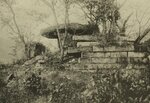
I found this situation of pyramids covered in mud interesting at the beginning of the 20th century. Besides that I did not know these Korean pyramids today in China, since for some reason we do not know much about the thousands of Chinese pyramids.

2-134647966_232438375120983_4616236495446851512_n.jpg
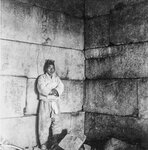
The pyramid appears to be large enough to make this man look very tiny.


2.png


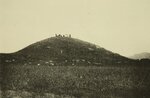
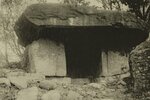
Janggun-chong or The General's Tomb is an ancient Korean pyramid, also known as the Eastern Pyramid. The pyramid is believed to be the burial tomb of King Gwanggaeto or his son King Jangsu, both former kings of Goguryeo.
The pyramid is located in what was formerly known as Gungnae, one of the capitals of Goguryeo, now Ji'an, Jilin Province, China. The pyramid was "rediscovered" in 1905.

3.png
4-134804939_232438428454311_5597243443587134901_n.jpg
If they are huge blocks, these are the measurements ...

[Source: Encyclopedia of Korean Popular Culture (Janggunchong (將軍 塚))]
1) A cemetery of a certain area was made by scattering fine gravel around the site where the external structural grave is located. Some estimate that there may be other barriers or stone walls, but the gravel is actually surrounded by a square of about 70 to 80 cm on one side as a sign of the collapse of the stone wall. ). Generally, the Jeokseok tombs in Goguryeo are simple Jeokseok tombs, Gidan Jeokseok tombs, and Gwak Jeokseok tombs with a type of single-stage stone chambers and bongseok stone tombs. According to this, the general tombs are included in the single-stage stone chambers. The tomb was made of granite in the shape of a 7-story pyramid. The stone was made by cutting granite into jangdaeseok [長 臺 石: rectangular cube] according to the standard, and then carefully polishing the surface. There are about 1,100 in total.

The size of the stone is not necessarily constant, but roughly the first layer uses a large stone, and it seems to gradually decrease as it goes up. The first floor has dimensions of about 2 m long and 1 m thick, while there are also about 2 m long and 0.7 m high. The largest jangdaeseok is 5.7 m long, 1.12 m wide and 1.1 m thick. On the second floor and higher, the thickness of the stone is reducing to about 0.5m. Also, at the bottom of each floor, there are some especially long jangdaeseoks about 5 to 6 m long. Looking at the number of levels of each floor that jangdaeseok is stacked on, the first floor has 4 levels, and each floor has 3 levels from the second to the seventh floor, and the upper jangdaeseok on the upper floor is convex to fix the jangdaeseok lower on the upper floor. Technically it is considered that it increases the solidity, for example, it makes it suitable for long seats. The top was rounded into a dome shape by mixing lime and gravel. The first floor of the tomb is square, the length of each side is 31.5 m, the height is 12.4 m and the area is 960m2.
8-134720020_232438525120968_6090921682878734168_n.jpg
9-134673371_232438548454299_1687862462644080777_n.jpg26-134862238_232439211787566_1912017214742979587_n.jpg24-135255996_232439128454241_9209317734204859339_n.jpg13-4676681_232438648454289_5701803289078335681_n.jpg5-134640088_232438451787642_8286234296876379079_n.jpg


The same old question ...
How did they lift those rocks and cut the granite?
What happened in the 19th century for many of the pyramids that happened to be re-discovered in the 20th century. Were they full of mud?


124409152_4558930314177234_3091740692891240024_o.jpg

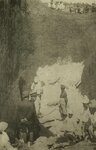
In Mexico Leopoldo Batres, (Mexico City, 1852-1926) was a pioneer of modern archeology in Mexico, famous for his excavations during the Porfiriato.

Between 1884 and 1888, years in which he began his archaeological activity in Teotihuacan, where he exhumed the Temple of Agriculture, near the Pyramid of the Moon.
Other archaeological missions took him to Monte Albán and Mitla in Oaxaca in 1901-02, La Quemada, Zac. in 1903, Xochicalco, Mor. the Island of Sacrifices, Ver., again Teotihuacan between 1905 and 1910 and to the center of Mexico City.

124065067_4553456518057947_3231892763671509472_o.jpg
el tajin.jpg


Same situation with the pyramid of El Tajin (The city of thunder) Veracruz.
In 1785 the engineer Diego Ruiz visited and made a first description of the site while conducting an inspection looking for illegal tobacco fields.In the 19th century the site was visited by Guillermo Dupaix, Alexander von Humboldt and Carl Nebel, who published their notes on the place.
Carl Nebel's drawings of the Pyramid of Niches

The first archaeologists to arrive at the site in the 20th century included Teobert Maler, Eduard Georg Seler, Francisco del Paso y Troncoso, and Herbert Spinden and Ellen. With the discovery of oil in the area, roads were built from the 1920s through the 1940s.

1024px-Castillo_Maler.jpg

I think it is between the late nineteenth and early twentieth centuries that these re-discoveries occur. In 1840 the American John Lloyd Stephens, in the company of the English artist Frederick Catherwood, visited the archaeological site of Chichén Itzá. At that time it was located within the ranch of the same name that belonged to Juan Sosa.In 1894, Edward Herbert Thompson acquired the Chichén-Itzá Hacienda and conducted studies and explorations in the area, especially within the sacred cenote. During these works, many objects found were improperly sent to the Peabody Museum of Archeology and Ethnology at Harvard University, although, later, and due to the intervention of the Mexican Government, some of the objects were returned. When Thompson died in 1935, the property passed to his heirs, although control and jurisdiction, as well as the systematic exploration and maintenance of the extensive archaeological site is in charge, by law, of the National Institute of Anthropology and History, a decentralized body. of the Mexican federal government. In 1860, French archaeologist Désiré Charnay traveled to Mexico, where he visited and photographed several of the Mayan ruins, including Palenque, Izamal, Chichén Itzá, Uxmal, Sisal, Dzitás, and Ticul, as well as the cities of Mérida and Campeche. Upon his return to France, he managed to mount an exhibition with the photographs taken in Mexico, which captured the attention of Parisian society, to the extent that Emperor Napoleon III sponsored in 1863 the edition of his book Cités et ruines americaines, where he described what learned in his travels and plates of his best photos were published.

Façade_principale_du_palais_des_Nonnes.jpg

Facade of the Temple of the Nuns, as it was in 1860. Photograph by Désiré Charnay.


Are we seeing the results of a cataclysm? The date 1915 to 1930 is important as well as KD said SH Archive - What happened between 1915 and 1930?


Sources:
http://encykorea.aks.ac.kr/Contents/Item/E0048318#https://es.wikipedia.org/wiki/Pirámide_de_Xi'Anhttps://es.wikipedia.org/wiki/Leopoldo_Batreshttps://es.wikipedia.org/wiki/El_Tajínhttps://es.wikipedia.org/wiki/Chichén_Itzá


4-134804939_232438428454311_5597243443587134901_n.jpg
 
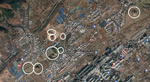
The pyramids near Xi'an have been deliberately covered with earth and had trees planted on top of them to make them look like natural hills. I don't believe they have ever been excavated, if they have it's not been made public.

Evidently what ever they are is not convenient for the mainstream narrative in China, so they are just trying to pretend they don't even exist.
 
The pyramids near Xi'an have been deliberately covered with earth and had trees planted on top of them to make them look like natural hills. I don't believe they have ever been excavated, if they have it's not been made public.

Evidently what ever they are is not convenient for the mainstream narrative in China, so they are just trying to pretend they don't even exist.

You are right, some of them have not been excavated. However, they are very well appreciated from the top of the satellite view.
By the way, what Fomenko raises about the Mayans is very interesting:

This says Fomenko del popol: Popol Vuh is a sacred book of the Maya-K'iche American Indians. They were a powerful people that inhabited Central America. It is thought that the Mayan civilization flourished in the 11th century and was destroyed in the 15th-16th centuries. During the invasion of the Europeans - the Spanish conquerors. But this hypothesis of the historians is incorrect. It turns out that the time of Columbus is not only reflected in the Popol Vuh, but the book itself begins with his description. The name of Columbus is even mentioned. Relocation from the Old World to the New World is one of the central themes of the book. All this took place in the 14th-16th centuries. Historians are convinced that the "very old" Popol Vuh reflects only local American history and "not at all"; It could have described biblical and Christian events in the Old World. As they said, regular contacts with Europe began only at the end of the 15th century. Consequently, historians reason, all the obvious parallels of the "old" Popol Vuh with the "old" Old Testament can be attributed to this.
Supposedly, in the 16th century, some scribes of the American book inserted Christian and biblical motifs in it, brought to America only in the 15th-16th centuries cc. That is, they say, they falsified the text. Any thought of Popol Vuh written as a Christian book in the XV-XVI cc. from the beginning it cannot cross the mind of a modern historian, as it would contradict the Scaligerian chronology. A statement continually voiced in the Popol Vuh that states that the community alliance of the settlers in America is absolutely correct. Russia-Horde, which created the Empire, expanded in various directions from the collective center. Our point of view differs from the traditional one in that historians refer the words of the American Bible Popol Vuh exclusively to the history of Central America. On the other hand, we affirm that here is presented a grandiose vision of the resettlement of the Russian-Horde peoples all over the world at that time. One of the last resettlement countries was Central America.

Aka khan Ivan Vasilyevich IV Grozny (The Terrible). The whole story with the respectful embassy of Maya-K'iche from America to the Eastern Tsar-Capholic sample, which at the time of the XV-XVI cc. The hierarchical power structure in the Great Empire was clear. Entering into the property rights of the discovered territories was only possible through the magnanimity of the Khan of Russia-Horde. He listened gently and gave his permission. Members of the embassy sighed in relief. In Central America, the Mayan and Toltec civilizations flourished. There are strongly pronounced evangelical stories present in Popol Vuh. In particular, the appearance of the star of Bethlehem in the sky, as in the harbinger of the arrival of Christ and the cristofania itself (the appearance of Christ). It would be more correct to call the Indian civilizations of Central America: Mayan, Aztec, etc., the Indian HORDE. They appeared as a result of the Hordana-Ottoman (Ataman) conquest of America in the XIV-XV cc.
The pyramids near Xi'an have been deliberately covered with earth and had trees planted on top of them to make them look like natural hills. I don't believe they have ever been excavated, if they have it's not been made public.

Evidently what ever they are is not convenient for the mainstream narrative in China, so they are just trying to pretend they don't even exist.

You are right, some of them have not been excavated. However, they are very well appreciated from the top of the satellite view.
By the way, what Fomenko raises about the Mayans is very interesting:

This says Fomenko del popol: Popol Vuh is a sacred book of the Maya-K'iche American Indians. They were a powerful people that inhabited Central America. It is thought that the Mayan civilization flourished in the 11th century and was destroyed in the 15th-16th centuries. During the invasion of the Europeans - the Spanish conquerors. But this hypothesis of the historians is incorrect. It turns out that the time of Columbus is not only reflected in the Popol Vuh, but the book itself begins with his description. The name of Columbus is even mentioned. Relocation from the Old World to the New World is one of the central themes of the book. All this took place in the 14th-16th centuries. Historians are convinced that the "very old" Popol Vuh reflects only local American history and "not at all"; It could have described biblical and Christian events in the Old World. As they said, regular contacts with Europe began only at the end of the 15th century. Consequently, historians reason, all the obvious parallels of the "old" Popol Vuh with the "old" Old Testament can be attributed to this.
Supposedly, in the 16th century, some scribes of the American book inserted Christian and biblical motifs in it, brought to America only in the 15th-16th centuries cc. That is, they say, they falsified the text. Any thought of Popol Vuh written as a Christian book in the XV-XVI cc. from the beginning it cannot cross the mind of a modern historian, as it would contradict the Scaligerian chronology. A statement continually voiced in the Popol Vuh that states that the community alliance of the settlers in America is absolutely correct. Russia-Horde, which created the Empire, expanded in various directions from the collective center. Our point of view differs from the traditional one in that historians refer the words of the American Bible Popol Vuh exclusively to the history of Central America. On the other hand, we affirm that here is presented a grandiose vision of the resettlement of the Russian-Horde peoples all over the world at that time. One of the last resettlement countries was Central America.

Aka khan Ivan Vasilyevich IV Grozny (The Terrible). The whole story with the respectful embassy of Maya-K'iche from America to the Eastern Tsar-Capholic sample, which at the time of the XV-XVI cc. The hierarchical power structure in the Great Empire was clear. Entering into the property rights of the discovered territories was only possible through the magnanimity of the Khan of Russia-Horde. He listened gently and gave his permission. Members of the embassy sighed in relief. In Central America, the Mayan and Toltec civilizations flourished. There are strongly pronounced evangelical stories present in Popol Vuh. In particular, the appearance of the star of Bethlehem in the sky, as in the harbinger of the arrival of Christ and the cristofania itself (the appearance of Christ). It would be more correct to call the Indian civilizations of Central America: Mayan, Aztec, etc., the Indian HORDE. They appeared as a result of the Hordana-Ottoman (Ataman) conquest of America in the XIV-XV cc.

Something interesting is how Fomenko tells us about how they find these "cities" and ask the kahn for permission to settle in them:

One of the last resettlement countries was Central America. But it was not the only one. Having come to America, the Maya-K'iche people 'found many cities'. As Popol Vuh informs us, the question of the establishment and blessing of the New Kingdom soon arose. It was required to send back east across the ocean the Maya-K'iche embassy to the great Quetzalcoatl to gain the authority to rule. This extremely interesting section of Popol Vuhes.

Also interesting is this play on words. As soon as the suspension of the Scaligerian chronology was lifted, in the name of the Mexican god Quetzalcóatl we recognize Caesar-catholic. The sounds that L and R could cross: Quetzal - Coatl = Caesar-Coatl = Caesar-Catholic.
This brings us immediately to Europe, where the Russian Christian church is still called the Orthodox CAPOLICA, and in some countries the CATHOLIC faith is widespread. Thus, the Maya-K'iche embassy from a distant America, having crossed the ocean, appeared in front of the great King Capholic (Catholic) and received the powers and authority to govern the territories discovered in America. This event is reflected in European sources as the return to Europe of Columbus's confederates to receive from the king the authority to govern the discovered American lands. It is clear that such authority could have been granted only by the emperor of the 'Mongol' Empire. Furthermore, it is possible that Quetzal-Coatl in the Indian texts is the Emperor Charles V, whom the famous Admiral Cortes Cortés actually informed about the conquest of America. In which case, we also know Quetzal - Coatl as the Babylonian-Asibian king Nebuchadnezzar.
 

Attachments

  • 7.png
    7.png
    1.8 MB · Views: 327
Last edited:
The Goguryeo Pyramid, now Ji'an, Jilin Province, China. The pyramid was "rediscovered" in 1905.
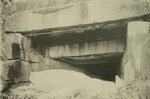
Leopoldo Batres removes the mud from Monte Albán and Mitla in Oaxaca in 1901-02, La Quemada, Zac. in 1903, Teotihuacan between 1905 and 1910.
The Pyramid of Niches (Tajin) The first archaeologists to arrive at the site in the 20th century were Teobert Maler, Eduard Georg Seler, Francisco del Paso y Troncoso and Herbert Spinden and Ellen.
The Chichen Itza Pyramid In 1840 the American John Lloyd Stephens, in the company of the English artist Frederick Catherwood, visited the archaeological site of Chichén Itzá. , In 1894, Edward Herbert Thompson.
To this list of Pyramid Re-Discoveries I add ZAWYET EL ARYAN - ABU RAWASH.
Alessandro Barsanti, who found the remains of the pyramid in 1900 and began excavating in 1904.
12.png
Most people don't know that near the famous trio of pyramids in Gizah, Egypt, there are two other pyramids of which only the foundations remain.

"PREMEDITED DESTRUCTION IN ORDER TO AVOID FUTURE DISCOVERIES, INVESTIGATIONS AND UNCOMFORTABLE QUESTIONS"
NEITHER SCIENCE, NOR THE EGYPTOLOGISTS, NOR THE GOVERNMENTS HAVE WANTED TO KNOW ANYTHING ABOUT THIS ARCHAEOLOGICAL SITE.
PERFECT SOLUTION.
COVER IT ALL AGAIN AND LEAVE IT MORE COVERED THAN WHEN IT WAS EXCAVATED AT THE BEGINNING OF THE LAST CENTURY. BUT BE SURE BEFORE YOU WANT TO TAKE IT AND HIDE TO GOOD COLLECTION EVERYTHING THAT IS DIFFICULT EXPLAINABLE AS THE MYSTERIOUS ELLIPTICAL "BATHTUB" SUPER POLISHED LIKE A MIRROR, AND ITS SERAPHEUM-TYPE COVER WITH THE SAME TYPE AND MIKERINOS PROTUBERANCES.
1-35539691_3425869620871987_3839431679752683095_n.jpg
15.png


The polished bathtub reminded me of the Barabar cave, India. https://stolenhistory.net/threads/the-barabar-caves-in-india.2046/

I call it the Tina, because Barsanti said it had once contained a liquid based on the signs he found inside when he opened the sealed container. This is Barsanti's description, which is quite intriguing. "As this search continued on the north side, almost in the center of the west side, on March 12, I discovered an object in a completely new shape. It is a large oval tub (Plate III), made of pink granite, polished like a mirror, and with a depth of 1 meter and 5 centimeters. It is carved from one of the pavement blocks that occupies the bottom of the moat, and the Egyptian architects took their measurements carefully to protect it. They had spread a layer of lime on the lid, and over the lime a thick bed of well-spread clay, which completely avoided contact with the blocks of limestone stacked on it.
Furthermore, these had been regularly placed in the clay from side to side, to enclose the precious shape with a kind of insulating protection. The lid was nailed in the tub with plaster. and it was with real excitement that I got into a position to pick it up. All the precautions taken made me hope that the contents were more precious, but once again I was deceived: when the inside of the tank appeared, I found it completely empty. I only noticed that the side walls were lined with a black band that was 0 meters 10 centimeters high. It is likely that it is the very light deposit of some liquid enclosed in the tub as an offering or libation, and that it would have evaporated over the years. It has been hypothesized that this tank was an unused sarcophagus, but I don't think so. The care with which it was protected shows that it contained something, and the blackish deposit indicates the nature of this content.
We don't know what this vessel was used for or why it had to be built this way. It is a very unusual shape and form, but it seems to have been extremely important to the original builders, due to the extreme care they took to seal this vat hermetically and to protect it with large stones.

SO THEY CLOSED THE AREA IN THE 60'S OF THE TWENTIETH CENTURY AND THEY BLEED THE ENTIRE DEPOSIT WITH CONTROLLED BLASTING TYPE EXPLOSIVES SO NOT TO LEAVE ANY KIND OF EVIDENCE. SO THEY TURNED IT INTO A MILITARY ZONE AND BURIED IT ALL AGAIN UNDER TONS OF STONE AND SAND. AND BEARING BEFORE THE RED GRANITE BLOCKS THAT MADE THE FLOOR AND, OF COURSE, THE MYSTERIOUS ELLIPTICAL ARK.
13.png

Here we can appreciate the military complex

IT WAS A CONSTRUCTION TOO IMPRESSIVE AND DIFFICULT TO EXPLAIN WITHIN HISTORICAL EGYPT AND THE CLASSIC CONCEPTION TO WHICH WE ARE USED. THE SIMPLE THING IS NOT TO LEAVE ANY TRACE OF EVERYTHING THAT COULD SOW DOUBTS.

Some images:
7.png
8.png
9.png
10.png
4-135492016_3425870934205189_4948932835868741586_n.jpg
1920px-Layer_Pyramid-es.svg.png
800px-Pirámide_estratificada_o_de_Jaba.jpg


Sources:
http://www.soul-guidance.com/houseofthesun/zawyet.htmlhttps://es.wikipedia.org/wiki/Pirámide_estratificada
 
Last edited:
the recently discovered bosnian pyramids were also buried

Just yesterday I was observing this pyramid in Siberia. They call it the tomb of a Tartar king, little information I have found.
 
the recently discovered bosnian pyramids were also buried

Just yesterday I was observing this pyramid in Siberia. They call it the tomb of a Tartar king, little information I have found.
https://www.bing.com/maps
65,029974, 145,367133
you just add these coordinates to the pyramid in siberia
ubicacion de piramide de siberia.png
ubicacion de piramide de siberia2.png
ubicacion de piramide de siberia3.png
ubicacion de piramide de siberia4.png

Another one of those discoveries of the early twentieth century to the account.
In 1905, Max Uhle investigated Áspero, a pre-ceramic settlement located on the coast of the Supe valley, 23 km from Caral. Julio C. Tello explored the same place in 1937.
The first to draw attention to Caral was the American traveler Paul Kosok, who visited the place together with his compatriot, the archaeologist Richard Schaedel, in 1949. In his report, published in the book Life, Land and Water in Ancient Peru, in 1965, he mentioned that Chupacigarro, as Caral was known at the time, must be very old, although he could not specify its age. It also contains an impressive aerial photograph of a sector of what is now called the Sacred City of Caral.
2.png
4.png
5.png
14.png


It was also sent to the distant past, do you think it is that old? The antiquity of the Caraline civilization has been confirmed through 146 radiocarbon dates made in the United States. According to these, Caral is approximately 5000 years old.

Source :Caral - Wikipedia, la enciclopedia libre
 
Last edited:
Also interesting is this play on words. As soon as the suspension of the Scaligerian chronology was lifted, in the name of the Mexican god Quetzalcóatl we recognize Caesar-catholic. The sounds that L and R could cross: Quetzal - Coatl = Caesar-Coatl = Caesar-Catholic.
I am from Mexico, and I have studied greco-latin etymologies enough to know the Latin pronunciation. It's very hard to believe the possibilitiy of a cross sounds. Neither Latin or Spanish pronunciation could cross L and R, the sound it's very different. In English maybe could be possibly. Besides the word Quetzal it's the name of the most representative bird of tne Mayan culture, that's why the Guatemalan coin it's named Quetzal.

Considering that Scaliger was French, I ignore the sound of L and R in the old French spoken at that time. But in the modern French the sound it's different as the other Romance languages mentioned.
 
awesome post. I just submitted something along these lines without having seen this one, but they fit together nicely. I put forth the theory that Monk’s Mound could in fact be a buried step pyramid, due to its nearly identical appearance to the buried pyramid at Cholula. I wasn’t even aware that there were others in Mexico, great work.
 
Tips
Tips
Please respect our Posting Rules.
Back
Top