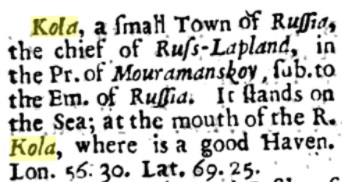
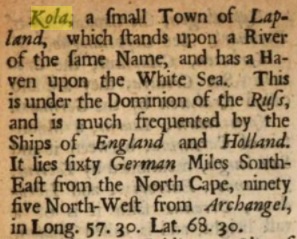
Northern people were called “Murmans”, “Urmans”, Normans. Later, this name was also transferred to the land where events were held with the participation of foreigners. The coast of the Barents Sea, and then the entire Kola Peninsula, was called "Murman". Accordingly, the name "Murmansk" means "city on Murman."Note: This post was recovered from the Sh.org archive.
Username: Cemen
Date: 2020-01-30 08:23:45
Reaction Score: 1
Originally called Romanov-on-Murman. After the revolution, it was renamed Murmansk.
When laying the city did not represent anything special, an ordinary settlement. With the development of the northern territories in the USSR, it began to grow.
1915-1916

1918
1918
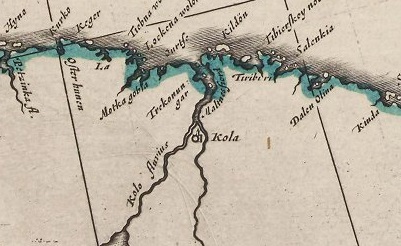
And what Mercator has indicated I can’t say. Maybe he marked the Kola River flowing there.
He even designated a certain "pogost".
Pogosts are places of compact settlements of the Sami people, or, as they were also called, Lopari. In winter, they lived in winter pogost or “siites,” which they considered permanent residence, and in summer, in summer.
Pogosts were very small settlements. In some, there were only a few humans and no more than 10 males lived. The largest рogost was considered Pechenga - about 80 inhabitants.
The Kola Pyramids are an extremely interesting object, but they are unlikely to be related to Murmansk and small peninsula settlements.