Archive
Old SH Archive
- Joined
- Sep 8, 2020
- Messages
- 17,737
- Reaction score
- 3,167
Disclaimer: if this is in the wrong section, please feel free to advise me otherwise.
Before there was New England in America, there was New England in the Crimea. After William of Normandy conquered England in 1066, many Saxon nobles fled east. The English landed in Constantinople and were granted land by Emperor Alexios Komnenos on the northeastern shore of the Black Sea, in the Crimea. There is apparently some scholarly support for this story.
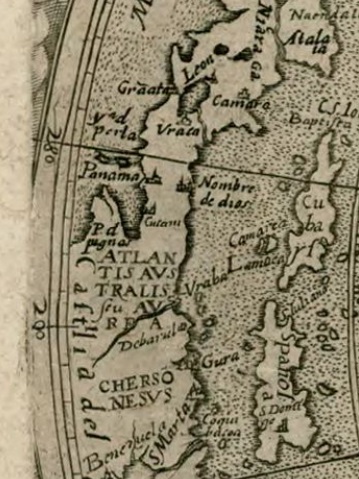
Side note: the Crimean peninsula is often called Chersonesus (lit. peninsula) or Chersonesus Taurica (a truncation of Tartaria or maybe Tartauria?) among the Greeks, and interestingly enough New England in America has its own Chersonese - the Delmarva or Delaware peninsula. A document in the name of King Charles II refers to the Delaware peninsula as the 'Chersonese'. Check out the map above, the orientation of placenames seems a little funky. The topography looks consistent with the modern Crimea, but the placenames are situated in a way that would make it difficult to read upright.
Do any of our English or British forum members know about this? Is it taught in schools or is it a complete unknown? Anyone here from Crimea know about this legend? Something about this story doesn't seem to add up, as interesting as it is.
From Wikipedia,
New England (medieval)
It would seem that most of the evidence for the Crimean England is based on toponymy in the region, where places appear to have been given names that evoke London and the Saxons.Játvarðar Saga relates that when the English rebels, fighting against William the Conqueror, became sure that the Danish king Sveinn Ástríðarson would not help them any more, they agreed to leave England for Constantinople (Miklagarðr). The English force consisted of 350 ships, a "great host" and "three earls and eight barons", all led by one "Siward earl of Gloucester" (Sigurðr jarl af Glocestr). They sailed past Pointe Saint-Mathieu (Matheus-nes), Galicia (Galizuland), through the Straits of Gibraltar (Nörvasundz) to Ceuta (Septem). They captured Ceuta, killing its Muslim defenders and plundering its gold and silver. After Ceuta, they seized Majorca and Menorca, before embarking to Sicily, where they heard that Constantinople was being besieged by infidels.
The English sailed to Constantinople, vanquishing the besieging fleet and clearing the heathen army. The ruler of Constantinople, Alexius I Comnenus (Kirjalax), offered to take the English into service, allowing them to live in Constantinople as his bodyguards, "as was the wont of the Varangians who went into his pay". While some of the English liked this idea, Earl Siward and some others desired a realm of their own to rule over into old age. Alexius told them of a land over the sea that had formerly been under the emperor of Constantinople, but was now occupied by heathens. The emperor granted this land to the English, and a party led by Earl Siward sailed for this land while another party of English remained in the service of Alexius. The land lay "6 days north and north-east of Constantinople", and was won by Earl Siward, who after many battles drove away the heathens. They called it "England" and the territory's main towns were called "London", "York", and "by the names of other great towns in England". The English did not adopt "St Paul's law" (the Eastern rite liturgy), but instead sought bishops and other clergymen from the Kingdom of Hungary. The descendants of these English are said to have remained in the region ever since.
The story told by the Chronicon Universale Anonymi Laudunensis is largely the same in summary, but has a few variant details. It does not name the Danish king (Sveinn Ástríðarson), named as "Sveinn son of Ulf" by the Játvarðar Saga. Likewise, it does not mention the route taken by the English to the Mediterranean, a route added by the Icelandic author(s) probably from "general knowledge". There are other small variants, like, for instance, "William king of England" (Willelmus rex Anglie) in the Chronicon is called by the Játvarðar Saga "William the Bastard" (Viljálmr bastharðr), "Sicily" in the saga is "Sardinia" in the Chronicon, the names of the cities (London and York) are not given by the Chronicon, and the "New England" (Nova Anglia) of the Chronicon is called only "England" by the saga. A bigger variant is that the Earl "Siward" (Sigurðr) of the saga is called Stanardus by the Chronicon. Most of the narrative however is largely the same, the numbers and ranks of the earls and barons, their ships, as is the sailing distance from Constantinople to the colony. The Chronicon, after its account of the foundation of New England, adds that when Alexius sent an official to take tribute from them, the "eastern English" (Angli orientales) killed the official; the English who remained in Constantinople, fearing that Alexius would take his revenge upon them, are said to have fled to New England and to have taken up piracy.
Evidence of five place names from portolans from medieval Italian, Catalan and Greek navigators of the north coast of the Black Sea support the view of a medieval New England east of Constantinople. It is possible that Susaco (or Porto di Susacho) derives from the word 'Saxon' or 'South Saxons' (from the Kingdom of Sussex, now Sussex). This may be the place that gave its name to the Ottoman fortress of Sudschuk-ckala'h or Sujuk-Qale, now the site of the Russian port city of Novorossiysk.
Medieval portolans also show Londina, a place on the north coast of the Black Sea to the north-west of Susaco that gave its name to the Londina river and may derive from the place name London.
Note: This OP was recovered from the Wayback Archive.
Note: Archived Sh.org replies to this OP are included in this thread.