- Joined
- Sep 22, 2020
- Messages
- 4,691
- Reaction score
- 1,500
NOTE: Even with the technology available in 2005, when Italy agreed to repatriate the Obelisk of Axum, it had to be cut into three pieces and flown in three trips to Ethiopia. The obelisk only weighed 160 tonnes.
In ancient Rome, the transportation of obelisks was not just a practical task. Rather, it was testament to Rome’s mastery over both the manmade and the natural, an accomplishment worthy of celebration. According to Pliny the Elder, obelisk ships were put on display and heralded as “more miraculous than anything else on the sea.”
KD: My original plan was to write a small something on the endeavors they had to undertake while transporting one of the Cleopatra's Needles to London. In the process, the OP acquired some additional info.
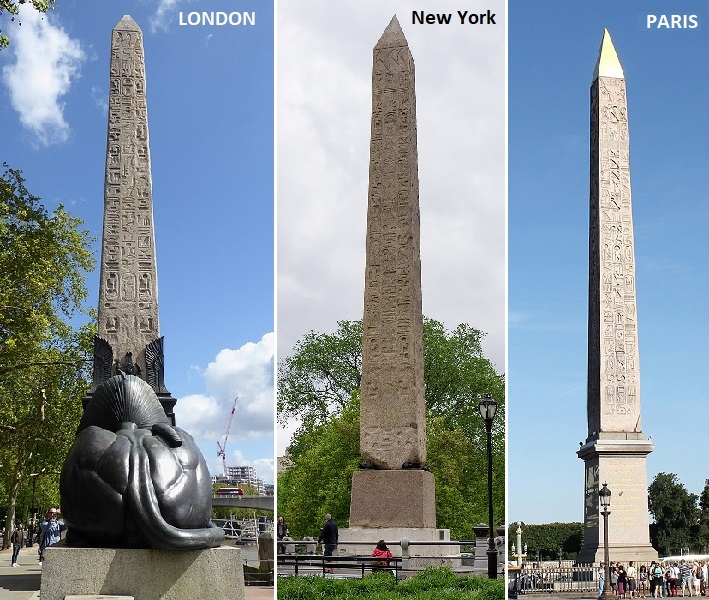
Although all three needles are genuine Ancient Egyptian obelisks, their shared nickname is a misnomer, as they have no connection with the Ptolemaic Queen Cleopatra VII of Egypt and were already over a thousand years old in her lifetime. An earlier reference states Queen Cleopatra brought the London obelisk from Heliopolis to Alexandria shortly before the time of Christ for the purpose of decorating a new temple but it was never erected and lay buried in sand on the shore until presented to the British nation in 1819.
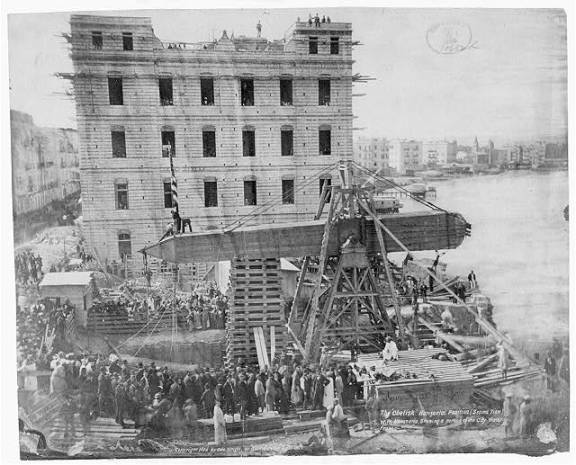
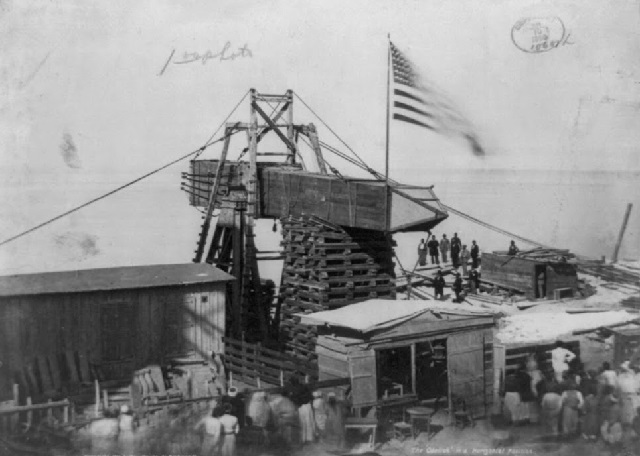
The New York NeedleThe New York City needle was erected in Central Park, just west of the Metropolitan Museum of Art, on 22 January 1881. It was secured in May 1877 by judge Elbert E. Farman, the then-United States Consul General at Cairo, as a gift from the Khedive, Muhammad Ali Pasha, for the United States remaining a friendly neutral as the European powers - France and Britain - maneuvered to secure political control of the Egyptian Government.
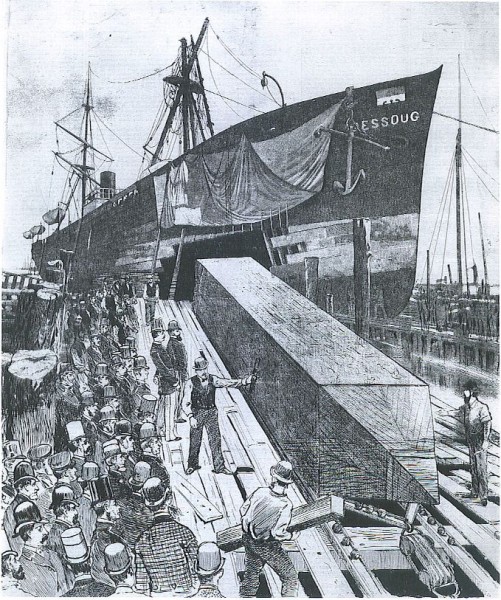
Source
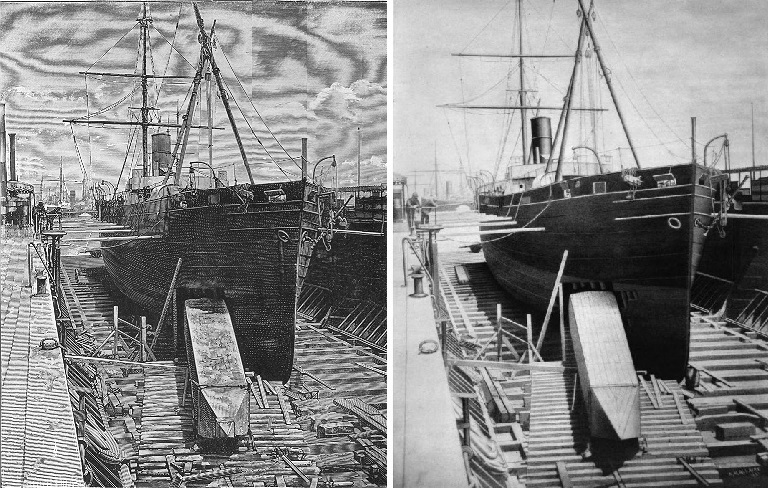
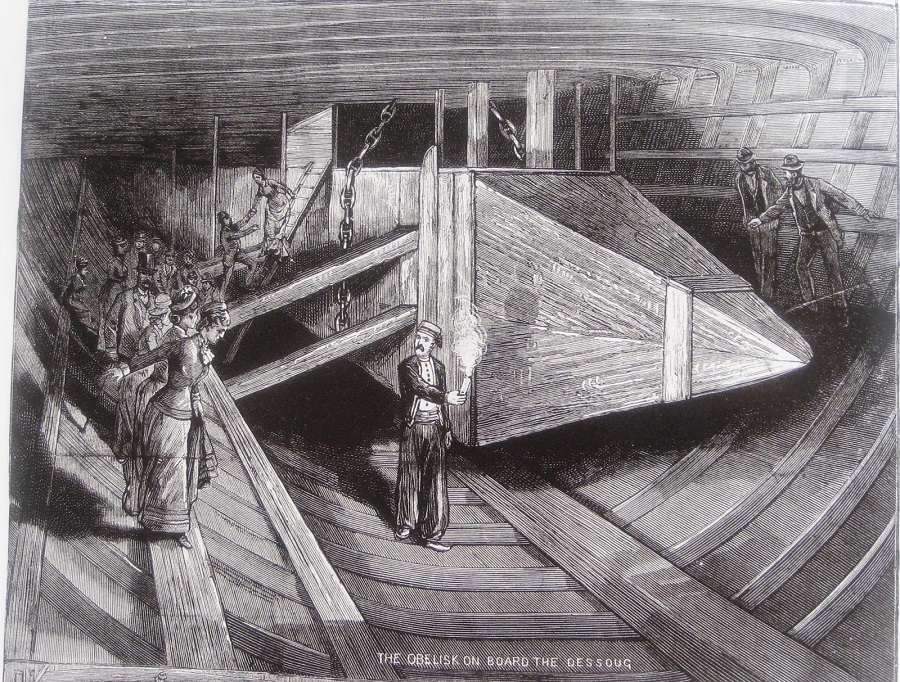
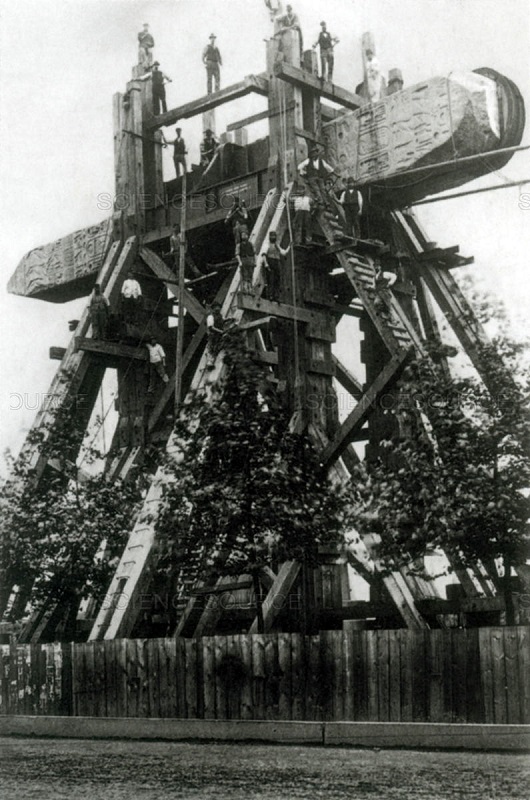
On the right: Is this a photograph, or a drawing?
Source +1
Source
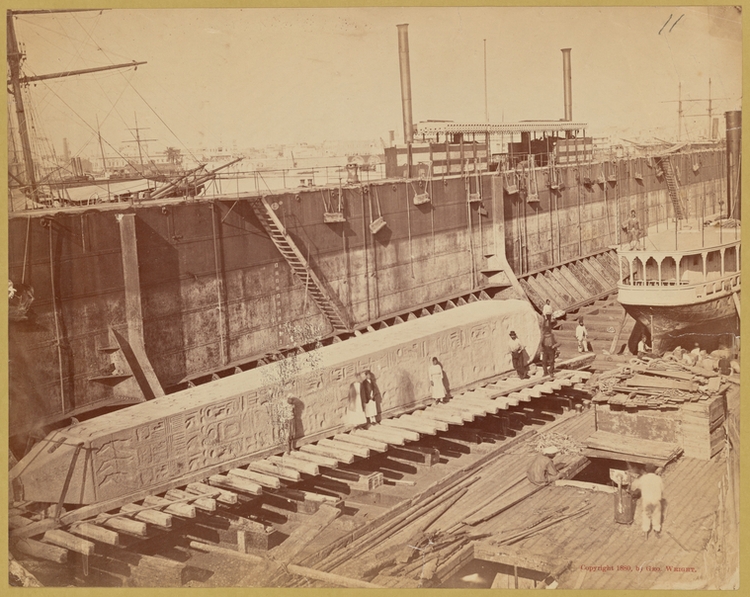
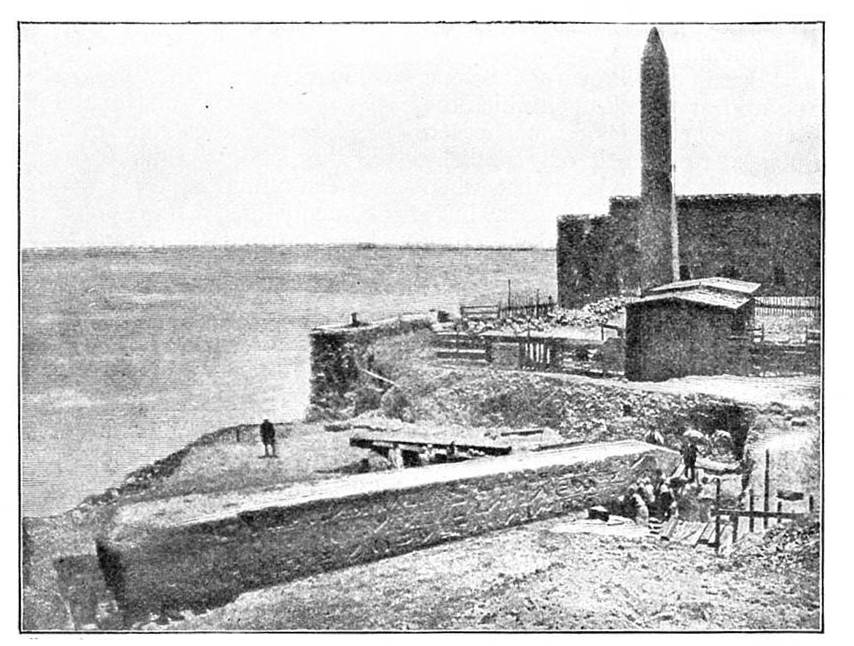
Prior to being loaded onto ship "Dessoug"...
Source
Source
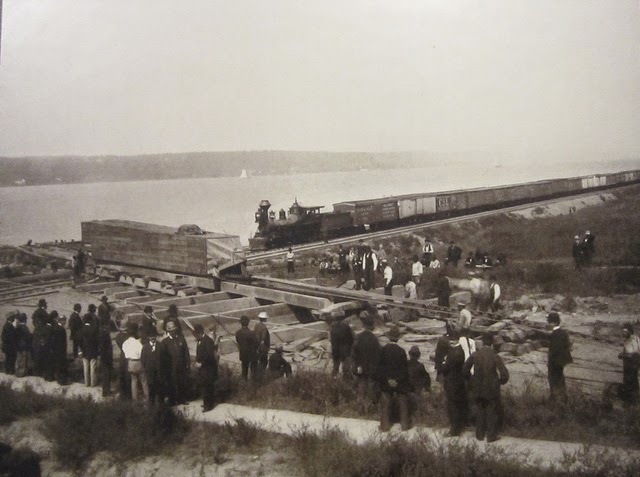
Source
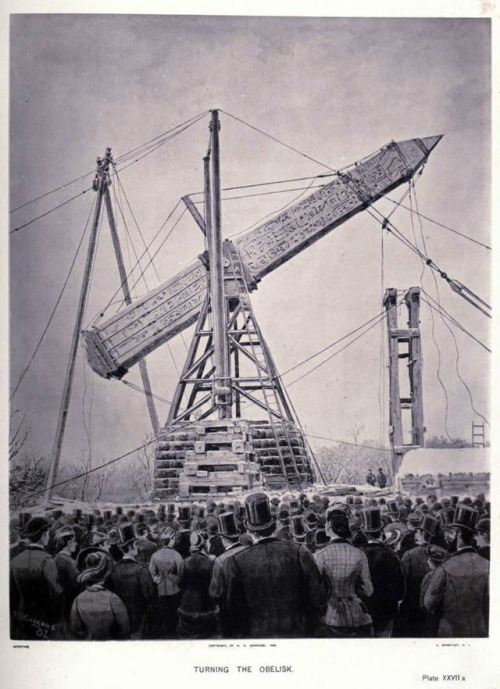
Source
The Paris/Luxor NeedleThe Paris/Luxor needle is in the Place de la Concorde. The centre of the Place is occupied by the giant Egyptian obelisk decorated with hieroglyphs exalting the reign of the pharaoh Ramesses II. Along with its twin (still in situ), it once marked the entrance to the Luxor Temple. The ruler of Egypt and Sudan, Muhammad Ali, presented the New York needle to France in 1828, but it was exchanged in 1830 with the 3,300-year-old Luxor Obelisk. King Louis-Philippe had it placed in the centre of Place de la Concorde in 1833 near the spot where Louis XVI and Marie Antoinette had been guillotined in 1793. Given the technical limitations of the day, transporting it was difficult – on the pedestal are diagrams explaining the machinery used for its transportation. The red granite column rises 23 metres high, including the base, and weighs over 250 tonnes. Missing its original cap, believed stolen in the 6th century BC, in 1998 the government of France added a goldleafed pyramid cap to the top of the obelisk. The obelisk is flanked by two fountains constructed at the time of its erection on the Place.
The Luxor Obelisk first arrived in Paris on 21 December 1833, having been shipped from Luxor via Alexandria and Cherbourg, and three years later, on 25 October 1836, was moved to the centre of Place de la Concorde by King Louis-Phillipe.
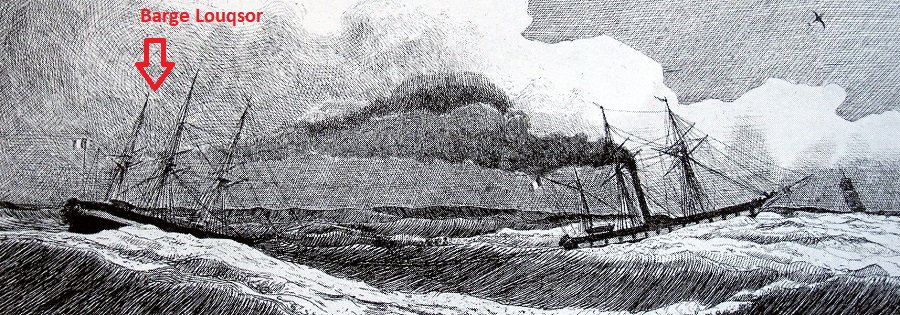
After the Obelisk was taken, the mechanical clock provided in exchange was discovered to be faulty, having probably been damaged during transport. The worthless clock still exists to this day in a clocktower in Egypt, and is still not working.
The Obelisk of MontecitorioThe Obelisk of Montecitorio, also known as Solare, is an ancient Egyptian, red granite obelisk of Psammetichus II (595-589 BC) from Heliopolis. Brought to Rome with the Flaminio Obelisk in 10 BC by the Roman Emperor Augustus to be used as the gnomon of the Solarium Augusti, it is now in the Piazza Montecitorio. It is 21.79 metres (71 ft) high, and 33.97 metres (111 ft) including the base and the globe.
Note: There are a few additional smaller ones you can read about here.

To understand some of the shenanigans pertaining to these obelisks, you will have to read the linked wiki articles. They are short, but do provide enough interesting info.
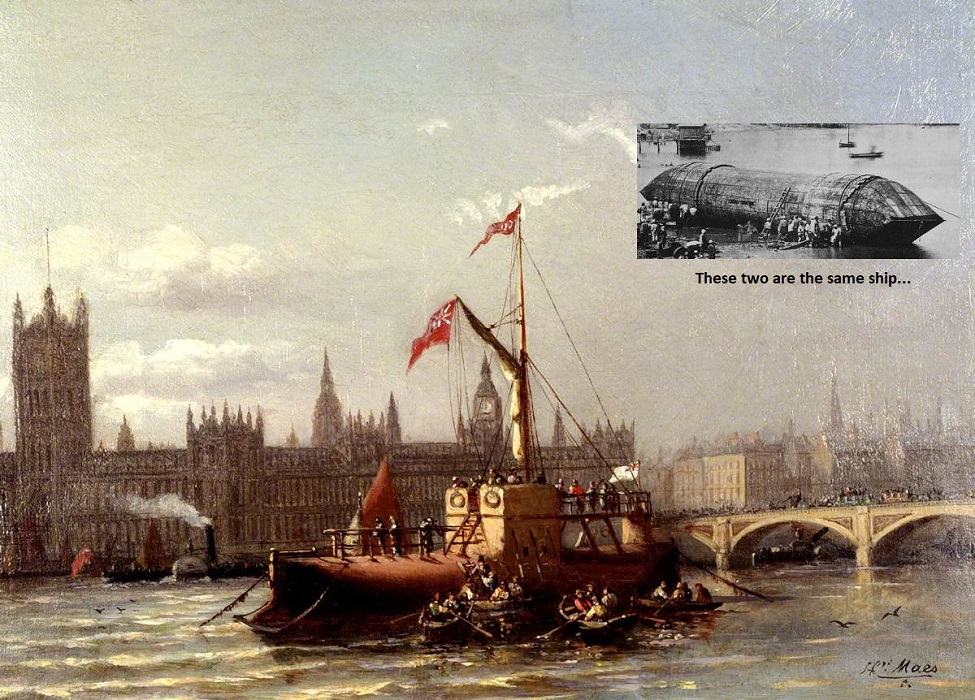
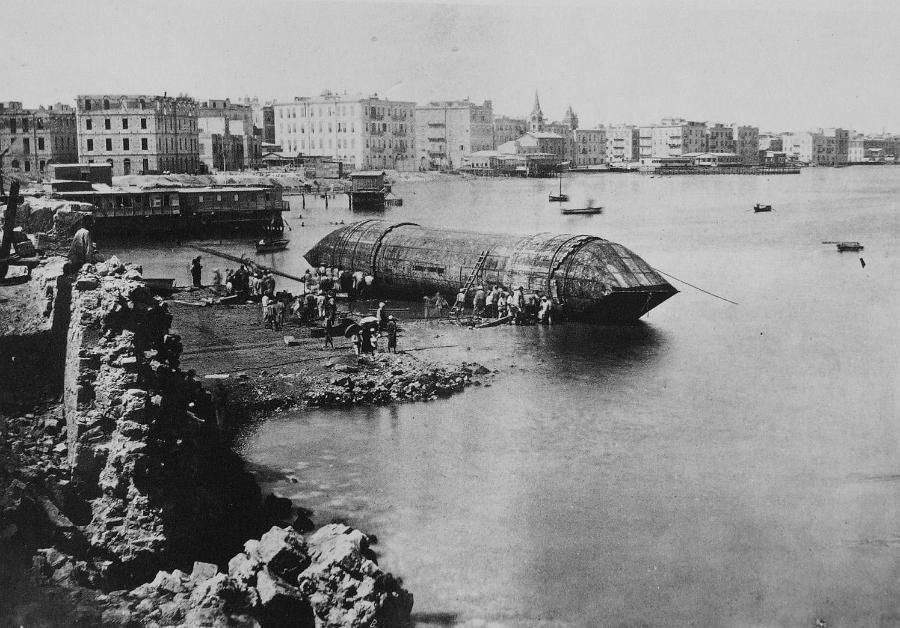
In February 1878 ‘curious sightseers’ cheered from the bridges as they beheld the equally strange spectacle of a 92-feet long, cigar-shaped iron cylinder (dubbed Cleopatra), draped in bunting, bobbing up the river Thames towards the Adelphi Steps at Victoria Embankment. No ‘seeming mermaid’ steered this craft, however, but the hoary sea dog Captain Carter. It’s precious cargo? Cleopatra’s Needle, one of a pair of obelisks erected by Pharaoh Thutmose III in c.1500 BC at Helopolis in Egypt.
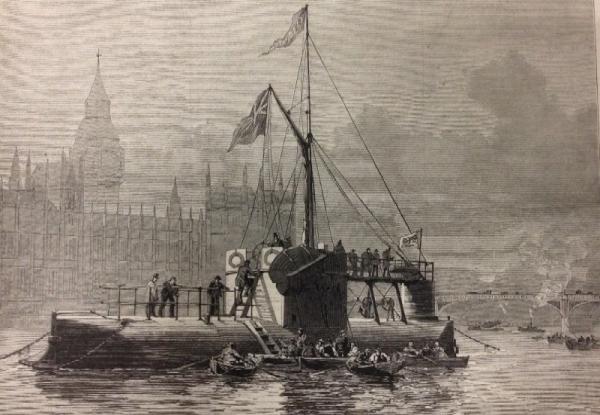
The question of transportation was a problem, it was too expensive to transfer by land and the British Government did not want to get involved in any way. The solution proposed by engineer John Dixon was to encase the obelisk in great iron cylinder, 92 feet (28 m) long and 16 feet (4.9 m) in diameter.
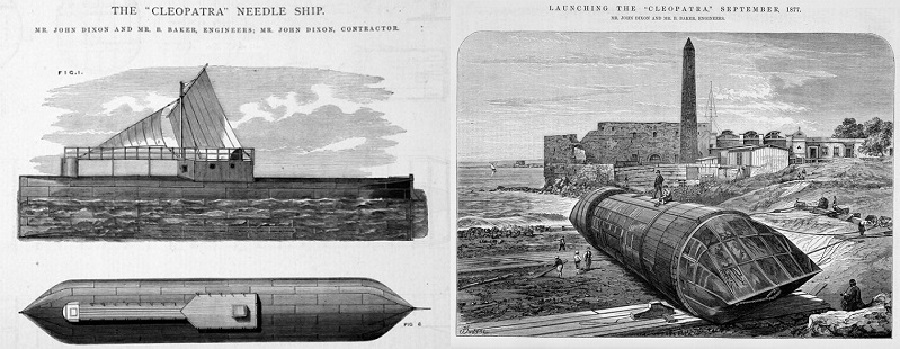
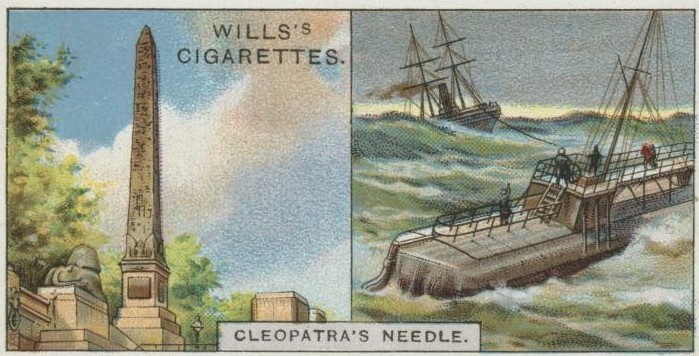
Eventually the obelisk was encased in the cylinder and attached to the steamship Olga for its journey to London, all went well until 14th October 1877, when a storm in the Bay of Biscay caused the cylinder to start rolling, The Olga sent out a rescue boat with six crew, but the boat capsized and all six crew were lost. Captain Carter and the five crew members aboard the Cleopatra were eventually rescued, but the cylinder was feared to have sunk. However these fears were unfounded and the cylinder was found and was taken to Ferrol in Spain. Unfortunately this was not the end of the problem because over £2,000 salvage had to be paid before the journey could be continued.
The money was eventually paid and the William Watkins owned paddle tug Anglia (which was also built at Thames Ironworks) departed Millwall to travel to Ferrol to tow the cylinder back to the Thames. Thankfully this journey was without incident and the tug and the cylinder arrived in the Thames estuary on 21 January 1878.
A newspaper report from The Times tells the next part of the story.
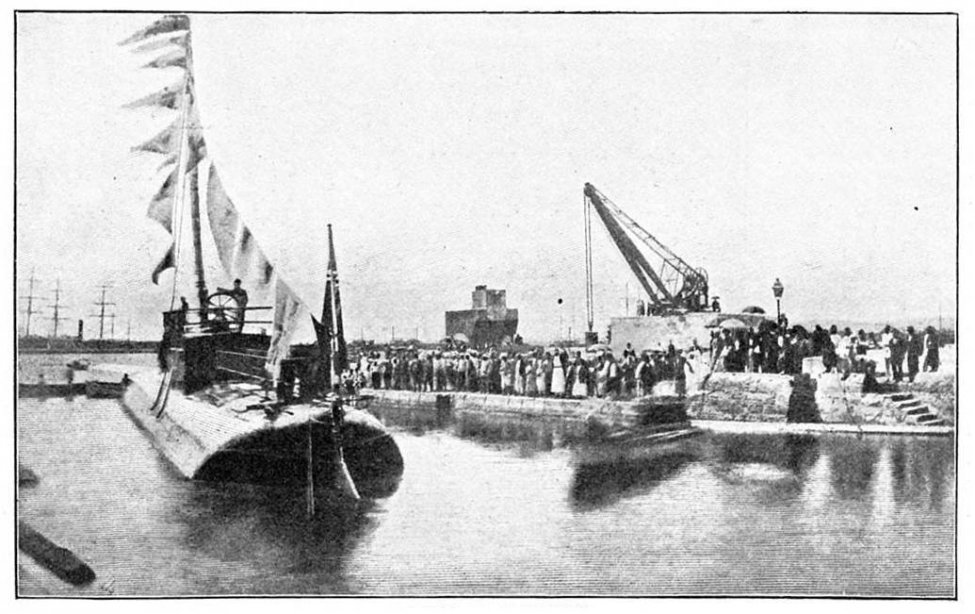
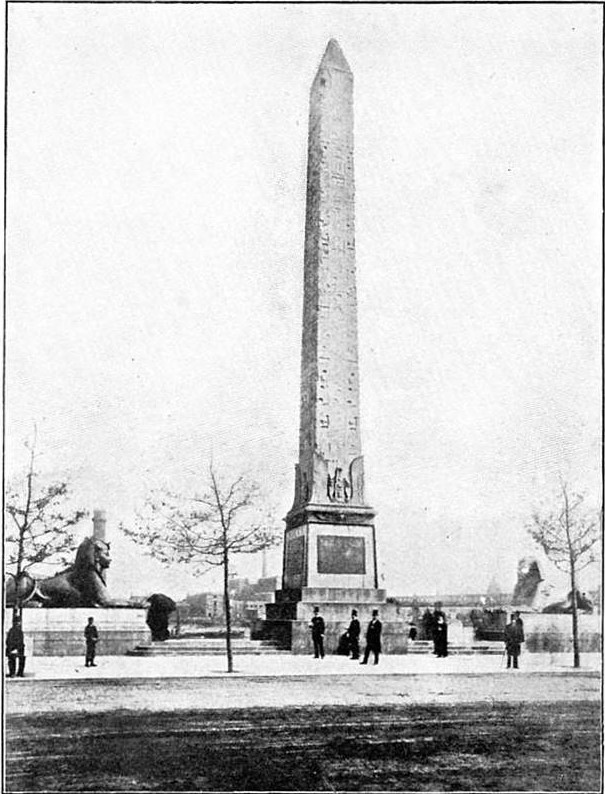
KD: If the above photograph was taken in the United Kingdom, than what is that second obelisk in the picture? Do we have an additional Egyptian obelisk in the vicinity of the Thames river?
On 14 October 1877 the Cleopatra was in danger of sinking off France in the Bay of Biscay. The steam-ship towing her, the Olga, cut the towrope, and left the vessel adrift in the Bay. Five days later a ship spotted the ‘Cleopatra’ floating undamaged off the northern coast of Spain, and she was towed to the Ferrol, Galicia. There a steam-ship, the Anglia, arrived to tow her to London. They arrived at Gravesend on 21 January 1878. The Cleopatra was broken up immediately after the obelisk had been removed on 6 July 1878. The needle was positioned on the Thames Embankment, in September 1878 where it still stands.
KD: "The ship looked like a primitive submarine", and "broken up immediately" sounds rather suspicious.
Sources & Links:
KD: Today, when technology is more on par with handling 250 ton weights, we do not appear to care much for moving obelisks. At the same time, when we do move one, we choose to cut it into three pieces.
And I have nothing but questions. All of those could be answered separately, with plausible answers, but what do we really gain from such answers?
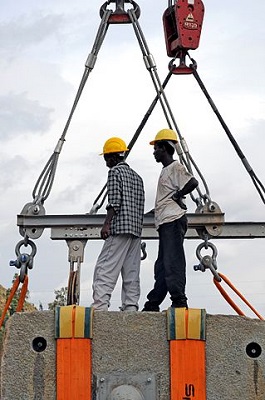
In ancient Rome, the transportation of obelisks was not just a practical task. Rather, it was testament to Rome’s mastery over both the manmade and the natural, an accomplishment worthy of celebration. According to Pliny the Elder, obelisk ships were put on display and heralded as “more miraculous than anything else on the sea.”
KD: My original plan was to write a small something on the endeavors they had to undertake while transporting one of the Cleopatra's Needles to London. In the process, the OP acquired some additional info.
Cleopatra's Needle
Cleopatra's Needle is the popular name for each of three Ancient Egyptian obelisks re-erected in London, Paris, and New York City during the nineteenth century. The obelisks in London and New York are a pair; the one in Paris is also part of a pair originally from a different site in Luxor, where its twin remains.
The London Needle
The London needle is in the City of Westminster, on the Victoria Embankment near the Golden Jubilee Bridges. It was originally erected in the Egyptian city of Heliopolis on the orders of Thutmose III, around 1450 BC. In 1819, Muhammad Ali Pasha gave Britain the obelisk as a gift. However, Britain's prime minister at the time, Robert Jenkinson, hesitated on having it brought to the country due to shipping expenses. It remained in Alexandria until October 1877 when its transport to London was funded by William James Erasmus Wilson.- Gifted: 1819
- Transported: 1877
- Weight: 224 short tons (203,000 kg)
- Height: 21 metres (69 ft) high
- Material: red granite
The New York Needle
- Secured: 1877
- Erected: 1881
- Weight: 200 tons
- Height: 21 metres (69 ft)
- Material: red granite
Source
On the right: Is this a photograph, or a drawing?
Source +1
Source
Prior to being loaded onto ship "Dessoug"...
Source
Source
Source
Source
The Paris/Luxor Needle
- Gifted: 1830
- Transported: 1833
- Erected: 1833/36
- Weight: 250 metric tons (280 short tons)
- Height: 23 metres (75.5 ft) high
- Material: yellow granite
The Luxor Obelisk first arrived in Paris on 21 December 1833, having been shipped from Luxor via Alexandria and Cherbourg, and three years later, on 25 October 1836, was moved to the centre of Place de la Concorde by King Louis-Phillipe.
- It was given to France in exchange for a French mechanical clock.
After the Obelisk was taken, the mechanical clock provided in exchange was discovered to be faulty, having probably been damaged during transport. The worthless clock still exists to this day in a clocktower in Egypt, and is still not working.
Obelisks of Rome
Well, the transporting of the above three obelisks could be considered child games when compared to what, and when they moved to Rome. The stuff is really mind boggling, especially considering when it was accomplished. Anyways, there we go.The Lateran Obelisk
Tallest obelisk in Rome, and the largest standing ancient Egyptian obelisk in the world, originally weighing around 455 tons. From the temple of Amun in Karnak, and brought to Alexandria with another obelisk by Constantius II, and brought on its own from there to Rome in 357 to decorate the spina of the Circus Maximus. Found in three pieces in 1587, restored approximately 4 m shorter by Pope Sixtus V, and erected near the Lateran Palace and basilica of San Giovanni in Laterano in 1588 in the place of the equestrian statue of Marcus Aurelius, which was moved to the Capitoline Hill. Current version weighs around 330 tons.The Vatican Obelisk
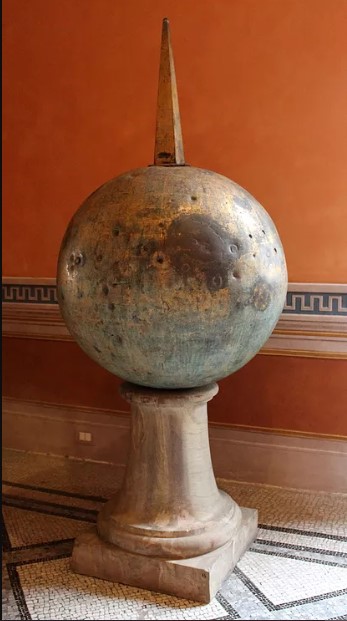
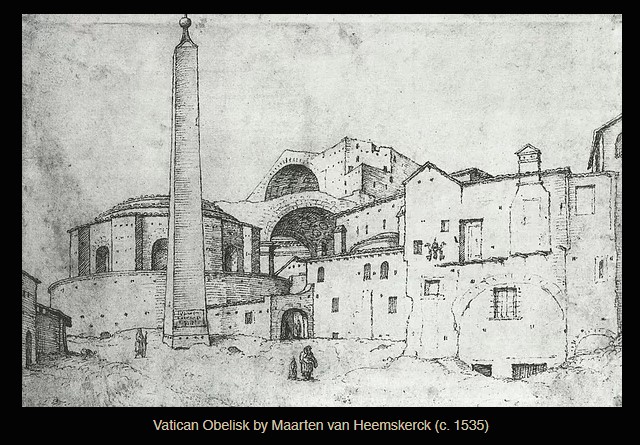
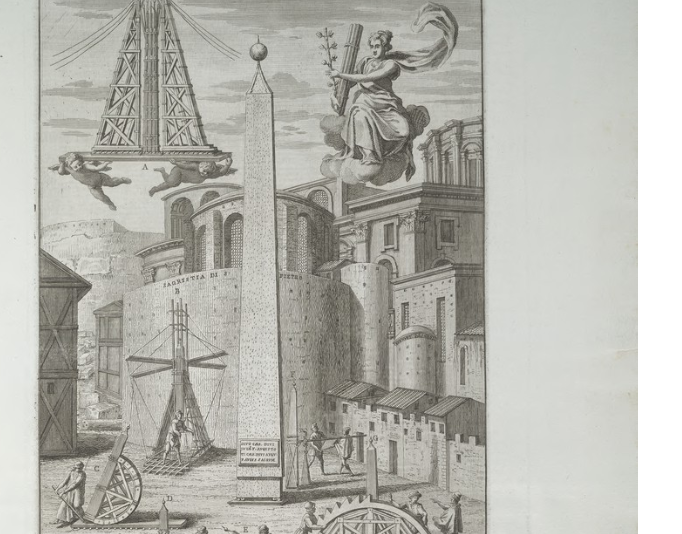
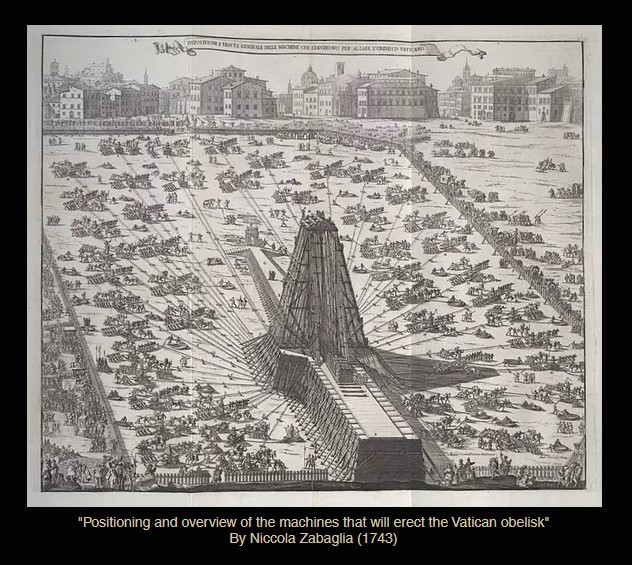
Originally raised in the Forum Iulium in Alexandria by the prefect Cornelius Gallus on Augustus' orders around 30–28 BC. No hieroglyphs. Brought to Rome by Caligula in 40 for the spina of the Vatican Circus. Relocated by Pope Sixtus V in 1586 using a method devised by Domenico Fontana; the first monumental obelisk raised in the modern period, it is the only obelisk in Rome that has not toppled since Roman times. During the Middle Ages, the gilt ball on top of the obelisk was believed to contain the ashes of Julius Caesar. Fontana later removed the ancient metal ball, now in a Rome museum, that stood atop the obelisk and found only dust.The Flaminio Obelisk
Originally from Heliopolis. Brought to Rome by Augustus in 10 BC with the Solare obelisk and erected on the spina of the Circus Maximus. Found with the Lateranense obelisk in 1587 in two pieces and erected by Pope Sixtus V in 1589. Sculptures with lion fountains were added to the base in 1818. Weighs around 235 tons.The Obelisk of Montecitorio
Note: There are a few additional smaller ones you can read about here.
To understand some of the shenanigans pertaining to these obelisks, you will have to read the linked wiki articles. They are short, but do provide enough interesting info.
Transport to London
I was not planning on putting all of the above together, so I will only present the obelisk which made its way to London in 1878. The London needle's journey is fairly well known and has plenty of pictures. Additionally, using somebody else's research is always easier.In February 1878 ‘curious sightseers’ cheered from the bridges as they beheld the equally strange spectacle of a 92-feet long, cigar-shaped iron cylinder (dubbed Cleopatra), draped in bunting, bobbing up the river Thames towards the Adelphi Steps at Victoria Embankment. No ‘seeming mermaid’ steered this craft, however, but the hoary sea dog Captain Carter. It’s precious cargo? Cleopatra’s Needle, one of a pair of obelisks erected by Pharaoh Thutmose III in c.1500 BC at Helopolis in Egypt.
The question of transportation was a problem, it was too expensive to transfer by land and the British Government did not want to get involved in any way. The solution proposed by engineer John Dixon was to encase the obelisk in great iron cylinder, 92 feet (28 m) long and 16 feet (4.9 m) in diameter.
The money was eventually paid and the William Watkins owned paddle tug Anglia (which was also built at Thames Ironworks) departed Millwall to travel to Ferrol to tow the cylinder back to the Thames. Thankfully this journey was without incident and the tug and the cylinder arrived in the Thames estuary on 21 January 1878.
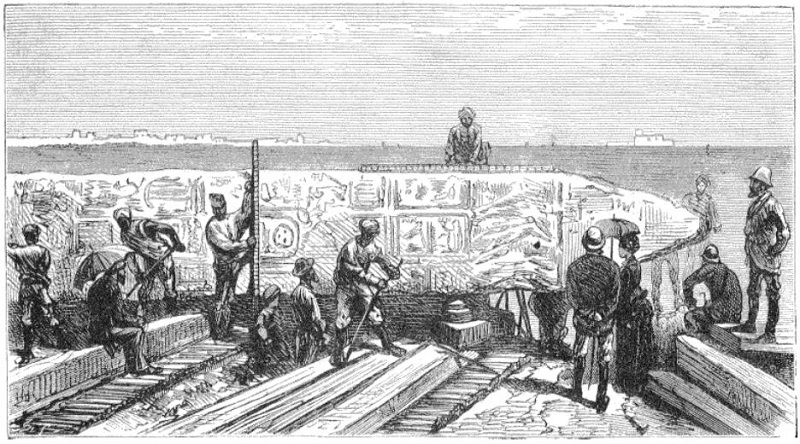
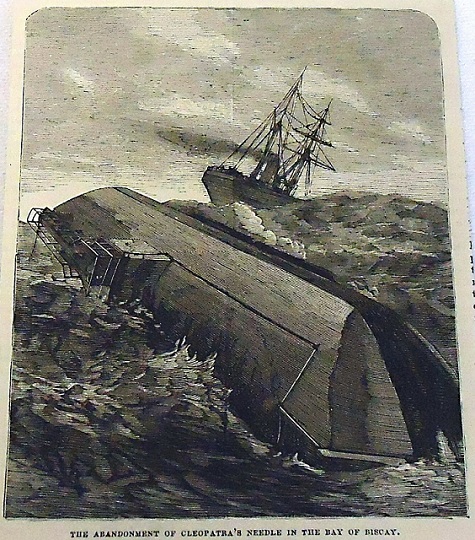
A newspaper report from The Times tells the next part of the story.
- The Cleopatra with the Alexandrian obelisk on board was safety moored on Monday afternoon in the East India Docks. Every preparation was made for her reception by Mr Aslett, superintendent of the East India Docks ; Sir William Baynes, chairman of the East and West India Dock Company; Captains Marrable and J. Hales Dutton, dock masters; and Colonel du Plat Tayior, secretary of the dock company. It was resolved to give her the ‘railway berth,’ the best in the whole dock, just opposite the superintendent’s office. There was a great crowd at Blackwall, and much enthusiasm was evinced- as the afternoon tide approached high-water point, the time for which, According to the notification at the dock gates, was 3-35. Captain Saxby had foretold that it was to have been a very high tide, but it was much checked by a south-westerly wind. It was said that the Anglia, with the Cleopatra in tow, had left Gravesend at half-past twelve, an announcement which timed out to have been a little premature, as the start thenue was not made until 1. However, not long after the Anglia, with the Needle-ship in her wake, was seen from the Blackwall Railway Pier steadily approaching. She is an iron steam tug of 140 horsepower, and has three funnels, painted black, with a red band in the middle, and hoists a red flag marked W, like all those of the fleet to which she belongs. The fleet numbers a score of these powerful iron vessels, which must not be confounded with ordinary river and coasting tugs, but often make ocean voyages, as far, for instance, as St. Helena. The form of the floating cylinder with parallel pinched ends need not be again described. She is painted buff down to her water-line, and red beneath, carrying two red flags, of which the upper one bears her name ‘Cleopatra,” the lower being a simple British merchant’s ensign. Owing to the number of vessels leaving the docks, it was close upon three before the Anglia and the Cleopatra approached the dock gates, and it was a quarter to 4 before the obelisk ship was within them. By this time the Anglia had resigned her charge to the care of the dock company’s tug Mosquito,which worked the Cleopatra safely and comfortably through the narrow entrance, and saw her to her berth, which, however, was not reached till nearly 5. Meanwhile the crowds continued to swell, and the excitement was very great. Order was admirably preserved, thanks to the arrangements of Captain Sheppey, the superintendent of the East and West India Dock Police.
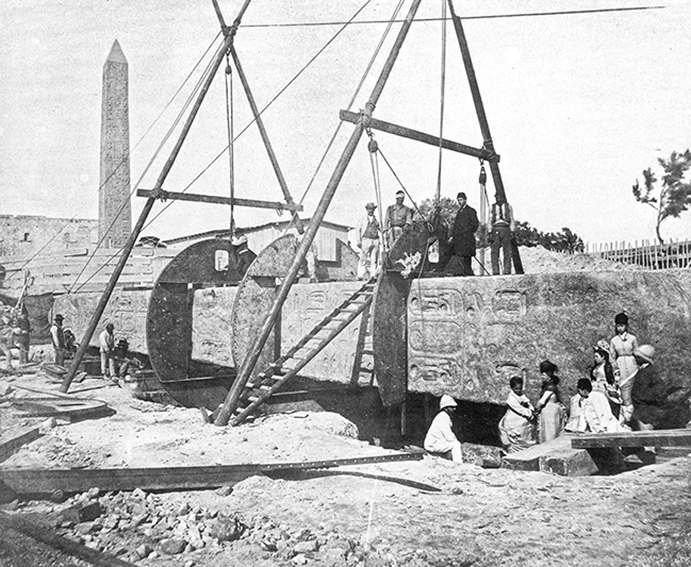
KD: If the above photograph was taken in the United Kingdom, than what is that second obelisk in the picture? Do we have an additional Egyptian obelisk in the vicinity of the Thames river?
Cleopatra - Cylinder Ship
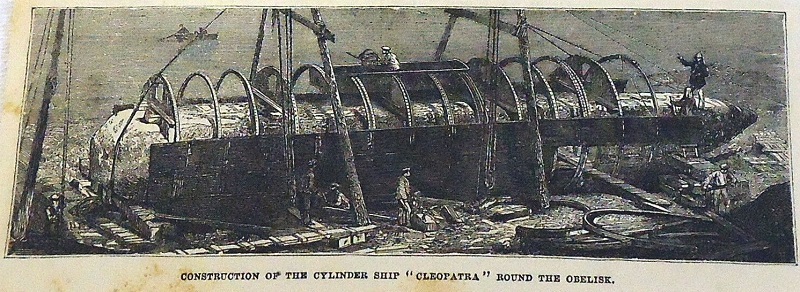
Designed by engineer John Dixon, the Cleopatra was essentially of an iron cylinder 92 feet (28 m) long and 16 feet (4.9 m) diameter containing the obelisk. It was supplemented by a bow and a vertical stern, rudder, two sidewalls, and a mast for sails to stabilise the vessel. A bridge was built to accommodate the crew.- Designed as a floating pontoon, and commanded by Captain Carter, it was to be towed to London by ship the Olga, commanded by Captain Booth.
- The cylindrical shape was a clever choice in the context of a constrained budget (private funding by some patrons). Indeed, the cylinder, made of sheet metal riveted curves was literally built around the obelisk, with circular internal partitions used as cradles for the monolith.
- Once completed , the ship looked like a primitive submarine, but its seagoing capabilities were more limited.
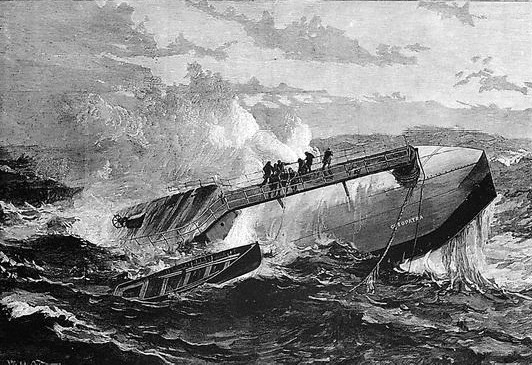
On 14 October 1877 the Cleopatra was in danger of sinking off France in the Bay of Biscay. The steam-ship towing her, the Olga, cut the towrope, and left the vessel adrift in the Bay. Five days later a ship spotted the ‘Cleopatra’ floating undamaged off the northern coast of Spain, and she was towed to the Ferrol, Galicia. There a steam-ship, the Anglia, arrived to tow her to London. They arrived at Gravesend on 21 January 1878. The Cleopatra was broken up immediately after the obelisk had been removed on 6 July 1878. The needle was positioned on the Thames Embankment, in September 1878 where it still stands.
KD: "The ship looked like a primitive submarine", and "broken up immediately" sounds rather suspicious.
- What this steamship Olga, which existed in 1877? Sure it can't be this Olga here.

Sources & Links:
- Cleopatra's Needle
- Cleopatra's Needle
- Cleopatra's Needle, London
- Cleopatra's Needle (New York City)
- Luxor Obelisk
- Obelisque de Louxor in Paris
- French corvette Sphinx (1829)
- Cleopatra's Needle and the Secret of the New York Freemasons
- Cleopatra’s Needle: John Hamill traces its masonic history
- The Strange Story of the Transportation of Cleopatra’s Needle
- Cleopatra’s Needle
- Cleopatra’s Needle
- Needles of Cleopatra
- The Pharaoh’s Obelisk
- How Cleopatra’s Needle got to Central Park
- How to Ship an Obelisk
- Obelisk Metropolis
And I have nothing but questions. All of those could be answered separately, with plausible answers, but what do we really gain from such answers?
- What's up with the obelisk infatuation exhibited by the ancient Romans and 19th century "move that obelisk" promoters?
- Obelisks are allegedly nothing but pieces of reshaped stone. Wouldn't it be easier/cheaper to produce them locally?
- Are we sure that artificial granite was not used to make those?
- If it was that troublesome to move obelisks from Egypt to wherever in the 19th century, how did they move them in 10 BC and early AD? Were they that bored?
- And once again, ancient Romans are known for building some monumental stuff. Well, at least the narrative tells us that they are. Did hey really have nothing better to do other than transporting 300 ton obelisks from Egypt to Rome?
- Did they really move those, or just presented that they did?
- Some of the images look like ultra cheep movie sets. Well, at least to me they do.
- What if obelisks were already at their final destination?
Note: This OP was recovered from the Sh.org archive.
Note: Archived Sh.org replies to this OP are included in this thread.