

- Joined
- Sep 22, 2020
- Messages
- 4,691
- Reaction score
- 1,500
St. Mary Magdalene Catholic Church in downtown Omaha turns 150 in 2018. Over the years the church has seen a lot, including the lowering of Dodge Street in the early 20th century, renovations in the late 1990s and the long-awaited addition of a steeple in 2007.
Interesting but it took only one year - 1868 - to build this "Gothic-style cathedral". One year was a normal time frame to build something like this back then. As a matter of fact, it appears somewhat slow, for Seattle did much better in 1889. I'm being sarcastic, but these are the official narratives we have.
Below is an example of over 20 feet of dirt which came from nowhere. It buried this cathedral at some unknown point in time. Our official history can not account for its appearance. The officials are not even trying to explain where the dirt came from (as far as I know). If we were to believe that the cathedral was indeed built in 1868, than somebody has some explaining to do. If the cathedral was not built in 1868, we have a totally different issue added to the mud flood one we already have.
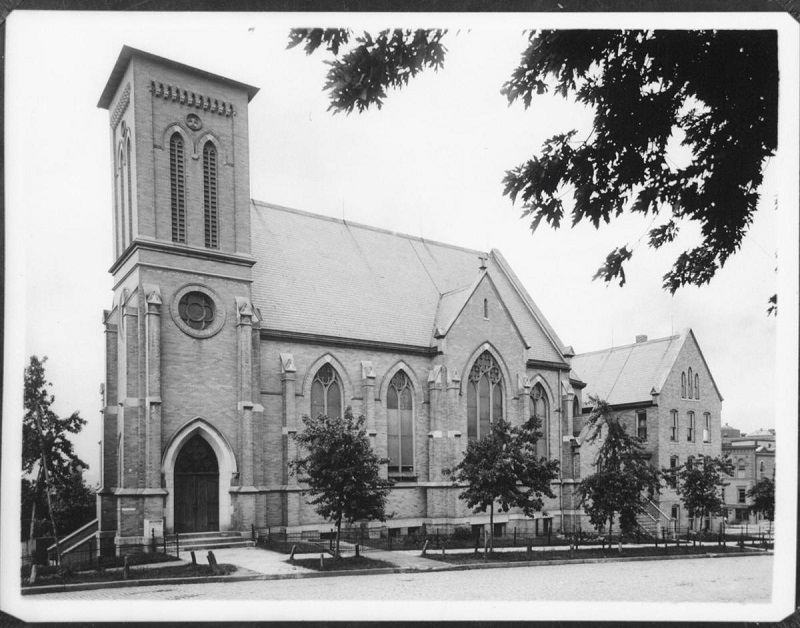
1. Omaha's St. Mary Magdalene Church before the grading project began. This photo shows the west side of the church about 1908.
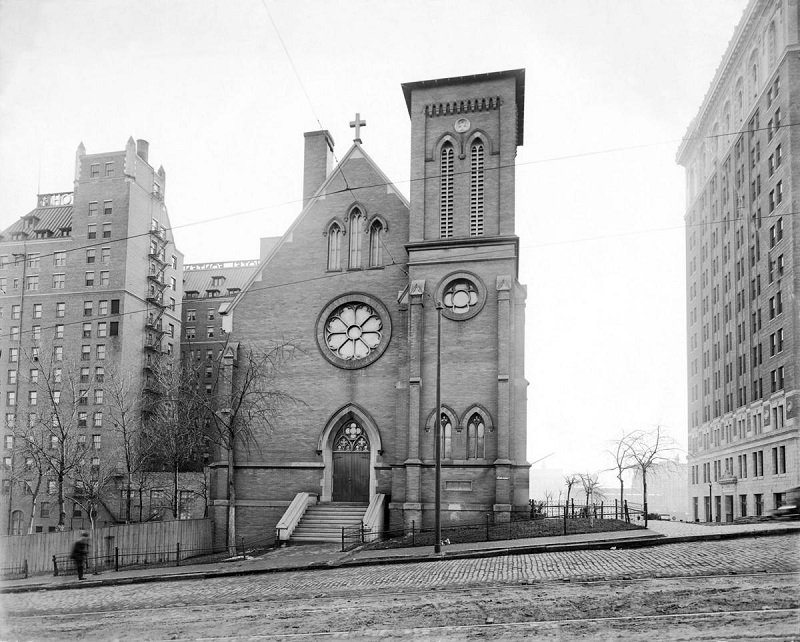
2. A view of St. Mary Magdalene before 1920 street construction.
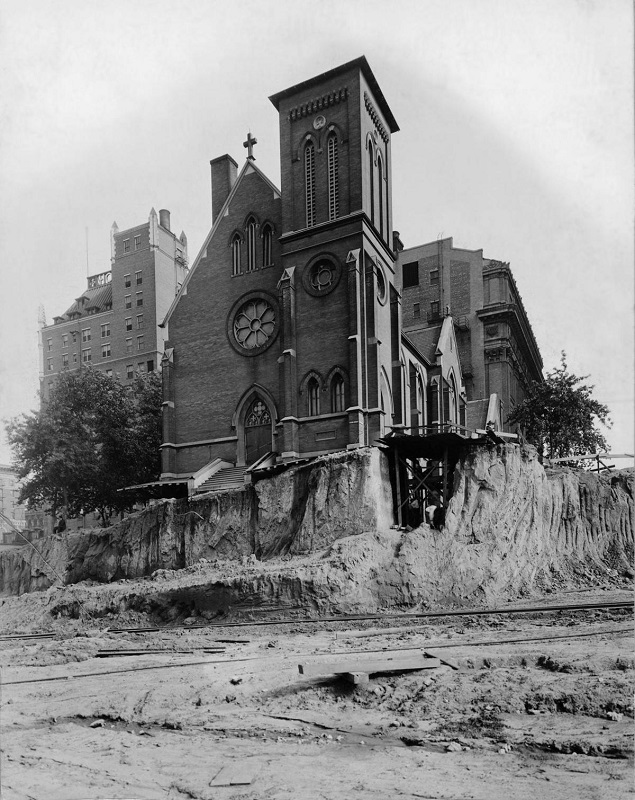
3. St. Mary Magdalene is seen during grading. The Dodge Street project cost nearly $13 million in today’s dollars, and at the time was described by the World-Herald as a “great engineering feat.”
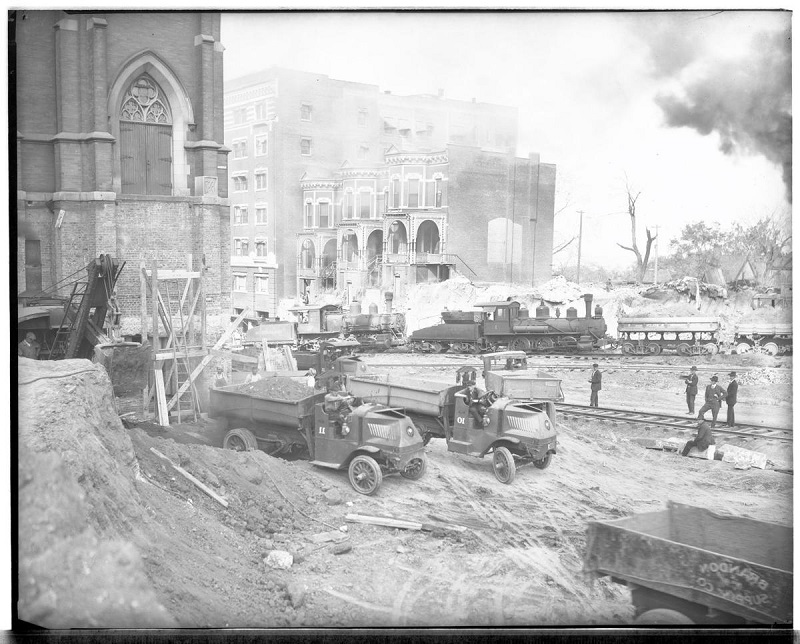
4. Crews work on the lowering of Dodge Street in front of St. Mary Magdalene Church.
5. A steam shovel removes dirt and loads it onto a hopper car during the grading of Omaha's Dodge Street near 19th Street.
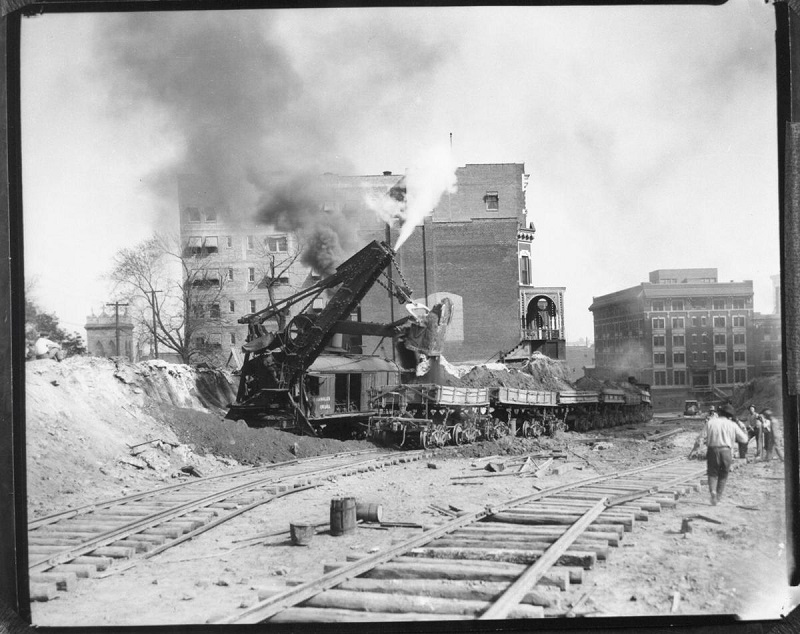
6. Steam engines and dump cars ran on special tracks to remove dirt dug out by steam-powered shovels along Dodge Street in 1920.
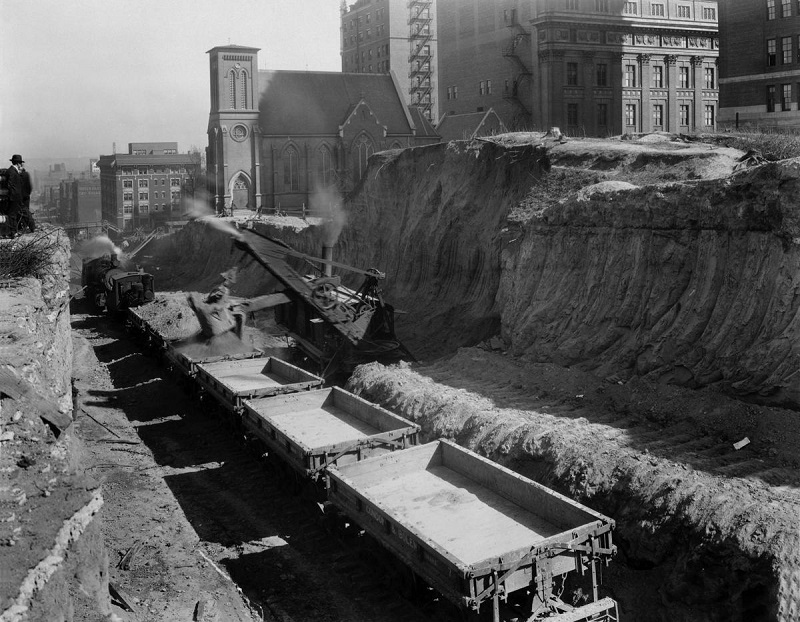
7. St. Mary Magdalene Church at 19th and Dodge Streets in Omaha during the lowering of Dodge Street. Once the earthmoving was complete, the church’s front door stood about 20 feet above Dodge.
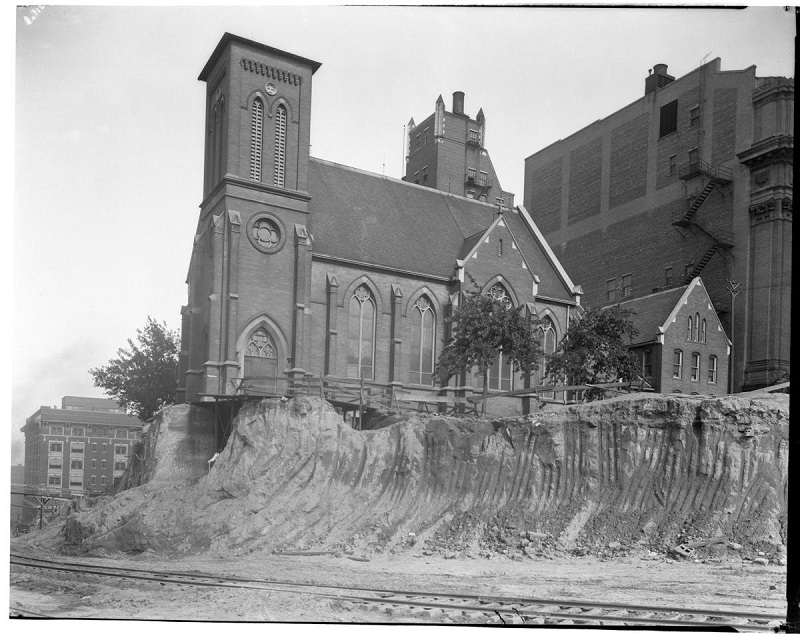
8. Omaha's St. Mary Magdalene Church at 19th and Dodge Streets during the street grading project. The workmen are building a new foundation.
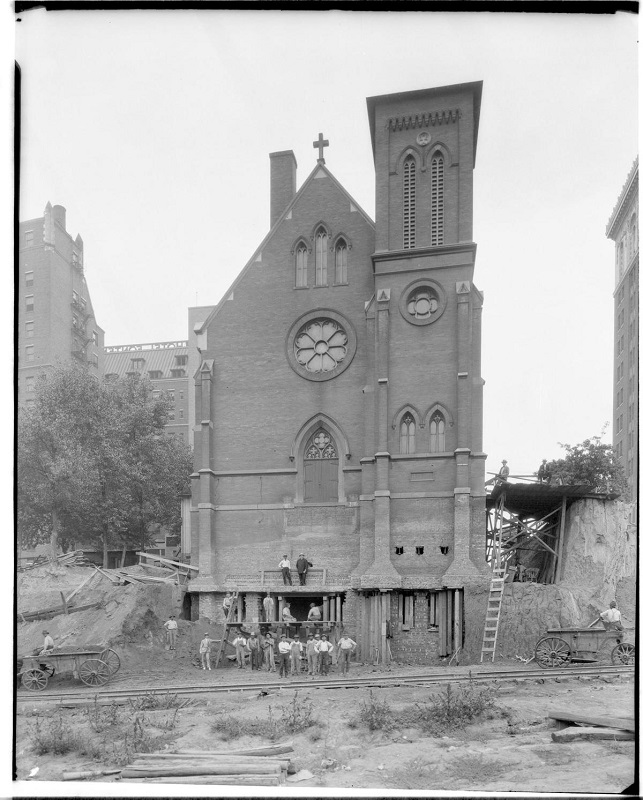
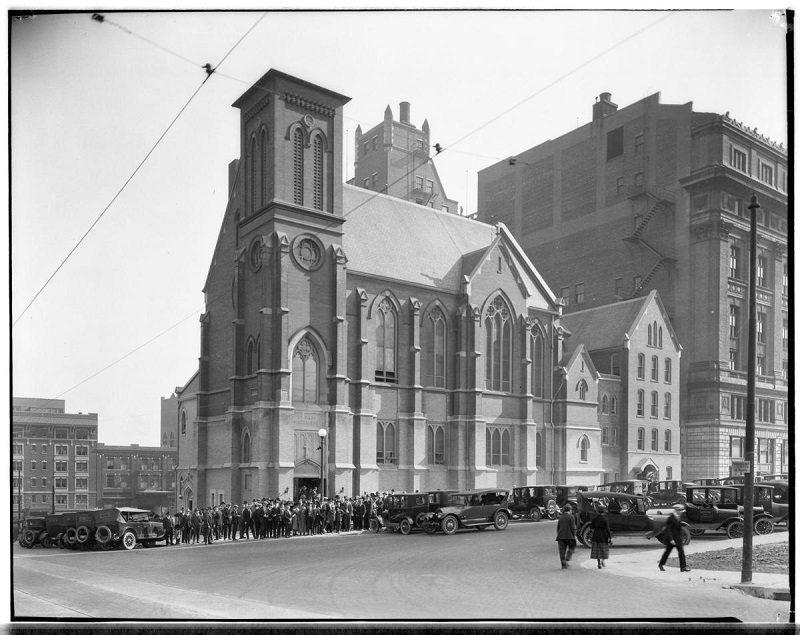
9. St. Mary Magdalene, about a year after the Dodge Street project.
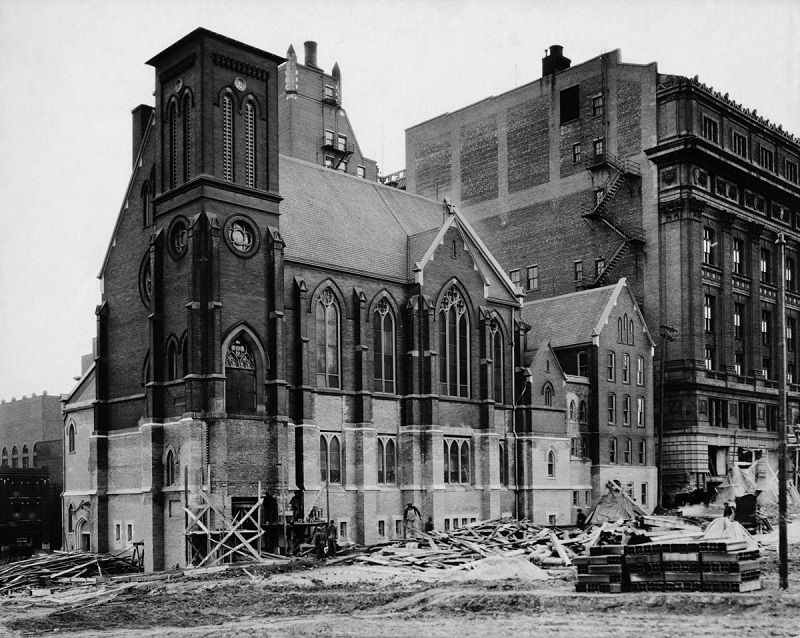
10. This photo shows the new lower level of Omaha's St. Mary Magdalene Church after the Dodge Street grading.
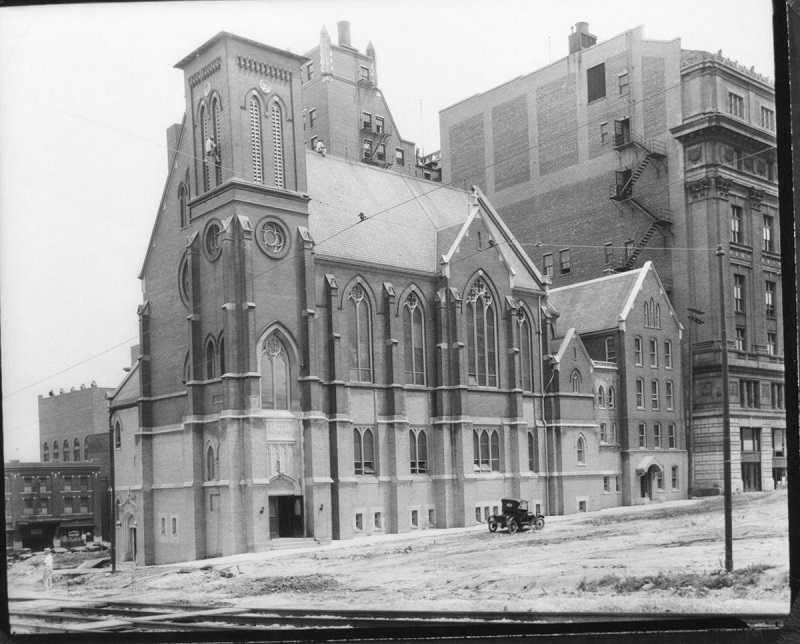
11. St. Mary Magdalene Church at 19th and Dodge Streets in Omaha after the street grading project.
Source: Photos: Downtown Omaha's St. Mary Magdalene Church through the years
* * * * *
KD: Entering a cathedral through the 3rd story window has to be somehow explained. Where is that explanation?

Next time you walk by a building with half-sunk windows like above, remember this cathedral. There could be three buried stories beneath your feet.
Interesting but it took only one year - 1868 - to build this "Gothic-style cathedral". One year was a normal time frame to build something like this back then. As a matter of fact, it appears somewhat slow, for Seattle did much better in 1889. I'm being sarcastic, but these are the official narratives we have.
The Dirt
Below is an example of over 20 feet of dirt which came from nowhere. It buried this cathedral at some unknown point in time. Our official history can not account for its appearance. The officials are not even trying to explain where the dirt came from (as far as I know). If we were to believe that the cathedral was indeed built in 1868, than somebody has some explaining to do. If the cathedral was not built in 1868, we have a totally different issue added to the mud flood one we already have.
St. Mary Magdalene Catholic Church
Omaha, Nebraska
Omaha, Nebraska
1. Omaha's St. Mary Magdalene Church before the grading project began. This photo shows the west side of the church about 1908.
* * * * *
Note: This OP was recovered from the KeeperOfTheKnowledge archive.
Note: Archived SH.org replies to this OP: Omaha Mud Flood: St. Mary Magdalene Church 1920 transformation


