SH Archive Our civilization did not build Titanic, Olympic or Britannic. Theirs did. Was it the Tartarian one?

SH.org OP Username
KorbenDallas
SH.org OP Date
2018-06-25 09:07:58
SH.org Reaction Score
76
SH.org Reply Count
19
Note: This post was recovered from the Sh.org archive.
Username: ISeenItFirst
Date: 2018-08-12 00:29:20
Reaction Score: 1
It seemed a lot of presumption based on modern interpretation to me, not evaluation of the evidence provided.
 
Note: This post was recovered from the Sh.org archive.
Username: KorbenDallas
Date: 2018-08-12 00:36:50
Reaction Score: 13
All this just proves one more time that we have some major substitution activities done to our reality. All that Industrial Revolution is a bunch of baloney.

Historians took out may be up to one thousand years of technological development, and replaced those with some bogus one thousand years of pre-renaissance epoc. Than they crammed all the centuries of development into this Industrial Revolution nonsense. And in the process something wiped out like 90% of the world population.

Great.
 
Note: This post was recovered from the Sh.org archive.
Username: Username
Date: 2018-08-14 22:34:27
Reaction Score: 5
Brazing is a very old technique and requires much lower temperature than welding and just heat, flux, and filler metals. Is it possible the panels on the lower hull could have been brazed? I'd be more inclined to believe that before super glue. I don't believe the invisible rivets theory after looking at the high res images.

The only problem there would be that it doesn't hold as strongly and is much more susceptible to cracking with repeated flexing as I'd imagine the hull of the largest ship built would be subjected to. Lining up the huge panels well enough that their seams would be able to be brazed also seems troublesome.

Maybe they're bonded to the structural panels beneath that are actually riveted to the structure? Very strange.
 
Note: This post was recovered from the Sh.org archive.
Username: KorbenDallas
Date: 2018-08-14 22:43:21
Reaction Score: 7
Apparently in 1868 they already had some sort of a welding technique. Somehow it’s not being too advertised. Took it here.

I start thinking that whoever started building the Titanic were not the same people who finished and launched it. As in it has both welded and riveted portions.

Hence the construction pictures missing any progression. We just have the keel laying and immediately the almost complete hull.

May be that could also explain why they also did not really know how to handle these 3.
 
Note: This post was recovered from the Sh.org archive.
Username: Username
Date: 2018-08-14 22:58:48
Reaction Score: 6
If I'm understanding that diagram, to me, that welding contraption makes sense - it's basically forge welding, which is something we've also (officially) been doing a long time. The application for tubes makes sense, too, since you would run them through the forge and into the (cold, harder) rollers. It actually reminds me of hypodermic needle production where the tubing is drawn down.

Unless we find a gigantic forge and press, that method is a hard sell for shipbuilding.

I like your idea on why they wrecked. Hell, maybe they did try something novel and it fell apart as mentioned earlier. Though, didn't the (official) Olympic hold together through repurposing in a WW or two?
 
Note: This post was recovered from the Sh.org archive.
Username: ISeenItFirst
Date: 2018-08-14 23:15:02
Reaction Score: 5
From what I've found, the forge isn't in question, really. The steel panels showed up all one size, and were shaped and cut on site with rollers and steam shears respectfully.
And they used rivits. Officially of course

In Weak Rivets, a Possible Key to Titanic’s Doom
 
Note: This post was recovered from the Sh.org archive.
Username: KorbenDallas
Date: 2018-08-14 23:18:40
Reaction Score: 3
20 some years for Olympic is not that much. We were somewhat convinced that 25-30 years was a good service time for a large ship, but was it really for those ships?

I have a 100+ year old ship which is still in service, I plan on putting up a little article on one of these days.
Besides, after writing this article we ran into the same issue with 1860s-70s ironclads.
 
Note: This post was recovered from the Sh.org archive.
Username: Username
Date: 2018-08-14 23:40:51
Reaction Score: 3
What I meant was a forge and press large enough to weld those panels together. At the time of manufacture, I'm sure it was bar or plate that was rolled to the desired thickness, but you're going to need a forge large enough to make the entirety of the "invisible rivet" hull and a press with dies the shape of the hull if you intend to weld it together in the same way as that pipe welder KD posted. I just don't see that happening.
Honestly, I hadn't bothered looking it up before making the comment as I was almost positive it was used until the late 50's-mid 60's. You're totally right - that seems like extraordinarily short service. I'll have to take a look at the ironclads as I'm pretty unfamiliar with them. I'm also much more familiar with steel than iron working, so I'd have to educate myself before I could go one way or the other. I remember there not being much available info on the ironclads when I was interested in them a few years back.
 
Note: This post was recovered from the Sh.org archive.
Username: jd755
Date: 2019-01-17 20:20:20
Reaction Score: 1
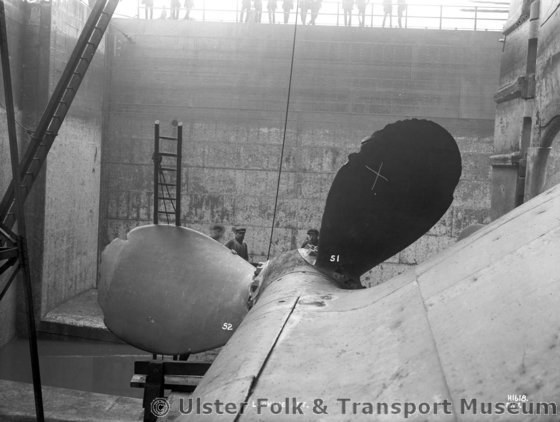
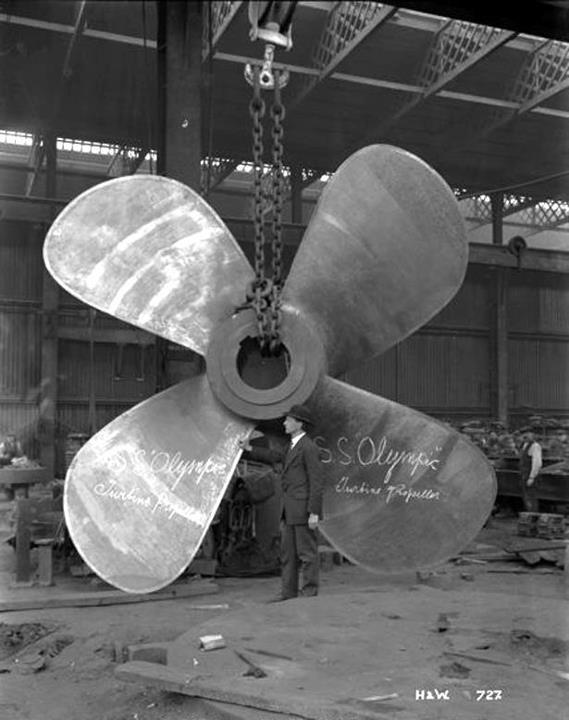
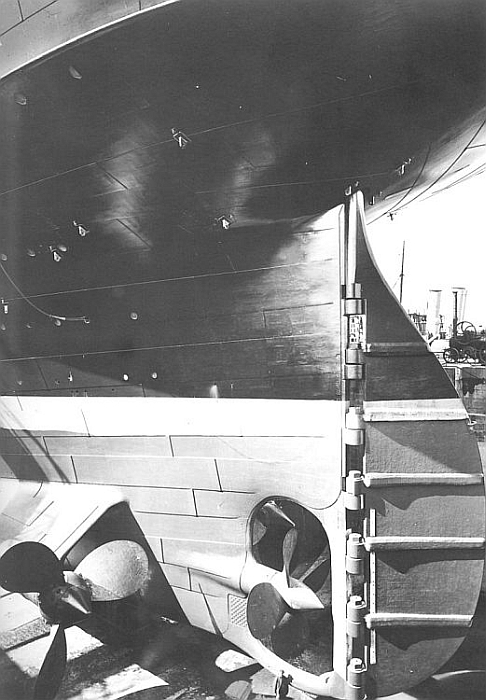
here is a picture with this description
"This one is from October 1911 after the Hawke collision. The blades of the starboard prop were damaged. The shaft also got damaged and had to be replaced."
I'll keep digging might find a clearer picture.

rivets.jpg

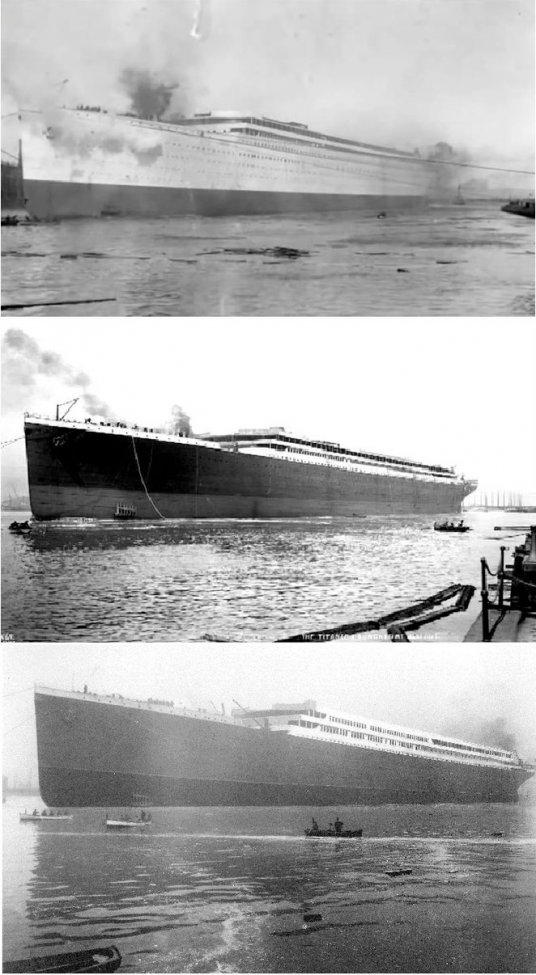
Fascinating pictures.
Olympic
Titanic
Brittanic

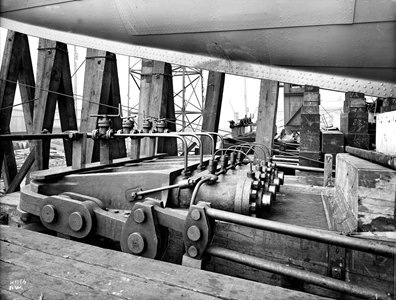
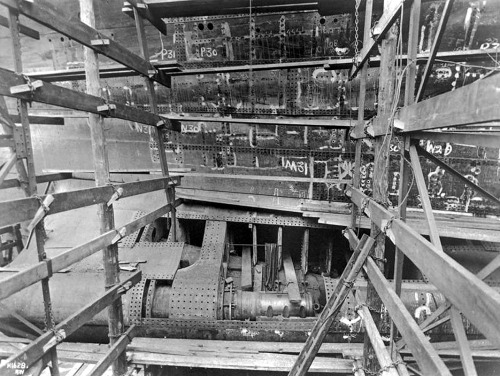
From this this site we get this very clear picture of what the caption says is titanics launch rams and the keel and plating are literally awash with rivets.

rivet.jpg

compare that images quality with this one

peeps.jpg

something is off with the people picture.
And something is definitely off with this one as it is brittanics launch cradle in view see here
but she was built on the adjacent slip

which ship.jpg
 
Note: This post was recovered from the Sh.org archive.
Username: Seeker 101
Date: 2019-01-25 04:13:26
Reaction Score: 3
I think you may have searched variable pitch propeller, if you to the search boat or ship you would have found this: "In 1835, two inventors in Britain, John Ericsson and Francis Pettit Smith, began working separately on the problem. Smith was first to take out a screw propeller patent on 31 May, while Ericsson, a gifted Swedish engineer then working in Britain, filed his patent six weeks later." Wikipedia.

The 3 vs 4 on the Titanic, the outboard screws are 3 bladed the inner/center one is 4 bladed and was driven by the exhaust steam turbine, which strangely enough worked at a negative pressure because the condenser was next in the chain of using up all the power of steam.
I think you would find that the cost of running/fueling these class of ships was the issue. Not much efficiancy was the problem and signed their demise. Pretty much already outdated when launched. All those boilers, all those men working 3 shifts for the entirety of the voyage. Oil was just around the corner and easily trumped coal.
Flush riveting is what was used below the water line to reduce drag. Raised rivets are cheaper because they don't need countersinking. That's why, in all the upper work we can see rivets. Don't forget that there several layers of protective paint that blurs the countersunk rivets. They can be discerned in some of the photos taken under the hull during construction but in later photos, they look smooth as more paint has been added.

I agree there is something 'off' with many photos. Counting the holes along the bow in the white area, I come up with 14 in some photos and 15-16 in others. Toward the rear of this front section there are two holes close together, then normal spacing, then two more close but in other shots they aren't there! Hmmm? Elsewhere, someone admits that news agencies regularly swapped Olympic and Titanic photos and film. Many discrepancies and much has been written. As for the propeller replacement for the Olympic, it was taken from the Titanic as it wasn't ready to be launched and they had time to cast a new one. That's why it's on the sunken wreck as the wreck is the broken, terminally crippled Olympic. There's also repairs that are self evident on the hull side of the "Titanic" as it leaves for NY. Around the stern region on the interior, there is a strengthening frame that has been put in to support the terminally weakened keel. Also seen in the wreck along with these, is the missing letters on the bow that reveal I think the letter 'M' and one other from 'Olympic'!! Oh, and the name, is stuck on the hull whereas they are a part of the plate work in other earlier photos.
 
Note: This post was recovered from the Sh.org archive.
Username: ISeenItFirst
Date: 2019-01-25 13:36:26
Reaction Score: 3
It's not any old screw prop I was interested in. If you look at these ships pictures, the angle of each blade could be changed making it a VARIABLE Pitch propeller. That's what I was looking for in the bit you quoted. I found it with planes, but not with ships, which makes sense from a tech development standpoint, bit doesn't explain why these ships have them.

I would add that it wasn't just news agencies. White Star Lines themseleves used the images of the ships interchangeably in their marketing materials as well.
 
Note: This post was recovered from the Sh.org archive.
Username: jd755
Date: 2019-01-25 16:08:15
Reaction Score: 2
Well searching for propellor pictures of the three ships produces a mismash of pictures to the extent its not possible to say which ship is which save to say pictures of brittanics propellors are as rare as hens teeth.
However these are interesting nevertheless.
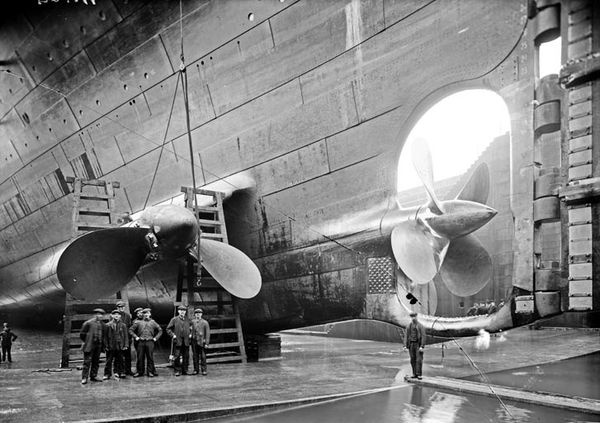
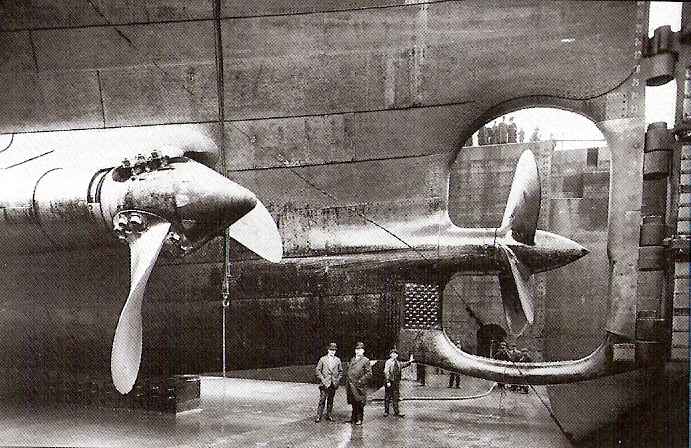
Captioned titanic
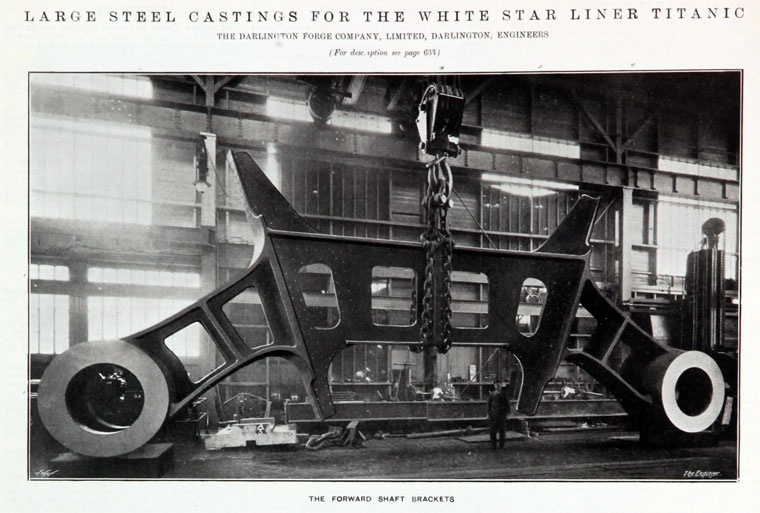
The outer pair are four piece construction the middle one is a one piece casting.
31fd757bfc42075a80959f7918e4fec5.jpg

This one is captioned
"Damage to RMS Olympic Propeller Blade Feburay 1912"

Damage to RMS Olympic Propeller Blade Feburay 1912 jpg.jpg

SS olypic turbine propellor. A single casting pictured in the foundry.

olympic_s_propeller_by_121199-d97u7jd.jpg

Repairs to olympic after the collision with the cruiser HMS hawke. Rivets.

tumblr_maosbu4QeE1qmyxbjo7_500.jpg

more pictures here

This might be interesting but I don't have an account. View by Archives

Im1909V108-p636a.jpg

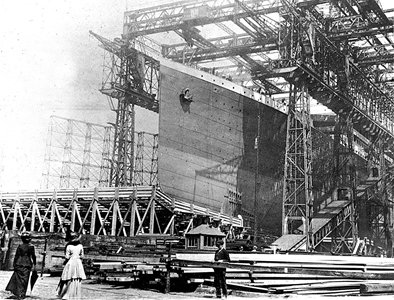
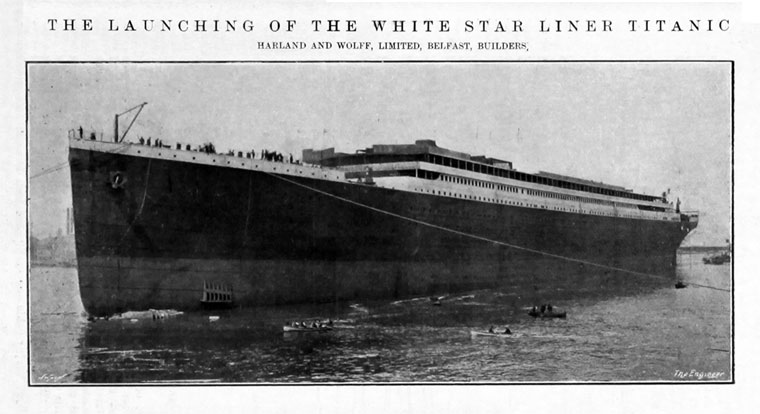
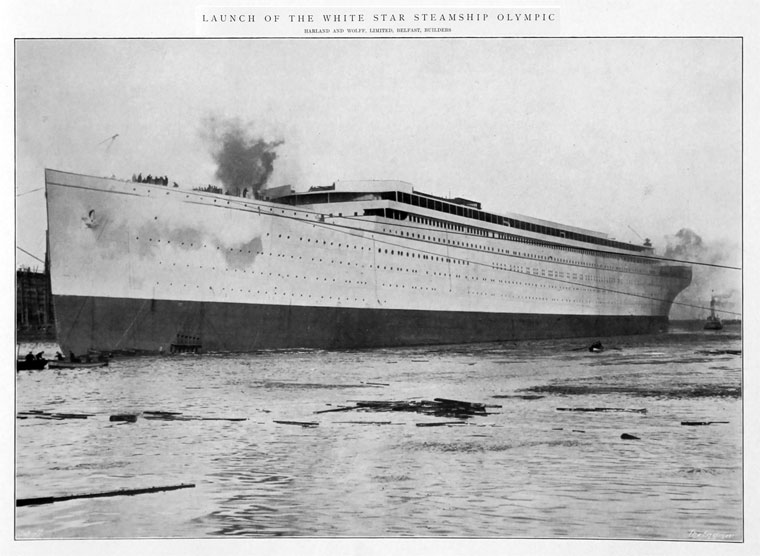
These three make no sense.
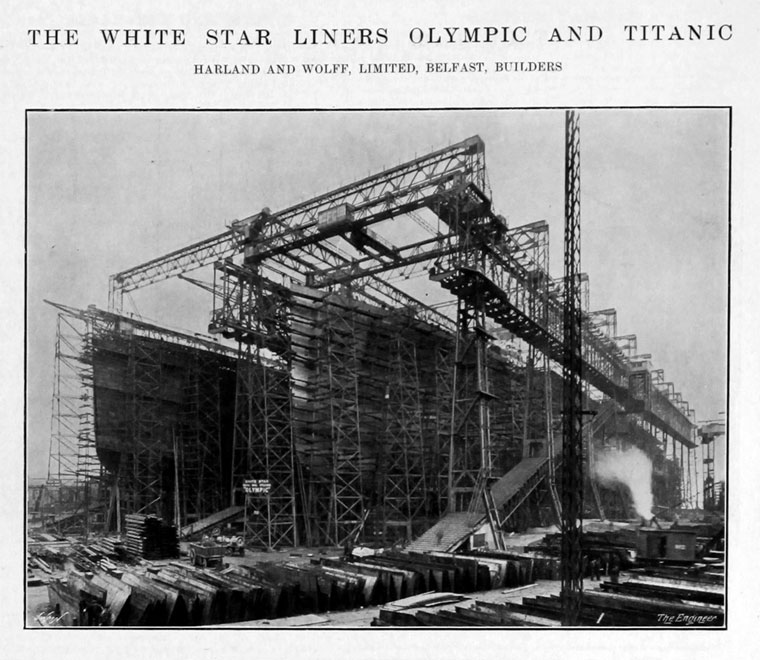
The first is the Titanic on the far slip olympic on the nearest.
The second is the Olympic launch.
The third is the Titanic launch.
Look at the differences in the size of the buildings behind the ships. The buildings show the Olympic as being nearer the shore at launch yet she was launched from the slip furthest away.
1.jpg3.jpg
2.jpg
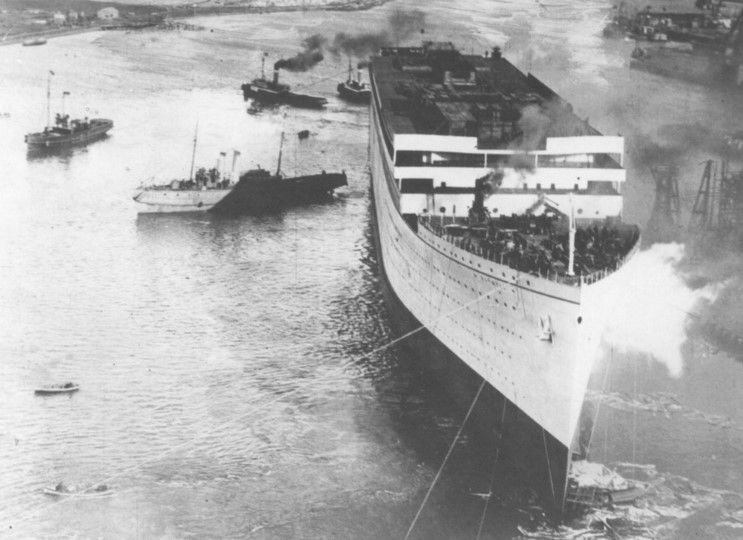
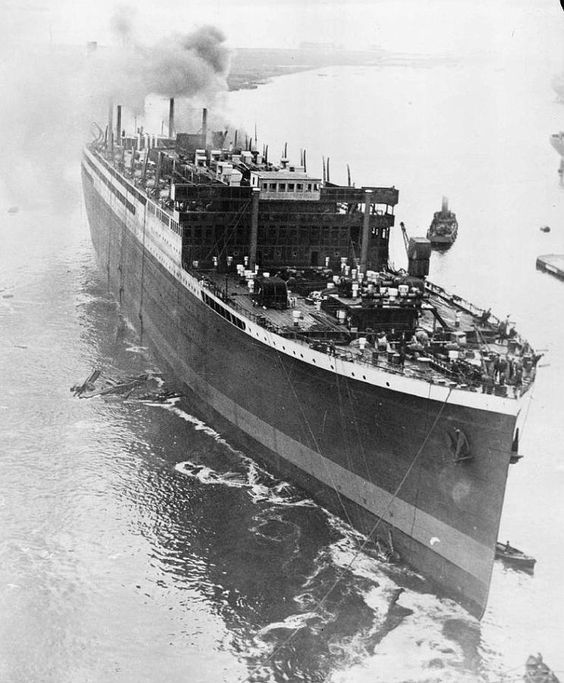
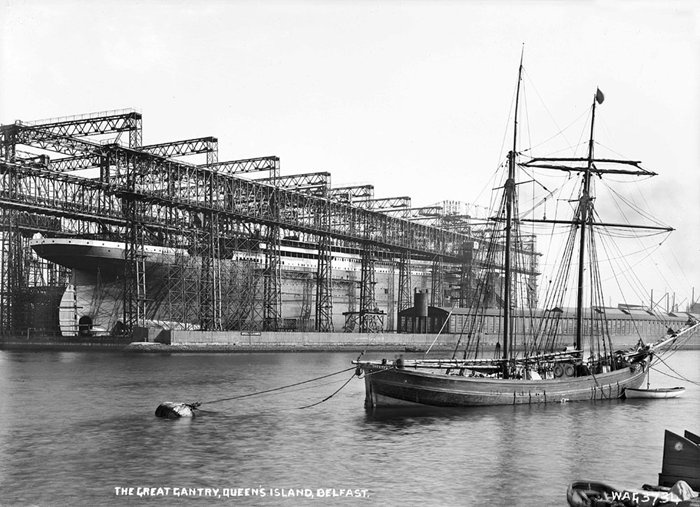
This two are pictures from the great gantry looking down on the launch of first olympic and then brittanic. These ships were built on the same slipway but look at their position relative to the dockside to their right.
If that is the brittanic she has gone down number one slip not number two, the one olympic went down. There appears to be no pictures of titanics launch taken from the great gantry.

4.jpg
5.jpg

All 'three'? launches in one picture clear as mud.

6.jpg

Titanic/brittanic on number one slip.
7.jpg
 
Note: This post was recovered from the Sh.org archive.
Username: Seeker 101
Date: 2019-01-28 13:37:49
Reaction Score: 1
Sorry, I missed the words 'were to add' in my opening line, it should have read; "I think you may have searched variable pitch propeller, if you [were to add] to the search, boat or ship you would have found this: "In 1835, two inventors in Britain, John Ericsson and Francis Pettit Smith,..." They weren't inventing any old screw prop. Isn't 1835 early enough for a variable pitch ship propeller? I'd have thought the time between invention and practical application would be enough, or did you misinterpret my find on variable pitch ship props?
 
Note: This post was recovered from the Sh.org archive.
Username: ISeenItFirst
Date: 2019-01-28 18:41:24
Reaction Score: 1
Maybe I did not look close enough. When I looked at their invention it appeared a normal screw prop. Seemed fitting as about the time we go from wind and oars to other power. I'll have to check again.

Ok, having checked again, I cannot find anything in the official history of screw propellers, or anything in their patent designs, stories or history that would indicate a variable pitch propeller. Maybe you can show me what your looking at?

Either way, having bolted on blades does not necessarily make these VPPs. So it isn't proof of anything, but if these could be shown definitively to be VPPs, I think it would be safe to say they were well ahead of their time.
 
Note: This post was recovered from the Sh.org archive.
Username: jd755
Date: 2019-01-28 20:01:16
Reaction Score: 2
Amy help ? The mystery of Titanic's central propeller
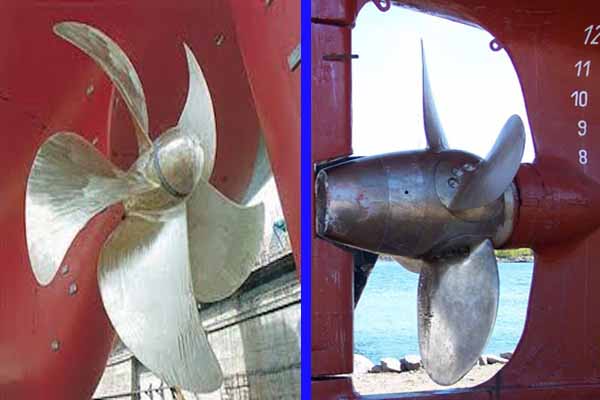
This picture puts both types side by side on two modern ships.

cppfpp.jpg


The author of this site makes a good case for variable pitch propellors being useful on ships carrying a lot of fuel which these three (though my current feeling is there were only ever two Olympic and Titannic/Brittanic).

Controllable Pitch Propellers
 
Note: This post was recovered from the Sh.org archive.
Username: ISeenItFirst
Date: 2019-01-28 20:19:22
Reaction Score: 1
Right. The prop in question had bolted on blades like the VPP on the right. It is unclear whether they were capable of changing pitch, or were just bolted together.

It seems officially this was the time we went from using what was little more than an Archimedes screw to using more what we consider a propeller today. One of these gents even changed his patent, when he accidentally knocked a blade off his wooden propeller and it doubled his speed. So while they were toying with the ideas of pitch and blade number, they were a ways off from a true variable pitch propeller.

It makes a huge difference in propeller aircraft, because it allows you to modulate your thrust, without changing your engine rpm. This is not as big a consideration with a large ship. When I searched the history of such props it seemed they originated in aircraft market, where stalling an engine means fiery death instead of floating around until you restart. They surely did find their way into ships, but I can't find any older than the ones in planes.

I found it interesting because I always imagined the power they were originally used would have properties much more advantageous to a variable pitch, but that is still a reach. If their power plants ran at a constant rpm, I just don't know.
 
Note: This post was recovered from the Sh.org archive.
Username: jd755
Date: 2019-01-28 22:26:35
Reaction Score: 3
Found another picture from here. An interesting set of three pages discussing the build and careers of the ships not least the fact that despite appearing to be british ships the ultimate holding company was american.

Said to be olympics propellers but really no way to know.

Olympic-Fit-out-HW-drydock.jpg
 
Note: This post was recovered from the Sh.org archive.
Username: Seeker 101
Date: 2019-01-29 04:48:26
Reaction Score: 1
It seems I owe an apology, you are correct. In my late night haste, I took Google's listing as gospel. Oops. And, yes, there appears to be no acknowledged inventor of the VPP or CPP for boats. There is in our state public library, a large and wondrous old book on the White Star Line trio of ships that I can remember poring over for hours as a 14 year old. Gosh, that's a long time ago. It has many detailed drawings of the engines. I shall make it my mission to get there when in the big smoke and see if it's still in the archives. Great photo finds by the way.
 
Note: This post was recovered from the Sh.org archive.
Username: ISeenItFirst
Date: 2019-01-29 06:02:16
Reaction Score: 1
You owe nothing. That's what we're here for. I can't take credit for any photos, I am mostly on mobile, so don't link or upload much, and if I did, I sure didn't put much work into it.

I found it odd no inventor listed for that as well. I put it down to the reasons I listed above. Maybe someone had something like it on a boat sometime previous, but if necessity is the mother of invention, VPP is aircraft's baby. It solves many problems with aircraft that never were much an issue with ships, and the amount of force involved has got to be orders of magnitude higher, making material science and mechanical engineering considerations far more difficult as well. Which is why I latched onto it as a possible anachronism.

I can't even imagine how it is done now in big ships, despite having a pretty good understanding of how it is done with helicopters (I do RC).

Of course, absent any further evidence, Occam would suggest they just bolted the blades on so they could be replaced more easily if damaged.
Despite some of the photos (particularly the 3bladed side props) looking mighty similar to modern VPPs, I think it would be tough to make any inroads against the official story in this regard.

See what you can find in that book, might be some clues. Take a look at the difference between a standard prop drive shaft and a vpp shaft and see if the book let's any secrets through. A VPP shaft will have some additional mechanisms for adjusting blade pitch.

Speaking of which, those side blades on the pic above look to have a really aggressive pitch on them. Seems excessive but I have no idea how the 3 prop design is meant to work.
 
Tips
Tips
Please respect our Posting Rules.
Back
Top