I like the Olympic video, great find. The chap gives no indication that the 3 bladed props are variable. I feel that if they were, he would say something. The "Mystery of the Titanic's central propeller" page also gives no indication of a variable prop, except to confirm that it can be altered in dry dock.
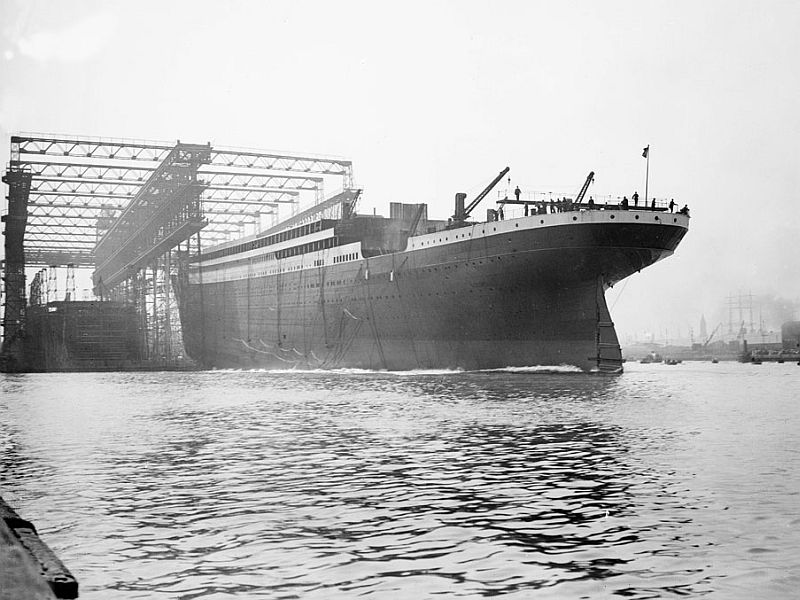
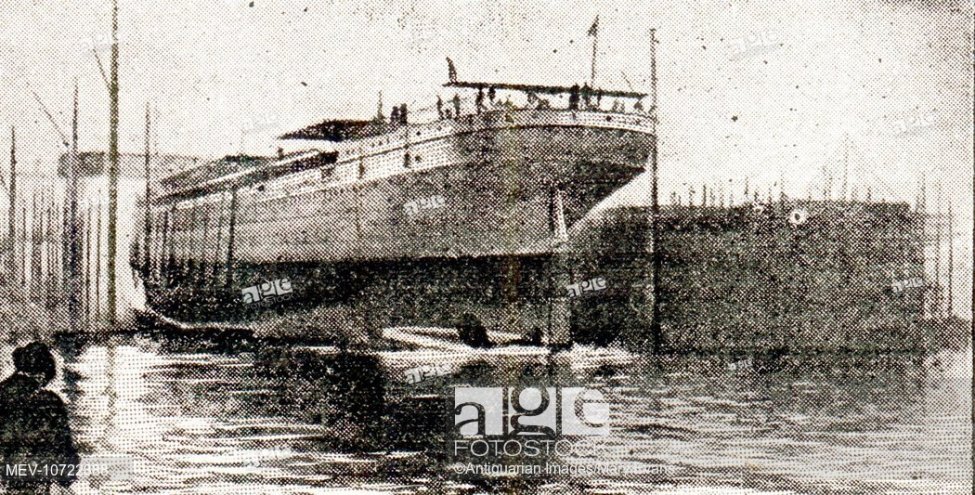
Titanic being launched. Note the ship under construction on the inboard slip, the one vacated by Olympic.
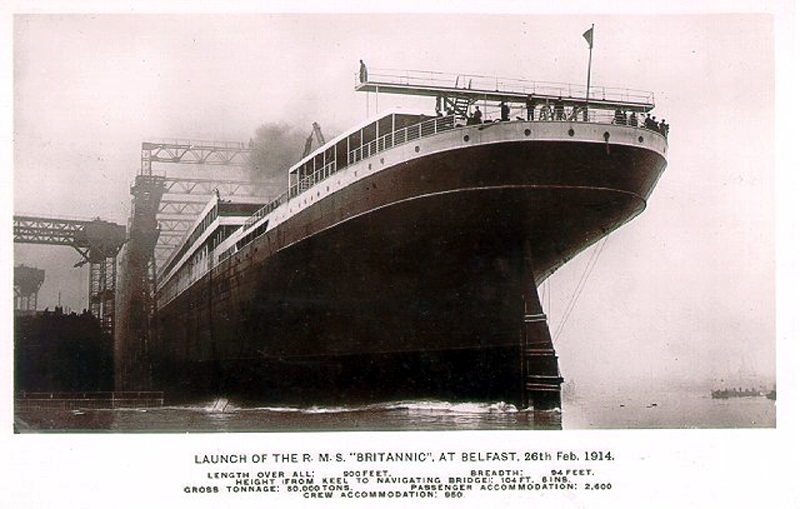
And this is said to be Brittanic but again note the ship under construction on the inboard slip (the same ship?) which reveals that titanic/brittanic went down the outboard slip not the inboard one which olympic went down/
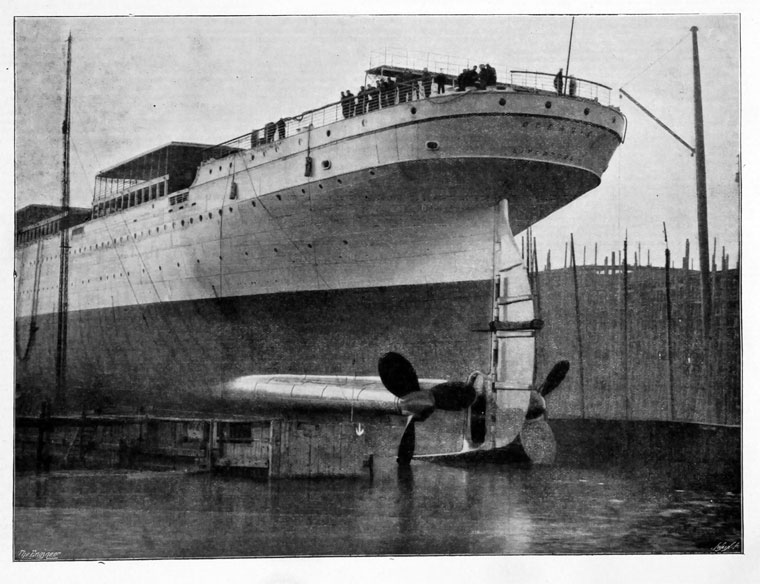
This one is said to be Brittanic ready to launch and yet her hull looks very light in colour and there is another Olympic class ship on the outboard slip where titanic was supposedly constructed. Why was Olympic the only one launched with her name and home port on the stern?
Really does feel to me that this whole three ship class is utter nonsense and there were only ever meant to be two right from the get go.
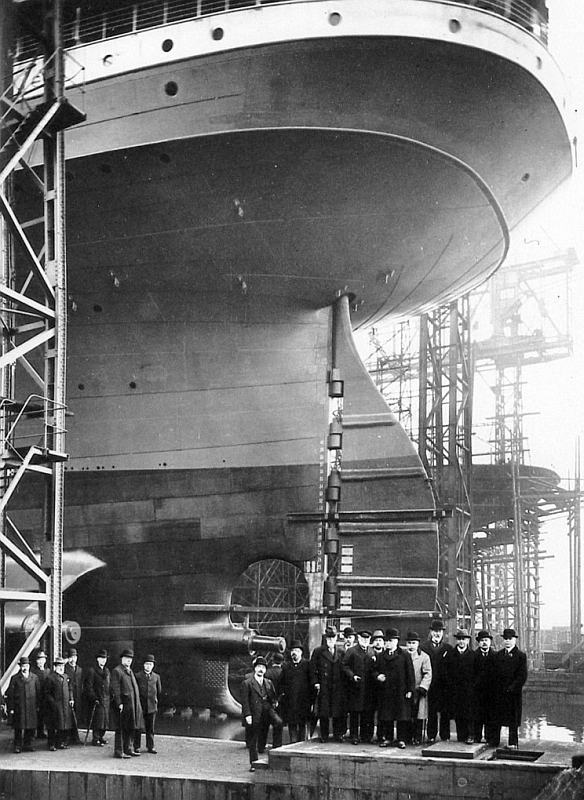
The picture above has to be one from the launch of olympic. That is titanic/brittannic in the background and the bloke in the cap in the foreground is captain smith the man who 'died' when titanic 'sank'. He wasn't 'around' for 'brittanics launch'. Bruce Ismay is not in that photograph, odd.
I like the Olympic video, great find. The chap gives no indication that the 3 bladed props are variable. I feel that if they were, he would say something. The "Mystery of the Titanic's central propeller" page also gives no indication of a variable prop, except to confirm that it can be altered in dry dock.
Yeah, and them being adjustable that way is one thing, and still seems ahead of its time, but a true VPP, one that could be changed during operation, would be a clear smoking smoking gun of future tech at the time. I'm not sure either way.
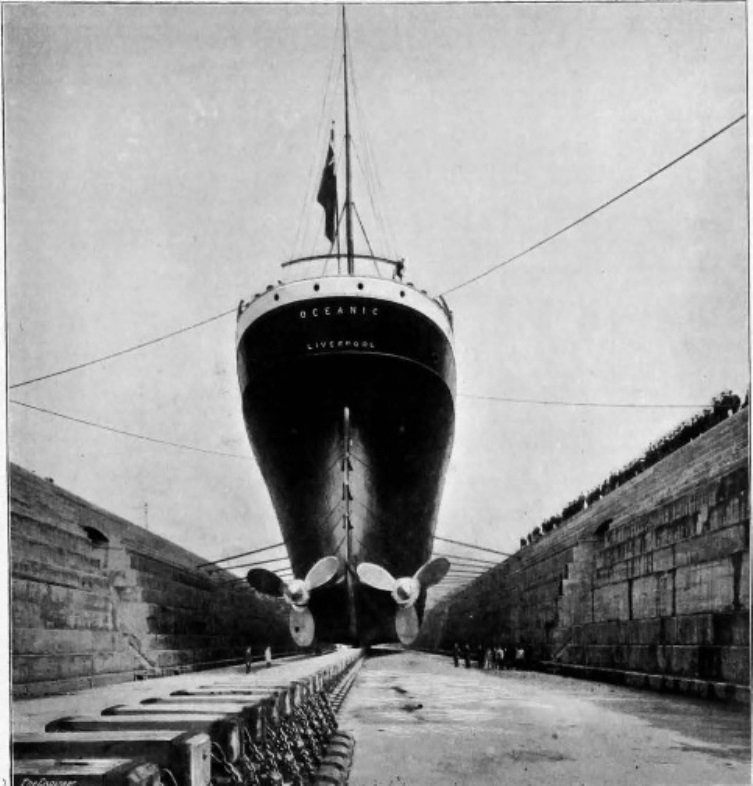
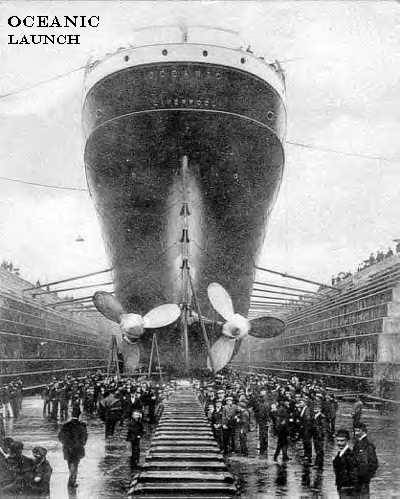
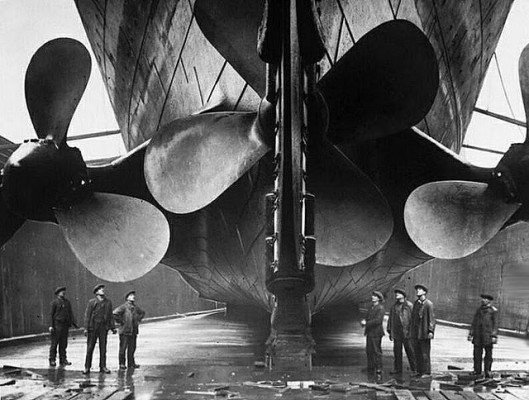
In search of more popellor images from Olympics predecessor class and found these the size of the propellors compred to the size of the hull in these two classes of ships make no sense to me.
First said to be Oceanic launched 1899 with her propellors already in place.
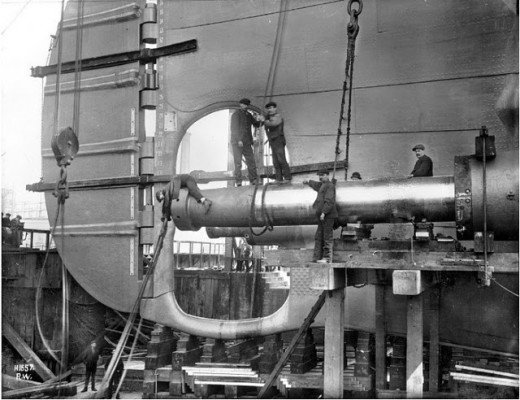
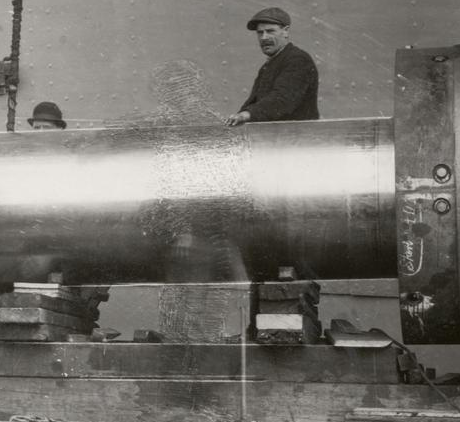
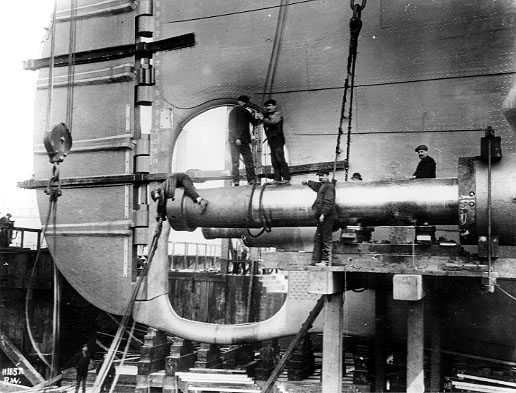
Titanic now "In this remarkable photograph, taken in May 1911, shipyard men are fitting Titanic’s starboard tail shaft."
Not if this link is correct, would certainly make more sense. "subject : view of workmen putting in the tail shaft on the 'Olympic';not an original Welch print. Condition : good"
Said to be Titanic again this time with her props on.
The thing that nags at me is why there are so few pictures tagged Olympic when she was first of class, brand new and innovative in comparison to the numbers claimed to be Titanic and as for Brittanic well there are fewer of her than there are of Olympic.
Also I have yet to find any images of Bruce Ismay attending Olympics launch. He isn't in that launch party picture way up the thread which I find odd to say the least.
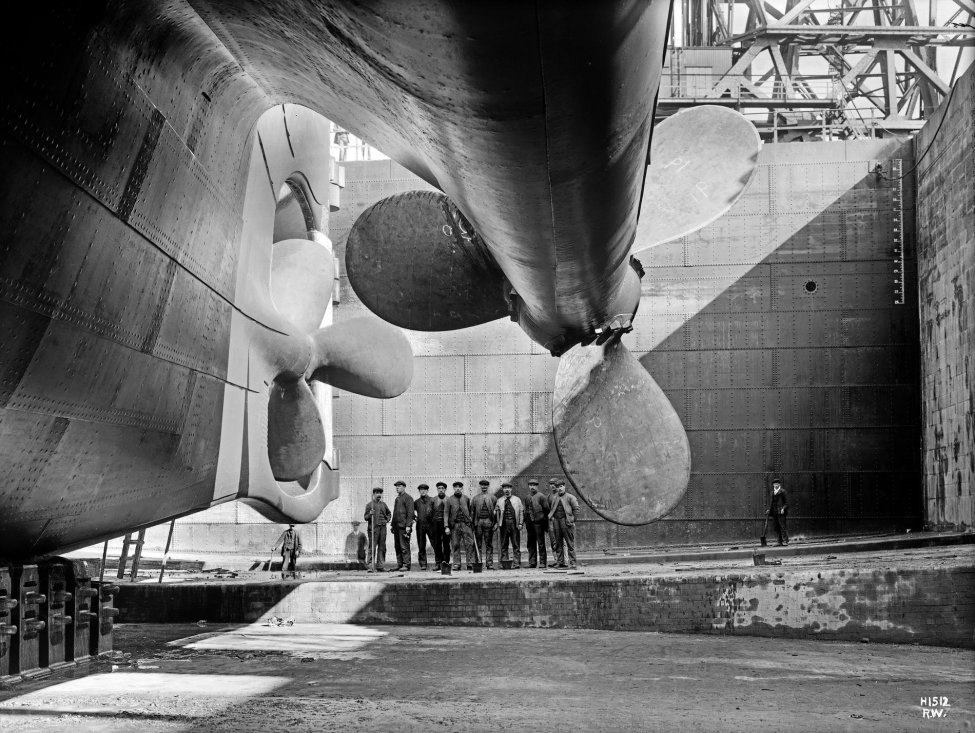
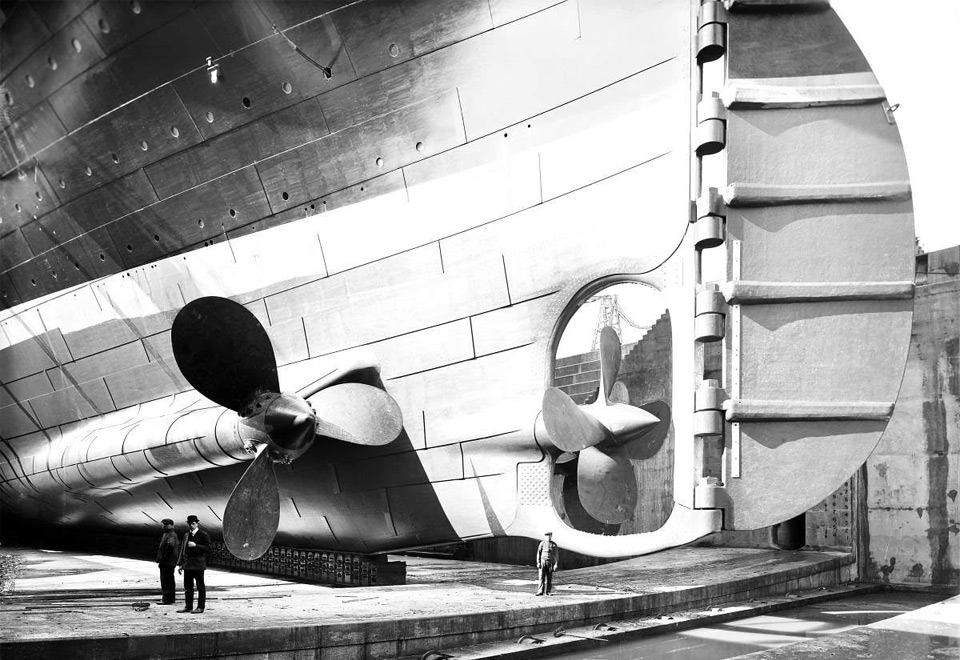
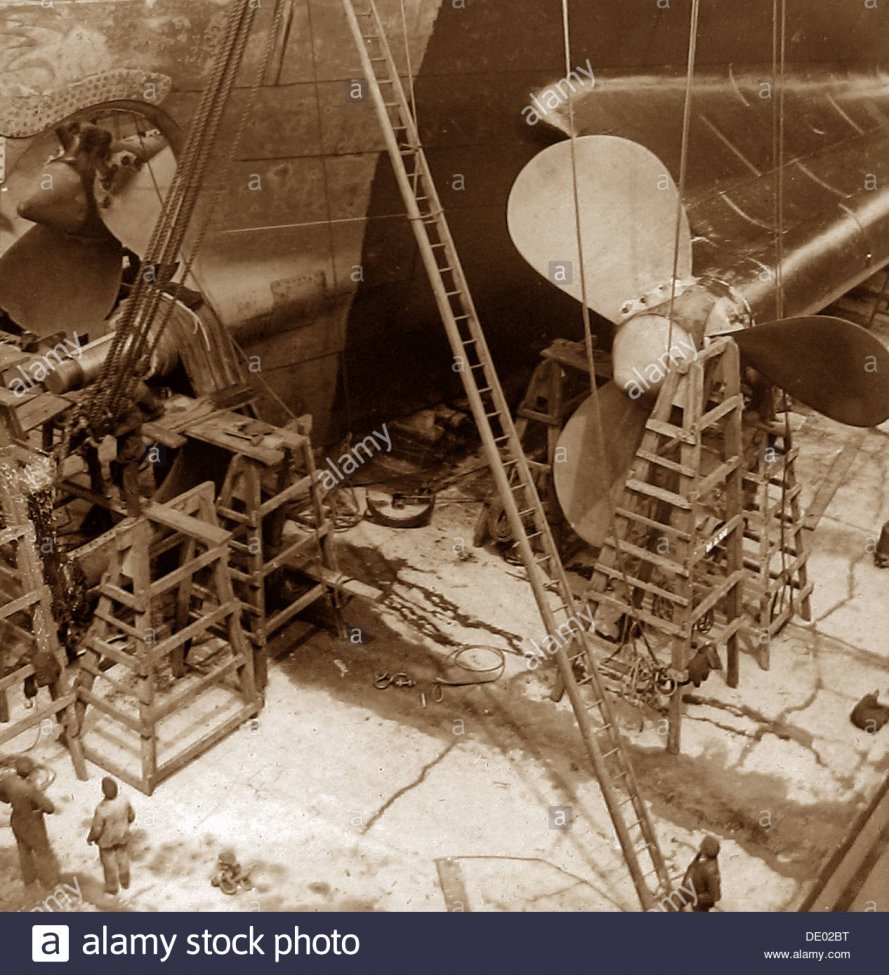
Just found another of Olympics props. "Photograph, Harland and Wolff glass plate negative. subject : Port propeller, centre propeller, posed workers and caisson from dock floor. Ship No: 400. Name: Olympic. Type: Passenger Ship. Tonnage: 45324.
Launch: 20 October 1910. Delivery: 31 May 1911. Owner: Oceanic Steam Navigation Company (White Star Line)."
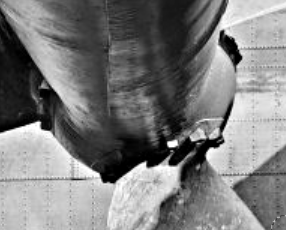
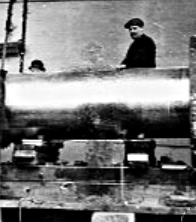
He is carrying something in his left hand and pointing at something with his right. His body is facing left but the shape of the legs looks like he is walking to the right. Maybe a movement to many during the exposure?
My money is on the pitch being changeable in drydock only by undoing those massive nuts or not at all as the joining flange doesn't appear to be round.
The rivet or no rivet question seems to be laid to rest.
In search of more popellor images from Olympics predecessor class and found these the size of the propellors compred to the size of the hull in these two classes of ships make no sense to me.
First said to be Oceanic launched 1899 with her propellors already in place.
Titanic now "In this remarkable photograph, taken in May 1911, shipyard men are fitting Titanic’s starboard tail shaft."
Not if this link is correct, would certainly make more sense. "subject : view of workmen putting in the tail shaft on the 'Olympic';not an original Welch print. Condition : good" View attachment 16634
Said to be Titanic again this time with her props on.
The thing that nags at me is why there are so few pictures tagged Olympic when she was first of class, brand new and innovative in comparison to the numbers claimed to be Titanic and as for Brittanic well there are fewer of her than there are of Olympic.
Also I have yet to find any images of Bruce Ismay attending Olympics launch. He isn't in that launch party picture way up the thread which I find odd to say the least.
Just found another of Olympics props. "Photograph, Harland and Wolff glass plate negative. subject : Port propeller, centre propeller, posed workers and caisson from dock floor. Ship No: 400. Name: Olympic. Type: Passenger Ship. Tonnage: 45324.
He is carrying something in his left hand and pointing at something with his right. His body is facing left but the shape of the legs looks like he is walking to the right. Maybe a movement to many during the exposure?
My money is on the pitch being changeable in drydock only by undoing those massive nuts or not at all as the joining flange doesn't appear to be round.
The rivet or no rivet question seems to be laid to rest.
I think these rivets would have been visible in the picture in the OP were they to be out there. Which ship is this exactly, and how do we know that? Sorry I’m in a rush here, can’t look up myself.
I think these rivets would have been visible in the picture in the OP were they to be out there. Which ship is this exactly, and how do we know that? Sorry I’m in a rush here, can’t look up myself.
According to the description at that site she is the Olympic which would make sense to me as it is the first of class that gets all the photographic attention. Unlike this 'trio' where it is the 'middle' sister that gets the attention as though 'they knew' it was going to be made famous. For me there were only two Olympic and Titanic/Brittanic. I'll keep looking for a full on view of any of the plating. However all modern ships are welded and having worked on one of them an aircraft carrier i can say the welding distorts the plating even on warships which are made to be much stronger than merchant ships (closer framing more than anything) and the plates on these sisters are very smooth and flat. No heat has been applied to them during their installation, to my eyes at least.
The third to last is the ship on the construction slip (note the keel blocks) and the last one is in a drydock (note the rivetted caisson). The pictures showing the three ends of the prop shafts sans propellers reveals them to be of similar construction but will keep looking.
According to the description at that site she is the Olympic which would make sense to me as it is the first of class that gets all the photographic attention. Unlike this 'trio' where it is the 'middle' sister that gets the attention as though 'they knew' it was going to be made famous. For me there were only two Olympic and Titanic/Brittanic. I'll keep looking for a full on view of any of the plating. However all modern ships are welded and having worked on one of them an aircraft carrier i can say the welding distorts the plating even on warships which are made to be much stronger than merchant ships (closer framing more than anything) and the plates on these sisters are very smooth and flat. No heat has been applied to them during their installation, to my eyes at least.
The third to last is the ship on the construction slip (note the keel blocks) and the last one is in a drydock (note the rivetted caisson). The pictures showing the three ends of the prop shafts sans propellers reveals them to be of similar construction but will keep looking.
Yep, you appear correct, don't know dick about drydocks or construction slips. If you look at a modern VPP, and there may be many designs, but what makes sense and the ones that I have seen, is that the pitch is controlled by a shaft that runs down the axis of the main shaft. This would be connected to a gear hub of some kind inside the center hub of the propeller. It would be totally enclosed everywhere.
I still say you got the smart money, that they were just changeable blades, (and even if the slot were indexed, different pitch blades could be cast). At the time though, with threads and nuts being what they were, and all of the other considerations, and work involved, it doesn't seem a totally logical choice, although I'm sure I could be convinced otherwise. It's really in the details.
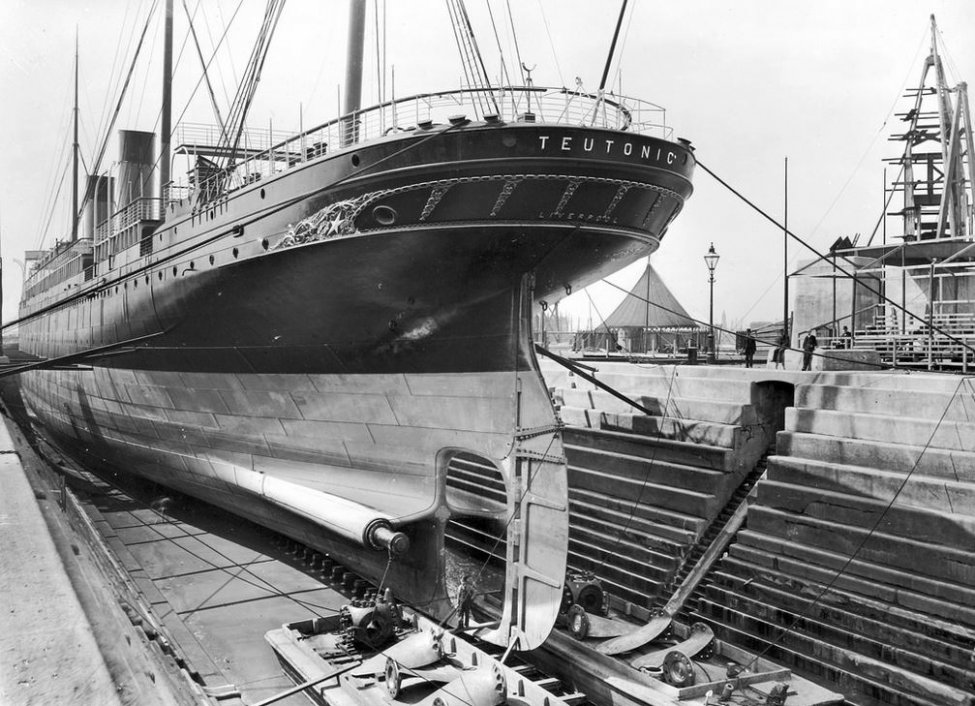
This is the Teutonic with a cracking view of her propellers before they were fitted judging from the layout on the dock bottom and the caps (looking exactly the same as Olympics) used to protect the shafts during the launch. Perfectly round flanges on the blades.
Yep, you appear correct, don't know dick about drydocks or construction slips. If you look at a modern VPP, and there may be many designs, but what makes sense and the ones that I have seen, is that the pitch is controlled by a shaft that runs down the axis of the main shaft. This would be connected to a gear hub of some kind inside the center hub of the propeller. It would be totally enclosed everywhere.
I still say you got the smart money, that they were just changeable blades, (and even if the slot were indexed, different pitch blades could be cast). At the time though, with threads and nuts being what they were, and all of the other considerations, and work involved, it doesn't seem a totally logical choice, although I'm sure I could be convinced otherwise. It's really in the details.
They were more skiful back then than one would imagine. In the shipyard where I worked in the eighties/early nineties there were metal working machines knocking on for a 100 years old and still producing such a precision finish they were 'irreplaceable' according to those who worked them.
Below the water-line more than usual care has been taken to diminish skin friction as much as possible, and to accomplish this the plating has been carefully cleaned, rubbed down and smoothed, then treated with a coating of Rahtnjen's celebrated composition. So nicely has this been done that the bottom plating of the Teutonic is as smooth as glass, having the appearance of an enameling process.
This is the Teutonic with a cracking view of her propellers before they were fitted judging from the layout on the dock bottom and the caps (looking exactly the same as Olympics) used to protect the shafts during the launch. Perfectly round flanges on the blades.
They were more skiful back then than one would imagine. In the shipyard where I worked in the eighties/early nineties there were metal working machines knocking on for a 100 years old and still producing such a precision finish they were 'irreplaceable' according to those who worked them.
Caps are on the shaft? Or on the parts on the dock, not sure I see what you mean.
I don't need convincing on the old machines score. I have seen machine shops like you describe, with ancient machines. I know an old boot maker that has been making the boots in the same shop the same way as has been done for over 100 years. The machinery is amazing.
I hope your not trying to convince me, because I still think you got right idea. But I don't see the reason for these hollow hubs. I doubt the force that damages one of those blades is going to leave the threaded studs on the hub in pristine and unstretched state. Also, the hole on the hub looks diamond shaped.
Ignore the pasted in people. This is likely to be Olympic not Titanic as the photo suggests but the image of the prop blade connections is the clearest yet found (interestingly it took a search for RMS Teutonics propellers to bring it to light! the titanic`s rudder and propellers, 1912 photo
Naval officer most likely not a White Star officer. Pity I cannot get it any clearer. I feel that the bigger clearer picture up the page has been fiddled with in 'more recent times.
More construction images Photo Gallery Of The RMS- well the lsipway and machinery again more likely Olympic than Titanic.
Caps are on the shaft? Or on the parts on the dock, not sure I see what you mean.
I don't need convincing on the old machines score. I have seen machine shops like you describe, with ancient machines. I know an old boot maker that has been making the boots in the same shop the same way as has been done for over 100 years. The machinery is amazing.
I hope your not trying to convince me, because I still think you got right idea. But I don't see the reason for these hollow hubs. I doubt the force that damages one of those blades is going to leave the threaded studs on the hub in pristine and unstretched state. Also, the hole on the hub looks diamond shaped.
Nope no convincing attempted or required. The caps as I call them are the metal 'blanks' attached to the ends of the prop shafts that protect the machining as the ship gets launched. In the Teutonics picture you can see them on both of her shafts just above the two barges which are carrying the propeller components with their painted on markings clearly visible that is why I feel this picture is just prior to their assembly.
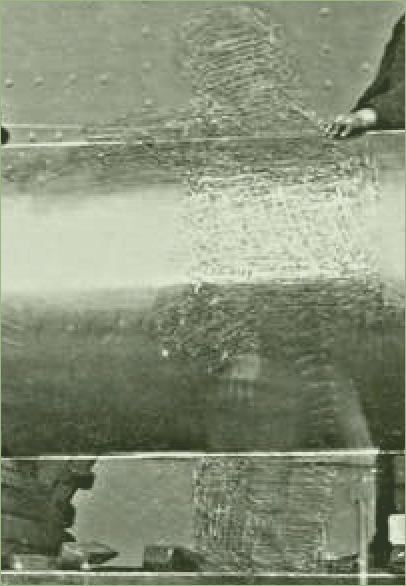
The caps/blanks are there on the pictures of Olympics shafts the ones with the ghostly officer/man in them.
Again no convincing but in the foundry of the shipyard they had a dedicated x-ray and ultra sound team that went over every square inch of the prop blade castings for flaws, tiny flaws. Cannot remember their name but they are' invisible to the naked eye' weaknesses in the cast caused by all manner of things, water, slag, sand, gas for example.
I doubt there were such techniques around in the 1900's could have been all options are open but more than likely there would be a sound test done which detects larger flaws quite successfully.
Olympics blade simply snapped along the line of an unseen flaw so wasn't forced off by hitting anything but rather forced off by an internal flaw in the normal operation of the propeller cutting through the water.
You can see in the middle shaft in the alamy photo (bigger picture using the link) the cap has been removed revealing the threaded portion which they screwed the blank on to potect it. Looking through the rudder at the chap on the prop boss the blade flanges actually look round so possibly they are in fact round as Teutonics are.
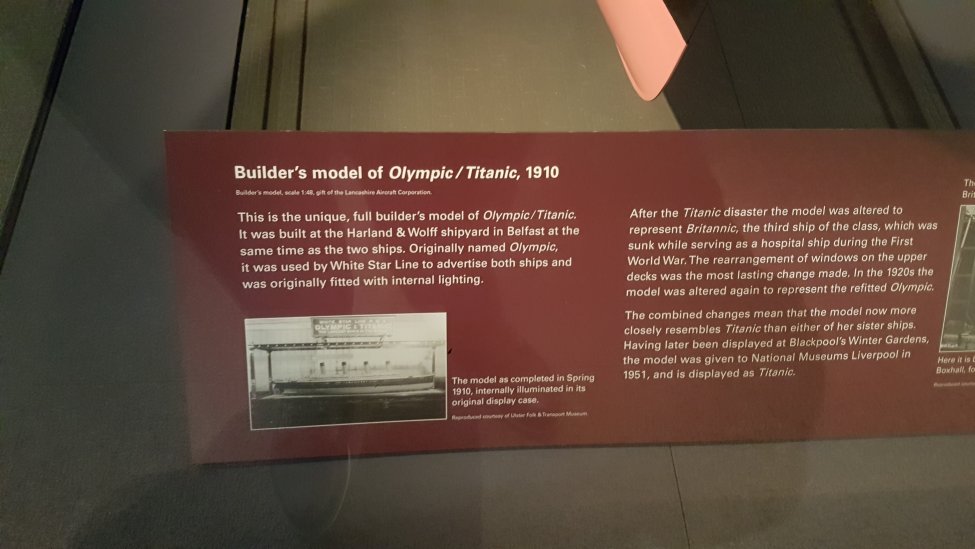
Well I have spent the morning visiting the Titanic section in the Maritime Museum in Liverpool and left wholly dissapointed. The museum is a shrine to the mainstream narrative, and actually flows more like James Cameron's film version of the narrative.
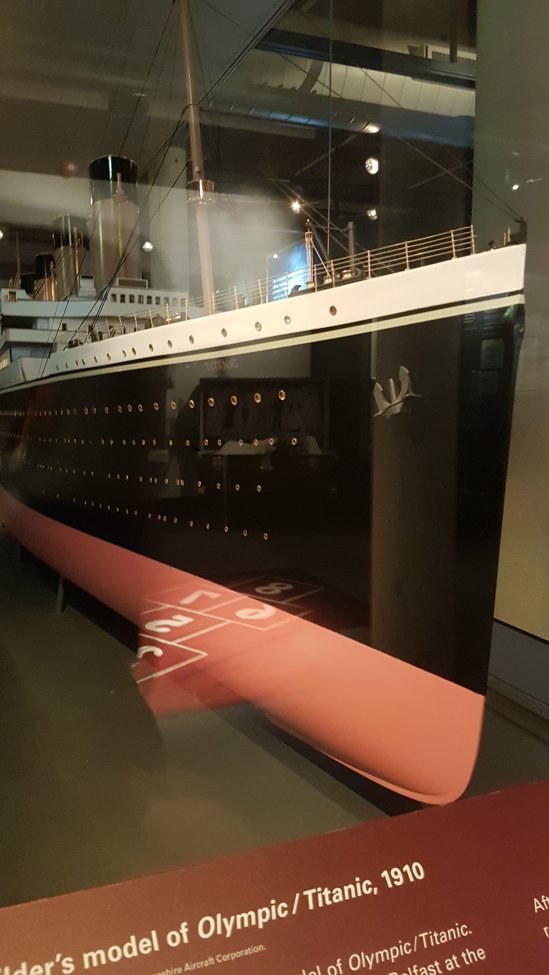
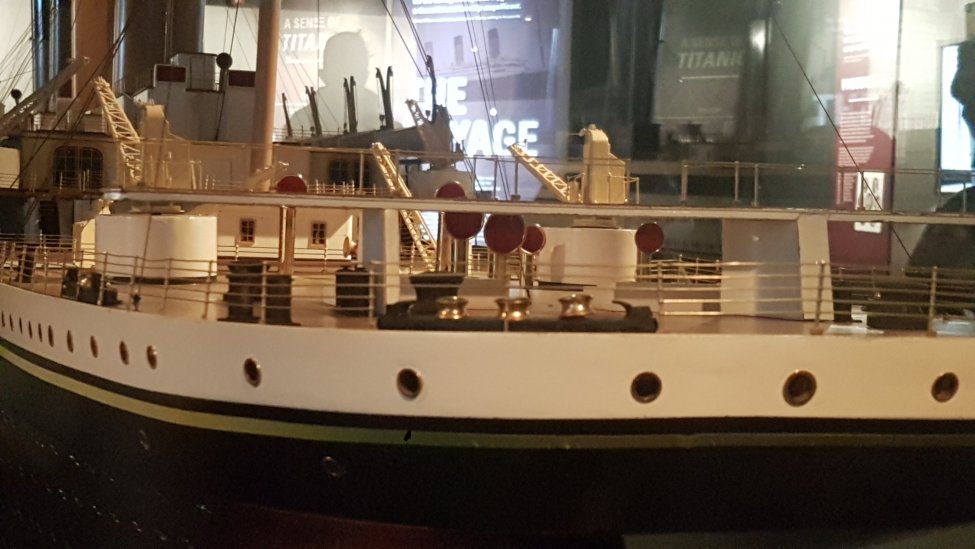
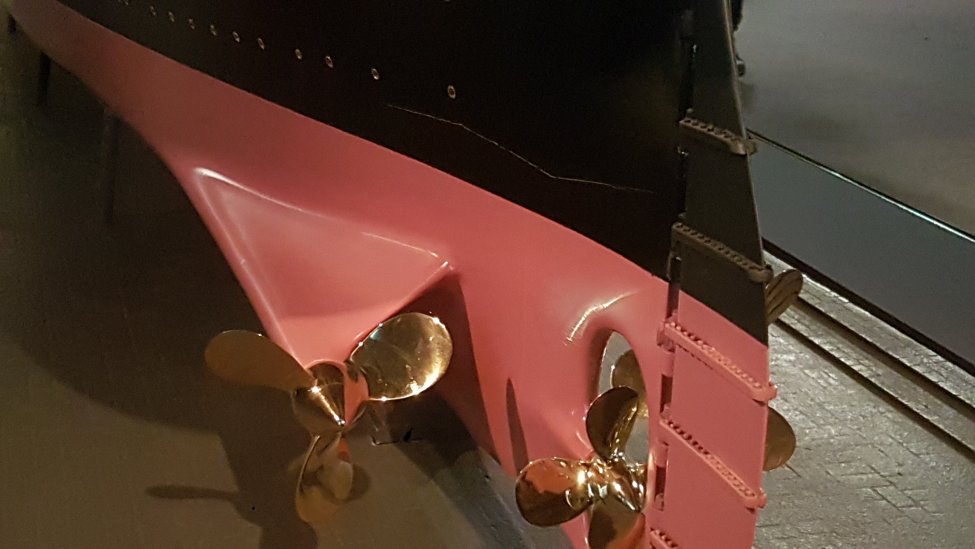
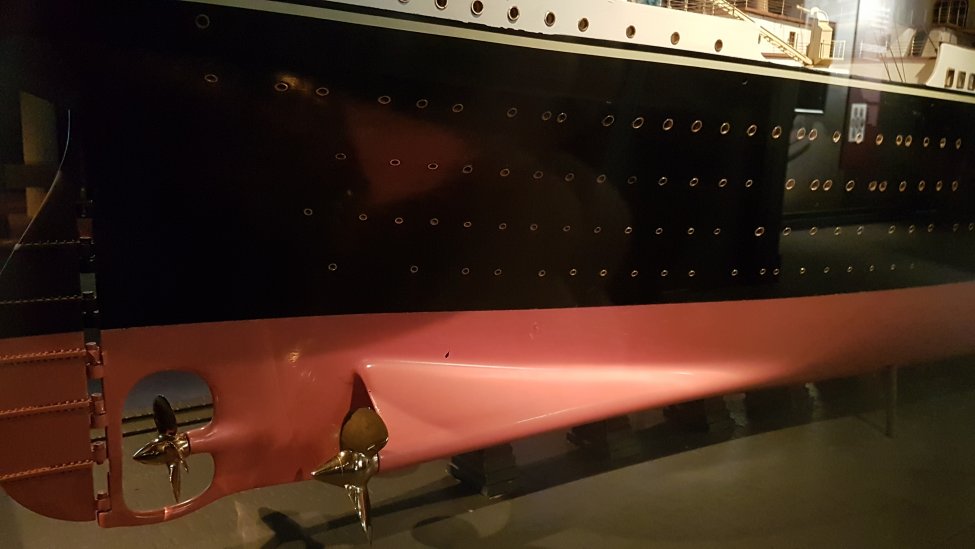
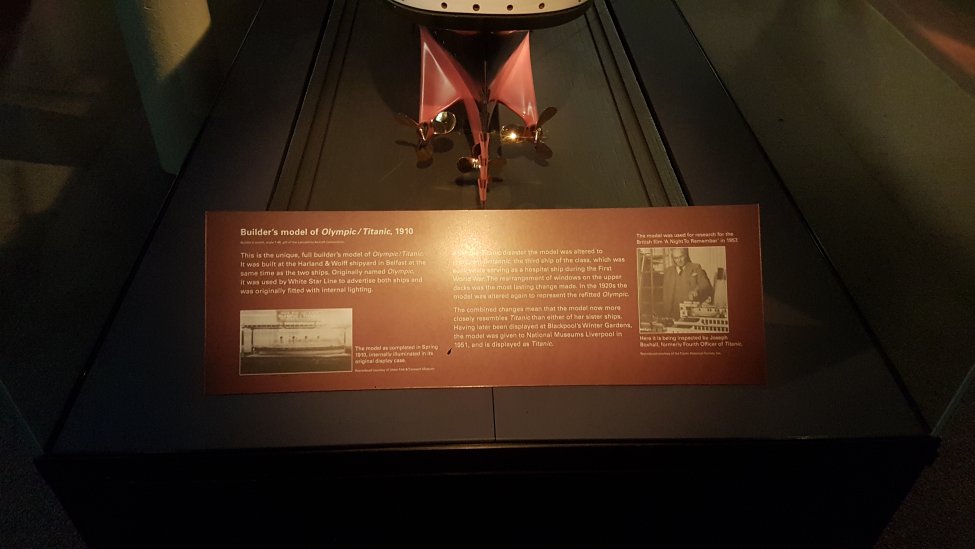
There is nothing, I repeat absolutely nothing on the creation of these great ships, no words, no images, save for this Builders Model which was 'built at the same time as the ships...' notice the detail in the decor but the hull is simply seemless, not even any painted on rivets!
I am sure the propellors differ from any images I have seen purporting to the Titanic?
You would think they would want to wow us with the ships creation, but there is nothing....Extremely disapointed.
However, for me at least it solidifies our thoughts of some kind of deception here.
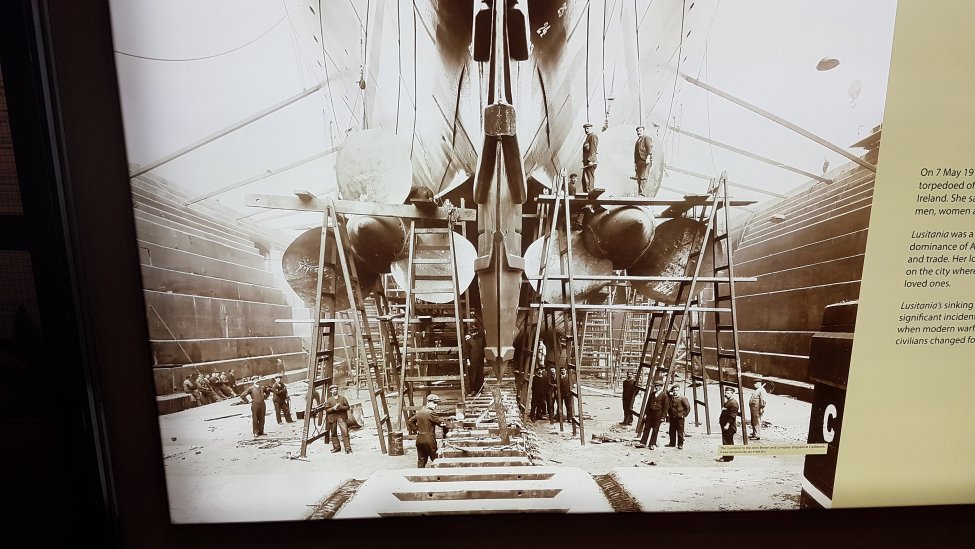
There is however a huge print of the 'lusitania' hull with workmen, if those scafolding are the height of tech, how did the get that ship together?
Finally I had hoped for some info on the SS Great Eastern, as it has big links to Liverpool, but there is nothing, not a single reference....