

Archive
Old SH Archive
- Joined
- Sep 8, 2020
- Messages
- 17,737
- Reaction score
- 3,168
I'd never heard of these before, reading the wiki page I do believe they belong in this forum. O yeah, they are UNESCO sites too. A qanat or kariz is a gently sloping underground channel to transport water from an aquifer or water well to surface for irrigation and drinking, acting as an underground aqueduct. This is an old system of water supply from a deep well with a series of vertical access shafts. The qanats still create a reliable supply of water for human settlements and irrigation in hot, arid, and semi-arid climates, but the value of this system is directly related to the quality, volume, and regularity of the water flow. Traditionally qanats are built by a group of skilled laborers, muqannīs, with hand labor. The profession historically paid well and was typically handed down from father to son. According to most sources, the qanat technology was developed in ancient Iran by the Persian people sometime in the early 1st millennium BC, and spread from there slowly westward and eastward. However, some other sources suggest a Southeast Arabian origin.
Sorry for the short write up, and i hope they interest some of you.
Thanks
A qanat tunnel near Isfahan
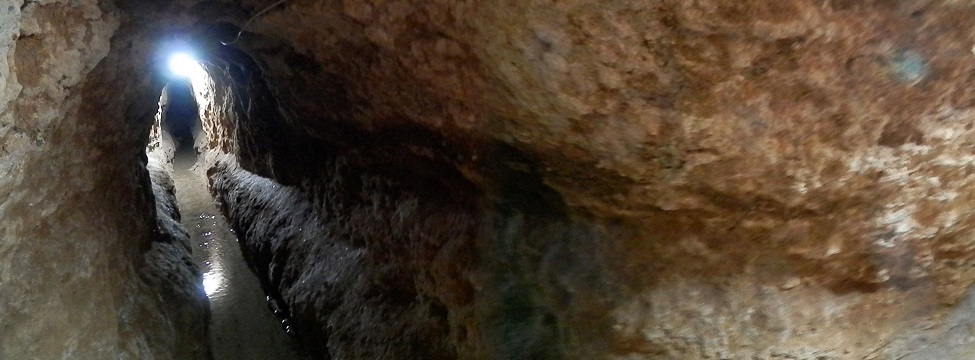
Cross-section of a Qanat
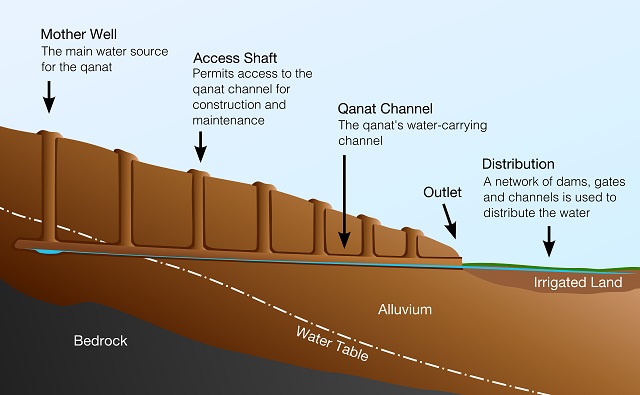
Cross-section of a Qanat
Sorry for the short write up, and i hope they interest some of you.
Thanks
Note: This OP was recovered from the Sh.org archive.
Note: Archived Sh.org replies to this OP are included in this thread.


