

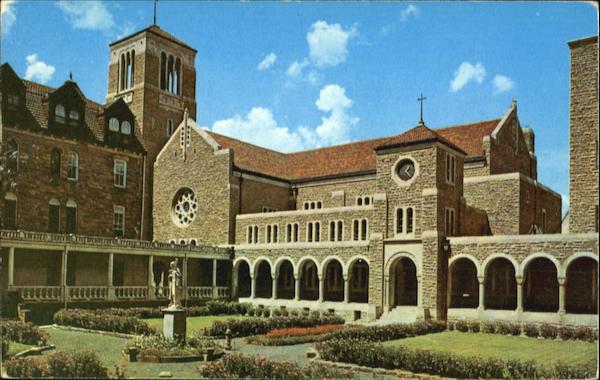
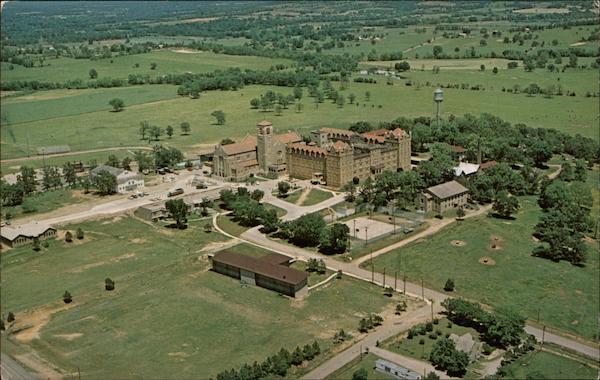


The Subaico Abbey, according to the Benedictine monks who currently populate its halls,
is a private, college preparatory, Roman Catholic boarding and day school. We are an apostolate of "Subiaco Abbey," the religious community of Benedictine monks located in Subiaco, Arkansas. The Benedictine Order in the Catholic Church, to which Subiaco Abbey belongs, evolved from the "Rule" written by St. Benedict of Nursia in Italy in the early sixth century. The education of youth, in some form, has been a significant part of the apostolate of Benedictine Monks since that time...almost 15 centuries. Hence, Subiaco Academy has a rich tradition of educating young men.
The school came into existence as a result of the German migration to the Arkansas River Valley in the 1870s. The Little Rock-Fort Smith Railroad Company owned thousands of acres in the area. They resolved to sell this land only to German Catholic settlers, if possible. This company approached the Swiss Benedictine Monks in Indiana, asking them to send missionaries to Logan County, Arkansas in 1878. These monks brought with them their Swiss Benedictine heritage of a monastery school. Until the First World War, numerous additional monks and recruits from Switzerland strengthened this educational tradition.
In 1887 the monks opened a school, called St. Benedict's College, to educate young men between the ages of 14 and 20 in the basic humanities. There were never more than 20 students in this school and it was terminated in the summer of 1892. The monks reorganized that summer, and in the fall, the school reopened as a seminary to train students for the ministry. This school was called the Scholasticate. Modeled upon European "Gymnasium" lines, it consisted mostly of classical languages and musical training.
Subaico Abbey, through the years
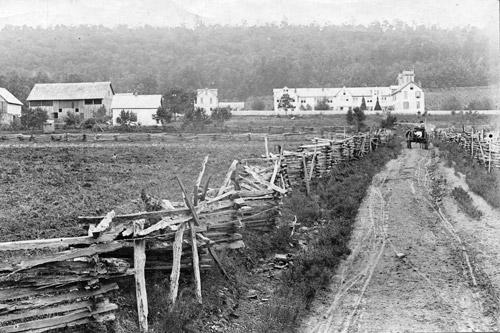
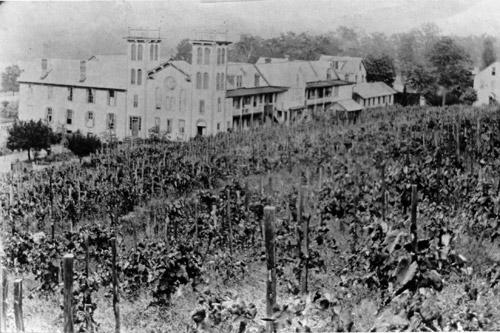
The original monastery as viewed from what would now be approximately the highway.
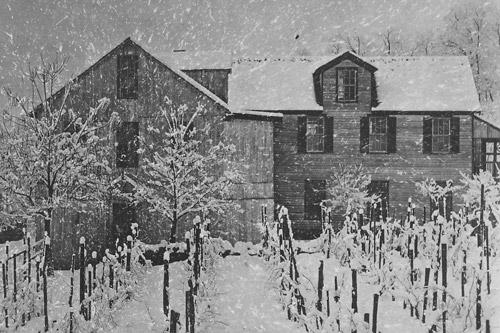
Snow falls on Subiaco College, a forerunner to Subiaco Academy, in this undated photo.


Wolfgang Schlumpf (Pictured on right):
The source I have for this man is the only thing I've managed to find on the internet that claims the existence of this person.
The Fire(s)
Surely you didn't think this would be a Trismegistus post where there wasn't a fire?
1901
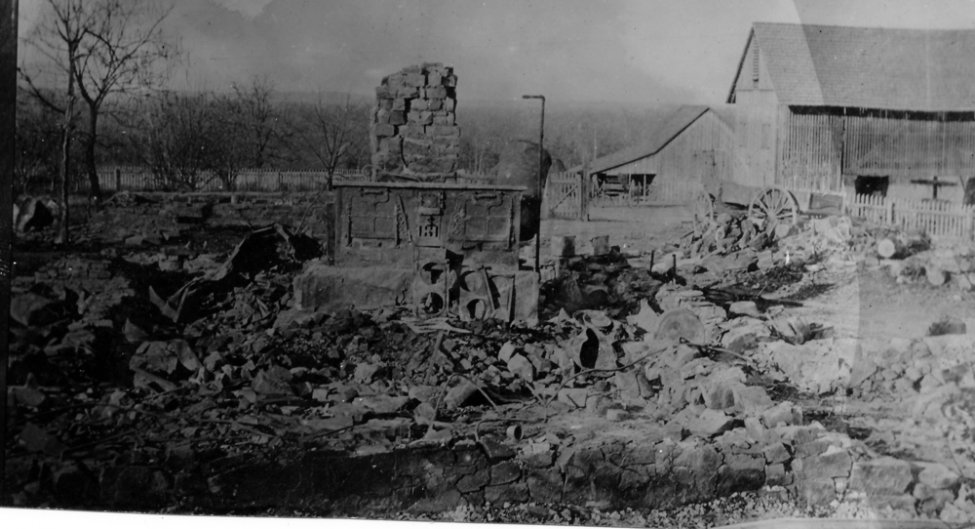
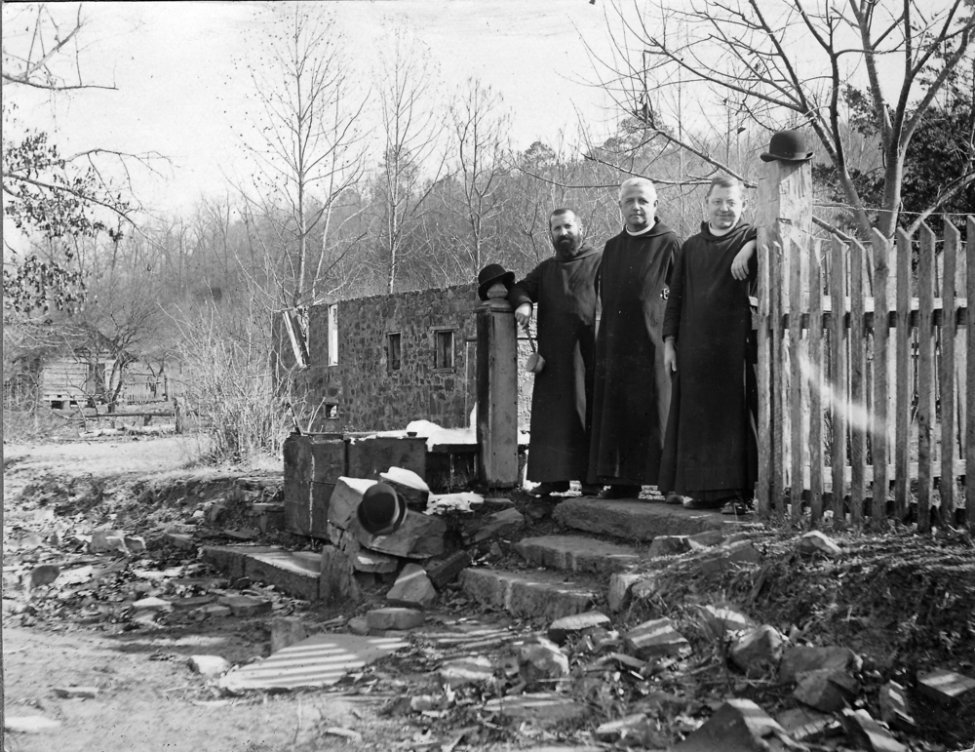
The hats are killing me here. Not only do these people look completely unlike a fire just burnt down their Abbey, but surely the Robe/Bowler hat combo is a fashion travesty!
1927
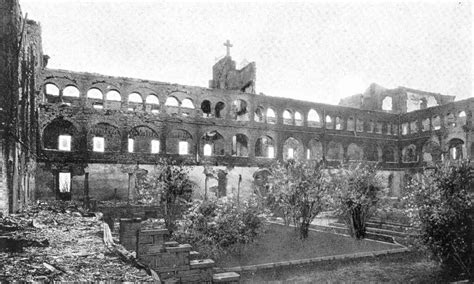
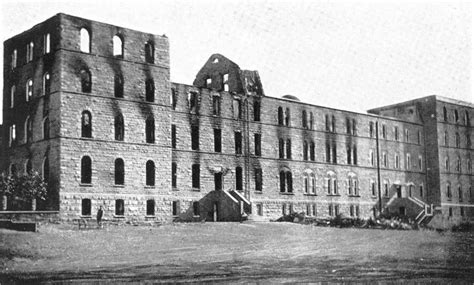
Same building, same fire, back and front angle - - but where is the cross in the second photo???
Also cross off "weird stairwells leading to the un-buried second floor" on your bingo board.


The state it is currently in did not come about (allegedly) until the 1960s. The rebuild process took a nose dive after America's entrance to WWII and stayed in limbo until a few decades later. It seems ever since then the Vatican has been very kind to this place - - because even in 2020 it is still absurd this little Medieval haven is nestled away at the foot of the Ouachita mountain range.
Moreover, all three versions of this building (original, 1927, and modern day) are seemingly completely distinct - - building from virtual scratch every time. How long did it take anywhere from 20-200 monks and the small population of the surrounding areas to go from ground zero in 1901 to this building 26 years later? My research has not given me an answer.
That is quite convenient. Already under construction or already finished?By the spring of 1902, the school reopened in its present location, in a stone building that had already been under construction when the 1901 fire occurred. The name was changed to Subiaco College. This school comprised a six-year program, still modeled on European lines, with three courses of study: classical, scientific, and commercial. By the mid-1920s, enrollment stood at over 200 young men.
This is a confusing part of the timeline. As far as I can tell, there is no evidence this "primitive" school existed in the ashes of the fire. Is that what they are calling the current structure? As per usual, there are more questions than answers.In December 1927, the institution was again destroyed by fire, but a primitive school, Subiaco Academy, was reopened in February 1928, in what was left of the Main Building. This school barely survived the Depression Years. During World War II, enrollment soared, but it was only after 1945 that Subiaco Academy was able to expand its physical plant. In the 1960s, when a majority of Subiaco's students began enrolling in college, Subiaco Academy became college prep and was accredited by the North Central Association in 1968.
The "Hunt for Evidence"
I did manage to find an article regarding some semblance of journalism on the topic of Subaico Abbey history:...The newly cleared foundations represent the culmination of an enduring mystery surrounding the history of the 136-year-old Benedictine community, which marked the arrival of its three founding monks from Switzerland March 15.
While it is well-documented that the original abbey, and later a school and house for the resident nuns who followed, stood on this patch of land, archaeological evidence of the secondary structures was elusive.
“I can remember watching them bulldoze the area where the old abbey was,” said Father Hugh Assenmacher, OSB, the community’s historian. The original abbey burned to the ground in December 1901 after a fire in the detached kitchen building spread to the wooden structure; decades later bulldozers razed the foundations to transform the site to pasture.
“We knew these other buildings were here, we just couldn’t figure out where they stood,” Father Assenmacher said...
Little did they know that for all the hints of the previous community they could see — the terracing in the hillside where the vineyards once grew; the hand-cut stone cistern — a bigger prize was right under their noses.
“We just assumed that erosion and time had taken everything,” Abbot Kodell said. “Turned out we were just looking in the wrong place.”
It was a couple of months ago Father Assenmacher was poring over some books in the abbey archives when a photograph fell out that would settle it once and for all. Apparently shot from the second floor of the abbey, the photo showed the configuration of buildings farther west on the site than originally believed.
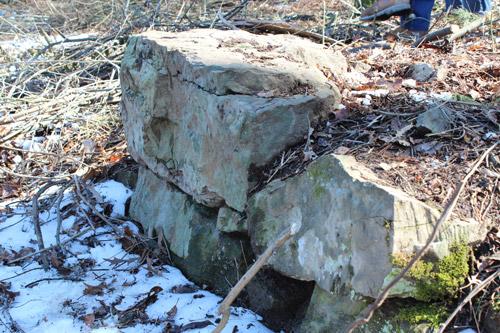
Native stone was meticulously cut and fitted to form the foundations of the nuns' residence and school.
There is another nugget in that article that made a connection I hadn't made until I started writing this thread. The reference to a hand cut stone cistern. I could not find any evidence online of this stone cistern, but it got me thinking about a recent hike I took.
A Curious Find
This hike took place north of Ft. Smith, AR in the Lake Ft Smith State Park.

It is approximately 60 miles away, as the crow flies. The reason I bring it up is because while I was on that hike, I encountered an extremely anomalous "carved" stone cistern.


Now, it would be disingenuous to claim that the hand carved stone cistern at the Subaico Abbey is similar to this strange well I found. However, when you consider both the existence of a fairly advanced cistern and the Abbey within 100 miles of each other in rural Arkansas, one starts to see this area in a different light.
(More) Questions
- Why do these Monks occupy such a remote area?
- Was it Benedictine Monks who built the structure we see burnt in 1927? Or did they simply just begin inhabiting it?
- Is it my understanding that this burned out husk of a structure remained as it was in the photos until the late 50s, when it was finally torn down to make way for the current building?
- If these found "rock foundations" are what they say they are - - do these fitted stones match the photographs of the original Abbey?
- Is the Abbey built on top of a previously existing stone structure? Perhaps one that uses advanced engineering like the cistern I came across not too far away?
- What is the explanation for advanced engineering in this area of the country in what is believed to have been the "early 20th century"? Most of these places in 2020 have not grown substantially past what they were 100 or even 200 years ago.
- Could these two discoveries be connected to a previous civilization that roamed this plateau?
- Does the Vatican know something about this area we don't?
Note: This OP was recovered from the Sh.org archive.
Note: Archived Sh.org replies to this OP are included in this thread.


