- Joined
- Sep 22, 2020
- Messages
- 4,691
- Reaction score
- 1,500
This is probably one of the ballsiest lies produced by the PTB to date. If they were capable of executing something like this, they can do just about anything, and their abilities are borderline limitless. What am I talking about here? I think we have a 19th century event being presented as a 75,000 year old one.
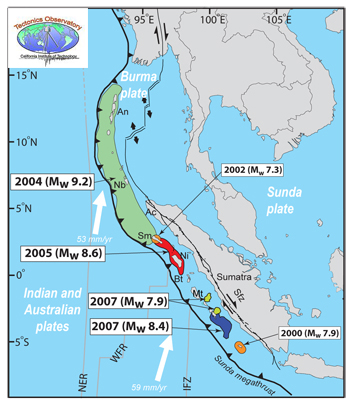
Lake Toba is the site of a massive supervolcanic eruption that occurred 69,000 to 77,000 years ago, representing a climate-changing event. Recent advances in dating methods suggest a more accurate identification of 74,000 years ago as the date. It is the largest-known explosive eruption on Earth in the last 25 million years. According to the Toba catastrophe theory:
Note: In 1993, science journalist Ann Gibbons posited that a population bottleneck occurred in human evolution about 70,000 years ago, and she suggested that this was caused by the eruption.
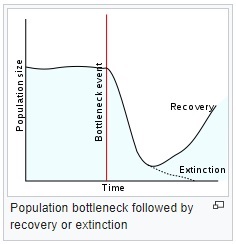
The controversial Toba catastrophe theory, presented in the late 1990s to early 2000s, suggested that a bottleneck of the human population occurred c. 70,000 years ago, proposing that the human population was reduced to perhaps 10,000–30,000 individuals when the Toba supervolcano in Indonesia erupted and triggered a major environmental change.
KD: I do not even know where to start. We are being sold this 74,000 year old Total Cataclysm. It possibly killed off the majority of the world population and left a few species to re-populate the Earth. Simultaneously we are being told that may be it was not that bad, and the aftereffects were not nearly as bad.
At some point a scientist looked at this lake, did some chemical tests, dated some argon, and came up with all this non verifiable non-sense.
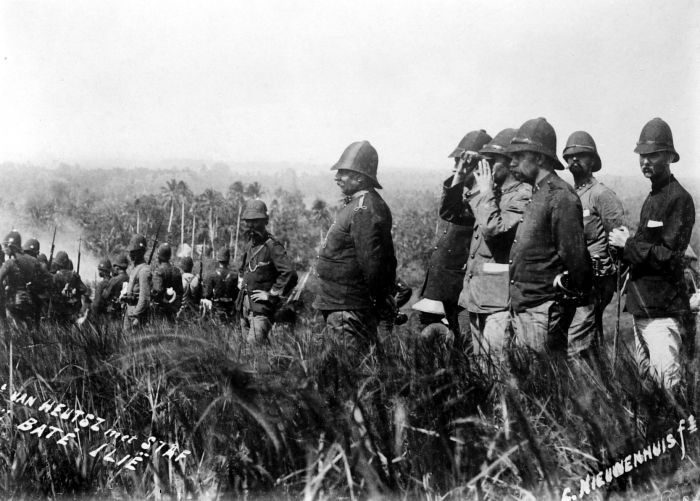
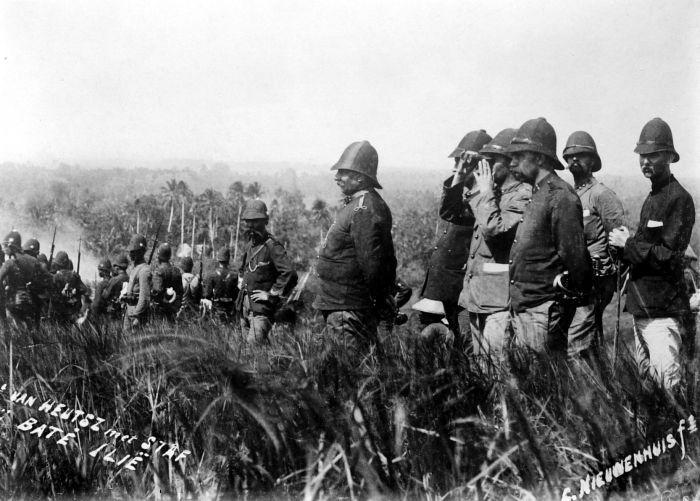
KD: Somebody is seriously full of sh*t here. It's either scientists with their 74,000 year old eruption, or the people of Batak with remembering what happened 74,000 years ago. So we have this "largest-known explosive eruption on Earth in the last 25 million years", "global volcanic winter which lasted 6 to 10 years" 74,000 years ago, and these Batak dudes and dudesses survived to carry through 74 millennia, and tell the story? They even managed to know the name of the 74,000 year old volcano mountain. Mount Tuhaweoba, right?
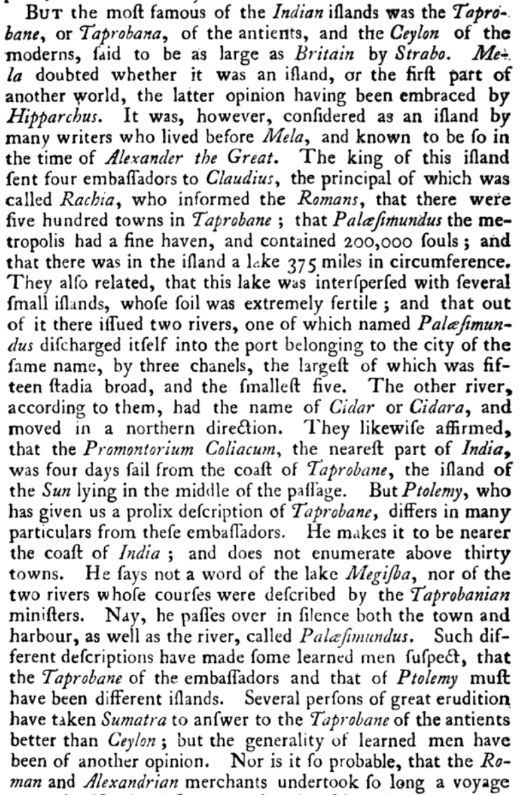
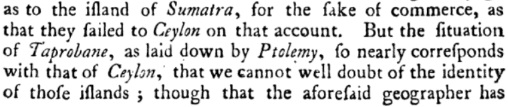
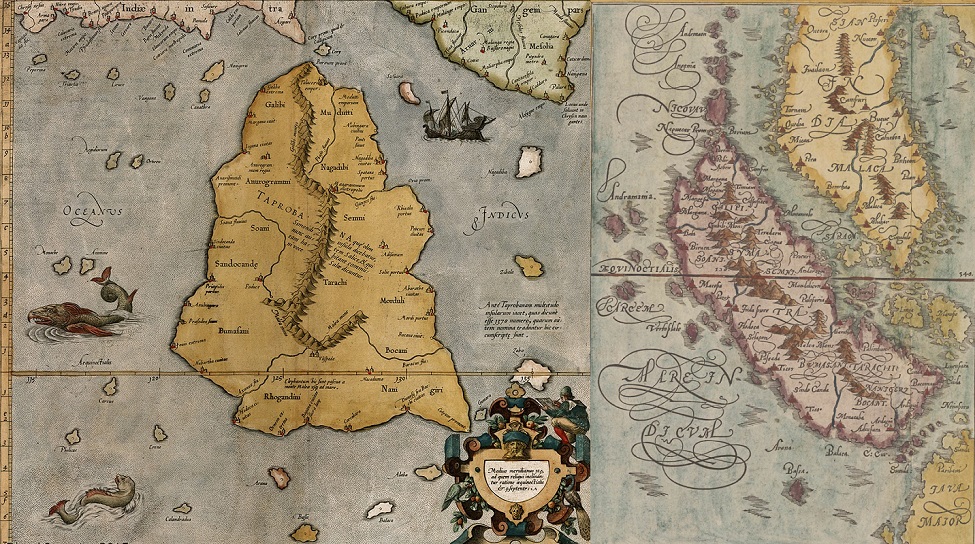
It seems that playing musical chairs with geographical names was trendy back in the day. Why would they rename a huge island? Ok, I can see it being renamed by the so-called colonists from Sumatra to some St. George island. At the same time I have hard time understanding why they took the Island of Taprobana and changed its name to Sumatra. What I also do not understand is why TPTB is trying to tell us, that Taprobana was an older name for the Island of Sri Lanka.
Who out there would pay attention to anything beyond the name of the map? Some would, but a whole bunch would probably not.
Of course there were maps like this one or this one, but all these "Formerly Taprobane" have very little of my trust at this moment.
Dhani Irwanto here, thinks that: Taprobana is not Sri Lanka nor Sumatera, but Kalimantan. He is wrong, and below you will see why.
Something like this, I guess.
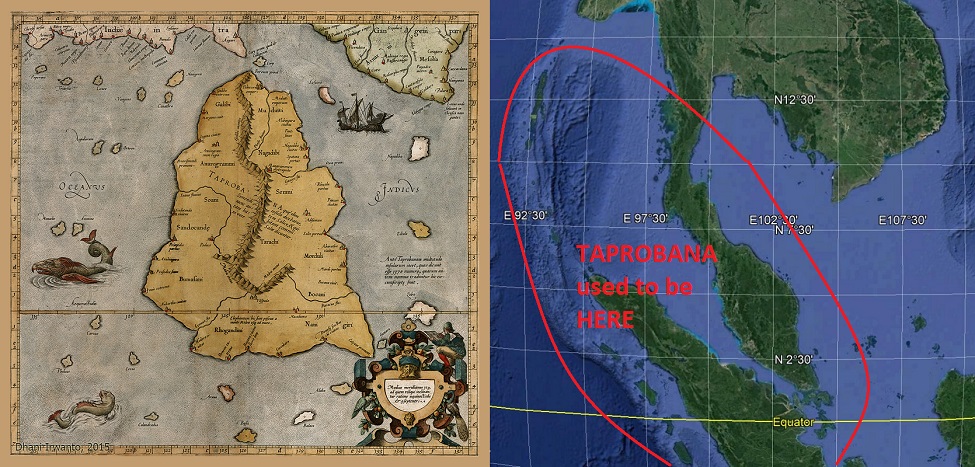
Once the above occurred to me, a proper map showed up. As you can see Sri Lanka is where it is supposed to be, and our Island of Taprobana was still in its place.
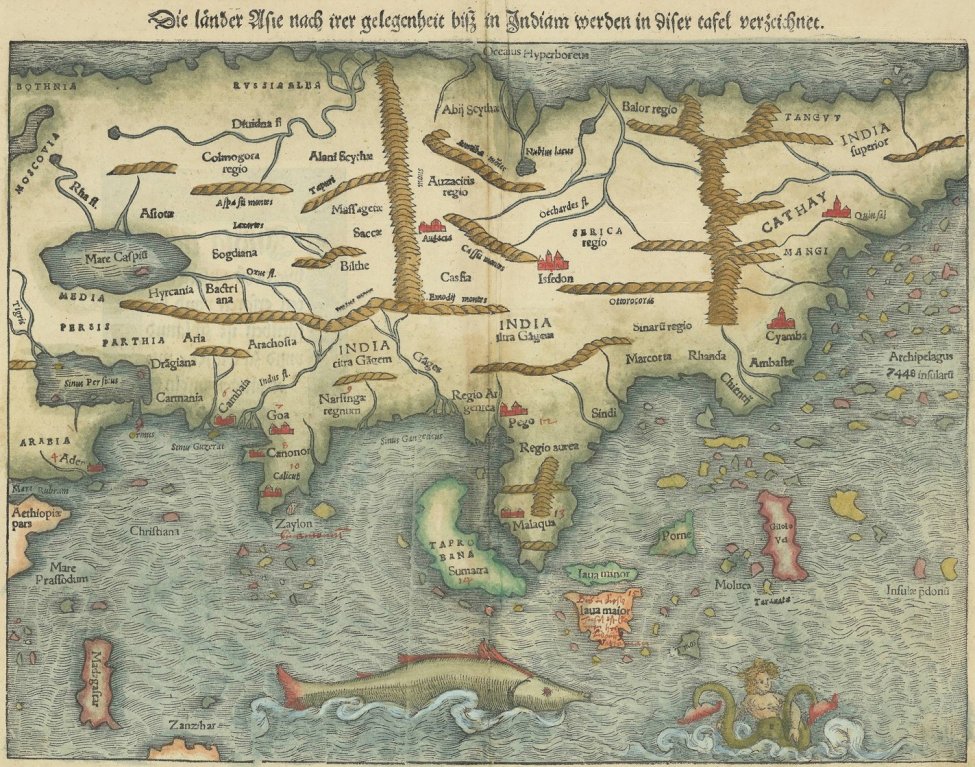
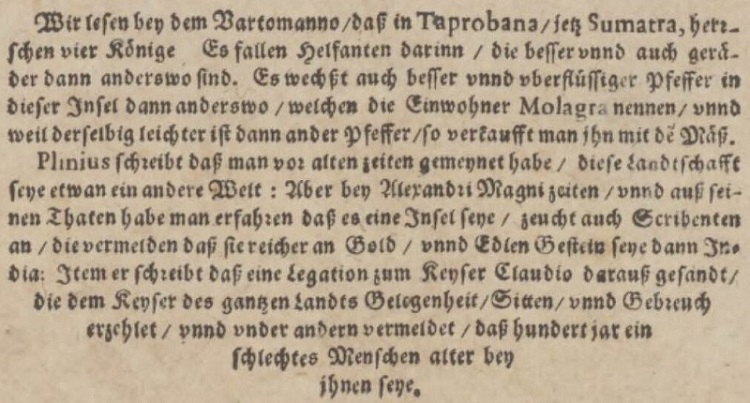
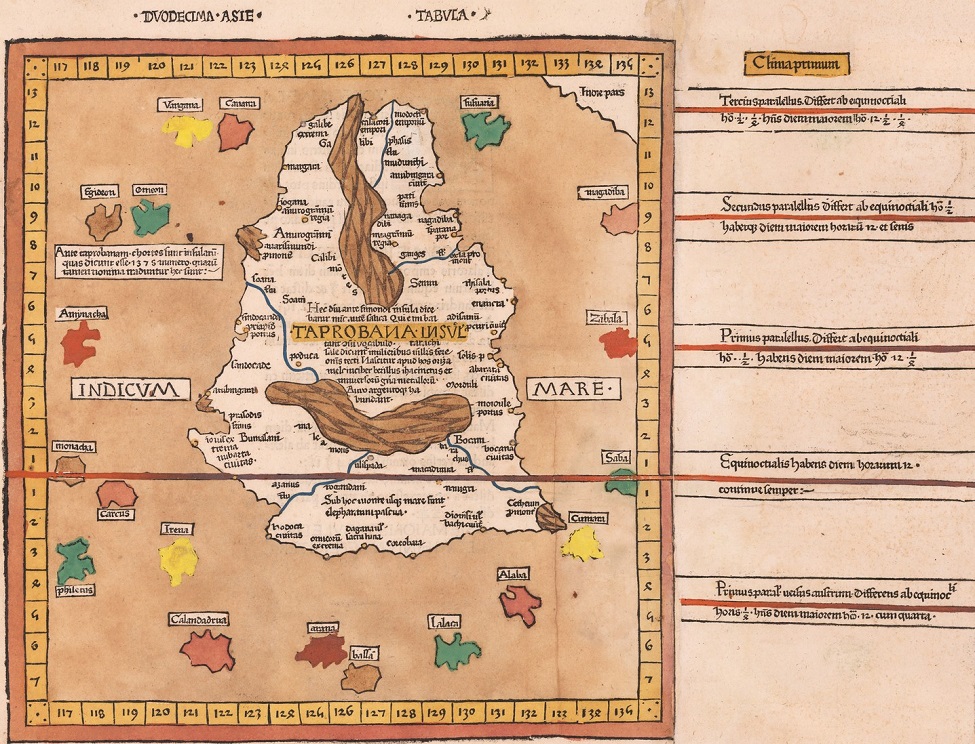
As you can see in the above map Sumarra is just below the main name of the island of Taprobana. When you look at our contemporary map above, you will realize that the island of Taprobana was split from North-West to South East. The Nort-Western corner does not exist any longer, as in it is under water. The right portion of the split island of Taprobana was pushed into Malaqua. This right portion of the island of Taprobana hosts today's Kuala Lumpur. Well, and Malaqua itself sustained some major damages as well.
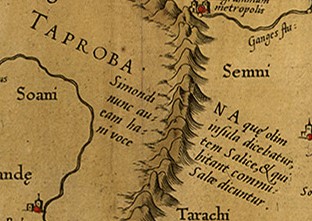
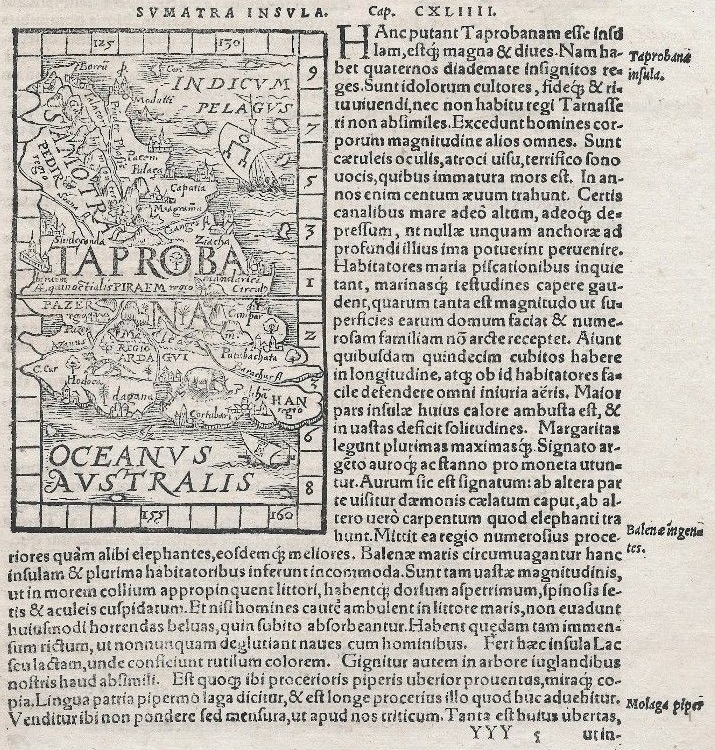
If someone out there can help out with the translation of the below, it would be greatly appreciated. Taken from this 1588 map.

Text in Latin from Johannes Honter's Rudimenta cosmographica. 1561 Source.
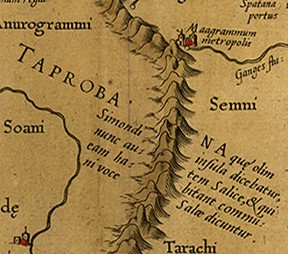
And this from the above Ptolemy Map.
Well, and of course, our Island of Taprobana had its own king, as can be seen on the 1375 Catalan Map of possibly Abraham Cresques.
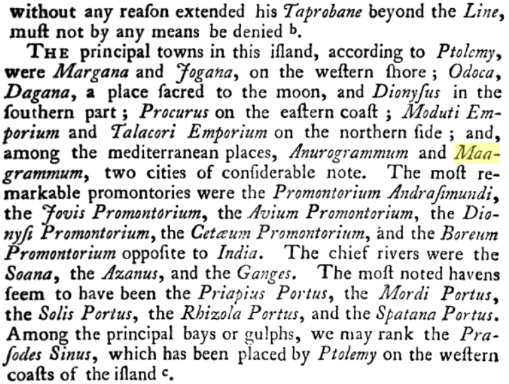
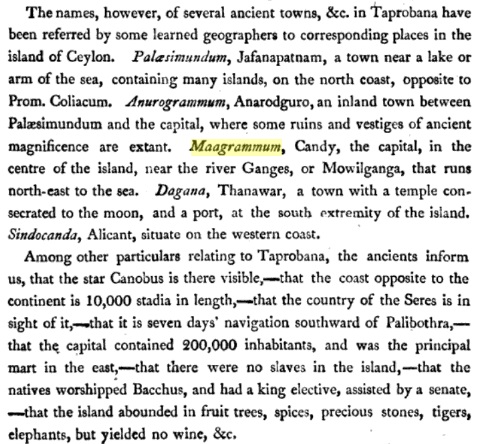
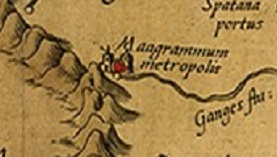
Oh, and what's this Maagrammum Metropolis here? Pretty sure TPTB would tie it into Sri Lanka somehow, but there still had to be some useful info left somewhere.
Lake Toba: Continued The Dutch writer Louis Couperus, writes in the style of the time, in his travel journal “Eastward” from 1923.
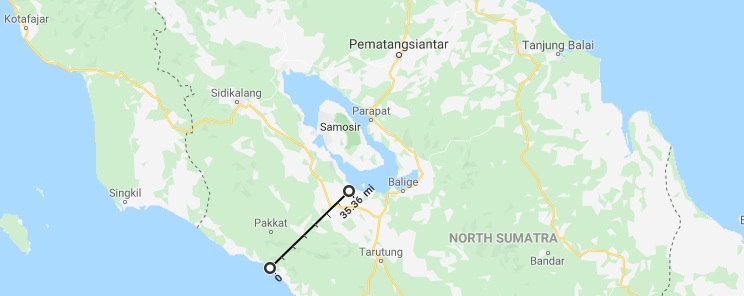
As it says above: the Dutch arrived in 1596 and gradually gained control of all the native states including Achin. Now check the below info out, and tell me if them not finding out about the Lake of Toba all the way until 1811 makes any sense.
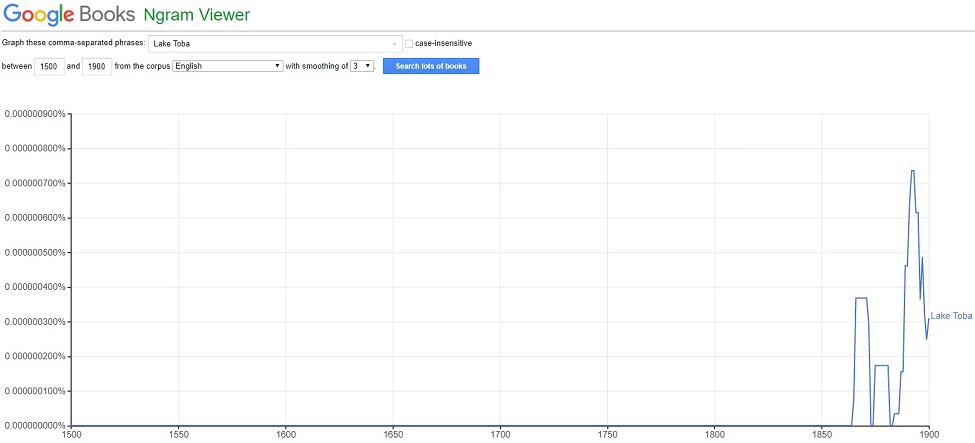
Google Ngram Viewer for 1500-1900 Lake Toba, or lake Toba looks even more puzzling.
Lake Toba: where are you?Following the map progression normally yields results, which to a certain degree reflect views and opinions of the people who lived at the times when those maps were made. Let's see when our 74,000 year old Lake Toba shows up on the maps.
The present map is from the second edition of this work, which was first published in 1482.
Map
1561
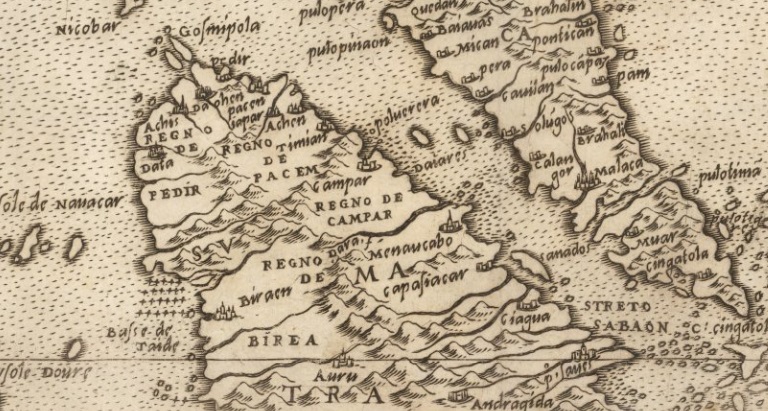
Map +1
1593
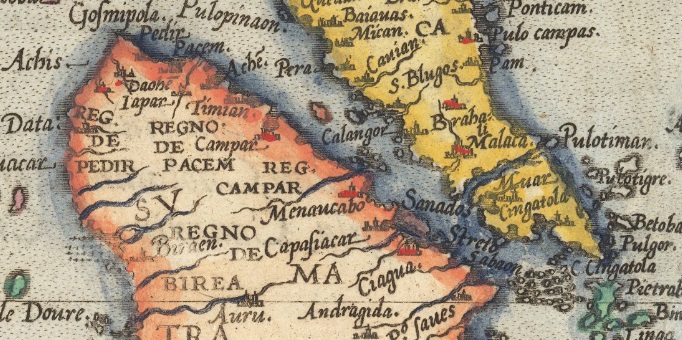
Map
1599
Narsinga, and not Hindustan...
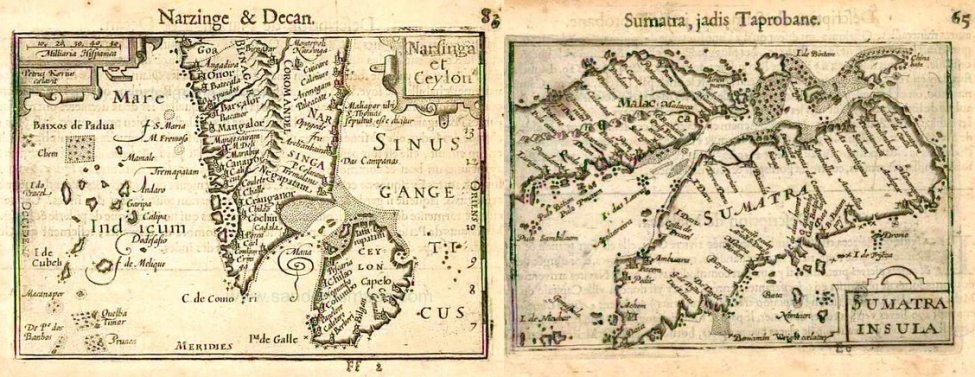
Source + Source
1630
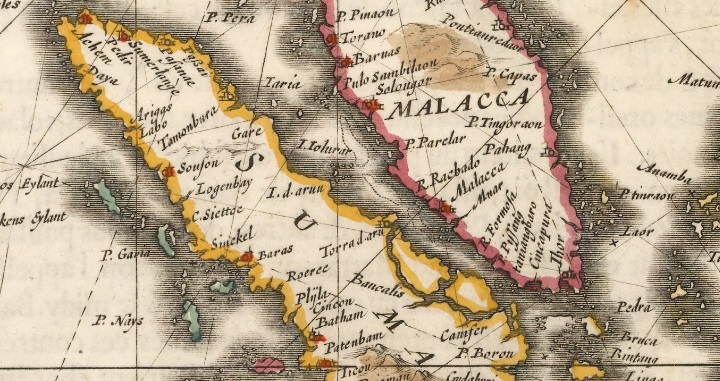
Map
1676
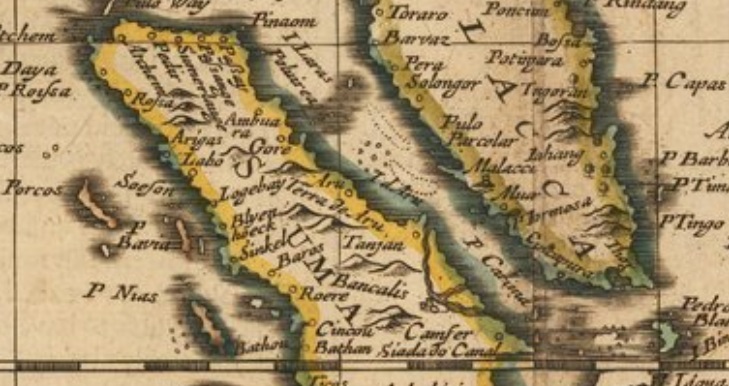
Map
1719
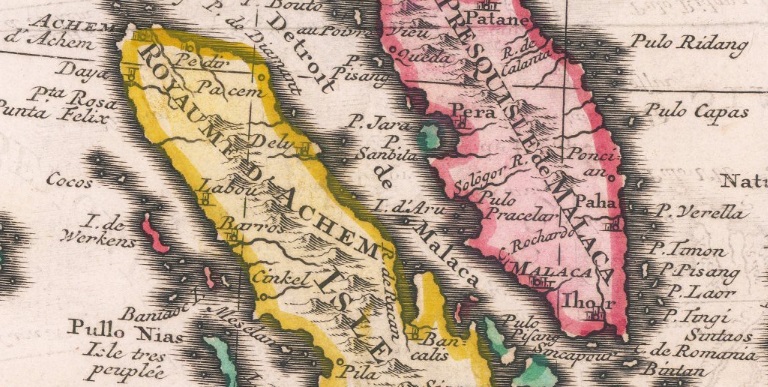
Map
1720
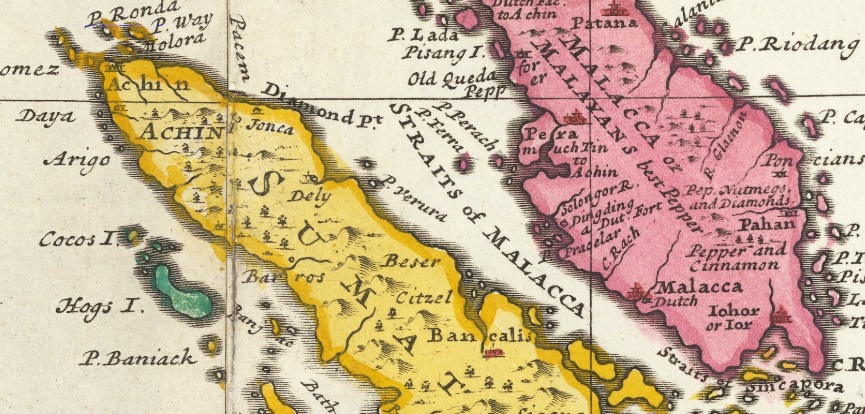
Map
1746
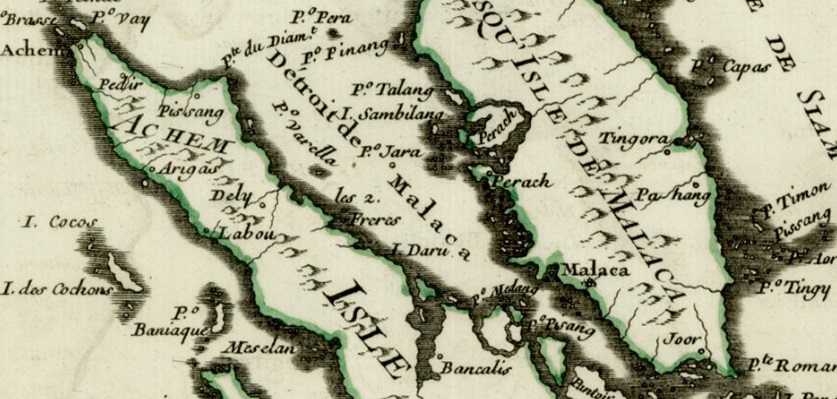
Map
1760
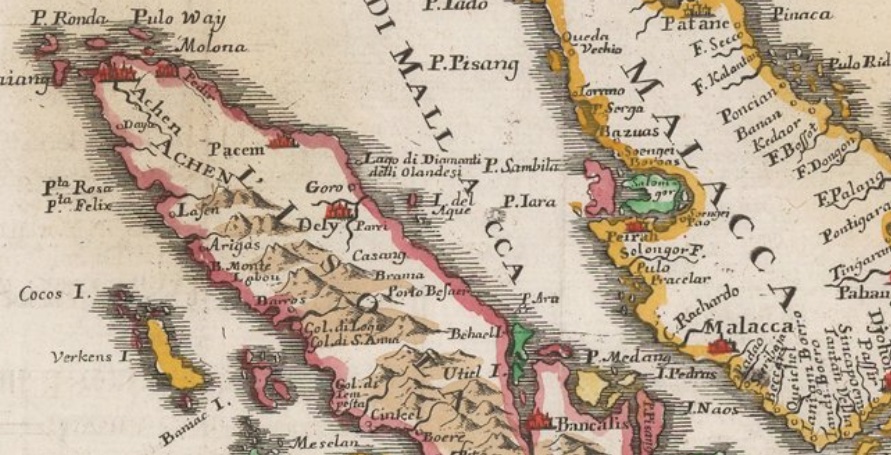
Map
1786
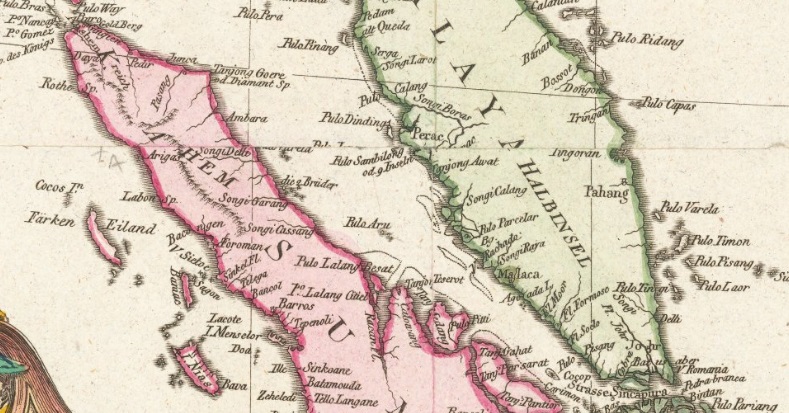
Map
1802
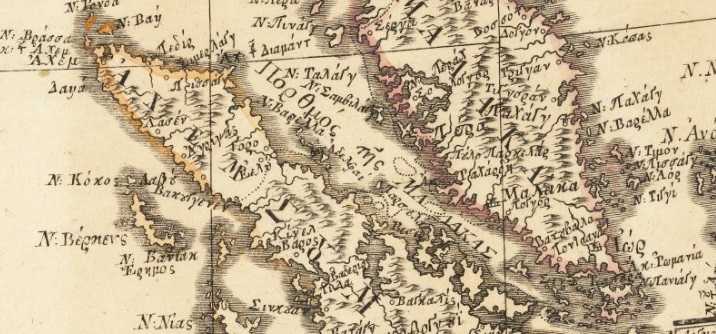
Map
1814
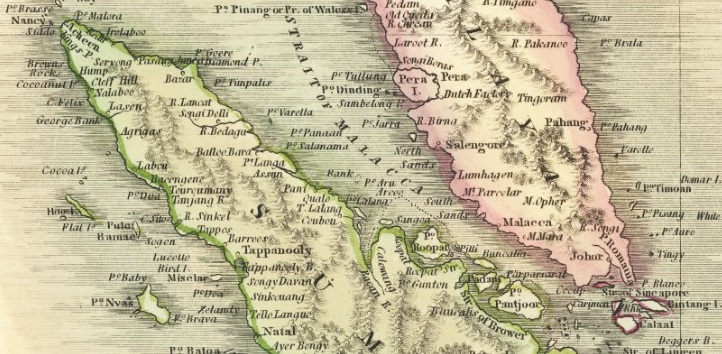
Map
1825
Map
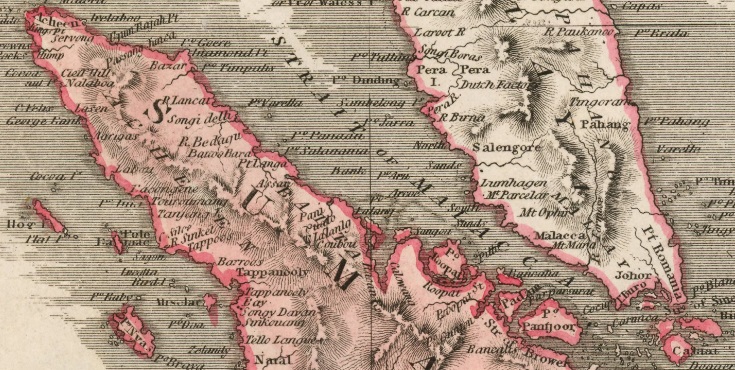
1826 - HallelujahFinally in 1826 we catch the first glimpse of the Lake Tabo. Welcome this wonderful body of 74,000 year old water called "Lac peu connu". Naturally we have this "Little Known Lake" representing the Lake Tabo.
Well, someone out there wants us to think that the island of Sumatra was in its current state forever. They also want us to think that this Lake Toba was around for at least 74,000 years. I do not expect to find anything about this lake in the older texts for two reasons:
KD: It also makes me think, that not having the island of Taprobana in its previously described, and known state/location, could provide for the confusion where Ceylon and Sumatra were both considered to be Taprobana. There are some after-1525 texts stating that Spaniards considered Ceylon to be Taprobana.
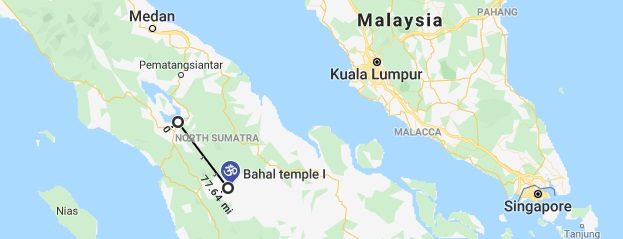
Candi Bahal North Indonesia: Candi Bahal is a monastery located about 400 km from Medan. The complex includes three candis: Candi Bahal I, Candi Bahal II, and Candi Bahal III. The temple site is linked to Pannai Kingdom circa 11th to 13th century CE.
Candi Bahal are one of a group of temples discovered in Padang Lawas. Padang Lawas is a grassy flat plain located between the Barisan Mountains and the highlands of northern Sumatra. The plain is kept free of tall vegetation by the prevailing dry winds sweeping through the gap between the two highlands. There were no major settlements in Padang Lawas, but the area provided a strategic route for people moving between the east and west coast of Sumatra. The flow of people in the area might provide the reason for the establishment of 11th and 13th century shrines found in the area.
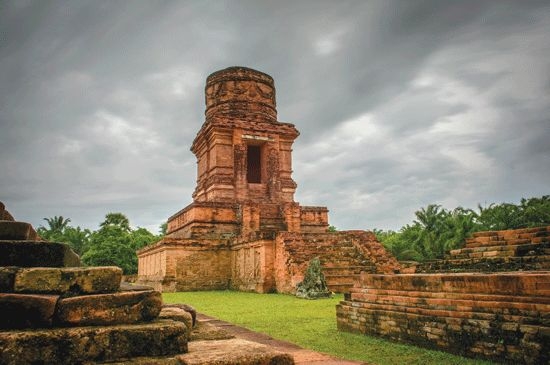
At least 25 brick shrines have been discovered in the plain of Padang Lawas, including Candi Pulo, Candi Barumun, Candi Singkilon, Candi Sipamutung, Candi Aloban, Candi Rondaman Dolok, Candi Bara, Candi Magaledang, Candi Sitopayan and Candi Nagasaribu.
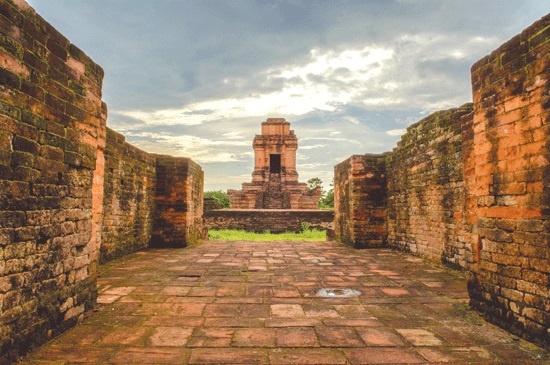
Construction of the temples of Padang Lawas were estimated to be between the 11th to 13th century CE. They were possibly linked with Pannai Kingdom.
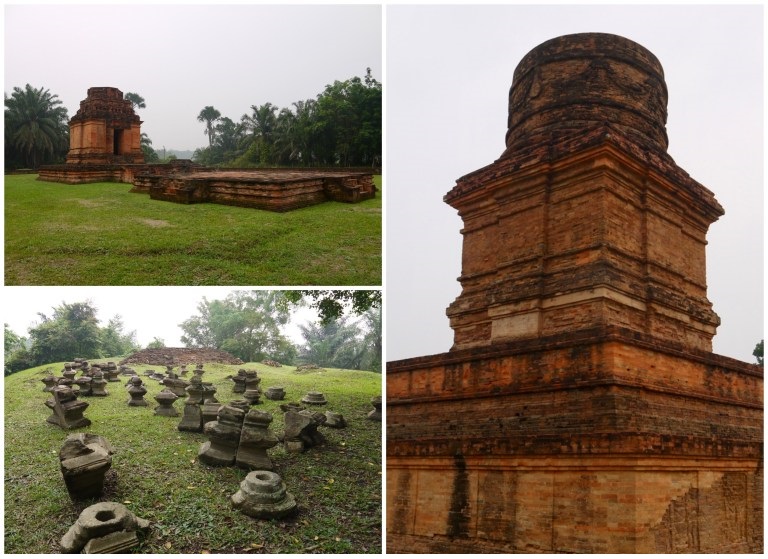
Despite its rich archaeological value, unlike the popular temples of Java, the Padang Lawas temples are mostly neglected and in the state of ruins, partly due to its isolated location. There are some attempts to promote the temples as a tourism attraction, however because of its remote location and poor infrastructure, promotion and tourism activity is limited.
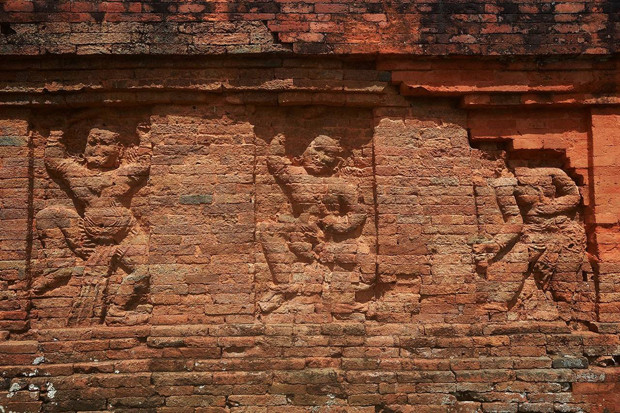
There is a whole bunch of various ruins in the North Sumatra. Appreciating that they were predominantly built with red brick, I will ask a totally unrelated question, for in order to be discovered, these buildings would have to be lost first.

KD: First of all, as far as the above maps go... obviously they can be trusted only so much. The main distrust of mine is not related to the outlines, but rather to various semi-naked barbarians drawn in by whoever did it. The reason for my doubts lies within the enormous technological mismatch, where 14th-16th century buildings do not match the nakedness of their alleged creators. In my opinion, we had the remnants of the pre-existing infrastructure overlaid with a new narrative.
Taprobana/Sumatra: The Age of Discovery started in 1419. Many lands previously unknown to Europeans were discovered by them during this period, though most were already inhabited. From the perspective of many non-Europeans, the Age of Discovery marked the arrival of invaders from previously unknown continents.
Lake Toba: Intro
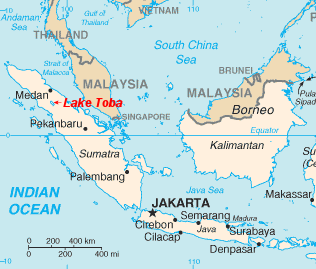
Lake Toba is a large natural lake in Sumatra, Indonesia occupying the caldera of a supervolcano. The lake is located in the middle of the northern part of the island of Sumatra, with a surface elevation of about 900 metres (2,953 ft). The lake is about 100 kilometres (62 miles) long, 30 kilometres (19 mi) wide, and up to 505 metres (1,657 ft) deep. It is the largest lake in Indonesia and the largest volcanic lake in the world. Lake Toba Caldera is one of the nineteen Geoparks in Indonesia, which is proposed to be included in the UNESCO Global Geopark.
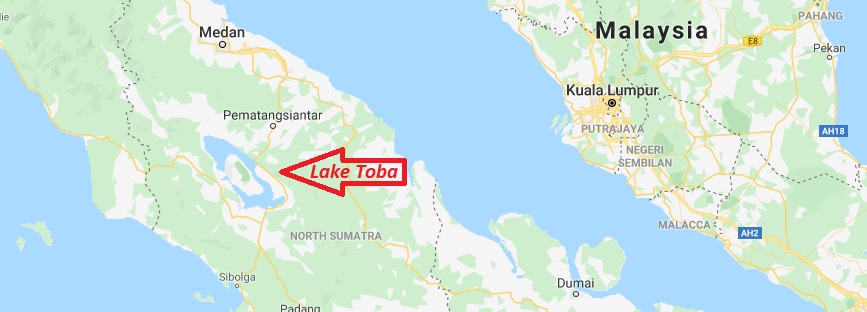
Lake Toba is the site of a massive supervolcanic eruption that occurred 69,000 to 77,000 years ago, representing a climate-changing event. Recent advances in dating methods suggest a more accurate identification of 74,000 years ago as the date. It is the largest-known explosive eruption on Earth in the last 25 million years. According to the Toba catastrophe theory:
- It had global consequences for human populations.
- It killed most humans living at that time.
- It is believed to have created a population bottleneck in central east Africa and India, which affects the genetic make-up of the human worldwide population to the present.
- It has been accepted that the eruption of Toba led to a volcanic winter with a worldwide decrease in temperature between 3 to 5 °C (5.4 to 9.0 °F), and up to 15 °C (27 °F) in higher latitudes.
Note: In 1993, science journalist Ann Gibbons posited that a population bottleneck occurred in human evolution about 70,000 years ago, and she suggested that this was caused by the eruption.
- Geologist Michael R. Rampino of New York University and volcanologist Stephen Self of the University of Hawaii at Manoa support her suggestion.
- In 1998, the bottleneck theory was further developed by anthropologist Stanley H. Ambrose of the University of Illinois at Urbana–Champaign. Both the link and global winter theories are highly controversial.
- The Toba event is the most closely studied supereruption.
Population Bottleneck
A population bottleneck is a sharp reduction in the size of a population due to environmental events (such as famines, earthquakes, floods, fires, disease, or droughts) or human activities (such as genocide). Such events can reduce the variation in the gene pool of a population; thereafter, a smaller population, with a smaller genetic diversity, remains to pass on genes to future generations of offspring through sexual reproduction. Genetic diversity remains lower, increasing only when gene flow from another population occurs or very slowly increasing with time as random mutations occur. This results in a reduction in the robustness of the population and in its ability to adapt to and survive selecting environmental changes, such as climate change or a shift in available resources.The controversial Toba catastrophe theory, presented in the late 1990s to early 2000s, suggested that a bottleneck of the human population occurred c. 70,000 years ago, proposing that the human population was reduced to perhaps 10,000–30,000 individuals when the Toba supervolcano in Indonesia erupted and triggered a major environmental change.
- However, subsequent research, especially in the 2010s, appeared to refute both the climate argument and the genetic argument. Recent research shows the extent of climate change was much smaller than believed by proponents of the theory.
Scientific Blasphemy
In fact, Oregon State University researchers were able to link recent eruptions at Mt. Sinabung in northern Sumatra to the last eruption on Earth of a supervolcano 74,000 years ago at the Toba Caldera some 25 miles away. At Toba, it appears that the eruptions continued for at least 15,000 to 20,000 years after the supereruption and the structural adjustment continued at least until a few centuries ago - and probably is continuing today. It is the magmatic equivalent to aftershocks following an earthquake.- Toba is at least 1.3 million years old, its supereruption took place about 74,000 years ago, and it had at least six definitive eruptions after that - and probably several more," Mucek said. The last eruption we have detected occurred about 56,000 years ago, but there are other eruptions that remain to be studied.
- Sure #1: The researchers also managed to estimate the history of structural adjustment at Toba using carbon-14 dating of lake sediment that has been uplifted up to 600 meters above the lake in which they formed. These data show that structural adjustment continued from at least 30,000 years ago until 2,000 years ago -- and may be continuing today.
- Sure #2: Previous argon dating studies had provided rough ages of eruptions at Toba, but those eruption dates had too much range of error, the researchers say. In their study, the OSU researchers and their colleagues from Australia, Germany, the United States and Indonesia were able to decipher the most recent volcanic history of Toba by measuring the amount of helium remaining in zircon crystals in erupted pumice and lava.
KD: I do not even know where to start. We are being sold this 74,000 year old Total Cataclysm. It possibly killed off the majority of the world population and left a few species to re-populate the Earth. Simultaneously we are being told that may be it was not that bad, and the aftereffects were not nearly as bad.
At some point a scientist looked at this lake, did some chemical tests, dated some argon, and came up with all this non verifiable non-sense.
The Lake Toba Legend
According to a legend, there was a mythical mountain called Mount Tuhaweoba in area of the Lake Toba. Tuhaweoba is also the name of the type of pepper. The mountain exploded, Lake Toba was created and the people who shared the land were divided. Those on the western side of the lake became the Batak Toba and on the eastern side Batak Simalungun. The word Tuhaweoba changed over time into Tuba and later into Toba.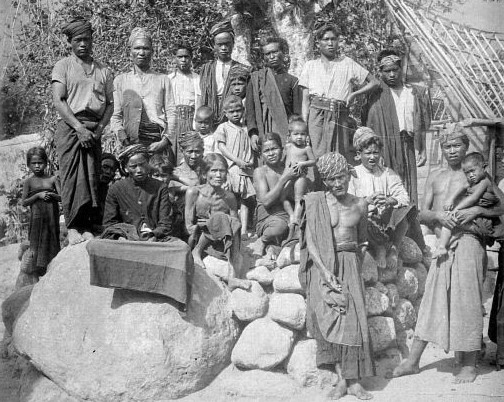
KD: Somebody is seriously full of sh*t here. It's either scientists with their 74,000 year old eruption, or the people of Batak with remembering what happened 74,000 years ago. So we have this "largest-known explosive eruption on Earth in the last 25 million years", "global volcanic winter which lasted 6 to 10 years" 74,000 years ago, and these Batak dudes and dudesses survived to carry through 74 millennia, and tell the story? They even managed to know the name of the 74,000 year old volcano mountain. Mount Tuhaweoba, right?
- Step outside, and ask an average person what they know about the New Madrid Earthquake of 1811-12, or about the Great Flood of 1862.
- This is probably the point where you want to bring up the Great Biblical Flood, and various related legends we have recollection of today. Well, it was not that long ago, and hardly was a flood. In my opinion these two events (Biblical Flood and Toba Eruption) happened at about the same time. The Great Biblical Flood topic would be for an entirely different thread, and has been covered by me on a few occasions within this very forum. For starters you can read this.
Sumatra aka Taprobana
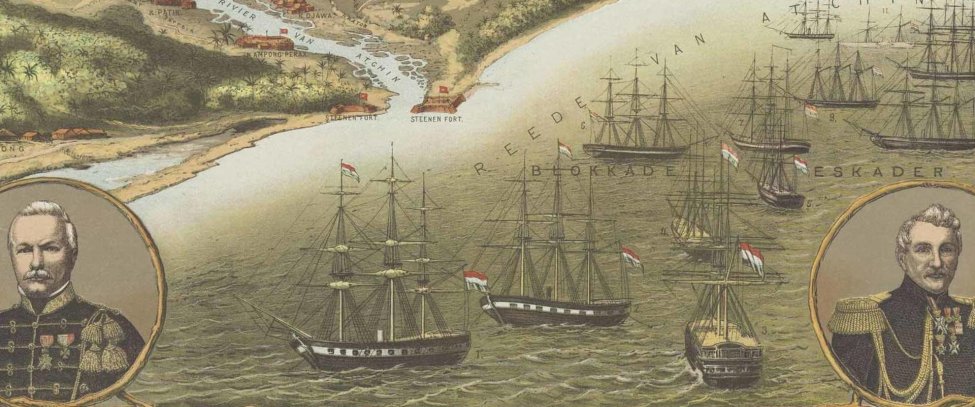
The first European to visit Sumatra was Marco Polo, who was there briefly c.1292. Following the Portuguese, who came in 1509, the Dutch arrived in 1596 and gradually gained control of all the native states including Achin. The British had brief control over parts of the island in the late 18th and early 19th cent. The Achinese (Acehnese) launched a rebellion in 1873 and were not subdued by the Dutch until 1904.It seems that playing musical chairs with geographical names was trendy back in the day. Why would they rename a huge island? Ok, I can see it being renamed by the so-called colonists from Sumatra to some St. George island. At the same time I have hard time understanding why they took the Island of Taprobana and changed its name to Sumatra. What I also do not understand is why TPTB is trying to tell us, that Taprobana was an older name for the Island of Sri Lanka.
- Ancient Greek geographers called Sri Lanka Taprobanā (Ταπροβανᾶ) or Taprobanē (Ταπροβανῆ) from the word Tambapanni.
- KD: What exactly were Ancient Greeks doing on Sri Lanka?
Who out there would pay attention to anything beyond the name of the map? Some would, but a whole bunch would probably not.
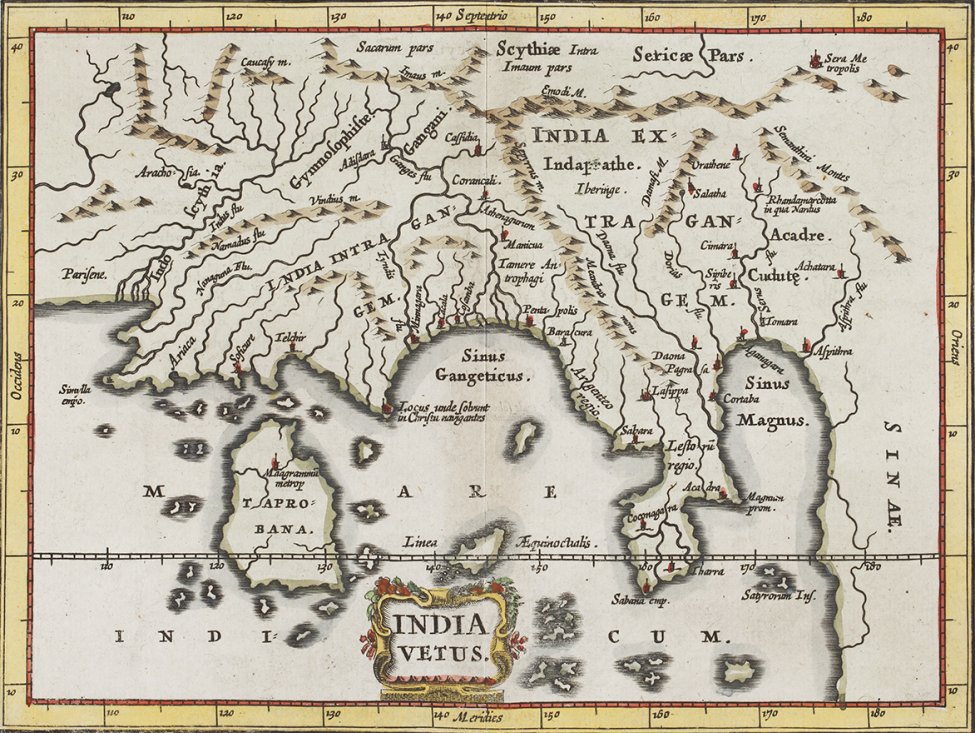
- Why is this Sri Lanka/Taprobana located to the South-West of the mainland India?
- Since when do we have the Equator crossing the island of Sri Lanka?
- This here is Sri Lanka, for comparison.
- KD: Additionally, who was responsible for renaming?
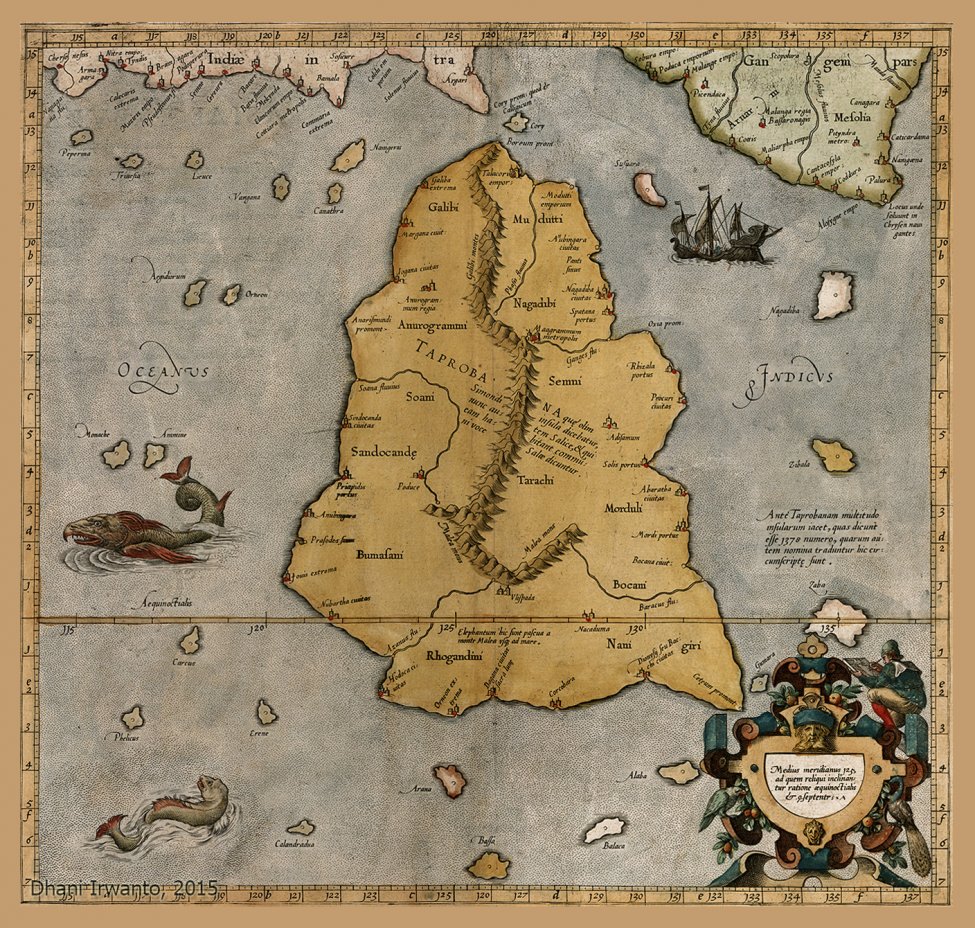
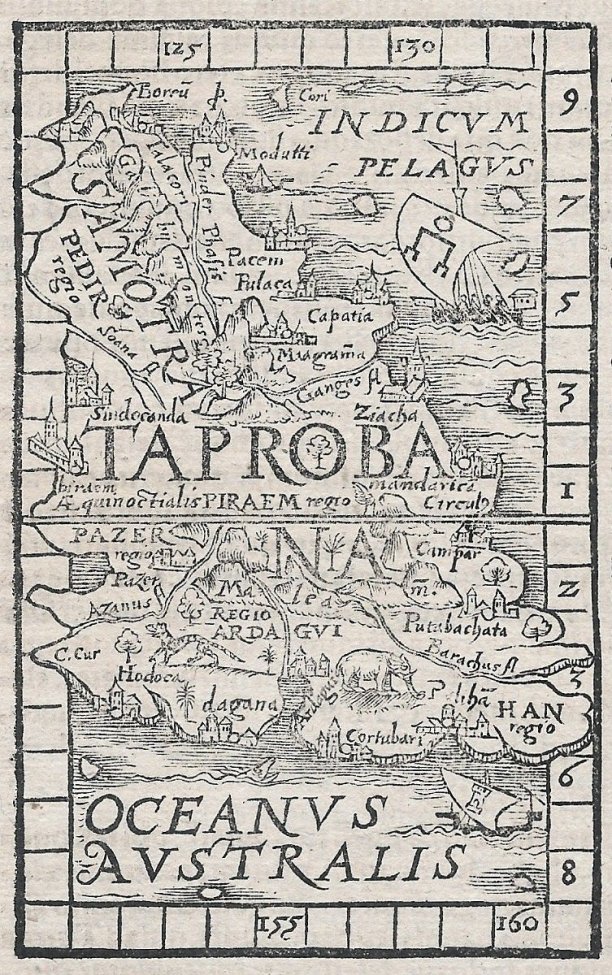
Of course there were maps like this one or this one, but all these "Formerly Taprobane" have very little of my trust at this moment.
Dhani Irwanto here, thinks that: Taprobana is not Sri Lanka nor Sumatera, but Kalimantan. He is wrong, and below you will see why.
Taprobana: Ancient Knowledge
Reports of the island's existence were known before the time of Alexander the Great as inferred from Pliny (died 79 AD). The treatise De Mundo (supposedly by Aristotle (died 322 BC) but according to others by Chrysippus the Stoic (280 to 208 BC) incorrectly states that the island is as large as Great Britain (in fact, it is only about one third as big). The name was first reported to Europeans by the Greek geographer Megasthenes around 290 BC. Herodotus (444 BC) does not mention the island. The first Geography in which it appears is that of Eratosthenes (276 to 196 BC) and was later adopted by Ptolemy (139 AD) in his geographical treatise to identify a relatively large island south of continental Asia.- Taprobana is most likely to be the Greek rendition of Tamraparni, Sri Lanka's oldest name from the era of Agastya and the early Pandyan kingdom which was also the name of the river and region around the present-day Thamirabarani River of Tirunelveli, in Tamil Nadu in India. G.U.Pope, in his book "Textbook of Indian History", claims the name to be derived from Dipu-Ravana, meaning the island of Ravana.
- Sri Lanka, as in Ptolemy's map and climes
- Sumatra, as in the birthplace of Enrique of Malacca
- A phantom island
No BS: Taprobana Was Destroyed
This is the point where I have realized something, and will honestly admit, that I had no clue up to this very moment. I think I understand why the island of Taprobana was renamed to Sumatra. Because it stopped to exist in its original state. As in something split the island of Taprobana into Sumatra and Malaysian Peninsular. In other words the below maps show the same thing before,and after.- The equator line, and the numbered lines of latitude made me think of the below.
Something like this, I guess.
Once the above occurred to me, a proper map showed up. As you can see Sri Lanka is where it is supposed to be, and our Island of Taprobana was still in its place.
- c. 1550: A very rare mid-16th century German woodcut map of the Indian Ocean and Asia in old colour by Sebastian Münster (1488-1552), a German geographer, cartographer, Hebraist and theologian and published in the 1550 German edition of his monumental work Cosmographia, a compendium of some 1,223 pages and 910 woodcuts including maps and dozens of city views. The Cosmographia ran to at least 27 editions between 1553 and 1628 in German, French, Latin, Italian and Bohemian.
As you can see in the above map Sumarra is just below the main name of the island of Taprobana. When you look at our contemporary map above, you will realize that the island of Taprobana was split from North-West to South East. The Nort-Western corner does not exist any longer, as in it is under water. The right portion of the split island of Taprobana was pushed into Malaqua. This right portion of the island of Taprobana hosts today's Kuala Lumpur. Well, and Malaqua itself sustained some major damages as well.
If someone out there can help out with the translation of the below, it would be greatly appreciated. Taken from this 1588 map.

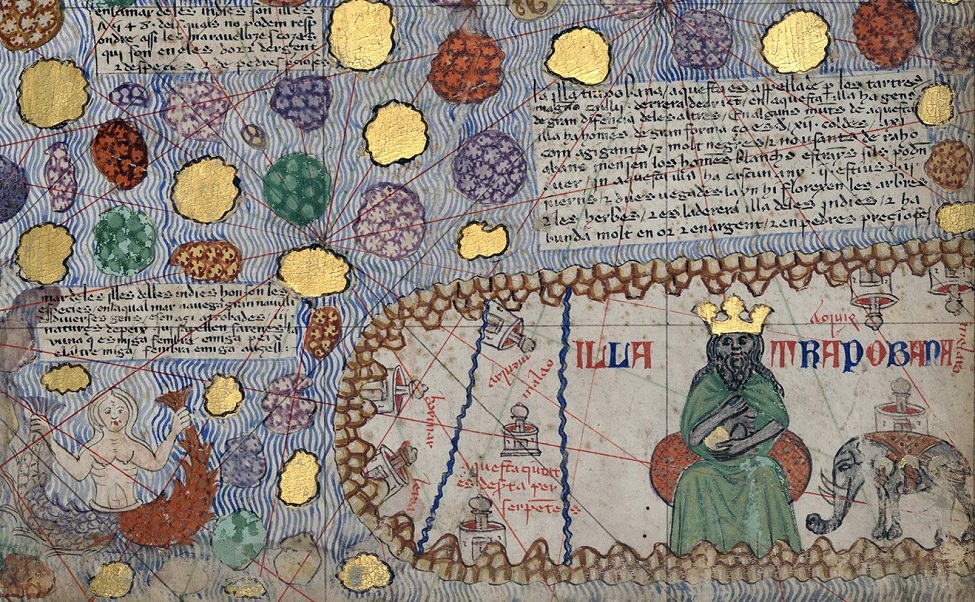
Oh, and what's this Maagrammum Metropolis here? Pretty sure TPTB would tie it into Sri Lanka somehow, but there still had to be some useful info left somewhere.
Lake Toba: Continued
- Europeans got knowledge about this sacred lake reasonably late. Marsden, which spend eight years in Bengkulu wrote in his “History of Sumatra” from 1811.
- “It is said that there is a huge lake in North Sumatra, where exactly is not known.”
- Two British missionaries, Burton and Ward, spend a week in the Silidung valley in 1824, but were probably kept out of the way of the lake on purpose, which is considered sacred by the population.
- The first European to visit Sumatra was Marco Polo, who was there briefly c.1292. Following the Portuguese, who came in 1509, the Dutch arrived in 1596 and gradually gained control of all the native states including Achin. The British had brief control over parts of the island in the late 18th and early 19th cent.
As it says above: the Dutch arrived in 1596 and gradually gained control of all the native states including Achin. Now check the below info out, and tell me if them not finding out about the Lake of Toba all the way until 1811 makes any sense.
- Are we seriously expected to believe that with all that Gold, Silver and Copper, this relatively small island would stay unexplored to the point where this big a*s Lake Toba was not even heard of until 1811?
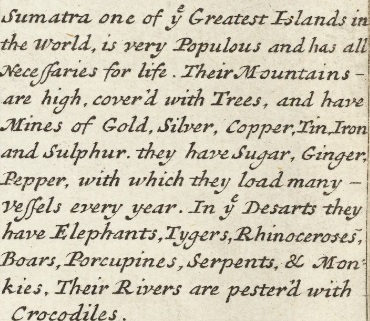
Google Ngram Viewer for 1500-1900 Lake Toba, or lake Toba looks even more puzzling.
Lake Toba: where are you?
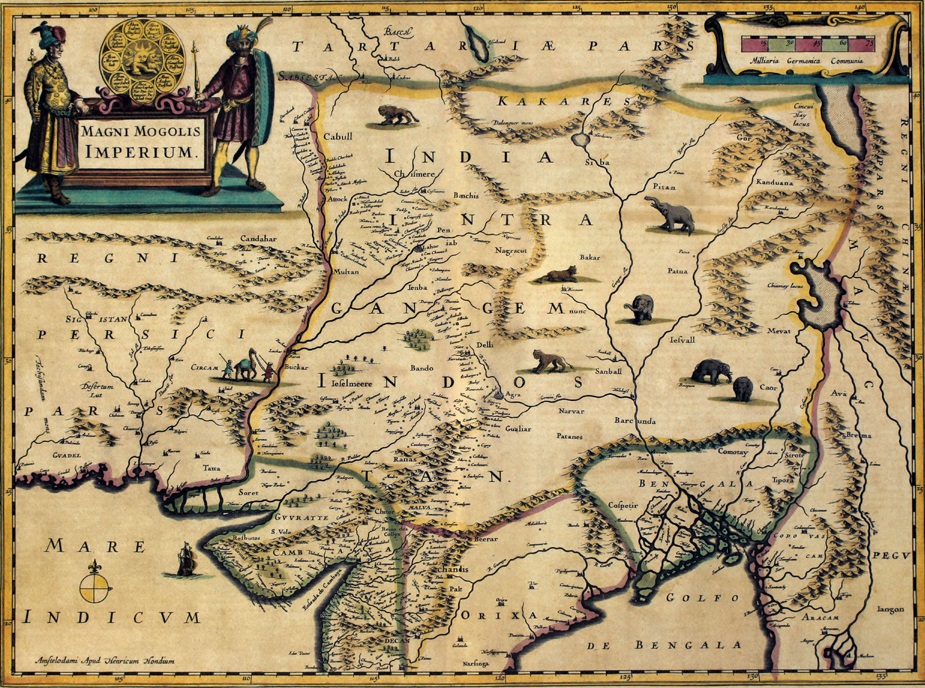
- Additionally, it would be interesting to find out who (in the opinion of TPTB) mapped all the below inlands. Per their stupid narrative, Europeans stayed away from the mapped areas.
1482
Fine old color example of this remarkable early map of Taprobana (Sri Lanka), from the 1486 Ulm edition of Ptolemy's Geographia. The map is drawn from the work of Nicolas Germanicus, whose manuscript maps were created to illustrate pre-1470 editions of Ptolemy's Geographia.The present map is from the second edition of this work, which was first published in 1482.
Map
1561
Map +1
1593
Map
1599
Narsinga, and not Hindustan...
Source + Source
1630
Map
1676
Map
1719
Map
1720
Map
1746
Map
1760
Map
1786
Map
1802
Map
1814
Map
1825
Map
1826 - Hallelujah
Well, someone out there wants us to think that the island of Sumatra was in its current state forever. They also want us to think that this Lake Toba was around for at least 74,000 years. I do not expect to find anything about this lake in the older texts for two reasons:
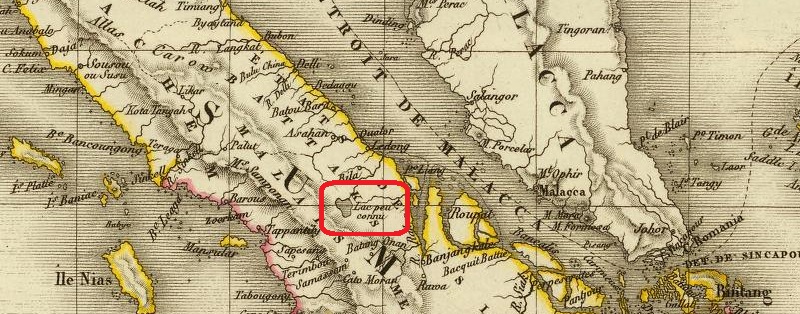
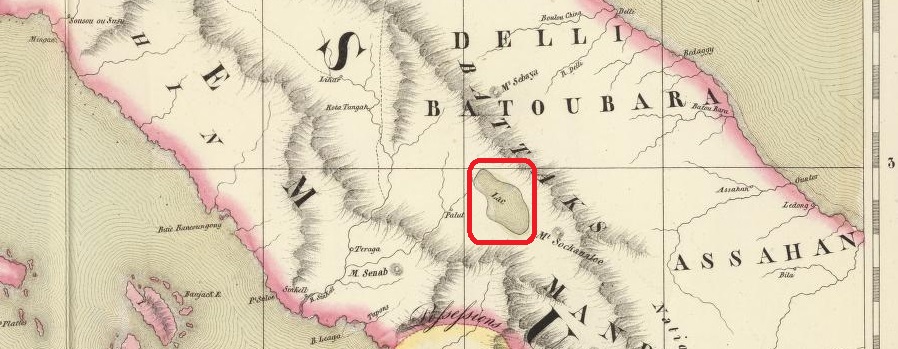
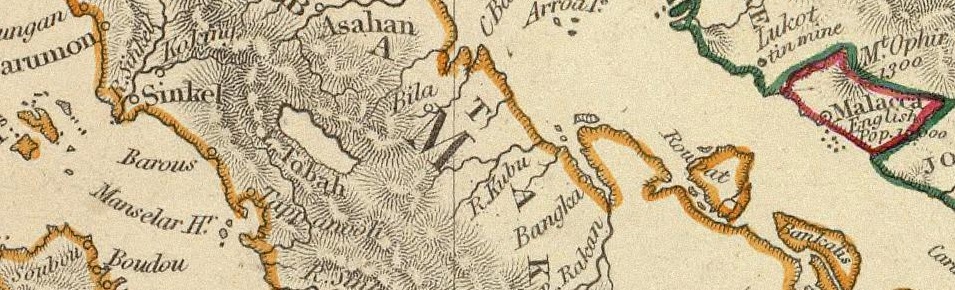
- I do not believe that this lake existed prior to the end of 18th, beginning of the 19th century.
- They claim that they did not even know about this lake prior to 1811.
1525 - The voyage of Magellan
Ferdinand Magellan reached the Malay Archipelago in Southeast Asia between 1505 and 1511–1512. That is for the first time while traveling East. He also did it second time traveling west (1519-1522). I did not find the actual book, but Google Books provided with an interesting snippet containing the following:- The island of Samatra (Sumatra), formerly called Taprobana, Pegu, Bengala, Vroza, Chelin, where are the Malabrins under the king of Naslinga.

KD: It also makes me think, that not having the island of Taprobana in its previously described, and known state/location, could provide for the confusion where Ceylon and Sumatra were both considered to be Taprobana. There are some after-1525 texts stating that Spaniards considered Ceylon to be Taprobana.
Candi Bahal
Despite its rich archaeological value, unlike the popular temples of Java, the Padang Lawas temples are mostly neglected and in the state of ruins, partly due to its isolated location. There are some attempts to promote the temples as a tourism attraction, however because of its remote location and poor infrastructure, promotion and tourism activity is limited.
- How exactly do you lose structures like these, when "Dutch arrived in 1596 and gradually gained control of all the native states including Achin".
- We did not know about a huge 74,000 year old lake, and we did not know about these Candi Bahal and Co Padang Lawas structures.
- When were they discovered?
- Where were brick factories?
Taprobana/Sumatra: The Age of Discovery started in 1419. Many lands previously unknown to Europeans were discovered by them during this period, though most were already inhabited. From the perspective of many non-Europeans, the Age of Discovery marked the arrival of invaders from previously unknown continents.
- In my opinion, it should be renamed to the Age of re-Discovery and Conquest. Some catastrophic event changed the face of the Earth, including the island of Taprobana.
- Certain powers went around the world pillaging whatever was pillageable.
- In the process, many survivors were annihilated.
- The Great Biblical Flood is what we call this event today.
- The Lake Toba story is like a carbon copy of this: The Grand Canyon is under 450 years old...?
- Additionally we need to remember about that 1815 Mount Tambora Eruption, which was blamed for the 1816 Year without Summer.
- May be the emergence of the Lake Toba, and the Eruption of Mount Tambora were directly related to each other.
- And may be both were not natural volcanoes.
- Event #1: The Great Flood > possibly 14th century. All the chimeras were destroyed.
- Event #2: War of 1775 - 1815ish > possibly created Lake Toba
Note: This OP was recovered from the Sh.org archive.
Note: Archived Sh.org replies to this OP are included in this thread.