

Archive
Old SH Archive
- Joined
- Sep 8, 2020
- Messages
- 17,737
- Reaction score
- 3,168
First a brief history of the Patent Office.
So, the first one was in the Blogget hotel, purchased by the government in 1810 and supposedly the only Washington building not torched by the British in 1812. Really?
Hmmmm....
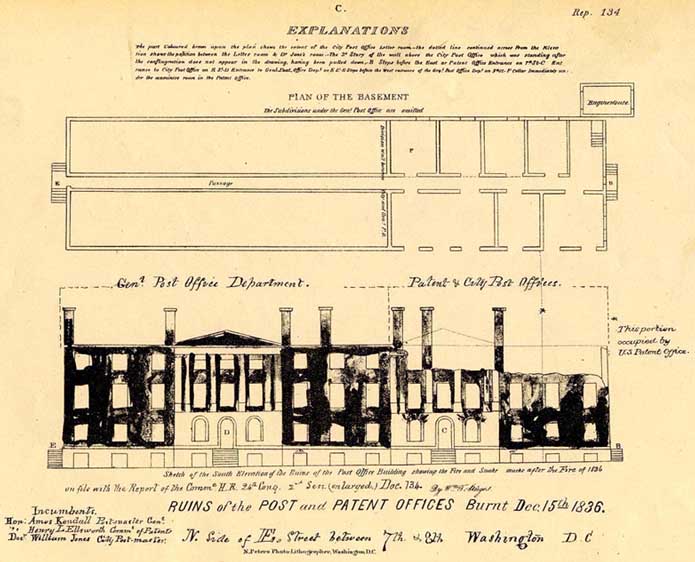
So, it caught on fire in 1836 and effectively destroyed every patent filed up until then.
Hmmm....
Started in 1836, it took 30 years to build and was completed in 1865.
However, history also states (with a straight face) that Clara Barton worked as a clerk for the Patent Office in that building from 1854 to 1857.
So, just like the Smithsonian Castle across the street, this fire-proof structure also caught fire, destroying thousands of patent records and models.
Eventually they fixed it up (again) and became part of the Smithsonian complex and now houses the American Art Museum.
And, of course, can't bring up the X-factor without mentioning the Dark Journalist work tracing X steganography back through history used to represent hidden knowledge of ancient technology.
So, the first one was in the Blogget hotel, purchased by the government in 1810 and supposedly the only Washington building not torched by the British in 1812. Really?
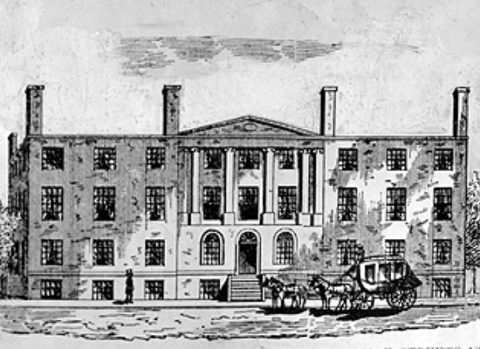
It temporarily housed Congress in 1815 after the destruction of the Capitol by the British.The Patent Office was the only major government building to survive the British invasion of Washington, D.C., during the War of 1812. This is credited to Dr. William Thornton who was building a musical instrument in the same building. He persuaded British officers that they would be destroying the shared intellectual record of mankind if the patents were burned. [1]
Hmmmm....
So, it caught on fire in 1836 and effectively destroyed every patent filed up until then.
Hmmm....
Now instead of buying another building so the Patent Office could get running promptly, the government selected a piece of prime real estate and announced their plans to put up their new Patent Office in accordance with L'Enfant's vision. It was right across the street from the Smithsonian Castle.The Patent Office 1836 fire occurred on December 15 when the patents were in temporary storage while a new (more fireproof) facility was being built. A fire station was located next to the temporary storage facility, but the hoses and pumps were frozen, and the firemen were unable to prevent the loss.
Old Patent Office Building - WikipediaIn Pierre (Peter) Charles L'Enfant's plan for the capital city, the site of the Patent Office Building, halfway between the Capitol and the President's House, was set aside for a monumental structure. L'Enfant envisaged a nondenominational "church of the Republic", which he later modified to a Pantheon devoted to great Americans.[7
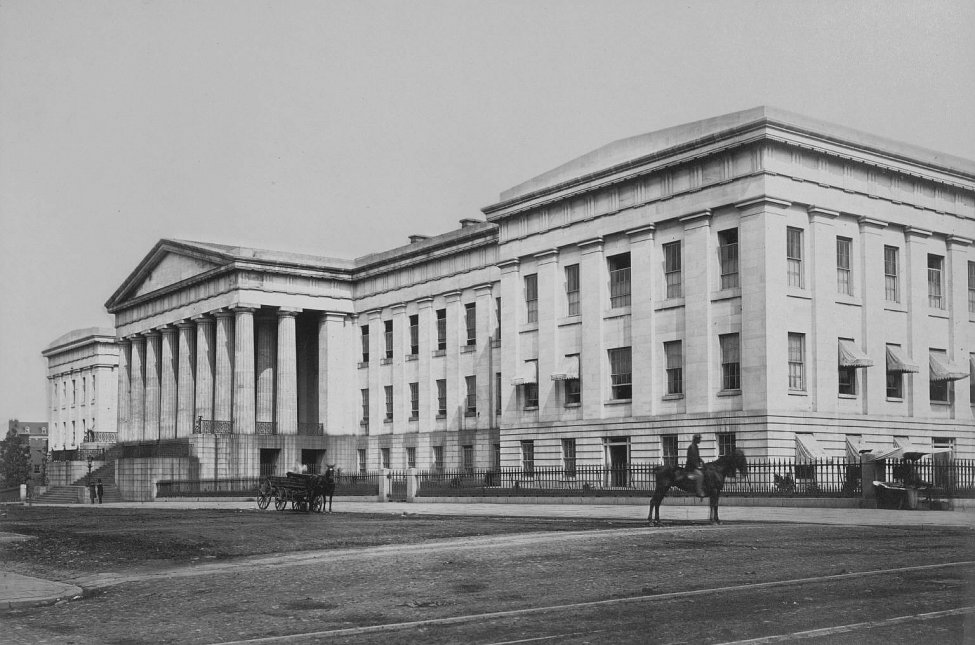
Started in 1836, it took 30 years to build and was completed in 1865.
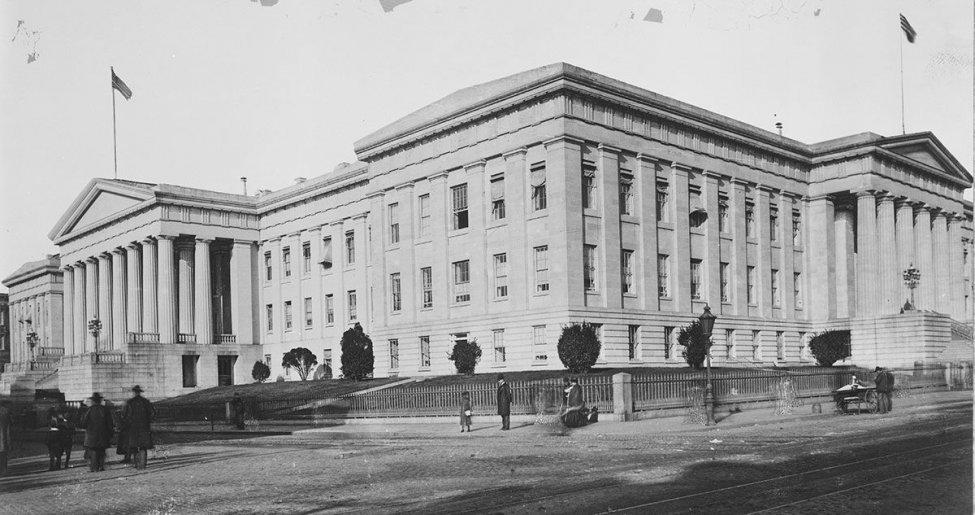
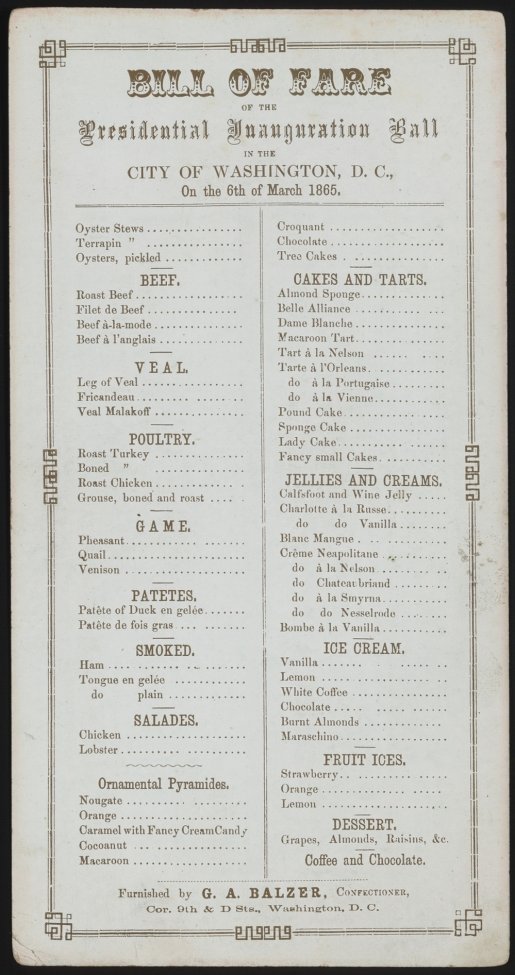
It was ready just in time to be the venue for Lincoln's second inauguration ball. Sounds like it was quite a party!After years of political infighting, in which Congressional committees questioned Mills' competence and insisted on design changes that inserted unnecessary supporting columns and tie-rods, Mills was summarily dismissed in 1851. Construction continued under the direction of Thomas U. Walter, one of Mills' harshest critics[9] and was completed in 1865.
A sugar model of the Capitol... was much admired until it began to dissolve on its pedestal in the shambles that ensued.
Instead of going to the tables in sequence, the crowd literally charged at the refreshments, wolfing down food, carrying off legs of lamb to be eaten in alcoves... Glasses were smashed. The marble floor was littered with pulp and debris. The hilarity grew as the night wore on, and some of the inebriates lay down to sleep it off. Laces and silks were torn in the free-for-all.
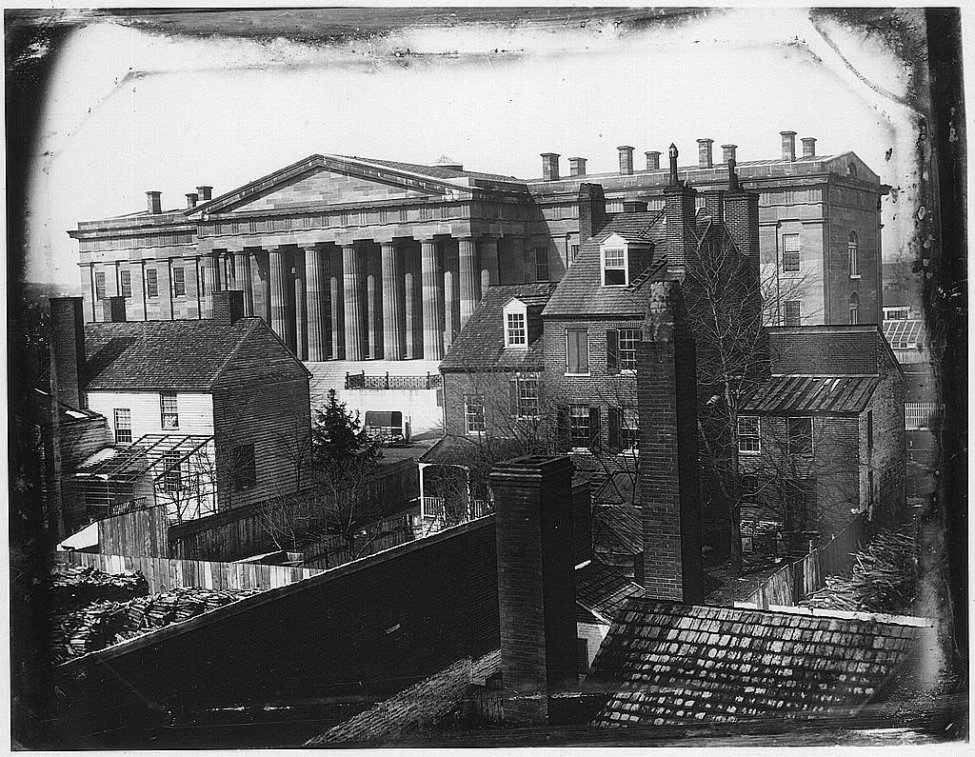
However, history also states (with a straight face) that Clara Barton worked as a clerk for the Patent Office in that building from 1854 to 1857.
Guessing this is a photo of the "original" building, it is dated 1846. Looks like it is in need of a good whitewashing!From 1854 to 1857, Clara Barton worked in the building as a clerk to the Patent Commissioner, the first woman federal employee to receive equal pay. During the Civil War, the building was turned into military barracks, hospital, and morgue. Wounded soldiers lay on cots in second-floor galleries, among glass cases holding models of inventions that had been submitted with patent applications. The American poet Walt Whitman frequented "that noblest of Washington buildings"[10] and read to wounded men.
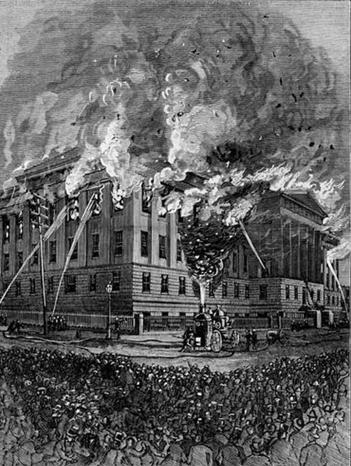
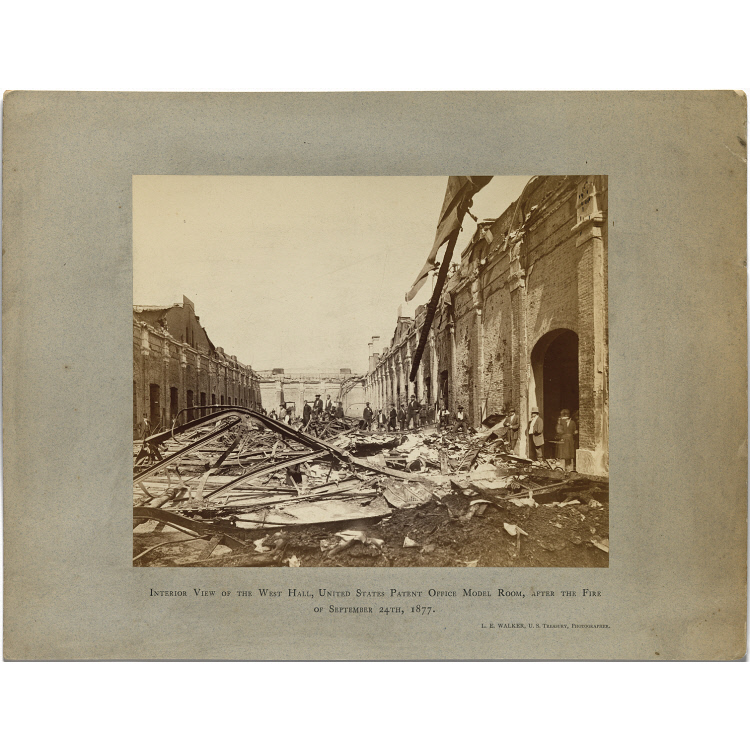
So, just like the Smithsonian Castle across the street, this fire-proof structure also caught fire, destroying thousands of patent records and models.
And just like the Smithsonian Castle fire, the depictions show the whole building aflame while the aftermath pictures indicate a specific section burned, not the entire structure.Supposedly, the Patent Office Building was nearly fireproof, but the events of September 24, 1877, demonstrated that this was not true. The original wings of the Patent Office had a roof with a framework of iron and brick, but by the time the west or Ninth Street wing was built, cheaper methods of construction had been allowed. The west wing roof was formed of trusses made partly of iron and partly of wood. These were covered with pine sheathing with thin copper sheeting over it. Over 100,000 board feet of white pine lumber was used in the construction of the roof of the west wing. Under the south end of the west wing was a conservatory or hot house, and just to the north of this some 12,000 rejected models were stored in the loft up among the trusses of the roof. A finer lot of kindling wood could not be assembled. The precise origin of the resulting fire was never determined with certainty, but a leading theory was that a defective flue passing through the section of the loft containing the rejected models set fire to the models or to the adjacent wooden roof.
Eventually they fixed it up (again) and became part of the Smithsonian complex and now houses the American Art Museum.
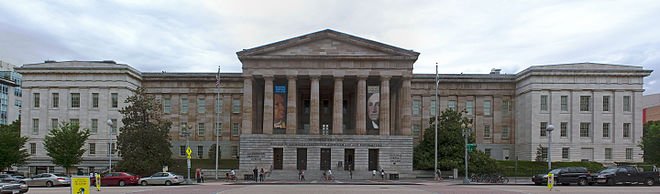
Now we come to Patent X. This designation is used to identify patents recovered after these fires, some from the original owners files. There are still X Patents popping up to this day! Here is a PNG of the first X Patent!The Smithsonian American Art Museum (commonly known as SAAM, and formerly the National Museum of American Art) is a museum in Washington, D.C., part of the Smithsonian Institution. Together with its branch museum, the Renwick Gallery, SAAM holds one of the world's largest and most inclusive collections of art, from the colonial period to the present, made in the United States. The museum has more than 7,000 artists represented in the collection. Most exhibitions take place in the museum's main building, the old Patent Office Building (shared with the National Portrait Gallery), while craft-focused exhibitions are shown in the Renwick Gallery.
The United States Congress immediately passed a law to aid re-issuing of the missing patents after the fire. About 2,800 such patents have been recovered,[2] and 1,989 are online.
Up until five months prior to the fire, U.S. patents had not been numbered, and were identified by titles and dates. The first patent denoted with the serial numbering system still in use today was issued on July 13, 1836, and was given the number 1.[3] The recovered patents are also numbered from 1, but these numbers have an "X" added to them. The X is generally added to the end of the number except for the first patent which has the X in the beginning of the number. Therefore, they are called X-Patents.

The first patent was issued in 1790. The first patent official was the superintendent of patents, an employee of the Department of State beginning in 1802. A fire destroyed the records of the first 10,280 patents issued between 1790 and 1836. Fewer than 3000 of them were recovered and reissued with a number ending in "X." Patents since 1836 were renumbered starting at one. The Patent Office was housed in its own new building in 1836 under a commissioner for patents, being transferred in 1948 to the new Department of the Interior and eventually in 1925 to the Department of Commerce. In addition to the patent laws, the office administers trademark laws and is now officially known as the Patent and Trademark Office (PTO). Beginning with the new numbering system, patent 10,000 was issued in 1854, patent 100,000 in 1871, patent 1,000,000 in 1912. In total, the PTO has issued more than 8,000,000 patents. It is widely claimed that in 1899 the head of the U.S. Patent Office sent his resignation to President McKinley urging the closing of the office because "everything that could be invented has been invented." Even President Reagan used it in a speech. However, there appears to be no actual evidence that this ever happened.
Of course, I can't help but wonder just what kind of evidence of previous technology may have been obliterated forever in those files? We'll never know, but I'm going to keep my ear to the ground about new X- Patents coming forward.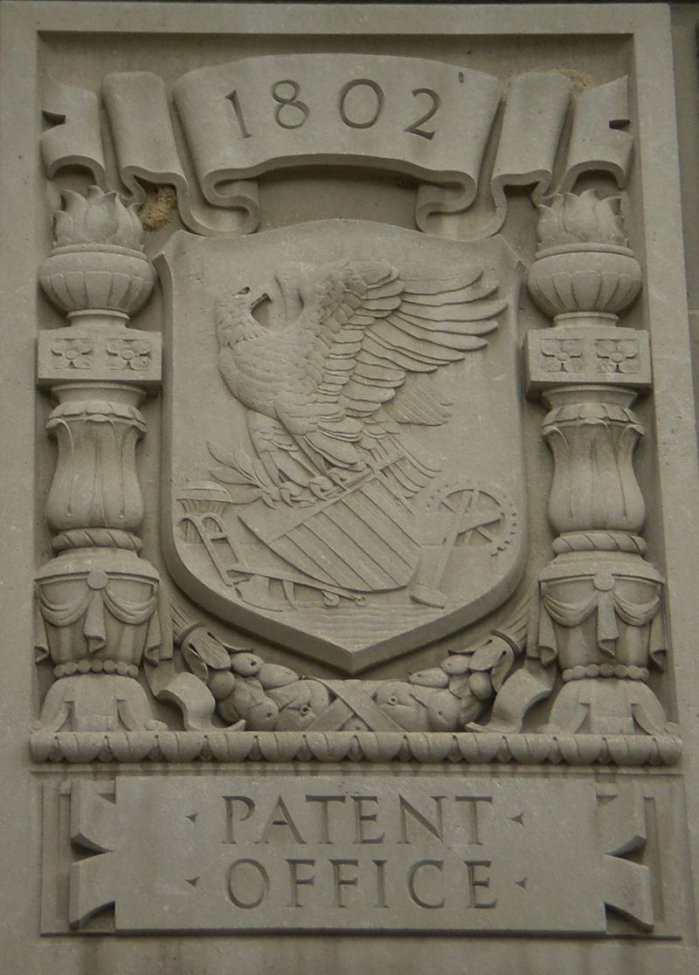
source
source
And, of course, can't bring up the X-factor without mentioning the Dark Journalist work tracing X steganography back through history used to represent hidden knowledge of ancient technology.
Note: This OP was recovered from the Sh.org archive.
Note: Archived Sh.org replies to this OP are included in this thread.


