What actually happens when the sun sets?

What could we hope to see?
The shape of the pool of light like being above a streetlight sort of thing?
Wish I knew. Only way I can see of working out the pattern of light cast would be by use of the timeanddate website . Using the December equinox it might be possible to track the sunrise/sunset times for those places around and to north of the tropic of Capricorn , then compare these to sunset/sunset times for places at various distances north of the tropic of Cancer . Might have to look at this when I have enough free time .

I can see your scalene triangle idea makes sense but light is part of the electromagnetic spectrum . I picture light being influenced by earth's (possibly rotating) toroidal magnetic field. Scalene triangle would be a 2d view of a 3d phenomenon , is that correct?
 
Scalene triangle would be a 2d view of a 3d phenomenon , is that correct?
To be honest I was looking for the egg shape image and landed on the scalene triangle and that felt thats good enough. And of course once I'd posted that I discovered the half egg image!
You know how it goes.

I know from looking at an infrared light on a shipyard security camera setup that infrared light is invisible to us. I saw the lamp and its red light as red but saw nothing of the infrared light itself or the things it was pointing at and illuminating.
It was only when looking at the screen attached to the camera did I see what was being illuminated by the infrared.
Therrefore to my mind visible red light such as we see at sunrise and sunset fades into infrared at sunset and merges into orange/ yellow etc at sunrise.

An artifact of our eyes presentation of the physical is the horizon line which is in the exact horizontal middle of our vision. The picture delivered is presented on a curved screen if you will that brings what's above the horizon and below it together at the horizon line.
We know they don't actually meet.

When we use our vision to look at a lighthouse from distance if the light is shining along the horizon line we see it illuminate the sea which our eyes make the water rise up between us and the lighthouse.
Above the water in the water vapour we call air the light appears to form an angle from source rising up until it vanishes as its limit is reached. This angle does not repeat on the seas surface because the sea is lower than the source and our vision is aligned to the level horizon so it 'sees' solid objects like the surface of the sea differently to lit water vapour.
I reckon all light is is a source being bounced off of water vapour. When there is a huge source as in the suns case we are unaware of the extent of the distance the sun illuminates as we cannot see the dsrkness where there is still water vapour but no light. Except we do actually know its limited as the blue sky shows us. And at night we get to see more as the blue fades out and anything lit by the setting sun is orange to red.

As this lighthouse light moves on through ninety degrees to point directly at us we see a bright centre with a ring of bright light diminishing in brightness the further it is from the source all of which appears circular. Only at the very edge of this circle of brightness do we get a glimpse of red light but its definitely there.
When the light points 180 degrees from our position we see no light because we are behind the source.
As it comes and goes from our vision its too weak a light so we do not see the red light at its edge.

The idea of the half egg shaped light from the sun comes from the slow morning quick night observable reality. Unlike the lighthouse example where the source has a back to it the sun appears to be omnidirectional.
Of course the possibility is there that it too has a back but it tilts about an axis as it travels over bus and never presents its back so we don't get to see it at any point during the day.
It is difficult if not impossible for our vision to show us the true limit of light and the shape it makes in the darkness.
Its also possible it turns enough to reveal its back once its gone beyond our visual limit.

If we use a torch in the dark that can can be focussed then it appears the light is circular from source to extremity which we can see be moving the toirch closer to and further away from a flat surface. Shine it at a ball and it is also circular in appearance. But shining it at a ball or a square so it is fully illuminated and then going round the opposite side of the ball or square we see the light actually illuminating much more than the surface.

This brightness overspill, to use a term (probably badly!), appears to be circular until the angle of the torch to the lit object is changed. We then see an egg shaped area of brightness around the object.

That's a very long winded way of showing you where I feel the half egg shaped pool of the suns light comes from. Its focussed and angled to do one thing very well, bring forth life at the edge boundary of liquid water and water vapour. That's what we are and where we are.

Sunset basically means the distance the light source, the sun, is from the edge of its light is much less than at sunrise. We see this in the way the light that lands on objets changes colour.
 
This is neither here nor there, but here’s a local (greater Seattle) shot of the sun midday and just about out of sight.

considering that there’s no discernible change in size from (nearly) directly overhead to (nearly) setting… I would have to surmise that either the sun is indeed very very far away, or that what it is and how it works is entirely beyond our comprehension.


EDIT:
Here’s a 9am shot… and it does look smaller 🤔
I have wondered about the midnight sun phenomenon and would like to know if there are any flat earth adherents (I’m moving over to the extended plane idea) who can explain how 24 hours of sunlight would work on a flat earth model.
 
I have wondered about the midnight sun phenomenon and would like to know if there are any flat earth adherents (I’m moving over to the extended plane idea) who can explain how 24 hours of sunlight would work on a flat earth model.
I reckon you could find some answers here @Just

IFERS
 
I have wondered about the midnight sun phenomenon and would like to know if there are any flat earth adherents (I’m moving over to the extended plane idea) who can explain how 24 hours of sunlight would work on a flat earth model.
Here’s a looped time lapse of 24hr sun:


View: https://www.youtube.com/watch?v=ndlQNicOeso


I do suppose any discourse on “sunsetting” should take into consideration what happens when the sun doesn’t set.

EDIT: to add Antarctic perspective:

View: https://www.youtube.com/watch?v=YQlr366eels
 
Last edited:
Here’s a looped time lapse of 24hr sun:


View: https://www.youtube.com/watch?v=ndlQNicOeso


I do suppose any discourse on “sunsetting” should take into consideration what happens when the sun doesn’t set.

EDIT: to add Antarctic perspective:

View: https://www.youtube.com/watch?v=YQlr366eels

There's so many Antarctic/Arctic shenanigans, I will make a thread about it someday.

But the midnight sun videos has been repeatedly debunked already:
in the first video, if you focus on the land/mountains, you will notice a jerk/shift every now and then; while the sun does not show a corresponding jerk; so it is likely the land and the sun are on separate layers in the video

for the second one, see below from 13:57:

View: https://www.youtube.com/watch?v=_KAVmIlksHI
(Also, the cloud formation and flag movement is exactly the same at the start and at the end)

Now I'm not saying that the midnight sun phenomenon cannot be real, but so far I have not come across a genuine video of it
 
Last edited:
There's so many Antarctic/Arctic shenanigans, I will make a thread about it someday.

But the midnight sun videos has been repeatedly debunked already:
in the first video, if you focus on the land/mountains, you will notice a jerk/shift every now and then; while the sun does not show a corresponding jerk; so it is likely the land and the sun are on separate layers in the video

for the second one, see below from 13:57:

View: https://www.youtube.com/watch?v=_KAVmIlksHI
(Also, the cloud formation and flag movement is exactly the same at the start and at the end)

Now I'm not saying that the midnight sun phenomenon cannot be real, but so far I have not come across a genuine video of it

Could you elaborate? I've always thought people close to the arctic experience this midnight sun thing and assumed given that people live there, they surely can't make it up and share this unique experience all over the internet without someone from there debunking it.

If you have a link to an account of someone who went there to witness it and didn't that would be great as debunking videos, well, you could fabricate a debunking video just as easily.

Peace.
 
I have wondered about the midnight sun phenomenon and would like to know if there are any flat earth adherents (I’m moving over to the extended plane idea) who can explain how 24 hours of sunlight would work on a flat earth model.
The Sun moves moves above us all year long in nearly perfect circles at a rate of 15 degrees per hour (15X24=360). These circles are only nearly perfect because of the fact that the Sun, each and every year also travels between the tropics of Cancer and of Capricorn, the former being the closest it ever gets to our North center and the latter when its distance is the farthest.

Think of a corkscrew that gets slightly larger in one direction and imagine a light that follows that past, first one way and then the other... like clockwork.

This is what Alex Gleason's masterpiece showed us perfect;y in 1892. And it was patented in several countries as a perfect way to calculate time based upon the Sun's movement. The hi-res version of this is below:

gleas2%20hires.png


Pay special attention to the diagrams in the bottom two corners. The North Pole's 24 hour Sun around the June Solstice and its 24 hours of darkness around the December Solstice can be easily seen.
 
Could you elaborate? I've always thought people close to the arctic experience this midnight sun thing and assumed given that people live there, they surely can't make it up and share this unique experience all over the internet without someone from there debunking it.

If you have a link to an account of someone who went there to witness it and didn't that would be great as debunking videos, well, you could fabricate a debunking video just as easily.

Peace.
I must agree… I could easily record me photoshopping a photo of myself standing on my front porch. Would that then mean that me standing on my porch is a lie?

I do believe that if polar day and polar night, were they fake… we’d have a lot of people loudly calling BS. Particularly people who live in those places.
 
Could you elaborate? I've always thought people close to the arctic experience this midnight sun thing and assumed given that people live there, they surely can't make it up and share this unique experience all over the internet without someone from there debunking it.

If you have a link to an account of someone who went there to witness it and didn't that would be great as debunking videos, well, you could fabricate a debunking video just as easily.

Peace.
I used the term ‘midnight sun’ loosely, the correct term would be ‘unsetting’ sun , i.e. the sun never dipping below the horizon; the Sun(not just sunlight) can be continuously seen without a ‘break’. To observe the unsetting sun, one has to be at a high enough altitude, and stay there for time where the Sun makes the ‘U-turn’ so to speak. Simply observing 24-hours Sun-‘light’ is not observing an unsetting Sun.

The (extreme) difficulty of observing this, is circumstantially proven by the tiny amount of videos that claim to show an ‘unsetting sun’; I would expect there to be many more videos to exist if the ‘unsetting sun’ can be easily observed. Again, I’m not saying it does not/cannot happen.

Secondly, Arctic midnight(unsetting) sun, and Antarctic midnight(unsetting) sun are 2 different matters. Even if Arctic midnight sun happens, it does not prove that Antarctic midnight sun happens too.
 
Last edited:
The Sun moves moves above us all year long in nearly perfect circles at a rate of 15 degrees per hour (15X24=360). These circles are only nearly perfect because of the fact that the Sun, each and every year also travels between the tropics of Cancer and of Capricorn, the former being the closest it ever gets to our North center and the latter when its distance is the farthest.

Think of a corkscrew that gets slightly larger in one direction and imagine a light that follows that past, first one way and then the other... like clockwork.

This is what Alex Gleason's masterpiece showed us perfect;y in 1892. And it was patented in several countries as a perfect way to calculate time based upon the Sun's movement. The hi-res version of this is below:

gleas2%20hires.png


Pay special attention to the diagrams in the bottom two corners. The North Pole's 24 hour Sun around the June Solstice and its 24 hours of darkness around the December Solstice can be easily seen.

Can you explain how the sun moves at the same exact speed all year round, but manages to go over a distance that's twice the size of it's sister tropic? Comparing the actual distances of the tropic of cancer, and the tropic of Capricorn. Can you extrapolate as to how this is possible?
 

Attachments

  • 69423244_566021987468131_39922824822915072_n.jpg
    69423244_566021987468131_39922824822915072_n.jpg
    144.1 KB · Views: 161
The sun has a constant angular velocity , it moves within earths rotating toroidal magnetic field.

Gleesons map is a 2d representation of the imaginary globe .It is not a flat earth map. A mile along the southern tropic would have to thus be longer than the mile along the northern tropic.
 
The book of Enoch.

XIV.​


They took Enoch to the West.​

AND again those men led me away to the western parts, and showed me six great gates open corresponding to the Eastern gates, opposite to where the sun sets, according to the number of the days three hundred and sixty-five and a quarter.

2 Thus again it goes down to the western gates, and draws away its light, the greatness of its brightness, under the earth; for since the crown of its shining is in heaven with the Lord, and guarded [by four hundred angels, while the sun goes round on wheel under the earth, and stands seven great hours in night, and spends half its course under the earth, when it comes to the eastern approach in the eighth hour of the night, it brings its lights, and the crown of shining, and the sun flames forth more than fire.


The Forgotten Books of Eden: The Book of the Secrets of Enoch: Chapter XIV
 
The Green Flash paradox is the main argument which is essential in a FE vs RE sunrise/sunset debate.
The green flash needs further examination in a long thread such as this. The only reason I have even heard of it is because when I was in Ibiza, there was the “Green Flash Café” which was quite popular at sunsets as crowds tried their hardest to not blink and catch an elusive glimpse. Apparently this was a hotspot for sightings. But how does this make sense? A vivid green flash covering everything in sight at the moment the sun disappears, (or appears, which is even more rare) but only very occasionally, and usually only when at sea or looking out to sea? The explanation about “atmospheric thickening” doesn’t seem to cut it.

Green Flash
 
The green flash needs further examination in a long thread such as this. The only reason I have even heard of it is because when I was in Ibiza, there was the “Green Flash Café” which was quite popular at sunsets as crowds tried their hardest to not blink and catch an elusive glimpse. Apparently this was a hotspot for sightings. But how does this make sense? A vivid green flash covering everything in sight at the moment the sun disappears, (or appears, which is even more rare) but only very occasionally, and usually only when at sea or looking out to sea? The explanation about “atmospheric thickening” doesn’t seem to cut it.

Green Flash
I've actually seen a green flash in the dead of night (something like 1 or 2am). I literally stopped in my tracks thinking wtf was that and of course no one else spoke of it the next day because it was like a split second event. Lit up the night sky and evaporated, like lightning but less lingering. Weirdest thing.
 
Have any of you researching this topic, come a cross that the sky is considerably lower in the arctic? I always get that feeling.
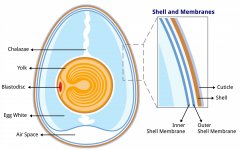
If the earth is concave, and acts like an egg, and we are in the "air cell"... then yes, technically, the sky/space-barrier would be lower in the "north" part and highest in the "southern" part.
 

Attachments

  • egg.anatomy.jpg
    egg.anatomy.jpg
    747.9 KB · Views: 115
Wonderful topic!

Isn't our daylight as we perceive it, the result of the noble gasses in our atmosphere being lit up due to the electromagnetic field of the passing sun?
I think it is not sunlight as most people think. I've seen videos from a camera (non fish-eye) that was high up in our atmosphere with a helium balloon, spinning around and showing nothing but a flat earth and a bright spot underneath the sun on earth, like a spotlight. And the sun was definitely not that far away as we're told. Afaik we cannot see the sun outside our atmosphere with our bare eyes in open space. With that I also wonder what the relationship would be of those noble gasses and the sun's image that we perceive see when the sun is coming over out heads, eg sunrise and sunset.
Would somehow the properties of those gasses influence the image we see?

Seems to explain some part of our colorful sky:
TikTok - Make Your Day
 
Last edited:
Wonderful topic!

Isn't our daylight as we perceive it, the result of the noble gasses in our atmosphere being lit up due to the electromagnetic field of the passing sun?
I think it is not sunlight as most people think. I've seen videos from a camera (non fish-eye) that was high up in our atmosphere with a helium balloon, spinning around and showing nothing but a flat earth and a bright spot underneath the sun on earth, like a spotlight. And the sun was definitely not that far away as we're told. Afaik we cannot see the sun outside our atmosphere with our bare eyes in open space. With that I also wonder what the relationship would be of those noble gasses and the sun's image that we perceive see when the sun is coming over out heads, eg sunrise and sunset.
Would somehow the properties of those gasses influence the image we see?

Seems to explain some part of our colorful sky:
TikTok - Make Your Day

That is most likely what is happening. Argon is the third most abundant gas in the atmosphere and emits a "lavender blue" light when a high voltage passes through it. Carbon Dioxide also emits a white light when a high voltage passes through and there's plenty of that up there too.
 
Tips
Tips
Please respect our Posting Rules.
Back
Top