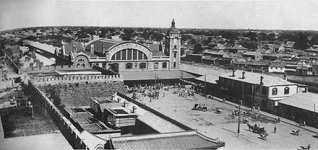
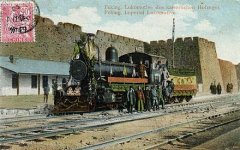
Who constructed these buildings in China?

VincentFreeman

Contributor
Active Member
Joined
Feb 23, 2022
Messages
26
Reaction score
46
In China, there is a royal garden called Yuanmingyuan (Old Summer Palace - Wikipedia) in Beijing. According to the narrative in Chinese, it was built with combination of both Chinese and Western style, and was looted and burnt by the British and French troops for 3 days and 3 nights in 1860.

Here is a picture of what it's imagined to be like (computer generated, a part of the garden):

3.jpeg

And here is what it looks like nowadays:

10.jpeg

I've also found some old pictures, which is said to be taken by some German guy in 1873, 13 years after it was burnt.

yuanmingyuan-2.jpg
yuanmingyuan-5.jpg
yuanmingyuan-4.jpg
yuanmingyuan-1.jpg
yuanmingyuan-6.jpg
yuanmingyuan-3.jpg

My questions are:
1. In those BW photos, everything looks grand and Western, nothing seems to be Chinese style or even combination of Chinese and Western, like the imagined picture.
2. How come those grand buildings, even just ruins, don't exist any more today? Unless you bomb it or deliberately shatter it, I don't think those can just fall down easily.
3. Who could have built those buildings? They'd say the royal families hired some Western architects to design those and then had local Chinese built those, is that possible? I mean, looking at those Chinese people of this era, in late Qing dynasty... most look very malnourished and extremely poor. Even the officials' families don't look anything that great, and that's supposed to be the rich ruling class. I have a hard time imaging those people or their grandparents built those old ruins.

I would really appreciate some of your thoughts.

The ordinary class?

qing people 1.jpeg
qing people 2.jpeg

the middle class with servants?

qing people 3.jpeg

middle class' own business, foreign trade?

qing people 5.jpeg

the rich ruling class with wife and concubines?

qing people 4.jpeg
 
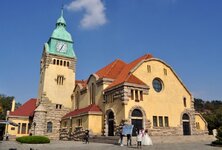
Qingdao in China is a city full of "German style" buildings. It was said Germans took it over and ruled from 1897 to 1914 until Japanese took it over from the Germans. When Germans came, it was just a small fish village of 20,000 of people. However, within short 17 years, they not only built impressive churches and large buildings, but also built excellent underground sewage system that worked better than anything new today.

qingdao.jpeg
qingdao1.jpeg
qingdao2.jpeg
qingdao3.jpeg
qingdao5.jpeg
qingdao6.jpeg

Those are the impressive well-built sewage system:
sewage-1.jpg
sewage-2.jpg
sewage-3.png
sewage-4.jpg

I found a few old pictures which were said to be taken around the German ruling era. I find it hard to be believe a couple of Germans could have built all those within such a short time. And why would a small fishing village have some impressive gate like that?
old-qingdao-3.jpg
old-qingdao-5.jpg
old-qingdao-6.jpg
old-qingdao-7.jpg
old-qingdao-8.jpg

old-qingdao-1.jpg
old-qingdao-2.jpg
old-qingdao-4.jpg

Who really built this city?!

If, more than 100 years ago, Germans were capable of building those sewage system that works wonder, which prevents a seaside city like Qingdao from drowning in huge rain, in short 17 years, why didn't they build these in their own towns in Germany to prevent floods like this one in 2021?

german-flood2021.jpeg
 
The proportions of the buildings, for example in this photo, look uncommon for German buildings. It looks a bit like you would build in the European style if you don't really know how they did it.


qingdao2-jpeg.jpg
 
I suspect the "base" ones didn't look like those, maybe the Germans and ones who came after did a lot of repair and cover so we don't see the original any more?
 
If, more than 100 years ago, Germans were capable of building those sewage system that works wonder, which prevents a seaside city like Qingdao from drowning in huge rain, in short 17 years, why didn't they build these in their own towns in Germany to prevent floods like this one in 2021?
A sewage system is not the same a storm water management system.
 
I suspect the "base" ones didn't look like those, maybe the Germans and ones who came after did a lot of repair and cover so we don't see the original any more?

This is a possibility, looking at some of the older fotos.
 
A sewage system is not the same a storm water management system.
The "official" narrative said the Germans started to build those sewage (or storm/flood management) system in the second year since they suffered some diseases in the first year due to the rain/storm. I suspect those very huge ones were already there when Germans arrived. So it was not built by them, because if they had the tech to build such impressive system in such a short time, they would have done that in their own country over the years. It is said today those type of huge system remains less than 1/1000 of the whole city's system.
 
But those cellars look very Gothic. The old civilisation not black and white serial gothic.
 
The "official" narrative said the Germans started to build those sewage (or storm/flood management) system in the second year since they suffered some diseases in the first year due to the rain/storm. I suspect those very huge ones were already there when Germans arrived. So it was not built by them, because if they had the tech to build such impressive system in such a short time, they would have done that in their own country over the years. It is said today those type of huge system remains less than 1/1000 of the whole city's system.
Not argueing with your ideas or the official narative. These systems are differnet, do not operate the same or for the same purpose, that is all.
 
Shell, broken arch and the triangular thing looks different to what we are used to. Perhaps it was the opium, but could be the architechtual source maybe?
 
I found this city (Dalian - Wikipedia) particularly interesting as the official narrative says Russians occupied from 1897 to 1905, until Japanese took over. However, from some old photos collected by a Japanese university, there seemed to be massive impressive huge buildings there. If as said, Russians only started to arrive in 1897, and then engaged in war with Japan in a few years, until they were driven out in 1905, they had only 8 years to build all those grand Western buildings (not to mention some years in war also). Is that even possible?!

First the old BW photos of old Dalian, note how few people are on the street... like many old photos in other countries!

dalian-old.jpeg
dalian-old1.jpeg
dalian-old2.jpeg
dalian-old3.jpeg
dalian-old4.jpeg
dalian-old5.jpeg
dalian-old6.jpeg
dalian-old7.jpeg
dalian-old8.jpeg
dalian-old9.jpeg
dalian-old10.jpeg
dalian-old11.jpeg
dalian-old12.jpeg
dalian-old13.jpeg
dalian-old14.jpeg
dalian-old15.jpeg
dalian-old16.jpeg
dalian-old17.jpeg

The modern Dalian, the few main buildings around the Square seems to remain but most others in the black and white photos are nowhere to be found. I think they must have destroyed a lot of those as it might be hard to explain how in short 8 years the Russians could have built all of those...

dalian1.jpeg
dalian2.jpeg


dalian3.jpeg
dalian3.png
While watching the new video of SH, this came to my mind:
Could the rougher bricks and pillars on those yellow "German style" building be the original, like the Erie County Savings Bank which was demolished in New York? The yellow wall and red tiles were added later which was why some of those Qingdao buildings look weird.
qingdao-german-building.jpg
 
Last edited:
Here are my old examples of ancient architecture from Qingdao.
ACmZMtIENsg.jpg
vqlxrxa-x8A.jpg

In general, I have a similar opinion as @VincentFreeman. Chinese cities are just as classic ancient cities as any European, American... Now the globalists (acting within the framework of modern official history) have to build replicas of ancient buildings to justify (in the future) having real ancient architecture in China. These replicas are in most cases built to a low (in relation to the real antique buildings) standard.

The Europeans (English, Russians, Portuguese, Germans, etc.) only attributed their construction from scratch. If they built buildings, they built them on old foundations. Now looking at Chinese cities in baidu, I can clearly see that Chinese cities are built on ancient blocks. In my opinion, this is a consequence of the fact that China (especially inland - East Turkestan and Manchuria) was severely affected by the global cataclysm of the past.
 
Last edited by a moderator:
Here are my old examples of ancient architecture from Qingdao.

In general, I have a similar opinion as @VincentFreeman. Chinese cities are just as classic ancient cities as any European, American... Now the globalists (acting within the framework of modern official history) have to build replicas of ancient buildings to justify (in the future) having real ancient architecture in China. These replicas are in most cases built to a low (in relation to the real antique buildings) standard.

The Europeans (English, Russians, Portuguese, Germans, etc.) only attributed their construction from scratch. If they built buildings, they built them on old foundations. Now looking at Chinese cities in baidu, I can clearly see that Chinese cities are built on ancient blocks. In my opinion, this is a consequence of the fact that China (especially inland - East Turkestan and Manchuria) was severely affected by the global cataclysm of the past.
Yes, more proof of a unified world-wide architecture style. I wonder where the previous tenets gone. It will be very interesting to study historical data of cemeteries in relation to population number according to the amount of housing these cities might have had. Are human remains being found in historical cemeteries, to account for whole generations, or are simply, just missing?
 
Those are the impressive well-built sewage system:​


Who really built this city?!

Similar dungeons in Saratov were "built" by the "British".
133748_900.jpg
1002992_original.jpg
133447_900.jpg

But a miracle happened, and on June 28, 1872, the City Council concluded a contract with the "Partnership Rachmaninov and Co." for the construction of a mechanized water pipeline with water intake from the Volga. The comrades-in-arms undertook to build everything practically free of charge, in return for which they demanded only the right to operate it for 20 years. And while the city officials rejoiced over the good deal, the years passed, and the "responsible comrades" continued to idle away. In the end, the rights of construction were transferred to a third party, represented by some English joint stock company, which undertook the construction of the water pipeline. In 1875, under the guidance of British craftsmen, the following facilities were put into operation: a cast-iron water pipeline, a water-raising machine and a complex of filtration facilities, which it was decided to place on one of the slopes of Falcon Mountain. Water from the filters came into the pressure tank, and then followed to the water intake boxes, of which there were 15 in the city. From these booths, citizens could get water for personal use.

The complex of water treatment facilities, built by the British, was subsequently upgraded, as well as eliminated numerous mistakes made by foreign colleagues. For example, the water intake on the Volga was built on a shallow site, without taking into account the seasonal decline of water. As a result, since the end of the 19th century, water supply interruptions for Saratov residents have become commonplace...

Translated with www.DeepL.com/Translator

Link1 (rus), Link2 (rus).

Doesn't it remind you of the Ninja Turtles (overall, the first four seasons are very interesting in terms of alternate history)?
 
Last edited by a moderator:
In Harbin and Shenyang there are lots of this kind of buildings left even though many have been dismantled after 1949 and in the small northeastern Chinese cities there are also the same kind of buildings. Officially they are the products of half colonial period.
 
Last edited:
In Harbin and Shenyang there are lots of this kind of buildings left even though many have been dismantled after 1949 and in the small northeastern Chinese cities there are also the same kind of buildings. Officially they are the products of half colonial period.

Yes, you're right. These are well-known examples. Personally, I try to look for lesser-known cities.

For example, it is believed that Harbin (and other ancient-style cities in that region) was built by the Russians. But I, with a high degree of probability, am sure that this is not the case. The Russians only came to the ready-made (most likely partially buried) areas of the cities.

According to my observations, inland China (the territory of Inner Mongolia and Eastern Turkestan) suffered much more after the cataclysm than the territory of Sea China and Manchuria. Therefore, European colonizers moved in that direction.

By the way, there is such a phenomenon as the Chinese Eastern Railway (CER; КВЖД or ВКЖД). Officially, it was built by the Russians as part of the southern branch of the Trans-Siberian Railway from Chita to Vladivostok (via Harbin) I assume that this road was partially (I think most of it) dug up.

17.png
3.png
2.png
8.jpg
15.png
bp.jpeg
14.png
a_ignore_q_80_w_1000_c_limit_001.jpg

As for Shenyang, historians attribute this area near Hong Kong to European colonial influence. But I recently looked up the city of Shaoguan in baidu panoramas. In the most visited sources (Wiki, Baiku) there is no mention that Europeans built antique buildings in that city (the only mention I found was by the Italian missionary Matteo Ricci). But there are ancient buildings. It is possible that historians have forgotten this city and have not had time to write it a legend, according to which European colonizers built houses in the ancient style (I believe that all the peoples of the world live on the foundations and ruins of previous human civilization; at least in those places where such ancient buildings are present).

I hope you enjoy this topic (here and here, where the topic of ancient buildings in China is touched upon; and many other topics on the site).
 
Yes, you're right. These are well-known examples. Personally, I try to look for lesser-known cities.
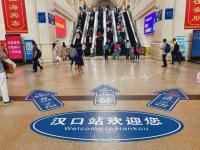
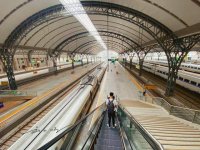
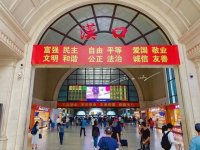
Thanks for the older links. Biggest western style railway station is Hankou station in Wuhan city. There is the info on wiki Hankou railway station - Wikipedia
Yes many train stations are western style. After Russian Japanese war, the Japanese had the control of railways in Manchuria. During 30s, there was most intensive train networks in east Asia. Till 1945, there was 11479 km railroads in Manchuria. That was really “fast”. Several photos of inside of Hankou station. Nowadays these western buildings are used by the government for patriotic education for average Chinese population and not to forget the half colonial time.
China railway museum used to be a Beijing train station just beside a Tartar wall
China Railway Museum - Wikipedia
 

Attachments

  • 1D544EED-5F36-4AD0-B5F5-AE05912295E1.jpeg
    1D544EED-5F36-4AD0-B5F5-AE05912295E1.jpeg
    81.9 KB · Views: 148
  • 5153B5FF-26C3-4970-8059-B5ED9E135328.jpeg
    5153B5FF-26C3-4970-8059-B5ED9E135328.jpeg
    84.7 KB · Views: 143
  • 8111B642-3A9B-4CC0-8498-0912BCA07AB3.jpeg
    8111B642-3A9B-4CC0-8498-0912BCA07AB3.jpeg
    73.7 KB · Views: 135
  • BDD576B4-F722-459A-96A7-9F3EA0F7A03D.jpeg
    BDD576B4-F722-459A-96A7-9F3EA0F7A03D.jpeg
    36.7 KB · Views: 131
  • F9392A29-8C25-4CC8-AC2B-3DE793616AC4.jpeg
    F9392A29-8C25-4CC8-AC2B-3DE793616AC4.jpeg
    56.2 KB · Views: 141
Tips
Tips
Please respect our Posting Rules.
Back
Top