SH Archive Who really built Russian Saint Petersburg? Did they dig it out?

SH.org OP Username
KorbenDallas
SH.org OP Date
2018-05-06 06:05:31
SH.org Reaction Score
64
SH.org Reply Count
55
Note: This post was recovered from the Sh.org archive.
Username: nothingnew
Date: 2020-05-10 11:16:08
Reaction Score: 0
Good observation, I missed it as well. This only further solidifies my argument that the colors were added later by someone else. Someone who knows nothing about wires on rooftops.
 
Note: This post was recovered from the Sh.org archive.
Username: LazyScroller
Date: 2020-05-10 18:48:07
Reaction Score: 1
I honestly don't know why there is so much attention to St. Petersburg. There is practically nothing original left after soviet times, and the city in my opinion, well, its historical centre, just one big, gutted of anything interesting and valuable, theme park(. There is so much to see and explore in western Europe...
P.S. I also did some research on the subject, and it seems that the city and its surroundings were rebuilt probably around the second half of 19 century (there are things like old trees, bricks etc. that indicate this). Buildings foundations, embankments, pavements and architecture in general have a lot in common with other cities and towns on Baltic see shores, that are now attributed to Swedish period. And it's no surprise, that even according to official history, Peter 1st got these lands from Sweden, and they were inhabited by Finnish speaking people; and one more thing - Peter 1st is also famous for destroying cities, not building them, well, except one city, of course...
 
Note: This post was recovered from the Sh.org archive.
Username: Ilmarinen
Date: 2020-05-11 14:38:54
Reaction Score: 1

If you take a look at European demographics and what those no-go ghettos offer especially in the southern and western parts one can easily imagine that the greater St Petersburg area (and Karelia) will be gaining in value as it will attract fleeing people who appreciate space, nature, 4 seasons, northern culture and safety. This is prime real estate especially if they can keep their borders secure unlike EU. There is a reason this area was occupied from ancient Finns.
 
Note: This post was recovered from the Sh.org archive.
Username: Banta
Date: 2020-05-11 17:14:09
Reaction Score: 2
Probably partially because of a lot of the initial alternate history and subsequent mudflood researchers are Russian. Their influence echoes throughout this entire field.
 
Note: This post was recovered from the Sh.org archive.
Username: Starmonkey
Date: 2020-05-11 18:44:07
Reaction Score: 2
Started in 2013. Opening the Russian archives. Right after 2012, and the end of time. Are we just digging up time here?...
 
I made this comparison regarding this illustration in Russian, hopefully someone can translate it and maybe have the date.
Did you notice the colors of the flag?

312432218_5490629914354548_2985360198782474204_n.jpg
15.png
3 - copia.png
 
I made this comparison regarding this illustration in Russian, hopefully someone can translate it and maybe have the date.
Did you notice the colors of the flag?
Looks like a depiction of the river frozen over, and hosting a sled race.

There are depictions of similar things when the Niagara river used to freeze over, and businesses would set up shops and games would be played.
 
Looks like a depiction of the river frozen over, and hosting a sled race.

There are depictions of similar things when the Niagara river used to freeze over, and businesses would set up shops and games would be played.
But if you check the comparison, both trees, houses, structures would be on the ice of the river, rather the river is dry, don't you think? it looks even more sunken, as if the water is gone. Horses running on the ice?
 
Not much time for posting, but I wouldn't like to forget this one...
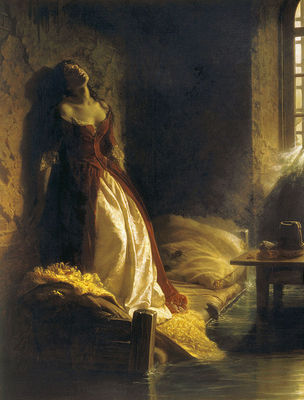
There is this story of a Princess Tarakanova who died of tuberculosis in 1775 but she was later depicted in a famous painting as dying trapped in her cell (inside the St.Petersburg starfort) during the flood of 1777 and ... A narrative mess if you follow the wiki stories.
Moreover, the painter himself has a weird, not well edited, wiki profile, an exhibition in 1864 is mentioned and generally he sounds like a fictional character to me.

800px-Tarakanova.jpg

I had sent the story to Martin Liedtke a while ago. While he showed the picture, he didn't pay much attention to the story, the characters and the timeline. I personally find these revealing of the PTB modus operandi:
Artwork, either preserved from the Old World, or freshly created, is used to propagate the new timeline, characters and events take new designations and 'exhibitions' reveal the new narrative to the public, in this case through art.
In the new internet era, PTB insert the faux narrative into wiki pages for posterity, but the job is often done clumsily and we end with a mess of names, narratives, timelines, sources, etc like in this case.
The Warburg Library has a unique reference system that appears to reflect such a modus operandi:
3DE8F52C-3C04-44B1-9191-F8C7C096F8EA.jpeg
 
But if you check the comparison, both trees, houses, structures would be on the ice of the river, rather the river is dry, don't you think? it looks even more sunken, as if the water is gone. Horses running on the ice?

1666972480004.png
Roller coaster on the frozen Neva River in front of the Winter Palace in St. Petersburg, Russia, 18th century

1666972575037.png

St. Petersburg, Russia. /Ntaking Water From The Neva River In St. Petersburg. Wood Engraving From An English Newspaper Of 1874


Take these for what you will, but it seems like in the 18th-19th century it was fairly common to see the Neva River hard freeze to the point where it could hold quite a bit of weight. Keeping in mind that those periods were much colder than they are now, so while it is somewhat uncommon to see modern day photos of people having fun on the frozen river, it may have been more frequent in the past.
 
But if you check the comparison, both trees, houses, structures would be on the ice of the river, rather the river is dry, don't you think? it looks even more sunken, as if the water is gone. Horses running on the ice?
As Hellboy said - to me it also looks like river is dry - river level now is cca 2-3m lower than ground level where those towers are and on drawing (if you compare it to height of tower which is 32m) is more than 10m till end of wall under tower and by the looks it also slopes down. Also terrain under that wall looks sloped and with trees so depth is even bigger, and even if you ignore trees in middle, frozen river would have almost flat surface... And if you go to google maps and compare - now that rounded part with two huge balls is much higher and balls are much smaller. What ever happened river level is now much higher than then.
 
[ADJUNTAR=completo]26150[/ADJUNTAR]
Montaña rusa en el río Neva congelado frente al Palacio de Invierno en San Petersburgo, Rusia, siglo XVIII

[ADJUNTAR=completo]26151[/ADJUNTAR]

San Petersburgo, Rusia. /Tomando Agua Del Río Neva En San Petersburgo. Grabado en madera de un periódico inglés de 1874


Tómelos como quiera, pero parece que en los siglos XVIII y XIX era bastante común ver que el río Neva se congelaba hasta el punto en que podía soportar bastante peso. Teniendo en cuenta que esos períodos eran mucho más fríos de lo que son ahora, por lo que si bien es poco común ver fotos modernas de personas divirtiéndose en el río congelado, puede haber sido más frecuente en el pasado.
Thanks for the info, I just thought it was an interesting illustration and that there might be more illustrations or engravings from the site.

  • Do you think those trees are artificial like the ones in the first photo you shared?
I did my little comparison and selected some very beautiful illustrations directly from wikipedia of the specific building that serve as a comparison, they are from 1810 - 1817.

2.png

800px-Sthotoshnikov,_Chesky_-_View_of_Bourse_from_Bolshaya_Neva_1810s.jpg
The Old Stock Exchange ( Bourse ) as seen in an 1817 engraving.


1024px-Alexeev_birzha 1810.jpg
Fyodor Alekseyev , View of the Stock Exchange and the Admiralty from the Peter and Paul Fortress , 1810​


The Stock Exchange was founded by an edict of Peter the Great, ordering the establishment of a stock exchange for his capital city, inspired by the Amsterdam Stock Exchange. In 1767, the City Building Committee decided to develop the vacant space on the Vasilevsky Island spit and create a new home for the St. Petersburg Stock Exchange. The area was developed over six years, from 1783 to 1789, according to a design by Giacomo Quarenghi. A series of buildings were constructed on the banks of the Bolshaya Neva River, including the main building of the Academy of Sciences and the concave part of the north warehouse (1795-1797). These buildings enclosed the left and right sides of the spit, the projected location of the Stock Exchange building. Construction of the Stock Exchange building itself began in 1783, but was suspended in 1787.

The project was restarted in 1805, supervised by architect Thomas de Thomon, but by 1810 work had stalled again due to the upheavals of the Napoleonic Wars. The architectural ensemble was completed between 1826 and 1832 with the construction of the south and north warehouses and the customs buildings according to the design of architect Giovanni Luchini. Old Saint Petersburg Stock Exchange and Rostral Columns - Wikipedia

  • The Stock Exchange was founded by an edict of Peter the Great.

  • In 1767, the City Building Committee decided to develop the vacant space on the Vasilevsky Island spit and create a new home for the St. Petersburg Stock Exchange. The area was developed over six years, from 1783 to 1789.

  • Construction of the Stock Exchange building itself began in 1783, but was suspended in 1787.

  • The project was restarted in 1805, supervised by the architect Thomas de Thomon, but by 1810 work had stalled again due to the upheavals of the Napoleonic wars. The architectural ensemble was completed between 1826 and 1832.

And it seems that destiny was guiding me and I went to a view with google maps from the frozen river at the moment.
Google Maps

I remembered some curious things from other threads about St. Petersburg from the "fiction".

Book - The Year 4338. Letters from Petersburg.
Small novel of 1835.
SH Archive - Book | - The Year 4338. Petersburg Letters.
The world described in Odoevsky's work is in some respects similar to that of the 21st century and yet differs significantly from the present one we encounter today. Some of the technological advances included in Petersburg Letters are air and space travel, the telephone, artificially controlled climates, and the ability to photocopy. Hallucinogenic and truth drugs, in the form of fizzy drinks and "magnetic baths," eliminate hypocrisy from social life. In this foreseen future, Russia and China are the centers of world power.
The main character of the story is actually a Chinese student, Ippolit Tsunguev, (not a Russian character, as expected) who attends the "Main School" in St. Petersburg. His letters to his fellow students constitute the novel. The Year 4338: Petersburg Letters - Wikipedia
So the student was able to travel from China to St. Petersburg in 8 days, by train through tunnels and then from the Russian border by airship.
Another thing is that his mentor mentions the bias of monopoly producing scientists. Reminds me of something. In his time, these scum scientists now had power over the state, we all know what kind of society we have now.
It represents a totally different society that promotes the common good, rather than violence and personal gain. And I think only this kind of society is capable of building monumental star fortresses.
Well, the guy supposedly wrote this in the 1830s. To me, heat delivery alone sounds pretty crazy. But there's a lot of other stuff in there. Jules Verne is considered the pioneer of the science fiction genre. His first book was published in 1863.
Global heat delivery systems, transporting warm air from the equator to the colder regions of the world. Equatorial heat delivered to people's homes?
Tunnels under the Caspian Sea and through the Himalayas. Flying through tunnels?
Electric train ideas in the 1830s?
Indicators of having social networks with a-la FB capabilities. Not sure if the author understood the sources he was working with.
Telephones?
SH Archive - Book | - The Year 4338. Petersburg Letters.
'Books are invented that, using a machine, change the letters in several other books simultaneously'
Windows, Apple, Google, internet, wiki, smart device, perfectly explained here.
'There are machines to produce novels and theater' (photo/film).
SH Archive - Book | - The Year 4338. Petersburg Letters.
  • About the stock exchange building, take some texts:
It's an absolute work of art! It's completely built on arches that are constantly heated with hot air, so only a few steps separate the tropical and temperate climate zones. The garden is like a miniature version of the entire planet, so walking through it is like walking around the world.
The schools I went to did not inform me of the existence of this technology before 1835. As far as I know, we still don't have hot air pipes. Naturally, to me this is crazy, given the date. There is nothing special about the Boeing 747s flying in the air today. If I knew of a fleet of those in use in 1600, I'd say that's crazy too.
SH Archive - Book | - The Year 4338. Petersburg Letters.

See this thread as well:
1914: vision of Moscow in the 22nd and 23rd centuries.
SH Archive - 1914: vision of Moscow in 22nd, and 23rd Centuries
 
Last edited:
In May of 1703, there supposedly was nothing but swamp where the great City of Saint Petersburg was to stand.
Archaeological excavations on the Okhtinsky Cape have been carried out since 1992. What was found-
— Cape settlement of ancient Russian times (before 1300)
- Landskrona Fortress (1300-1301)
— Nyenschanz Fortress (1611–1703)

"Archaeological observations and studies of the cultural layer have been carried out on Cape Okhtinsky under the leadership of P. E. Sorokin since 1992. In the mid-2000s, it became known about the planned construction of a business district with a skyscraper in this place - the so-called Okhta Center. Since 2006, On the site of the proposed construction, large-scale protective archaeological excavations began, during which the ramparts and ditches of Nienschanz were discovered, and during further research, the fortifications of Landskrona.


The fortress is much better preserved than expected. The fortress ditches, the remains of the walls, the base of the unique wooden donjon tower are well preserved. Traces of a fire were found, crossbow bolts and arrowheads of an easel crossbow were found. The excavations provided unique scientific material and made it possible to get an idea of the fortress and answer many controversial questions. Landskrona was a wood-and-earth fortress, not a stone one, as some historians suggested. The donjon tower fits well with the description of the place of the last battle of the Swedes. Many design features prove that Landskrona was a well-fortified and powerful fortress for its time. During subsequent excavations, traces of a fortification that existed in this place before Landskrona were also found. There is no information about him in the sources. Petersburg, Nienschanz, Landskrona, these are new buildings. 700 years.

Excavations were carried out on a small area from the city of St. Petersburg. "After the destruction of Landskrona, the fortress was not renewed for a long time, however, due to its convenient geographical location, settlements arose at the mouth of the Okhta in the 14th-15th centuries. At the beginning of the 16th century, a small town on Okhta called Nevsky Estuary was known, which by the end of the century had grown and had the Sovereign's Gostiny Dvor, customs, and a cemetery with the Church of Michael the Archangel, which, apparently, was located directly on the territory of the former Landskrona. During the Time of Troubles, the entire territory was captured by the Swedes. In 1611, on the left bank of the Okhta, on the site of Landskrona, the Nienschanz fortress was founded, and on the right bank, the settlement of Nien (Nienstadt) was located, which later received the rights of the city. Both the fortress and the city existed until the conquest of Ingermanland by Peter I in 1703. Before the approach of the Russian troops to Nyenschantz, the city buildings were burned by the Swedes themselves, the population of the city was evacuated, and after the fortress itself was captured and the wooden fortifications were destroyed, an explosion was made on its ramparts, which partially destroyed the earthworks. Later, a fruit nursery (and then a shipyard) was arranged on the territory of the fortress, and the settlement of Nien was assigned to the settlements of artisans (Okhtinsky settlements). " "The heyday of Nien came at the end of the 17th century, after receiving the status of a city in 1642. There were several churches in the city - in particular, the German community had its own parish. There were many Finns, there were also Russians. On the opposite bank of the Neva, in the place where Smolny is now located, there was a rather large Russian village of Spasskoye, with which Nien was connected by a ferry. For several decades, Nyen became the largest city in Ingermanland, the eastern Swedish region (province?). Yes, and in neighboring Finland - also at that time owned by Sweden - there were only two cities with a population greater than in Nyene - the ancient capital of Abo (Turku) and Vyborg.

The question is why the fortress was made of wood. For example, Kaporye was made of stone. 1280 year.

The city was not founded in a vacuum. I have quoted from various sources of the official version of the story. I see no reason to retell it myself. Easier quotes. If the city was dug up, then it was built a very, very long time ago, before 1200.
was built in i704 as a port in the middle of the winter.
Winter is mentioned here probably because of the peculiarities of construction. According to the official version, the islands were poured. In winter, a wooden frame and formwork were placed on the ice, and stone was poured inside. Then all this went under water and an artificially created land, an island, was obtained.
One thing is known- sea levels rose then abated, but not as far as before. It’s a fact even mainline can’t ignore.
The water level changed. There is evidence that the course of the Neva River has changed in the opposite direction. This is evidenced by the "Document called" Idrography of the Russian state of 1627. "It was based on the records of a certain Novgorod priest John, compiled in the XIII century." Древняя российская идрография,
I made this comparison regarding this illustration in Russian, hopefully someone can translate it and maybe have the date.
Written_ "Running triplets on the Neva River in St. Petersburg. For the prize of the management of the STATE stud breeding." That is, the competition of horses harnessed in three pieces. (troika). Organized by a stud farm.
Keeping in mind that those periods were much colder than they are now, so while it is somewhat uncommon to see modern day photos of people having fun on the frozen river, it may have been more frequent in the past.
Even now the ice is very strong. Going fishing in a car on ice is a common thing. They drive along Lake Ladoga, the same as the Neva.
hopefully someone can translate it and maybe have the date.

On January 8, 1861, the first day of the race took place. Since 1880, the competition has been moved to another location.
 
Last edited:
Tips
Tips
Please respect our Posting Rules.
Back
Top