- Joined
- Sep 14, 2020
- Messages
- 186
- Reaction score
- 345
So recently I was watching some of the new videos on China by Mind Unveiled and got re-inspired to look at more old maps after looking into some of his research on the Mongols, Scythians and Cathay. While doing so I noticed a couple patterns while investigating Alaska/Siberia in the Bering Strait and the kingdoms that were purported to be there such as Arzareth, Cathay, Argon and Anian. I noticed a name that popped up in those regions...
M. Paul, the Venetian.
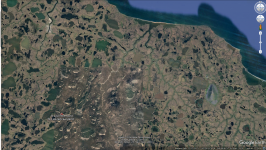
He's accredited on old 16th century maps in the North Pole region. Just from looking around on old maps and playing with translations I've discovered he's cryptically credited as having apparently traveled to Hyperborea and Japan (depicted on old maps as standing where St. Lawrence Island does today, now a wasteland.)


--
There are several "Paul the Venetians", two of note in the 16th century.
First let's go with the oldest professed depiction of Marco Polo, dated to the 16th century, depicting a man who allegedly lived 3 centuries prior.
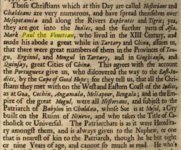
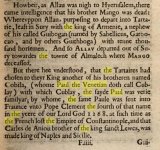
 Here's some evidence Marco Polo or Marcus Polus is "Mark Paul", or "M. Paul the Venetian", "Marco Paulo Veneto" or sometimes referred to simply as, Paul, the Venetian.
It seems fairly obvious to me the M. Paul, Mark Paul or Paul referred to as having gone to China (and Japan/Iapon which appears to have stood where St. Lawrence Island does now) are the same person.
Here are some excerpts.

 --
--
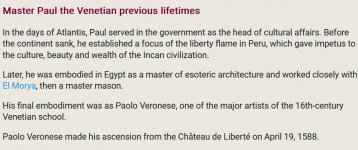
Our second figure is Paolo Veronese, a Venetian artist of the 16th century (Paolo Veronese - Wikipedia) is a very enigmatic figure. Accredited as a master artist, many of his works are magnificent, depicting a different world. He was born in 1558 and died 60 years later.
 A bizarre aside is his alter ego, "Master Paul the Venetian", of which he is called and attributed as being Paolo by new age waves of Theosophists and referenced a lot in the 20th century in those books as Paolo being his final incarnation..(?)

 --
--
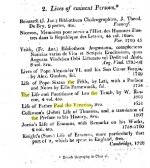
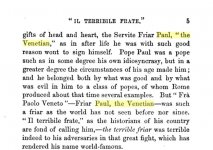
Our third figure is Father Paul, the Venetian (1552-1623) (The Letters of Father Paul, 1693.) He was also known as Friar Paul and is said to have produced several treatises, one of his most acclaimed according to these sources was one on how to rule.
He is also, apparently, Paolo Sarpi, even his Wikipedia article references many books about Father Paul the Venetian.


(Top half: History of the Council of Trent, 1676, bottom half, the Treatise from 1736 which contains a version of "The life of Father Paul")
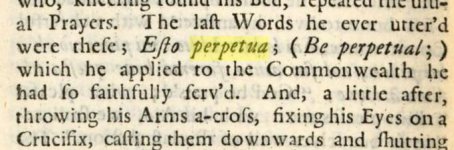
 His final words as quoted by Wikipedia are in some of these books as well,
"His last words, "Esto perpetua" ("may she [i.e., the republic] live forever"), were recalled by John Adams in 1820 in a letter to Thomas Jefferson, when Adams "wished 'as devoutly as Father Paul for the preservation of our vast American empire and our free institutions', as Sarpi had wished for the preservation of Venice and its institutions."" Of note is that this is Wikipedia's spin on his words.
Left to right: History of the Council of Trent, 1676, bottom half, the Treatise from 1736 which contains a version of "The life of Father Paul"

Friar Paul, also known as Paul the Venetian also had an assassination attempt on him ordered by Pope Paul V., and made some discoveries on the anatomy of the heart
Images from Fra Paolo Sarpi The Greatest of the Venetians By Alexander Robertson · 1894


Sources:
Fra Paolo Sarpi The Greatest of the Venetians By Alexander Robertson · 1894
Paul the Pope and Paul the Friar 1861
The Critical Review, Or, Annals of Literature 1807, quote "of Paul, the Venetian, whose two journies were accomplished in 1250 and 1270"
Lectures on Natural and Experimental Philosophy by George Adams, 1807
A Philosophical and Political History of the Settlements and Trade of the Europeans in the East and West Indies Volume 6 By abbé Raynal (Guillaume-Thomas-François) · 1804
Encyclopaedia; Or, A Dictionary of Arts, Sciences, and Miscellaneous Literature; Constructed on a Plan, by which the Different Sciences and Arts are Digested Into the Form of Distinct Treatises of Systems ... [& Supplement] Volume 19 1803
The Works of James Harris Volume 2 By James Harris · 1801
Supplement. Vol.I. Being Volume XIX of Encyclopædia Britannica ... (Supplement to the Encyclopædia Britannica ... By George Gleig ... Vol.II.). 1800
A Philosophical and Political History of the Settlements and Trade of the Europeans in the East and West Indies, 1788
The History of the World, Ecclesiastical and Civil, 1703
The Mahumetane Or Turkish Historie, Containing Three Bookes ... 1600
THE GREAT HISTORICAL, Geographical and Poetical DICTIONARY, 1694
The LETTERS Of the renowned FATHER PAUL, Counsellor of State To the most Serene Republick of Venice; And Author of the Excellent History of the Councii of Trent. (1693)
A New History of Ecclesiastical Writers - 1699, quote "Mark Paul, a Venetian, son of Nicholas Paul"
Of Idolatry: a Discourse In which is Endeavoured a Declaration Of, Its Distinction from Superstition; Its Notion, Cause, Commencement, and Progress 1678
The History of the Council of Trent: Containing Eight Books. In which Besides the Ordinary Acts of the Council are Declared Many Notable Occurrences which Happened in Christendom, During the Space of Forty Years and More ... 1676
The Voyages & Travells of the Ambassadors .. 1669, quote "Marco Paulo Veneto, Mark Paul Veneto, ''Zipangry'' "
Additional sources:
The Universal Magazine of Knowledge and Pleasure ... Volumes 12-13 1753
The History of the Reformation and Other Ecclesiastical Transactions .. 1722
M. Paul, the Venetian.
He's accredited on old 16th century maps in the North Pole region. Just from looking around on old maps and playing with translations I've discovered he's cryptically credited as having apparently traveled to Hyperborea and Japan (depicted on old maps as standing where St. Lawrence Island does today, now a wasteland.)
--
There are several "Paul the Venetians", two of note in the 16th century.
First let's go with the oldest professed depiction of Marco Polo, dated to the 16th century, depicting a man who allegedly lived 3 centuries prior.
It seems fairly obvious to me the M. Paul, Mark Paul or Paul referred to as having gone to China (and Japan/Iapon which appears to have stood where St. Lawrence Island does now) are the same person.
Here are some excerpts.
Our second figure is Paolo Veronese, a Venetian artist of the 16th century (Paolo Veronese - Wikipedia) is a very enigmatic figure. Accredited as a master artist, many of his works are magnificent, depicting a different world. He was born in 1558 and died 60 years later.
Our third figure is Father Paul, the Venetian (1552-1623) (The Letters of Father Paul, 1693.) He was also known as Friar Paul and is said to have produced several treatises, one of his most acclaimed according to these sources was one on how to rule.
He is also, apparently, Paolo Sarpi, even his Wikipedia article references many books about Father Paul the Venetian.
(Top half: History of the Council of Trent, 1676, bottom half, the Treatise from 1736 which contains a version of "The life of Father Paul")
"His last words, "Esto perpetua" ("may she [i.e., the republic] live forever"), were recalled by John Adams in 1820 in a letter to Thomas Jefferson, when Adams "wished 'as devoutly as Father Paul for the preservation of our vast American empire and our free institutions', as Sarpi had wished for the preservation of Venice and its institutions."" Of note is that this is Wikipedia's spin on his words.
Left to right: History of the Council of Trent, 1676, bottom half, the Treatise from 1736 which contains a version of "The life of Father Paul"
Friar Paul, also known as Paul the Venetian also had an assassination attempt on him ordered by Pope Paul V., and made some discoveries on the anatomy of the heart
Images from Fra Paolo Sarpi The Greatest of the Venetians By Alexander Robertson · 1894
Sources:
Fra Paolo Sarpi The Greatest of the Venetians By Alexander Robertson · 1894
Paul the Pope and Paul the Friar 1861
The Critical Review, Or, Annals of Literature 1807, quote "of Paul, the Venetian, whose two journies were accomplished in 1250 and 1270"
Lectures on Natural and Experimental Philosophy by George Adams, 1807
A Philosophical and Political History of the Settlements and Trade of the Europeans in the East and West Indies Volume 6 By abbé Raynal (Guillaume-Thomas-François) · 1804
Encyclopaedia; Or, A Dictionary of Arts, Sciences, and Miscellaneous Literature; Constructed on a Plan, by which the Different Sciences and Arts are Digested Into the Form of Distinct Treatises of Systems ... [& Supplement] Volume 19 1803
The Works of James Harris Volume 2 By James Harris · 1801
Supplement. Vol.I. Being Volume XIX of Encyclopædia Britannica ... (Supplement to the Encyclopædia Britannica ... By George Gleig ... Vol.II.). 1800
A Philosophical and Political History of the Settlements and Trade of the Europeans in the East and West Indies, 1788
The History of the World, Ecclesiastical and Civil, 1703
The Mahumetane Or Turkish Historie, Containing Three Bookes ... 1600
A Treatise Of Ecclesiastical Benefices And Revenues (Paolo Sarpi 1736)
The Whole Works of the Reverend Mr. John Flavel ... By John Flavel · 1701THE GREAT HISTORICAL, Geographical and Poetical DICTIONARY, 1694
The LETTERS Of the renowned FATHER PAUL, Counsellor of State To the most Serene Republick of Venice; And Author of the Excellent History of the Councii of Trent. (1693)
A New History of Ecclesiastical Writers - 1699, quote "Mark Paul, a Venetian, son of Nicholas Paul"
Of Idolatry: a Discourse In which is Endeavoured a Declaration Of, Its Distinction from Superstition; Its Notion, Cause, Commencement, and Progress 1678
The History of the Council of Trent: Containing Eight Books. In which Besides the Ordinary Acts of the Council are Declared Many Notable Occurrences which Happened in Christendom, During the Space of Forty Years and More ... 1676
The Voyages & Travells of the Ambassadors .. 1669, quote "Marco Paulo Veneto, Mark Paul Veneto, ''Zipangry'' "
Additional sources:
The Universal Magazine of Knowledge and Pleasure ... Volumes 12-13 1753
The History of the Reformation and Other Ecclesiastical Transactions .. 1722
Attachments
Last edited: