17thC Sandstorm, Scotland

_harris

Core Member
Active Member
Joined
Oct 3, 2020
Messages
291
Reaction score
239
Not sure if here's the best Forum for this thread, but it's a sandstorm..

Just having a peruse through this page:
Weather in History, 1650-1699
Lots of storm reports and flooding but then this curious report:

1694
(November)
Early-November(NS). Notable storm, wind possibly BFt 11. Villages in NE Scotland (near the Moray coast) buried in sand due to a prolonged (Lamb indicates 36 hours) northerly or north-westerly gale. November 1st/2nd (NS) - Scotland - sandstorm - Culbin village 'lost' for 230 years. This was, apparently, one of the most fertile areas in northern Scotland.
[ As with many such events, the area was probably at risk of sand inundation for centuries before, nevertheless, this does seem to have been a spectacular storm. The drifting of sand in the area was only stopped when the area was extensively planted-up with trees in the early part of the 20th century.]

abandonedcommunities.co.uk said:
As a result of the storm of 1694 the landowner Alexander Kinnaird claimed that “two parts” of Culbin had been covered by sand. In 1695 he submitted a petition to Parliament requesting “relief from cess”, a reduction in taxation, in view of the damage done to the estate. According to the petition the “best two parts of his estate of Culbin, by an unavoidable fatality, was quite ruined and destroyed, occasioned by great and vast heaps of sand, so that there was not a vestige to be seen of his manor place of Culbin, yards, orchards and mains thereof, and which, within these twenty years, were as considerable as many in the county of Moray; and the small remainder of his estate which yet remained uncovered was exposed to the like hazard, and the sand daily gaining ground thereon.”

Not heard of this before, seems the North-east coast of Scotland got inundated with sand, and not too long ago! I've been to the dunes on the Aberdeenshire coast and they're huge!

Makes me wonder where all that sand would come from... :unsure:
 
Not sure if here's the best Forum for this thread, but it's a sandstorm..

Just having a peruse through this page:
Weather in History, 1650-1699
Lots of storm reports and flooding but then this curious report:

1694
(November)
Early-November(NS). Notable storm, wind possibly BFt 11. Villages in NE Scotland (near the Moray coast) buried in sand due to a prolonged (Lamb indicates 36 hours) northerly or north-westerly gale. November 1st/2nd (NS) - Scotland - sandstorm - Culbin village 'lost' for 230 years. This was, apparently, one of the most fertile areas in northern Scotland.
[ As with many such events, the area was probably at risk of sand inundation for centuries before, nevertheless, this does seem to have been a spectacular storm. The drifting of sand in the area was only stopped when the area was extensively planted-up with trees in the early part of the 20th century.]


Not heard of this before, seems the North-east coast of Scotland got inundated with sand, and not too long ago! I've been to the dunes on the Aberdeenshire coast and they're huge!

Makes me wonder where all that sand would come from... :unsure:
Thanks for the very interesting Weather in History link. Its descriptions of 17th and 18th century 'storms' add helpful detail to some of the events associated with the Reformatting (AKA The Reformation).

I haven't worked out how the sand was created or where it came from (yet :)). Scotland's north-east coastline also has plenty of odd rectangular 'nibbles' cut out of it. Examples:

1. Bucholie Castle: (Google Maps)
2. Very even, right-angle cuts: (Google Maps)

Perhaps they are part of Scotland's coversands story.

Just to have working models for further investigation, I'm guessing the sand was created as the spoil from hyper large-scale refining - quarrying and/or landscaping - or as debris from the Reformatting. Or all of these.

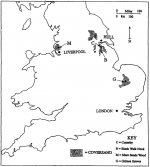
Map of similar coversands in England:

distribution_of_coversands_in_england.png
Source: Thermoluminescence dating of the british coversand deposits

The coversand patch west of Hull seems to be part of a much larger area of coversands extending to the east of Hull.

Download Video

Sand protects the remains of lost villages. Source: Is The Anglo-Saxon Invasion Of England A Myth?

And a similar sand-swamped village event is discussed in the IHASFEMR thread.
 
Last edited:
I was just wondering if you could find the tree growth age around that area? How old are the trees at the surrounding site that you are talking about? Where are the closest rivers, and dams? You will have to find some old history books about the first people to inhabit the place to see if you can find any evidence from the people that lived and traversed the lands. Keep looking and I know you will start to find some really interesting things.

I too have found similar anomalies where I am from and it seems to have been around the same time line. I think this is an interesting thread because there is evidence of the world's story in each layer we look at. Keep up the good work.
 
I was just wondering if you could find the tree growth age around that area? How old are the trees at the surrounding site that you are talking about? Where are the closest rivers, and dams? You will have to find some old history books about the first people to inhabit the place to see if you can find any evidence from the people that lived and traversed the lands. Keep looking and I know you will start to find some really interesting things.

I too have found similar anomalies where I am from and it seems to have been around the same time line. I think this is an interesting thread because there is evidence of the world's story in each layer we look at. Keep up the good work.
How very interesting. A couple of hours reading up on just the last two centuries of Culbin's history uncovered an even larger sand-stabilisation planting (10m trees) than the sand-flood suppression planting at Thetford Forest (6m trees).

We also see a manor with a dovecot ('doocot') sited on a mound. Dovecots on mounds are interesting (to me) because I suspect many dovecots are mislabelled. Details would derail the thread.

We also see folklore - and possibly it is 19th century pseudo-folklore - about Culbin manor's mean lord (laird) playing cards with the Devil. And that this card game led to the sandflood. This is interesting because Ross Sinclair says this piece of folklore should be discarded on the grounds that the same folklore was used to explain other coversands in Scotland. And that it "fired the imagination of writers into keeping the tale alive". Which tells us that:
  • there are other coversands in Scotland
  • Ross Sinclair (for one) suspected the card-playing with the Devil story was being deliberately promoted during the 19th century.
And why might he think the latter?

I'm speculating about what someone else thinks here, which is not entirely reasonable, but given that:
eliza-maria-ne-gordon-cumming-lady-middleton_orig.jpg
who was:
  • sister to Constance Gordon-Cumming, who promoted a Druidic explanation for Loch Nell serpent mound (and called it ancient when it may well have been an expedience feature from the Reformatting)
  • and who promoted natural explanations for volcanic activity, and who:
  • hung out with the 'Romantics', who were occupied with:
    • creating a Romantic version of the past after the Reformatting had wiped away much of the real, ogrish past...
then you can see why Sinclair might have thought Romantics were simultaneously promoting both a scientific and a controlled folkloric vision of the past.

I think the Culbin sand flood event was being given:
  • a plausible scientific explanation, and also:
  • an alternative 'good versus evil' explanation aimed at those that needed morality lessons (another deliverable of the Romantics).
and that its position as one event in a much larger set of events was being played down by both the scientific explanation and the 'mean laird playing cards with the Devil' version.

But anyway, there's more...

On the Mrs Willoughby's poem page, there's this unattributed engraving of Culbin's laird playing cards with the Devil:

cardgames_1.jpg

where we see the Devil portrayed with long nose and jutting chin. Features that seem to crop up often in accounts and imagery of the face shapes of giants, executioners and butchers.

And that's just what you find before you start looking for older material.

So, the research is worth the search. :)
 
Last edited:
@usselo - Look anywhere along the N-E scottish coast and there's anomaly after anomaly, huge sand dunes in every bay, and ruined castles all along the entire coastline.. here's the best I've seen so far!
"Findlater Castle"

I wonder if these 'wind-blown sands' were the result of an impact?! Seems likely as they appear so widespread in the planet, and not just confined to coastal regions. Unless the sand had originally been brought from the seabed, to the coast, then spread by winds?!

the Oera Linda book tells of the destruction of "Atland" (doggerland?!) by cataclysm.. also alludes to a pole shift too!

ps- cheers for response, checking your links now... "Did the Saxon invasion even happen?" perfect timing, sir, that's been the focus of most of my reading this week!
 
@usselo - Look anywhere along the N-E scottish coast and there's anomaly after anomaly, huge sand dunes in every bay, and ruined castles all along the entire coastline.. here's the best I've seen so far!
"Findlater Castle"

I wonder if these 'wind-blown sands' were the result of an impact?! Seems likely as they appear so widespread in the planet, and not just confined to coastal regions. Unless the sand had originally been brought from the seabed, to the coast, then spread by winds?!

the Oera Linda book tells of the destruction of "Atland" (doggerland?!) by cataclysm.. also alludes to a pole shift too!

ps- cheers for response, checking your links now... "Did the Saxon invasion even happen?" perfect timing, sir, that's been the focus of most of my reading this week!
Seemingly disputed issues are:

1. When the sand arrived in its initial location (the initial sand deposition event) and
2. When and how quickly the sand moved (flooded) neighbouring land (the sand flood event).

We tend to read about the latter. Not so much about the former.

During yesterday's reading I saw these claims for sand flood dates. These for the coversands map above plus Culbin plus Kenfig, Wales:

YearLocationSource of Sand (Alleged)
1270 - 1540 (multi-century event)Kenfig, WalesFrom Irish Sea/Bristol Channel
1610 (multi-decade event)Santon Downham, SuffolkWind blew it from a 'warren' at Lakenheath (owned by Dean and Chapter of Ely)
1694 (disputed multi-decade event)Culbin, ScotlandOriginally from hills above/River Findhorn watershed, then wind from the north west
1694 or 1695Scunthorpe, LincolnshireWind driven from unspecified west
N/AMere Sands Woods, Lancashire (Location 'M' in the coversands map above)Ambiguous but from west, presumably Irish Sea

Same with water on the east coast:
  • How much?
  • How long?
  • From where?
  • When?
Download Video

Please don't talk over your interviewee Aubrey - the date is hard to hear. Source: BBC Talking Landscapes: The Fens

And:

Download Video

Getting wetter with the Romans but worse afterwards. Source: BBC Talking Landscapes: The Fens

Of course, add 1,000 years to the Romans. Which brings flooding dates to approx 1070 AD, with a worsening after 1400 AD and a draining into, say, 1700 (ish). Which ties in better with the cover sand events in the above table.

The first paragraphs of Steve Mitchell's When the Sea Flooded Britain: A Catastrophic Late Holocene Isostatic Interlude along the Eastern
Seaboard of England and Scotland
(attached) date several sea inundation events between: 400 - 1700.

Add 1,000 to Mitchell's 400 AD start date. Leave 1700 as it is because 1700 is this side of the Reformatting Reformation.

Map of 878 AD England, including marshland:

shrunk_england_878.jpg
Compare east coast marsh with Bateman's coversands map above. Source

Date's probably a crock but the marshland locations may help identify former coastline, sand events, etc.

Why does water matter?

Because it is interesting in itself and it may help explain - and date - the cover sands event(s).
 

Attachments

  • When the Sea Flooded Britain, by Steve Mitchell (2005) - Soc.pdf
    1.5 MB · Views: 228
Last edited:
During yesterday's reading I saw these claims for sand flood dates. These for the coversands map above plus Culbin plus Kenfig, Wales:

YearLocationSource of Sand (Alleged)
1270 - 1540 (multi-century event)Kenfig, WalesFrom Irish Sea/Bristol Channel
1610 (multi-decade event)Santon Downham, SuffolkWind blew it from a 'warren' at Lakenheath (owned by Dean and Chapter of Ely)
1694 (disputed multi-decade event)Culbin, ScotlandOriginally from hills above/River Findhorn watershed, then wind from the north west
1694 or 1695Scunthorpe, LincolnshireWind driven from unspecified west
N/AMere Sands Woods, Lancashire (Location 'M' in the coversands map above)Ambiguous but from west, presumably Irish Sea

The first paragraphs of Steve Mitchell's When the Sea Flooded Britain: A Catastrophic Late Holocene Isostatic Interlude along the Eastern
Seaboard of England and Scotland
(attached) date several sea inundation events between: 400 - 1700.
now I wish my PC was in full health! I have a folder of maps of settlements/ old maps of britain, for reference in times like these... but my motherboard only wants me to use 1 of 4 SATA ports... :rolleyes::rolleyes:

About Kenfig - a buried castle.... "The story goes that a vast and prosperous city lay beneath the [Kenfig] lake". it's mad. I've read about how the Severn Estuary was more of a forested river valley before sea levels rose, but all land Historians and Archaelogists seem to think the water level could've never changed during the periods they study... Cognitive Dissonance, much?!?!

I've actually been to Porthcawl (a few miles south of Kenfig) and the sands there, and grew up in Weston-super-Mare, looking over the Severn (Sabrina to the Romans!). Living at sea-level always gave my mind some strong "catastrophism" imagery to think about!

here's a couple of hilarious quotes from Wiki around Kenfig: (emphases are mine!)
wiki said:
The encroaching sand caused by intensive cattle grazing and declining temperature due to the Medieval Warm Period made habitation of the area difficult
wiki said:
There are several theories about how the [Kenfig] pool was formed. An old, yet popular theory claims that the lake was created during a "sinking of the land" in a massive earthquake, but has since been rejected as downright bizarre
so, a massive cataclysmic earthquake event is a "Bizarre" theory, yet sand dunes caused by cattle seems reasonable?? I'm done! :ROFLMAO:


Over my side of the river are huge flat plains of MUD (the Somerset levels), previously seasonal tidal marshland, but for how many years has the sea actually been at this level?!?

My posts may seem slightly chaotic, but I'm trying to not stray wildly off topic :ROFLMAO:

(and now for another look at the official story of the monasteries and abbeys, and romans in the Severn Valley area)

I think it's our due diligence to truly KNOW our local areas, and the histories within.

As Bob Marley sang - "If you know your history, then you will know where you're coming from" ✌️
Of course, add 1,000 years to the Romans. Which brings flooding dates to approx 1070 AD, with a worsening after 1400 AD and a draining into, say, 1700 (ish). Which ties in better with the cover sand events in the above table.

The first paragraphs of Steve Mitchell's When the Sea Flooded Britain: A Catastrophic Late Holocene Isostatic Interlude along the Eastern
Seaboard of England and Scotland
(attached) date several sea inundation events between: 400 - 1700.
That was a great read, definitely worth a further look at!

Makes a lot of sense that the sea levels have changed a lot... the "Iron Age" civilization seem only to have built on hilltops (in my area, at least!), so maybe that is the "30m"+ time he speaks of.

Chronologically altered, Pre-roman ("Iron Age"/Brythonic, or were they 2 separate peoples separated by time?*) would put us at, roughly, either 1300 or 1000 years Before Present, let's call it 1200 just for this exercise... that's any time Pre-800AD, so within the scope of the book, this guy studying the levels might have the actual timescale historically correct, correlates to higher sea levels in Pre-Roman times.

[*the brythonic tribes could either be remnants, or partial remnants of the "Iron age" civilization, or non-native, pre-roman population (emigrated from europe), probably intermixed with natives.. They seemed pretty advanced, but what time did they exist in, in relation to "Roman/Saxon" times?! Did they exist in one form previous to that era, and also suffer from forces of nature?]

Pretty sure the Roman sea level being the same as the Saxons is more than coincidence. They both seem to have used the same waterways, and both seem to get ruined by flood! (it would be strange for the exact same event to occur 700 or so years apart). I need to look at into this some more, I feel like there are anomalies to some of the ideas (such as the sunken sites, islands which are no longer there, doggerland).

Maybe the water stayed high for a little while, or subsided to similar levels* as "Roman" times, long enough after the damage was done (would that take a few generations?). Obviously, not everything got fully destroyed/inundated, but it would leave everything else coated in mud and silt. (and lovely, wind-blowable sand???)

[**when I say water "level", it could be waters becoming lower, or land raising. Possibly a combination of both.]
[Also, would being nearer to the equator affect sea level?
:unsure: ]

All the grand abbeys and cathedrals period (and early castles, but what's "Roman/Saxon" and whats's not??), ending around 14thC seem to be built with a higher water table, and mostly not suffered from any serious destruction since that period, other than by the hands of humans.
 
Last edited:
now I wish my PC was in full health! I have a folder of maps of settlements/ old maps of britain, for reference in times like these... but my motherboard only wants me to use 1 of 4 SATA ports... :rolleyes::rolleyes:

About Kenfig - a buried castle.... "The story goes that a vast and prosperous city lay beneath the [Kenfig] lake". it's mad. I've read about how the Severn Estuary was more of a forested river valley before sea levels rose, but all land Historians and Archaelogists seem to think the water level could've never changed during the periods they study... Cognitive Dissonance, much?!?!

I've actually been to Porthcawl (a few miles south of Kenfig) and the sands there, and grew up in Weston-super-Mare, looking over the Severn (Sabrina to the Romans!). Living at sea-level always gave my mind some strong "catastrophism" imagery to think about!

here's a couple of hilarious quotes from Wiki around Kenfig: (emphases are mine!)


so, a massive cataclysmic earthquake event is a "Bizarre" theory, yet sand dunes caused by cattle seems reasonable?? I'm done! :ROFLMAO:


Over my side of the river are huge flat plains of MUD (the Somerset levels), previously seasonal tidal marshland, but for how many years has the sea actually been at this level?!?

My posts may seem slightly chaotic, but I'm trying to not stray wildly off topic :ROFLMAO:

(and now for another look at the official story of the monasteries and abbeys, and romans in the Severn Valley area)

I think it's our due diligence to truly KNOW our local areas, and the histories within.

As Bob Marley sang - "If you know your history, then you will know where you're coming from" ✌️

Makes a lot of sense that the sea levels have changed a lot... the "Iron Age" civilization seem only to have built on hilltops (in my area, at least!), so maybe that is the "30m"+ time he speaks of.

Chronologically altered, Pre-roman ("Iron Age"/Brythonic, or were they 2 separate peoples separated by time?*) would put us at, roughly, either 1300 or 1000 years Before Present, let's call it 1200 just for this exercise... that's any time Pre-800AD, so within the scope of the book, this guy studying the levels might have the actual timescale historically correct, correlates to higher sea levels in Pre-Roman times.

[*the brythonic tribes could either be remnants, or partial remnants of the "Iron age" civilization, or non-native, pre-roman population (emigrated from europe), probably intermixed with natives.. They seemed pretty advanced, but what time did they exist in, in relation to "Roman/Saxon" times?! Did they exist in one form previous to that era, and also suffer from forces of nature?]

Pretty sure the Roman sea level being the same as the Saxons is more than coincidence. They both seem to have used the same waterways, and both seem to get ruined by flood! (it would be strange for the exact same event to occur 700 or so years apart). I need to look at into this some more, I feel like there are anomalies to some of the ideas (such as the sunken sites, islands which are no longer there, doggerland).

Maybe the water stayed high for a little while, or subsided to similar levels* as "Roman" times, long enough after the damage was done (would that take a few generations?). Obviously, not everything got fully destroyed/inundated, but it would leave everything else coated in mud and silt. (and lovely, wind-blowable sand???)

[**when I say water "level", it could be waters becoming lower, or land raising. Possibly a combination of both.]
[Also, would being nearer to the equator affect sea level?
:unsure: ]

All the grand abbeys and cathedrals period (and early castles, but what's "Roman/Saxon" and whats's not??), ending around 14thC seem to be built with a higher water table, and mostly not suffered from any serious destruction since that period, other than by the hands of humans.
> "The story goes that a vast and prosperous city lay beneath the [Kenfig] lake"

I've wondered if the Fens cover a former large city. There were grounds for investigating even before I found this theory: TROY IN ENGLAND.

> That was a great read, definitely worth a further look at!

In that case, credit where credit is due. It came from SIS at: https://www.sis-group.org.uk/papers/2005/01/01/when-the-sea-flooded-britain-by-steve-mitchell/.

Searching SIS's site for 'Mitchell' produces flood-supporting follow-ups: Mitchell - Society for Interdisciplinary Studies.

They repay the read.

Robert John Langdon (presumably a nom-de-plume) - originally mentioned in this post - has books/videos around the Post-Glacial Flood hypothesis and canals at Robert John Langdon.

Also videos on YouTube at https://www.youtube.com/c/RobertJohnLangdon-author.

For me, buying this entity's The Post-Glacial Flooding Hypothesis (Prehistoric Britain Book 1) was not worth the purchase. The Kindle book couldn't be read on the available device and the £2.99 purchase money wasn't efficiently recoverable. Suggest buying print versions if tempted to test Amazon's "Hi, I'm a customer - hurt me!" blend of business and technology.

The Tim Cullen entity's recently published Blooming Planet Earth surfaces another explorable idea about possible causes of these events.

> now I wish my PC was in full health! I have a folder of maps of settlements/ old maps of britain, for reference in times like these... but my motherboard only wants me to use 1 of 4 SATA ports...

A sad truth is that lack of appropriate equipment hinders this kind of research and diverts efforts into non-essential auxiliary work and creating work-arounds. Though that extra work in itself may produce positives: developing skillset, patience, multi-tasking, etc.

Speaking of work, another challenge modern humans face is their small-mindedness. We just don't think big enough when considering possibilities for the size and management of 'our' domain:

Download Video

'Bees down there' symbolism. Bryan Cranston' plays Aristo-God of the hive. Source: Breaking Bad, S3 Ep11

Do worker bees dream of enormous product managers?


I messed up the formatting of the bullet points for my observations about the Gordon-Cumming 'folklore' writers in post-118032 above and editing on that post is closed so repeating here as originally intended:
eliza-maria-ne-gordon-cumming-lady-middleton_orig.jpg
who was:
  • sister to Constance Gordon-Cumming, who:
    • promoted a Druidic explanation for Loch Nell serpent mound (and called it 'ancient' when it may well have been an expedient feature left over from the Reformatting)
    • and who promoted natural explanations for volcanic activity, and who:
    • hung out with the 'Romantics', who were occupied with:
      • creating a Romantic version of the past after the Reformatting had wiped away much of the real, ogrish past...
The Gordon-Cumming sisters are possibly cut-outs - meaning: entities created to cover acts of content creation and myth-production in our domain. But rather than focusing on that, I'm looking at the content they (allegedly) created and its relationships with the physical realities in the landscapes they wrote about.
 
Last edited:
Excellent post! I live not very far from Culbin, should anyone want photos or other site visit support.

One of the questions that initially lead me on my stolen history journey was around the conflict I could see between the accepted narrative that some very beautiful and extensive homes and gardens exist along the moray coastline, and indeed throughout the highlands, but the official narrative promoted at school and in museums here suggests that regular people lived in rugged ‘black houses’ along with their livestock, with no running water, sewage, or infrastructure- ie just on hillsides and in fields. How can this be the case, that these two communities existed contemporaneously?

72E09B54-B982-4AA4-B26C-9AF779AEE9F5.jpeg
359471BA-51B0-499C-B79B-E50C2F1BCDE2.jpeg
FCB1DC0E-83AF-4BC9-AA14-CAE982DAFBBA.jpeg
01924AAB-17B2-491F-8C1A-D4F3743C95B3.jpeg
Something about this followed by the Jacobite uprising and then the Clearances just doesn’t make any sense.
 
Excellent post! I live not very far from Culbin, should anyone want photos or other site visit support.

One of the questions that initially lead me on my stolen history journey was around the conflict I could see between the accepted narrative that some very beautiful and extensive homes and gardens exist along the moray coastline, and indeed throughout the highlands, but the official narrative promoted at school and in museums here suggests that regular people lived in rugged ‘black houses’ along with their livestock, with no running water, sewage, or infrastructure- ie just on hillsides and in fields. How can this be the case, that these two communities existed contemporaneously?

Something about this followed by the Jacobite uprising and then the Clearances just doesn’t make any sense.
Humans living with livestock - or in the rooms above it - is a common part of narratives about the British rural past. I've also encountered it in Portugal.

There's a passage in the Torrington Diaries where author John Byng notes his surprise that an innkeeper expected Byng's (presumably) human assistant to sleep in the inn like Byng himself. Coupled with other comments elsewhere in the Diaries, you get the impression Byng expected his assistant to sleep with the horses.

From The Torrington Diaries (Abridged), p347, at Bardney, Lincolnshire, dated 1791-06-30:
He shew'd me into his best parlour - alias bed room; and wanted the other gentleman to come in likewise.

Sounds like Byng wasn't happy about the innkeeper's assessment - or equal treatment - of the other member of Byng's party.

As it happens, I don't think Byng's horses were necessarily what we understand to be horses but we're clearly supposed to think they were horses as modern humans understand them so I am going with that assumption.

IHASFEMR conjectures that humans (as we understand humans) were treated and housed as cattle until very, very recently. With reverberations continuing into our times - like the now-forgotten British House of Commons reference in the early 1990s to England's population as 'stock'. The reference was removed from Hansard - the record of British Parliamentary debate. I've also found written evidence of commoners in Lincoln being considered as owned slaves into the first decades of the 19th century.

At a guess, the Clearances in Scotland, and the Enclosures in England, are a rewriting of the last cleansing brush sweeps of a depopulation event. But not the cleansing of a population that was dominated by modern humans.

But I've gone over this in the IHASFEMR thread. What evidence do you find for what the the Jacobite rebellion was? And the Clearances? Or what evidence do you not find that you would expect to find if the orthodox narrative were correct?
 
Last edited:
I've wondered if the Fens cover a former large city. There were grounds for investigating even before I found this theory: TROY IN ENGLAND.
Totally possible!
But surely Troy is always Troyes in France?

Just read this rather good article explaining the prehistoric landscape, and also explains a lot of sand, yet the (very good) author seems to not want to say the word CATACLYSM!!!
 
People in New England have a history story that contains clear cutting the trees during the 1800's. This supposedly, and a sudden surge of Spanish Merino sheep was almost the destruction of New England, because there was so much clear cutting because of the new Industrial revolution. I find this very interesting and much of a farce. I have been finding evidence that disproves the "clear cutting" narrative and looks more like a cataclysm had happened that touched the East coast, all the way inland to my beloved Vermont. I have found evidence in the Vermont History Books, from the "horse's mouth", that there was evidence of some great destruction of the land and that what they had presently been seeing was a land that had recently recovered.

I look around me and see trees that are just, the oldest, 250 to three hundred years old, and only few spots of virgin growth trees in spurts throughout New England.

When you speak of Scotland and these sand patches, I really think things start to make sense for me, and validates that there is missing history of a catastrophe(s) that has not been told. Just thinking of the magnitude of an event that could do such things to the earth.

I do believe in the Noah flood but I do believe there may have been many floods and shifting land masses that have happened throughout the history of this planet.
 
Totally possible!
But surely Troy is always Troyes in France?

Just read this rather good article explaining the prehistoric landscape, and also explains a lot of sand, yet the (very good) author seems to not want to say the word CATACLYSM!!!
If there was a city before the Fens, perhaps it was Elysium. As in Ely...

More evidence of rising medieval sea levels:

From Denny Abbey, Cambridgeshire:
A group of Benedictine monks, dependent upon Ely Abbey, moved here from their water-logged monastery at Elmeney (a vanished settlement about a mile to the northeast) in the 1150s

From Winchelsea, East Sussex:
...the start, in 1233, of a prolonged period of exceptionally turbulent weather that lasted until 1288. A long series of severe storms accelerated the eastward longshore drift of shingle in the Channel and started to break up the shingle bank on which Old Winchelsea was built.

From 1244, Winchelsea was receiving regular grants towards its sea defences.

The description of the storm of 1250 suggests that the shingle bank on which Old Winchelsea stood was been permanently breached. By 1258, tides were running as far inland as Appledore, a distance of close to 8 miles from Old Winchelsea; an unheard-of occurrence. By 1280, the town and its surroundings were for the most part submerged.

On 4 February 1287, it was recorded that the sea flooded so greatly that all the sea walls were broken down and almost all the lands were covered in water as far as Winchelsea”. The unfortunate little town of Broomhill was swept away. The storm also appeared to have finished off what was left of Old Winchelsea, although its ruins were still visible at low tide for another five years.

Bridge floods:

High Bridge, Lincoln:
The bridge was built about 1160 AD and a bridge chapel was built dedicated to Thomas Becket in 1235 on the east side of the bridge. The chapel was removed in 1762.

Since the 14th century the bridge has contributed to floods in Lincoln

But it didn't contribute to floods between 1160 and the start of the 14th century in 1300? Why not? What other factor changed?

Pulteney Bridge, Bath:
By the end of the 18th century it had been damaged by floods, but was rebuilt to a similar design.

The Pulteney Bridge flood damage is too vaguely described here to be much of a clue, though we note that the weather in the 17th and 18th centuries seems to have been... stormy.
 
I do believe in the Noah flood but I do believe there may have been many floods and shifting land masses that have happened throughout the history of this planet.
Shifting lands is a good subject.. I believe that anywhere built on top of an "alluvial layer" of sediment is not safe from subsidenceMore evidence of rising medieval sea levels:
Denny Abbey, Winchelsea
very good finds!! British sea levels HAD TO be higher when all the large Cathedrals were built, which fits so perfectly into this time.

I want to call this rise in sea level the "post-roman flood". Unfolding this mystery certainly involves more work than I had originally considered!!

Bath is a strange place... the entire city centre is raised metres above the high water mark, the "Roman" baths are underground!
 
Shifting lands is a good subject.. I believe that anywhere built on top of an "alluvial layer" of sediment is not safe from subsidenceMore evidence of rising medieval sea levels:

very good finds!! British sea levels HAD TO be higher when all the large Cathedrals were built, which fits so perfectly into this time.

I want to call this rise in sea level the "post-roman flood". Unfolding this mystery certainly involves more work than I had originally considered!!

Bath is a strange place... the entire city centre is raised metres above the high water mark, the "Roman" baths are underground!
Were they baths? At the moment I'm inclined to think they were vats. Tanners' vats, cordwainers' vats or perhaps the vat component of some technology we don't understand.

Returning to rising sea levels towards the end of or after the orthodoxly-dated Roman era.

From On The Roman Occupation of Lincoln And The Eastern Portion of Britain, Rev. Prebendary SCARTH, Archaeological Journal. June, 1881:
It is a curious fact, however, that recent excavations for making modern sewers are said to have shewn that the old Roman drains have their levels above the level of the Roman roads, and this seems to prove that the Roman city, during the period of Roman occupation, underwent great changes of level; the previous buildings being destroyed, abandoned, and then rebuilt, and the sewers constructed during the latest occupation.

That paragraph had a footnote:
The waters of Brayford once washed the city wall. This is known from a deed of the 17th Century. For 500 years the level of High Street has remained unaltered; but 200 years ago the waters of Brayford washed over the site of GuildHall Street, while on the south side of the river St. Benedict's Church and buildings, now pulled down, were erected more than 700 years ago.

The present site of the city appears to be about 10 feet above the level of the Roman one.

Many stone coffins were found in St. Martin's Lane, four feet under the surface.

Cavern like perforations, three feet in diameter, have been found eight feet below the surface, filled with run lime, with remains of plaster and tilework of Roman character.

My dad says he saw the remains of a quay that would have been in line with the above reference to GuildHall Street. The steps down to it used to be open to the public for one day a year. The westerly extension of Guildhall Street is the road that runs along the north bank of the current Brayford. The road is called 'Newland'.

That gives you a water level much wider than the current River Witham level and supports the early 19th century claim that the single-arched bridge across the river was originally five arched. However, it doesn't tell you much about the then height of the river level.

There is also evidence that the water level was up to ten metres or more higher and the river very much wider (probably across the full two miles span of the Lincoln Gap). That evidence is a reference to a mooring staithe with remains of a ship tied to it found beneath the building at the top of Lincoln High Street, where St Martins Lane, St Martins Street, The Strait and the High Street all come together.
 
Were they baths?

I'd say so- Built on natural hot springs, in an ancient port, and where the city gets it's name from! (Bath coming from Germanic "Bad", meaning Bath) ~ Also called "Aquae Sulis", (water of the sun) in Latin :)

We have similar "Hot Wells"/"Boiling Wells" in Bristol (10 miles down the road), but the hot water has stopped for over a century!

Also, the Bath Roman Baths are not below water level, just below the modern city... if you razed from the edge of the river bank across the centre, you'd probably be pretty close to the Roman floor level. some serious inundation to bury it that deep!

- "old Roman drains have their levels above the level of the Roman roads, and this seems to prove that the Roman city, during the period of Roman occupation, underwent great changes of level; the previous buildings being destroyed, abandoned, and then rebuilt, and the sewers constructed during the latest occupation."

sounds to me a lot like those "roman" drains were built a lot later than the original town/city, maybe they aren't as "roman" as we're led to believe?! perhaps built in the same time as the "gothic" Cathedral builders were about? still old enough to be mistaken for Roman, I'm sure.

The problem here is; archaeologists + historians are CERTAIN that all technology stopped for 800+ years after the Roman collapse. I say that's bollocks, and technology such as drainage/water management was still used! definitely seems like they forgot about it sometime in the 14-16th Centuries... Or it was just kept from the peasants!
My dad says he saw the remains of a quay that would have been in line with the above reference to GuildHall Street. The steps down to it used to be open to the public for one day a year. The westerly extension of Guildhall Street is the road that runs along the north bank of the current Brayford. The road is called 'Newland'.

That gives you a water level much wider than the current River Witham level and supports the early 19th century claim that the single-arched bridge across the river was originally five arched. However, it doesn't tell you much about the then height of the river level.

There is also evidence that the water level was up to ten metres or more higher and the river very much wider (probably across the full two miles span of the Lincoln Gap). That evidence is a reference to a mooring staithe with remains of a ship tied to it found beneath the building at the top of Lincoln High Street, where St Martins Lane, St Martins Street, The Strait and the High Street all come together.

Love it!

I did this in most cathedral cities- here's Gloucester.. add 13m to sea level and we get the water right up around the Cathedral platform! :) Same in Bristol and Bath... I'm yet to find a british cathedral or manastery below this mark, but some are built on even higher ground... is this indicative of a more ancient holy site?

glos cath.png
 
Last edited:
Tips
Tips
Please respect our Posting Rules.
Back
Top