AncientAngloSaxon420
New Member
- Joined
- Dec 21, 2020
- Messages
- 3
- Reaction score
- 11
Nice write up this was very eye opening
Great article, as an Irishman i really enjoyed it. I will say one thing though at the beginning you mention that ogham writing isn't necessarily Irish but as you continue the thread
Here in Québec we have à Creek community and I had note à similarity between their pysiologie and them of the mayan poeple from guatemala. Furthemore my great gran father was à sailman , said To be a native from here but was in fact Irish descendance. They named him thé crow. A man from Cuba, the father of a friends looked exactly like him: very dark skin and not tall of height.This is for biological aspect. A legend from people of saguenay tell about à great city made in gold in Valmont, build by tall white Man with beard.
And maybe it's a mystery because the language connects to an older civilization that was overthrown by people who now speak the newer "latinized" language and they were never taught that history, just the lies.
Yes, as I told amazingly Iberian language remains unknown and there's no official career degree. Totally bizarre (as if it's one of "those" questions, powers TPB doesn't want to go too far, including basque nationalist politics).
I celebrate the brilliant focus on this thread, as it was inevitable to relate ancient nations to the futhark oggham iberian etc, etc old runic (pictogram in fact) symbols.
Sometime somewehere this pictogram scheme turned to proto-phoenician alphabet. So an ancient language more complex that could even be read in every direction (left to right, right to left, making a matrix, from above to below, etc, and keeping a coherence).
....


https://en.wikipedia.org/wiki/Glagolitic_scripthttps://en.wikipedia.org/wiki/Nicolai_Levashov
Turning to basques,
You see this idea of Iberian peninsula and the meaning of iberians as "free people", comes to me in different angles.
Iberia=I berriak
aberri (fatherland) eguna (day)- basque nation fest day
https://en.wikipedia.org/wiki/Aberri_Eguna
Meaning berri not new but in another sense -aberri- (nation, linking nation not to a place or territory but a group of people).
Another point of view, basque in basque language (Euskera) it's known Euskadi it's the name of this little region in the north of Spain besides France (South France there has some basques either -Aquitaine- or Basque-French country).
What does it mean EUSKADI?. I'm not philologist but a close interpretation should be something like "we govern ourselves"
Eus (we, to us) Kadi (leadership, governance).
https://www.dictionary.com/browse/alcaidehttps://en.wikipedia.org/wiki/Qaid
The word Kadi, it's related to arabic Al-Kaide (maybe even Al-Qaeda has some relationship but this is very distorted in political and secret services games). Al-Qaeda (The Base) would be here the Council.
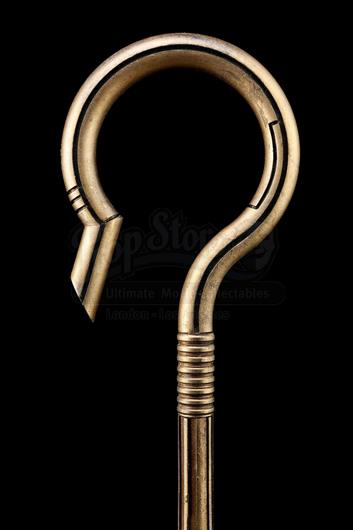
Alcalde or Alcaide (in spanish chief of the city council or Major), Cadiz (spanish city in Andalusian region). Probably it's related to the word (large cane or wand of the major, as a symbol of governship, civil or sacred).
...........................

Egyptian crook (In spanish Cayado, or cane shephard).
............ ......................... .......
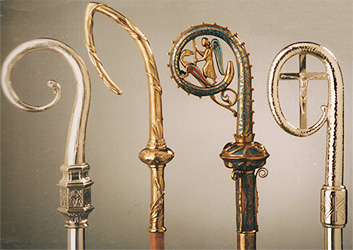
Did you notice the sephard cane, correlated to Sepharad?
https://en.wikipedia.org/wiki/Sepharad
Again, cane as KADI.
https://www.merriam-webster.com/dictionary/caddyhttps://www.dictionary.com/browse/alcaidehttps://dictionary.cambridge.org/us/dictionary/spanish-english/cayado
So EUS-KADI (we govern ourselves).
So Euskadi (Basque country) it seems comes from this (I have the cayado wand , or I govern myself) what has been a constant in the recently or modern history of Spain (large autonomy).
The real name is Euskadi (what it's really linked to ancient iberians), Basque it's a more modern term (maybe related to a sort of people's army -Bashkir-).
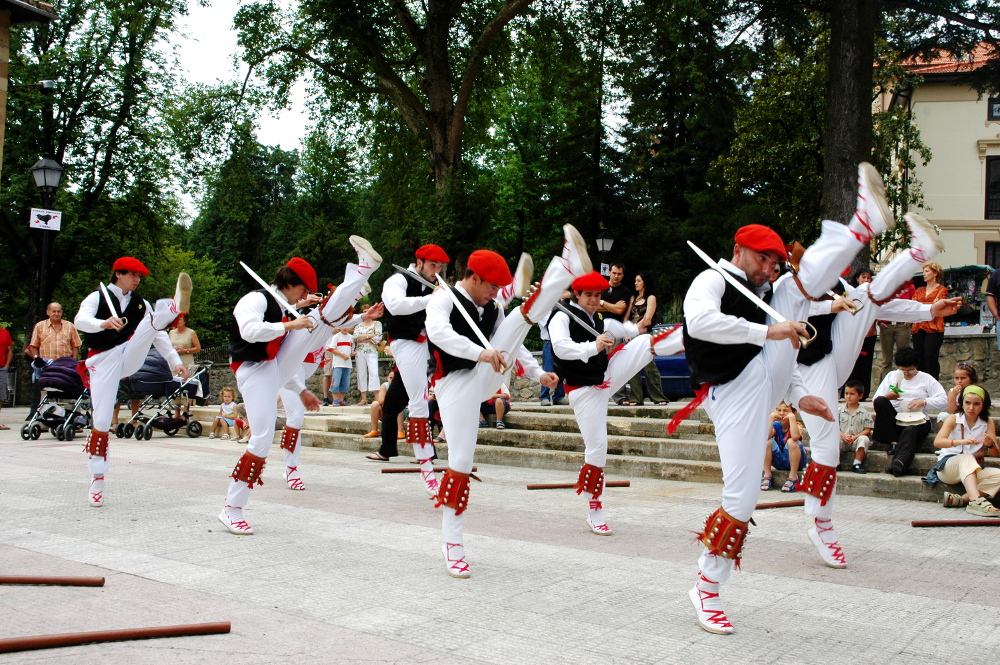
Just observe in basque tradition, the wellcoming dance (aurrezku), resembles a sort of very old rite related to horses. (unbraving horses and the dangerous kicking).
View: https://www.youtube.com/watch?v=I7EJk0k88Ko
View: https://www.youtube.com/watch?v=QjVl9zbH5N8
.................................................
There's even another interesting linking from basques and America recolonisation, as Spain took lots of basque people (not only being good sailors), but mainly as people who knowing a bit of this ancient language (euskera or basque), it seems they had better skills to understand native american languages.
My intuition perceives that in ancient world, I don't know how and why, Iberia was a sort of refugee and it was like Americas was in the 17th-Century for europeans, a land to escape out of religious wars and prosecutions, for Iberian case a land for rebel slaves.
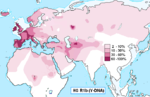
Even maybe latin word Libero (free man), comes from L'Ibero (Iberian). So a territory with a great mix of blood, but one original population that seems very linked to RH- in north spain and basques (iberians) mostly.
Lábaro has the same consonant frame.
Same word used for first country founded with free slaves (Liberia).

 It is very shallow and is now drying up. THOSE WHO WERE IN THE MOUNTAINS OF AFGHANISTAN survived and degraded. And the real Cities Collapsed and somehow ended up at the bottom of the Swamp) Not a single mummy, skull, etc. Such a State "PAPER TOLES EVERYTHING"
Nergos and Australoids cannot live in Britain-Ireland because they will die from lack of sun. It's just Biology.
It's in the industrialized world. Where there are vitamins, tanning beds, blacks can go south and so on. If there is a catastrophe and peace, all these peoples will simply die out. Any culture of Lapland (Sami, Norway), Russian and American Eskimos and reindeer herders = These are dead-end civilizations. (The most developed of these are Russian fishermen and Norwegian fishermen = Scottish and Icelandic fishermen are also here)Nergos and Australoids cannot live in Britain-Ireland because they will die from lack of sun. It's just Biology.
Not sure about that, I think spending even a short amount of time in any major British city would dispel that idea pretty quickly. Britain has probably the largest and longest established black and South Asian population in Europe, and many of the latter are Australoid.
These nationalities will have to interbreed with local ones and half of the children will die. (The Aristocrats who seized power apparently changed their bodies) Until recently, there was a real chance of dying from Tuberculosis. There were areas with IodoDecifitis (for example, the Dwarf population in Switzerland in 1900) There were areas with poisoned land (One area in Italy) Only the joint efforts of societies in 1890-1950 solved all these problems. (It is clear that people are bullied and persecuted, but this is half the process. They are allowed to live as an idiot ) London is a very dark and damp city. What THEY are doing there is a mystery ) One fundamentalist is calling for the shutdown of electricity. Can you imagine what will happen to people and cities?)
The author of these pictures was Theodor De Bry (Theodor de Bry - Wikipedia) and the 'Pict' comes out from the book 'Historia Americae sive novi orbis...' (Illustrations :: bodmerlab). It is used on the internet as a representation of the Picts but I have my doubts about that.

The author of these pictures was Theodor De Bry (Theodor de Bry - Wikipedia) and the 'Pict' comes out from the book 'Historia Americae sive novi orbis...' (Illustrations :: bodmerlab). It is used on the internet as a representation of the Picts but I have my doubts about that.
Could be. Even though on the link you give there is this sentence by De Bry to 'explain' the pictures:This drawing of the Pict is known as one of the "Pict plates" compared to other "non-Picts" in other plates. See this page.
The title page of the English text version concludes with the phrase: “[The Picts were included] to showe how that the Inhabitants of the great Bretainnie haue bin in times past as sauage as those of Virginia.”

The Celtic Druids by Godfrey Higgins might give some more info (and is English). Or look into Cro-magnon.........................................