

- Joined
- Sep 22, 2020
- Messages
- 4,691
- Reaction score
- 1,500
I'm actually pretty excited about this little discovery. I think it could explain how people in the past moved and shaped objects like these:
The above 1822 pub specifically talks about multiple issues related to the Artificial Granite. And while you can follow the link on your own I wanted to point out one specific issue with artificial granite as described in the above pub.
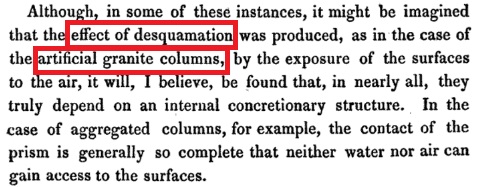
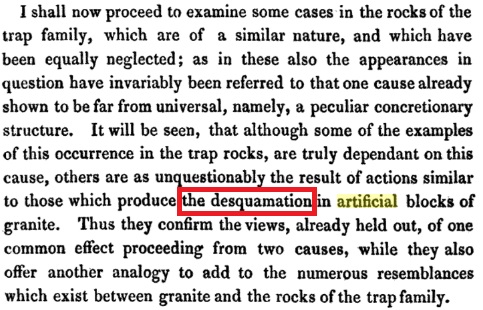
DesquamationI was not smart enough to know what this "desquamation" was (I hope I was not the only one), so I turned to Google:
Desquamation of PalmyraPalmyra is an ancient Semitic city in present-day Syria. Archaeological finds date back to the Neolithic period, and documents first mention the city in the early second millennium BC. Palmyra changed hands on a number of occasions between different empires before becoming a subject of the Roman Empire in the first century AD.
Some of the above types of artificial marbles are actually pretty old. It's important to understand the difference between "their" stacco, and our "modern" one.
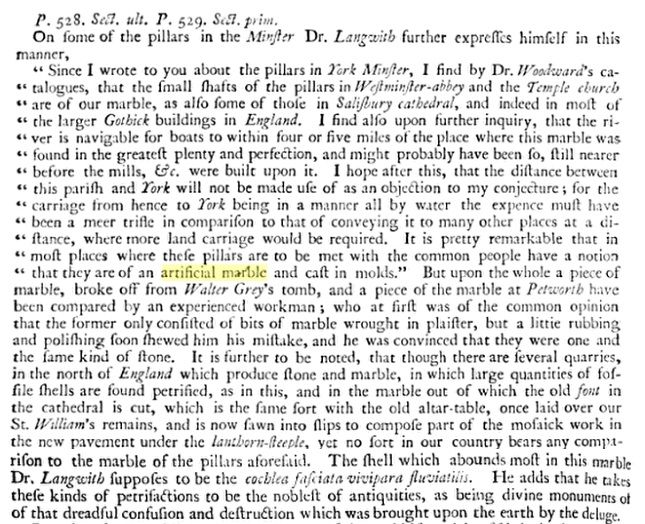
1736 The history and antiquities of the City of York
Bonus
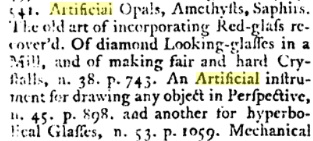
1665-1677 Magazine/Book
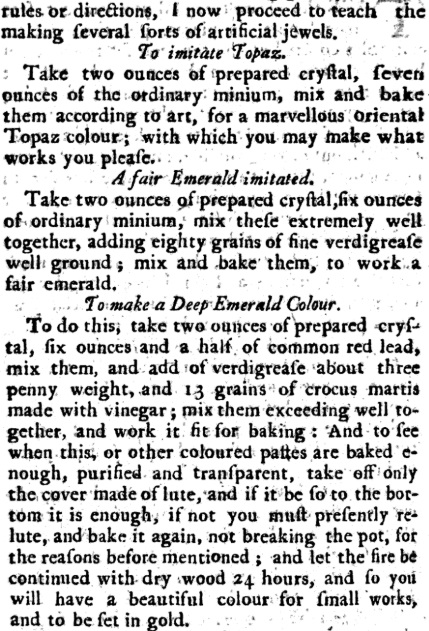
1792 Art's Master-piece

1843 Pocket Cyclopædia
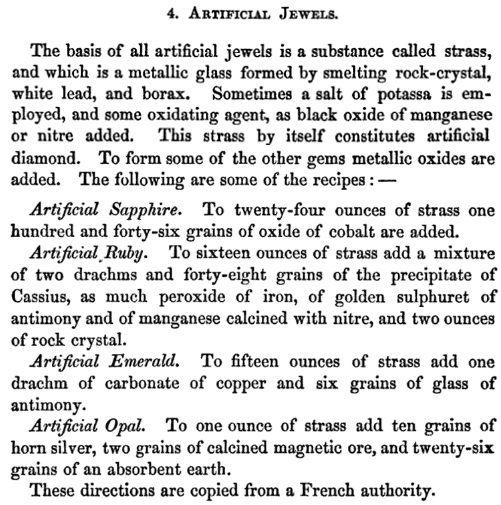
1855 An outline of the discoveries
Synthethic Opal - Opals of all varieties have been synthesized experimentally and commercially. The discovery of the ordered sphere structure of precious opal led to its synthesis by Pierre Gilson in 1974.
Synthetic Sapphire - In 1902, the French chemist Auguste Verneuil developed a process for producing synthetic sapphire crystals.
Synthetic Amethyst - Synthetic (laboratory-grown) amethyst is produced by a synthesis method called hydrothermal growth, which grows the crystals inside a high-pressure autoclave. Synthetic amethyst is made to imitate the best quality amethyst. Its chemical and physical properties are the same to that of natural amethyst and it can not be differentiated with absolute certainty without advanced gemmological testing (which is often cost-prohibitive).

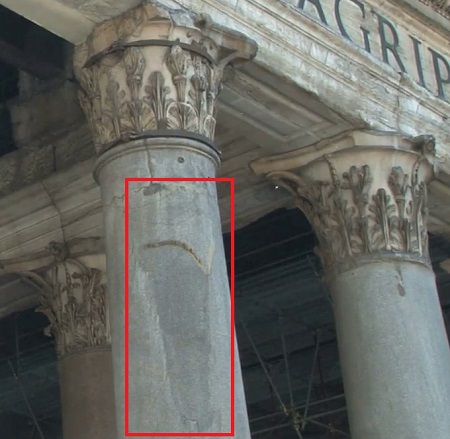
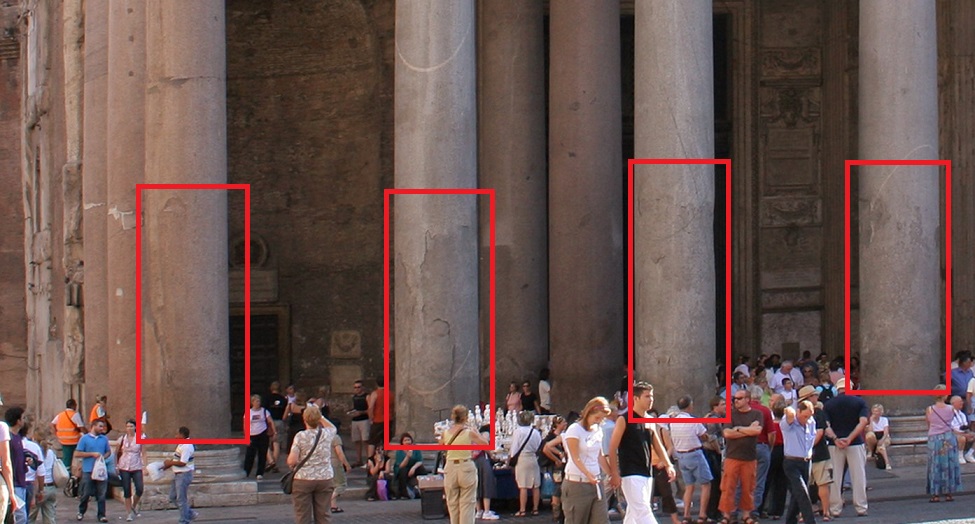
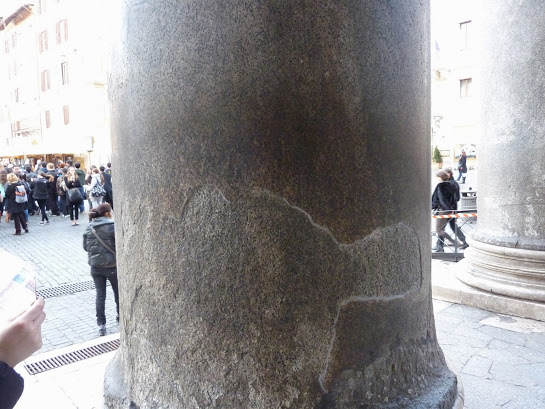
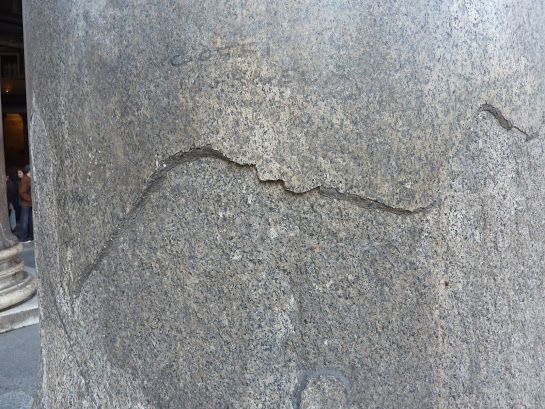
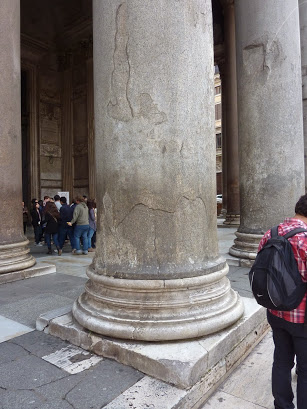
KD: Sounds like there is a whole lot we do not know about our not so distant past. In this post of the Pantheon thread published by @anotherlayer, I noted that granite was not supposed to be pealing off like this. Well, apparently it is, when our granite is not natural. Now, with "desquamation" we have some sort of a proof that these columns were indeed made using artificial granite.
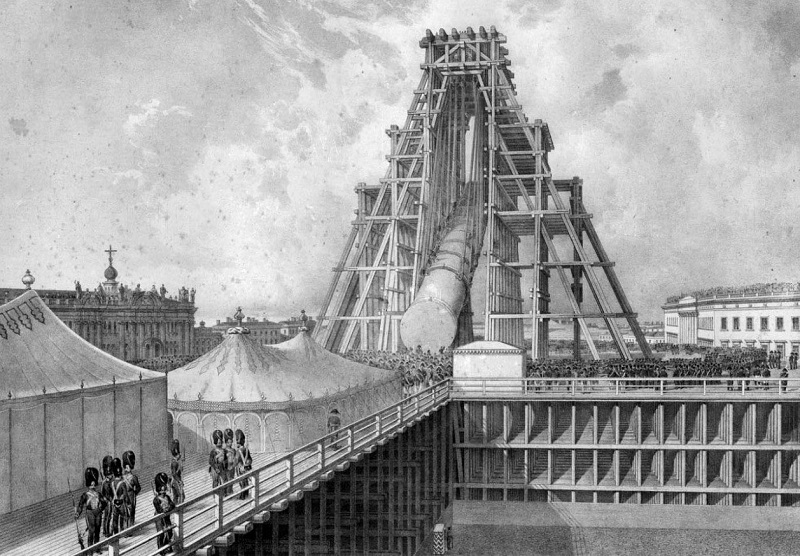
Really, why would you spend time to quarry some 800 ton slab of granite, transport it to a city, and then spend time shaping, and lifting it. Apparently our so-called ancient forefathers were not as dumb, as our pseudo historians want us to think. They simply produced enough of the elusive artificial granite and avoided the below non-sense.
Also, with most of our "ancient" statues and busts discovered in the 19th century... are we still supposed to believe that for 2,000 years they were waiting to get discovered?
- 661 ton Alexander Column in 1830s
- 352,740 lbs King Bath Tab in 1818
- I strongly insist that you do take a look at the above two threads
Artificial Stone
I did not go beyond the official Wikipedia Article pertaining to the narrative compliant history of the artificial stone production. Why would I? Wiki is the tool to give us the official version, and as such, the information provided has to be properly reflecting TPTB position on the issue.- History:
- One of the earliest artificial stones was the Coade stone (SH Article), a ceramic created by Eleanor Coade (1733–1821), and produced from 1769 to 1833.
- not an artificial granite
- Later, in 1844, Frederick Ransome created a Patent Siliceous Stone, which comprised sand and powdered flint in an alkaline solution. By heating it in an enclosed high temperature steam boiler the siliceous particles were bound together and could be moulded or worked into filtering slabs, vases, tombstones, decorative architectural work, emery wheels and grindstones.
- Developed around 1844
- not an artificial granite
- This was followed by Victoria stone, which comprises finely-crushed Mountsorrel granite solid surface and Portland cement, carefully mixed by machinery in the proportions of three to one and cast in moulds of the required shape. When the blocks are set hard the moulds are loosened and the blocks placed in a solution of silicate of soda for about two weeks for the purpose of indurating and hardening them. Many manufacturers turn out a material that is practically non-porous and is able effectually to resist the corroding influence of sea air or the impure atmosphere of large towns.
- I think VS was developed after 1860s
- not an artificial granite
- Most later types of artificial stone have consisted of fine cement concrete placed to set in wooden or iron moulds. It could be made more cheaply and more uniform than natural stone, and was widely used. In engineering projects, it had the advantage that transporting the bulk materials and casting them near the place of use was cheaper than transporting very large pieces of stone.
- not an artificial granite
- One of the earliest artificial stones was the Coade stone (SH Article), a ceramic created by Eleanor Coade (1733–1821), and produced from 1769 to 1833.
- Engineered stone
- Engineered stones are the latest development of artificial stones, it was invented in the early 1980s and have since been continuously developed by the Italian company Breton S.P.A.'s late founder Marcello Toncelli and marketed as Bretonstone.
- Engineered stones are a mix of marble powder, resin, and pigment cast using vacuum oscillation to form blocks. Slabs are then produced by cutting, grinding, and polishing. Some factories have developed a special, low-viscosity, high-strength polyester resin to improve hardness, strength, and gloss and to reduce water absorption.
- There are two major varieties of engineered stones based on the main composition of its aggregates (stone powders), marbles and quartz. The process is more or less similar except in certain details, however the two product have different commercial applications.
- Engineered marbles are most commonly used as flooring for large commercial projects. Engineered quartz is widely used in the developed world for counter tops, window sills, and floor and wall coverings.
- The vast majority of engineered stone companies are located in Greater China, India, and its birthplace in Italy.
- was not developed until 1980's
- uses resin
- has marble powder mix (and I assume granite, or whatever other powder as well)
- was given a cool name of "engineered stone"

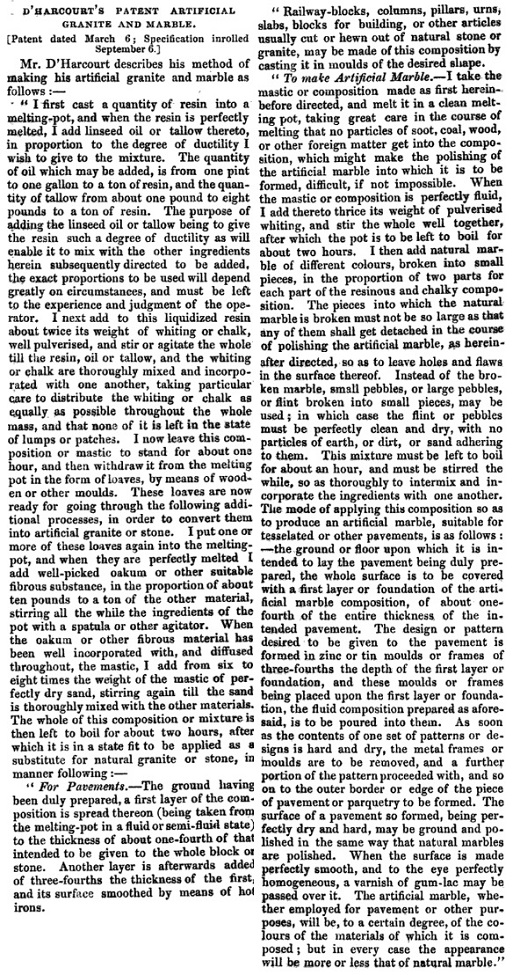
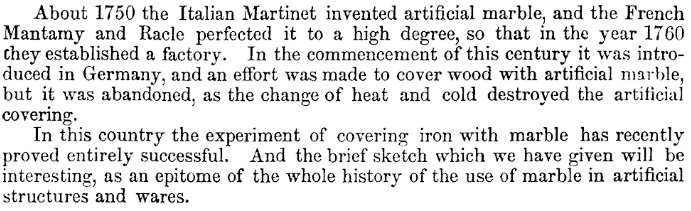
1822
I have a strong belief that our Mr. D'Harcourt did not invent the method he patented in 1839. The reason for it is this 1822 publication titled:The above 1822 pub specifically talks about multiple issues related to the Artificial Granite. And while you can follow the link on your own I wanted to point out one specific issue with artificial granite as described in the above pub.
Desquamation
- Desquamation, commonly called skin peeling, is the shedding of the outermost membrane or layer of a tissue, such as the skin.
Desquamation of Pantheon
113–125 AD (current building)
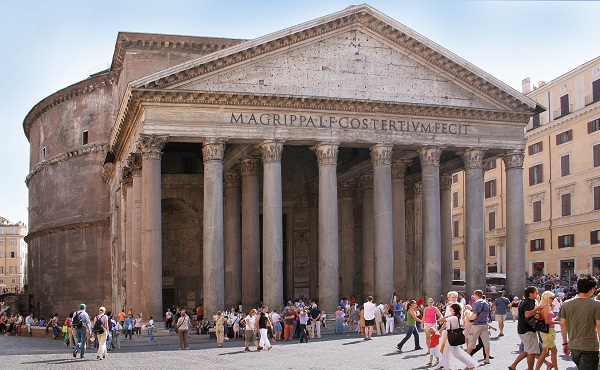
The Pantheon is a former Roman temple, now a church, in Rome, Italy, on the site of an earlier temple commissioned by Marcus Agrippa during the reign of Augustus (27 BC – 14 AD). It was completed by the emperor Hadrian and probably dedicated about 126 AD. Its date of construction is uncertain, because Hadrian chose not to inscribe the new temple but rather to retain the inscription of Agrippa's older temple, which had burned down.113–125 AD (current building)
- The building is cylindrical with a portico of large granite Corinthian columns under a pediment.
- The monolithic column shafts are in Mons Claudianus and Aswan grey granite with the bases and capitals in white Pentelic marble.
- Excuse my French please, but this is just straight up ridiculous, for here is our desquamation on the Pantheon columns.
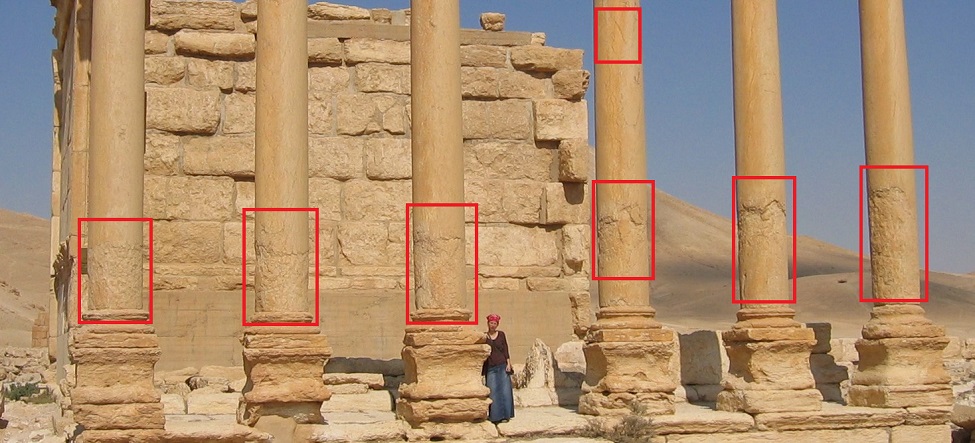
Desquamation of Palmyra
- Not sure how old this place is, according to the narrative
Peristyl House, Palmyra
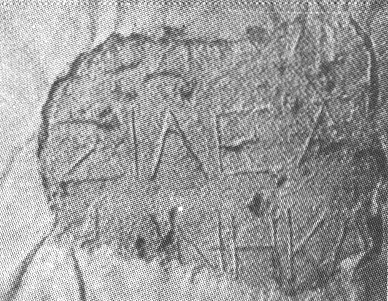
The inscription mentioning king Epiphanes (LOL)
Some coumn in Palmyra
19th century Palmyra
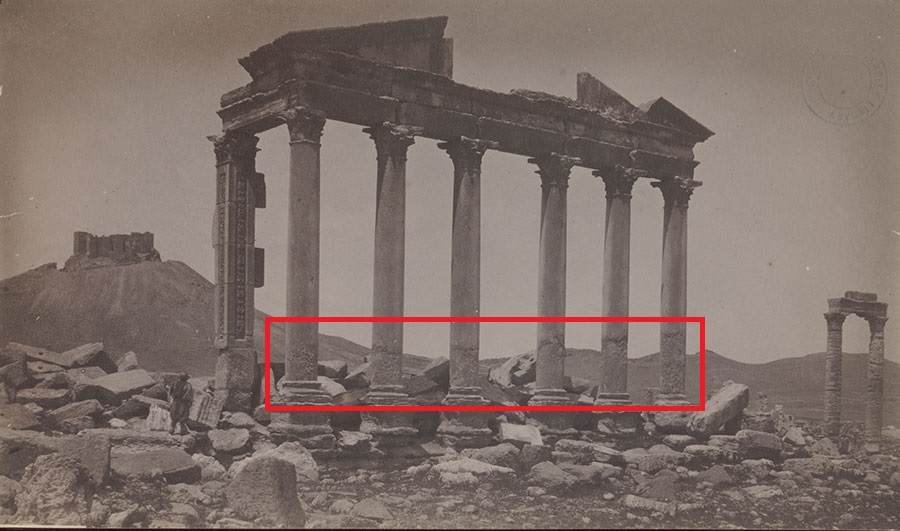
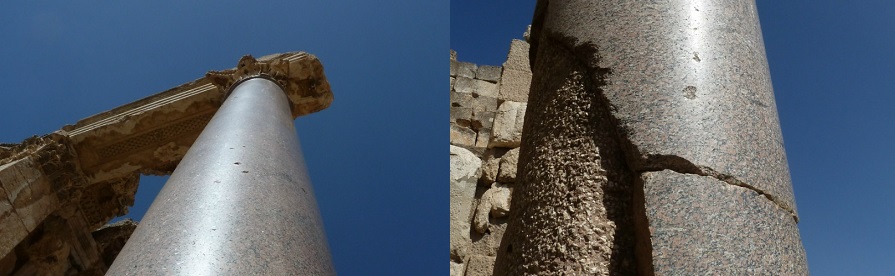
Baalbek
The Temple of Bacchus
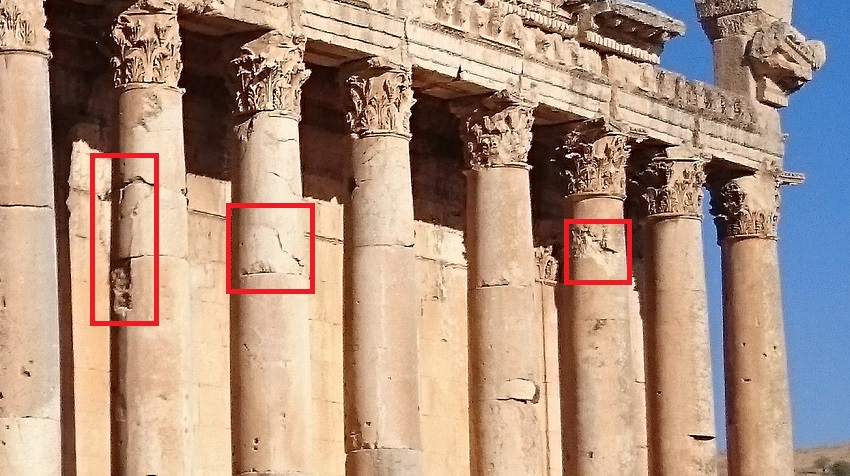
Baalbek - Wikipedia
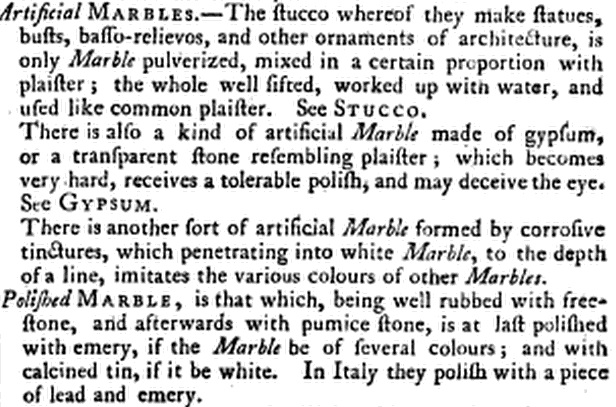
1672
Artificial Marbles
I did not find the entire book from 1672. You can give it a try using this link here: 1672 Book
The inscription mentioning king Epiphanes (LOL)
Some coumn in Palmyra
19th century Palmyra
Baalbek
The Temple of Bacchus
Baalbek - Wikipedia
1672
Artificial Marbles
Some of the above types of artificial marbles are actually pretty old. It's important to understand the difference between "their" stacco, and our "modern" one.

- Ancient Stacco uses:
- Stucco has also been used as a sculptural and artistic material. Stucco relief was used in the architectural decoration schemes of many ancient cultures. Examples of Egyptian, Minoan, and Etruscan stucco reliefs remain extant. In the art of Mesopotamia and ancient Persian art there was a widespread tradition of figurative and ornamental internal stucco reliefs, which continued into Islamic art, for example in Abbasid Samarra, now using geometrical and plant-based ornament. As the arabesque reached its full maturity, carved stucco remained a very common medium for decoration and calligraphic inscriptions. Indian architecture used stucco as a material for sculpture in an architectural context. It is rare in the countryside.
- In Roman art of the late Republic and early Empire, stucco was used extensively for the decoration of vaults. Though marble was the preferred sculptural medium in most regards, stucco was better for use in vaults because it was lighter and better suited to adapt to the curvature of the ceiling. Baroque and Rococo architecture makes heavy use of stucco. Examples can be found in churches and palaces, where stucco is mostly used to provide a smooth, decorative transition from walls to ceiling, decorating and giving measure to ceiling surfaces. Stucco is an integral part of the art of belcomposto, the Baroque concept that integrates the three classic arts, architecture, sculpture, and painting.
- Modern Stacco - Modern stucco is used as an exterior cement plaster wall covering. It is usually a mix of sand, Portland cement, lime and water, but may also consist of a proprietary mix of additives including fibers and synthetic acrylics that add strength and flexibility. Modern synthetic stucco can be applied as one base layer and a finish layer, which is thinner and faster to apply, compared to the traditional application of three-coat stucco.
1736 The history and antiquities of the City of York
Bonus
1665-1677 Magazine/Book
1792 Art's Master-piece
1843 Pocket Cyclopædia
1855 An outline of the discoveries
Synthetic Sapphire - In 1902, the French chemist Auguste Verneuil developed a process for producing synthetic sapphire crystals.
Synthetic Amethyst - Synthetic (laboratory-grown) amethyst is produced by a synthesis method called hydrothermal growth, which grows the crystals inside a high-pressure autoclave. Synthetic amethyst is made to imitate the best quality amethyst. Its chemical and physical properties are the same to that of natural amethyst and it can not be differentiated with absolute certainty without advanced gemmological testing (which is often cost-prohibitive).
Really, why would you spend time to quarry some 800 ton slab of granite, transport it to a city, and then spend time shaping, and lifting it. Apparently our so-called ancient forefathers were not as dumb, as our pseudo historians want us to think. They simply produced enough of the elusive artificial granite and avoided the below non-sense.
Also, with most of our "ancient" statues and busts discovered in the 19th century... are we still supposed to believe that for 2,000 years they were waiting to get discovered?
- Filippo Baldinucci (1624-1697) said the following, "Bernini liked to boast that in his hands marble could become as impressionable as waxand as soft as dough." Bernini's marble does indeed seem to mutate into other substances: fibrous rope; brilliant steel; locks of hair.
- Bernini’s son Domenico, surely recording his father’s own analogies, also singled out the greatest prize of the artist’s chisel as his victory over the hardness of marble, rendering it “pliable as wax…. obedient to the human hand as if made of dough - pasta.”
- Faux marble, Alexander the Great, Dhul-Qarnayn, Ivan the Terrible and our Lost History

Note: This OP was recovered from the Wayback Archive.
Note: Archived Sh.org replies to this OP: Artificial Ancient Granite and Marble


