Basilikas, The „CORPUS I.C.“ & years AD

PuzzleBear

Well-Known Member
Active Member
Joined
Jul 28, 2022
Messages
80
Reaction score
232
You know, sometimes words have two meanings. Or even more !

what-is-a-basilika.jpg

It doesn’t matter if Basilica is written with “c” or “k”, it sounds the same. So, what is a Basilica ? How many meanings?

Ethymology of BASIL – ica, -eo, -ea, -eum, -eon


What does Wiki show ?

Basilika - Wikipedia

"The Basilika was a collection of laws completed c. 892 AD in Constantinople by order of the Eastern Roman emperor Leo VI the Wise during the Macedonian dynasty. This was a continuation of the efforts of his father, Basil I, to simplify and adapt the Emperor Justinian I's Corpus Juris Civilis code of law issued between 529 and 534 which had become outdated. The term "Basilika" comes from Greek: Τὰ Βασιλικά meaning "Imperial Laws" and not from the Emperor Basil's name, which though shares the etymology "imperial"."


Corpus Juris Civilis - Wikipedia


"The Corpus Juris (or Iuris) Civilis ("Body of Civil Law") is the modern name[1] for a collection of fundamental works in jurisprudence, issued from 529 to 534 by order of Justinian I, Byzantine Emperor. It is also sometimes referred to metonymically after one of its parts, the Code of Justinian.


The text was composed and distributed almost entirely in Latin, which was still the official language of the government of the Eastern Roman Empire in 529–534, whereas the prevalent language of merchants, farmers, seamen, and other citizens was Greek. By the early 7th century, the official government language had become Greek during the lengthy reign of Heraclius (610–641).

The Corpus Juris Civilis was revised into Greek, when that became the predominant language of the Eastern Roman Empire, and continued to form the basis of the empire's laws, the Basilika (Greek: τὰ βασιλικά, 'imperial laws'), through the 15th century. The Basilika in turn served as the basis for local legal codes in the Balkans during the following Ottoman period and later formed the basis of the legal code of Modern Greece. In Western Europe, the Corpus Juris Civilis, or its successor texts like the Basilika, did not get well established originally and was only recovered in the Middle Ages, being "received" or imitated as private law. Its public law content was quarried for arguments by both secular and ecclesiastical authorities. This recovered Roman law, in turn, became the foundation of law in all civil law
jurisdictions. "


[Recovered ? 😁]

Basilika

the buildings were courts, Halls of Justice. And places for important announcements.

Basilika

was the name given to a collection of laws, or a CORPUS IURIS CIVILIS. Abreviation I.C. or J.C., but J is a more recent alphabetic invention

The abbreviation I.C

stands for Juris consultus, a legal adviser

juris-consult-titel.JPG

Translation: The sigla that precede or follow personal names mostly indicate status or title, like
J.C. = legal counsel, C.C. = collegiate lawyer, D = Duke or Lord , N.E.R. = Notary of the Roman Church.

I.C. also for In Capitolio = in the capitol

IC-incapitolio.JPG

What about I.C. = In CAPITALIBUS ? Written NAMES in capitals, phonetically is no difference between minuscule and majuscule letters, but „jewridicially“ … and you know „sometimes words have two meanings“ … and special teachings are only for chosen ones.

And for Iesus Christ, next to the koine letters XP, IHS

ic-jesus.JPG

Sources abr.: Lexicon Abbreviaturarum
Wörterbuch lateinischer und italienischer Abkürzungen - Lexicon of Latin and Italian abreviations german-latin). I attach the pdf file in case someone finds such lists useful. Abreviations from documents, coins and medals.

Basileo or Vasileo

was a title given to the contemporary King. A royal title.

As was once Alexander The Great, according to this article:

The name of Vasileon Makedonon Alexandroy - Aleksandar Makedonski is unique and there is no need for names like "Alexander the Third of Macedonia" or negatorian political names: "veliki", "the great", "magno", "magnus" etc.

The titel Basileo on coins


Alexandar the Makedonian was listed in koine letters on the North Wall of the BASILICA in Pompeii. Scarcely visible in 1818. Keep in mind that Pompeii only got buried in 1631, thus „ancient graeco- RHOman“ times happened only about 500 years ago.


Next to number 9 is written “Alexandros” in koine letters. If this list represents all rulers, there were 16 rulers from start to destruction. Unless these inscriptions were forgeries from 1800 ? First name I read Numo, but also Eros (number 10).

If there was a Basilica in Pompeii, the city was an imPORTant city at some point in time.

Basileum, the royal city ?

The swiss city of Basel used to be called Basilea or Basileum. The monetary center of power, maybe since THEY came to control the leaders of ancient city/states or nations ?

basileum_coin.jpg


Source

Basel is called Bâle in French.

And Sion French is called in german Sitten (canton Wallis), it was an old swiss mint town.

Basilika as Churches

but what CORPUS is celebrated ? Dead man on the cross, it’s a DEAD / DEBT system. PERSONS (name IN CAPITALS) are no living beings, but „jewridical fictions“ or documents, certificates, liens that are even traded. Assets of the govern MENTs. There are no nations, no states, it’s all been PRIVATISED, turned into PRIVATE corporations.


Everything is BUSINESS. Religions were invented to rule, to fool and to fleece the sheep.

Aren’t the Basilica buildings all aligned EAST / WEST? So, on equinoxes, when the son/sun rises exactly EAST, PASSes OVER the Aequator, it will shine through a marker-window in a way it will neither the day before nor the next.

Churches are Temples, built in a special way for time tellers (Temps-lars) to be able to tell time. Equinoxes, solstices. Temples comes from french „Temps“ = time. Time teller places, star gazer, like many stone circles in Scotland / Irland or the pyramids in Egypt, South America, …

It was all about figuring out the exact lenght of a year. Or maybe refiguring it out ? Imo THEY did not build the Basilicas, nor the Pyramids, nor the Stone Circles.

There used to be a time when a year had 10 months à 36 days and 5 intercalary days, with each 4th year 6 intercalary days to stay in line with the solar cycle. 10 = X (RHOman number)

Where did the 10 months come from ? I might have figured that out.

Days are like years. Or months are like years. 1 solar year = +/- 365.24. days, 1 lunar month = +/- 29.53059 days

365,24 / 10 = 36,524 – 7 = +/ - 29,524, in days the mean length of a lunar SYNodic month and in years 1 revolution of SATURN in the zodiac. Synodic, from new moon to new moon. Eclipses are the marriage of Sun & Moon.

Thus a solar month is 36 days, an “octave” longer than the lunar month.

365,24 + 7 = +/- 372,24 , in years the cycle for the spring equinox eclipses to repeat.

We have a cycle of 372 years or 135870 days (plus 5 to 11 hours) when the exact same solar eclipses happen again. Not quite exact, but the 20.3. eclipses happen over long periods on the same day before they fall on 21.3. ( 3-4 x 372 years, maybe 5 x? it’s depending on the exact duration of the phase)

This cannot be a coincidence, it shows, there is sacred/secret geometry or mathemagic involved and the number 7 is important !

3, sometimes 4 solar eclipses on spring equinox in a row of 19 years each 372 years.

equinox-solar-eclipses.JPG

List Solar Eclipses for 5000 years by Nasa solar eclipses

If you know the exact cycles, you can write programs, algoritms to calculate dates, positions, distances ... . The nastronuts took also care of the gregorian missing 10 days in October 1582, so the spring equinox eclipses of the years 1271, … were on 12.3, which was spring equinox instead of 20.3.

BY.THE.WAY !!!

For the year 532 a new moon is shown for 22 march, it wasn’t an eclipse anyway, but this is the same as for Nasa here also 10 days added in October 1582, so equinox happened earlier in march 532 than on new moon 22.3 and this proves the Dionysius Exiguus Paschal calculations were done later than in the year 525. Thus FORGED !!! Because : it would have started with a year when the epacts were ZERO. New Moon on Equinox.

Oh and it’s the same guy that calculated the “Birth of Our Lord” having happened 525 before his calculations.


AD, Anno Dominus (Lord)?

or Anno Dominium (dominion) since the birth of the CORPUS I.C. Iuris Civilis?


Could the calendar reform have been implemented to start a counting of before and after the introduction of the new joodicial civilis system? Under the guise of religion, ... a new ASSET & Soul control system, a PRIVATE one under the guise of PUBLIC, with indiction cycles (RHOman taxation system), birth & death certificates, a LIEN banking, … which THEY make believe to be older than it actually is.

AC, Anno Christi, - Ante Christum

antechristum.JPG

BC – Bonorum curator = Trustee of goods
😂
 

Attachments

  • abrev-latin.pdf
    35.7 MB · Views: 252
Last edited:
Heinsohn has written something about the Basilika (<justinian's correct dates in 1st Millennium AD crhonology>):

Of the law collection, an abbreviated Greek version, the Basilika, was published under Leo VI. (886-912 CE). For reasons unexplained so far, he used 700 years earlier Koine Greek. Laws issued from the outset in Greek (Novellae from 535 CE) are also written in Koine Greek of the 2nd/3rd century CE.

Justinian’s Digestae are dated to Late Antiquity (6th century). Yet, the most important legal commentators quoted in the Digestae belonged to the time of the Severan emperors of Imperial Antiquity (2nd/3rd century). Justinian himself wrote the Latin of the 2 nd/3rd century of these commentators. His Greek subjects got a readable version – strangely still using Koine Greek of the 2nd/3rd c. – only in the Early Middle Ages (Basilika; 9th/10th century). All these oddities give the impression as if the three epochs existed side by side at the same time. Yet, such a statement would sound bizarre or worse.

Immagine 2022-08-28 113005.png

edit: While searching some more info about the basilika I've stumled upon this essay by the title 'The “Cleansing of the Ancient Laws” under Basil I and Leo VI' (The “Cleansing of the Ancient Laws” under Basil I and Leo VI (Chapter 1) - Byzantine Legal Culture and the Roman Legal Tradition, 867–1056). At a certain point there's an interesting passage:

Evidence of this challenge to the Romanitas of the Byzantines is especially noticeable in the sources of the second half of the ninth century. Amidst the controversy of the Photian schism a letter of Pope Nicholas I (858–67) addressed to Michael III (r. 843–67), the predecessor and eventual victim of Basil I, contained a scathing response to the charge that the Greek language was preferable to Latin. Although the epistle of Michael III has not survived, apparently he had described Latin as both “barbaric” (barbaram) as well as “Scythian” (Scythicam). Pope Nicholas, obviously offended by such an assertion, defended the use of Latin and then proceeded to ridicule the absurdity of the Byzantines calling themselves Romans, stating “if you thus call the Latin language barbarous, because you do not understand it, then keep in mind that it is ridiculous to call yourselves emperors of the Romans and not even know the Roman language.” Continuing in this vein, Pope Nicholas urged Michael to “stop calling yourselves emperors of the Romans, because according to your opinion you are barbarians … the Romans, however, use this language, which you call barbaric and Scythian.”
 
Last edited by a moderator:
I downloaded the pdf from Heinsohn to read it. (y)

The Koine letters have been rebranded "greek", but shall originally have been macedonian koine letters .

There were more variants of koine letters for sure, I read somewhere about the "Koine of the Church of Constantinople". Btw, also called the EASTern Church.

According to the macedonian site, the Romans changed their original letters and thus sounds. Example: Theta is a roman creation and if found in inscriptions on stones or elsewhere, it clearly shows the "roman" signature.

theta-DZ.JPG

Koine means common, ordinary. Commonly used to write in many "eastern" places. I guess one could write almost every language using koine letters.

Before letters and numbers became standardized through the printing press, those that could read & write wrote sometimes "freestyle". So the number 3 could look like a M.

Evidence of this challenge to the Romanitas of the Byzantines is especially noticeable in the sources of the second half of the ninth century. Amidst the controversy of the Photian schism a letter of Pope Nicholas I (858–67) addressed to Michael III (r. 843–67), the predecessor and eventual victim of Basil I, contained a scathing response to the charge that the Greek language was preferable to Latin. Although the epistle of Michael III has not survived, apparently he had described Latin as both “barbaric” (barbaram) as well as “Scythian” (Scythicam). Pope Nicholas, obviously offended by such an assertion, defended the use of Latin and then proceeded to ridicule the absurdity of the Byzantines calling themselves Romans, stating “if you thus call the Latin language barbarous, because you do not understand it, then keep in mind that it is ridiculous to call yourselves emperors of the Romans and not even know the Roman language.” Continuing in this vein, Pope Nicholas urged Michael to “stop calling yourselves emperors of the Romans, because according to your opinion you are barbarians … the Romans, however, use this language, which you call barbaric and Scythian.”

That smells like Byzantine, Constantinople having been "Rome", capital of what we know as "Roman Empire" and like the macedonian site, when referring to the Romans they mean in fact the Romanitas of Byzantine ?
 
That smells like Byzantine, Constantinople having been "Rome", capital of what we know as "Roman Empire" and like the macedonian site, when referring to the Romans they mean in fact the Romanitas of Byzantine ?
Can you rephrase the question? I didn't get the meaning.

The name of Vasileon Makedonon Alexandroy - Aleksandar Makedonski is unique and there is no need for names like "Alexander the Third of Macedonia" or negatorian political names: "veliki", "the great", "magno", "magnus" etc.
I'm not going to draw conclusions, since the matter is quite complex, but it should be noticed that Basil II and all the Macedonian Dinasty considered themselves direct descendants of Alexander the Great. Today it is considered an anachronism and a sort of propaganda by those rulers, but it seems that out of that period it was the norm rather than the exception to claim these seemingly absurd origins.
If we connect it with Heinsohn and other recentists' research (such as Fomenko), we could come up with a much shorter chronology where these people were very near to their supposed ancestors, thus making their claims much more believable.

Here on the wiki of Basil II (Basil II - Wikipedia) we can read: "He was also particularly compared with Alexander the Great who was believed to be Basil's ancestor. Classical works such as "The Persians" by the ancient Greek tragedian Aeschylus were among the most recited in the empire during the expansion given the different confrontations against the caliphates that the Byzantines indiscriminately and classically called 'Medes'."
Not only Basil was a discendant of Alexander, but the middle-eastern caliphates were called Medes! Today the Medes and other people have been thrown back in the past and almost considered a myth, but Heinsohn curiously shows through stratigraphy how in fact the time between the Medes' Empire and the time of Basil (probably considered by him as the last stage of the Roman Empire) were in fact very close to each other.
 
Can you rephrase the question? I didn't get the meaning.

.
When for historic events it is referred to the Romans or ancient Rome, it is in fact Byzantine or Constantinople which it meant, not Rome in Italy.
Also did the Romans change the makedonian koine letters, which would imply that the Romans used koine letters to write. As far as I know Rome, Italy, there was no common use of koine letters .. but I could be wrong. As in Pompeii the inscriptions on the wall of the Basilica were in both Latin and Koine letters. But the other question is, did Rome in Italy exist as that glorious city back then ?

Yes, all of the rulers always claimed descendance from god, gods or heros like Hercules to legitimate their kingship, power, control ... even unnatural pleasures, like the Cretans who were accused to have invented the Abduction of Ganymede by Zeus. Whatever is based on mythology is just make-believe.

The same as with the "justinian" events, some events which were multiplied and displaced in time / location, this happened again later with Napoleonic events, wars or where Napoleon I or III were involved in one of the episodes. [The Two Lives of Napoleon Bonaparte: Photoshopped History | The Unexpected Cosmology] Our real timeline concerning certain events is much shorter than what we are told.

All "experts" have to follow the official narrative, no thinking outside the established box is allowed. Like planes and ships which are not allowed to leave their programmed routes or paths.

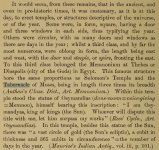
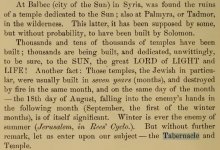
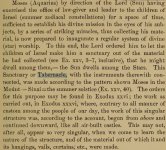
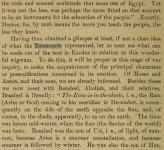
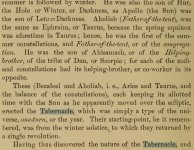
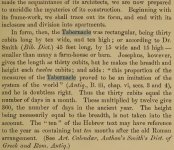
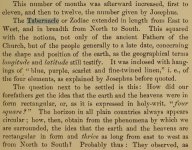
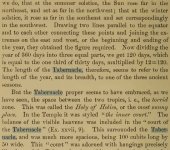
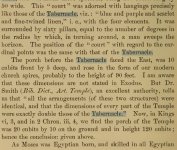
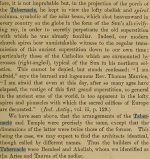
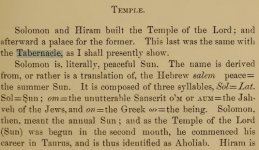
The Trinitarian Style and the plans of the buildings, reminds me of the Tabernacles, and I think now, the books of the Old Testament are partially dealing with this same time period, when they were finding out about the exact length of a solar year. I attach screenshots of the chapter about Tabernacles from Milton Woolleys book Hebrew Mythology.

Tabernacles and Basilicas are the same. Differents types existed, circular, but mostly rectangular, with 3 windows for the 3 seasons, … always built to observe sun, moon, stars, equinoxes, solstices. Milton Woolley also mentions the changes in their construction from 1 year having 10 months, then 11, then 12 months.

The change from 1 to 3 apses in the buildings, is similar to the change from 28 to 56 holes in the stone circles for a more accurate observation & prediction of eclipses.

Edited to add the Link
 

Attachments

  • tabernacle1.JPG
    tabernacle1.JPG
    67.2 KB · Views: 143
  • tabernacle2.JPG
    tabernacle2.JPG
    91.3 KB · Views: 150
  • tabernacle3.JPG
    tabernacle3.JPG
    66.7 KB · Views: 126
  • tabernacle4.JPG
    tabernacle4.JPG
    89.5 KB · Views: 144
  • tabernacle5.JPG
    tabernacle5.JPG
    72.7 KB · Views: 141
  • tabernacle6.JPG
    tabernacle6.JPG
    84.1 KB · Views: 135
  • tabernacle7.JPG
    tabernacle7.JPG
    71.9 KB · Views: 125
  • tabernacle8.JPG
    tabernacle8.JPG
    81.8 KB · Views: 130
  • tabernacle9.JPG
    tabernacle9.JPG
    75.6 KB · Views: 126
  • tabernacle10.JPG
    tabernacle10.JPG
    81.8 KB · Views: 127
  • tabernacle11.JPG
    tabernacle11.JPG
    77.5 KB · Views: 121
  • tabernacle12.JPG
    tabernacle12.JPG
    93.5 KB · Views: 124
  • temple.JPG
    temple.JPG
    46.8 KB · Views: 140
Last edited:
From the Heinsohn pdf


draco-2nd-letter.JPG

2-3 century "decor", the same letters can also be found on old maps.

DRACO refers to the lunar nodes. Cauda (head) Draconis is the North Node and Caput (tail) Draconis is the south node. An imaginary place in the heaven where the suns and the moons path cross each other and solar and lunar eclipses occur. Twice a year, moving backwards in the year. 18,6 years for the nodes to make 1 revolution through the zodiac, called Draconic year.

Indian Astrology uses the Dragon as symbol for the nodes, called Rahu and Ketu.

DRACO was part of the indication of a specific date, probably the inauguration of the building. The date of events was indicated by the positions of the 7 visible wandering stars in the zodiac, those positions will not repeat that fast.

Thus if indicating dates through planetary positions in the zodiac was still used for the destroyed Basilicas, … when was the use of consecutive numbered years really first introduced? merely 1582 ???
 
For the year 532 a new moon is shown for 22 march, it wasn’t an eclipse anyway, but this is the same as for Nasa here also 10 days added in October 1582, so equinox happened earlier in march 532 than on new moon 22.3 and this proves the Dionysius Exiguus Paschal calculations were done later than in the year 525. Thus FORGED !!! Because : it would have started with a year when the epacts were ZERO. New Moon on Equinox.

Oh and it’s the same guy that calculated the “Birth of Our Lord” having happened 525 before his calculations.
In relation to this, how many chances are that Dionysius came up with the astronomical recurrence of Christs's birth in the year 532, considering that his original task was to develop new Paschal tables to supplant the previous ones which ended, surprise surprise, in the year 531? The guy who made the previous tables, supposedly Victorious of Aquitaine in the year 437, didn't know his tables were going to end exactly at the behinning of the new cycle and Chists's Grand Happy Birthday... what a coincidence!!! (Easter tables)

Sometime ago I also discovered a hint about those 10 days 'jump' in 1582. I would like to know your opinion. (247 years)
 
Last edited by a moderator:
In relation to this, how many chances are that Dionysius came up with the astronomical recurrence of Christs's birth in the year 532, considering that his original task was to develop new Paschal tables to supplant the previous ones which ended, surprise surprise, in the year 531? The guy who made the previous tables, supposedly Victorious of Aquitaine in the year 437, didn't know his tables were going to end exactly at the behinning of the new cycle and Chists's Grand Happy Birthday... what a coincidence!!! (Easter tables)

Sometime ago I also discovered a hint about those 10 days 'jump' in 1582. I would like to know your opinion. (247 years)
I will read those posts, it has to do with this one ?
They say it's the Easter Dates from 532 til 632. It's in the Museum Cathedral = Basilica in Ravenna, Italy.

I cannot decipher any of those years . It seems to be a listing of epacts for 19 x 5 years, probably starting there where the cross is (at 2 o'clock). EB in the inner circle could stand for "Lunar Leap Year* ..... it's a "search in progress" ;)
 
I downloaded the pdf from Heinsohn to read it. (y)

The Koine letters have been rebranded "greek", but shall originally have been macedonian koine letters .

There were more variants of koine letters for sure, I read somewhere about the "Koine of the Church of Constantinople". Btw, also called the EASTern Church.

According to the macedonian site, the Romans changed their original letters and thus sounds. Example: Theta is a roman creation and if found in inscriptions on stones or elsewhere, it clearly shows the "roman" signature.


So the Theos in Macedonian is Dzeos.... very similar to Zeus... just made me think what else could be hidden there! By the way, I am an graduated archaeologist who studied in Greece and in Macedonia... and I speak the Macedonian language perfectly...

Македонскиот јазик е само еден од осумте јазици кои ги зборувам...

This is just for those who want to communicate in more details!
 
I will read those posts, it has to do with this one ?
They say it's the Easter Dates from 532 til 632. It's in the Museum Cathedral = Basilica in Ravenna, Italy.

I cannot decipher any of those years . It seems to be a listing of epacts for 19 x 5 years, probably starting there where the cross is (at 2 o'clock). EB in the inner circle could stand for "Lunar Leap Year* ..... it's a "search in progress" ;)
I gave it a look some time ago. I think the caption behind the image on the wiki (Date of Easter - Wikipedia) is wrong, since Easter tables' lenght was of 95 years, not 100, therefore going from 532 to 626. This would directly connect this Easter Dates in Ravenna with Dionysius Exiguus's Easter table (Dionysius Exiguus' Easter table - Wikipedia).

I started examining it but then I stopped. We should something together with it. I'll start by saying that number 6 possibly has its own way to be depicted on this one, which contradicts common way we think about its representation in Latin. Here below number 6 resembles a G.

Immagine 2022-09-06 115523.png
Another interesting thing, which I cannot confirm, is that a strange sort of phrase is reported on it, which seems to be a reference to Cyril of Alexandria, the one covering the period 437-531 with his Easter tables (Easter tables).
CY = possibly 'Cyril'
PAS = certainly 'Easter'
... the lines above these words are typical for Latin abbreviations.

Immagine 2022-09-06 120211.png
edit: thinking twice, the most possible translation of CY is 'cycle', CYCLUS in Latin.
 
Last edited by a moderator:
So the Theos in Macedonian is Dzeos.... very similar to Zeus... just made me think what else could be hidden there! By the way, I am an graduated archaeologist who studied in Greece and in Macedonia... and I speak the Macedonian language perfectly...

Македонскиот јазик е само еден од осумте јазици кои ги зборувам...

This is just for those who want to communicate in more details!
exactly what is needed to read (for you) aka decipher (for me) koine letters, that's great :D
CY = possibly 'Cyril'
PAS = certainly 'Easter'
... the lines above these words are typical for Latin abbreviations.

edit: thinking twice, the most possible translation of CY is 'cycle', CYCLUS in Latin.
I haven't started looking at it yet, was busy with something else, but somehow related to the time/calendar stuff.

Abreviations are shown with a line above like that.
Quick search in my latin abreviation lexicon (should be found in my uploads), I could not find CY as abreviation, only Cy. which stands for Cygnus, a star constellation.
But this KY Cyathus (Mass)

KY.JPG

Neither could I find a latin abreviation for PAS. This is what I found. Nothing matches exactly.


pa.JPG


pass.JPG

pass-.JPG

Could it be another language than Latin ? Like Coptic ? Just asking ?
 
Could it be another language than Latin ? Like Coptic ? Just asking ?
I fear I don't have the answer! Link this abreviation lexicon next time, please. In any case it's hard to tell what kind of Latin it was used. Generally speaking they call Latin the supposed language used by 'ancient' Romans, with multiple bastardized versions from the middle-ages. But the Ravenna tables are not exactly from the middle-ages and still we see number 6 written in a bizarre way according to convention. I feel like conventional Latin frozen in time is pretty much an invention by scholars.
But yes, I really think it's CY for cycle. It makes sense since it's repeated various times on the wheel. And PAS must be an abbreviation for Pascha. But who knows!
 
I fear I don't have the answer! Link this abreviation lexicon next time, please. I

Here's the Lexicon Abbreviaturarum pdf, it's about latin and italian abreviations on documents, coins and medals from medieval times.
It's a german explication on the first pages. Published 1901.

Imo Latin was never a spoken language among common people. It was a secret language for the rulers, to communicate safely and to keep knowledge sealed from the stupid peasants. Like classical Greek and Hebrew. Dead languages, but Hebrew got "revived", I wrote about that here.

PAS should stand for PASSover, or PASchal .. .but let's see what we're going to find out about the Pasquale Calendario.
. But the Ravenna tables are not exactly from the middle-ages and still we see number 6 written in a bizarre way according to convention.
the C or ç for 6 is indeed bizarre, and it's taken like V to continue numbering.
Xç = 16, XçI= 17, XçII = 18 and XçIII = 19
:unsure: was the number ç = 6 later turned into C = 100 ?

the ç as 6 looks a bit like a circle cut in half and is also to be found within the tables as çI = 7, çII = 8 and çIII = 9

The Cycle starts where the cross is and marked LV. Primus
LV for LU.nar cycle ? First lunar cycle ?

The PAS turns to PA.XC.for cycle 19 and PA.VI for the Primus

APR or AP should mean APRIL or APRILIUS
MAI ? the MA is like 1 letter, should be MARTIUS

pascal-calendar.JPG

EDIT to add the probable solution:

It's read from outside to the inside.

First line indicates the number of the Metonic cycle, this headline is not repeated as it's the same for each of the 5 cycles that follow each other 19 years apart. I turned the pic to start with Primus

primus.JPG

The start:
LV PRI MUS = Luna Primus = First Lunar cycle

AN IIII L XIIII IIII NO AP = Anno 4 Luna 14 4 Nonas April
PA VI ID AP LV XX = Pascal VI IDES April Luna 20
…. Is VI here 6 ?

CY.II.PAS = Cycle 2 Pascal
NO AP LU XçI = Nones April Luna 17

CY,III PAS = Cycle 3 Pascal
V ID APR = 5 Ides April
LU XXI = Luna 21

CY IIII PA = Cycle 4 Pascal
çII ID AP = 8 Ides April
LV XçII = Luna 18

CY V PA = Cycle 5 Pascal
PD N AP = Pridie Nones April
L Xç = Luna 16

Roman Calendar terminology according to this site:

K means Kalends = new moon
Kalends (Kal) fell on the first day of the month.

N Nonas = 1st quarter
Nones (Non) was the 7th of 31 day months March, May, July, and October, and the 5th of other months.

ID Ides = Full moon
Ides (Id) fell on the 15th of 31 day months March, May, July, and October, and on the 13th of other months.

The day before the Nones, Ides or Kalends was called Pridie.

Luna number stands for ? the age of the moon since new moon ?
 

Attachments

  • abrev-latin.pdf
    35.7 MB · Views: 185
Last edited:
Pascale Calendario almost solved

Let's have again a look at the Roman Calendar, numbering days from Kalens to Ides


Example: 4 Nones April = 4 days before Nones (= 1st quarter)
11 Kalens = 11 days before Kalens, the first of the month, which should be new moon, as Ides = full moon 15 days later.

pascal-luna14.JPG

The year at the start should indicate the roman INDICTION year number

So the cycle PRIMUS starts with Luna 14 (age of moon 14 days) on 4 Nones April (would correspond to 4th day in April) and Pascal was on VI = 6 Ides April, 6 days later when the age of the moon was 20 (14+6). 6 Ides April = 6 days before full moon April.

The use of VI and ç for 6 !

19 years later, Paschal was on Nones April and the age of the moon was 17 days.
19 years later, Paschal was on 5 Ides April the age of the moon was 21 days.
19 years later, Paschal was on 8 Ides April the age of the moon was 18 days.
Last cycle, Paschal was on Pridie Nones, the day before Nones and the age of the moon was 16 days.

Luna 14 should stand for New moon, counted being 14 days later than Full moon. It's not possible to observe something invisible, as I noted here at the end of this post. Except for when solar eclipses (marriage of sun & moon) happen.
 
Luna 14 for the 1. Lunar Cycle (Luna Primus) was on 4 Nones April.

Nones and Ides fell on different days, depending if a month had 31 or 30 days.


If the Nones and Ides are indeed different for April than March, then Luna 1 was/is on 20. March or Ante Diem (AD?) XIII Kalens April, day 13 before Kalens April.

The 20. March FULL moon is on 0° LIBRA or actually really around 6° VIRGO (24° difference to the once fixed degrees) and the following new moon (4 Nones April) is in Aries or really still in PISCES.

The Full Moon on spring Equinox is on that position where the Sun is on autumn equinox. The moon is a mirror of the Sun. I wrote here that the MOON was once the planetary head of VIRGO (the Virgin) and not as it is today Cancer.

luna14.JPG
If the Nones and Ides were the same for Aprilis and Martius, then Luna 1 would fall on 22. March.

I checked the dates of equinoxes from year 0 – 3700 here, search with CTRL F for 3/19 and 3/22

Equinox mostly falls on 20 or 21 March, but sometimes also on 19 March, in what looks like a predictable pattern.

Equinox 3/19 or 19/3 happened in the following centuries:
20 x 0-100,
6 x 100-200,
NEVER during 200-400
20 X 400-500
6 X 500-600
NEVER during 600-800
20 X 800-900
6 x 900-1000
NEVER during 1000-1200
20 X 1200-1300
6 x 1300-1400
NEVER during 1500-1600 ( -1700 ? or 1400-1500?)
20 X 1600-1700
6 x 1700-1800
NEVER during 1800-2000
20 X 2000-2100
6 x 2100-2200
NEVER during 2200 - 2400
20 X 2400-2500
6 x 2500-2600
NEVER during 2600-2800
20 X 2800-2900
6 x 2900-3000
NEVER during 3000-3200
20 X 3200 -3300
6 x 3300-3400
NEVER during 3400-3600
20 X 3600-3700
And so on …

There is something bizarre: no 19/3 equinox for 2 consecutive centuries, except for 1500-1600, just for one century ??? Okay, it’s a very SPECIAL century, isn’t it ?

The dates cannot be Julian dates, otherwise Equinox would not be on 20. & 21. March since year 0. It’s calculated with Gregorian time. But even this (Julian dates) would lead to earlier equinox dates, but not to a missing century for the 19/3 pattern. Anyway there should be 2 consecutive centuries. Heavenly cycles do not change !

Whatever is before 1500-1600 must beconsidered to be manipulated !

Also, spring equinox never fell/falls on 22 March !

Equinox dates vary from 19 to 21 March, but it always stays within those 3 days (dates fixed by an artificial created calendar with integer numbers (days) for fractional cycles (like 365.2424 or 29.53058). I wrote here, why I think there is no precession of the fix stars. The precession is the positon of the wandering stars after they finish their cycle. (fractional numbers)


Cycle PRIMUS of the Metonic Cycle


Every 19 years the moon returns to the exact same place in the zodiac with the exact same phase (face).

These are the years with Full Moon on 20 and 21 March and the following New Moon on 4. or 5. April

cycle-primus.JPG

2019 = PRIMUS, and 2022 year 4.

19 Years are 235 SYNODIC months, Synodic = new moon, when Sun and moon meet. The same time the moon makes 254 revolutions, passing the same point in the zodiac. Some matheMAGIC: 254 -235 = 19

19 Years = 19 x 365.2424 = 6939.6056 days
235 x 29.53058 (synodic months) = 6939.6863 days
254 x 27.322 (tropical or sideral months) = 6939.788 days

This is year 2019 as example for a PRIMUS year. The moon is on the same place and same phase every 19 years. In these years, there is also always a new moon on 26. December.

 
The Paschal Calendar in Ravenna displays the Easter dates from 1487 to 1582.

paschal-1487-1582.jpg

Let’s look at the puzzle pieces leading to this picture.

We know that the first Easter Sunday was VI Ides April, which corresponds to 8. April, the second PAS cycle has Easter Sunday on X Kalens April, which corresponds to 23 March.

pas-cy-1-2.JPG

Now those days are SUNDAYS.

I found this perpetual calendar and was able to determine Julian Sunday 8. April as a dominical letter G year. The second Sunday, 23. March is a dominical letter E.


So the second year was yet a LEAP year with the full domincal letter designation F/E. F is for the days before the leap day, E for the rest of the year.

Leap Years F/E start always on Tuesday, each 28 years.


So I made a list of the Julian leap years and compared it to the List of the Full moons. FE year is Primus year plus 1.

532-year-cycle.JPG


Every 532 years that exact cycle repeats.

A Primus Year in 1487.

The calendar was made for 19 x 5 = 95 years

1487 + 95 = 1582

1582, the year the Gregorian calendar was introduced, NOW WHAT A COINCIDENCE !! This Paschal Calendar was not created earlier in the 950s nor 420s, which would match to the calendar, nor as official HIStory states in 532 or 534? which does not match at all

Thus, IMO, a very very likely creation around 1480-1486, START 1487 until 1582 !!!

If those 532 years correspond to the famous Phoenix myth of renewal every 500 years .. please have a look at 2019 ! 1487 + 532 = 2019
This turns out to be very interesting ! 😁

I checked the last date for Easter Sunday to see if I could find sth in relation with the 1582 Gregorian Calendar reform.

gregorian-sundays.JPG

Now what a surprise: The 19. April 1581 was a GREGORIAN SUNDAY, and JULIAN Wednesday. This is the case for the 3 last easter dates on the calendar.

Thus this calendar reform to advance 3 days before this 95 year cycle ended was planned in advance ! Or did someone forge this calendario? Casted wrong dates ??? I don’t think so! It was planned! Those were the times the church was telling people what day it was, no one had a calendar on the wall. Anyway, who was able to read ?

The famous Gregorian calendar reform in reality:

Advancing 3 days from ante dies IV Ides October 1578 (day 4 before Ides) to Ides October (15. October) 1578. :ROFLMAO:
Not in 1582, not 10 days !!!

calendar-reform.JPG

Thus the changes were installing a fix 7 days weeks instead of the roman Kalens, Nones and Ides system. Invent the 7 day names for a week based on the wandering stars. Very likely inventing a new year numbering too that moment. The years seems to have been counted per Indiction number, the number of the reign of an emperor and per golden number system. And they adjusted the difference of the julian 365,25 days per year (leap years every 4 year) to 365.2424 by skipping specific leap years (3 leap years less in 400 years).
 
Last edited:
The Church Leaders or rather the star gazer knew ! They calculated and knew that they had to wait until the difference of 3 whole days was completed in 1578.

A leap year every 4 years leads to an extra day after 128 years.


Makes 3 days after 384 years. Thus the new rule, that century years would not be leap years unless divisible per 400. Loose 3 out of 4 in 400 years.

The difference was exactly 2 days in 1450, but when they noticed a few years before 1487, in these 37 years the newly accumulated difference was almost 1/3 of a day, so around 1487 the difference was 2 days & 1/3.

1578 – 384 = 1194

The ancient calendar was synchron with the sun PassingOver the equinox in or around 1194. Someone was able to tell tell time accurately. 1194 was allegedly the time of the so-called crusades. The cross fixes the 4 seasons in the circle of the zodiac. The TEMPlars, the time tellers. Were they Scots from Sethland or Lyreland ? Copts, Egyptians from Gizeh ? Alexandria ? or Persians ? Indians ? Or …. ?

equinox-sunset-we-the-skytians.JPG


Source book We, the Skytians, The Lie of the land of Aegypt

The shadow on the indented face of the pyramid appears only twice per year, on the days of the equinoxes. The builders KNEW.

Thus +/- 1194 or 828 years ago was the time the rule of a leap year every 4 years was introduced. Isn’t Iulius Caesar credited with having introduced this “each 4 year = leapyear”rule?

IC, JC, the Julian Calendar and the birth of JC ?
JC corresponds to the new time or new testament, starting in 1194. The time before is described in the old books of the Old Testament, star gazer mythologies, heavenly observations to figure out the exact length of a solar year, the change from 10 months per year to 11 then finally 12 months, see Hebrew Mythology

First no additional day was added in leap years, but the AD VI Kalens Martius, day 6 before Kalens of March, which corresponds to 24 February, was supposed to last 48 hours instead of 24 hours. A bi-sextile day .. wonder if the symbol “66” derives thereof ? Later a separate leap day was added, the 29th February. Which could have been merely in 1582, as before the Kalens/Nonae/Ides system was still in use. And they “doubled” one existing day, the 6th before Kalens March.


Another change that was implemented in 1579: Easter was now to be on the first Sunday after Full moon. The 8 April 1579 is the first Sunday after Full moon on 4. April.

1578 plus 23x19 Metonic cycles = the same lunar phases as in 2015. Now the start of the “Gregorian” Easter cycle is the new moon on equinox. The new PRIMUS year. But calculated and planned more than a century in advance.


Those years produce a full moon an December 26. It’s exactly the opposite of what has been before. INVERTED.

In 2015 was a solar eclipse on equinox, Saros cycle 120 and “notable in that the path of totality passed over the North Pole. Totality was visible in the Faroe (Pharao) Islands and Svalbard.

2015 was the first in a row of 3 in the next 2 x 19 years, 2034 and 2053. This happens every 372 years, last time in 1643, 1662 and 1681.

The total solar eclipse from 20.3.1662 is part of the Saros cycle 124, which produces a partial solar eclipse on 22 October 2022.


Someone later added another 7 fictious days to the 3 real ones
. In a perpetual calendar with Latin square the dominical letter stays the same for 3 days or 3+7=10 days and every multiple of 7 added to 3.

I do not think this was yet the „gregorian“ correction in 1578, imo the gregorian story was created later when the „10 days“ fairy tale was birthed. Together with the 7 fixed weekdays (& corresponding gods).

We are being fed fairy tales about everything. WHY are THEY hiding this nowadays, WHY all the forgeries and frauds ? Just to legitimate their power through a long period of fictive reigns which never really existed ? THEY are usurpers, PI-rats.


Did they just cast the fixed eastern dates with the “Gregorian” correction once in stone in Ravenna ? The Easter dates must have been communicated to other Churches / Basilikas that follow the same face/phase/faith too.

Anyway I had much fun with the Paschal calendar puzzle.

EDIT to add:

The dominical lettering of the years is another proof, that the new system called Gregorian calendar was introduced in 1579, not 1582.

The dominical lettering always start with G, not C !

Add the missing letters in the first row of the Gregorian column, 81 = D, 80 = F/E, 79 = G

 
Last edited:
I created a thread of its own for the Gregorian 10day calendar hoax. The start of the Julian Calendar should be the dominical letter G year 1190, considering the 3 day difference which was corrected in 1578. At least 1190, or 832 years ago was the time the Julian Calendar was synchron with the solar cycle.

They might have observed a total solar eclipse preceeded or succeeded by a lunar eclipse. During a solar eclipse the sky turns into a night sky, and stars can be observed. And a more accurate time calculation for the moon phases is possible. Should have been between 1450 and 1486.


Churchbooks

Churches were THE leading authority for a long time. Emperors were at the same time Pontifex and Judge. 3 powers in one.

I found coins of Emperor Antoninous Pius with the inscription PP. Abreviation for PaPa or Pontifex. Example coin:

antinous-pius-PP.JPG
Pic coin

Source

PP.JPG

Translation : The double sigla usually indicate the plural or the highest degree or sometimes a word in whose phonetic structure the letter given by the sigla occurs twice or more.

Churches kept church books to REGISter the baptisms, marriages, deaths and other contracts people made, like selling land, houses, testaments, etc. Keeping trace of actes, the Justinian CODEX CIVILIUS in action. Priests were notarys, lawyers, bishops were a hierarchy level higher … before they got the „religious Ritual-Show“ role to fool the masses and keep them ignorant.

A Search for the oldest Churchbooks and I found 1601 to be the earliest in my country, Luxembourg, once part of the Roman Empire or the „Heiliges Römisches Reich Deutscher Nationen“ meaning Holy Roman Empire (of) German Nations.

This is the oldest baptism book from Luxembourg city, starting 1601

Luxmbourg-St_nicolas_1601.JPG


Source Book 1601​

Here is the link to another book from starting 1630, where Index lists started with the Christian name, not the family name.

list-christian-names-1630.JPG

Around 1800 THEY let establish a recapitulative Index of every marriage and death „actes“ from 1601 to 1796.


Such preprinted registers were used here starting 1806.

The 1601-1796 Index list was counting (an inventary) of the assets of what would become a Duchy, Markgrafschaft, Grand Duchy, Republiques, because THEY introduced a NEW economical and political Monopoly system. E pluribus unum. (make) Out of many one.


People are capital, assets of the countries that were turned into corporations. Nations got incorporated as analog to incarnation. With leader puppets on THEY strings or replaced with THEY own people. Luxembourg got its first Grand-Duke in 1815 ! Coins for coined events.


This is the most interesting page I’ve discovered so far. Year i655 or simply 655? I did not go through the whole book, but there are more dates without i for 1 yet in the first pages.


Did the priest forget to put the i, because they were still used to write without?
Were priests told to add an i to the years, starting from a certain moment?
Was this a switching from JC to Gregory years ?
1190 + 655 = 1845 …a very interesting date btw.

In 1794, most men could read and write, while women signed with an X


In Luxembourg the Parishes have different dates of start for their Churchbooks, it started the moment they were founded, constituted, incorporated. Thus … 1601 for Luxembourg city ???

Churchbooks until 1806, then the new preprinted registers were introduced and the REGIStration task was transferred from the Churches to (newly created positions?) Majors of the villages. The formerly ROYAL power was divided, splitted into mundane and ecclesiastical parts, States and Churches. Part of THEY conquest plan.

The Question is: Were older church books destroyed? or did they simply never exist? Probably never existed. This being another change introduced in or around 1582? To first get control over THEY subjects, then turn them (sovereign nations and people) into assets … THEY debt slaves, but that should be common knowledge.

I will have a look at churchbooks from Germany and Austria, trying to find some books from before 1601.
 
So far the oldest Churchbook I could find in Germany, Bad Tölz started in 1576.

1576.JPG


Source pic 1576​

There was a change in the denomination of days starting probably in or after 1582. Depending on the speed this new agenda was introduced in different areas. The medieval week here started with Sunday, Feria secunda = Monday, Feria tertia = Tuesday, Feria quarta = Wednesday, Feria quinta = Thursday, Feria sexta = Friday, Saturday = Sabbati, Sabbatum and Sunday dominica.

Dominica Nona was used, as well as days called by the name of Saints, like Die Sancti Martini or Sancti Clementis, Die Johannis apostolic, …, Domenica quasimodogentili is the second Sunday of Easter

In Oettingen “Calendis Januarii” was still used 1593.

calendis-jan.JPG

Source

Second oldest Churchbook starting 1588 – 1624 in Wasserburg


Another historic record is a COPY written in 1610 from the foundation letter of their „Coenoby“, canopy in 1135 in Augsburg, St Georg. It is the first page of a Churchbook starting 1610 til 1644.


Imo this was not written by the same priest that noted the actes of baptism, marriage and death.


The historic reference page is even visible from the back, especially the C from Coelestine.

It’s divided into 3 parts. Foundation 1135. Below 1186 the name of Harducius Episcopus (bishop) Augustanus Jus Parochiale

The last part refers to Coelestine, Pope having confirmed the canopy. The date written below is VI Idus February (= 8.2.) in the year six of the Pontificatus.

1196 – 6 = 1190, the year the Julian calendar was synchron with the solar cycle. I :love: those COINCIDENCES

The Emperor and Pope being the same, Julius, Ceasar and Augustus being titels, what are the odds the Emperor & Papa was Julius Ceasar Augustus Coelestine since 1190, following Harducius?

Is Augsburg a shortening of Augustusburg ?

Of course this is a COPY written more than 400 years later and could be part of chronological forgeries, make-believe.


I’ve seen several Index lists established around the 1800s from births, marriages and deaths since THEY started REGIStration. Like this one from Menzelen, St Walburga. Some priests might have known what the listing and counting was for and treached … :ROFLMAO:

doubletten2.JPG


Source Westkirchen, St Laurentius 1648-1682

1680-doubletten.JPG


Source Doubletten 2

2 examples, there are more doubles in the last pages in this book. Accidentally ? I don’t think so. What for, if not to raise their stack ? It’s added with each BIRTH and retrieved with each DEATH. Those priests or aristrocraty must have yet been replaced by THEY people.

The following is the first page from 1837 of a genealogy list of the parish Aitrang, family sheets from 1445-1840, mentioning the priest, who was a Graf, Lord, namely Graf Carl von Marogna. Also mentioned the two following priests. The rest of the book has been written per Typewriter in 1948.

pfarrer-graf-carl.JPG


Source

Deathlists startet in Oettingen in July 1590. This was indeed the start of REGIStration. First just the names, later more info was added. Certain priests started early with summing the number of each birth, marriage, death per year.

start-deathlist-jul-1590.JPG

Source

Illegitimate children were marked as such, but nonetheless baptized in the same manner as all the legitimate children.

illegitim-1684.JPG

Source 1684-1713

illegitimate.JPG

sorry, forgot to save this link​

It‘s very interesting to look into ancient churchbooks, but also time consuming and I forgot to save some links & screenshot some interesting stuff. I need now a break from Churchbooks .... with this recently found planetarium picture, supposedly showing the constellations of the 7 planets for 28 March 579 AD. Found in a pdf about the Leiden Aratea, which is a 9th century Carolingian court COPY of a 3rd century roman COPY, allegedly made partially from my favourite „ancient Greek“ Ptolemys Almagest and also from Pliny, the Elder (dying on the faked date 79 AD in Pompeij)

But you might have guessed, constellations and date do not match. The astronomer who calculated this date … I cannot imagine he didn’t know about the Lunar node, he cannot have missed it too on the painting ! .. so he was not allowed to take care of DRACO, the lunar Node in front of Saturn in AQUARIUS. The date had to fit 28 March 579 AD. A challenging Puzzle.

leiden-aratea-constellation-overlay.JPG

march-579.JPG
 
That matches ... The obligation to register christenings (baptisms) and marriages was first prescribed in the Roman Catholic Church by Trident Council (1545-1563), and in 1614 it became mandatory to register the deceased.

I studied (long ago) the Old-Slavonic language in Serbia and Macedonia (actually at that time was Socialist Federative Republic of Yugoslavia) and the Church books and the Bible were almost the only texts we could find to read... so I had an opportunity to personally see some of those books. Well the registration there started a little bit later: on the territory of the Republic of Serbia, the registry books were first kept in Vojvodina, which was under the rule of the Habsburg empire.

The first mention of the keeping of Orthodox registries dates back to 1727 and is contained in a letter from the Church Mitropoly of Belgrade to Karlovac, written by Mojsije (Moses) Petrovic, instructing priests to start writing down all cases of deaths, births and marriages in special notebooks.

knjige.png


In 1779, the first official act was introduced concerning the Serbian Orthodox Church and it demanded control of registries in Orthodox parishes, and in 1784, all recognised religions, including Orthodox ones, were ordered to keep books of births, marriages and deaths.

Since 1827 the legal regulation introduced the keeping of registries in two copies. One specimen was kept in churches and the other in competent state institutions. On the territory of Austro-Hungaria in 1895 the state registries were introduced, leaving church officials without the power of public identification.

vencani.png

The keeping of books of births, deaths and marriages in the Principality of Serbia first started in Belgrade in 1816 at the initiative of the Serbian Church Mitropoly. Since 1824 books were also introduced in Sabac, and from 1837 in other parts of the Principality of Serbia. Namely, under the Constitution of the Principality of Serbia in 1835, the first regulation was enacted that determined the scope of the work and obligations of the church authorities.
 
Last edited by a moderator:
Tips
Tips
Please respect our Posting Rules.
Back
Top