SH Archive Boston: The Steinert Hall Underground Theater

SH.org OP Username
KorbenDallas
SH.org OP Date
2019-12-24 03:25:47
SH.org Reaction Score
10
SH.org Reply Count
10

KD Archive

Not actually KorbenDallas
Active Member
Joined
Sep 22, 2020
Messages
4,691
Reaction score
1,500
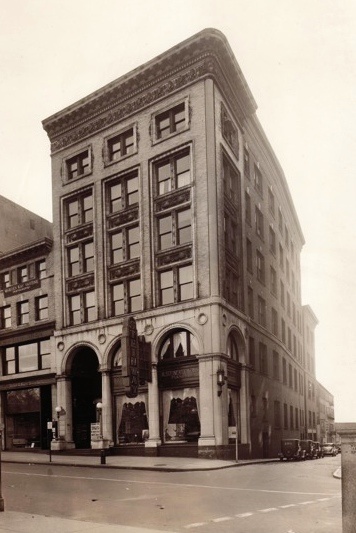
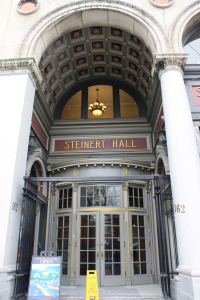
Not far from the Boston Public Garden there is this unremarkable building called Steinert Hall. Piano dealers M. Steinert & Sons own the building, erected in 1896 by company employee Alexander Steinert. Architects Winslow and Wetherell designed the "six-story limestone and brick Beaux Arts-style facade with terra-cotta ornament and a copper cornice."

steinert-hall.jpg
Steinert Hall

The Underground Theater
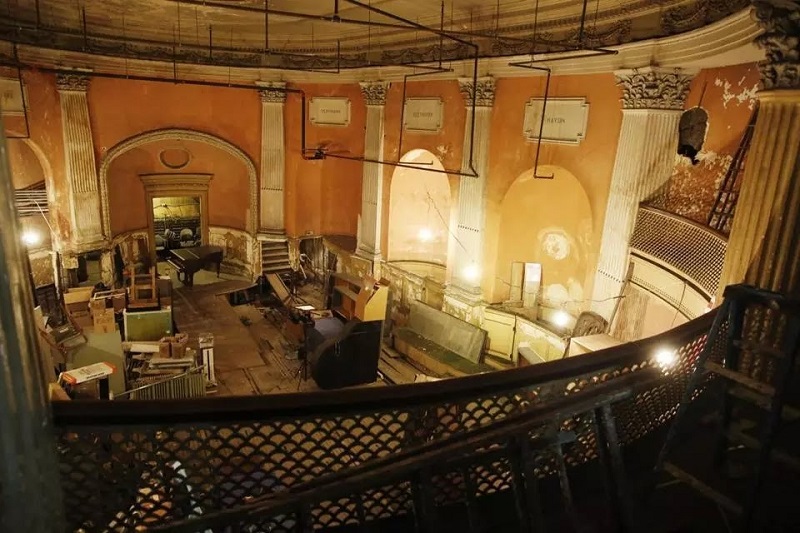
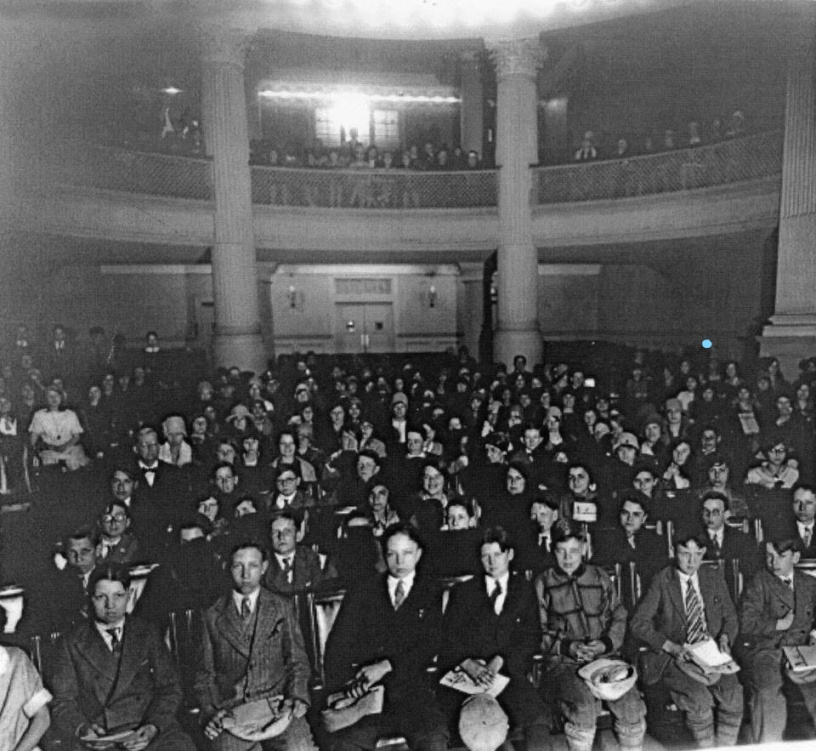
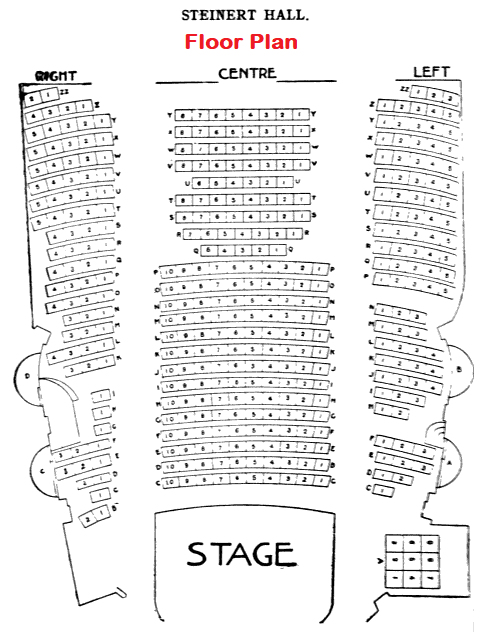
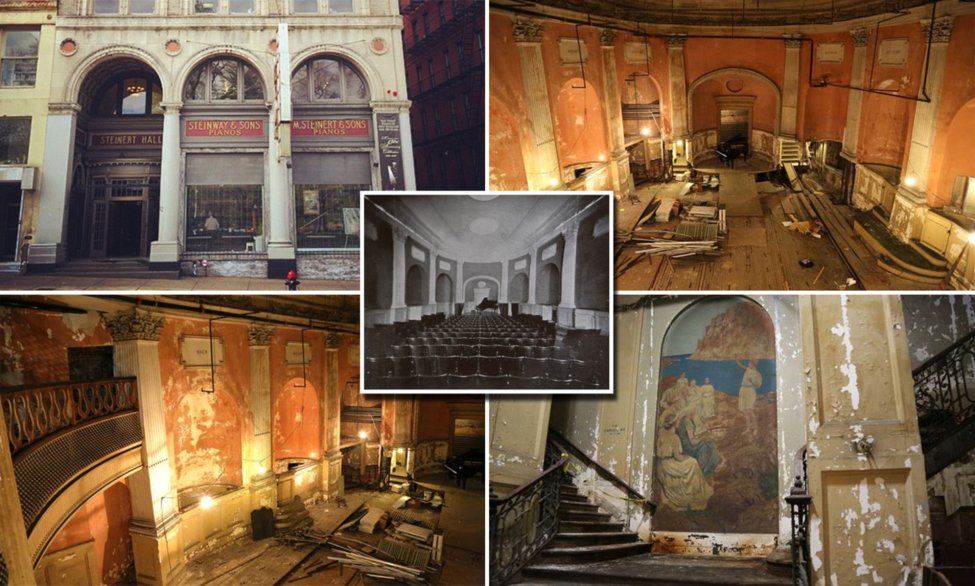
Inside the building and four stories below ground is a concert auditorium, now closed, designed in the "Adam-style ... with fluted Corinthian pilasters separating round arches." Around 1911 some considered Steinert Hall the "headquarters for the musical and artistic world of cultured Boston.
underground-theater-boston.jpg

The concert auditorium, now in ill-repair, has not been used since it was closed in 1942 due to new fire code restrictions imposed after the Cocoanut Grove nightclub fire and the prohibitive cost to upgrade the hall.

2017 Video

In May 2015, it was announced that the hall would be renovated in an attempt to open it again for performances. After 72 years hidden from the public, Boston's underground theater may have a chance to open its doors once again.


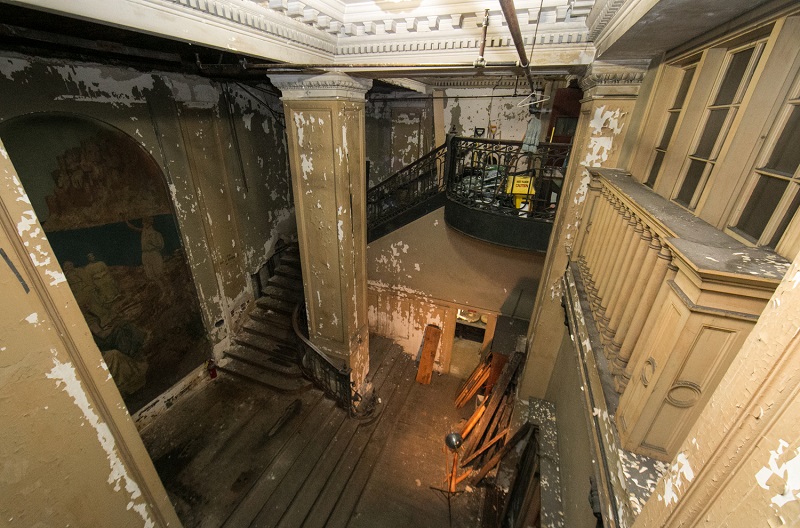
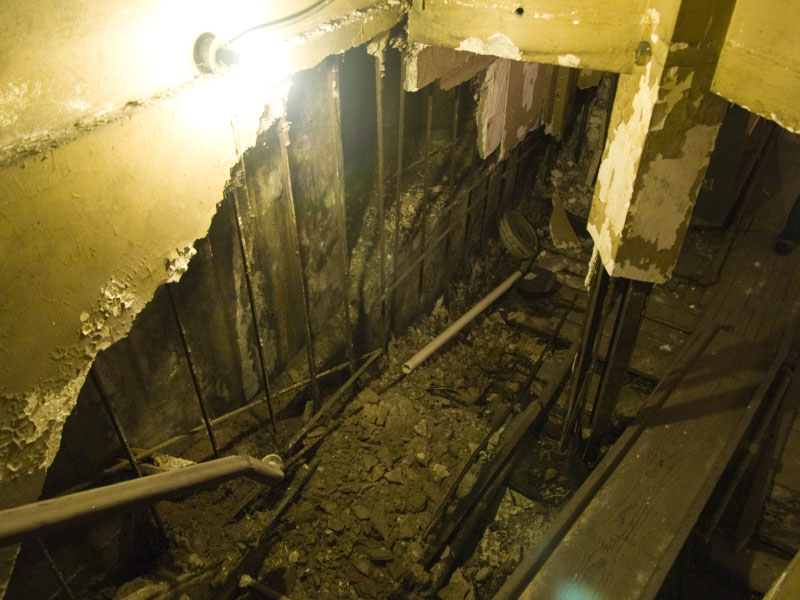
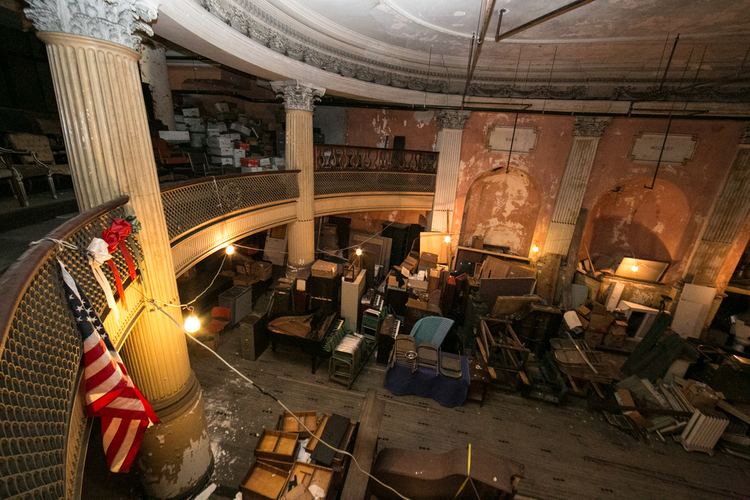
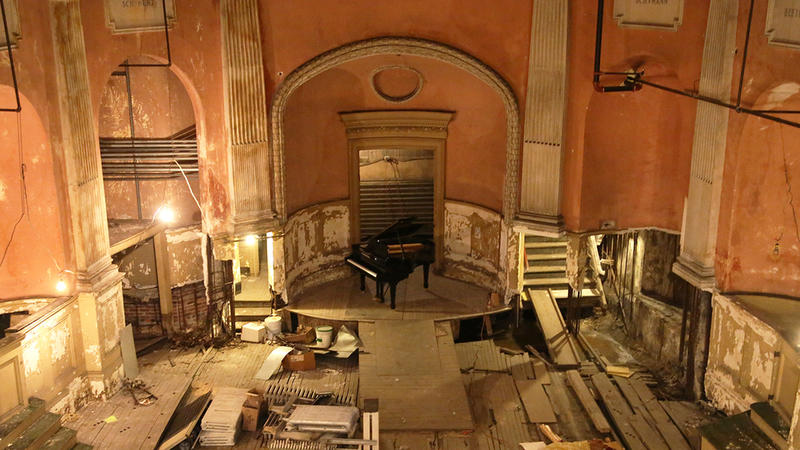
The performance hall was built below ground to shield it from the noise of the street. As a basement theater, it's below the water table, meaning it's damp and usually around 60 degrees - posing a number of architectural issues. Today, piles of record boxes and piano parts fill the theater. Paint peels from the walls and plaster falls from the high ceilings.
steinert-hall-5.jpeg
steinert-hall-3.jpg
steinert-hall-4.jpg
Steinert+Hall.jpg
Despite multiple development proposals over the years, none had come to fruition, WBUR's Robin Lubbock reported in 2014. At the time, Paul Murphy, the president of M. Steinert & Sons, said the performance hall would have to be deconstructed before it could be rebuilt. Mosakowski's idea is to bring the historic building back to its former glory, Jim Elcock, managing partner of Colliers International, the company advising Mosakowski, told the Boston Globe.

“The intent is to fix it up - but not close the doors - and to share it and have it be a part of the Boston music, arts and cultural scene," Elcock told the Globe. M. Steinert & Sons will move out of the building temporarily during renovations and plans to return to "a modern, state-of-the-art showroom." The renovation project is scheduled to begin in late 2015 and last 18-24 months, according to the statement. Steinert & Sons did not say if renovation of the performance hall is included in initial plans.

  • KD: As far as I understand in 2019, the promised renovations did not advance much.
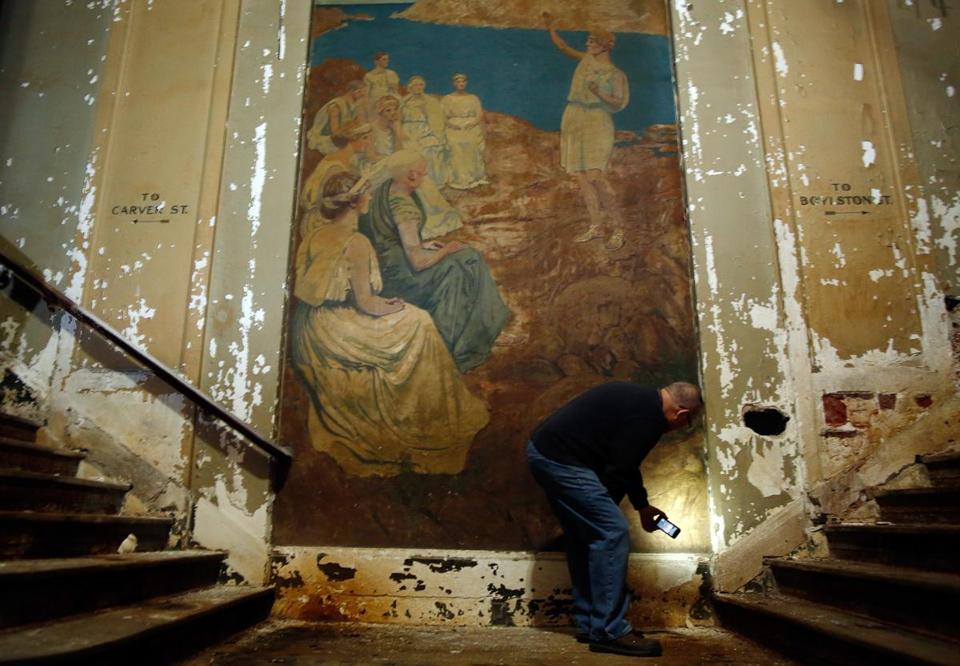
Frescoes
Ancient Romans again?...
Steinert-Theater.jpg
Sources and Links:
kd_separator.jpg
KD: They sure did like building underground structures back in the day, when there was no apparent need for any. This theater was allegedly built 40 feet below the street level to to shield it from the noise of the street. Makes one wonder how the rest of them above ground theaters were able to cope with the street noise.
  • The theater is built below the water table. The auditorium is damp, and it is normally around 60 degrees in there.
Wondering whether our Boston forum members even know about this moisturized abandoned theater hiding beneath their very feet. Well, as I made it known, I think we have a lot more than that hiding under the pavement we walk on.

Speaking of the alleged construction of such an underground structure, I did some simple calculations using Google Maps distance measuring tool. They had to remove 223,200 cubic feet of dirt as can be figured out from 124ft x 45ft x 40ft measurements. 223,200 cubic feet equals to 8,266 cubic yards of dirt.

  • The average commercial dump truck holds anywhere from 10 to 18 cubic yards of dirt.
dump-truck.jpg

For us it means that in 2019 it would take us between 459 and 826 trips, depending on the dump truck model. What did they use to haul that much dirt in 1896 for this achievement to leave no noticeable mark within the searchable internet?

AtlasObscura.COM: Steinert Hall still rots away, untouched and unused deep under the Steinert piano store. It seems to be used as storage for broken or abandoned pianos, adding to the mouldering look of faded opulence. Visitors are not generally allowed into the decaying hall, and employees in the surface-level store are markedly reticent to discuss the space, but some high-profile touring musicians such as Elton John have been known to check out the grand old hall.
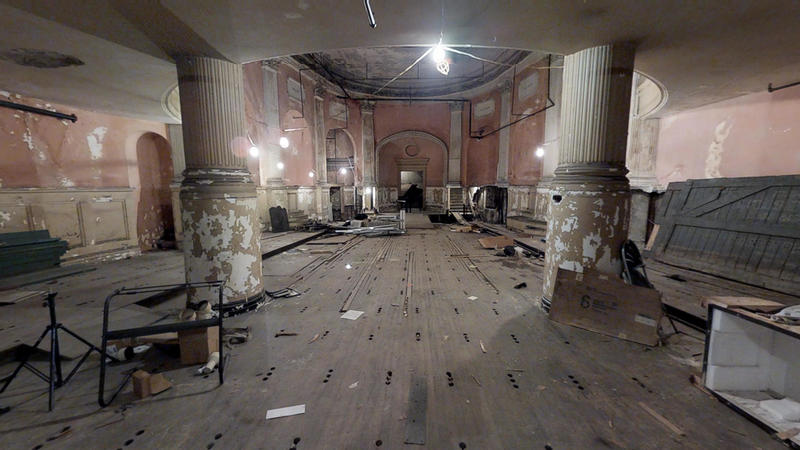
  • They say it could be getting fixed up these days. I have not seen any pertaining info to any renovations happening in 2019.
steinert-hall-7.jpg
I think we are witnessing a buried structure reclaimed by those who lived in 1896. In my opinion, the current above ground Steinert Hall could have been erected in 1896 on top of the previously buried building. Who knows, may be the below three arches were the original top of this buried building with 4 additional stories added only in 1896.
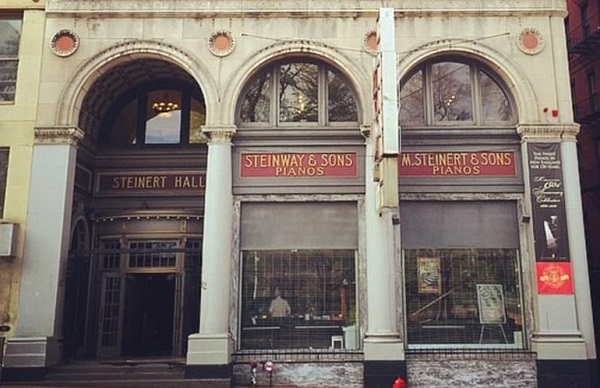
  • Outfitting one of the former windows with a tiny door would not be that hard...
steinert-11.jpg

It would be great if we could dig up some additional historical info on this "forgotten" underground theater in Boston. I would not be surprised if there was some "underground Boston" tour somewhere nearby.

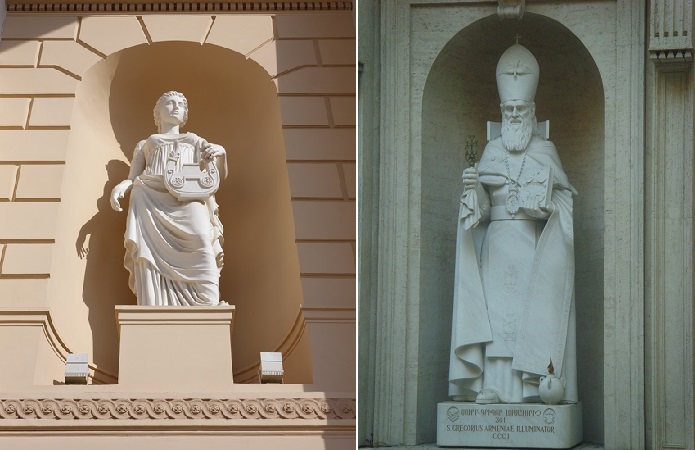
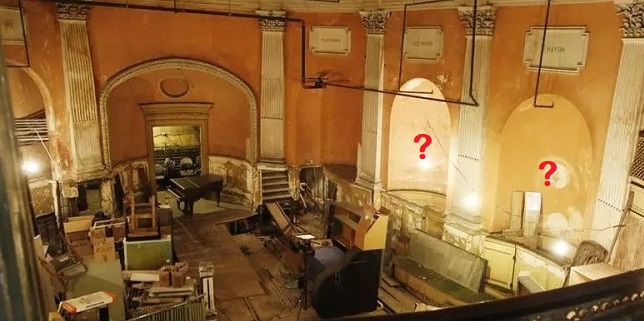
P.S. Oh, almost forgot... I do not think it was a theater prior to getting outfitted as one. Additionally, the empty openings in the walls are supposed to house statues. Something similar to the below image.
statue-1.jpg

Where are the statues, and what were they?
steinert-hall-41.jpg
The plaques above the statue enclosures state Bach, Mozart, Schumann, Schubert, Haydn and Beethoven, but I doubt those were the original dedications. Then again, who knows? One way, or the other, where are the statues and what did they look like?

Note: This OP was recovered from the Sh.org archive.
Note: Archived Sh.org replies to this OP are included in this thread.
 
Note: This post was recovered from the Sh.org archive.
Username: Cemen
Date: 2019-12-24 06:44:52
Reaction Score: 3
Again ... just yesterday I watched a study by one of our alternative specialists about the Bolshoi Theater in Moscow. Same. Less three floors, 27 meters underground, Beethoven Hall underground.
There are no underground structures on the plans of the 19th century. It turns out that all the underground facilities were built during the reconstruction of 2005-2011. But in the public domain there is also no documentation on modern construction!
Even the theater guide said that you will not find any information except, perhaps, some grains.
Damn it, in terms of secrecy, this is not a theater, but some kind of military facility.
Well, a couple of photos.

2294310_original.jpg37450205_b.jpg

Why even build underground halls.
 
Note: This post was recovered from the Sh.org archive.
Username: KorbenDallas
Date: 2019-12-24 08:46:22
Reaction Score: 10
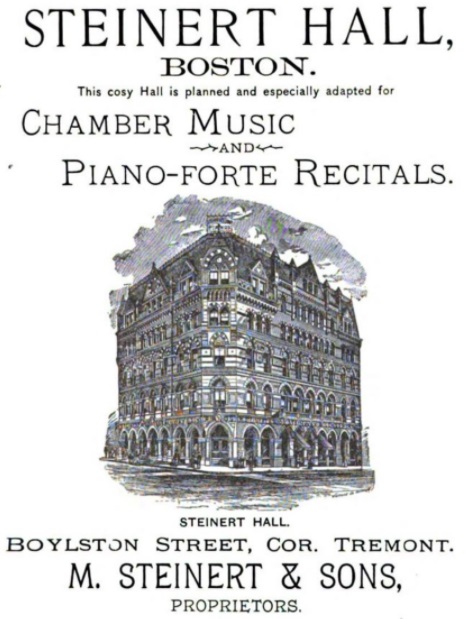
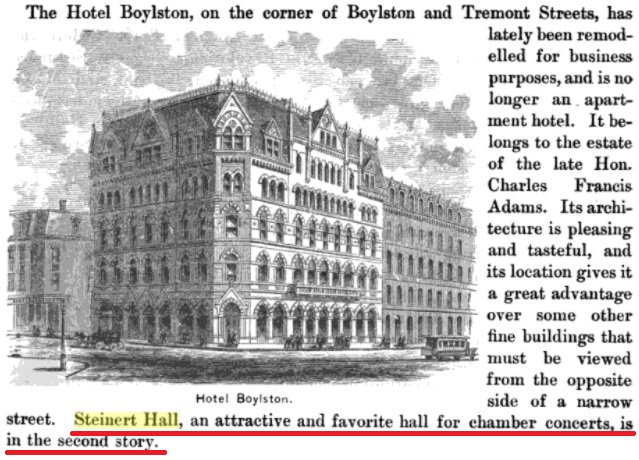
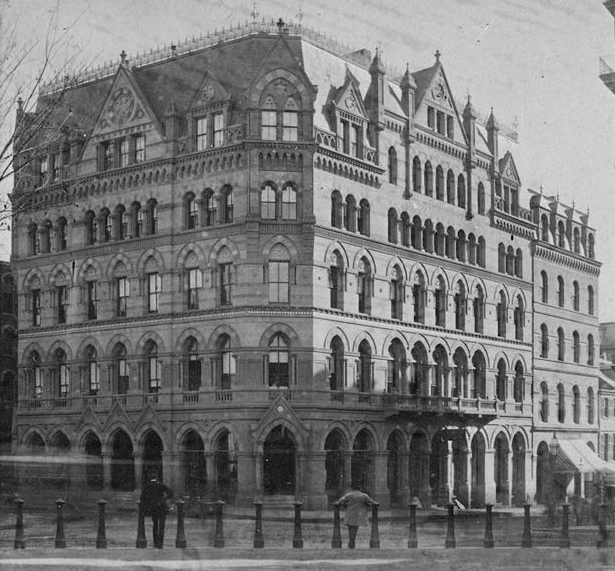
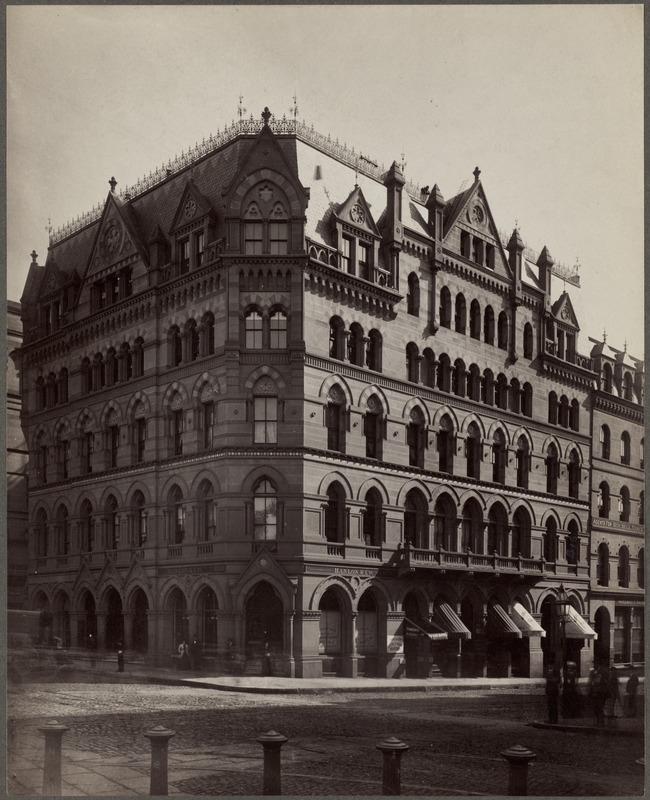
It looks like the history forgot to mention that there used to be a different Steinert Hall situated on the second floor of a certain Boylston Hotel. The location was Boylston St. & Tremonst St. vs. Boylston St. & Edgar Allan Poe Way.

boylston-hotel-2.jpg
The following excerpt from this, probably, 1890 publication provided with the following info.

boylston-hotel.jpg
kd_separator.jpg
Hotel Boylston (1871-1894) of Boston, Massachusetts, stood at the corner of Tremont Street and Boylston Street in today's Boston Theater District. The architecture firm of Cummings and Sears designed it "in the Italian-Gothic style" as a residential apartment building. Among the tenants: New England Kennel Club; Christian Science Publishing Co.; and piano dealer Steinert & Sons and its 350-seat concert hall.
  • Stood for 23 years only. Ridiculous.
HotelBoylston_Boston.jpg
HotelBoylston_Boston-2.jpg
Now go ahead and try to figure out what building is, or was where, when we have the following shenanigans I looked up in this thread, @trismegistus.
  • In 1869, Bradlee took up a particularly challenging civil engineering project by accepting a commission from the city of Boston to move the seven-story Pelham Hotel, situated at the corner of Tremont and Boylston Street (on the site of the Little Building) several feet back on its lot to allow for the widenening of adjacent streets. This was no small undertaking. The massive structure covered 5200 square feet and weighed an estimated 10,000 tons!
 
Note: This post was recovered from the Sh.org archive.
Username: jd755
Date: 2019-12-24 13:27:30
Reaction Score: 1
I don't know why you expect honesty and integrity from the wikiwaki sit, but that's just me talking out loud.
Going into Gibiru with the search string steinert concert hall history
These came up.
Steinert’s History - M. Steinert & Sons Boston Natick, MA
Where the hall barely rates a mention!
In 1896 Steinert Hall was built at 162 Boylston St., opening on Dec. 16, 1896.

This one where the room above the piano store gets a mention.
History

This one which has it thirty feet underground. What's ten feet between friends, a storey?
Steinert Hall | The Music Museum of New England
The Steinerts decided the only way to soundproof the concert hall was to put it underground — thirty feet underground and two to four floors beneath their piano store.
The Roman painting is Bach according to this photographers flickr feed.


The urban explorere who went into it in 2011's page
Steinert Music Hall, Boston, MA - 6th July

I'm wondering if there was a worked out clay pit on the site that was used for this concert hall. Cannot find any plans or deeds online but presumably they must exist in some sort of state or city registry.

Using startpage and search string
This map dated 1850 came up.I cannot see it clearly enough on this screen even with the on page zoom to make out the street names could someone with a bigger screen identify where on this map this underground concert hall would come to be located/dug out?
A new & complete map of the city of Boston, and precincts including part of Charlestown, Cambridge & Roxbury - Norman B. Leventhal Map & Education Center
Seems it was once called Frog Lane and was on the shore of the Back Bay. A name that keeps cropping up in the search results.
From here; Piano Row and its Hidden Secret: The Piano Industry in Boston by Carl Licence
The Piano Row district was once on the shore of the Back Bay, when at the time, Boylston Street, then called Frog Lane, led to a colonial rope walk on its shore. The area had been a remote location in colonial times and contained the 1756 Central Burial Ground. Eventually, as Boston grew, the area was developed in the first half of the nineteenth century.
Where's the hall?
Close by, at 162 Boylston Street a new office building and piano showroom opened for M. Steinert and Sons in 1896. At this time, M. Steinert was also designated as Boston’s authorized Steinway pianos. This new building, 162 Boylston Street, and M. Steinert and Sons piano showroom proved to be the magnet that created Piano Row.
What is the Boston Common?
Piano Row, across from Boston Common, contained not only the showrooms of Steinert and Steinway, but other large piano makers such as Vose, Starck, Mason & Hamlin, and Wurlitzer among others.

Here's the hall information.

However, back at 162 Boylston Street, at M. Steinert and Sons new office building and showroom, they had created a little secret space of their own.

Steinert and Sons was founded by Morris Steinert who moved his piano business first from Georgia to New York, then New Haven, and finally to Boston in 1883 where he too opened the first Steinert Hall in the Boylston Hotel in 1889 at the corner of Tremont and Boylston Street then briefly from the first floor of the Masonic Temple across the street. Morris Steinert’s son, Alexander, who had worked at the piano store, commissioned a new office building, showroom, and concert hall in 1896. M. Steinert commissioned the architects Winslow and Wetherell to build the 6-story limestone and brick building that currently stands at 162 Boylston Street, which opened in December of 1896.

From a startpage search string winslow and wetherell
Who were the architechs employed by Steiner.
Came this page of photographs An abandoned (literally) underground music hall in Boston
Of which this one intrigues me beacuse the structure is said to be belkow the water table and is always damp as a result which led me to thinking how did they, whoever the builders were, tank the thing to keep the water out?
One for iseenitfirst next time he's around.

Steinert Hall 25.jpg
 
Note: This post was recovered from the Sh.org archive.
Username: Bemused
Date: 2019-12-25 01:07:06
Reaction Score: 5
Wow. That is crazy to let that just fall apart. The shape of it reminds me of the Salt Lake Mormon Tabernacle. I toured the complex many years ago and was more impressed with the tabernacle than the other buildings. We walked into the front doors and the tour guide told a man by the organ 250 feet away, to face away from us and whisper and we could hear the man. The building is supposedly acoustically perfect. The tabernacle and the Steinert Hall are the same shape. I wonder if there was an organ instead of a piano in the hall originally. The tabernacle has a crazy roof which I thought must be what made it so acoustically perfect but maybe it is the shape and the roof.


The organ is amazing. It is considered one of the world's finest pipe organs, based on its superb tonal design, the first-rate maintenance performed on it, and the remarkable acoustics of the Tabernacle itself.

TabernacleOrgan2.jpg

I have suspicions that the tabernacle was there before the Temple.

thm_the_mormon_tabernacle_c1870_fr_hi.jpg

In this engraving it is the only large building there. It has antiquitec on the roof and a storm in the background. Time to harvest some etheric energy.
I also wonder if the Steinert Hall could have hidden floors above it. Why is it so deep underground? Toronto, Canada has a pair of theatres that are stacked one on top of the other. The Winter Garden was sealed up for decades. It apparently is seven storeys above the Elgin.

Winter Garden Sealed from Toronto for Six Decades
If Toronto has had a King Tut moment of discovery, it was the unsealing of the Winter Garden after more than 50 years. The theatre, which opened seven storeys above the larger Elgin (originally Loew's Yonge Street) Theatre in 1914, is a botanical fantasy designed to resemble a rooftop garden in full bloom. With the decline of vaudeville, it closed in 1928 although the Elgin continued as a movie house. It remained shut until the Ontario Heritage Trust bought the dilapidated double-decker theatre building in 1981.

For its restoration, which began in 1987, more than 5,000 real beech branches were harvested, preserved, painted and painstakingly woven into wire grids suspended from the theatre's ceiling. The walls were cleaned using hundreds of pounds of bread dough to avoid damaging the original hand-painted watercolour artwork.
In 1989, the Elgin and Winter Garden Theatre Centre reopened as one of Canada's finest live theatre complexes. This is the only double-decker complex still operating in the world.

Elgin-Winter-Garden-Theatre.jpg

Memories of Loew’s Downtown and Winter Garden Theatres
 
Note: This post was recovered from the Sh.org archive.
Username: Plissken
Date: 2019-12-25 21:23:01
Reaction Score: 8
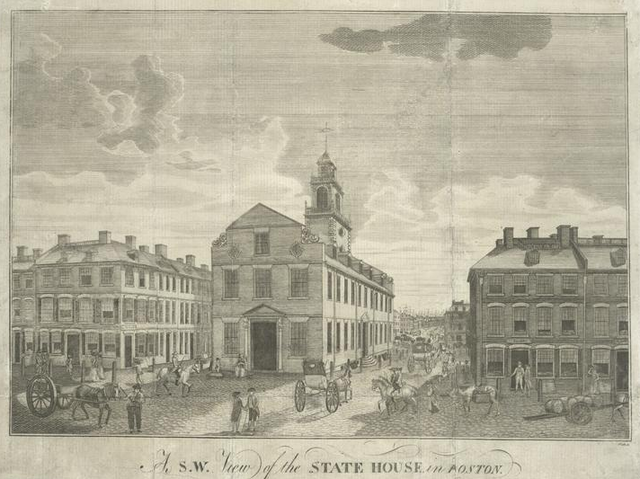
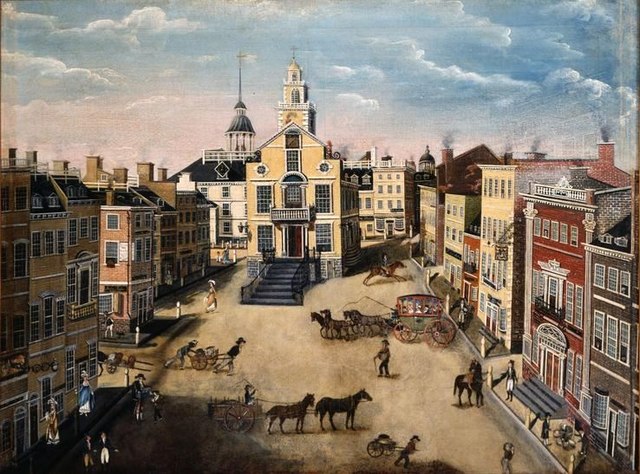
Nearby mudflood candidate - The original State House built 1713. Here it is in a sketch from 1793, Notice the huge front door and the steps up to to the side entrance. How many floors does this building have?

640px-1793_StateHouse_Boston_MassMag.png

1801
1801 Old_State_House_and_State_Street,_Boston_1801.jpg

1849
1849 Brown_OldStateHouse_BostonDirectory1849.png

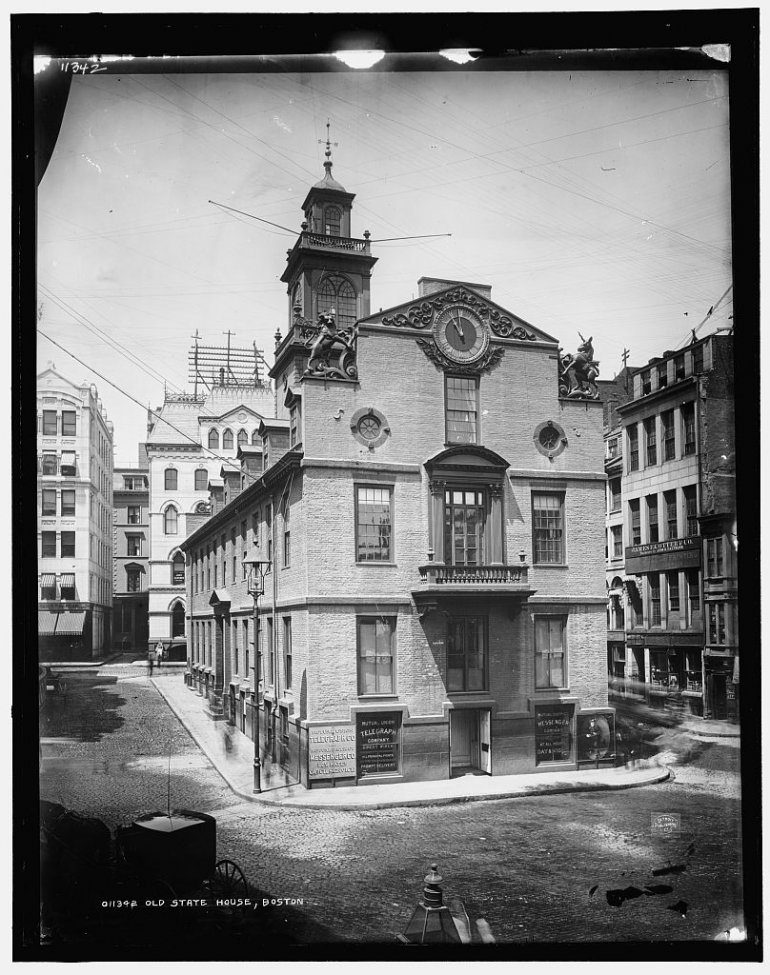
Here it is 1900-1910.
1900-1910.jpg

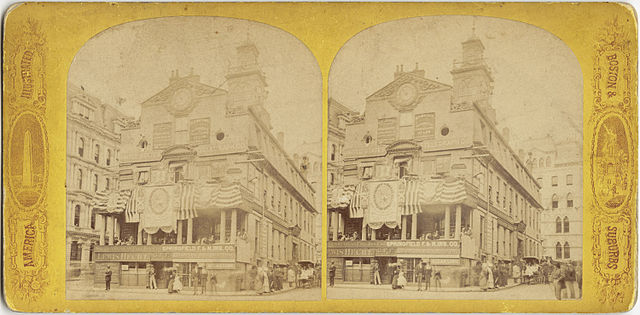
And sometime- with columns?
640px-2350780231_OldStateHs.jpg

With all the buildings being modified and torn down, you think that the patriots that threw off the yoke of British oppression would take a minute to remove the lion and unicorn from this building. :unsure: Maybe while the Declaration of Independence was being read from the balcony? Makes you think maybe the revolution was something else.

Plissken ?
 
Note: This post was recovered from the Sh.org archive.
Username: BStankman
Date: 2019-12-27 10:13:24
Reaction Score: 2
You would think of all places, a piano store could get away with leaving the giant size door intact.

1577440396527.png
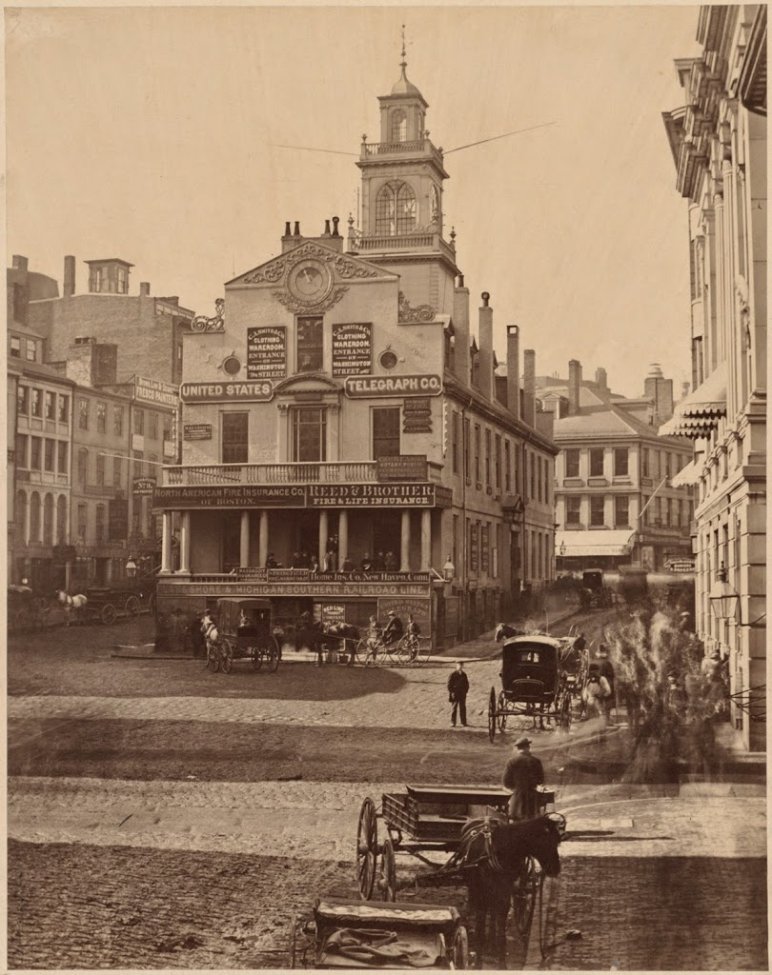
The old state house has gone through an incredible transformation.
Old State House, Boston - Lost New England

With columns, chimneys, antennas, stone cladding at the base all removed to make the building appear more colonial.

012_1860c-2Bbpl.jpg

With the post office, the market the old state house and the harbor, they have done a really poor job of covering up the old civilization and mud.

I suppose that is why they needed to say the history of the area goes back to 1620.
But we have a clue when the re write was taking place. Sometime after the civil war.
Abraham Lincoln finally made it (thanksgiving) a national holiday with his 1863 Thanksgiving Proclamation.

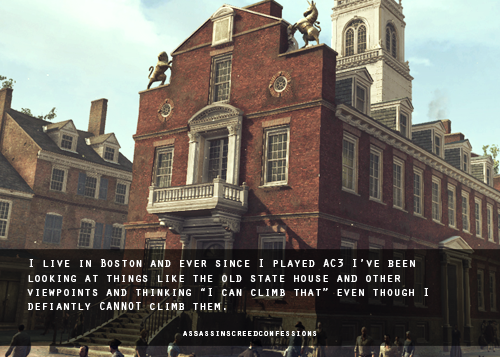
Another Assassin Creed location showing up in my searches.

tumblr_o4zls7JVM31r6tmsdo1_500.png
 
Note: This post was recovered from the Sh.org archive.
Username: Dirigible
Date: 2019-12-28 20:43:19
Reaction Score: 2
Selling pianos enabled these people to build this building?

Either they were the only piano salesman on Earth, people paid an exorbitant price for them (and a great many people bought them) or something else is going on.

The economics of this building don't make sense in light of what "paid" for it in my opinion.
 
Note: This post was recovered from the Sh.org archive.
Username: jd755
Date: 2019-12-28 21:08:43
Reaction Score: 1
From here; Alexander Steinert | The William Steinway Diary: 1861-1896, Smithsonian Institution

Alexander Steinert (b March 12, 1861 in Athens, GA; d November 15, 1933 in Boston, MA) was a son of Morris Steinert, the original Steinway dealer for New England and a close business associate of William Steinway, and Caroline Steinert. Alex was groomed by his father to take over the business and often accompanied him to meetings with William Steinway, during which business deals were negotiated. (Diary, 1894-01-16)

The Steinerts delayed their move north from Georgia until Alex was born. Educated in the public schools of New Haven, CT, Alex at an early age, probably about 16, was employed by his father, who was manufacturing pianos and managing a music store in New Haven. By age 18, Alex was living at a boarding house in Providence, R.I, along with his older brother Henry Steinert and managing his father’s music store in Providence.

Alex is said to have been the driving force behind the expansion of Steinert's Music stores into a chain serving all of New England. The Steinert’s flagship showroom was initially at the corner of Tremont and Boylston Street in Boston and later moved to Steinert Hall on Boylston Street in Boston, a building that Alex had constructed. Alex recognized the commercial potential in player pianos, which led to the business’s acquisition of the Aeolian Piano Company. Alex later drove the acquisitions of the Hume Piano Company and the Jewett Piano Company. He was for many years very active in the musical life of Boston, a founder of the Boston Singers, and largely responsible for bringing Ignace Paderewski on his first tour to Boston.
 
Note: This post was recovered from the Sh.org archive.
Username: dr dodge
Date: 2019-12-30 23:19:18
Reaction Score: 0
It appears from google streets that the music store is moving.
Wonder if someone "bought it" due to too much notice.

dr
 
Note: This post was recovered from the Sh.org archive.
Username: jd755
Date: 2019-12-31 09:11:47
Reaction Score: 0
You reminded me I discovered a bit about the architects, well startpage did
From here; WALTER WINSLOW | Nathaniel J. Bradlee | Architect | Boston,MA
Among the more prominent buildings with which he was particularly identified were the Tremont Building, Hotel Touraine, Board of Trade Building, Steinert Building, Henry Siegel Department Store, Edison Electric Building and The National Shawmut Bank. He also designed numerous homes, barns and stables throughout Massachusetts. In 1890, he and partner George Wetherell designed perhaps one of the most impressive mansions on Beacon Street, which was the home of Eden Dyer Jordan Jr., son of the founder of the Jordan Marsh department store. Mr. Winslow was elected an Associate of the American Institute of Architecture in 1901.

I realise this is just one link but perhaps a peek at his other buildings may be worth the effort in deciding if on the balance of probability he did in fact design the Steinert building or someone dug it out of the mud flood or adapted it from previous use by giants. It may also pay to have a butchers at the buildings connected to it to see if they to fitted the mud flood/giant frames of reference. The earlier buildings not necessarily the ones abutting it today.
 
Tips
Tips
Please respect our Posting Rules.
Back
Top