- Joined
- Oct 7, 2020
- Messages
- 509
- Reaction score
- 1,207
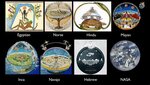
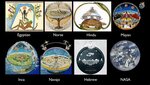
Two quotations below, which examine "ancient" descriptions of the dome as a solid expanse, close enough for people to see it.
Chicken Little was worried that the sky was falling.
Jack climbed a beanstalk to break into a giant's home.
And then, the sky was raised higher and out of reach of curious humans.The first quotation refers, of course, to the Tower of Babel and the origin of languages.
Wikipedia:
Chicken Little was worried that the sky was falling.
Jack climbed a beanstalk to break into a giant's home.
And then, the sky was raised higher and out of reach of curious humans.The first quotation refers, of course, to the Tower of Babel and the origin of languages.
"Those who gave counsel to build the tower, for they whom thou seest drove forth multitudes of both men and women, to make bricks; among whom, a woman making bricks was not allowed to be released in the hour of child-birth, but brought forth while she was making bricks, and carried her child in her apron, and continued to make bricks. And the Lord appeared to them and confused their speech, when they had built the tower to the height of four hundred and sixty-three cubits. And they took a gimlet, and sought to pierce the heavens, saying, Let us see (whether) the heaven is made of clay, or of brass, or of iron. When God saw this He did not permit them, but smote them with blindness and confusion of speech, and rendered them as thou seest. (Greek Apocalypse of Baruch, 3:5–8)"
Wikipedia:
The Flammarion engraving (1888) depicts a man crawling under the edge of the sky, depicted as if it were a solid hemisphere, to look at the mysterious Empyrean beyond. The caption underneath the engraving (not shown here) translates to "A medieval missionary tells that he has found the point where heaven and Earth meet..."The word firmament translates shamayim (=115%שָׁמַיִם) or rāqîa (=115%רָקִ֫יעַ), a word used in Biblical Hebrew. shamayim is translated as "heaven". Rāqîa derives from the root raqqəʿ (רָקַע), meaning "to beat or spread out thinly", e.g., the process of making a dish by hammering thin a lump of metal.[5][6]
The Hebrews believed the sky was a solid dome with the Sun, Moon, planets and stars embedded in it.[7] According to The Jewish Encyclopedia:
The Hebrews regarded the earth as a plain or a hill figured like a hemisphere, swimming on water. Over this is arched the solid vault of heaven. To this vault are fastened the lights, the stars. So slight is this elevation that birds may rise to it and fly along its expanse.[8]
The 6th-century Egyptian traveller Cosmas Indicopleustes formulated a detailed Christian view of the universe, based on various Biblical texts and on earlier theories by Theophilus of Antioch (2nd century CE) and by Clement of Alexandria (c. 150 – c. 215). Cosmas described a flat rectangular world surrounded by four seas; at the far edges of the seas, four immense vertical walls supported a vaulted roof, the firmament, above which in a further vaulted space lived angels who moved the heavenly bodies and controlled rainfall from a vast cistern.[9
![[Image: 220px-Flammarion.jpg]](https://en.m.wikipedia.org/wiki/File:Flammarion.jpg "[Image: 220px-Flammarion.jpg]")