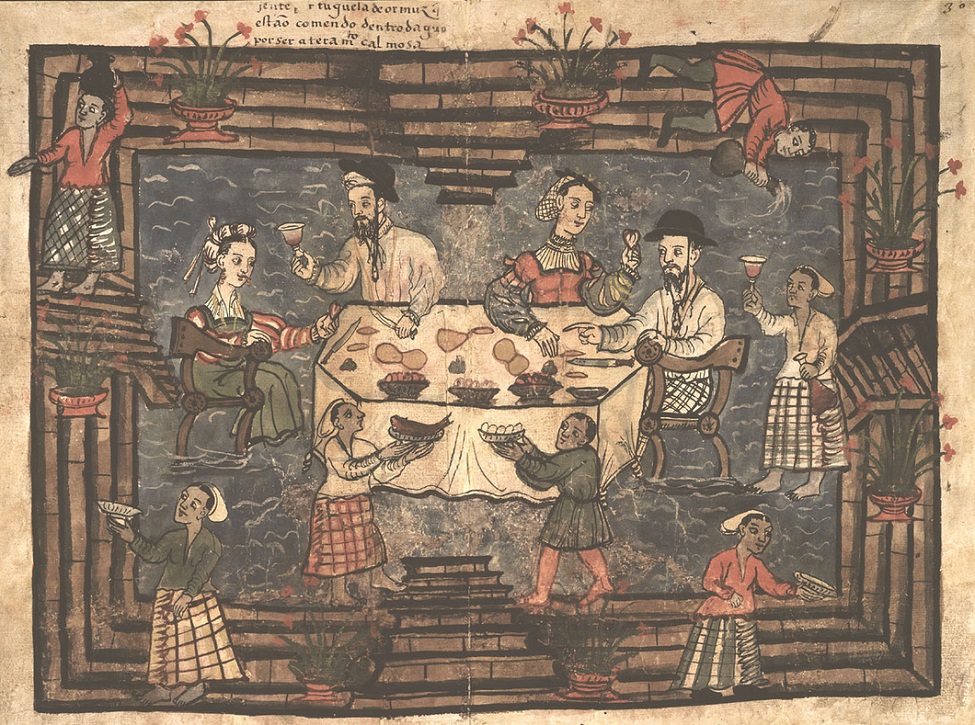
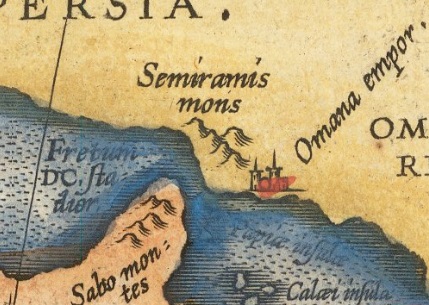
The Kingdom of Ormus (also known as Ohrmuzd, Hormuz, and Ohrmazd; Portuguese: Ormuz) was a 10th- to 17th-century kingdom located within the Persian Gulf and extending as far as the Strait of Hormuz. The Kingdom was established by Arab princes in the 10th century who in 1262 came under the suzerainty of Persia, before becoming a client state of the Portuguese Empire.
The kingdom received its name from the fortified port city which served as its capital. It was one of the most important ports in the Middle East at the time as it controlled seaway trading routes through the Persian Gulf to India and East Africa. This port was located on Hormuz Island, which is located near the modern city of Bandar-e Abbas.
The Strait of Hormuz is a narrow, strategically important waterway between the Gulf of Oman in the southeast and the Persian Gulf in the southwest. On the north coast is Iran and on the south coast is the United Arab Emirates and Musandam, an exclave of Oman.
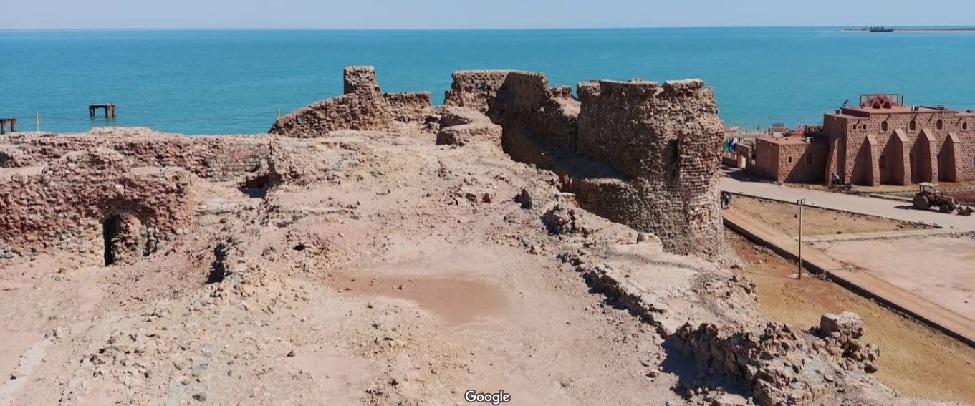
Hormuz Island, also spelled Hormoz, is an Iranian island in the Persian Gulf. Located in the Strait of Hormuz, 8 kilometres (5 mi) off the Iranian coast, the island is part of Hormozgan Province.
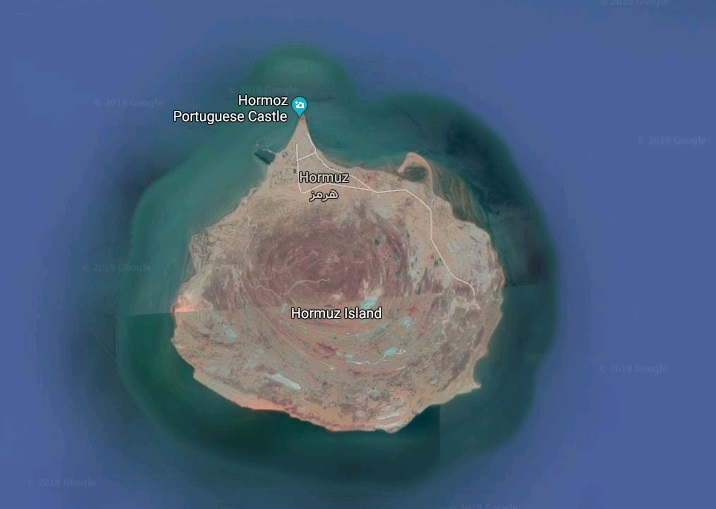
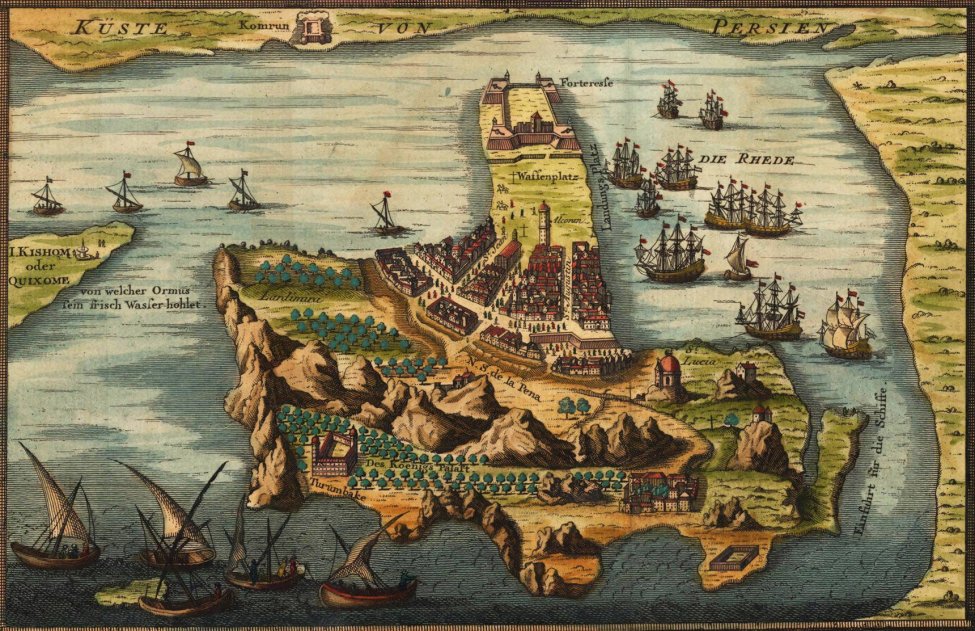
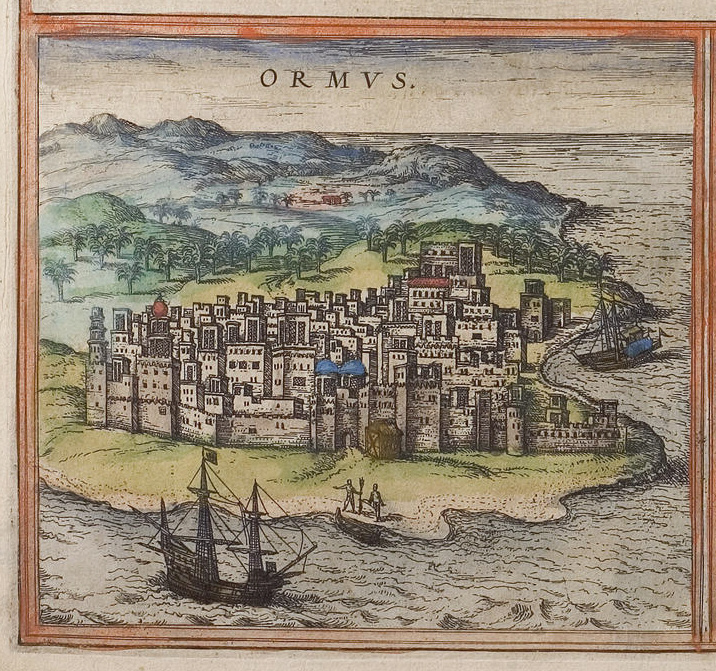
KD: Do I have the wrong island for 2019, or something happened back in the day to alter its shape and form? Also, does it look like the 1756 version of the island is... incomplete, as in missing two huge chunks of the island?
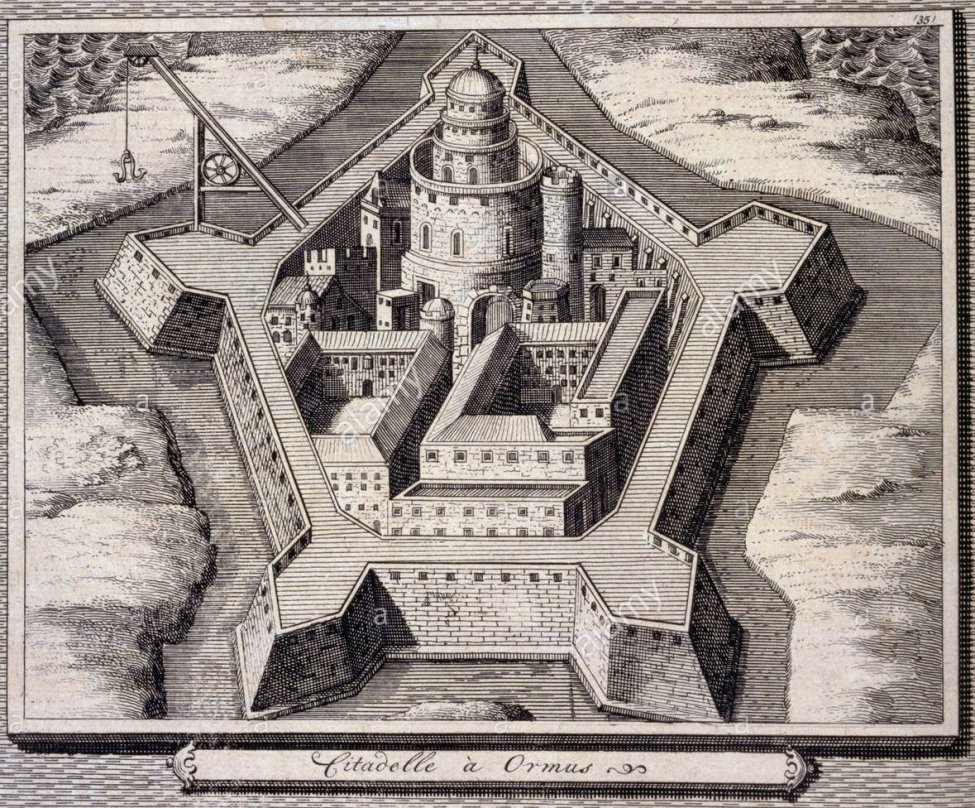
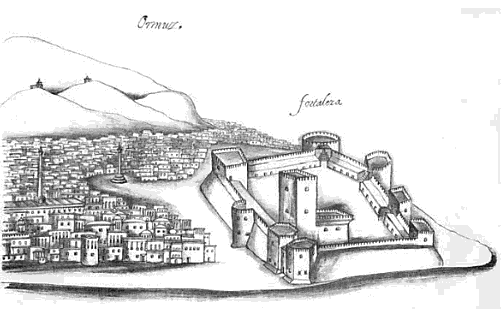
Check out the Star-Fort:Fortified city at Hormuz, Persia, Iran, 17th century. Illustration by Johan Albrecht de Mandelslo (1616–1644). Seventeenth-century German adventurer, who wrote about his travels through Persia and India.
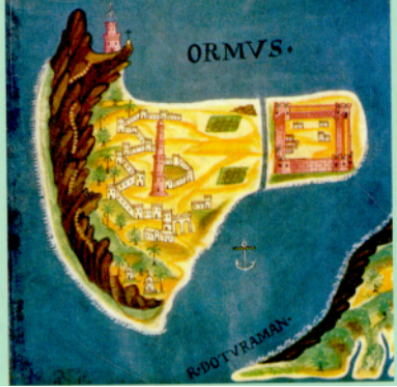
1635 "Detail of the island and fortress of Ormuz on the map of the Strait of Ormuz (descriptions of the strongholds of East India/"Descrições das Fortalezas da Índia Oriental")." Pedro Barreto de Resende – Wikipédia, a enciclopédia livre This fortalezas site's description adds (machine translation of the Portugese): "The island is represented with a noticeably triangular shape having at the apex the fortress and on the base the city where stands a high minaret." Forte de Nossa Senhora da Conceição de Ormuz
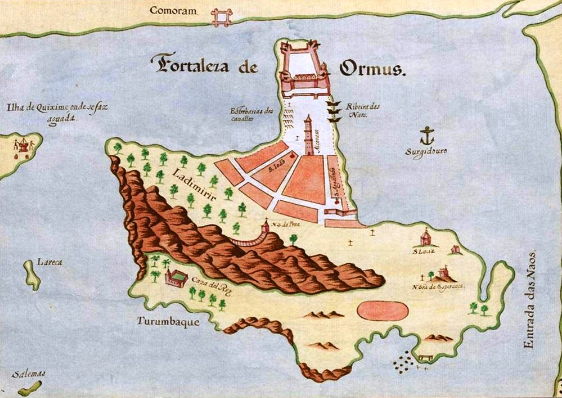
1648 "Fortress of Ormus ", Iran. Drawing, color. In: ALBERNAZ I, João Teixeira. "Plants of the cities and fortresses of conquest of eastern India"/"Plantas das Cidades e fortalezas da conquista da India oriental"
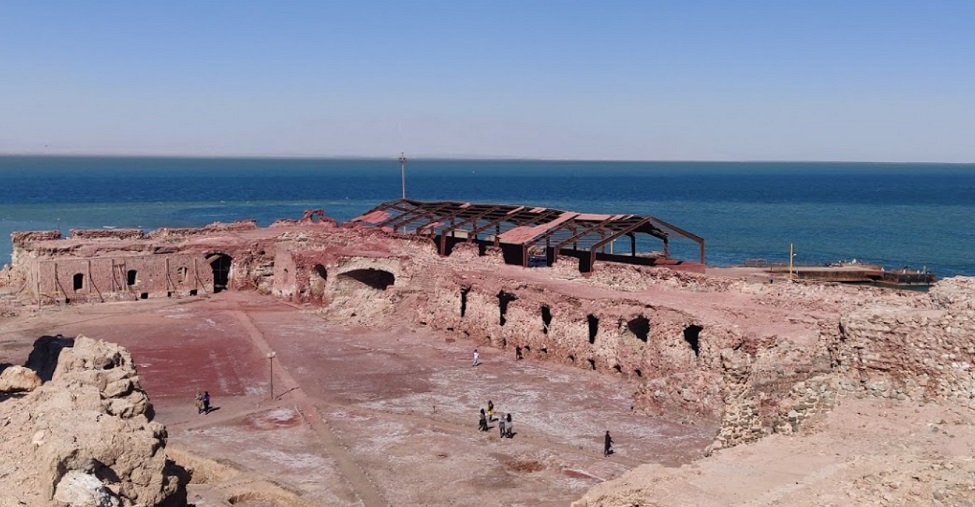
This is a funny little ilse, looking from above on google maps it looks as if it was the epicenter of a mahoosive tornado, or maybe a bomb went off in the center, there is nothing left there.
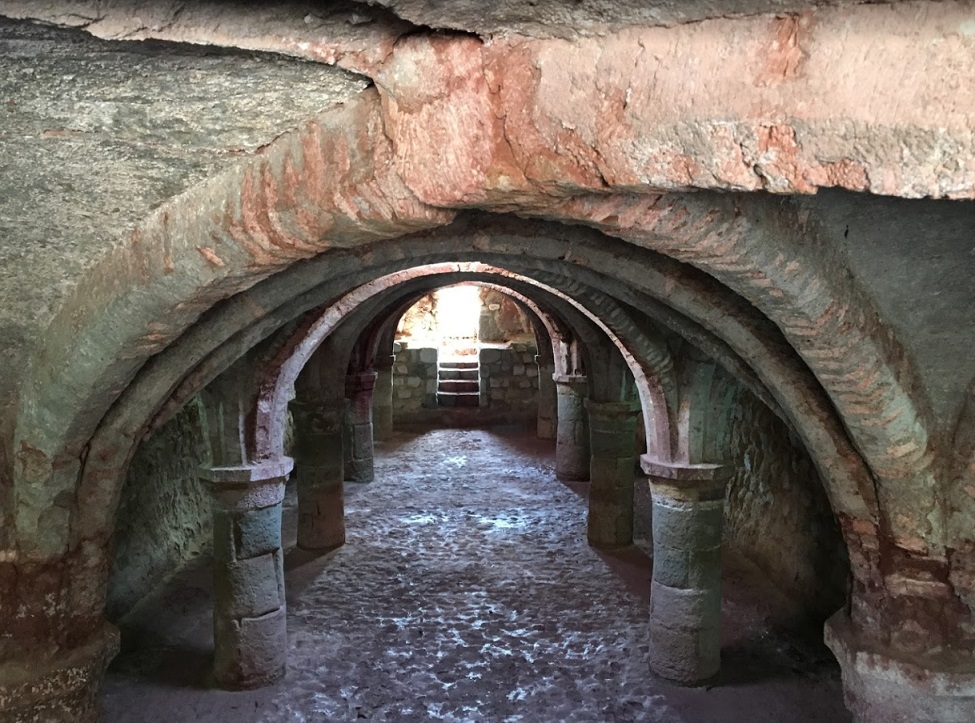
Clearly an advanced civilization at one point. As mentioned above looks like there are pieces missing as well. Possible natural disaster could have altered the island shape, but looking at some of the architecture and structural rigidity of some pics, the surface looks like some form of ancient carpet bombing. Reminds me of the aftermath of war areas of Iraq, Afghanistan. Hmmm.
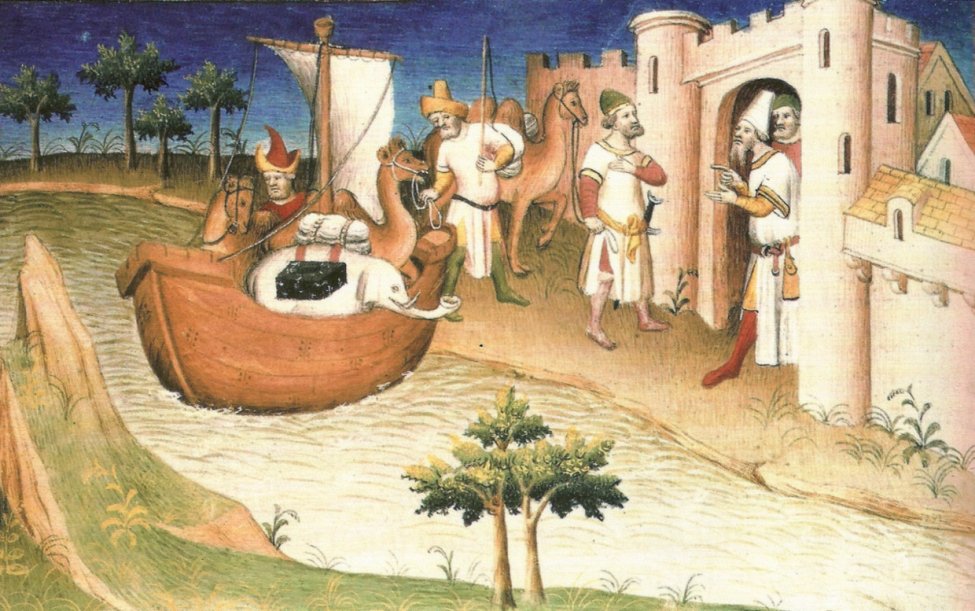
As far as I understand this is from the travels of Marco Polo. Not sure how he could ride camels in, if it was an island.
Marco Polo and his uncles arrive at Hormuz, 1271. Woodcut illustration. In 1271, Niccolo, Maffeo and Marco Polo embarked on their voyage to fulfil Kublai's request. They sailed to Acre, and then rode on camels to the Persian port of Hormuz.
Old pictures from Hormuz here Here
The capture of island is a very famous event in Iran's history Here
The English took the island and that was the beginning of new era in Iran,s history.
"The Persians, in early times, acknowleged one eternal and
omnipotent Being, the creator and preserver of all things: him
they called Yezad, Izad, or Izud; also Ormuzd, Hormuz, or
Hormizda Choda O supreme God" Hormizda is Ahura Mazda.
Here is what I found in essence on Wikipedia :
Ahura Mazdā (from Old Persian 𐏈 𐏉 / Auramazdâ, "Lord of Wisdom," in Persian اهورامزدا) is the central deity of the ancient Mazdean religion. Later, he becomes the sole god of Zoroastrianism, as taught and venerated by Zoroaster. From the early Avesta onward, Ahura Mazdā is the ratuš, the "ideal model," the "example to follow" of the spiritual world[1]. After Zoroaster's reform of the ancient Mazdean cult, Ahura Mazdā becomes the unique, abstract, and transcendent deity of Zoroastrianism. According to the Avesta, he is the primordial Supreme Spirit who gave birth to two opposing principles: Spenta Mainyu (the Holy Spirit) and Angra Mainyu or Ahra Manyu (the Evil Spirit). Although Ahura Mazdā transcends the elements of physical creation, he nonetheless remains the Pole of essential Light, the father of Atar[2] manifested through primordial Fire—which is the flashing, entirely metaphysical light that precedes and engenders the celestial illuminations of solar and stellar fires in the cosmos[3].
In Zurvanism, Ormuzd (AuhrMadzd or Ormudz, the Pahlavi contraction of Ahura Mazdā) and Ahriman (the Pahlavi contraction of Ahra Mainyu) are dominated by Zurvan (Boundless Time). Ormudz is the adversary of Ahriman, the Zoroastrian representation of evil. He is the bearer of arta, that is, wisdom and truth.
In Zoroastrianism, some of the Amesha Spenta (Immortal Saints) or primordial deities of Mazdaism become the seven expressions or divine virtues of Lord Ahura[3]:
Vohu Manah: Good Thought
Asha Vahishta: Truth-justice par excellence, the righteous order as divine perfection, including the cosmic order
Khshatra: the Kingdom of God, Desirable Sovereignty (Khshatra Vairya) — empire — power and might of Good
Ârmaiti: devotion as holy piety endowed with beneficent activities — Spenta Armaïti
Haurvatât: health as that which destroys the disease inoculated into creation by Ahriman, and salvation in the spiritual world
Ameretât: immortality (or non-death) as the perpetual dynamism of divine life
One may also include:
Mazdā: wisdom, light, omniscience. Sometimes Spenta Mainyu (Holy Spirit) is distinguished from Ahura Mazdā (Wise Lord, the supreme god) (Yashts 44.7, 45.6), being taken as his father; at other times Ahura Mazdā is Spenta Mainyu par excellence (Yashts, 1.1); and sometimes they are identified (Yashts, 13.28)[4].
The winged disk shown opposite is present on many bas-reliefs of the royal city of Persepolis, as well as on Achaemenid seals. Its identification with Ahura Mazdā is nevertheless debated. According to Paul Du Breuil, it does not represent Ahura Mazdā, but rather the Farvahar, the fravarti (the Angel) that resides in the sphere of the Sun. Depicted is a priest of Marduk, bearded and dressed in Vedic fashion, emerging half-length from the winged solar disk"
I agree with Dr Fomenko that Izad / Yazadn is " a slightly distorted variant of the name IESUS" = Jesus = ISA = عیسی from Shahnameh [Iranian Chronicle of the Great Empire of the 12th-17th centuries]
The island has no reliable history before the arrival of Portuguese.