SH Archive Pope is a Liar: #4 Bricks Tell the Story

SH.org OP Username
KorbenDallas
SH.org OP Date
2019-08-21 01:07:09
SH.org Reaction Score
11
SH.org Reply Count
11

KD Archive

Not actually KorbenDallas
Active Member
Joined
Sep 22, 2020
Messages
4,691
Reaction score
1,500
The main idea: nothing made out of fired bricks is ancient. 12th-15th centuries the earliest.

kd_separator.jpg

As I was saying in one of the related threads, the gap between the Ancient Rome and the Holy Roman Empire does not exist due to both being one and the same. The gap, in my opinion was filled with what we know as the medieval period. The narrative designated its duration from 476 AD to 1400 AD, and broke it down into a whole bunch of additional sub-categories. I think they are about right with their timing, for everything does start in the 15th century. The very first "Ancient Roman and Greek" copies of various texts were discovered around 1418. The Age of Discovery also started in the beginning of the 15th century.

Scientific Pearls aka Excuses
This thread is about fired bricks, so I figured a few scientific pearls (from our historians working hard on putting the fake version of the history together) are not gonna hurt.
  • After the Western Roman Empire fell in the 5th century many of the commercial stone quarries in Europe were abandoned. This led to a consistent pattern of reuse of Roman building materials throughout the next several hundred years. Like much of the Roman stone, Roman bricks were gathered for reuse throughout this period. For example, in the 10th century the abbots of St. Albans gathered enough Roman brick during this time period to have their own stockpile of the building material.
    • KD: LOL, let's gather some 500 year old bricks, and build an Abbey
  • In the British Isles, the introduction of Roman brick by the Ancient Romans was followed by a 600–700 year gap in major brick production.
  • The arrival of the American Period brought Gallant Dickinson who, in 1847, introduced a new building technique to California, the art of fired clay brick making.
    • The first European to explore the coast as far north as the Russian River was a Spanish sailing expedition, led by Spanish captain Juan Rodríguez Cabrillo, in 1542.
The time scale, in my opinion, was definitely messed with, but the narrative version is good enough for establishing reference points.

Missing Buildings
One of the important things to understand is the fact that we do not have a single surviving building (in Rome) which was built between the Ancient Rome and the Holy Roman Empire. Yes, you will be able to find a lot of buildings falling into this period. But there is a catch 22 in their descriptions. All of these buildings will have one similar trait: they were being built, altered, rebuilt, rebuilt again, and once again renovated. In addition, every other one was at somepoint destroyed by either fire, or in some sort of a military conflict.

In other words every single building falling into the period between the Ancient Rome and Holy Roman Empire is presented in other than its original state. We do not have a single original building built in the 6th, 7th, 8th, 9th, and possibly 10th centuries (at least I failed to find one, and I looked at many). We only have claims, but a closer examination reveals that we are looking at some 15th, 16th century "renovations."

Here is what we normally get for a typical Holy Roman Empire structure:
Essentially we have this interesting phenomenon, where we have a whole bunch of "antique" structures followed by a whole bunch of "renaissance" buildings with like 600-800 years of nothingness. Tell me if this is not suspicious.

Also, we are used to thinking that antiquity was using granite, marble and other natural type stone. The brick is not much advertised, and concrete is being considered an abnormality. I will concentrate on the brick, which I will use to present my case here.

The History of Bricks
We are interested in fired bricks only, for these are the ones used to build the below three "ancient" structures. In my opinion, the below three Ancient Roman buildings were built in approximately 11th-14th centuries. In other words there was no 1000 year break in between.
Pantheon_brick.jpg

Colosseum_brick.jpg

Basilica of Maxentius.jpg

It appears that we are being treated as idiots who are unable to think critically and analyze the information presented by the official narrative. The history of the fired brick is written in such a convoluted manner, that you loose track of its meaning.

In between the blue lines you can see the historical BS which is supported by nothing other than the opinion of our pseudo-historians. If you think otherwise, please try to find an original source of this disinfo.
kd_separator.jpg

  • Fired bricks are one of the longest-lasting and strongest building materials, sometimes referred to as artificial stone, and have been used since circa 4000 BC.
  • The earliest fired bricks appeared in Neolithic China around 4400 BC at Chengtoushan, a walled settlement of the Daxi culture. These bricks were made of red clay, fired on all sides to above 600 °C, and used as flooring for houses. By the Qujialing period (3300 BC), fired bricks were being used to pave roads and as building foundations at Chengtoushan.
  • Fired bricks was used as early as 3000 BC in early Indus Valley cities like Kalibangan.
  • Early civilisations around the Mediterranean adopted the use of fired bricks, including the Ancient Greeks and Romans. The Roman legions operated mobile kilns, and built large brick structures throughout the Roman Empire, stamping the bricks with the seal of the legion.
  • During the Early Middle Ages the use of bricks in construction became popular in Northern Europe, after being introduced there from Northern-Western Italy. An independent style of brick architecture, known as brick Gothic (similar to Gothic architecture) flourished in places that lacked indigenous sources of rocks. Examples of this architectural style can be found in modern-day Denmark, Germany, Poland, and Russia.
kd_separator.jpg

The Convoluted Reality
During the period of the Roman Empire, the Romans spread the art of brickmaking throughout Europe and it continued to dominate during the medieval and Renaissance period.
  • When the Roman Empire fell, the art of brickmaking nearly vanished and it continued only in Italy and the Bizantine Empire. In the 11th century, brickmaking spread from these regions to France.
  • During the 12th century bricks were reintroduced to northern Germany from northern Italy. This created the brick gothic period with buildings mainly built from fired red clay bricks.
KD: So, this sentence and two bullets above, taken from "The History of Bricks and Brickmaking"... what do you gather out of it? It's like fired bricks in Europe were nothing special, but... what's the meaning of these "spread to France"and "reintroduced" to Germany? While "continued only in Italy". Well, see below.

The BS
This here should be insulting to the intelligence of the dumbest person out there. Have you ever seen a country existing in a vacuum. We are being told that between 476 AD and 11th-12th centuries, brick making continued only in Italy (Byzantine as well, but it's irrelevant for Germany, France, England, Spain, etc). Where is Italy? Is it on the Moon, or on the other side of the ocean?

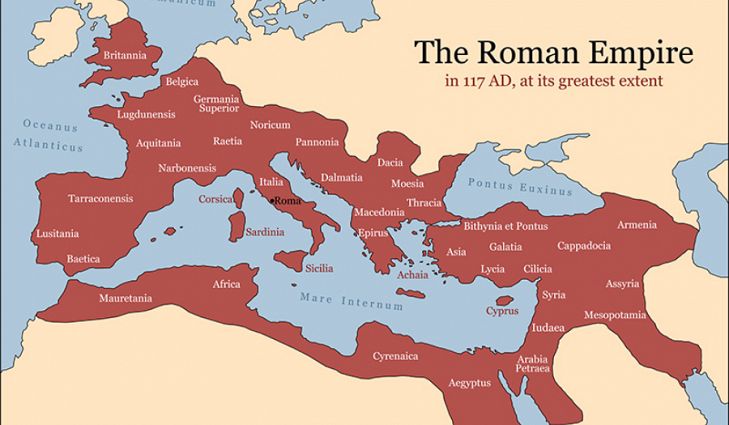
Roman Empire
roman_empire.jpg
For 600 years only in Italy they knew how to make fired bricks. In Germany, France, Spain, England, Russia they did not know how to make red bricks, but in Italy they did. Did they not travel, or trade? Russia was real developmentally disabled according to the narrative. Bricks came to Russia in the 16th century.

bricks.jpg

Most know, that back in the day there were no countries as we know them today. I guess we are talking about corresponding territories here.
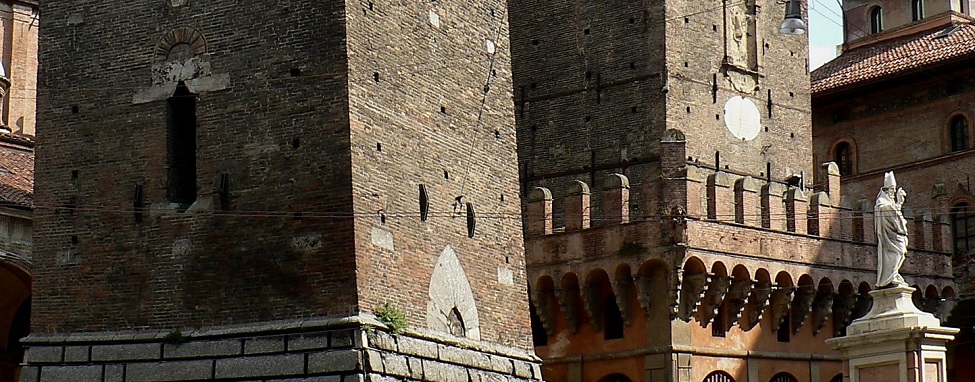
Later Brick Buildings
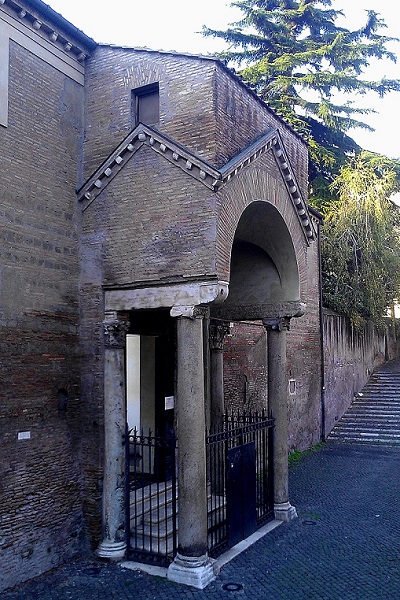
Who knows what the brick difference is between the below two buildings built in 12th ad 14th centuries respectively, and the above Pantheon and Colosseum. The only difference I see is the narrative compliant description.
  • San Clemente al Laterano (1108-1123) - The current basilica was rebuilt in one campaign by Cardinal Anastasius, ca 1099-ca. 1120. A now-outdated hypothesis held that the original church had burned out during the Norman sack of the city under Robert Guiscard in 1084, but no evidence of fire damage in the lower basilica has been found to date.
Side_entrance_to_the_Basilica_of_San_Clemente.jpg
2tours_bologne.jpg

kd_separator.jpg
KD: We are being lead to believe that there was a 1000 year break (more or less) between the Ancient Roman period, and the time when the Holy Roman Empire was established. After the fall of the Ancient Rome, only in Italy they knew how to make fired bricks, and continued to produce those. The neighboring territories (today occupied by France, Germany, etc) totally forgot how to make bricks. It took France and Germany over 600 years to adopt the brick production, while in Italy it had never stopped.
  • There appears to be no surviving unmodified buildings produced between 476 AD and approximately 1100 AD.
  • Buildings like Pantheon, and Colosseum appear to be built using exactly the same materials as the buildings allegedly produced 1200 years later.
Once again, I promote, that there was no break (we call medieval period) between the Roman Empire and the Holy Roman Empire due to both being one and the same. The so-called Medieval Period was either before, or after the Romans. It was caused by either a global war, or a global catastrophe. I also do not think it was anywhere close 1,000 long. The duration is a totally separate topic and will be talked about later.

By the way, this same very bricks were used to build this Jetavanaramaya stupa on Sri Lanka. It was allegedly built between 273 and 301 AD. May be the world was global indeed.
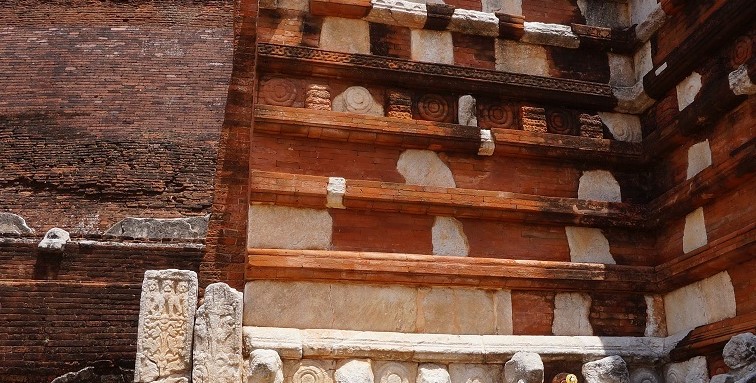
jetavanaramaya-stupa.jpg
Note: This OP was recovered from the Sh.org archive.
Note: Archived Sh.org replies to this OP are included in this thread.
 
Note: This post was recovered from the Sh.org archive.
Username: JWW427
Date: 2019-08-23 19:19:42
Reaction Score: 9
Well done.
Bricks have been on my mind of late, all bricks.
Here in Virginia, USA, we have good quality red bricks made from the rusty iron red Piedmont region clay.
George Washington's house is made with them.
It's said in books that Virginia bricks were shipped all over the Yucatan and South America for buildings given their quality, but I wonder.
But we should ponder if that's just another cover story. Historians make things up to make the narrative and timeline fit.
We do know that the ancient megalithic builders used granite, quartz sandstone, limestone, and marble because they are piezoelectric (pyramids, temples, star forts, towers, etc.), but what if bricks were used in conjunction as electric insulators? As far as I know, they do not conduct current.
Concrete does conduct energy, however.
Just some thoughts.
JWW
 
Note: This post was recovered from the Sh.org archive.
Username: Red Bird
Date: 2019-08-24 01:25:40
Reaction Score: 3
Another thought is brick making shut down (I’m sure it wasn’t lost) because new building material was used, like concrete and perhaps some of the other materials discussed. Could be Those other materials were lost (during catastrophe) and people started using brick again.
However it seems more likely brick was used then covered with other materials and we only thought they were stone. I know I did as those underlying brick ancient columns etc are a shocker, and the whole thing is just obfuscation.
 
Note: This post was recovered from the Sh.org archive.
Username: jd755
Date: 2019-08-28 19:12:16
Reaction Score: 2
Brick making by machine sure churned out a lorra bricks. The encyclopedia I'm reading has two gorgeous pictures of steam powered machines here in the United Kingdom, both of which were exported to America according to the text and one of which produced 30,000 bricks a day.
Yet to find pictures of them in the search engines though so for now here's a pair of links to two sites featuring United States machines.

Inventor Cyrus Chambers Transformed the 17th Century Milling Industry

Brickmaking History
 
Note: This post was recovered from the Sh.org archive.
Username: Cemen
Date: 2020-01-31 22:15:19
Reaction Score: 3
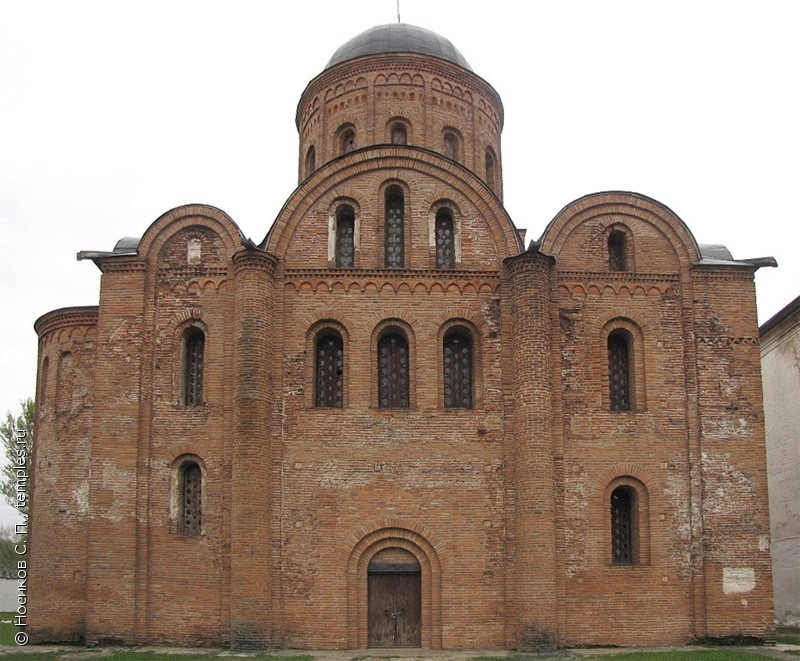
Church of Peter and Paul in Smolensk.
The temple was built in 1146 under the Prince of Smolensk, Rostislav Mstislavich.

108_0072618b.jpg

108_0072619b.jpg108_0072613b.jpg00079_20160501_181732.jpg0yueIGzmdio.jpgOp_oi83RuTI.jpgmePK_YAy_PM.jpg

Google Переводчик

Borisoglebskaya Church, Kolozha Church or simply Kolosha - one of the surviving architectural structures of Belarus during the period of Ancient Russia. The only preserved (in a distorted form) monument of Black Russian architecture.

Presumably, the church was built during the reign of the Grodno princes Boris and Gleb Vsevolodkovich (the first died before 1166, the second - in 1170) and consecrated in honor of their heavenly patrons, Boris and Gleb. According to another version - the temple was built in the 1180s by the children of Boris and Gleb.

59077323ff936731500e5c4b-5bdc8d98319d8-1dtp3co-lbcvr.jpgdepositphotos_235861164-stock-photo-ancient-brick-wall-kalozha-church.jpgcaption.jpg

Google Переводчик

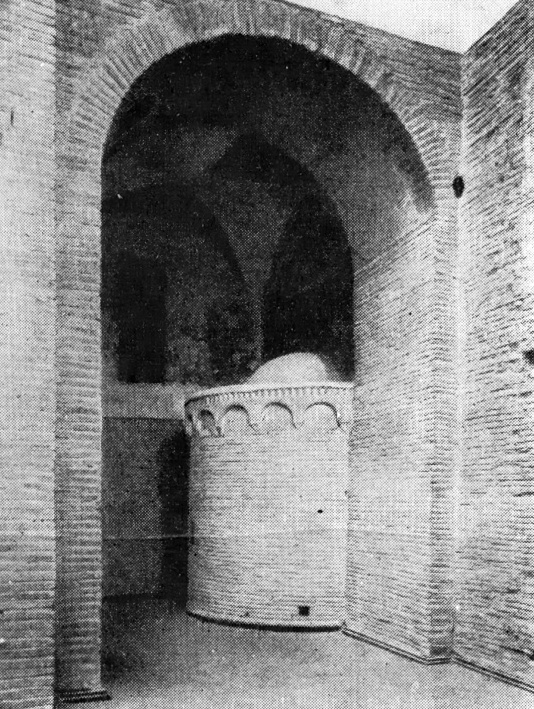
Chernihiv. Assumption Cathedral of Yelets Monastery, mid-12th century Interior view.
From a 1966 book.

T03-Arhitektura-Vostochnoi-Evropy-Srednie-veka-1966-0584.jpg
It is possible to continue further, but only one conclusion suggests itself - the buildings of the so-called “pre-Mongol period” are made either of stone (I do not exclude that this is some kind of concrete) or of plinth.
The official story explains this as usual, a copy of the Byzantine style, invited Greek, Italian and other masters. And the Russians at that time were sitting in the woods in the trees and were only able to dig dugouts and build huts from crooked logs.
It seems that during the time of troubles and under the Romanovs, in general, the whole story was stolen from Russia.
 
Note: This post was recovered from the Sh.org archive.
Username: fabiorem
Date: 2020-02-04 18:02:52
Reaction Score: 3
This topic fit like a glove in the 700-year gap theory.
Just watch this video.
 
Note: This post was recovered from the Sh.org archive.
Username: Red Bird
Date: 2020-02-09 15:30:19
Reaction Score: 1
Great video! He explains his view that there was a 700 year gap somewhere between 1-300ad and 900’s ad, with a minor catastrophe sooner, and a huge one around the 900’s ad (this being actually 700 yearish earlier, etc.)
He uses mainline reporting to prove his points, including architecture, that this change covered a lot of nations.
I recommend this to those interested in chronology Especially.
 
Note: This post was recovered from the Sh.org archive.
Username: usselo
Date: 2020-02-09 18:42:04
Reaction Score: 6
It is a great OP and thread. For anyone who hasn't seen it, the video is Gunnar Heinsohn's 2016 Toronto Conference presentation. It is excellent. It is also long and detailed, so prepare to settle in. It took me three watchings to grok the gap, especially the points he makes in the second half.

Much of Heinsohn's work on dating these structures and the 700-year gap they suggest is available at:


Now, brickmaking kilns. I visited a UK brick kiln a sad many years ago. They used waste wood (pallets primarily) to fire the kilns. The kilns were built of brick and arranged next to each other, curving around at the ends to form a lozenge shape of 16 kilns IIRC. They were using a technique called - again IIRC - continuous firing. Which meant: the kilns were usually all open to each other and only temporarily closed off with large sheets of brown paper hanging like curtains from the ceilings over their openings. Yep, brown paper. Two kilns along from the currently firing kiln, they would stack unfired bricks (mainly rustic handmade (high priced), but also some machine pressed bricks) amid the waste wood. As each 'burn' ended, they would let that kiln cool ready for unloading while they lit up the next loaded kiln - which was already pre-warmed from 24 hours or so of the neighboring kiln's 'burn'.

It's probably a bit hard to imagine - and it was hard to believe until one went up to the brown paper and felt the heat coming through it - but they were 'moving' a large hot spot around a series of brick-built 'cells' that only had one complete wall (the back wall of each kiln). And they were doing it using wood, paper and minimal labour. Minimal-cost consumables.

My point is that although this is perhaps hard to imagine, it is low-tech and it worked. They used no heat monitoring sensors, just feel and experience. The largest capital cost was building the initial kiln. And the most sophisticated components in their process were waste wood pallets.

Once you have seen this, you know it is possible. It is so simple, you also know how to do it. So, the notion that this was forgotten everywhere in Europe after the 'Romans' left is a joax (a joke hoax).
 
Note: This post was recovered from the Sh.org archive.
Username: Starman
Date: 2020-02-09 20:21:01
Reaction Score: 3
Another good web resource to dive further into Gunnar's theory is found here: heinsohn | Search Results | MalagaBay

Gunnar comes out of the Velikovsky camp, originally focused on a review of Velikovsky's historical reconstruction of the Bronze/Iron age nexus, what could also be called the 'Greek Dark Ages.' He's since moved on to the first millennium AD, initially a student of Heribert Illig. Illig is stuck on a fabricated 400 years, but Heinsohn has enlarged it to 700 years. They argue incessantly. Heinsohn is a catastrophist, sees the ending of Rome around 230 AD in a giant catastrophe (mud flood), which is the same catastrophe as documented elsewhere in Europe and the Baltics in 520/530 and is the same one chronicled elsewhere in 930. All the same event, but different societies came up with different timelines.

Gunnar's video is found on my Planet Amnesia Youtube channel. At the time of his recording he wasn't well enough to attend my 2016 "Celestial Crisis and the Human Record" conference in Toronto, so made this video that has stood the test of time. He is a very thorough researcher, and is all about corroborating what's in the ground with the so-called historical record.
 
Note: This post was recovered from the Sh.org archive.
Username: usselo
Date: 2020-02-09 20:48:13
Reaction Score: 1
Thanks for the extra background. And thanks also for putting on a conference that led to Heinsohn's presentation - it is one of my favourites.

I popped over to Malagabay after I wrote that post. I really enjoy his (Tim Cullen's) stuff. As with Heinsohn, I often have to read them several times to begin to get my mind around them. I'm watching where Cullen is going now, after one of his commenters - Louis Hissink I think - asked him if he was leading up to a full reveal. You certainly get the impression Cullen's mind is anchored in a different set of datapoints.
 
Note: This post was recovered from the Sh.org archive.
Username: Starman
Date: 2020-02-10 04:20:21
Reaction Score: 0
Usselo - If you want to get plugged into the ongoing research being done by Gunnar, and inside commentary by guys like Cullen and Hissink, I can put you in touch with Gunnar's right hand man, Clark Whelton who lives in Manhattan. He manages the e-mail group that challenges Gunnar on aspects of his theory. There is a lot of disagreement among that tribe, as they are all knowledgeable historians. It's kinda over my head, but I keep tabs. Just send me a private message.
 
Note: This post was recovered from the Sh.org archive.
Username: Ian Goss
Date: 2020-02-22 13:43:43
Reaction Score: 0
Those 1000 year old bricks look pretty good, even now. 50 year old bricks in my garden wall are already falling apart!
This what 30-100 year old bricks look like in the UK content://media/external/file/122407
 
For those that enjoy a visual - I found this UNILAD Tech - Making Roman Style Concrete
Making Roman Style Concrete
They go through step by step - the limestone / seashells (flooding?) and Volcanic Ash/Pumice piled into a standard brick form (wood maybe used back then), air bubbles removed and set to cure. They note that a mineral called aluminous tobermorite grows in the concrete when it reacts with Seawater (then replaces the volcanic ash to reinforce the structure).

One has to ask now....7 days to cure a brick, who made them, thousands of them, or were/ was the concrete just poured into molds for bigger pieces like columns....strange we can't find any brick manufacturer left overs, no forms, large melting bowls, cranes, pulleys etc. - they were probably stolen and sold by...Wait for it.....Italy criminals.
 
The style of buildings and the specific type of red bricks used by the Romans always fascinated me because I see these thin red bricks everywhere, it doesn't matter what type building is or when it was build. Those are of the same type and color regardless if it's a Roman ruin, a Christian cathedral, an Islamic mosque, a Byzantine abbey, or a renaissance church.

Just take a look at some brick work from the ancient Roman city of Pompeii (Italy).

Necropoli Pompeii.jpg
Pompei.jpg
Pompeii 2.jpg
Pompeii 3.jpg
Pompei kitchen.jpg

Archaeological Areas of Pompei, Herculaneum and Torre Annunziata
I've always liked the horizontal three bands of red bricks inserted at regular height in between stone work walls motive, they look cool. I've seen that same motive in Mosque's walls made out of stone and red brick. Now some more Roman brick work.

That looks the same technique and style of using red bricks to me. These bricks are to be found everywhere in the world and the only thing that makes them be older or newer is the narrative and dating slapped on the buildings lately.

The archeologists have discovered that Roman brick makers were stamping their bricks with a mark on them in order to be distinguished from the others as a sign of quality of work. Interesting, but researching for it didn't yield much results for me. Anyone interested to look into it more can have a read at the links below.
 

Attachments

  • Trier_Konstantinbasilika_BW_1.JPG
    Trier_Konstantinbasilika_BW_1.JPG
    1.7 MB · Views: 126
  • Jewry_Wall_with_west_wall_of_St._Nicholas,_Leicester.jpg
    Jewry_Wall_with_west_wall_of_St._Nicholas,_Leicester.jpg
    702.4 KB · Views: 100
  • Red_basilica_west_view.jpg
    Red_basilica_west_view.jpg
    1 MB · Views: 107
  • Gariannonum_Burgh_Castle_south_wall_well_preserved_close_up.jpg
    Gariannonum_Burgh_Castle_south_wall_well_preserved_close_up.jpg
    6.7 MB · Views: 116
I had some photos of a small Mosque in Vlorë (Albania) which shows a similar pattern of construction with rows of red bricks in between rows of stone masonry. The Mosque is supposed to have been built in the 16th Century according to wiki and that's the official story as well for the historians in Albania.

The Muradie Mosque (Albanian: Xhamia e Muradies) or Lead Mosque (Xhamia e Plumbit) is a Cultural Monument of Albania, located in Vlorë. The mosque was built in 1537 by the famous Ottoman Turkish architect Mimar Sinan during the rulership of Sultan Suleiman the Magnificent.[1] The construction was completed in 1542 AD.
The structure consists of the main building and the minaret. The former is about 10 to 11 square meters while the minaret has a length of 18 metres. In the past, it also had a portico which has been destroyed later. The mosque has a dome with a supporting polygon raised base, arched windows and classical triangular forms topping the side walls. The brick work of the Muradie mosque has layers with two different brick colors. There is also a contrast between the texture, quality, color, as well as size and sequence of the bricks used to build the Islamic prayer hall compared with the larger white chiseled stones used to build the minaret.
It is believed that the cultural monument was designed by the prominent Ottoman architect, Mimar Sinani, a leading mosque builder in the Ottoman Empire and the author of the Great Suleymaniye Mosque in Constantinople (Istanbul).

Here are some photos of mine of the Mosque.

IMG.jpg
The roofing and part of the minaret (especially the top spire) has been rebuild because it was destroyed throughout history, I cant' say for sure when exactly. The mosque is famous for it's name "The Lead Mosque" which I suppose was due to it's round roofing made out of lead in the past, but I speculate that it must have been made out of bronze as well as many other roofing metals which cover much of the buildings of the past.
The top of the Minaret has been rebuild and it has a cheep tin spire on it which looks ridiculous compared to the base of the building. The only thing that looks like good masonry is the ornamentation at the base of the round balcony on the top of the Minaret. And I suppose there must have been another similar looking Minaret on the opposing side of the existing one, because buildings of the past were always symmetrical. But let's just focus on the bricks work for the moment.

Brick work.jpg

It's the same pattern of similar Roman red bricks alternated in the wall pattern with white rock blocks, in this case it's a row of two red bricks instead of three as in my previous above post. Quite an interesting taste for making decorative walls as the Romans did the Ottoman architect had in the 16th Century. Impressive.

Let's just take a look at the rock blocks at the base of the Minaret.

Minaret.jpg
Minaret blocks.jpg

Mixed rebuild rock blocks
The minaret was clearly rebuild and I can't say for sure when, I guess it was after WWII but I need to confirm it, if you could zoom in on the blocks on the second photo on the right you could see the bottom rock blocks being machined or chiseled in order to make their surface smoother, because I suspect they were in a degraded condition as bad as the block on top of them.

Chiseled Rock.jpg
Chiseled or machined rock blocks
Which clearly shows a monstrous porosity due to some kind of extreme corrosive atmospheric chemical agents, or (my own speculation) surface rock liquefaction due to some other cause.

Busy Baçi: My conclusion is that this building is old as many other so called Roman buildings and it was repurposed as a mosque during the Ottoman invasion and rule over Albania in the 16th century.
It's crazy right. But the style of intermixing red bricks and stone blocks is close to what the Romans were building walls to look like. More posts to follow.
 
Last edited:
I'll go into another archeological complex site, the Butrint national park in Sarandë (Albania). The whole complex is situated in a small island close the shores of the Ionian Sea.

Butrint theater.jpg
Butrint Island.jpg
Archaeological evidence indicates that Corfiot traders founded Butrint in the eighth century B.C. Situated along the Adriatic coast, the town functioned as a way station between Epirus and the Italian territories to the south. The Greek historian Thucydides, writing in the fifth century B.C., refers to a struggle for control of the narrow straits that separate Butrint from the island of Corfu. In Book III of Virgil's Aeneid, the displaced hero arrives at the site and remarks: “I saw before me Troy in miniature / A slender copy of our massive tower.” Butrint was colonized by the Romans under Julius Caesar in 44 B.C., and later occupied by the Byzantine, Venetian, and Ottoman Empires. These layers of civilization were rediscovered by Italian archaeologist Luigi Ugolini in the 1920's, who unearthed an amphitheater dating from the fourth century B.C. Subsequent excavations have yielded Roman villas with intact mosaic floors, shrines, a baptistery, and a Byzantine palace. Communist dictator Enver Hoxha (1945-1985) closed Albania to foreign excavation and research, which resumed after the fall of his government in 1991.​
The whole archeological complex is composed of several buildings starting from the base of the hill with the theater build by the Romans during the Rule of Julius Caesar and going up to more recent towers as the Venetian one on top during the renaissance period and ending with the fortification walls build in the 18th Century by Ali Pashë Tepelena, a regional ruler at the time.

The photos below belong to remains of the Basilika belonging to the Baptistery build in the early 6th Century as a seat of bishopric of Byzantium, Patriarchate of Constantinople. The curious thing is again the thin red bricks that are being used to build it in the same style of the Romans. Even though this building supposedly was built centuries later.


Same pattern of thin red bricks as the Mosque and Pompeii's remains. Let's look at the Roman theater in Butrint.

The same door's archways made with thin red bricks extensively used. It looks like engineers of antiquity up to late times really loved the bricks intermixed with stone blocks. They never change their style of building even though a millennia goes on. Really strange lol.

And to make things even strange is that the theater's steps are made of granite, same as the tower on top of the hill which are found as free rock formation in between the dirt looking uphill. The base of the theater is made of cyclopean stones, there's a Lion Gate made with these stone blocks also. Which looks like someone the stones back together in the wrong way.

Lion Gate Butrint.jpg

Lion Gate, Butrint archeological park
 
Tips
Tips
Please respect our Posting Rules.
Back
Top