Note: This post was recovered from the Sh.org archive.
Username: jd755
Date: 2019-12-29 13:21:26
Reaction Score: 0
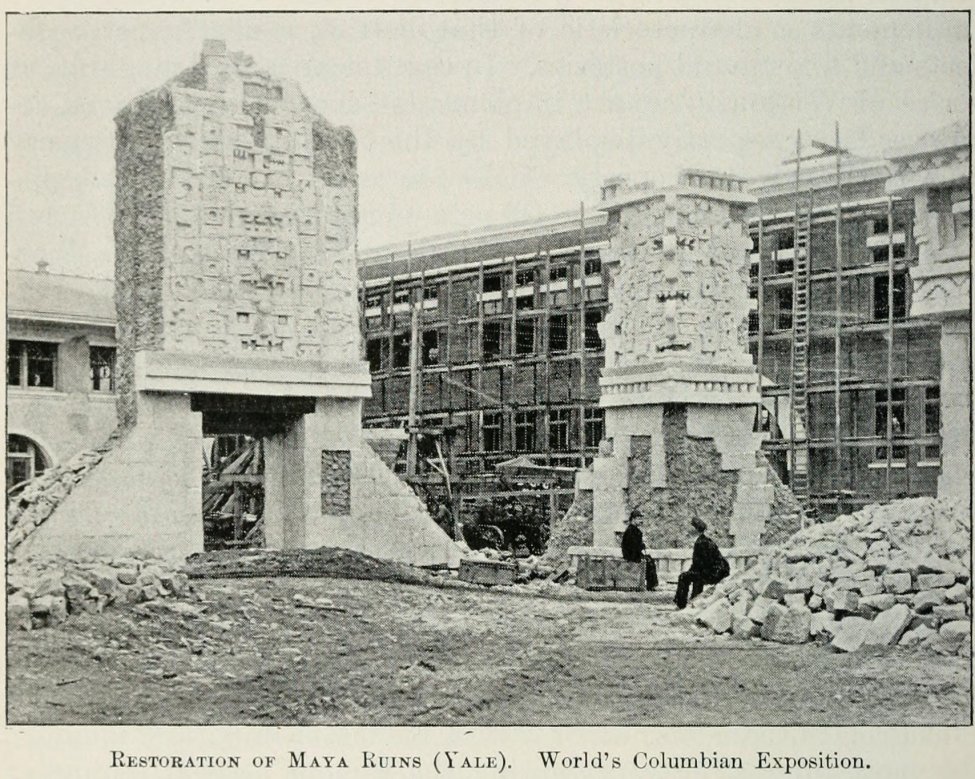
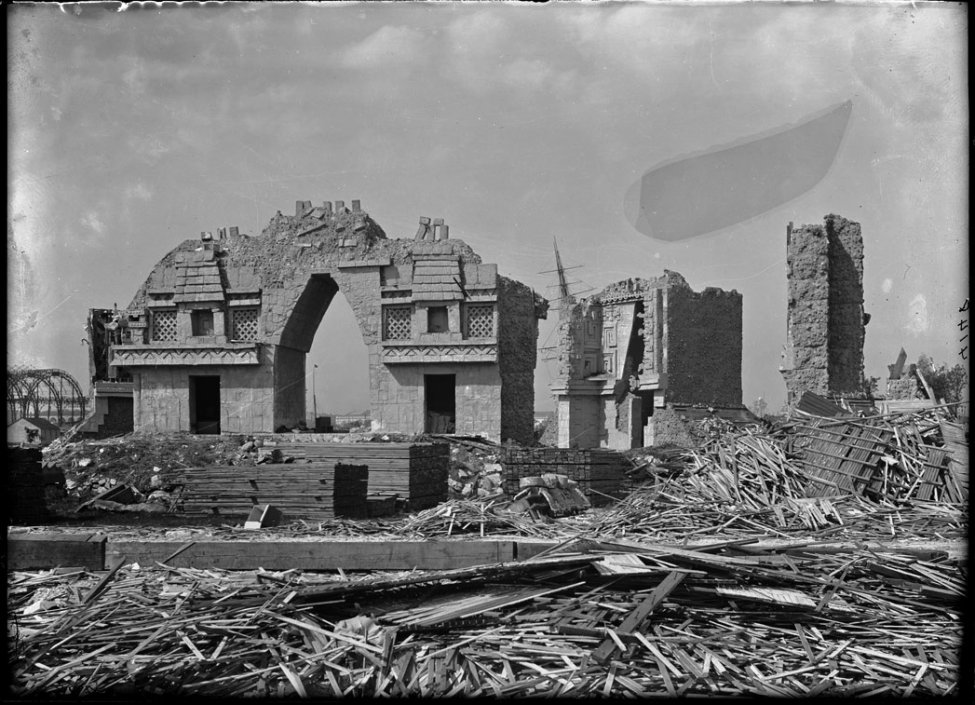
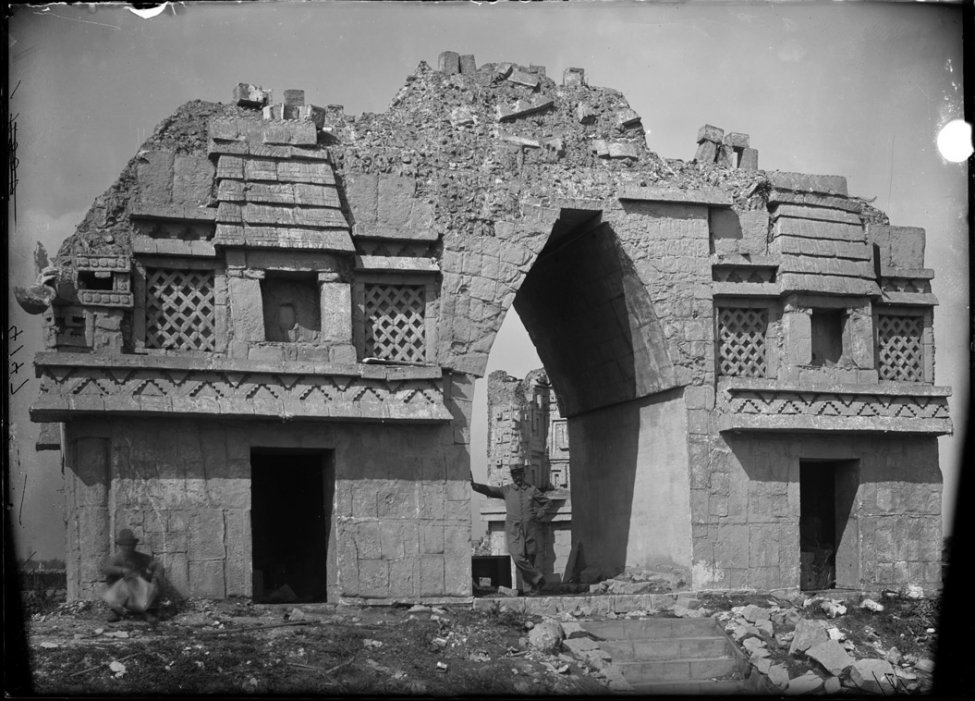
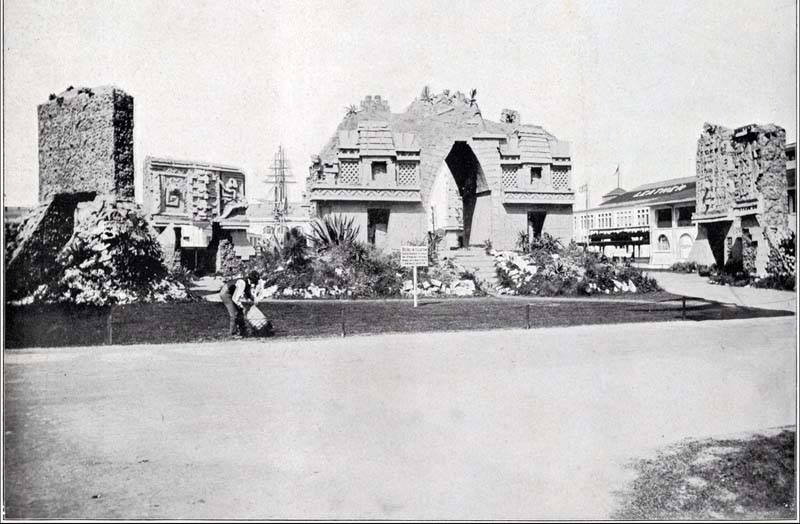
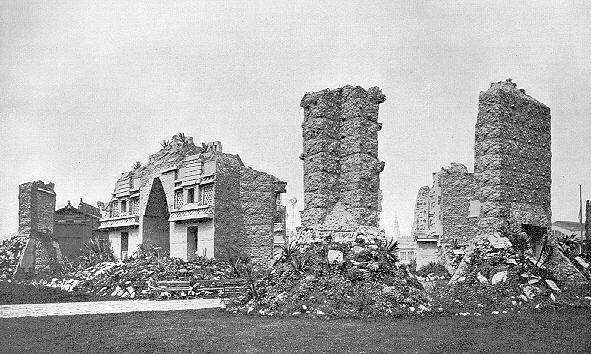
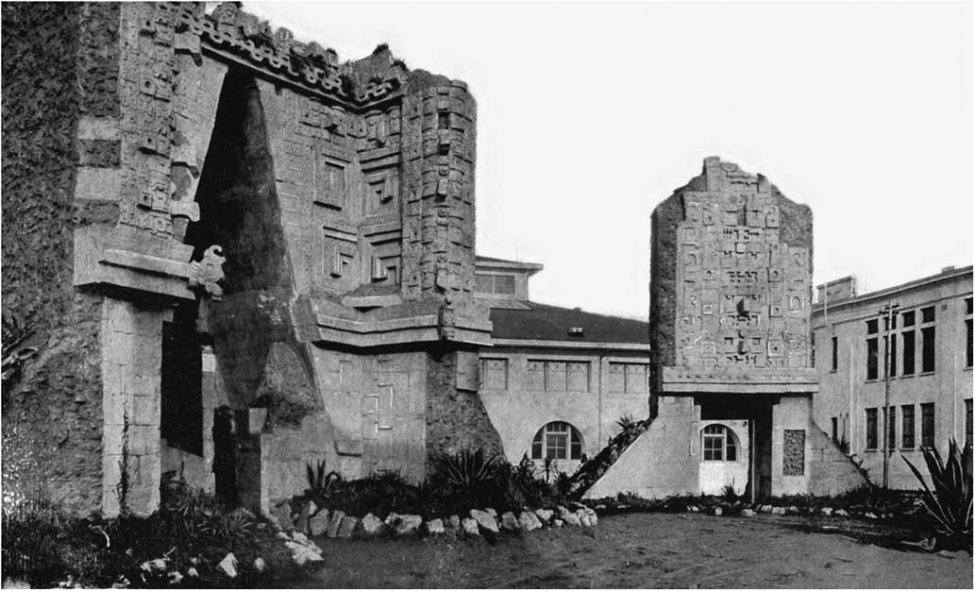
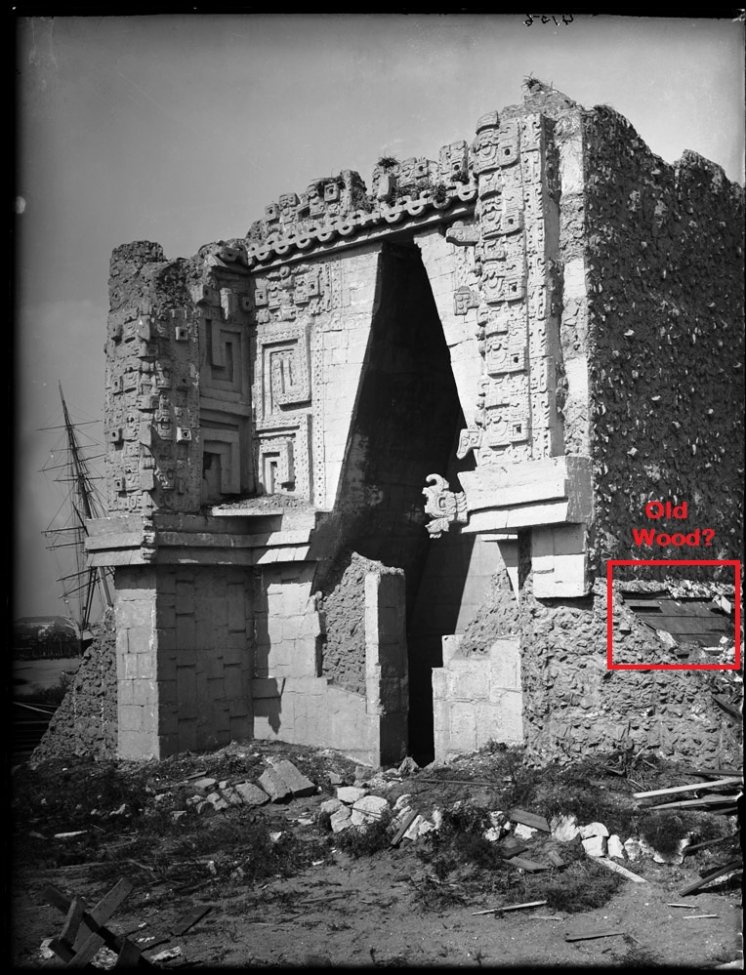
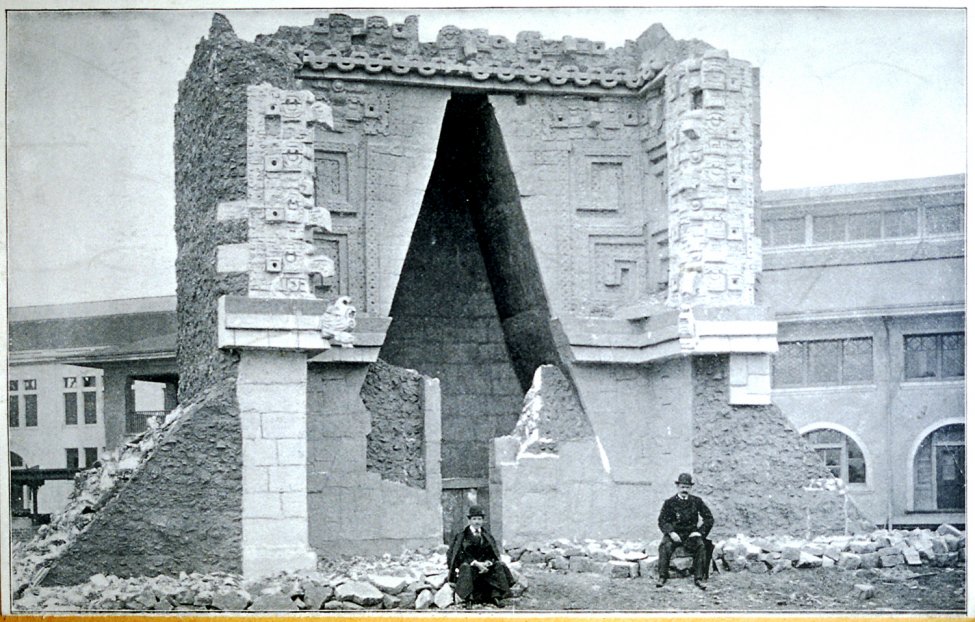
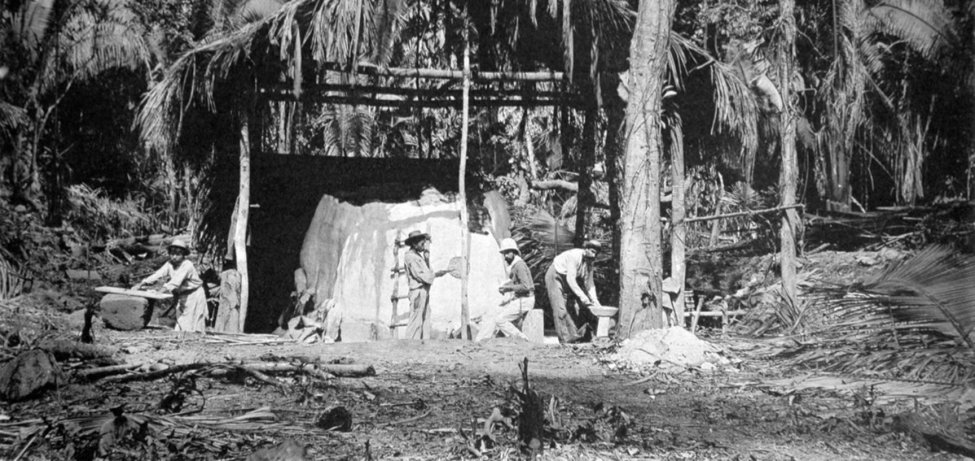
I don't know what I'm looking at. They say its a restoration of Mayan Ruins. They also call it a cast. But is it brand new, and why a restoration?
Thank you. Restoration is an odd choice of word to us alive today not a clue what it's definition or common usage was when the text was first written out, assuming it was contemporary with the fair. If more contemporary with our time well who can say why this word was used.
There is another thread on here, maybe two, which show the process of creating the buildings, lakes, bridges, walkways, statues, plaster mouldings etc etc.
However in the case of this exhibit ny good friends Gibiru and startpage produced these results with various search strings.
From here;
https://www.jstor.org/stable/29782676?seq=1
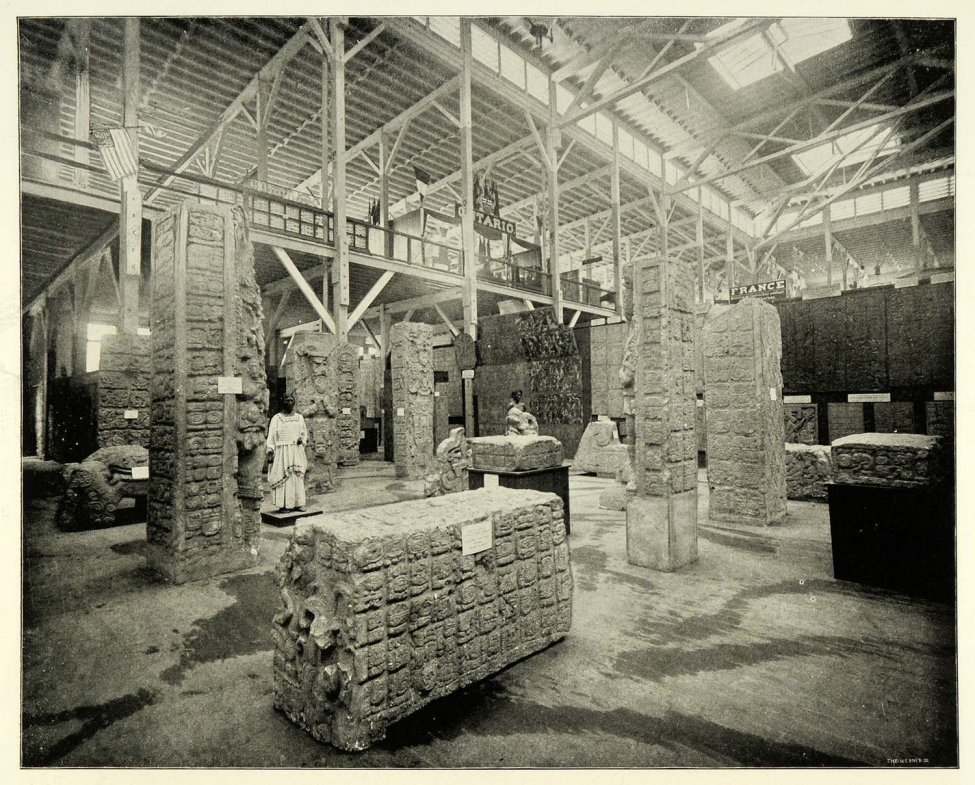
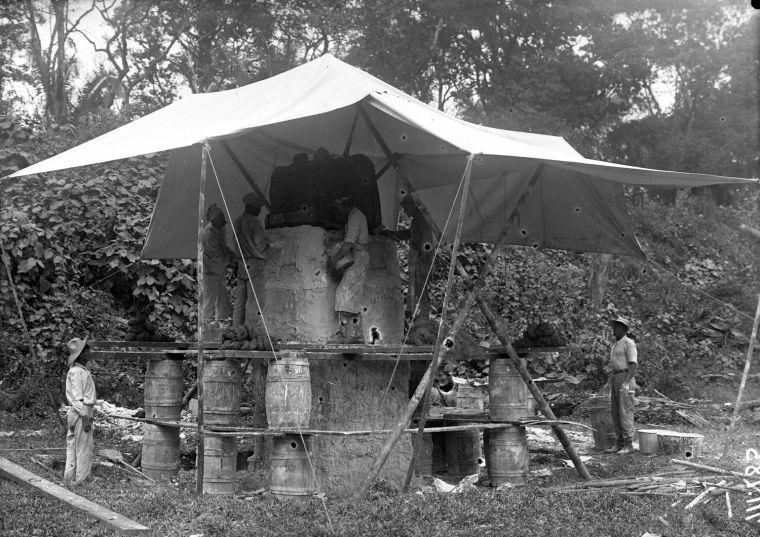
Edward H. Thompson and J. Eric S. Thompson to ... Papier-mache casts of Mayan stele ruins, and Mesoamerican sculptures made by Edward H. Thompson.
Which led to this.
From here;
Edward Herbert Thompson - Alchetron, the free social encyclopedia
He made a series of plaster casts of Maya sculptures and architecture, particularly from Uxmal and Labná, which were exhibited at the World Columbian Exposition in Chicago, Illinois in 1893.
Which to me sounds like those 'ruins' in the op and subsequent photographs.
From here;
Mexico at the World's Fairs
Mexico's presence in Chicago was especially notable for its ethnographic views. In the department of ethnology, numerous Mexican antiquities were exhibited, both by the Mexican government and by American anthropologists and ethnographers, together with pictures of ruins and models of tipos populares , Indian cloth, and Indian skulls (see Fig. 31).[16] In addition, reproductions of the architecture of exotic countries were constructed near the Dairy Building. These were replicas of the ruins of Uxmal, the House of Nuns, and the Labna group.[17] All of these replicas were made of papier-mâché and were the result of research conducted by the American archaeologist and diplomat E. H. Thompson, American consul in Yucatán, and of scientific studies by the American anthropologist F. W. Putnam.[18] This was part of the so-called Midway Exhibit that was, as historian James Gilbert has described, "a unitary exhibit of ethnic variations tied together by concepts of evolution and movement through stages of civilization."[19]
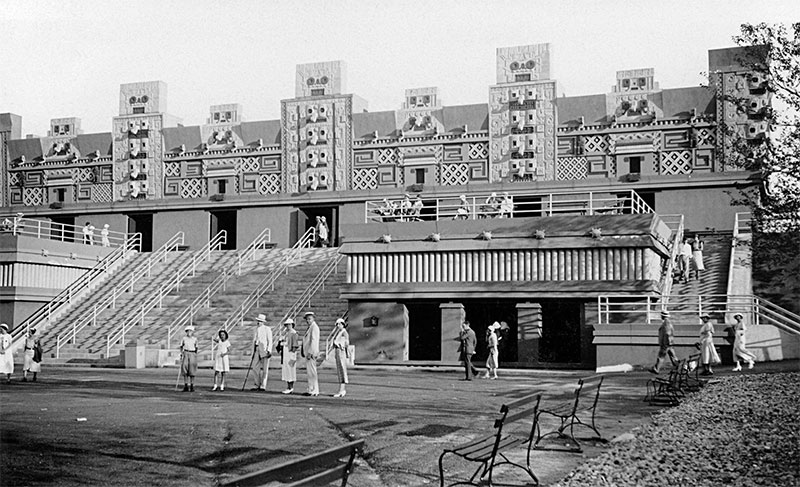
In terms of architecture, Chicago was destined to be an important point of departure. In general, the architecture of the Chicago exhibition was dominated by the aristocratic neoclassicist, Beaux Arts style of the Eastern architects. However, such innovative architects as Louis Sullivan constructed modernist buildings—the Transportation Building, for example—at the edges of the fair.[20] More importantly, the exhibits of exotic architectural styles nourished the emerging modernist architecture. Hence Frank Lloyd Wright, Sullivan's student, first saw Japanese and Mayan structures in Chicago, and from that inspiration he developed ingenious modern, functional buildings with Maya and Japanese influences (sometimes combined) in the modernist 1910s and 1920s.[21] That was the case, for example, with the Imperial Hotel he constructed in Tokyo in 1916 (a structure that combined traditional Japanese architecture with Maya motifs). In 1929, Mexico followed the same steps in its pavilion for the 1929 Ibero-American fair in Seville (see chapter 13).
And out popped another picee of high quality set creation and propaganda or in other words forming the narrative.
From here; [
Fair Necropolis: The Peruvian Dead, the First American Ph.D. in Anthropology, and the World’s Columbian Exposition of Chicago, 1893 : History of Anthropology Review
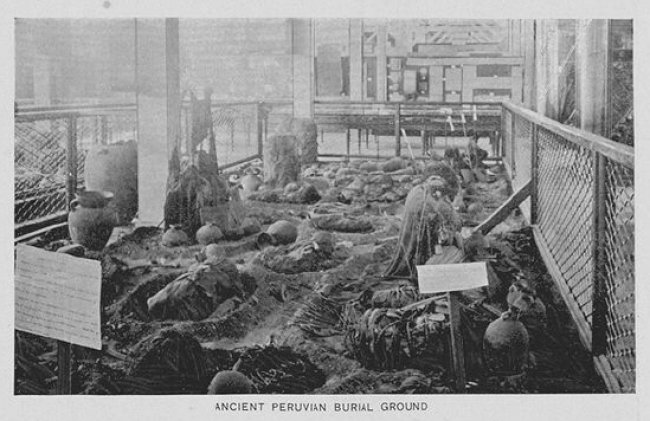
This piece explores one exhibit whose lack of study is particularly notable, given the extraordinary real estate and notice it claimed in anthropology’s exposition space: a reproduction of the coastal Peruvian “Necropolis” of Ancón, which organizers billed as “probably the largest burying ground, either pre-historic or modern, in the world” (Anonymous, 1894). Excavated and mounted by George A. Dorsey (1868-1931)—Boas’s later rival and a student of the fair’s anthropological coordinator, Harvard’s Frederic Ward Putnam—its presentation of upwards of fifty wrapped and unwrapped mummy bundles shown as if in the process of excavation apparently “attracted more attention than any exhibit in the [anthropological] building” (Moorehead, 1984: 20). This was fitting, given that the Ancón display was essential to what Boas, Putnam, and others believed was the anthropological exposition’s core mission at the Fair: offering a ‘Pre-Columbian’ baseline against which white American society—and supposedly disappearing Northern Native Americans—could be judged.[3] To do so, Dorsey had spent time, effort, and Putnam’s money to excavate burial grounds that Peruvians—elite and indigenous—had long dug and interpreted for themselves
From here;
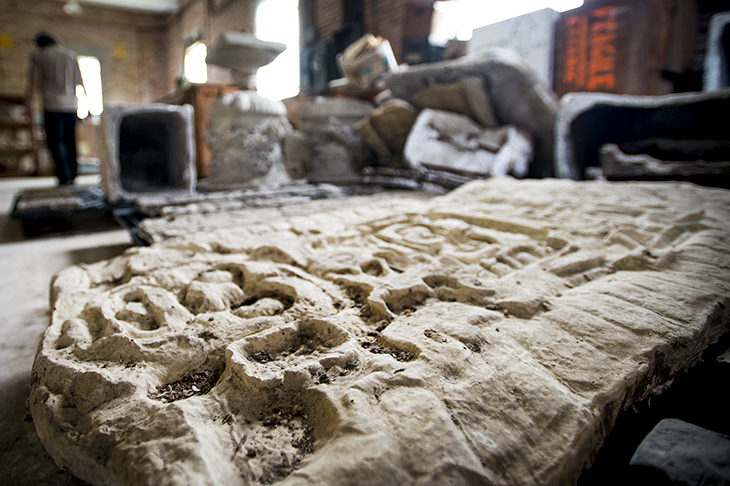
Rare archaeological casts rediscovered in storage
Dating plaster seems to me to be as impossible as dating anything else but here's a cast.
1914 admittedly but they were still creating plaster casts of ancient stuff so the method cannot have been too disimilar, to me awlays to me.
From here;
Casts of ancient monuments
And here 1883 this time;
Reading the Ruins: Alfred Maudslay and the Maya Site of Quirigua, Guatemala | Pitt Rivers Museum
Still at the fair but fair go, nothing to do with the op images at first blush but this fair was used by all manner of people for introducing all maner of 'stuff' both mental as in narrative formation/promotion, new services as in electricity for example and of course physical products.
Devilish Delights in the White City - IWFS Blog
From here;
https://www.reed.edu/uxmal/biblio-subject-MayaArchitecture.pdf
Bolding mine.
Brunhouse, Robert L.In Search of the Ancient Maya: the First Archaeologists.
Albuquerque: University of New Mexico Press, 1973 (a paperback edition, with different pagination, was published by Ballantine Books, New York, in 1974).
This is one of a pair of books by Brunhouse describing the life stories of 15 Maya explorers and archaeologists who worked from the late 18th to early 20th centuries, their adventures in the Americas and their approaches in Maya studies.This volume, dealing with the early years, describes the lives of Antonio del Rio and Guillermo Dupaix, Juan Galindo, Jean Frédéric Waldeck, John Lloyd Stephens, Charles Étienne Brasseur de Bourbourg, Augustus Le Plongeon, and Edward H.Thompson.
The introduction is a thoughtful reminder that there was no professional training available in archaeology at the time and that all of these individuals were amateurs, however remarkable. Brunhouse talso provides a description of the physical and intellectual conditions under which they worked.There are only occasional references to the Puuc region, but there are two pages describe Thompson’s commission to prepare molds of Puuc buildings for the 1893 Chicago World’s Fair, requiring 14 months and producing 10,000 square feet of molds (pp.177-178).
There is an important bibliography listing separately works by and about each of the 8 individuals, with brief, valuable critical comments