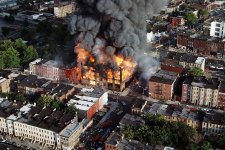
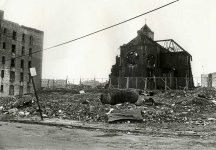
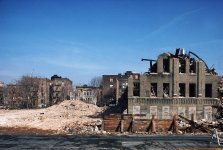
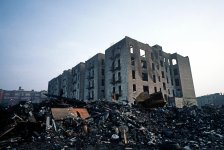
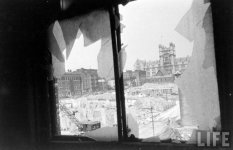
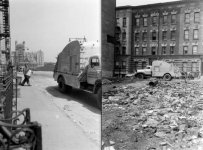
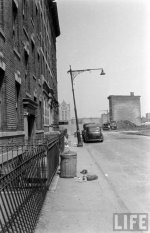
It does seem to be a systematic way of moving people in and out of the "ghettos"
Yes, I observed this phenomenon in my own town too. You live quietly in your neighborhood, then new people arrive massively attracted there by who knows what, and eventually you don't feel at home, it's not your neighborhood anymore.
And it might very well be deliberate too.
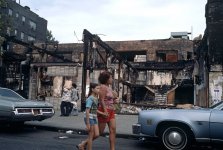
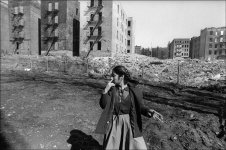
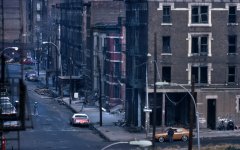
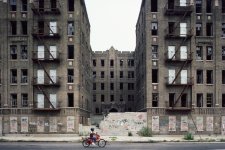
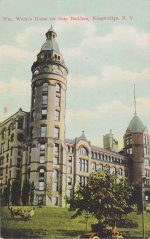
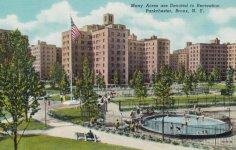
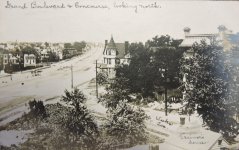
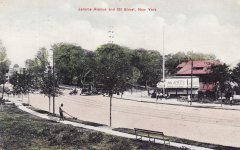
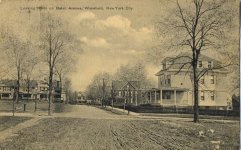
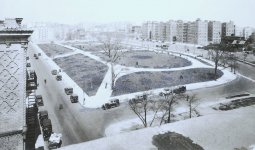
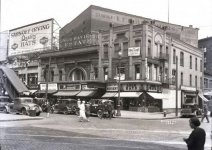
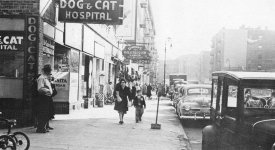
But the case of the South Bronx seems special. I realized while reading my post again that perhaps I should have presented my photo gallery in chronological order. Here's the chronology as I see it:
- c1900 to 1950: Rapid increase of population of the area by middle class people.
- 1950: Sudden departure of this middle class.
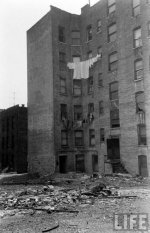
- 1950 to 1970: A 'void'. Neighborhoods abandoned and gradual arrival of new groups of people, mostly lower class and unemployed. But the repopulation was nothing compared to what it was before. Landlords don't do any maintenance anymore.
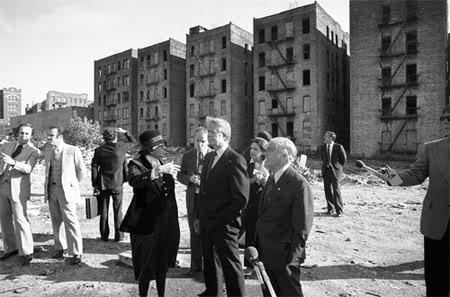
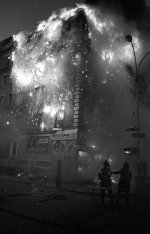
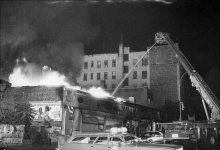
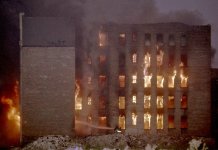
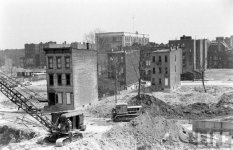
- 1970 to mid-eighties: Gradual destruction of entire blocks by fire and vandalism. Demolition and leveling of the parcels.
- Mid eighties to now: Reconstruction and re-development of the affected areas. In fact, most traces of this anomaly have disapeared.
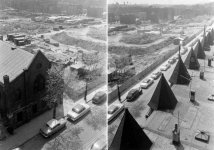
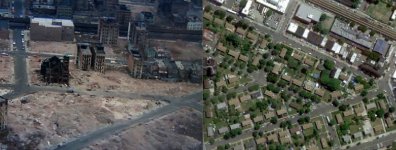
Here's a photo comparison. On the left a famous TV coverage image taken by helicopter showing the war zone. On the right, what it looks like today.
Let's go back a little to the late 19th century with this 1897 bird's view of the western part of the Bronx. Note how empty it seems to be in view of all the already laid out streets. How did they figure over a million people would soon live there?
If most of the Bronx consisted of trees as shown in the drawing, why spending a fortune in urban infrastructure, planning all the street layout a generation before it would be occupied? Is it possible that there was a whole city there, abandonned, but they would not want to show it on maps?
In the late 19th century, few people lived in the northern tip of Manhattan and most New-Yorkers might not have been aware of this unknown city, having no reasons to go so up north. Transportation was also scarce and slow then.
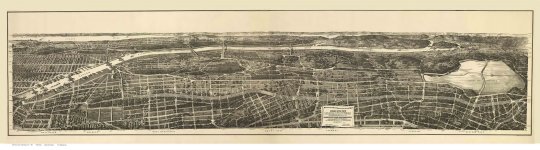
The western part of the Bronx was populated heavily while the eastern part may have remained empty. Studying photos of the empty buildings I noticed that some seem to have been evacuated by its tenants not so long ago while others are in such a state that you may wonder if anybody ever lived there.
Why the discrepancy?
I would like to speculate at this point (although I prefer facts to speculations most of the time):
Let's say that this really was an ancient city in accordance with the reset theory. What if there had been two factions among the decision makers, two philosophies?
One would be in favor of re-use of the structures while perhaps erasing possible clues of its origins and culture. The other preferred immediate destruction to make sure everybody forget as soon as possible that this was already there.
By 1900, those in favor of repurposing may have won the argument. Populating started after renovations.
Everything seemed to work and develop until circa 1950. Possibly the faction for reconstruction (their sons and grandsons) decided that it was time to take measures to put an end to this. They would stage all sorts of violent events in the South Bronx to scare the population. Parents would not want to expose their children to risks and therefore the exodus started.
By 1970, the destruction and replacement faction have finally won the internal disagreement among those 'in control'. Their plan was simply delayed by a few decades. The destruction however would have to look natural, not too systematic, hence the narrative of 'awful' tenant's vandalism and fire settings for insurance money purposes by desperate building owners.
Needless to say, I cannot prove any of this. Just throwing an idea.