This is what's in the attachment:
Liverpool Record Office
920 RAW: CORRESPONDENCE OF ROBERT RAWLINSON RELATING TO ST. GEORGE'S HALL
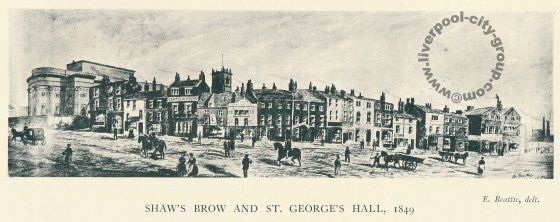
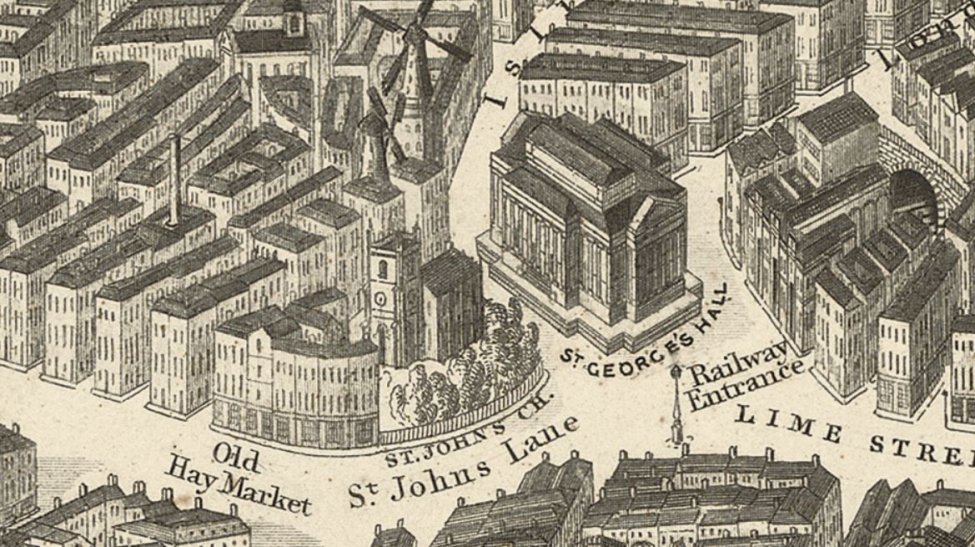
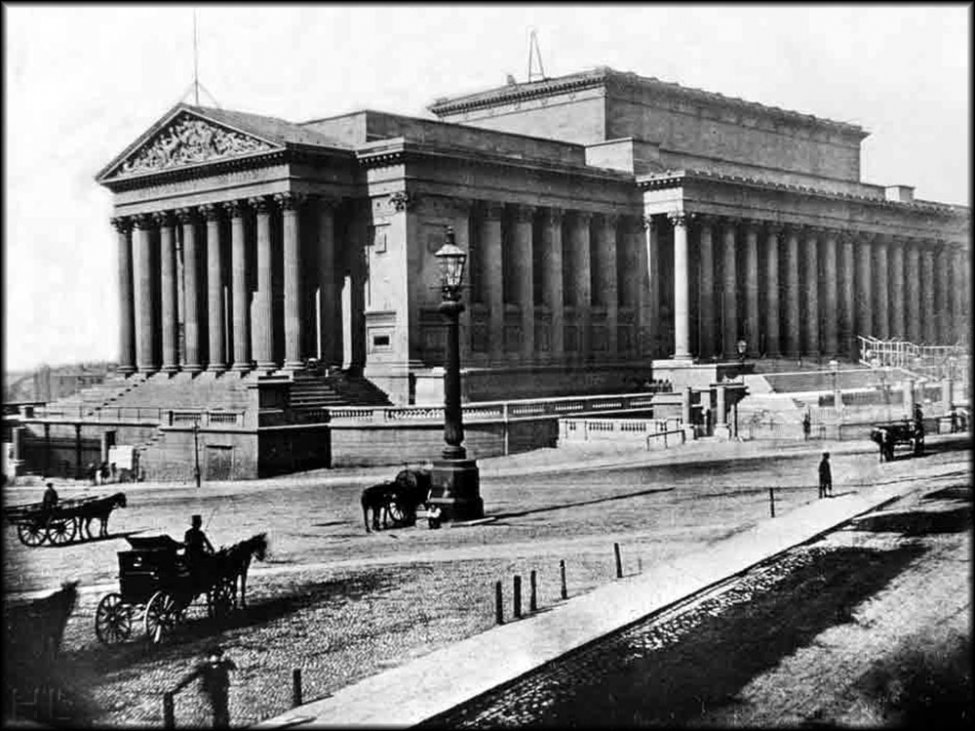
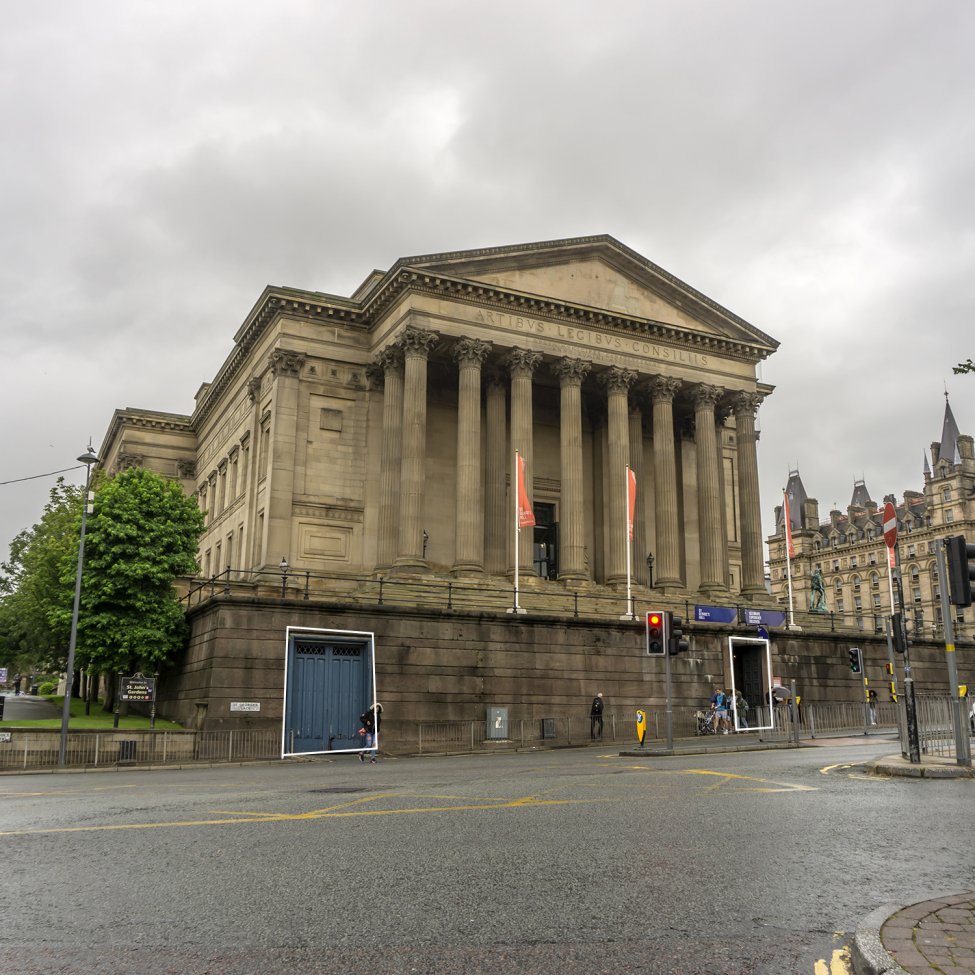
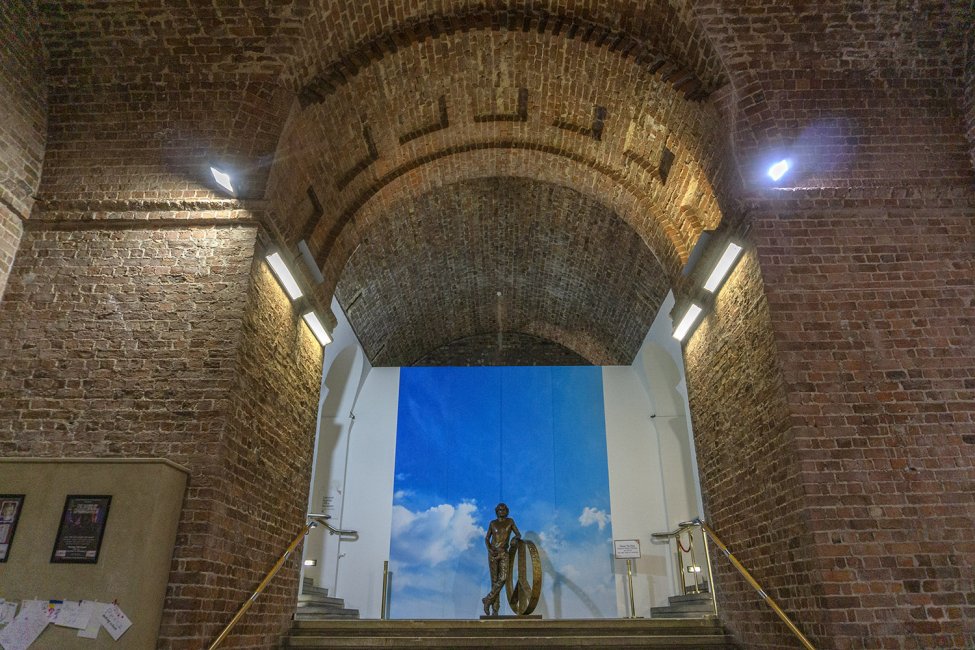
In the printed version of the correspondence, there appears a letter, dated 27 September, 1841, from H. L. Elmes to Rawlinson, which does not form part of the collection of MS. letters presented by Rawlinson to the Library. Letters of 15 November 1841, 12 May 1842, 12 October 1842 and 7 January 1843, which do form part of this collection, do not appear in the printed version. MS. transcripts of the letter were prepared in the Library during the nineteenth century. 1841-1863.124 documents. Robert Rawlinson, Assistant Surveyor to Liverpool Corporation, 1840-43, assisted Harvey Lonsdale Elmes in the construction of St. Goerge's Hall. Harvey Lonsdale Elmes was born near Chichester on 10 February, 1814, the son of James Elmes, architect and author of several works on architecture. In 1836, a fund was opened in Liverpool for the construction of a concert hall for large scale performances and a foundation stone was laid in 1838. Nothing further was done, however, until in March 1839, a competition for the design of a hall was announced. Harvey Lonsdale Elmes entered and his was the winning design amongst 75 entries. In 1840, the Corporation decided to build new Assize Courts and a second competition was held. Elmes' design was again chosen, from 86 entries. It was then suggested that the two buildings be combined and the Corporation finance the construction of one large block. The City Architect, Franklin, was commissioned to prepare a design but Elmes claimed the right to revise his designs and Franklin generously gave him his plans to facilitate this. Elmes' revised designs were accepted and building work began in 1842. Elmes worked long hours to achieve perfection but ill-health made frequent journeys from his London office to Liverpool impossible. Robert Rawlinson, Assistant Surveyor to Liverpool Corporation, 1840-1843, helped Elmes by supervising construction work on the spot and his interest continued, ever after Rawlinson became engineer to the Bridgewater Trust in 1843. The two were thus in correspondence. By 1847, Elmes' health had so deteriorated that he was advised to go to the West Indies, where he died on 27 November, 1847, aged 33. However, Elmes had left drawing detailing his intentions for the Hall and work continued for four years under the general supervision of Rawlinson, to whom Elmes' plans and papers had been left. The final work of decoration, sculpture, etc., was completed by C. R. Cockerell, appointed to the task on Rawlinson's recommendation. The building was opened in 1854. In later years, Sir Robert Rawlinson was accused by some of having assumed too much responsibility for the building of the Hall. By way of defence against these charges, he published his correspondence with Elmes and others, privately, in 1871, under the title: Correspondence relative to St. George's Hall [Ref: H 942.7213 GEO]Access will be granted to any accredited reader For further information on Elmes, the architectural features of St. Georges Hall and the work of C. R. Cockerell, SEE: Ronald P. Jones: Life and Work of Harvey Lonsdale Elmes, in Architectural Review, v. 15, June 1904, and R. P. Cockerell: Life and Work of C. R. Cockerell: op. cit., v. 12, August and October 1902 [REF. Hq 920 COC]. For further records relating to St. George's Hall, SEE 900 MD 19-21.
I must have walked past St George's Hall hundreds of times and had no real interest until I started reading about the Tartarian buildings. It's just, until now, been a part of my landscape since childhood, I've obviously always acknowledged it's a beautiful building but that was about it.