Returning to the subject, there is this very good article by a French recentist (
Cartes tartares). I'm reporting here the translation with the Google translator:
Tartar Maps
Examination of a set of maps of the world and Tartary proposed by Silva Ivanova
Earliest dates and authors are most often assigned without evidence on the map. Some are possibly backdated or falsely attributed.
America
Jean Le Clerc's map of 1602 informs us that Nova Albion was founded in 1590 on the west coast.
One of the most debatable points of Fomenko's work is the idea that the conquest of the Americas from Europe took place two centuries later, the conquest of the 16th century being a conquest from Tartary. This requires that all of the cards that testify to this colonization – which he uses when it suits him – are false.
The names mentioned here on the west coast in 1602 are mostly Spanish - as on the east coast - but there is mention of Nova Albion, which the map says was established in 1590. This is as early or even older than the first English settlements on the coast east (Roanoke), which are not mentioned on this map.
1608 Pet Kaerio, excerpt.
The insert at the bottom mentions native "Tartars". The presence of Tartars in the west will prevent colonization from the west. The Tartars even make them leave, since the north of the west coast is no longer mentioned on the maps from 1657, California being reduced to an island. The colonies reappeared under the same name in 1744, when the Russian Empire was formed in the east. The maps are correctly drawn from 1779.
The west coast is further detailed.
Nova Albion is still placed on the map with Port “Saint” Francis Drake, but it is confused with California, much further south, and now an island.
The conquest of Siberia by the Russian Empire created “subjects of Russia” from the Arctic Circle. A joint trip by Tchirikow and De L'Isle allowed us to redo a better map of western North America.
Russia
Novogardia Russia (Hartman Schedel, 1493), Asian Sarmatia (Gregor Reisch, 1503), then
Russia or Muscovy has been distinct from Tartary since 1500.
Persia is
mentioned as such since 1493. In 1630 (Henry Hondio) it extends to Pakistan.
The
Turks are the inhabitants of
Parthia (Schedel, 1493), then
Turkestan , which will later correspond to independent Tartary, to the republics of Central Asia. This nation includes
Samarkand and Khwarezm (Samaria). This nation is different from modern Turkey, still called Natolia.
Modern Turkey is built on what we call “Ottoman Empire” but which is called “
Empire of the Turks ”, which more or less corresponds to the ancient Assyrians. It was only called the "Turkish Empire" when it entered Europe, which was only mentioned on maps in
1648 . This nation supplanted the Anatolian Greeks for about a century. A Little Tartary is mentioned north of the Black Sea that year.
The map calls Samoyeds the inhabitants of northern Siberia. Tartars are still reported in southern Russia (Crimea, Astrakhan). The Tartaria associates the Horde Nagaia (main Horde) with the "Turkmen" and the country of Shamarghan.
“Samarkand, metropolis of all Tartary, is now in ruins. For Tamerlane has taken Bajazet the Emperor of the Turks prisoner. The inhabitants are Mohammedans."
Central Asia is named Turkestan, associated with Corasssan. The capital is Samarkand. Tartary has among its towns
Cambalich on the Ob. It still extends to the Volga. Cambalich is mentioned on maps as an important city or capital of Tartary between 1572 (Ortelius) and 1676 (Duval), but it is often not mentioned after 1657.
Tartary from the Nagaya Horde will now be separate from Turkestan.
Russia has pushed Tartary beyond the Ob.
The extension of Russia is confirmed.
Hindustan designates
around 1600 India with Indochina.
1630 Henryk Hondius, excerpt
The Empire of the Turks extends in Egypt and on the Libyan coasts. Persia extends to the Indus. Indostan to the west or “Intra-Gangem India” is on the other side.
Mention is made of the Mogul on the Indus, between Persia and Indostan. Indostan is already named Mogul on the Jenkinson map of 1562, but the name had disappeared from maps. The Mughal Empire is said to have been founded by Tamerlane, but there is no mention of an Empire yet.
Russia extends to the Ob. Cumbalich and Caracorum are mentioned. Mogolestan is forgotten. Indostan is more or less limited to Indiam intragangem (between the Indus and the Ganges). The name does not include the peninsula where the regions Cambaia in the north and Narfinga in the south are named.
Indostan is separated from Persia by the Indus, and does not include the peninsula. Russia goes to the Ob.
The empire of the Turks took over Europe east of the Adriatic. Muscovy retreats to the Volga. Cambalich is always mentioned with Caracoran. Hindustan is replaced by the Mogul Empire with Delhi and Agra as main cities. The Himalayas are called Caucasus.
Mogul expanded north and south
Tibet is mentioned north of the state of Mogul.
Muscovy goes to the Ob. Tibet is an integral part of Great Tartary and north of the Himalayas. On the map, the Himalayas is always the Caucasus.
The Mogul Empire crossed the Indus to the west and conquered part of Persia.
The Himalayas are still called Caucasus. The map mentions Magias in Thibbet. The capital of Great Tartary appears to be Caracoram west of Altai.
Things change. Great Tartary now extends beyond the Volga and into Georgia. It was at this time that Peter I began the Russo-Ottoman war. In a recentist context, it is often said that the Russians usurped the legitimate Tartar power in Moscow, and that they put down at the time the “revolt” of Stepan Razin and the true believers from the Astrakhan region. Astrakhan will indeed be a Tartar military region thereafter. But we see that this attack is not the desperate rebellion of the last legitimate kings. It is an invasion of Russia by Great Tartary. The capital seems to have been transferred to Selinga on the Yenisei.
A recentist question is who were the Ottomans that Peter I was fighting. The Empire of the Turks is very in the south, it is necessary to pass by Georgia which the chart of Jaillot presents like independent. It's even harder now that Great Tartary has created a kingdom in Astrakhan.
The Tartars took Tobolsk and Astrakhan. The Caucasus is placed in the right place. There is a "major Tibet" far to the north. Mugalia dates back far to the north. New cities appear like Cosaccorum in the Urals, or Urbs Mugalum (probably Selinga).
The Kingdom of Astrakhan still exists, but Great Tartary is divided into three. “Mosovite” (sic) Tartary, independent Tartary which corresponds to ancient Turkestan, and Chinese Tartary, north of a border wall with China which corresponds to the Great Wall. The names of the cities change.
De Fer's map of 1714 reconstructs Great Tartary, but it is imprecise.
The three Tartaries are again distinct. The capital of Muscovite Tartary appears to be Tobolsk. The name "Great Tartary" is now associated with independent Tartary.
Muscovite Tartary is now integrated into a "Russian Empire". There are only two Tartaries left, one from the west and one from the east.
A kingdom of Astrakhan is again reported south of the Volga. This is where Pugachev's revolt against Russia started.
The capitals of Independent Tartary and Chinese Tartary seem to be Bokara and Karakoto.
The name "Turkestan" is again used to designate independent Tartary. The words Turk and Tartar have become synonymous.
The status of Muscovite Tartary is fluctuating, so that maps from 1771 (often shown) mention Great Tartary again. But the Russians settled in Siberia as early as the 1740s. In 1775, due to the defeat of Pougachev, the north of Tartary seemed lost.
The Tartars of the west are now divided between Uzbeks and Tartars Eiluts, in northern Tibet.
The Kingdom of Tibet has taken on a certain importance in northern India. He apparently annexed the Eilut Tartars.
South India is now called the Decan. Tibet is still distinct from China.
The Eilut Tartars of independent Tartary are now attached to Chinese Tartary are the name of Mongolia.
1824 Fadden, excerpt. Hindustan migrates south to the peninsula. The Deccan is not mentioned, so the name must refer to the whole of India.
Traditional China, to the southwest of present-day China (Shanghai) remains on the sidelines of most political recompositions.
A "Chinese empire" now includes Tibet, China, Chinese Tartary and Mongolia. In 1851, the original Chinese Tartary will be renamed Manchuria.
Western Tartary (Uzbeks, Kalmouks) becomes “Tataria” (future republics of Central Asia). Afghanistan becomes independent from Persia as the Kingdom of Cabul.
China, Tibet, Mongolia and Manchuria are the four quarters of the Chinese Empire.
To summarize, and in connection with the work of Fomenko
America
The presence of Westerners in America does not date from the 18th century. The conquest of the Americas dates back to the second half of the 16th century. Most names on both coasts in 1600 are Spanish. On the other hand, the Tartars were present when they arrived
Hidden fact: both coasts were colonized by Europeans around 1600, but the Tartars prevented conquest from the west. They will be defeated in the Indian Wars.
In 1744, the Russian Empire was formed in the east and crossed the Strait of Anian. The Russians of the western United States probably predate the conquest of the west as Fomenko supposes, but they are not Tartars.
Asia
Persia has been mentioned as such since 1493. In 1630 it extended to the Indus, facing the
Mogul Empire . From 1636 the maps distinguish Hyrcania and Alexandria as main cities. Belatedly Herat seems to have been called "Esterabad". His standard historically represents a lion.
The oldest maps of Ptolemy mention for Poland-Lithuania the name of European Sarmatia, and Muscovy is named Asian Sarmatia, before renaming the country Poland and Muscovy or Russia. The Turanians therefore ruled in Muscovy before 1500 as the
Sarmatians . The manifest Turanian identity of Muscovites partially validates Fomenko's identification of Russians with Tartars. However, he thinks that the account of the end of the "Tartar yoke" by Ivan III in 1480 after the death of Mehmet II is a fable and that Russia remained a Tartar country.
Gold maps after 1500 show a
Russia distinct from
Tartary . Obviously Europeans have conquered Muscovy. Compared to Moscow, which would be the original Jerusalem, the history of the Hasmoneans shows that after the initial revolt of Judah Maccabee, the king who follows, Jonathan (Ivan?) is under Seleucid influence.
Fomenko also identifies the Turks and the Tartars, and sees in them generic terms not designating peoples. But
Tartary and Turkestan are different countries from the 16th century.
The
Empire of the Turks in the 16th century refers to Turkestan. In the 17th century it designates a country which includes Assyria, Natolia (modern Turkey) and part of Arabia. This nation supplanted the Greeks of Anatolia since about 1540. Around 1630 this empire extended to Egypt and the Libyan coasts, and Europe to the Adriatic from
1648 .
The wars against the empire of the southern Turks and against the Tartars are different. The “Turks” attacked Europe in 1648, the Tartars attacked Russia in 1694. Peter I did not face the southern “Turks” but the Tartars, the real “
Ottomans ”
The metropolis of Tartary is before 1550
Samarkand in Turkestan, whose inhabitants are said to be "Mahometans".
Tamerlan, Emperor of Tartary, from the Nagaya Horde, ravages Samarkand and takes the Emperor of the Turks Bajazet prisoner. The Nagayas become the dominant force. Their capital is at Cambalich (at least 1572-1676), and their territory extends to the
Volga
Between 1585 and 1670, Russia pushed Tartary beyond the Ob on the maps. After Cambalich, the capital seems to have been Caracoram west of Altai and further from the front.
Around 1675, Tartary returned to the banks of the Volga, but was pushed back to the Ob again in 1690. The southern "empire of the Turks" attacked Europe
The attacks of the “Ottomans” against Russia seem to have been concomitant with the extension of the
Mogul Empire to the north of India. Officially founded by Tamerlane, it may have been conquered in the wake of the capture of Turkestan. Although not part of Tartary, dynastic links may have been present. Called Hindustan, it again became the “Mogul Empire” from 1675. It then conquered the Indian peninsula and extended north of the Himalayas. In 1684, the northern Himalayas took the name of Tibet, whose kingdom was ruled by “Magias” (the “Caucasian Mages” were therefore the Himalayan lamas at the time). On the maps it is not integrated into the Mogul Empire but into Great Tartary. It crosses the Indus and takes Aghanistan from the Persian Empire.
The Russo-Ottoman War is directed not against the southern Turks, but Tartary. The Tartar attack in 1696 in the west takes Tobolsk and Astrakhan. It takes place at the same time that the name of Mugalia appears on the map in northern Tibet, with a new city named Urbs Mugalum, future
Selinga , which will soon appear as the capital of Great Tartary. It therefore seems that
the Mughal Empire was allied with the Tibetans, and with Great Tartary .
In 1702 military failure divided Tartary into three. Turkestan took the name "Independent Tartary" or from the west, again "Turkestan", even "Great Tartary" (1720 Delisle), with a capital at Bokara and perhaps a religious center again at Samarkand. The north invested by Russia takes the name of Muscovite Tartary, Russian Tartary, then Russian Empire (1744), with a capital in Tobolsk (which is therefore not the capital of Great Tartary as Fomenko says). Eastern Tartary is also called Chinese Tartary, whose capital would have been Karakoto.
From 1720, Tibet is reduced to a small country in the Himalayas. But a country called "Greater Tibet" is reported on some maps, and Moguls and later Eiluts on others east of Tartary, in what will later be Xinjiang rather than Mongolia, which is further north. in Chinese Tartary.
The western Tartars are divided between Uzbeks and Kalmouks in the west, and Eiluts or Mongols in Xinjiang. This explains why Great Vehicle Buddhism is shared in Mongolia and Tibet. The name Mogul appears to have been passed down from the Mogul Empire of Hindustan.
Between 1748 and 1775, the time of the famous “Pugachev revolt”, it seems according to certain maps that independent Tartary (Uzbeks and Eiluts) received the support of Tibet. The Tartars will take back the south (kingdom of Astrakhan) and the east of the Volga. The status of the north will fluctuate but it will remain generally held by Russia.
The defeat may have come from internal divisions. As early as 1760, Turkestan had two distinct regions, one for the “Uzbeks” and one for the Eilut Tartars. In 1816, the Eiluts were integrated into Chinese Tartary under the name of Mongolia and separated from "Great Tibet".
In 1824, the western area of Turkestan was renamed Tataria (future future republics of Central Asia). Mongolia, Chinese Tartary, Tibet and China proper form the four parts of the “Empire of China”. Chinese Tartary is then renamed Manchuria.
Thus it is indeed the Tartars who create an Empire of China (as Fomenko says), but the Chinese Tartars.



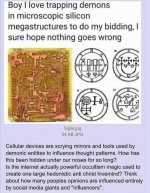



 this is just confirming my statement... I know only one thing for sure that I know nothing.