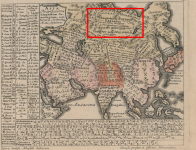
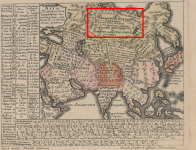
Notice indeed that the Liao dynasty (遼朝, 907–1125), founded by the Khitans, a people of para-Mongolian origin, ruled over a vast territory stretching from Manchuria to Inner Mongolia, with a Khitan elite and a Chinese-inspired administration. From its foundation, Buddhism was recognised as the state religion alongside traditional shamanism.
- Under the founder, Emperor Taizu (耶律阿保機, 907-926)
He allowed Buddhism to spread among the Chinese and the sedentary Khitans.
His wife, Empress Shulü Ping, protected Buddhist monks.
- Under the following emperors (10th–11th centuries)
Emperors Taizong (r. 927–947) and Shengzong (r. 982–1031) greatly favoured temples.
According to Song chronicles, there were thousands of monasteries and more than 50,000 monks.
Khitan monks were sent to northern China to study the scriptures.
Buddhist canons were translated into the Khitan language, particularly in the Khitan script (da qitan wen).
2. Concrete manifestations
a. Architecture and art
Liao pagodas still remain (e.g. the Yingxian Pagoda [应县木塔], built in 1056, the tallest wooden pagoda in the world).
Buddhist statues in a mixed style (Tang–Khitan) have been found in Liaoning and Hebei.
The Yixian caves and the monasteries of Chifeng display strong Buddhist iconography.
b. Texts and canons
The Liao Tripitaka (遼藏), a compilation of Buddhist texts produced under Emperor Xingzong (1031-1055), is one of the oldest printed canons in Asia.
The Liao also promoted esoteric traditions of Tantric Buddhism, particularly those from Tibet and the kingdom of Khotan.
c. Writing and culture
The Khitan script itself was used for religious inscriptions (steles, sutras).
The Khitans combined Buddhist, Confucian and shamanic rites, but it was Buddhism that dominated the public sphere.
3. Cultural implications
The Buddhist Liao did indeed seek to maintain a form of pacifism and syncretic spirituality, even in a warlike environment.
They considered themselves the guardians of a universal moral order, like Buddhist India or Tibet.
When their empire collapsed in the face of the Jürchen (Jin), some of them fled westward: this was the Qara Khitai dynasty (1124-1218), where Buddhism also persisted, mixed with Muslim influences.
4. The parallel with the Zhang-Zhung and the Tibetans
Link this to the Zhang-Zhung:
- The Bön religion of Zhang-Zhung, which predates Tibetan Buddhism, shares common roots with Tantric Buddhism in the traditions of the steppe and Central Asia.
- The idea of a northern/Hyperborean spiritual civilisation, both shamanic and Buddhist, fits in with this Liao-Zhang-Zhung-Tibetan narrative.
- Hensel's placing of the Tibetan script in Hyperborean Scythia fits well with this vision of a sacred North Asia where ancient spiritual lineages were found and perhaps even originated.
Let's see what about the religions signature of such peoples.