
I never heard of Kufic script. It is quite interesting. It is written in a spiral? Do you need special training to read it or is this understood by any Arabic speaker? This is reminds me of the Easter Island language, RongoRongo.Of course !
This drawing represents the quadruple repetition of the word ‘Muhammad’ in square Kufic script. This motif is often used in classical Muslim architecture, particularly on ornamental faience. It is also a devotional seal. Kufic is the language in which the Holy Q'ran was originally written, Arabic only appearing later. In the video I've shared, the surprising depiction of a swastika at the very centre of this seal is rightly pointed out. Hence my mention of the Yungdrung Bön or Bön swastika tradition. This type of swastika, enhanced by the four dots in the hollow of the swastika branches, is also abundantly represented in Buddhist or Hindu iconography. Here again, it is important not to confuse this sacred symbol, shared by a plethora of vernacular cultures around the world, with a symbol that has been hijacked by a certain mortifying ideology. But we are in good company.
You are using an out of date browser. It may not display this or other websites correctly.
You should upgrade or use an alternative browser.
You should upgrade or use an alternative browser.
SH Archive Tartarian Language and Alphabet
- Thread starter KD Archive
- Start date
- SH.org OP Username
- KorbenDallas
- SH.org OP Date
- 2019-02-11 21:01:03
- SH.org Reaction Score
- 100
- SH.org Reply Count
- 19
- Joined
- Feb 23, 2023
- Messages
- 128
- Reaction score
- 82
I think I did.Can you tell more about this?
- Joined
- Feb 23, 2023
- Messages
- 128
- Reaction score
- 82
About Kufic, you can see in there if it fits you : A study of Kufic script in Islamic calligraphy and its relevance to Turkish graphic art using Latin fonts in the late twentieth centuryI stopped watching this video after about 30 minutes. IMHO the narrator's intent is to erase Jews as a legitimate separate religion and people from Islam and Arabs.
First:
The narrator points out the historical discrepancies (clothing, Arabic like writing) in the paintings. The painters are reflecting their current conditions into the paintings. This is also seen when Jesus is depicted as a white man with blondish hair, darker skin with black hair, a man with a perm, etc.
Europe was introduced to Islam and depicted middle eastern themes in their art. Back then, they did not have contact with other cultures and went by stories others told. Islam uses a crescent therefore crescents are in the paintings. They wore red, everyone wore red.
The narrator talks about the timeline CE, BCE, AD, etc. He says the 16th century began an accurate timeline. The timeline is certainly not what we are told, so how can we really date the paintings? For that reason, IMHO, whatever year it is we are told doesn't matter too much. It is pointed out scholars tell falsehoods anyway!
I can't view the PDFs. I do not want to log in with my personal accounts. Can you post it here?About Kufic, you can see in there if it fits you : A study of Kufic script in Islamic calligraphy and its relevance to Turkish graphic art using Latin fonts in the late twentieth century
- Joined
- Feb 23, 2023
- Messages
- 128
- Reaction score
- 82
Of course. You see , I don't think all Arabic speakers are capable of deciphering Kufic on sight. It's a fairly erudite form of calligraphy, and present-day Arabic (and even more so Arabic in its ancient forms) comes in many scholarly, literary, jargon and dialect variants. The presentation I am giving here highlights the specific nature of Arabic calligraphy in general and Kufic calligraphy in particular.I can't view the PDFs. I do not want to log in with my personal accounts. Can you post it here?
Arabic comes in three forms: vernacular (or dialectal) Arabic, modern standard (or literal) Arabic and classical (or Koranic) Arabic. There are no fewer than 17 groups of dialectal or vernacular Arabic, with their subdivisions. This category is the result both of the fragmentation of 7th-century Arabic and of the fusion of languages resulting from the territorial expansion of the Arab-Muslim empire and the intermingling of populations of South Arabian, Berber and African languages, etc. Today, these varieties of Arabic are extremely numerous and persist throughout the Arab world. Vernacular Arabic is the language that each of the 290 million Arabic speakers uses throughout their lives and which conveys a whole popular, traditional and contemporary culture. It is highly devalued in social terms and is often perceived as ‘vulgar’ or ‘bastardised’. It is therefore an almost exclusively spoken language, the varieties of which are rarely incomprehensible between Arabic speakers.
A distinction is made between Western vernacular Arabic (varieties of Arabic spoken in Andalusia (Spain), in the Maghreb countries (Tunisia, Algeria, Morocco, Libya, Mauritania and the Western Sahara) and on the island of Malta) and Eastern vernacular Arabic (varieties spoken in Egypt, Djibouti, Sudan and the Middle East), Djibouti, Sudan, Chad, the Mashreq states (Iraq, Syria, Lebanon, Jordan, Palestine and Kuwait) and the Arabian Peninsula states (Saudi Arabia, Yemen, Oman, Qatar, United Arab Emirates, Kuwait and Bahrain). We should also add certain varieties of Arabic spoken by small communities in Turkey, Afghanistan, Tajikistan, Iran, etc. )
Attachments

- Joined
- Feb 23, 2023
- Messages
- 128
- Reaction score
- 82
Qur'anic Arabic has retained its essential eloquent characteristics, which allow skilled speakers to indulge in genuine stylistic creations, hence the expression ‘eloquent Arabic’. It is almost impossible to write and speak classical Arabic in a totally impeccable manner. While vernacular Arabic can be a simple language to learn, classical Arabic can be complex and difficult. This is one of the reasons why no Arabic-speaking population has adopted it as its mother tongue. All attempts to change and reform the Koranic Arabic language have been thwarted by protests from the protectors of tradition. There is a certain prevailing view in the Muslim world that, of all the world's languages, only Arabic, ‘the sacred language of the Koran’, should be subject to revision or reform. For some Arabs, to touch the Arabic language would be tantamount to undermining the Holy Koran. How can the Holy Koran and the Sunna of the Prophet still be understood if the rules of grammar and syntax are changed? For some, calls to do away with the current rules of Arabic grammar are ‘signs of the existence of the imperial-Zionist plot’. Be that as it may, Qur'anic Arabic is a prestigious form of Arabic because it is associated with religion and tradition.I can't view the PDFs. I do not want to log in with my personal accounts. Can you post it here?
Many linguists now consider Modern Standard Arabic to be distinct from Qur'anic Arabic. However, there are no agreed linguistic criteria that distinguish the two types of Arabic. Nevertheless, there are certain differences, even though they are very similar linguistic varieties. Modern Standard Arabic (known as ‘Fusha Arabic’) is the variety of standardised literary Arabic that developed in the Arab world in the late 19th and early 20th centuries. Modern Standard Arabic is the language used in literature, academia, the press and media, law and legislation, although it is not generally spoken as a mother tongue. It is a pluricentric language taught throughout the Arab world as part of formal education, and differs considerably from many vernacular varieties of Arabic that are commonly spoken as mother tongues in one region. Very few Arabs in the world speak this variety of Arabic as their mother tongue. In fact, only 120 million people know Fusha Arabic as a second language. In short, one speaks vernacular Arabic, but writes in standard Arabic.
- Joined
- Feb 23, 2023
- Messages
- 128
- Reaction score
- 82
That said, this modern Arabic is based on Koranic Arabic, but it has undergone certain modifications that began in the last decades of the 19th century, the so-called ‘Nahda period’, which means ‘Renaissance’, a political, cultural and religious renaissance. This movement was mainly the work of a group of intellectuals from Lebanon, then Egypt, Syria and Palestine. These reformers set about modernising the Arabic language by modifying and simplifying the original seventh-century syntax to some extent, but above all by adding modern words such as ‘train’, ‘company’, ‘democracy’, ‘socialism’ and so on. To do this, it was necessary to draw on the grammatical resources of Arabic, in particular using the process of analogy (al-qiyas). Today, almost 60% of modern vocabulary comes from this reformed Arabic.I can't view the PDFs. I do not want to log in with my personal accounts. Can you post it here?
Despite controversies over the various forms of Arabic - including between vernacular Arabic and other forms - there are very strong historical and ideological links between the two, as well as many linguistic similarities. For example, the letters of the alphabet are often identical, as are word order and syntax. However, words and pronunciation can be very different, as modern Arabic loses all trace of the local vernacular. This is why Arab communities have always considered that there is only one Arabic language. They pray in Quranic Arabic and write in modern Arabic, although vernacular Arabic can theoretically be written, but they speak in vernacular Arabic.
I can't view the PDFs. I do not want to log in with my personal accounts. Can you post it here?
- Joined
- Feb 23, 2023
- Messages
- 128
- Reaction score
- 82
With regard to calligraphy, the word al-khatt in Arabic means calligraphy, line, and its root also indicates the meaning of ‘design’ (graphics), the word includes the meaning of the intention of the drawing, of the preparation of the final result.I can't view the PDFs. I do not want to log in with my personal accounts. Can you post it here?
The art of calligraphy has always been considered the noblest of the plastic arts. Calligraphic drawings are often integrated with geometric or arabesque designs to create complex compositions that are difficult to decipher, and whose purpose becomes an intellectual exercise. Calligraphy is thus integrated into the image with the same aim of abstracting the context. The letters themselves become constituent elements of the total composition or arabesque. The letters, the words, become plastic forms, strengthened by a dual function that is both aesthetic and literary. Arabic calligraphy therefore has two very different purposes, which explain either its complexity or, on the contrary, its simplicity, depending on whether it is used to provide complex, decorative images or, more prosaically, to make texts easier to read.
The two oldest forms of writing: geometric ‘Koufi’, rigid and angular ; and the cursive ‘Naskhi’, supple and rounded.
These two styles of writing gave rise to many variants: each people had the desire to preserve the Koranic texts in a particular form and style. In addition, the writing adapted to the type of medium (in terms of size and material). Finally, special styles were invented for each use (for administration, etc.).
The geometric kufi is characterised by an original script based on its angularity and pronounced square shapes. The geometric kufi is a script with a more or less simple structure but offering the artist infinite variations and levels of complexity.
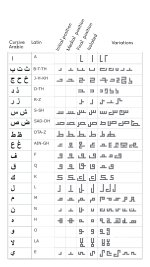
The Arabic alphabet is made up of twenty-nine letters. Most of the letters change slightly depending on their position in the word (initial, medial or final); whether they are joined to another letter, or stand alone.
In the graphic sense, the point-measure is the unit of measurement of the letter, and determines the appearance of the letters. By juxtaposing a certain number of dots (using Ibn Moqla's method), it is possible to determine the fatness, caster, height and depth of each letter. A final feature of Arabic script is that it is written from right to left. I have attached a table showing the Kufic alphabet according to the point-measure. I hope this answers to your questions.
Attachments
- Joined
- Feb 23, 2023
- Messages
- 128
- Reaction score
- 82
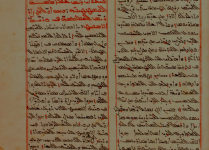
Now, we must not make the mistake of associating the Arabic language only with the Muslim world. Not only, the history of Arabic began long before the advent of Islam, although it is known as the emblematic language, but its evolution has been carried by several oth-ers traditions than the Islamic one. I enclose a copy of a text dating from 1490: hagiography (Saint Mark's Convent, Jerusalem), which has the specific feature of having been written with a few elements of Arabic. of having been written with a few Syriac elements, Arabic and above all garsuni, a code used by Christian code used by Christian translators of the time, which consisted of writing Arabic in Syriac characters. Anyway, the oldest known example of recorded Arabic is an inscription found in the Syrian desert dating back to the 4th century AD. The pre-Islamic Arab tribes of the East spoke Arabic and even had a flourishing oral poetic tradition.I can't view the PDFs. I do not want to log in with my personal accounts. Can you post it here?
Attachments
- Joined
- Feb 23, 2023
- Messages
- 128
- Reaction score
- 82
It is perhaps sometimes overlooked that contacts between Islam and and for instance Buddhism date back to the eighth century of the accepted chronology, when, during the reign of the Umayyad caliph Umar bin Abd al-Aziz, a delegation from the Tibetan Empire and Tang China asked him to send Islamic missionaries to their countries, and Salah bin Abdullah Hanafi was sent to Tibet. Between the 8th and 11th centuries, the Abbasid rulers of Baghdad maintained relations with Tibet. Contacts between Arabs and Himalayans are much older, probably predating the Middle Ages. There was little proselytising on the part of the missionaries at first, although many of them decided to settle in Tibet and marry Tibetan women. Between 710-720, during the reign of Tridé Tsuktsen, the Arabs, who were then present in greater numbers in China, began to appear in Tibet and allied themselves with the Tibetans and the Turks against the Chinese. During the reign of Sadnalegs (799-815), also known as Tride Songtsän (Khri lde srong brtsan), there was a long war with the Arab powers in the west. Tibetans captured a number of Arab troops and enlisted them on the eastern frontier in 801. The Tibetans fought as far west as Samarkand and Kabul. The Arab forces began to gain the upper hand, and the Tibetan governor of Kabul submitted to the Arabs and became a Muslim around 812 or 815.
Muslim Tibetans, also known as the Kachee (Kache), are a small minority in Tibet. As well as being Muslims, they are classified as Tibetan [By whom?], unlike the Hui Muslims, who are also called the Kyangsha or Gya Kachee (Chinese Muslims). The Tibetan term Kachee literally means ‘Kashmiri’ and Kashmir was called Kachee Yul (yul meaning ‘country’ in Tibetan).
Tibetan Muslims are spread across the whole of Tibet, with most of them in Lhasa and Shigatsé. While those who do not live in the Tibet Autonomous Region are not excluded, ethnic groups such as the Balti and Burig, who are also of Tibetan origin and consider themselves ethnically Tibetan, are also Muslims. However, these groups are predominantly found in Ladakh, controlled by India, and Baltistan, controlled by Pakistan.
In his book Seven Years of Adventures in Tibet, based on his stay in Tibet in the late 1940s, Heinrich Harrer points out that tolerance is an important virtue of Tibetans, who respect different religious views. In Lhasa, Muslims formed a large community with a mosque, and they were free to practise their religion. Originally from India, they assimilated into Tibetan culture. Their precursors demanded that their Tibetan wives convert to Islam, but the Tibetan government issued a decree allowing Tibetan women who married Muslims to retain their religion. The Hui are Chinese Muslims from Kokonor (Qinghai) who also have their own mosque in Lhasa.
Muslim Tibetans, also known as the Kachee (Kache), are a small minority in Tibet. As well as being Muslims, they are classified as Tibetan [By whom?], unlike the Hui Muslims, who are also called the Kyangsha or Gya Kachee (Chinese Muslims). The Tibetan term Kachee literally means ‘Kashmiri’ and Kashmir was called Kachee Yul (yul meaning ‘country’ in Tibetan).
Tibetan Muslims are spread across the whole of Tibet, with most of them in Lhasa and Shigatsé. While those who do not live in the Tibet Autonomous Region are not excluded, ethnic groups such as the Balti and Burig, who are also of Tibetan origin and consider themselves ethnically Tibetan, are also Muslims. However, these groups are predominantly found in Ladakh, controlled by India, and Baltistan, controlled by Pakistan.
In his book Seven Years of Adventures in Tibet, based on his stay in Tibet in the late 1940s, Heinrich Harrer points out that tolerance is an important virtue of Tibetans, who respect different religious views. In Lhasa, Muslims formed a large community with a mosque, and they were free to practise their religion. Originally from India, they assimilated into Tibetan culture. Their precursors demanded that their Tibetan wives convert to Islam, but the Tibetan government issued a decree allowing Tibetan women who married Muslims to retain their religion. The Hui are Chinese Muslims from Kokonor (Qinghai) who also have their own mosque in Lhasa.
It was the Romans. The Romans killed the druids and confounded humanity's real language for divide and conquer. The Language Crystal page 53 shows the alphabet was reversed after the Romans took over Greece and now we can't understand each other or what we're doing here. Wasn't Tartarian architecture vaguely Greek? They must have been Greek or at minimum Caucasian. The confounding of language in the Bible was just the Roman takeover, it was not a metaphor
The Greek alphabet and the early Phoenician form share a few letters but in reverse! I always wondered why. I know one thing evil is to read the Bible backwards or reverse messages in music. Is there a subliminal evil behind the reversal?It was the Romans. The Romans killed the druids and confounded humanity's real language for divide and conquer. The Language Crystal page 53 shows the alphabet was reversed after the Romans took over Greece and now we can't understand each other or what we're doing here. Wasn't Tartarian architecture vaguely Greek? They must have been Greek or at minimum Caucasian. The confounding of language in the Bible was just the Roman takeover, it was not a metaphor
- Joined
- Feb 23, 2023
- Messages
- 128
- Reaction score
- 82
I don't know about subliminal tricks of the devil, but what is sure is that reversing something is an easy way for encrypting/diverting/disgusising a message or a language.The Greek alphabet and the early Phoenician form share a few letters but in reverse! I always wondered why. I know one thing evil is to read the Bible backwards or reverse messages in music. Is there a subliminal evil behind the reversal?
View attachment 32991
- Joined
- Feb 23, 2023
- Messages
- 128
- Reaction score
- 82
What do you mean by 'Caucasian' exactly ?It was the Romans. The Romans killed the druids and confounded humanity's real language for divide and conquer. The Language Crystal page 53 shows the alphabet was reversed after the Romans took over Greece and now we can't understand each other or what we're doing here. Wasn't Tartarian architecture vaguely Greek? They must have been Greek or at minimum Caucasian. The confounding of language in the Bible was just the Roman takeover, it was not a metaphor
Probably Irish since the Irish were some of the first slaves, right? It's possible some of the gnostic druids were enslaved instead of killed. That would connect to the idea of Jews (yews, yew tree, druids) being enslavedWhat do you mean by 'Caucasian' exactly ?
It is perhaps sometimes overlooked that contacts between Islam and and for instance Buddhism date back to the eighth century of the accepted chronology, when, during the reign of the Umayyad caliph Umar bin Abd al-Aziz, a delegation from the Tibetan Empire and Tang China asked him to send Islamic missionaries to their countries, and Salah bin Abdullah Hanafi was sent to Tibet. Between the 8th and 11th centuries, the Abbasid rulers of Baghdad maintained relations with Tibet. Contacts between Arabs and Himalayans are much older, probably predating the Middle Ages. There was little proselytising on the part of the missionaries at first, although many of them decided to settle in Tibet and marry Tibetan women. Between 710-720, during the reign of Tridé Tsuktsen, the Arabs, who were then present in greater numbers in China, began to appear in Tibet and allied themselves with the Tibetans and the Turks against the Chinese. During the reign of Sadnalegs (799-815), also known as Tride Songtsän (Khri lde srong brtsan), there was a long war with the Arab powers in the west. Tibetans captured a number of Arab troops and enlisted them on the eastern frontier in 801. The Tibetans fought as far west as Samarkand and Kabul. The Arab forces began to gain the upper hand, and the Tibetan governor of Kabul submitted to the Arabs and became a Muslim around 812 or 815.
Muslim Tibetans, also known as the Kachee (Kache), are a small minority in Tibet. As well as being Muslims, they are classified as Tibetan [By whom?], unlike the Hui Muslims, who are also called the Kyangsha or Gya Kachee (Chinese Muslims). The Tibetan term Kachee literally means ‘Kashmiri’ and Kashmir was called Kachee Yul (yul meaning ‘country’ in Tibetan).
Tibetan Muslims are spread across the whole of Tibet, with most of them in Lhasa and Shigatsé. While those who do not live in the Tibet Autonomous Region are not excluded, ethnic groups such as the Balti and Burig, who are also of Tibetan origin and consider themselves ethnically Tibetan, are also Muslims. However, these groups are predominantly found in Ladakh, controlled by India, and Baltistan, controlled by Pakistan.
In his book Seven Years of Adventures in Tibet, based on his stay in Tibet in the late 1940s, Heinrich Harrer points out that tolerance is an important virtue of Tibetans, who respect different religious views. In Lhasa, Muslims formed a large community with a mosque, and they were free to practise their religion. Originally from India, they assimilated into Tibetan culture. Their precursors demanded that their Tibetan wives convert to Islam, but the Tibetan government issued a decree allowing Tibetan women who married Muslims to retain their religion. The Hui are Chinese Muslims from Kokonor (Qinghai) who also have their own mosque in Lhasa.
Thank you for that history! I remember one of your texts refers to the Muslim Uyghurs maybe as a general term for East Asian Muslims in general? Arabic is an ancient language of many different people and its script is beautiful. In fact so beautiful it can be hidden and blended into decorations. I don't think there are any languages that can do that.
There is even the fake Arabic used as a holy decoration in Christian art. I cannot find a picture of it now that I am looking!
- Joined
- Feb 23, 2023
- Messages
- 128
- Reaction score
- 82
Of course there are : old tibetan, tangut, mongolian, manchurian, mandarin, syriac zhang zhungian, and even latin, hieroglyphic or even demotic can do that, for instance. Actually, complex literarary and architectural decorative purposes were common to most of the old world languages. That's precisely the point of talking about Old World, Old civilization pratically calld Tartaria ! Now, I would seek truth not in alleged druidic pratices of the late queen, but in evidence laying by the litterary corpuses and architectural remains of this Old World in our ecumen, where by the way, quite dedicated 'restoration' and 'preservation' organizations (many names there, like Smithsonian, Unesco, heritage fondations, British Musum, Vatican, to say the least) are constantly witholding these evidence. Check it out :Thank you for that history! I remember one of your texts refers to the Muslim Uyghurs maybe as a general term for East Asian Muslims in general? Arabic is an ancient language of many different people and its script is beautiful. In fact so beautiful it can be hidden and blended into decorations. I don't think there are any languages that can do that.
View attachment 32993View attachment 32994View attachment 32995
There is even the fake Arabic used as a holy decoration in Christian art. I cannot find a picture of it now that I am looking!
View: https://www.youtube.com/watch?v=FCRy2TLsy04
View: https://www.youtube.com/watch?v=XpND73HNtQE
Last edited:
- Joined
- Feb 23, 2023
- Messages
- 128
- Reaction score
- 82
Queen Elizabeth, the druid
I don't beleive druids were satanists.
- Joined
- Feb 23, 2023
- Messages
- 128
- Reaction score
- 82
You know how the concept of 'caucasian' races was invented, and who enslaved who, right ? If not check this very learned lecture : .Probably Irish since the Irish were some of the first slaves, right? It's possible some of the gnostic druids were enslaved instead of killed. That would connect to the idea of Jews (yews, yew tree, druids) being enslaved
View: https://www.youtube.com/watch?v=8iZDapgQdFo
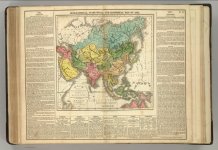
Caucasus is still in Old Tartaria, although the world back then was not the one we are told.
View: https://www.youtube.com/watch?v=FKTE34ms-cs
View: https://www.youtube.com/watch?v=IajLr78xwNg
Attachments
Last edited:

Similar threads

- Replies
- 3
- Views
- 7K

- Replies
- 26
- Views
- 8K
- Replies
- 9
- Views
- 4K
- Replies
- 42
- Views
- 22K
- Replies
- 0
- Views
- 2K