Here's some information about the native tribes of the area that becomes known as the American South and later the Confederacy during the War of Northern Agression/Civil War.
The sources for this post for times prior to 1800 are found on apalacheresearch.com. The Creek author is very meticulous about using original source writings and maps.
Speaking of slavery, why are all the slaves black? WHY DIDN'T THE SOUTH ENSLAVE NATIVE AMERICAN INDIANS INSTEAD OF ALLEGEDLY IMPORTING BLACKS FROM AFRICA? Something doesn't add up.
ALL South American and Caribbean native tribes were enslaved by the Portuguese, Spanish, Dutch, French, British, and local slave-trading native tribes starting in 1492 and ending in the early 1800's. The natives that didn't die from overwork ended up dying of disease. A few were lucky enough to run away into the jungle, the mountains, north along the coast, or by boat to the Florida panhandle. The Africans were only brought over en masse when the natives were all already enslaved, dead or gone, to be the labor to work on plantations, etc.
However, things with slavery went differently in what is now known as Northern Georgia. Back then it was known as the Kingdom of Apalache, and the tribes in the surrounding areas were members of the Apalache Conferderacy. The entire area is still referred to as Appalachia today, and the mountains are called the Appalachians.
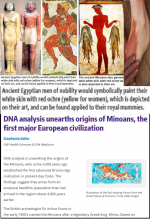
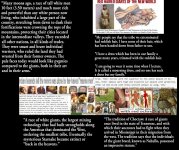
This kingdom was run by an elite tribe of natives known as Paracusa who had migrated from Peru around 200 BC. They had their homes and temples in the mountains and allowed other tribes to live in the lowlands and valleys of Apalache. They were very tall, with long skulls that were imitated by lesser tribes by flattenning their children's heads. They had mica encrusted temples that probably started the rumors about cities of gold. There was NO slavery allowed in the Kingdom of Apalache or in any surrounding tribes that wanted to be part of the Apalache Confederacy.
During the 1500's the Apalache Confederacy welcomed the persecuted Spanish-speaking Sephardic Jews that had been forced out of Spain by the Spanish Inquisition. The Jews were allowed to live in the Kingdom and mine for gems and precious metals, if they followed the laws. There was no slavery and single men had to marry native wives.
The Spanish themselves tried to set up a few forts, trading posts and churches along the coast, but they were chased out by the Apalache, French and Spanish Jews. The Apalache Confederacy hated the Spanish, since they killed and enslaved native peoples. Many of the tribes had fled Central and South America previously to escape the Spanish.The Confederacy refused to trade with the Spanish and would kill any Spaniard who entered the Kingdom without permission. The Spanish stayed south in Florida, where they continued slavery.
Apalache also welcomed the French Protestant Hugenots who had fled persecution by the Catholics in France, and were not slave owners. The Paracusa/High King converted to Protestant Christianity in the 1570's. They even had an international trade treaty with the King of France.
Outside of the Kingdom of Apalache there was major slave-trading going on all over the South. Many smaller tribes fled west across the mountains to escape slavery. African slaves were imported starting in the mid 1600's, once natives were harder to find.
In the 1600's the British were coming into power and looking for slave labour. Starting in 1610 they hired the Rickohocken tribe to procure slaves for them. The Rickohocken wiped out other tribes in Virginia and Carolina. They would kill whoever wouldn't make a good slave, and then burn the village to the ground. Eventually they were massacred themselves...
There was a major smallpox epidemic in Southeastern North America in 1696. It wiped out approximately 90% of the native population. The Kingdom of Apalache disintegrated, and the Apalache Confederacy reformed into the Creek Confederacy in 1717. It was never the same, of course. The high temples gleaming like gold with mica encrusted walls fell into disuse. The agricultural terraces on the mountainsides became overgrown rocky walls. The various tribal villages in the river valleys lost their individual identities as the scattered remnants of the tribes banded together. Mound villages fell into disrepair and skills were lost. This societal devastation allowed the colonists to make inroads into the native lands with bad treaties, illegal real estate deals and war.
The British still needed someone to procure native slaves for them. The Cherokee took over the nasty business in the 1700's. The Cherokees had worked their way south towards Washington DC from the Great Lakes area they started in. In Georgia and the Carolinas, the Cherokee were repeatedly gifted the lands of the Creek and other tribes through some shady treaties. This understandably caused hard feelings and the Cherokee fought a lot. The Creek Confederacy was at war with the Cherokee at least 40 years, with the British giving weapons to the Cherokee. They finally signed a peace treaty just before the breakout of the French and Indian War.
French and Indian War 1754-1763 -
A conflict between British and French for North America. It was mostly fought around the Great Lakes area. Multiple native tribes backed each side. During the conflict the British moved the French settlers out of Acadia/Newfoundland, many went to Louisiana and became the Cajuns.
The British won the Mid and Southern Atlantic coast, and got Florida from the Spanish in exchange for Cuba. France had to give up land west of the Mississippi River to the British and give up Louisiana and New Orleans to the Spanish. The Spanish left Florida and went to Cuba. There was a related European conflict at the same time called the Seven Years War, and this was part of an overarching peace treaty.
Revolutionary War - 1765-1783
During the Revolutionary War the Patriots paid the Creek Confederacy to fight with them and the British paid the Cherokee to fight with them. The French joined in with the Patriots to protect their own colonists north towards Canada and in Louisiana. (And because they hate the British.)
The Patriots won and founded the 13 colonies under the Articles of Confederation. Later on, in 1789, the Constitution would be adopted to centralize the government.
Louisiana Purchase - 1803
France sold the United States the land west of the Mississippi River, in order to pay for the Napoleonic Wars. The area stretched to Spanish Territory at the Rocky Mountains to the west and Texas to the south, and north to British territory in Canada.
United States settlers wanted to spread north and west into the Great Lakes area. There was friction along the borders. Of course, each side had different native tribes backing them and were being paid to create unrest with the other side.
War of 1812 - 1812-1815
Things came to a head between the British and the United States while the Napoleonic Wars were going on in Europe. The British had been blocking North American ports, searching ships and impressing / kidnapping Americans to work on British ships, all to fight the French. This really pissed off the Americans, so they declared war. But it was really about getting the British out of the part of North America that is now the United States. The United States won, forced the Brits north to Canada. Relationships with native tribes were realigned and (of course) more native land was lost to settlers moving west.
Trail of Tears - 1831-1838
The Georgia Gold Rush started in 1928. This would be the final nail in the coffin for the native tribes of the South. Congress passed the Indian Removal Act in 1830 and the forced removals to Indian Territory began.
Forced removals included:
•Choctaw, crappy treaty terms
•Seminole, after losing Seminole Wars
•Creek, after losing Creek War and shady treaty situation
•Chicasaw, got paid off
•Cherokee, after shady treaty situation
There were (and still are) pockets of each of these tribes left behind, some by treaty and some by hiding. Other individuals had earned citizenship through fighting in one of the numerous wars. But the natives were essentially beaten and gone. The South belonged to the settlers now. They finished moving onto the rest of the native lands. They dug up burial mounds and made collections of Indian artifacts to place in their parlors.
It would be about 20 years later the War of Northern Agression/Civil War was said to begin.
Possible Global Reset - 1840-1848
The information on another thread on the forum (I think by dreamtime) indicates that this time-frame was when the most recent global cataclysm took place. This primarily affected the northern hemisphere. There were floods, mudslides, famine, darkness, pestilence, etc. No history was recorded for eight years.
If this did indeed happen, it could have been a factor in the next conflict. The industrial North would have been hit harder, and been more aggressive.
The War of Northern Aggression / Civil War - 1861-1865
Said to be about slavery, but more about economics. The North was industrial with a higher population, and thought everyone should live the same dirty, frantic lives they did. The South was more agricultural with spread out people, living a more seasonal life.
I personally believe that there were beautiful partially-buried Old World and Moorish buildings all over the South and mid-Atlantic. The kind with tall ceilngs and giant-sized doorways to match the size of the skeletons dug out of burial mounds all over America. I think this war was especially destructive to get rid of these buildings. The war also provided a cover story for the rapid expansion of the railroads westward as the rails were dug out of the dirt by slaves.