The Daily Fake

Do you have a link to the video that included this image?
MSN

This has an embedded video, which I think has this reference:
MSN

I agree that the flat ends and the first 2 torcs in general give a functional impression rather than something decorative. I was thinking 'stethoscope' or something to do with headsets/listening, like you mention.
 
Well here we go again with egypt i guess.....
 

Attachments

  • Screenshot_20230918-013819.jpg
    Screenshot_20230918-013819.jpg
    408.6 KB · Views: 185
MSN

This has an embedded video, which I think has this reference:
MSN

I agree that the flat ends and the first 2 torcs in general give a functional impression rather than something decorative. I was thinking 'stethoscope' or something to do with headsets/listening, like you mention.
Thanks, I'll check it with a modern browser.

Even before seeing these torcs I've been thinking it would be helpful to have a publicly accessible classification for the different features of portable antiquities. Judging from the PAS photos, some items are so consistent they look as though created to function to a standard rather than to meet a fashion standard or for pure aesthetics.

For example, I'd like to compare close up images of the ends of all flat-ended torcs. How much do they vary? How do they vary? What might the variations correlate with? Etc.
 
New research reveals why and when the Sahara Desert was green

Science + history.

A major barrier to understanding these events is that the majority of climate models have been unable to simulate the amplitude of these humid periods, so the specific mechanisms driving them have remained uncertain.
... but now "our" models have broken the barriers to understanding. Yay!

The results confirm the North African Humid Periods occurred every 21,000 years and were determined by changes in Earth's orbital precession. This caused warmer summers in the Northern Hemisphere, which intensified the strength of the West African Monsoon system and increased Saharan precipitation, resulting in the spread of savannah-type vegetation across the desert.
The findings also show the humid periods did not occur during the ice ages, when there were large glacial ice sheets covering much of the high latitudes. This is because these vast ice sheets cooled the atmosphere and suppressed the tendency for the African monsoon system to expand. This highlights a major teleconnection between these distant regions, which may have restricted the dispersal of species, including humans, out of Africa during the glacial periods of the last 800,000 years.
Explanatory science. Post-facto justifications.

And - new word of the day: "teleconnection".

Its amazing how these studies explain so much about how climate is interconnected across 'the globe', and even reach into space with the Earth's wobble!

Co-author Paul Valdes, Professor of Physical Geography at the University of Bristol, said, "We are really excited about the results. Traditionally, climate models have struggled to represent the extent of the 'greening' of the Sahara. Our revised model successfully represents past changes and also gives us confidence in their ability to understand future change."
Its not that we're dicking around with models, trying to justify a ridiculous narrative in Excel! No, this really means something.

"The gate was open when Sahara was green and closed when deserts prevailed. This alternation of humid and arid phases had major consequences for the dispersal and evolution of species in Africa. Our ability to model North African Humid periods is a major achievement and means we are now also better able to model human distributions and understand the evolution of our genus in Africa."
It even helps with evolution.

I've got a wart on my, well... Anyway, I've got a wart - would these models be able to help with that too? A word in the right ear is all it takes I reckon.
 
Mysteries of the Court of Miracles
Beginning in the 1830s and lasting through till the 1860s, the ‘mystery’ novel was a hit with readers across the world. In France, there was Eugene Sue’s Mysteries of Paris (1842–43). In Canada a little earlier there was Mysteries of a Convent (1834). These novels were followed in Britain with George W.M. Reynolds’s Mysteries of London (1844–48) and Mysteries of the Court of London (1849–56). In the United States there was Mysteries of New York (1848–49) by Edward Zane Hudson Jr; Mysteries of Manchester (1844); Mysteries of Boston (1844); and Mysteries of St Louis (1851). In Spain there appeared Los Misterios de Barcelona (1844). In Portugal there was Misterios de Lisboa (1854) by Camillo Castelo Branco, who followed up with a sequel titled Livro Negro de Padre Diniz (1856). In Brazil, there was Juana Manso’s Misterios del Plata (1852).[1]

There were many other mysteries novels in countries such as Mexico, Australia, Colombia, Venezuela, and India. In short, it seems that wherever you were in the world between c.1830 and c.1860, you would have been aware of ‘mysterymania’. They were not ‘mystery’ novels as we would understand them today, in which a detective usually solves a crime. Instead, these novels sought to portray vice and depravity among all classes of society, showing how the lives of people from each social class—especially those from the ‘underworld’—were interconnected as demonstrated through multiple, almost ‘encyclopaedic’ narratives.

This odd article has a subject matter that makes me think of old-time propaganda. From the 1830s to 1860s, a bunch of mystery novels were put out by various authors. It also has the potential to express some underlying truths but pass them off as fiction. The article focusses on Victor Hugo's work.

Gringoire has finally reached the underworld. In popular histories of crime and in the media, the ‘underworld’ is, according to Heather Shore, a ‘nebulous concept’, rarely a physical place, and carries with it
The notion of a separate culture, shared by those living outside of the boundaries of normal and respectable society.[7]

This is exactly how Hugo deploys the concept, for the Court of Miracles is a place where
No law-abiding men had ever penetrated at such an hour; a magic circle where those officers from the Chatelet or provost sergeants who ventured into it vanished in small pieces; a city of thieves, a hideous wen on the face of Paris; a sewer from which that stream of vice, mendicancy and vagabondage that is in a constant spate in the streets of capital cities flowed each morning and to which it returned to stagnate each night; a monstrous hive to which all the hornets of the social order returned in the evenings with their booty; a bogus hospital where gypsies, unfrocked priests, ruined students, and wastrels from every nation, Spaniards, Italians, Germans, and of every religion, Jews, Christians, Mohammedans, idolaters, were beggars covered in artificial sores by day and transformed themselves by night into brigands; in short, a vast dressing room, in which the entire cast of the everlasting comedy performed in the streets of Paris by theft, prostitution, and murder donned and removed their costumes.[8]
Hugo did not fall into the trap of romanticizing the delinquents and criminals of the Court of Miracles. As the passage above makes clear, the people of the Court of Miracles are the worst of the worst, and it seems that gypsies are the dominant social group. Hugo based his characterisation of gipsy life upon remarks made by Daine’s Barrington to Gilbert White (quoted in the latter’s Antiquities of Selborne published towards the close of the eighteenth century).[14] The gypsies were said to have originally been ‘Egyptians’ who migrated out of that country and
…first attracted notice in the beginning of the fifteenth century, and within a few years afterwards, they had spread themselves all over the continent. The earliest mention which is made of them was in the years 1414 and 1417 when they were observed in Germany. In 1418 they were found in Switzerland; in 1422, Italy; and in 1427, they are mentioned as having been seen in the neighbourhood of Paris, and about the same time in Spain. In England they were not known till some time after. One remarkable part of their history is their continuing the same unsettled mode of life, and rigidly keeping apart from all other people.[15]

Were these novels a way to teach people about 'history'? To help guide one understanding of the past towards a more modern one? There seems to be more here to uncover.
 
Last edited:
The Daguerreotype’s Famous. Why Not the Calotype? - JSTOR Daily

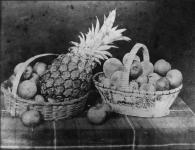
In a rather self-indulgent fashion, I am posting this article on an early photography pioneer and linking to a previous thread of mine from the same photographer:
1844 Lacock Abbey

I'm very interested to read some more on 'William Henry Fox Talbot'.

Talbot was in his thirties when he began experimenting with a process to capture images on paper, according to the Metropolitan Museum of Art Bulletin. Already an accomplished natural scientist, he was a fellow of the Astronomical, Linnean, and Royal Societies and had published four books and twenty-seven scholarly articles on topics ranging from mathematics to Egyptology to botany and philosophy. “He was one of these polymathic figures, not uncommon at the time,” says Batchen.
Just another "one of these polymathic figures, not uncommon at the time".

Talbot also lost money defending his patents (he took out a number over the years) in court. He sued a London gallerist, for example, in 1852 for selling photographs on paper created using his technique, and never won any official recognition from the government, as did Daguerre in France. “The irony of this omission was that Daguerre’s process became obsolete while Talbot’s laid the foundation for modern photography,” Sharp says. “He never received any substantial financial rewards for his invention.”
“The embarrassment was such that the organising committee and members of the photographic community approached Talbot and begged him to loosen the patent rights so that other people could innovate the process,” Batchen explains. “Talbot was persuaded to do so and as a result, the process suddenly became far more popular. Photographic societies and amateur photographers were keen to promote this paper-based process. Suddenly, people were free to innovate.”

Screenshot.png
A still life by William Henry Fox Talbot, 1844 Getty
 
Last edited:
Well here we go again with egypt i guess.....
I looked this up, and found this article:

Archaeologists Unearth Egyptian Queen's Tomb, 13-Foot 'Book of the Dead' Scroll

Archaeologists in Egypt have unearthed a cache of treasures—including more than 50 wooden sarcophagi, a funerary temple dedicated to an Old Kingdom queen and a 13-foot-long Book of the Dead scroll—at the Saqqara necropolis, a vast burial ground south of Cairo, according to a statement from the country’s Ministry of Tourism and Antiques.
A Book of the Dead scroll? Some Tibetan pollination in the Egyptian history departments?

As first reported by Al-Ahram, Egyptologist Zahi Hawass and his colleagues discovered the coffins, which appear to date back to the New Kingdom era (1570–1069 B.C.), in 52 burial shafts measuring 33 to 40 feet deep. Paintings of ancient gods and excerpts from the Book of the Dead, which was thought to help the deceased navigate the afterlife, adorn the sarcophagi.
I’d never heard of this queen before,” Hawass says to CBS News. “Therefore, we add an important piece to Egyptian history, about this queen.”
Nor me.
 
Ancient fashion: 3,200-year-old pants on Chinese mummy are like modern-day jeans

More fashion history - 3200 year old trousers - to link up with:
The Daily Fake

trousers.png
3200 years old

I'll post this, with a few quotes. It seems to me that fashion history is quite light..

Dated to at least 3,200 years old, the Turfan Man’s trousers are believed to be the oldest pair of trousers yet discovered, giving researchers a rough estimate for when this now indispensable piece of clothing was first invented. “Previously,” reports Science News, “Europeans and Asians wore gowns, robes, tunics, togas or — as observed on the 5,300-year-old body of Ötzi the Iceman — a three-piece combination of loincloth and individual leggings.”
Determining when the Turfan Man’s trousers were made proved to be a whole lot easier than determining how they were made. Carbon dating and other forms of analysis can provide us with fairly precise age estimates, but the atoms themselves do not reveal anything about the techniques or influences that ancient craftsmen relied on to put them together to create a pair of pants.
Eurasia Department of the German Archaeological Institute, assembled an Avengers-like team of geologists, chemists, and fashion designers to give the Turfan Man’s fabled fashion a closer look.
According to Wagner’s study, their best shot is to produce more replicas using different ancient and contemporary weaving devices and determine which of these replicas is closest to the original.
coming to a shop near you soon?

Closing paragraph:
For this reason, Michael Frachetti, an anthropologist from Washington University in St. Louis, has referred to the Turfan Man’s trousers as “an entry point for examining how the Silk Road transformed the world.” Wagner couldn’t agree more. “Eastern Central Asia,” the archaeologist told Science News, “was a laboratory where people, plants, animals, knowledge, and experiences from different directions and sources came… and were transformed.”

Otzi_Museum_Bozen_-_panoramio.jpg
Still got it.
 
Archaeologists Discover More Than 100 Ancient Drawings in a Spanish Cave

Many of the works, estimated to be at least 24,000 years old, employ a rare clay painting technique
“Animals and signs were depicted simply by dragging the fingers and palms covered with clay on the walls,” Ruiz-Redondo says in a statement. “The humid environment of the cave did the rest: the ‘paintings’ dried quite slowly, preventing parts of the clay from falling down rapidly, while other parts were covered by calcite layers, which preserved them until today.”
The archaeologists hope their find, especially its unique art techniques, will prove an important contribution to the study of cave art in the area.
An important contribution.

Judge for yourself:

auroch.png
Is that the head of an auroch?

horseshead.png
Is that the head of a horse?
 
Last edited:
New research reveals why and when the Sahara Desert was green

The findings also show the humid periods did not occur during the ice ages, when there were large glacial ice sheets covering much of the high latitudes. This is because these vast ice sheets cooled the atmosphere and suppressed the tendency for the African monsoon system to expand.

Right, of course, that's how the Ice Age was caused - by vast ice sheets cooling the atmosphere! It must be the same phenomena at work that explains why I saw a horse the other day behind the cart.

Were these novels a way to teach people about 'history'? To help guide one understanding of the past towards a more modern one? There seems to be more here to uncover.

I think you may have a valid point there. (y)
 
Archaeologists discover world’s oldest wooden structure - University of Liverpool News

5-the-wooden-structure.png
Its a wooden structure.

The research, published in the journal Nature, reports on the excavation of well-preserved wood at the archaeological site of Kalambo Falls, Zambia, dating back at least 476,000 years and predating the evolution of our own species, Homo sapiens.
476,000 years.

Expert analysis of stone tool cut-marks on the wood show that these early humans shaped and joined two large logs to make a structure, probably the foundation of a platform or part of a dwelling.
Wood is rarely found in such ancient sites as it usually rots and disappears, but at Kalambo Falls permanently high water levels preserved the wood.
They used new luminescence dating techniques, which reveal the last time minerals in the sand surrounding the finds were exposed to sunlight, to determine their age.
476,000 years.

The area is on a ‘tentative‘ list from UNESCO for becoming a World Heritage site because of its archaeological significance.
Our research proves that this site is much older than previously thought, so its archaeological significance is now even greater. It adds more weight to the argument that it should be a United Nations World Heritage Site.”
UNESCO, UN World Heritage Site

2-Larry.png
Water preserves wood for half a million years.
 
Mysteries of the Court of Miracles

This odd article has a subject matter that makes me think of old-time propaganda. From the 1830s to 1860s, a bunch of mystery novels were put out by various authors. It also has the potential to express some underlying truths but pass them off as fiction. The article focusses on Victor Hugo's work.

Were these novels a way to teach people about 'history'? To help guide one understanding of the past towards a more modern one? There seems to be more here to uncover.

The 1830-1860 timing does sound like the later Romantic Movement at work transforming a widely brutal past into a smaller, more locally brutal past. A modified limited hangout.

From Mysteries of the Court of Miracles:
Certainly there is also evidence that some pirate groups operated a small-scale form of welfare for pirates who could no longer participate in active service

This and other characteristics identified in the article - the oath, their mercenary nature, the suggestion they came from the Middle East - do sound like the Knights Templar. And their attempts to create a new Jerusalem in Britain.

Summarising Reynolds' version of the story:
The Resurrection Man and his gang will do all kinds of foul deeds for an appropriate fee. But one of the most fearsome groups, who it is suggested have a big hand in controlling all crime in London, is the tribe of Zingarees from the land of Egypt (gypsies).

The area in which they live is not a ‘court of miracles’ but is instead named ‘The Holy Land’

Download Video

Source: Royston Cave - A Mystery beneath the Streets

South of Baghdad is the village of Weston - former home of the helpful giant thief that citezenship once brought to our attention. Its centre originally seems to have been called Damask Green. The heath between Baghdad and Roi-stone was notorious for highwaymen (and should be notorious for its 'Roman' cemeteries).

Similarly, various Templar 'temples' - like Temple Bruer in Lincolnshire - were (we're told) attempts to recreate the Temple of Solomon in Jerusalem. As with Weston, Hertfordshire, the Temple Bruer-owned land formerly called Lincoln Heath was also infamous for its 18th century highwaymen. So much so that insurance couldn't be bought for that travellers and merchants traversing that area.

So English mystery fiction that referred to 'The Holy Land' may have been interpreted differently by 19th century readers familiar with north Hertfordshire and its activities. And with Lincolnshire and its activities.

Edit:
FWIW: Mysteries of the Court of Miracles mentions demonstrating your pickpocketing skills:
his skills in pickpocketing will be tested. It is by no means an easy test—a dummy, to which is attached numerous bells, is hangs from a gibbet and it is Gringoire’s job to successfully pick the dummy’s pocket without setting any of them ringing.

I think that is a reference to the pickpocketing school: School of Seven Bells. Which - arguably - justifies a link to Half Asleep by the band School of Seven Bells:

 
Last edited:
And yet, even with this amount of unproven bullcrap, some still be like hell yeah, "expert" said.......
I've seen some pretty stupid dates but this one top them all by a mile

Am i the only one who see literally nothing??? Omg
Yep, those were new lows.
 
Workers uncover eight mummies and pre-Inca objects while expanding the gas network in Peru

workers-uncover-eight-2.jpg
3000 year old bodies, pots, wood, 30 centimetres below ground, under a water pipe, next to "opium-smoking pipes, handmade cigarettes, shoes, Chinese playing cards, a Peruvian silver coin minted in 1898 and a certificate of completion of an employment contract written in Spanish and dated 1875"

"We are recovering those leaves of the lost history of Lima that is just hidden under the tracks and streets," Jesus Bahamonde, an archaeologist at Calidda, the company that distributes natural gas in the city of 10 million people, said Friday.
Jesus Bahamonde = Jesus beautiful world?

He said the company's excavation work to expand its system of gas lines over the last 19 years has produced more than 1,900 archaeological finds of various kinds, including mummies, pottery and textiles. Those have mostly been associated with burial sites on flat ground.
19 is a popular number.
Bahamonde showed the bales of ancient men sitting, wrapped in cotton cloth and tied with ropes braided from lianas that were in trenches 30 centimeters (nearly a foot) below the surface.
The company's archaeologists believe the finds belong to the pre-Inca culture called Ichma. The Ichma culture was formed around A.D. 1100 and expanded through the valleys of what is now Lima until it was incorporated into the Inca Empire in the late 15th century, scholars say.
1100ad = ~3000 year old mummies....

Archaeologists found the bodies next to opium-smoking pipes, handmade cigarettes, shoes, Chinese playing cards, a Peruvian silver coin minted in 1898 and a certificate of completion of an employment contract written in Spanish and dated 1875 at a hacienda south of Lima.
...next to artifacts from late 19th century.

"When the Spaniards arrived in the 16th century they found an entire population living in the three valleys that today occupy Lima ... what we have is a kind of historical continuation," Bahamonde said.
"what we have is a kind of historical continuation".
 
Eating fossils | The Palaeontological Association

Something from the Palaeontological Association - palass.org - taste as a tool.

Licking the rock, of course, is part of the geologist’s and palaeontologist’s armoury of tried-and-much-tested techniques used to help survive in the field. Wetting the surface allows fossil and mineral textures to stand out sharply, rather than being lost in the blur of intersecting micro-reflections and micro-refractions that come out of a dry surface. On that day, it brought out the handsome nummulites a treat. The taste, now, was likely merely registered as generically-slightly-dusty and then instantly forgotten; I had always thought it entirely superfluous to identification. But perhaps not so. As we contemporary types develop capabilities in one direction, we might be entirely losing them in another. Go right back to the beginnings of our science, and our ancestors, and their senses, were attuned to different settings. One could then, it seems, literally develop a taste for stratigraphy.
If one was to choose an ancestral stratigrapher, then Giovanni Arduino (1714–1795) would be as good a candidate as any. He was the man who set up the Primary, Secondary and Tertiary ‘orders’ of strata that were ultimately to morph and diversify into what we now know as the Geological Time Scale (together with an offhand mention of a ‘fourth order’ that itself was to evolve – with a few fits and starts – into the Quaternary).
Arduino is of note as he gave us the Geological Time Scale - Primary, Secondary, Tertiary and Quaternary. Also interesting-ish is where the name comes from:
Arduin (Italian: Arduino; c. 955 – 14 December 1015) was an Italian nobleman who was King of Italy from 1002 until 1014.
Arduin of Ivrea - Wikipedia

Once the preliminaries are over – and Arduino shows elegant manners in these, proclaiming himself grieved ‘to be kept from research and contemplation of the productions of the Fossil Kingdom’ and from ‘regular correspondence with Men of Philosophy’ – his list of ‘curious observations’ was unfurled, spiced with those sensory grace-notes. Fossil shells in a mudrock, for instance, and coal fragments, when burned, leave an ash that ‘as soon as it is placed on the tongue, it burns like fire and leaves a flavor equally bitter and urinous; when spat out, it leaves a certain sweetness, and a skinned tongue’. Springs that emerge from a stratum full of marcasite and coal ‘have an acid spicy flavor; vitriolic, yes, but with a certain pleasantness that I cannot describe, like the acidity of wine’. These waters ‘made me far less nauseous than did the waters from the same source that I have tasted here in Vincenza and at Scio’. The white and micaceous sediment from one stratum has no taste in the raw state, he said, but once burnt ‘acquired a flavor, as well as a caustic quality from the calcining of the spar’.
Its a simple process - burn the sample, and taste it.
It is a taxonomy of taste – and of sight and smell too, as the specimens are burnt, boiled, dissolved, all reacting in different ways, minutely described. The account as a whole is redolent with a literary flavour that is part alchemy, part sensual experience of rock, part scientific analysis. And, of course, in days when there was no chemical analytical equipment – and indeed no framework of chemistry in any way that we now understand it – it was a sensible means to throw a little light on those enigmatic but useful rocks.

This was taste, therefore, as analytical tool. The whim of some jaded gourmet, or perhaps gourmand, though, can also be thrown into the mix.

The article meanders this way and that, but the main point for me is that a literal "taxonomy of taste" was considered acceptable science.

I think the article provides the opportunity to get a glimpse of the comedy that is human endeavour towards knowledge.

We have a spurious methodology (which is acknowledged as "part alchemy, part sensual experience of rock, part scientific analysis" by the author) AND the person who gives us the Geological Time Scale. This is to say, that this is a nice example of how a 'strata of classification' and academic 'expertise', can easily arise from nonsense, and gain a life of its own. The principle is that this or that classification model, once adopted, allows one to step out of reality and into fantasy. The idea (not the reality) is what matters. Why not spend a lifetime in fantasy, esp if it pays the bills - like everyone else?
 
Last edited:
Tips
Tips
Please respect our Posting Rules.
Back
Top