We all have heard how the major platforms ban and delete content. Even as you look through this site, it is likely that one will find many broken links to youtube videos that have been banned since being posted. This is just one part - there is all the banning of comments, tinkering with algorithms to promote certain content, authorised fact checkers, etc. These actions are a sort of fakery to me - they are manipulation of information in a way that is beneficial for someone, somewhere.
This article relates to the management of information in WW2:
World War II 'Rumor Clinics' Helped America Battle Wild Gossip
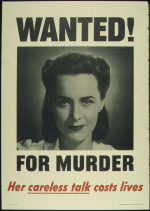
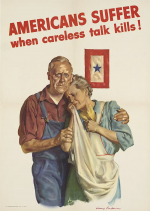
and therefore we get a little look at how this was done in the past. Its quite nice to see how it is described as being done in the past.
Here are some quotes from the article.
When the United States entered World War II in December 1941, its enemies weren’t limited to the Axis powers of Germany, Italy and Japan. The nation also faced an adversary at home: rumors that undermined morale, sowed distrust of the U.S.’s laws and leaders, and turned Americans against each other based on racial and religious differences.
Yesterdays "rumors" is today's "misinformation" and "hate speech". These terms make it nice and clear that this is wrongthink.
In an era before the internet, social media, artificial intelligence and ultra-partisan TV hosts, rumors could only spread the old-fashioned way, from neighbor to neighbor. Many were planted by Axis propagandists, but others appear to have originated with everyday citizens, frequently arising out of their anxieties, suspicions, prejudices or simple misunderstandings.
People needed guidance! People discussing things was the problem.
While the government’s Office of War Information waged its own fight against rumors, a grassroots movement took hold across the country to stop gossip at its source. Over the course of World War II, more than 40 newspapers and magazines in the U.S. and Canada started “rumor clinics” to debunk the lies and fight back with facts.
facts = "what experts say" -
The Royal Society's Facts
The reason, the magazine speculated, was that “the Axis [have] been clever enough, via shortwave broadcasts and moral saboteurs, to exploit existing lines of discontent. Thus the people of the U.S. are led to a sort of psychological suicide by serving to circulate dangerous lies about U.S. Jews, U.S. Negroes, U.S. allies, U.S. leaders. No better could they aid the Nazi tactics of divide and conquer.”
"the Nazi tactics of divide and conquer."
Of course, the Allies didn't do this - just the clever unscrupulous Axis powers. In fact there was no discontent in general among the Allied countries - back then, citizens moved in unison... right?
But not everyone was a fan of rumor clinics. Some critics faulted them for helping hearsay reach an even larger audience. In fact, the U.S. government’s anti-propaganda efforts took a different approach, releasing floods of facts while rarely mentioning the rumors they were meant to extinguish.
They're not even pretending any of the information was about giving people real information. Its just that unauthorised information was bad and these rumour clinics we're working well enough. 'The first casualty of was is truth' as they say, and it seems we are in a perpetual war.
In a 1954 book, The Nature of Prejudice, Allport expanded on that theme. “It is doubtful … that the exposure of a rumor changes any deeply rooted prejudices,” he wrote. “What it does at most is to warn those of mild or negligible prejudice that wedge-driving rumors in wartime or in peacetime are not in the best interests of the nation.”
"rumors in wartime or in peacetime are not in the best interests of the nation". But are the interests of "the nation" the same as the interests of the individuals in a nation? And do they have anything to do with the truth of the matter?
Rumor clinics in various forms saw an occasional resurgence in the postwar years. Beginning in the late 1940s, the Anti-Defamation League of B’Nai B’rith conducted presentations billed as rumor clinics at civic group meetings across the country, explaining how malicious gossip spread and how to combat it.
The ADL and B’Nai B’rith eh? From their wiki
B'nai B'rith - Wikipedia:
B'nai B'rith International (/bəˌneɪ ˈbrɪθ/ bə-NAY BRITH;[1] from Hebrew: בְּנֵי בְּרִית, romanized: b'né brit, lit. 'Children of the Covenant')[2] is a 501(c)(3) nonprofit[3] Jewish service organization and was formerly a German Jewish cultural association.[4] B'nai B'rith states that it is committed to the security and continuity of the Jewish people and the State of Israel and combating antisemitism and other forms of bigotry.
Although the organization's historic roots stem from a system of fraternal lodges and units in the late 19th century, as fraternal organizations declined throughout the United States, the organization evolved into a dual system of both lodges and units.[5][6] The membership pattern became more common to other contemporary organizations of members affiliated by contribution in addition to formal dues paying members. B'nai B'rith has members, donors and supporters around the world.
Fraternal lodges, a Jewish service organization for the service of the state of Israel... Well, that doesn't sound like a politically-suspect, agenda-driven organisation, at all! Move along, citizen!!
So, could rumor clinics help Americans separate fact from falsehood today? Probably not as they did 80 years ago.
Oh - so somewhere it was established that these rumour clinics helped "Americans separate fact from falsehood". Got it.
Some things never change, however, one of them being human nature. “There have always been, and will always be, people who are willing to believe things that aren’t true,” Young says. The challenge will be finding ways to keep the rumormongers of the future, whether foreign or domestic, from dividing Americans even further. As she sees it, “I don’t think the media alone can fix that.”
We need more legislation, AI to monitor, stronger government, fines, etc, etc. The truth still needs to be defended! By governments. Like it did in WW2. K?