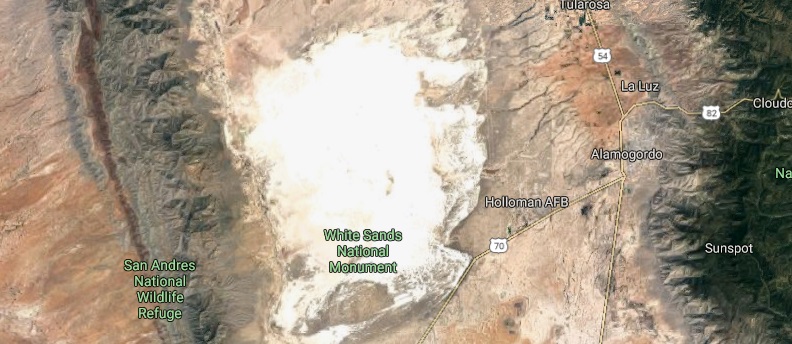
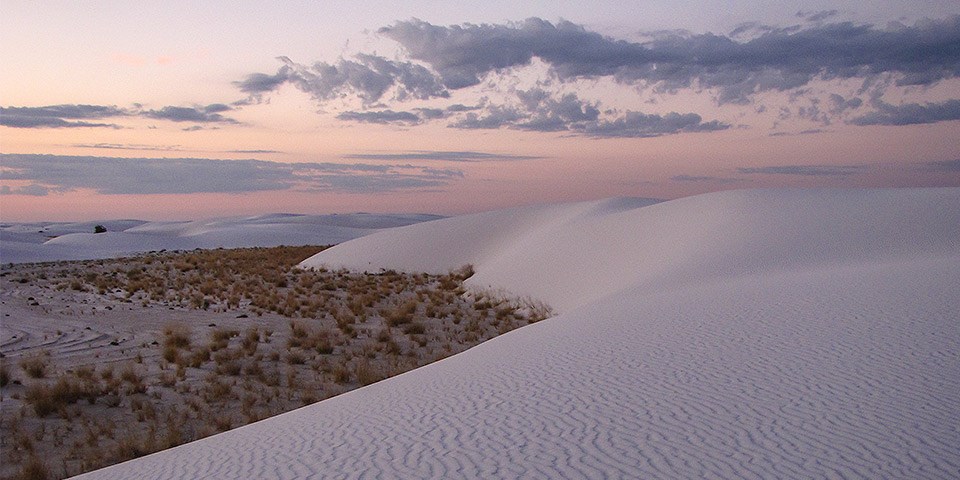
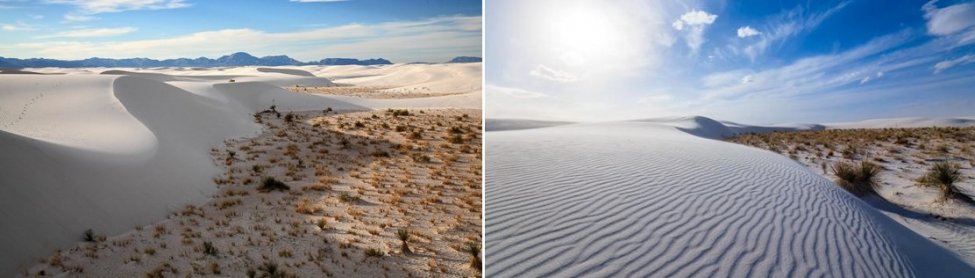
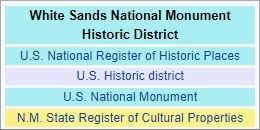
White Sands National Monument is a United States national monument located in the state of New Mexico. The monument comprises the southern part of a 275 sq mi (710 km2) field of white sand dunes composed of gypsum crystals. The gypsum dune field is the largest of its kind on Earth.
It is interesting, that when you
zoom in, Google Maps appears to be hiding something in the southwestern part of the formation. If I was to guess, there could be some outlines they do not want us to see. The place is properly protected by every single agency guaranteeing that no digging will ever take place.
 History
The first Euro-American exploration was led by a party of US Army officers in 1849. The idea of creating a national park to protect the white sands formation dates to 1898 when a group from El Paso, Texas, proposed the creation of Mescalero National Park.
Geology
Long ago, an ancient sea covered most of the southwestern United States. It was during this time that layers of gypsum were deposited on the seafloor. The rise and fall of the sea level millions of years ago started the process of making the gypsum sand that covers the monument today. Many factors, including the latest ice age, had an effect on the formation of this magnificent landscape. The following journey through time shows the gradual transformation from sea to sand, and the amazing factors that allow this dune-field to exist.
Rebecca Burghart, program manager of visitor services of White Sands, said the gypsum remained at the bottom of the lake because it at times was created more quickly than it could be dissolved.
The "Monument"
We have this pile of gypsum sand in the middle of "nowhere" New Mexico. The pile of gypsum is considered to be super important, and somehow can be considered a monument.
KD: Courtesy of TPTB, I think this is one of those
"in our face" lies. First of all, regular scientists do not have a slightest idea of where this weird "sand" came from. In their act of cowardice, they hide behind their usual "millions of years ago" fairy tale.
Those who do know where the gypsum came from, are the same ones who dig-protected the site. In other words we are talking about TPTB here.
In my opinion, a huge pile of this white junk was dumped in the area at about the same time we acquired the
Grand Canyon. Whether we are dealing with some
quarrying spoils being randomly dumped in the area, I am not sure. At the same time, judging by how protective of the area TPTB is, it most likely was not a random act.
And how many Military Bases do we have down there? Those in power have everything covered, LOL.
No matter where you look from, this National Monument smells. Today, and back in the day the preferred method of obtaining gypsum was/is quarrying. They could simply shovel it here, but they chose not to.
As a basis for this hypothesis I will say the following: