Archive
Old SH Archive
- Joined
- Sep 8, 2020
- Messages
- 17,737
- Reaction score
- 3,168
I did say "I worked with" back then I was a employed as a plumber in t'shipyard. The problem with estimating the numbers of bricks is where did they come from as the origin dictates the size. In the United Kingdom at the time for example they were huge compared to the modern brickNote: This post was recovered from the Sh.org archive.Username: jd755Date: 2019-03-06 21:07:43Reaction Score: 2
What upset the apple cart was a brick tax imposed by the government in 1784. The tax was paid per brick, so brick makers responded by making much larger bricks, which meant fewer were needed for a given size wall.
The government later set an upper limit of 150 cubic inches (10"x5"x3") for a 'brick, which was still much larger than bricks had been before the tax.
The tax was repealed in 1850, but by this time, many brick makers, especially in the Midlands and North, had moved from hand-made to machine-made bricks. Having invested heavily in machinery it wasn't easy for them to revert to the smaller sizes, which meant that big bricks persisted for a long time afterwards.
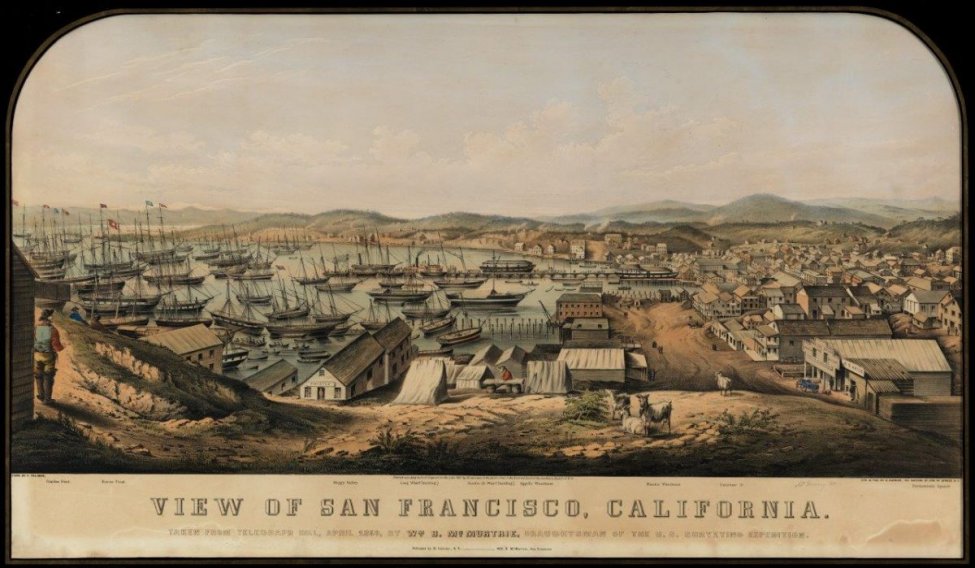
Not sure when the San Francisco brick factory got going and no clue what size bricks it made, well not yet anyway.
But here is some information on the reason to go from wood to brick very quickly.
From here Early History of the San Francisco Fire Department
Six fires in the first two or three years of her history caused the people to make extraordinary efforts to protect themselves against their recurrence.
New and better buildings; more precautions taken concerning the use of fire; the widening of streets; the purchase of fire apparatus, and finally the impressment of all citizen to fight a blaze and the organization of fire companies were among the earlier steps taken. Later on cisterns were built at strategical points.
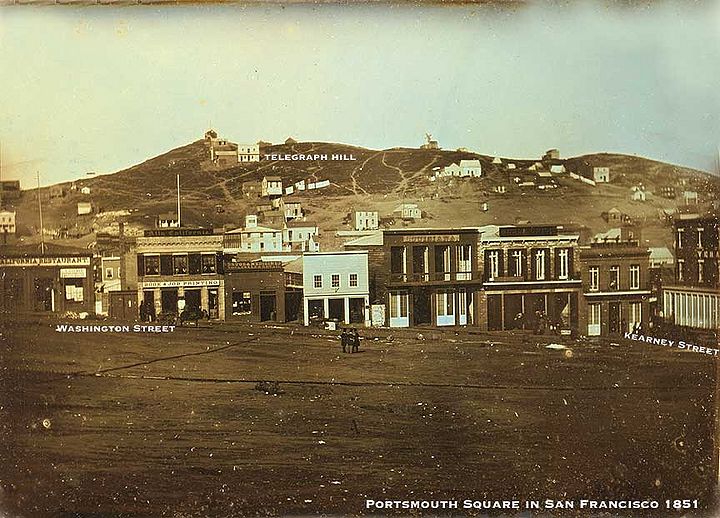
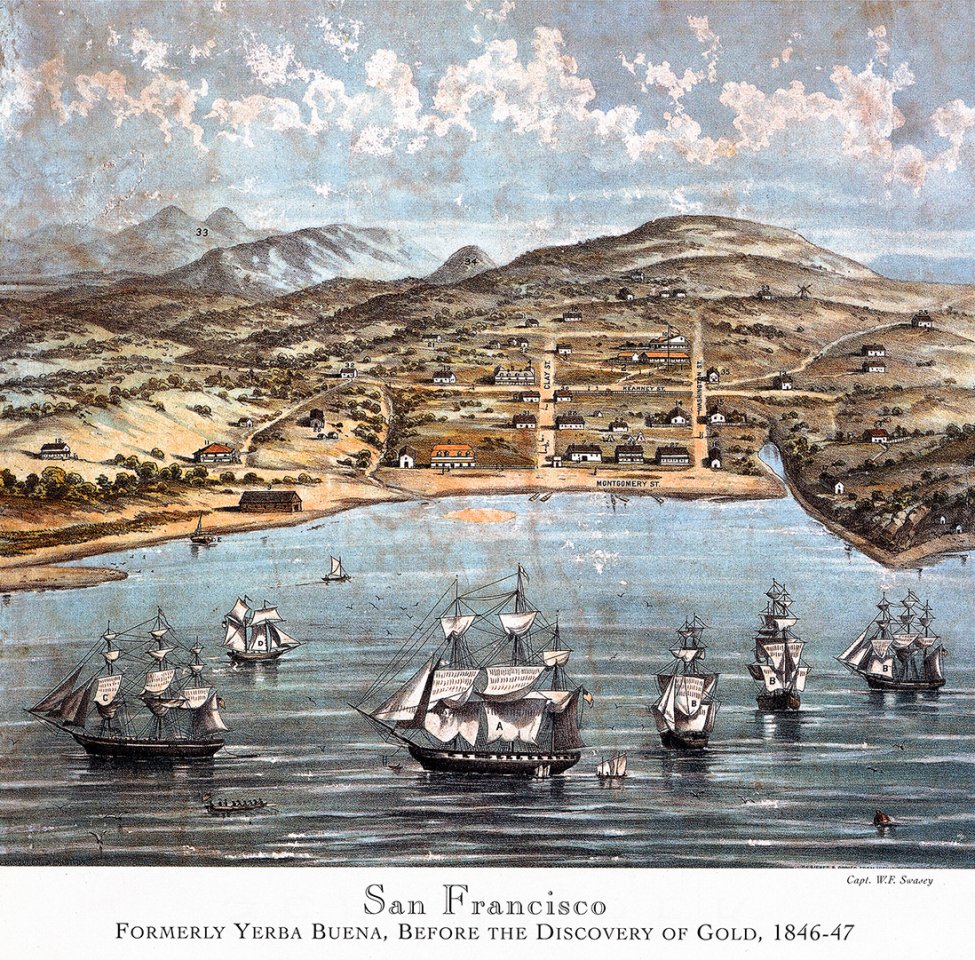
The first fire of any importance occurred in January, 1849, when the Shades Hotel was destroyed. In June following the ship “Philadelphia” was burned as it was preparing to sail for the Sandwich Islands. The inflammable material of which the town was built and winds made many thoughtful people realize that if a fire ever got started nothing could stop it.
Scarcely were the ashes cold when preparations were made to erect new buildings on the old sites, and within a few weeks the place was covered as densely as before with houses of every kind.”
One month later, on June 14, the third great fire started. It broke out at 8 o’clock in the morning for a defective chimney in a bakery. The wind was blowing and in a few hours the blocks between Clay, California and Kearny streets to the water were one more in flames.
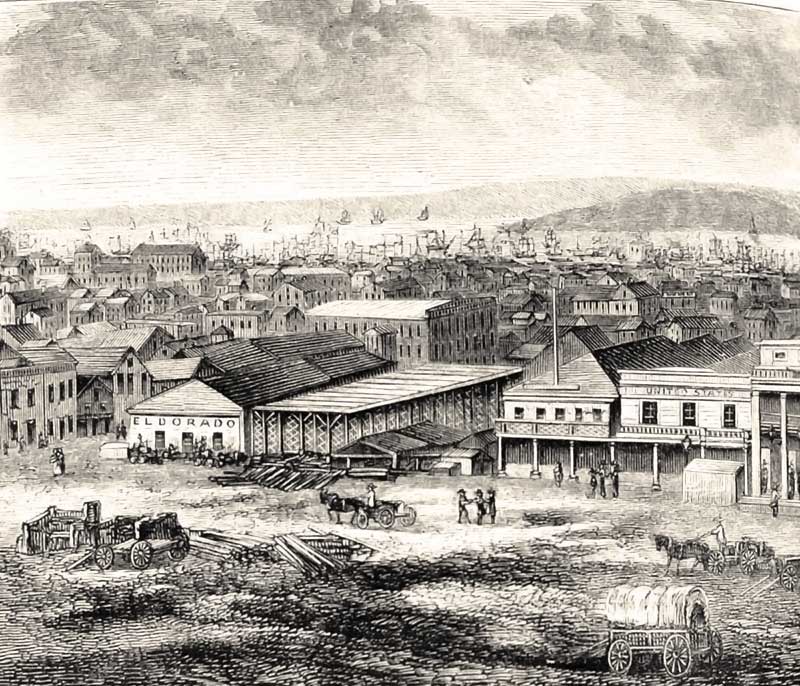
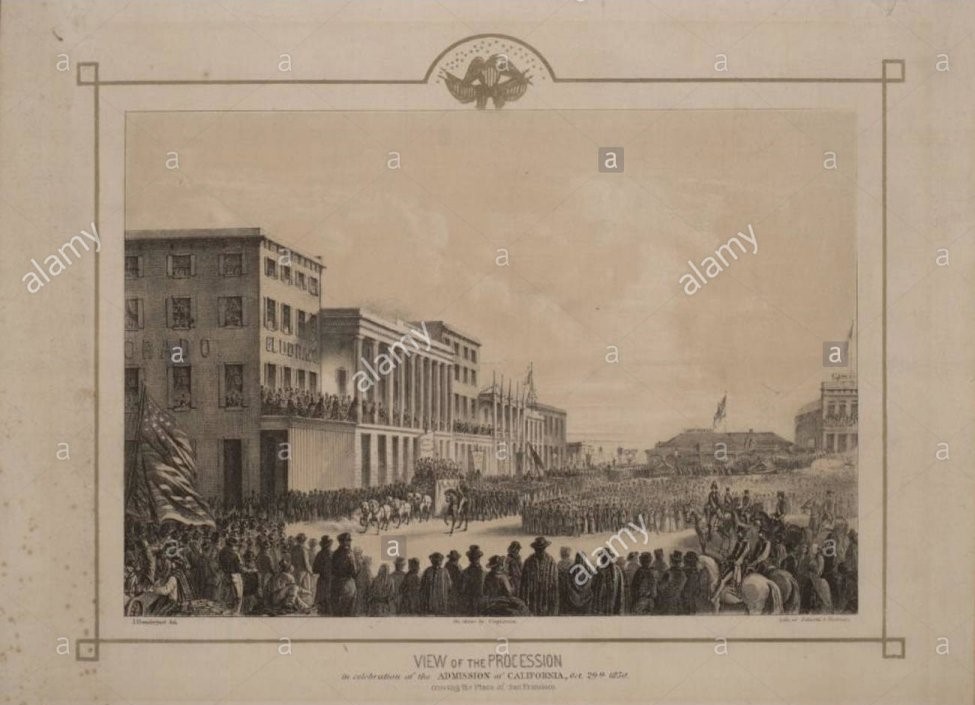
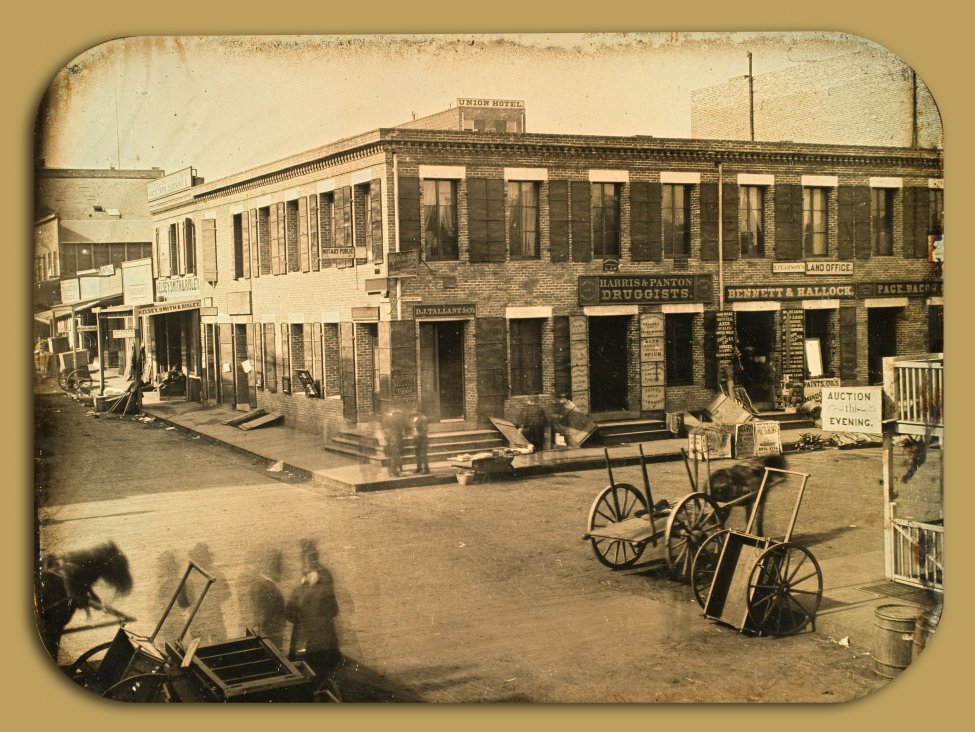
Experience had taught the people that although that the cost of fireproof brick structures was much greater than the cost of the old wooden ones, yet in the end they were cheaper and better, The style of architecture began to change for the better.
The fourth great fire broke out about 4 o’clock in morning of September 17, 1850.
On October 31 of the same year the City Hospital was destroyed. It was supposed to have been the work of in incendiary.
On the evening of December 14, 1850, just a year from the first great fire, the fifth great fire, not considering one or two smaller ones, started.
The fire burned for the period of ten hours. Between 1500 and 2000 houses had been destroyed. Eighteen blocks in the main business district had been destroyed.
Only five of the brick buildings on Montgomery street escaped. The burned district extended about three-fourths of a mile from north to south and a third of a mile from east to west.
On June 22, 1851, hardly six months after the previous one, another fire started. Again incendiaries were believed to be the cause. It began about 11 o’clock in the morning and the wind drove the flames in every direction.
The Jenny Lind Theatre, the property of Thomas Maguire, one of the most valuable buildings, was destroyed, which was the sixth time the owner had suffered by fire and lost everything.
They began to build houses now of walls two and three feet in thickness of solid brick to try and make them fireproof.
Terrible Experiences, Mother of Department
A REALISTIC description of the great fire of May 4, 1851, is contained in Frank Marryat’s “Mountain and Molehills.” And because of its effect on people, the dangers they encountered and how it had its influence in efforts to make the department ever more efficient, it is quoted in full:
Go to the site to read it.http://www.sfmuseum.org/hist1/fire.html
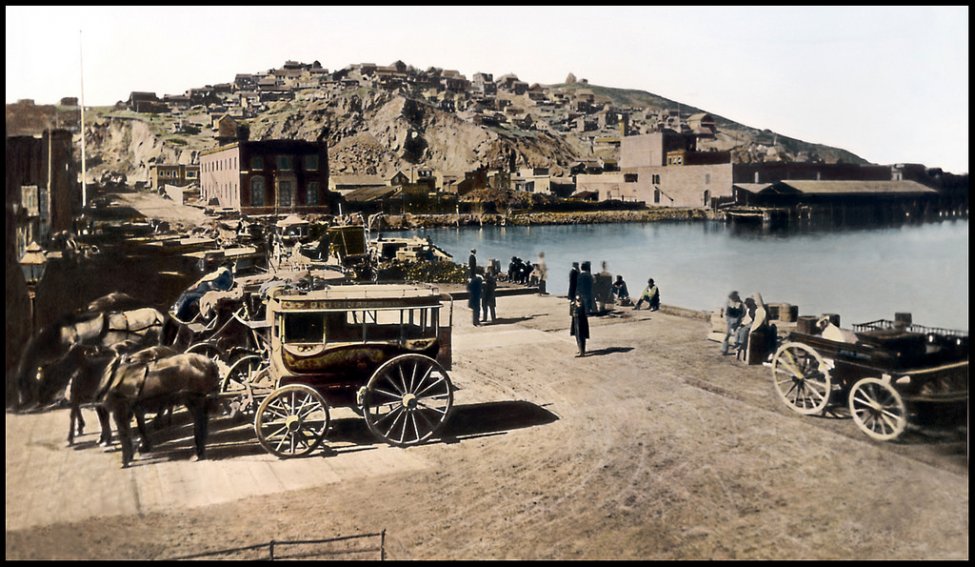
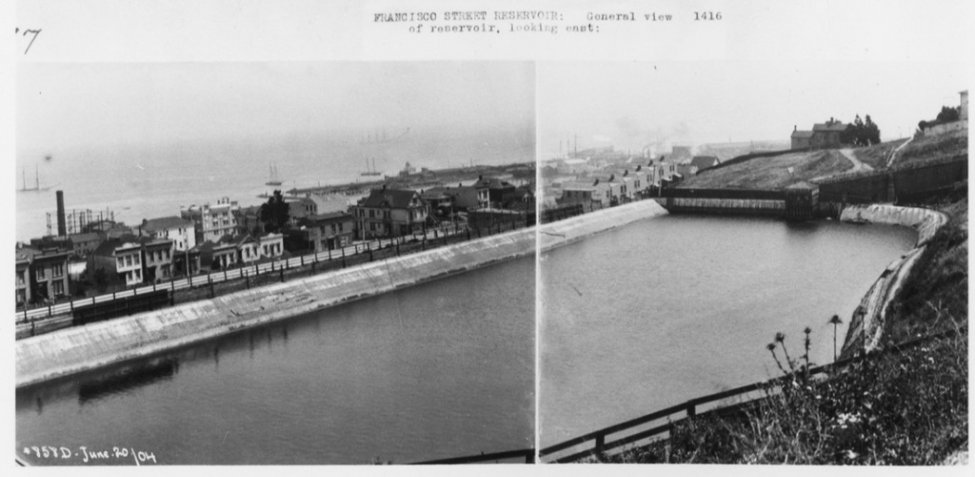
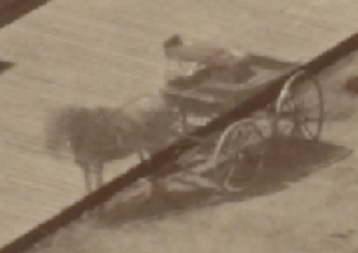
For visual evidence of large numbers of horses in the city checkout the hay ships here Work on Land & Water, 1880-1920 - FoundSF
They even had their own wharf.
Also whilst there clock the amount of timber being unloaded.