- Joined
- Sep 22, 2020
- Messages
- 4,691
- Reaction score
- 1,500
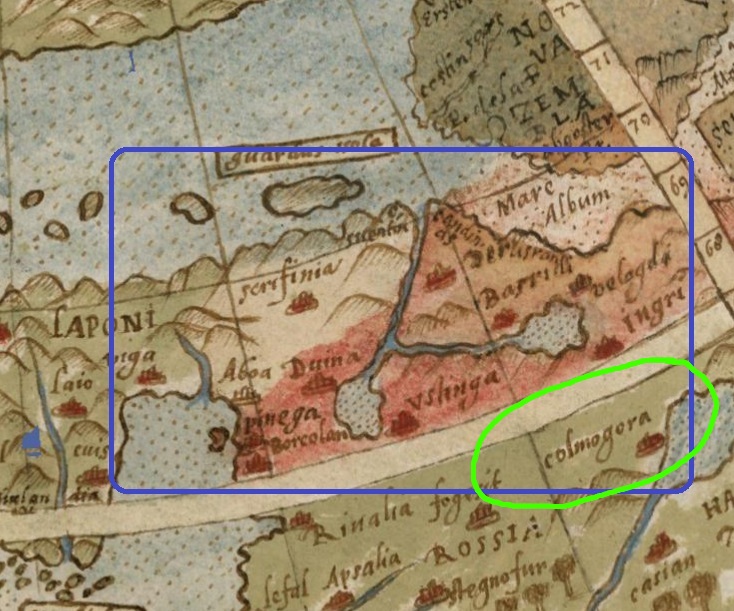
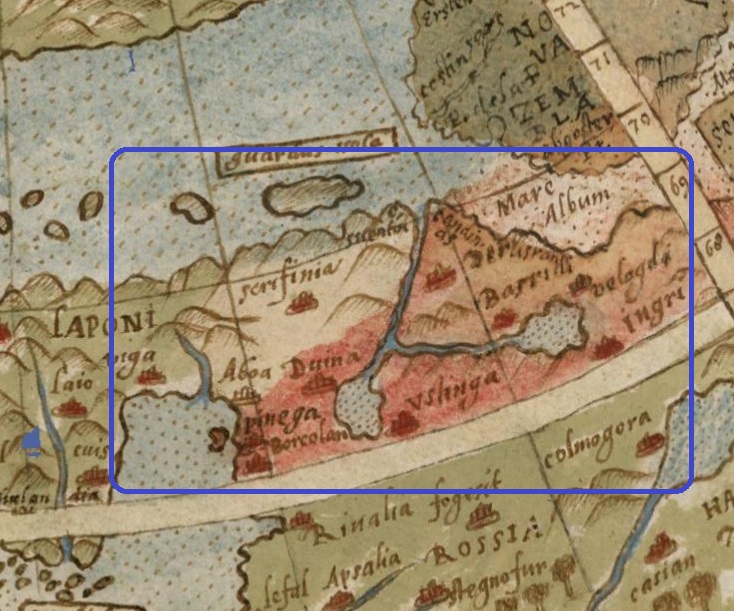
I am one of those who questions the traditional history of the Russian city of Saint Petersburg. I also think that older maps carry more conditional credibility than we think. One of the maps I find particularly interesting is the 1587 map allegedly produced by a certain Urbano Monte.
Yet, I do think that there is a slight chance that Aboa is not Turku, and that sources of the map attributed to Urbano Monte predate our recorded history.
Map 5
Map 6
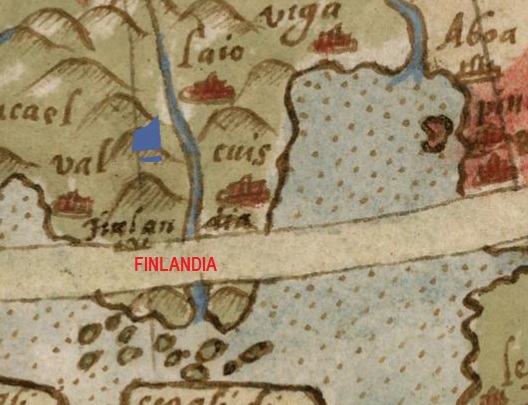
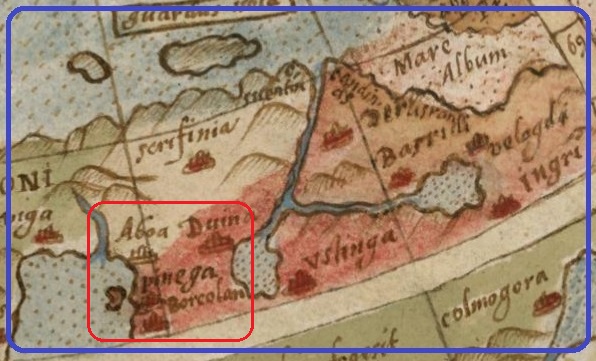
May be our Russian forum members could assist with referencing other cities/towns from the squared area. Places like Duina, Pinega, Barcolan, etc. could shed some light on what this Aboa was.
Map 10
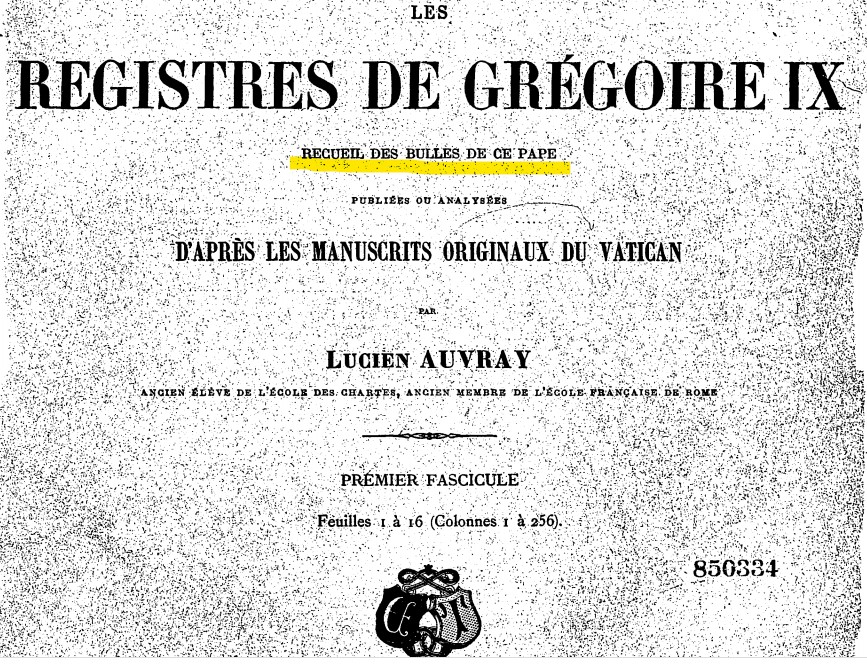
1229 Papal BullAccording to wikipedia: the Pope first mentioned the town Aboa in his Bulla in 1229 and the year is now used as the foundation year of the city. I am not sure the Pope (in 1229) would even know about some town of Aboa somewhere in the future country of Finland, unless it was a big and important city. Apparently he did know about Aboa, and chose to include this town in his public decree.
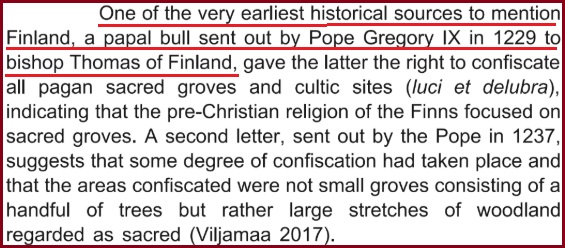
I would love to see the actual text of the 1229 bull in question. What does it say about the town of Aboa, and what specific words place Aboa where today's city of Turku is?
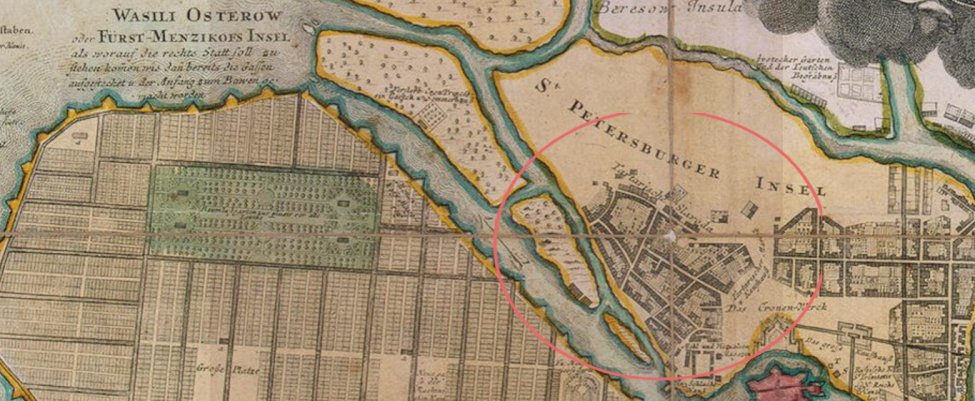
Etymology: PetersburgWhat if the name of this city has nothing to do with Peter the Great? I could see myself saying something like this, "Check out that city of stone in the middle of the bay." Depending on the language it could probably end up being called Peterburg.
KD: I just wanted to give this Aboa-city some exposure. I am not saying that I'm right, and Aboa did become Saint Petersburg. At the same time this is a hypothesis of mine, and could warrant further investigation. It would be interesting to see whether we have any additional information linking Aboa to Saint Petersburg.
Additionally, could it be that Peter the Great's Saint Petersburg incorporated more than one ancient city?
P.S. And one more thing about the 1587 map by Urbano Monte: I think it could reflect this world as it was some time prior to the Age of Discovery. IMHO there was no secret of what was where, but something happened and things changed. The event (Great Flood, Catastrophe, Cataclysm, etc) prompted the Age of Discovery to kick in. I would call it the Age of Re-discovery, but that's just my opinion. This map shows human hybrids, and the below thread could show what influenced my opinion on the age of the map in question:
- You can put this map on your Google Earth: download KMZ File and Open in Google Earth
- Requires Google Earth: download.
- At the time when this map was produced (copied), our Earth already looked different.
- This map is a "so-so" copy of a professional map we do not have access to.
- This map shows many no longer existing antediluvian cities, towns, terrain features and animals.
- I find it possible that some of the areas we are not allowed to see today. We simply do not know they exist.
- This map also shows many cities and towns we still have around today. Most of them were renamed and received an updated history.
- I do not see any reasons to believe that contents of this 10 square foot map were faked in order to mislead us. Masses do not care enough to justify its production.
- I view this map as something ancients could have included in their elementary school text books.
Saint Petersburg
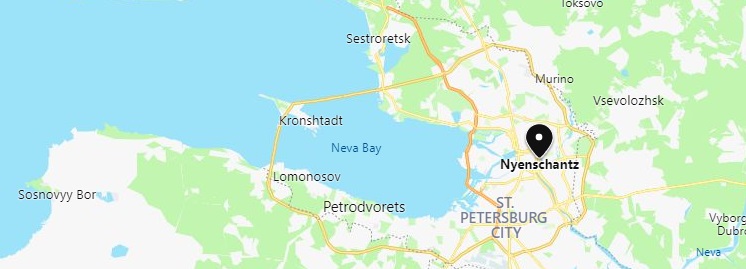
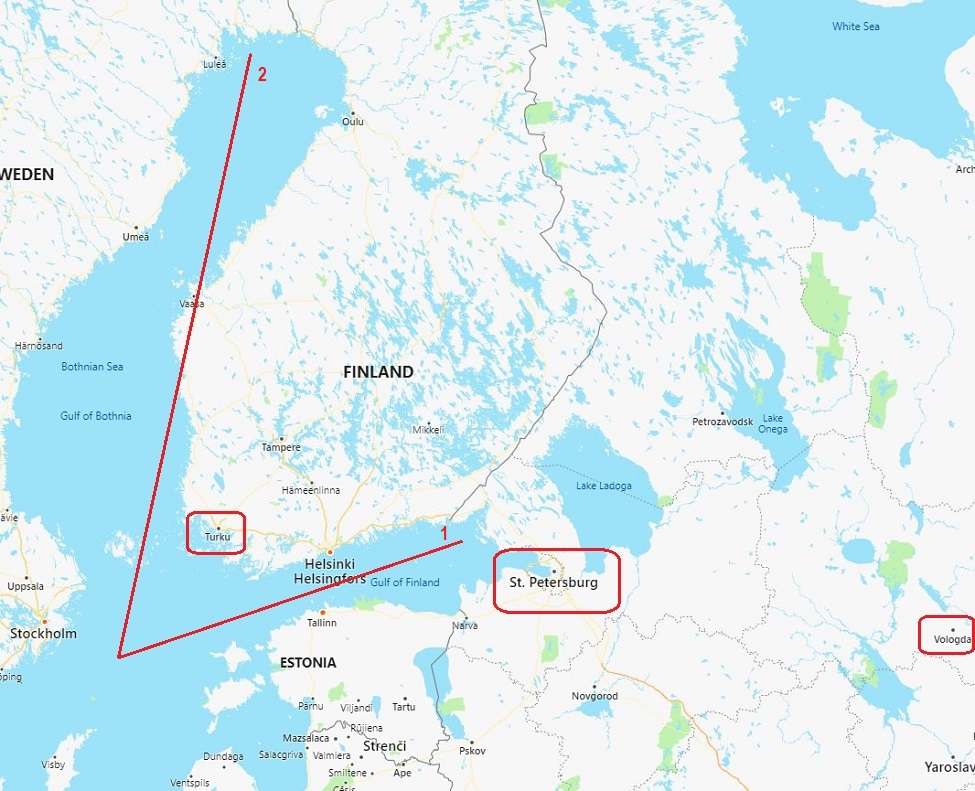
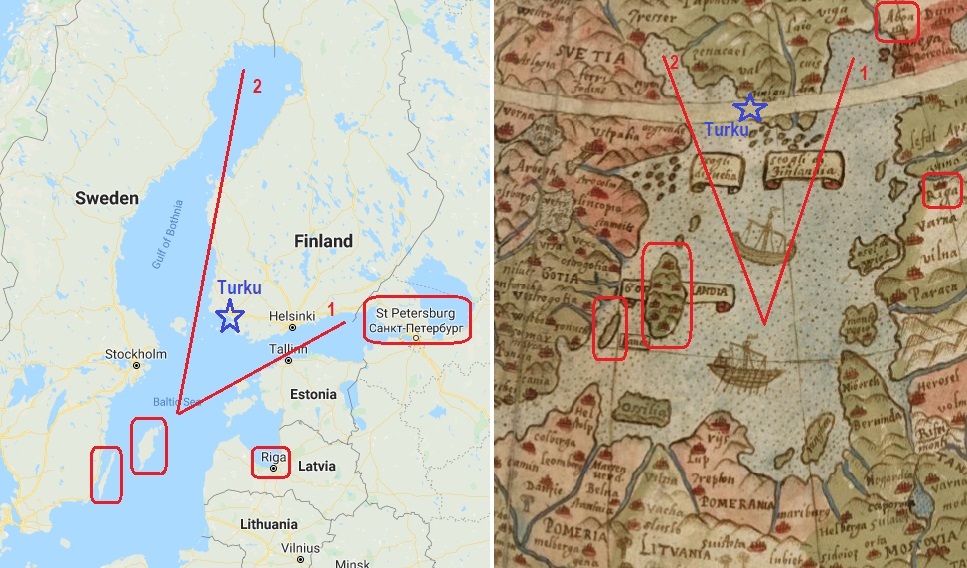
Per the narrative, the city of Saint Petersburg was named after Peter the Great. The PTB says he founded it: after winning access to the Baltic Sea through his victories in the Great Northern War, Czar Peter I founds the city of St. Petersburg as the new Russian capital.- The below lines and circled cities will make sense as we progress...
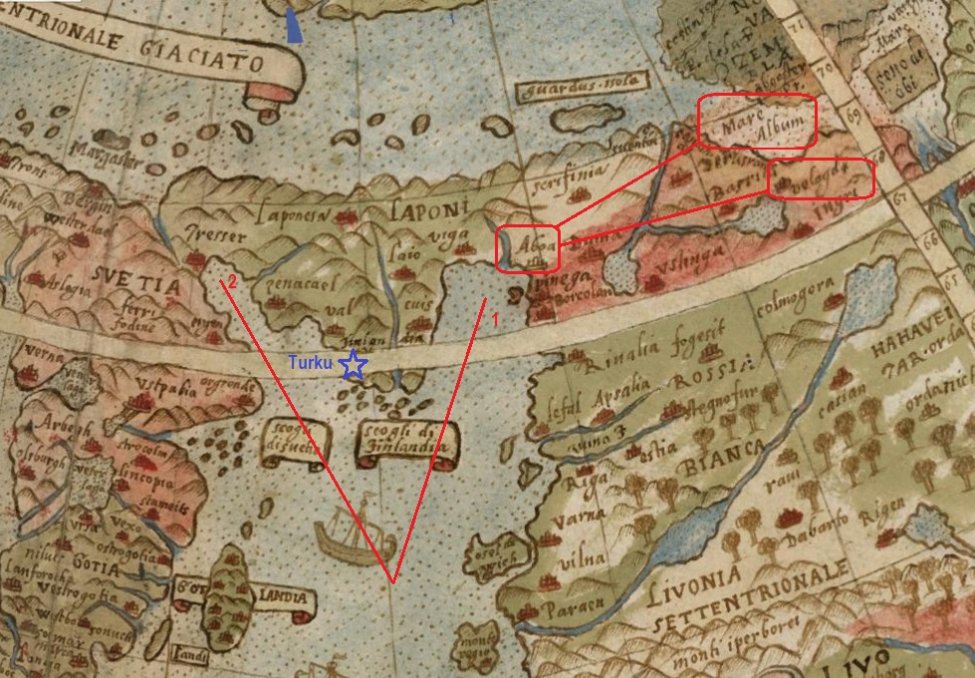
- 1 - Gulf of Finland
- 2 - Gulf of Bothnia / Bothnian Sea
Map 1
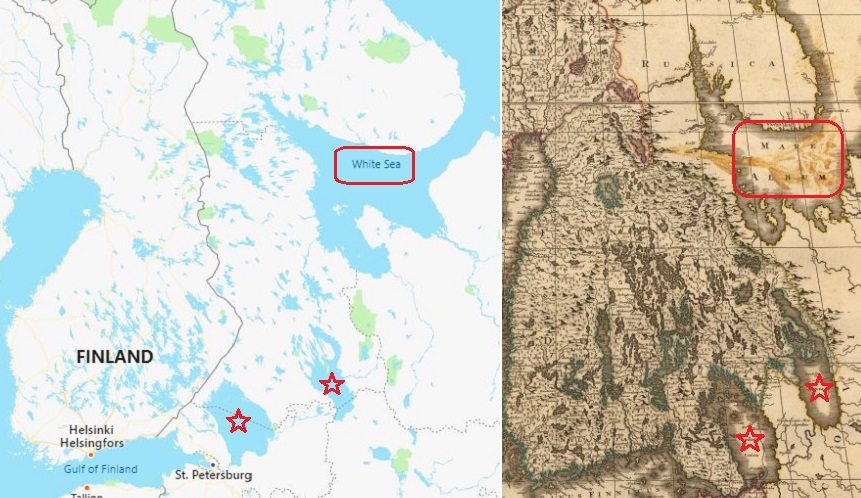
The White Sea is of great interest due to me using it as a reference point. Apparently the White Sea used to be called the Album Sea. It was not that long ago either. I have seen it on multiple maps, but the below example is dated with 1710. Wikipedia conveniently omitted the previous name of the White Sea in its dedicated article.
- Why did they change it in first place? What was wrong with keeping the Album Sea name?
Map 2
The city of Turku
Turku (Swedish: Åbo) is a city on the southwest coast of Finland at the mouth of the Aura River, in the region of Finland Proper. The region was originally called Suomi (Finland), which later became the name for the whole country.The city of Turku
- As the oldest town in the country Turku was the most important city in Finland, a status it retained for hundreds of years throughout the centuries under the rule of the Kingdom of Sweden.
- It was only after the last great fire in 1827 that most governmental institutions were moved to Helsinki along with the Academy of Turku (Turun Akatemia) founded in 1640, which then became the University of Helsinki.
- It is unknown when Turku gained city rights. The Pope first mentioned the town Aboa in his Bulla in 1229 and the year is now used as the foundation year of the city.
Map 3
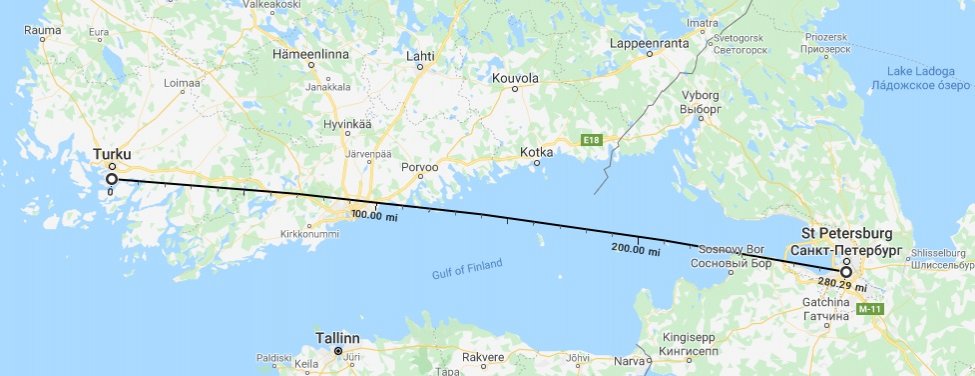
KD: Essentially, we are being told that the city of Turku used to be called Abo, as well as Aboa (per the papal bull of 1229).
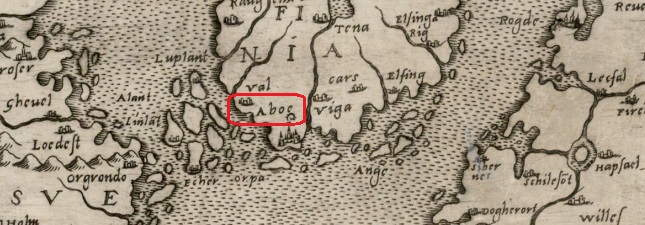
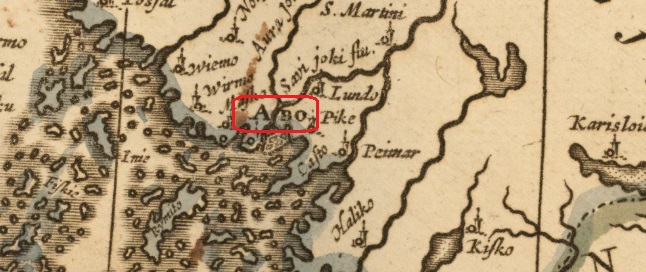
Yet, I do think that there is a slight chance that Aboa is not Turku, and that sources of the map attributed to Urbano Monte predate our recorded history.
Map 4
For additional referencing we could use Mare Album (the White Sea), and the city of Vologda. Compare the below Map 5 to Map 1 above.
Map 5
Map 6
Map 7
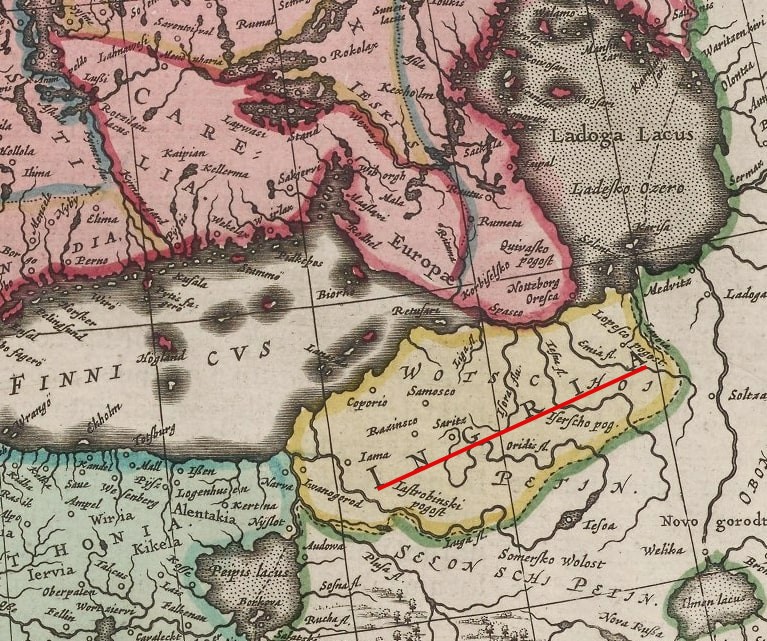
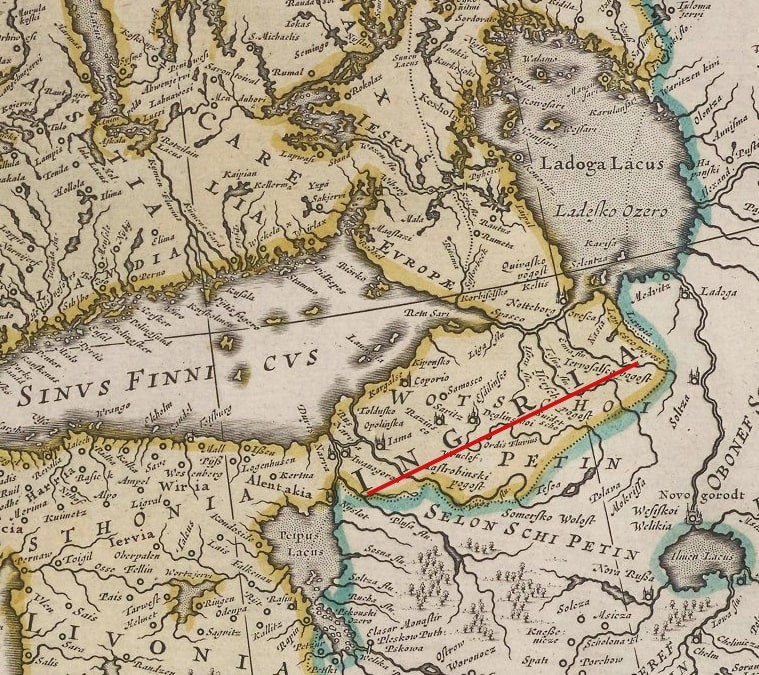
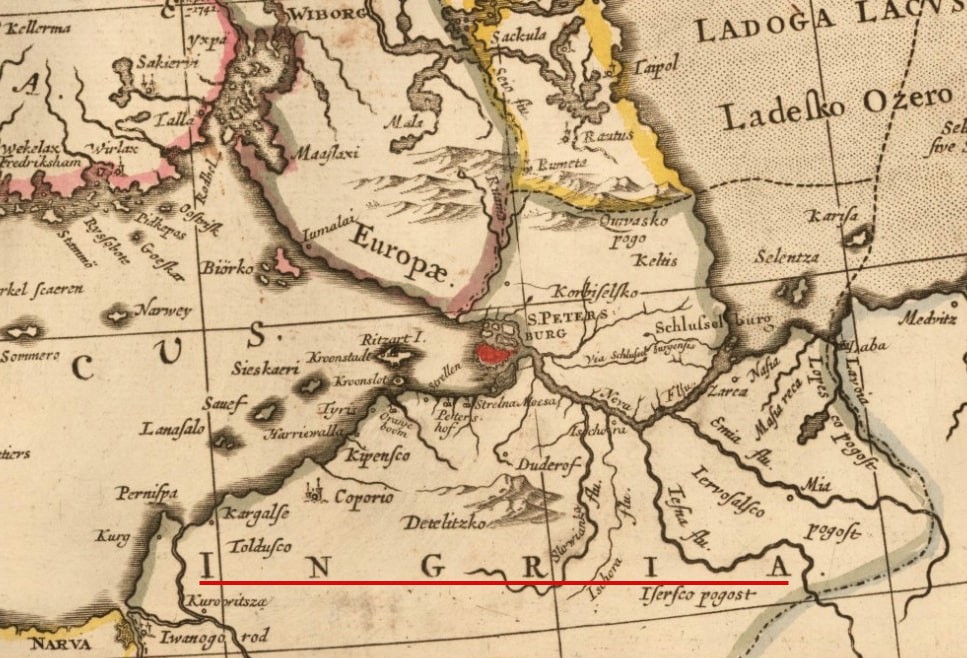
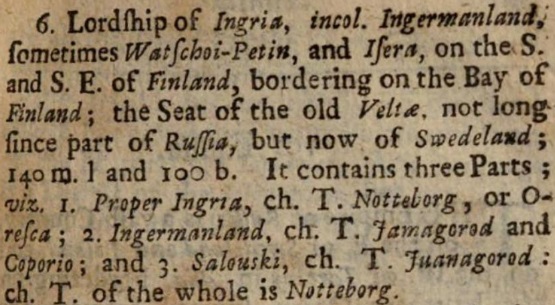
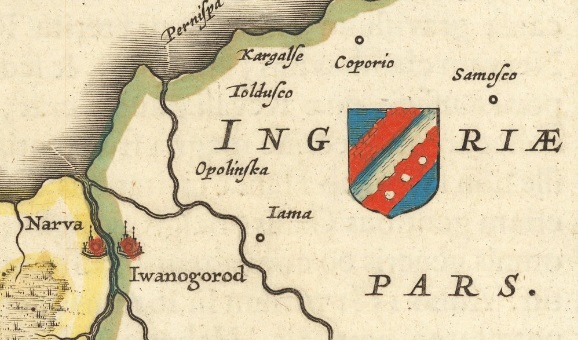
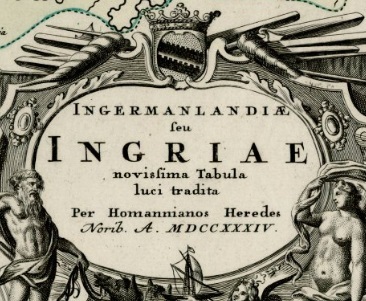
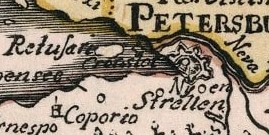
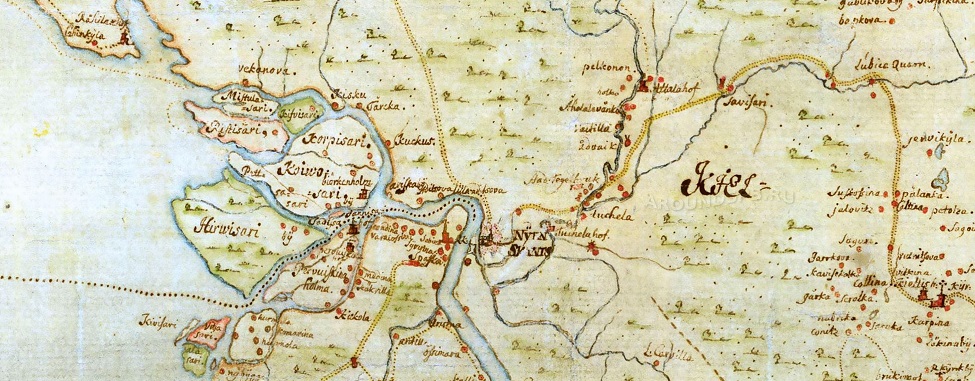
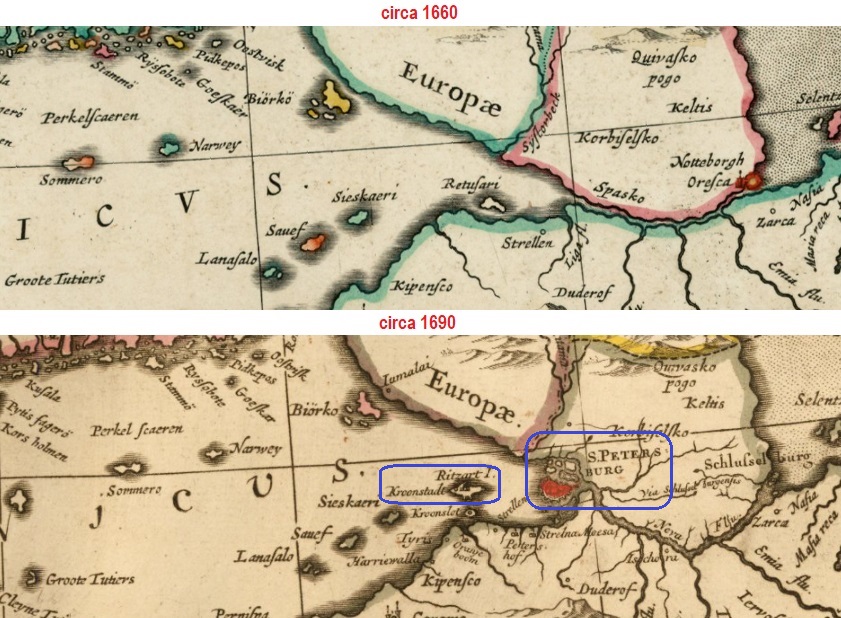
Both of the below maps are attributed to Anders Bure, who died in 1646. As you can see:
- Notteborgh Oresca became Schlusselburg
- Looks like Oresca is just a fortress these days.
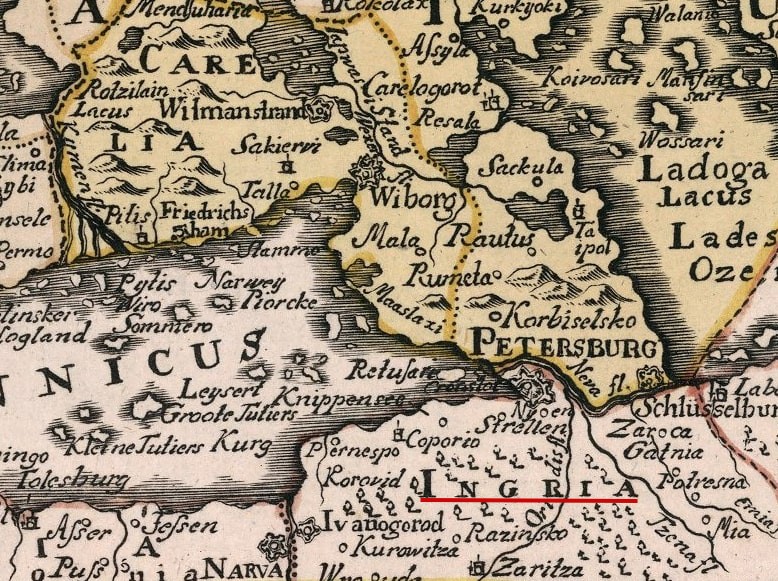
- I am not going to comment on S. Petersburg on the below 1690 dated map. May be it's a dating mistake, I don't know. At the same time I have hard time believing that their circa 1690s infrastructure could produce the star-city of S. Petersburg. Where did it come from?
Map 9
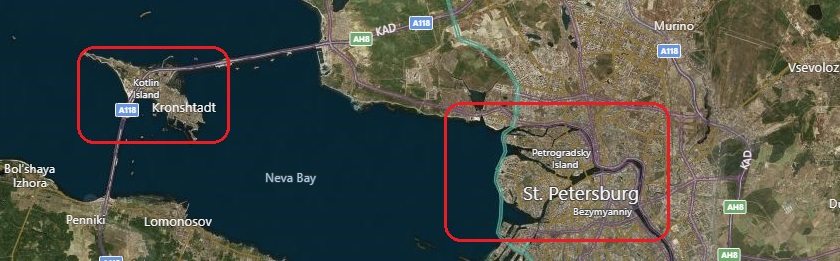
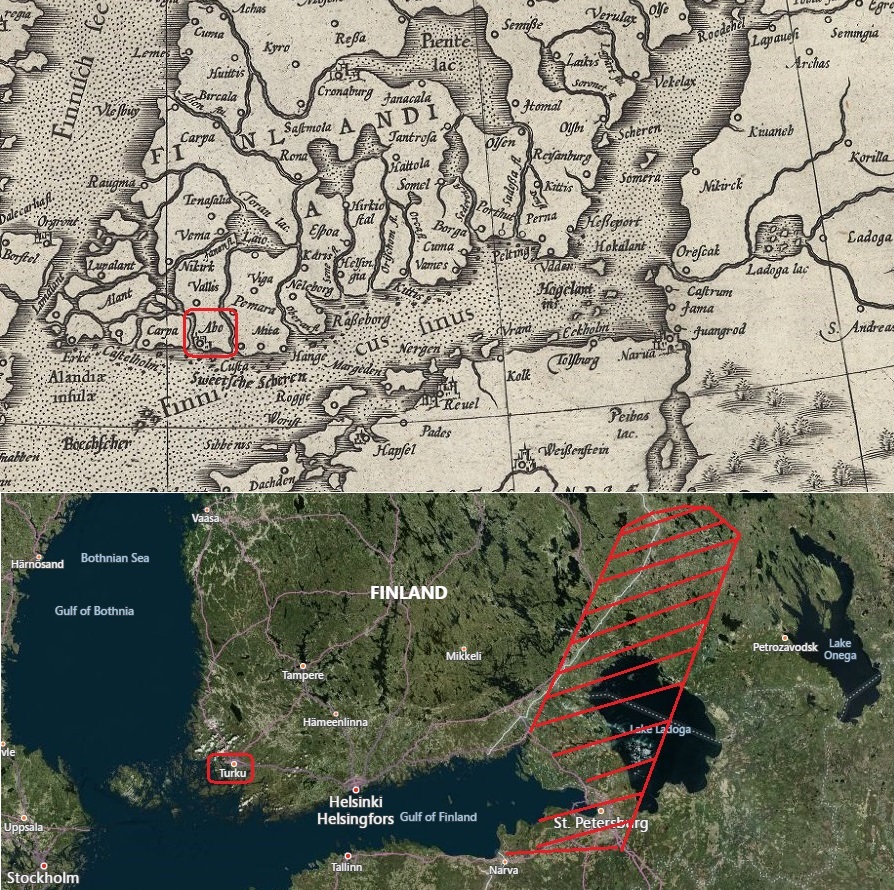
I think the below 1607 map (whenever that was) shows the area (post-cataclysm, presumably) when water levels were still high. As waters receded, a few antediluvian cities got exposed. I did a rough extrapolation of the submerged areas on our contemporary map. I'm probably off by a lot, but the general idea remains the same.
Map 10
1229 Papal Bull
How many Aboas?
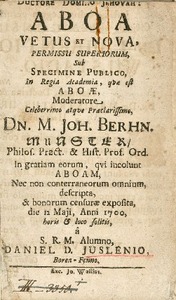
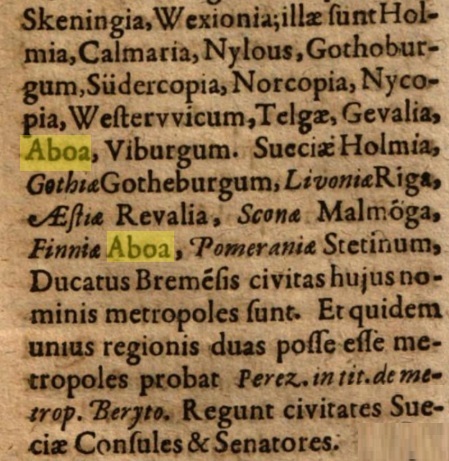
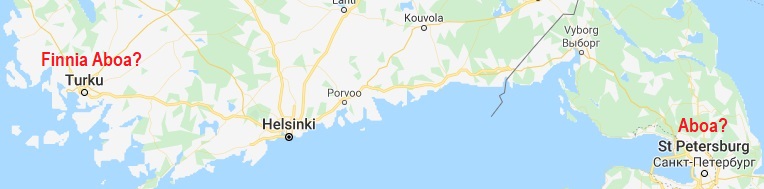
Could it be that there were more than just one Aboa? For example Aboa and Finnish Aboa? I am not sure what this text in Latin says, but it appears to be a list of cities or towns in the area. There appears to be two Aboas.- Aboa next to Viburgum
- Finnia Aboa
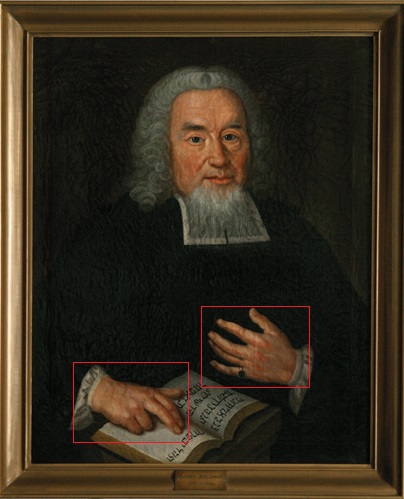
- He wrote, for example, Aboa vetus et Nova, in which he claimed that the civilisations of Rome and Ancient Greece originated in Finland.
- KD: Which Aboa would that be, Turku or Saint Petersburg?
Etymology: Petersburg
- Burg - town, city
KD: I just wanted to give this Aboa-city some exposure. I am not saying that I'm right, and Aboa did become Saint Petersburg. At the same time this is a hypothesis of mine, and could warrant further investigation. It would be interesting to see whether we have any additional information linking Aboa to Saint Petersburg.
Additionally, could it be that Peter the Great's Saint Petersburg incorporated more than one ancient city?
- Aboa
- Pinega
- Borcolan
Map 12
P.S. And one more thing about the 1587 map by Urbano Monte: I think it could reflect this world as it was some time prior to the Age of Discovery. IMHO there was no secret of what was where, but something happened and things changed. The event (Great Flood, Catastrophe, Cataclysm, etc) prompted the Age of Discovery to kick in. I would call it the Age of Re-discovery, but that's just my opinion. This map shows human hybrids, and the below thread could show what influenced my opinion on the age of the map in question:
Note: This OP was recovered from the Sh.org archive.
Note: Archived Sh.org replies to this OP are included in this thread.