

- Joined
- Sep 22, 2020
- Messages
- 4,691
- Reaction score
- 1,500
Roman, or Etruscan Fasces is one of the things we all have seen, yet our understanding of this bundle of wood appears to be as far from the truth as possible. I dare to say that we know nothing about it. This innocent pile of twigs with an attached axe could be one of the most powerful weapons known to mankind. I have strong reasons to believe that there is a group of people in our contemporary world, who know what this fasces device actually is, and what it does, and what it means. The meaning of this symbol should not be underestimated, for it allows us to understand who is who on the power ranking scale.
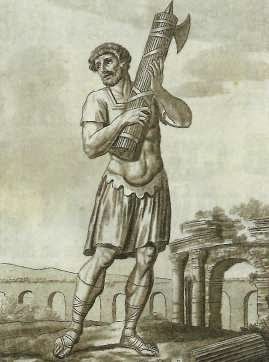
Fasces TodayThe presence of the fasces in the today's world should not be underestimated. Wiki gives us this explanation, "Numerous governments and other authorities have used the image of the fasces as a symbol of power since the end of the Roman Empire. It also has been used to hearken back to the Roman republic, particularly by those who see themselves as modern-day successors to the old republic or its ideals."



Benito MussoliniBenito Mussolini (1883-1945) was an Italian politician and journalist who was the leader of the National Fascist Party. He ruled Italy as Prime Minister from 1922 to 1943; he constitutionally led the country until 1925, when he dropped the pretense of democracy and established a dictatorship.
According to Livy, lictors were introduced by Rome's first king, Romulus, who appointed 12 lictors to attend him. Livy refers to two competing traditions for the reason that Romulus chose that number of lictors. The first version is that 12 was the number of birds that appeared in the augury, which had portended the kingdom to Romulus. The second version, favoured by Livy, is that the number of lictors was borrowed from the Etruscan kings, who had one lictor appointed from each of their 12 states.
I will side with Livy on this one. Romulus supposedly reigned reigned mid to late 8th century BC. Irrelevant the actual date, for we do not know when the 8th century BC really was. The important part is that the Lictors predate the most ancient of Romes, and that the number was 12.
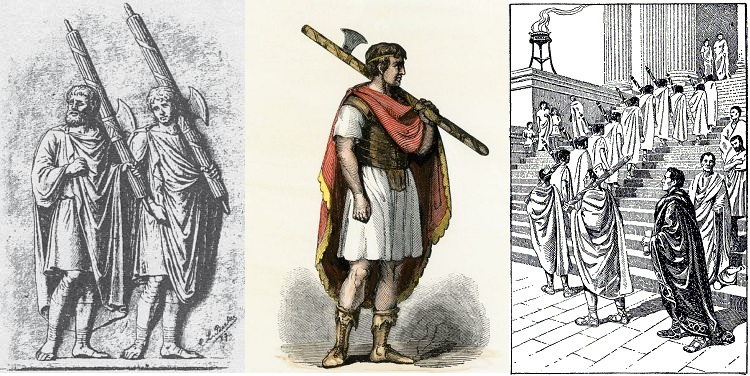
Essentially we get that fasces were carried by the bodyguards of those who had power of command. This in turn could mean the following:
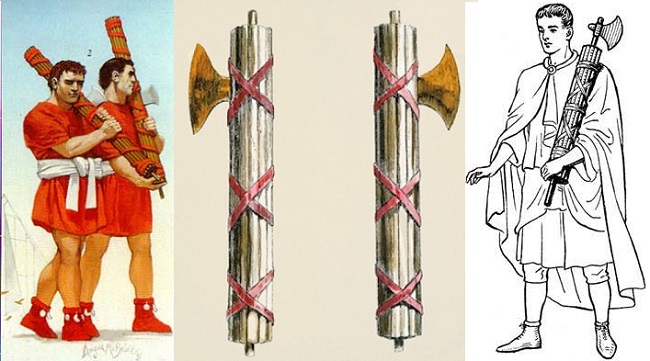
Contemporary Reenactment
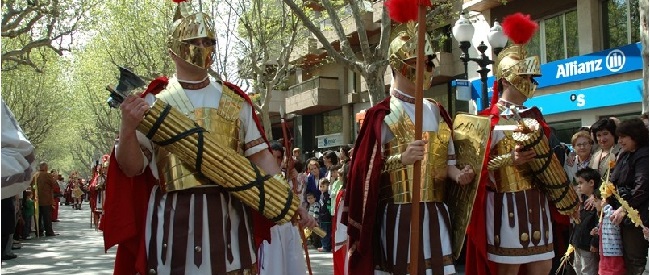
This fasces weapon is clearly bulky and clumsy, when looked at from the traditional stand point. Cut-edge weapons supposed to have totally different mobility. Hypothetically the axe could be removed and used conventionally, but close inspection of some of the etchings raises a question of whether it was really an axe.
Now, if those above fasces were merely bundles of wood, the warriors would look pretty ridiculous hugging those. To me it appears that they are taking aim. Of course they could tree-hugging, but this is something main stream would say. The number of Lictors in the above frieze reaches 17, if we were to believe the source site. At the same time I do not see 17 people with fasces, therefore I will stick with 12 Lictor limit max for right now.
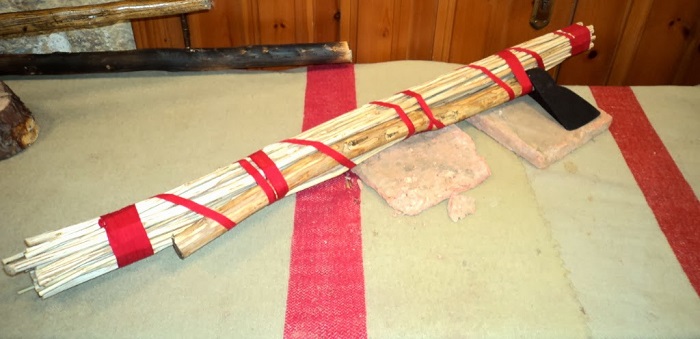
KD: We have these strange fasces item which is claimed to be a bundle of birch twigs with an attached axe. Yet it was being used to shoot down Zeppelins, and those particular fasces were allegedly electrical. Ancient bodyguards used fasces to protect those who had power to command. The symbol of fasces went through thousands of years to be a bizarre architectural, and artistic inclusion incorporated by some of the 21st Century Governments. Isn't it interesting.
Below you can see a piece of the 19th Century Transatlantic Cable, with some additional related images added below.
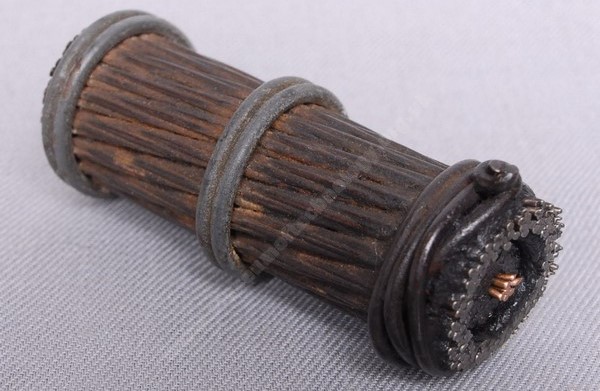


There is definitely a resemblance there in my opinion, but just like I said before, I do not now where the electric charge could come from. Could there be two different types of faces out there, with one being electric and the other one being acoustic/resonance?
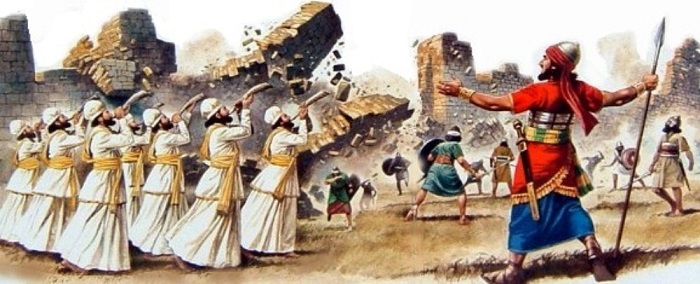
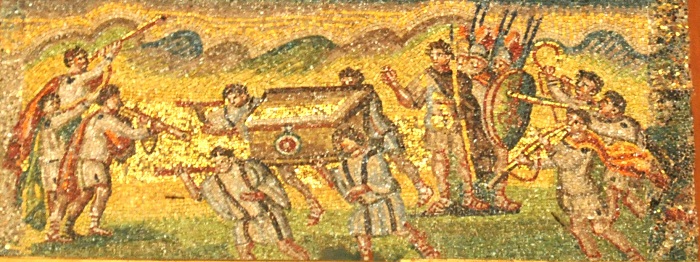
Pretty sure we can place the entire symphonic orchestra next to the Great Wall of China today, even the dirt filled wall is not going to collapse. Meanwhile the Jericho walls allegedly collapsed. Simultaneously, this sure does remind of a few other collapsed city walls.
Clearly, those were some special trumpets, not like the ones we have today. Could them trumpets be just a part of the fasces/trumpet resonance weapon setup?


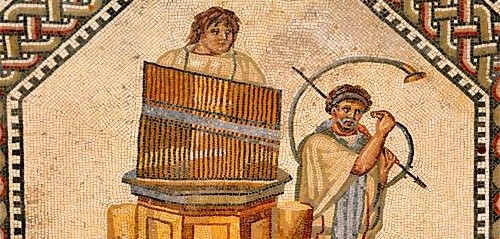
Regular Organ Music Instrument you can read about on your own. Wiki says it was invented by Greek inventor and mathematician Ctesibius circa 285–222 BC, but what do they know. He did not go for a simple organ, he started with the water organ. I guess it was easier. Backwards things are normal for our historians.
Things to consider:
Fasces Today
- Slavery in ancient Rome played an important role in society and the economy. Besides manual labour, slaves performed many domestic services, and might be employed at highly skilled jobs and professions. Accountants and physicians were often slaves. Slaves of Greek origin in particular might be highly educated. Unskilled slaves, or those sentenced to slavery as punishment, worked on farms, in mines, and at mills: their living conditions were brutal, and their lives short.


Benito Mussolini
1937 - Tripoli: Mussolini between the lictor's fasces, speeches to all Muslims of Libya
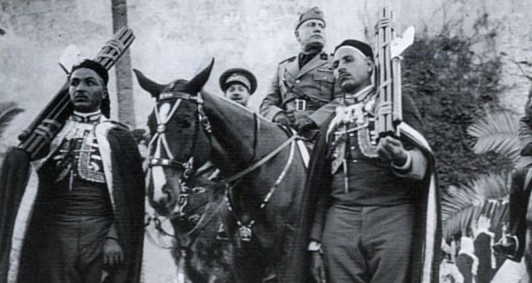
Mussolini with fasces left and right; and Adolf Hitler giving his famous salute
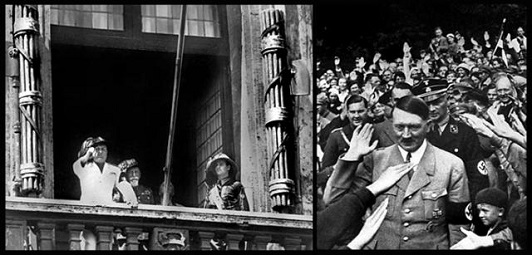
The Legend
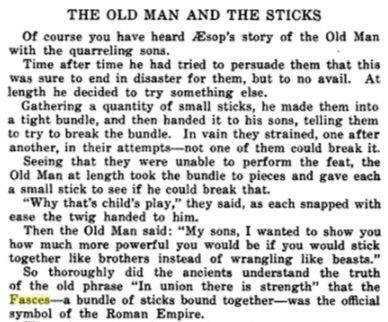
Wikipedia, as usually, leads us in the traditional, but wrong direction: the symbolism of the fasces suggested strength through unity; a single rod is easily broken, while the bundle is very difficult to break. It is often claimed that the rods could be used to lash people, and the ax to execute them. Mussolini with fasces left and right; and Adolf Hitler giving his famous salute
The Legend
The Lictors
At the same time, traditional textbook sources similar to Wikipedia do reveal a few details which allow us to isolate several important things. Only a few are more important than Lictors. Who were, or who are they?According to Livy, lictors were introduced by Rome's first king, Romulus, who appointed 12 lictors to attend him. Livy refers to two competing traditions for the reason that Romulus chose that number of lictors. The first version is that 12 was the number of birds that appeared in the augury, which had portended the kingdom to Romulus. The second version, favoured by Livy, is that the number of lictors was borrowed from the Etruscan kings, who had one lictor appointed from each of their 12 states.
I will side with Livy on this one. Romulus supposedly reigned reigned mid to late 8th century BC. Irrelevant the actual date, for we do not know when the 8th century BC really was. The important part is that the Lictors predate the most ancient of Romes, and that the number was 12.
A Consul on horseback preceded by his Lictors
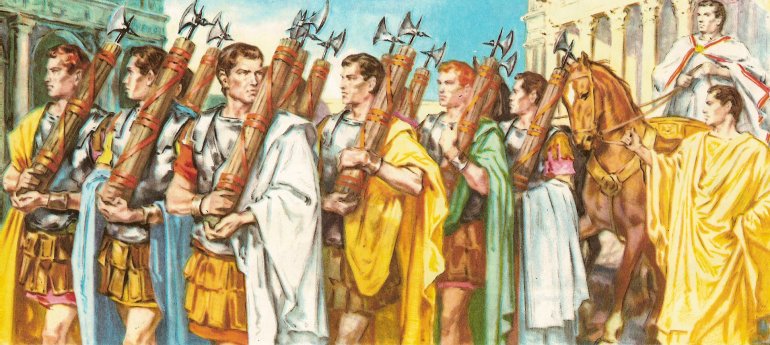
- Lictor was a Roman civil servant who was a bodyguard to magistrates who held imperium. Lictors were used since the Roman Kingdom, and according to Roman historian Livy, the custom may have originated earlier, in the Etruscan civilization.
- Imperium is a Latin word that, in a broad sense, translates roughly as 'power to command'.
Essentially we get that fasces were carried by the bodyguards of those who had power of command. This in turn could mean the following:
- fasces are weapons
- those with fasces are not in command
- those in command do not carry/display fasces
The Weapon
This is where we will have to heavily rely on our common sense. Obviously the main purpose of a bodyguard is to guard a body. In this case we have lictors protecting a person who had power of command. Lictors appear to have been the best of the best warriors available at the time, a kind of Special Ancient Forces of sorts. Lictors used to carry fasces, which had to be a tool of their trade. We are offered to believe that fasces was this:- By the time of the Roman Republic, the fasces had developed into a thicker bundle of birch rods, sometimes surrounding a single-headed axe and tied together with a red leather ribbon into a cylinder.
Contemporary Reenactment
Axe a Trigger?


Basically, I cannot picture this weapon being swung as a simple axe. Fasces clearly have different sizes, and shapes. Some have the axe looking device attached, and some do not. And this mysterious fasces was a weapon chosen by the bodyguards of the ancient top dogs.


Alamy Give Away
Alamy is a website selling images uploaded by some individual photographers. These photographers go places, take pictures, upload those to the website, and get a commission when the image gets sold (that's just my guess). Well, one of such photographers went somewhere, and took a picture of a painting which was accompanied by the below description.The last raid of Zeppelins, night of 29 to 30 January 1916. Since the beginning of the conflict, German aviation throw bombs on Paris.
Electrical fasces and bright rockets were used to defend the capital from aerial attacks.
source
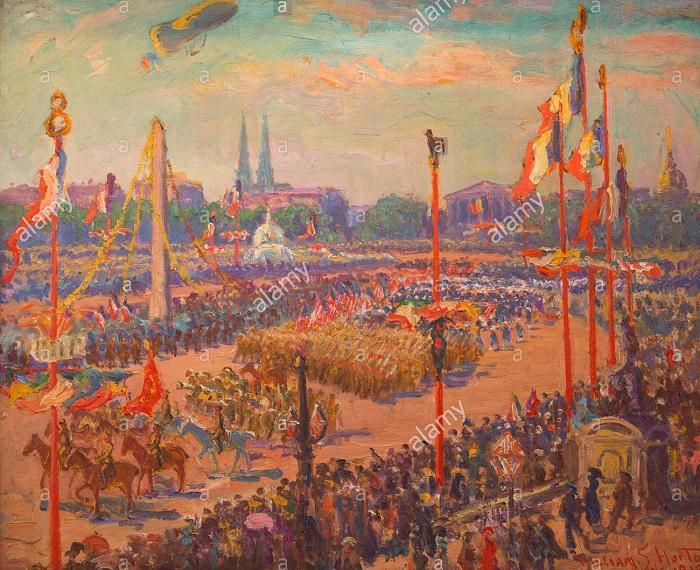
While I do understand that an image from Alamy is a questionable piece of evidence, I have hard time picturing somebody coming up with "electrical fasces ... to defend against aerial attacks". I do think that there is an old unknown painting with this description in one of the museums somewhere. I also would like to know how the fasces could be used to shoot down Zeppelins.Electrical fasces and bright rockets were used to defend the capital from aerial attacks.
source
Now, if those above fasces were merely bundles of wood, the warriors would look pretty ridiculous hugging those. To me it appears that they are taking aim. Of course they could tree-hugging, but this is something main stream would say. The number of Lictors in the above frieze reaches 17, if we were to believe the source site. At the same time I do not see 17 people with fasces, therefore I will stick with 12 Lictor limit max for right now.
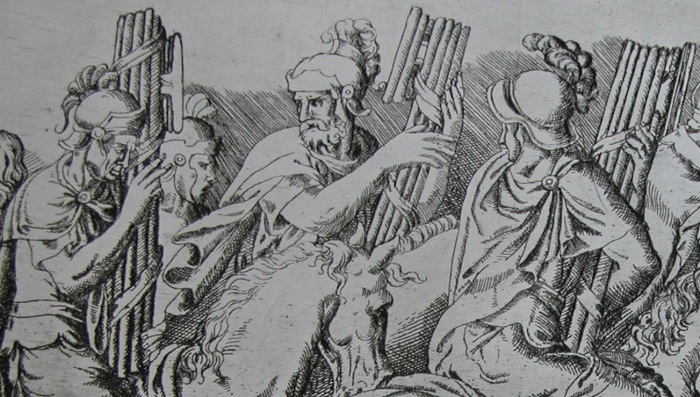
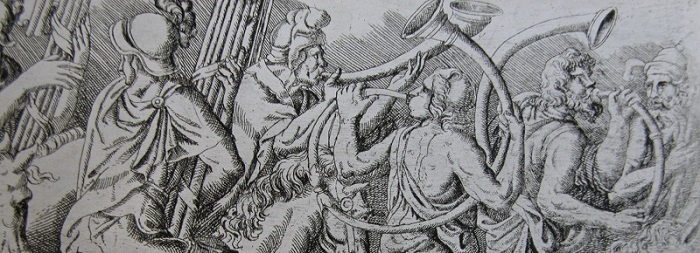


KD: We have these strange fasces item which is claimed to be a bundle of birch twigs with an attached axe. Yet it was being used to shoot down Zeppelins, and those particular fasces were allegedly electrical. Ancient bodyguards used fasces to protect those who had power to command. The symbol of fasces went through thousands of years to be a bizarre architectural, and artistic inclusion incorporated by some of the 21st Century Governments. Isn't it interesting.
Electricity and Sound
Keeping in mind the below two threads, along with "electrical facses" mentioned above, the electrical nature of the facses weapon was the most obvious thing to assume.- Atmospheric electricity and building destruction in the 19th century
- Lightning Rod Fashion: 18th century grounded Umbrellas and Hats
Below you can see a piece of the 19th Century Transatlantic Cable, with some additional related images added below.


Trumpets of Jericho
We all know that according to Joshua 6:1-27, the walls of Jericho fell after Joshua's Israelite army marched around the city blowing their trumpets. In the above-mentioned Frieze of Sigismund we can see trumpets right next to our fasces. Is this a mere coincidence?
1871 - Great Chicago "Fire"
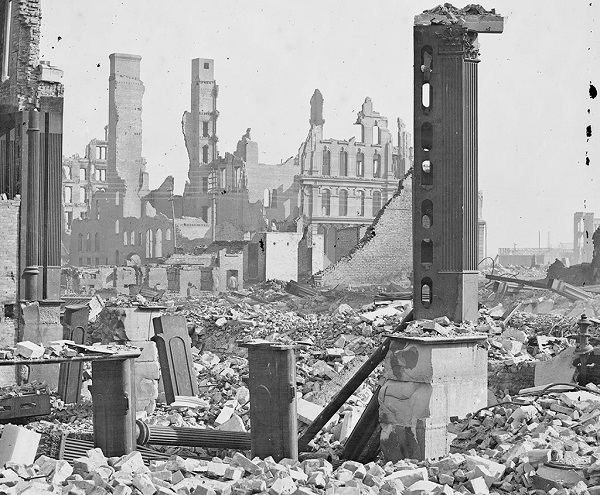


Clearly, those were some special trumpets, not like the ones we have today. Could them trumpets be just a part of the fasces/trumpet resonance weapon setup?
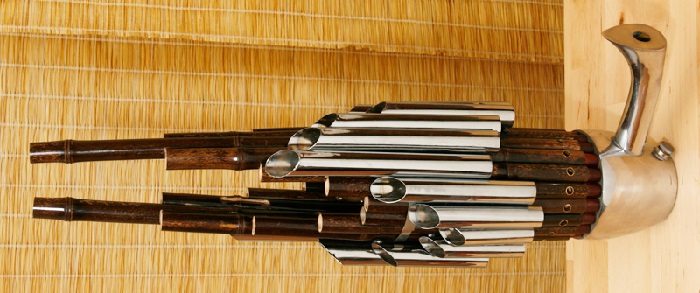
Sheng Mouth Organ
The sheng is a Chinese mouth-blown instrument consisting of vertical pipes. It is one of the oldest Chinese instruments, with images depicting its kind dating back to 1100 BCE. The development of sheng can be traced back to 3000 years ago.


- Insanity patients in 1908 Messina destruction: earthquake or guns?
- The symbol of fasces is displayed by Lictor Countries. This makes USA, Russia, England, France, etc., merely a group of glorified bodyguards
- Lictors protect whoever holds imperium, aka "power to command". This protected country (family, group, etc) does not display fasces
- Is Vatican the one with "power to command"?
- There could be two types of fasces weapons: electric and sound based
- We can not fully comprehend the power of this weapon (if it even existed). We observe various sizes of the fasces, which suggests that there had to be a reason for it. Could various sizes (length/thickness) be related to power difference?
Note: This OP was recovered from the Sh.org archive.
Note: Archived Sh.org replies to this OP: Lictors and Roman Fasces Weapons: Grand Deception


