Moonlight Towers and the Wayne County anomaly

That's what they want us to believe. The problem is they would need to be replaced almost every day and there would need to be somebody climbing up every single tower to replace all six bulbs. I don't believe it.
Belief is fine however the available evidence including physical bulbs and they are still being made today counter that belief.
Surely it is worth trying to track down the type of bulb you believe was used.

Incidentally what were you looking for in that op photo?
Vanilla skies perchance or something else?
Reason for asking is there is nothing stand out about it to my eye.
 
Belief is fine however the available evidence including physical bulbs and they are still being made today counter that belief.
Surely it is worth trying to track down the type of bulb you believe was used.

Incidentally what were you looking for in that op photo?
Vanilla skies perchance or something else?
Reason for asking is there is nothing stand out about it to my eye.

Somebody was going through old photographs in a video a while ago and had noticed the reflection in the puddle but didn't look any further into it. I managed to find the exact photograph and take a closer look for myself.
 
Somebody was going through old photographs in a video a while ago and had noticed the reflection in the puddle but didn't look any further into it. I managed to find the exact photograph and take a closer look for myself.
Thank you. Much appreciated.


A process.
I went and put this search string into startpage images.
Detroit in paintings 1800

Out came this image on this site Moving to Michigan in the 1800s
download-6.jpeg

Hmm a printed version so not an original.
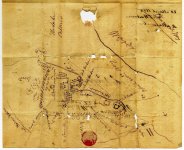
I had never heard of General Macomb or even the surname Macomb. So back to start page with this search string. General Macombs map Detroit.
Out came this interesting colour version. Interesting as it contains numbered buildings. And its zoomable at the link.
I still had the feeling it wasn't the original because it isn't by the general nor from the genrals time
This view was painted by C. P. Mithoff in 1931 and was based upon a view created by General Alexander Macomb. This view was most likely created as a model for a printed view, which appears never to have been published.
https://www.geographicus.com/P/AntiqueMap/detroitin1818-mithoff-1931
DetroitIn1818-mithoff-1931.jpg

Just along in the search results was this map from here
Moving to Michigan in the 1800s
Macombs_March_1813_map_A.jpg
Not Detroit obviously but it is best I can tell from that scan a scan of an original map.
However it predates the printed Detroit map by five years so maybe General Macombs drawing skills improved during that time.

So going with the probability the Detroit map is authentic to the time of General Macomb and he was making an accurate map then quite honestly if there were pre existing structures in Detroit of that date, 1818, they were not within the area of Detroit as it was then and must have been outside it but inside the area of the Detroit of the 1880's, if that makes sense.
If that's where they were then they weren't something worthy of drawing, at least to General Macomb or they were drawn and that map is still locked with a government archive.

Upshot is the light towers are not present on his map ergo they weren't there in 1818. The caveat as always is the map could be faked either at the time or fairly recently but how it would be possible to figure that out I know not.
General Macombs name is behind a fair few similar maps and this I would argue he is likely a life and death character not a made up one as so many are. Perhaps a dig into the General himself would reveal more but I feel that is outside the scope of this thread.
Turns out the printed map itself is dated to 1915!
1958.192.047 - Poster | Detroit Historical Society
The numbers are explained in this version.
Onwards with the search.
 
Last edited:
That's what they want us to believe. The problem is they would need to be replaced almost every day and there would need to be somebody climbing up every single tower to replace all six bulbs. I don't believe it.

This video is all the evidence anybody needs for harnessing electricity from the atmosphere:

View: https://www.youtube.com/watch?v=ENeDkGce5-4

Running corona motors was one of the options I was thinking of when I said if you are high in the sky and dangle a wire down you will also have voltage.

Not sure what the latest public work on designing DIY corona motors is. Something like this perhaps:
 
So I dug a bit into Macomb and all I could find is the claim he made a sketch of the layout of Detroit but its survival or its whereabouts today don't get a mention.
However I did find this image of the Detroit of 1821
60.151-d1.jpg
From here | Detroit Institute of Arts Museum
which features the twin spires of a catholic church built in 1818.

From here Sainte Anne de Detroit Church - Clio
On October 5, 1703, the church, the rectory, and the parish records were destroyed by a fire that swept through the settlement. A make-shift church was set up in Cadillac’s barn for several years.2 On February 2, 1704, Cadillac’s daughter Marie Therese was born, the first European born in Detroit, and the first recorded birth and baptism at Ste. Anne’s.2 In 1714, a third church was also destroyed by fire, though this time intentionally, as soldiers of the fort wanted to prevent it from housing Native American enemies they were battling.3 Other churches were built in 1723, 1755, and 1806.2 Finally, a seventh church, constructed from stone, was built in 1818 near Larned and Bates Streets.
The seventh church would be the one whose twin spires the general painted.
Why two spires thought I. Well apparently...
In 1886, the parish had outgrown its little stone church and constructed a new Gothic Revival cathedral of red brick and limestone. Designed by Albert E. French and Leon Conquard, the eighth home of Ste. Anne’s parish is a standard cruciform plan with twin spires at the front that are reminiscent of the cathedrals of northern France.
Nowhere can I find an image of the seventh church save the view of Detroit of 1821 the general painted. That said in that painting the twin spires are the tallest man made structure in the painting so where are the allegedly pre existing structures to be found?
Just to further muddy the waters that site has this image on it. No attrribution or provenance information is given but still here it is.
large_25228.55378.jpg
1749 illustration of Detroit, with Ste. Anne's depicted on the far right​

Carbon arc info of the time.
Understanding Early Arc Lamps
Light Sources
London's arc lights in 1881.
Arc Lighting in London, 1881
Tesla solved the feed problem.


View: https://m.youtube.com/watch?v=RL9uvw2s7pY
 
Last edited:
We all encounter a problem with discussing issues that contain several options. It's laborious to set out the options we think might be present and difficult to track responses and arguments for each option's sub-options.

It derails so many conversations, I'd like to know if there is a name for this problem so I could see if anyone has developed techniques to manage similar discussions.

Returning to the light towers... I think our knowledge is deliberately, carefully curated, so when we're shown crude manipulations that stand out as being inexplicably careless, I tend to guess they are inserted or leaked as tests to see if we can detect inconsistencies.

That's the unwritten thought that lay behind my option 4.

Something like this:

Just for my piece of mind. Or maybe for this week's AI progress report. Source: Westworld

The other suggestions are illuminating. Take the viziers' spiked hats... Our knowledge curators may hope we spot their similarity to these hats:

View attachment 30341
Bronze hats from Germany

which I presented as possible examples of these hats:

View attachment 30342
Royston Cave wall carving.

If there is/was a communication technology whose equipment resembled these, then perhaps Royston Cave depicts this equipment being used to take bids and share prices over a wider distance on market days above the cave.

But if so, we're still missing materials and methods necessary to understand how this technology worked (specifically: methods and materials for transmission/propagation, modulation and demodulation).

A clue about high lights is that their installers seem to have cared about illuminating rooftops and risks at roof-height. I wonder if there is an airship delivery clue in that. It also tallies with the seemingly unnecessary amount of structure - cupolas, gazebos and ironware that used to poke above roofs in the past.


If I've correctly understood what is going on with atmospheric potential gradient, then: be high in the sky and hang a wire down and you will also have voltage. Which might be useful for recharging kit that you have with you high in the sky. Or for phase-changing materials that you have with you high in the sky.

One thing that might help is a potted history of Detroit's industries and their time periods, particularly around these photos' 1882 period. See Industrial Detroit - 1860-1900. with the usual caveat that nothing should be taken as authoritative, complete or accurate.

In that list, the terse line:


stands out as odd. It's a power-related industry but what happened that centred it in Detroit at this time? We also see mentions of new technologies coming in around this time but nothing about the industries that were being replaced.
The stove abundance has to do with available steel, as noted in this entry from the same source. Also why Detroit be ame an automobile manufacturing center.
  • 1864: The first Bessemer-type steel is produced at Eureka Iron Works in Wyandotte, laying the groundwork for railroad, stove, and automobile manufacturing in Detroit.
 
After watching a few videos on the remaining towers in Austin, TX I just don't understand the towers. The live shots do not seem to show an illumination worth the trouble of the installation and mainatance not mention the noise and debris that the arc lambs were to have given off. The most impressive etchings seem to show a lighthouse effect but the only thing I've seen on the various videos show a zoomed in visual of the lightbulbs lit at the top of the tower, nothing of the straet visibility below. I don't believe this was the original use.
 
After watching a few videos on the remaining towers in Austin, TX I just don't understand the towers. The live shots do not seem to show an illumination worth the trouble of the installation and mainatance not mention the noise and debris that the arc lambs were to have given off. The most impressive etchings seem to show a lighthouse effect but the only thing I've seen on the various videos show a zoomed in visual of the lightbulbs lit at the top of the tower, nothing of the straet visibility below. I don't believe this was the original use.
What makes you think they are still using arc lamps?
In the second world war all the searchlights on land and sea were arc lamps used becuase of the brightness of the light the arc produces.
I'll have a ratch amongst some online articles to see if I can discover what the ones in modern day Austin are.
 
What makes you think they are still using arc lamps?
In the second world war all the searchlights on land and sea were arc lamps used becuase of the brightness of the light the arc produces.
I'll have a ratch amongst some online articles to see if I can discover what the ones in modern day Austin are.
I do not believe arc lamps are still in use with the towers. When looking at technology from the past one must do so with reason. Was there a need and did the technology fill the need? How did it work? What was the cost of operation, etc. My point was that while the idea of moonlight towers seemed groundbreaking, the actuality of how they worked (when arc lamps were used) seemed a major cost of time, effort and annoyance. The best way to see an example today of the output and practicality is Austin. With different bulbs, of course.
 
As you say the bulbs are no longer arc lamps.
The point of the arc lamp is the brightness of the light the arc produces is the only thing that gave rise to the towers. At normal streetlight level where obviously maintenace closer to hand, their brightness was too much.
That said other cities at the links I prtovided, most notably Paris, used arc lamps at normal streetlight level but most put them up on huge masts.
The wiring is talked about in the last two carbon arc links and is most interesting.
Prior to electricity or taking electrticity away light of the artificial kind comes from flames. Something has to be burnt to create a bright enough flame to illuminate a certain physical area. The bigger the area the bigger or brighter the flame or multiple flames are required.
I've been looking for a location map of the towers in any of the cities but primarily Detroit to see what areas and what type of areas they were illuminating.
Liverpool's and London's were in commercial districts and docks which makes sense if ships for example were coming and going by tide. I don't see how any combustible form of light would be sufficient to allow a ship to come into port and moor in safety.

The light by the Majestic building obviously illuminated the square which included government buildings and a small park so less of a reason for its placement except for the number of roads that meet under its pool of light. Perhaps that was why it was where it was.

The issues of carbon rods burning down and the shortish time the arc burned bright for was an issue fom the get go hence the dumb waiter continuous rope mechanisms were installed. Once longer burning carbon rods and automatic control devices were installed the heyday for these lights was passing.
I suggest the maintenance was the singular reason why they weren't up long. Certainly they disappeared in short order once the iincadescents became powerful enough to do the same job from much lower down and with much less frequent maintenance.

The human wages are the most expensive part of all commercial operations. Even today we see people being replaced by "self service" machines in stores for example, not to mention no shortage of zombie volunteers who will work for the corporations without financial recompense!

So on the financial front replacing gas/oil lights with arc made sense due to lower labour costs and in turn replacing the arc lights with incandescents made sense as does replacing the incandesdcents with sodium light.
Not convinced the same argument applies to the LED replacing sodium though. Perhaps something for another thread.

Incidentally I saw a short video of a team of four workers in Africa somewhere changing bulbs along set of train tracks. Tall lights that have a counter weight at their base so once unlocked it was an easy matter for the men to lower the lamp post, swap the bulbs and raise it again. No cranes no going up off the ground. Simple, effective clever.
No sign of such a mechanism on any of the moon towers I've looked at which I do find a trifle odd as the people the day were not short of materials or innovations and cantilevers were known, canal lock gates being and obvious example. Perhaps two and two just didn't get put together in the right mind.
 
Last edited:
The stove abundance has to do with available steel, as noted in this entry from the same source. Also why Detroit be ame an automobile manufacturing center.
  • 1864: The first Bessemer-type steel is produced at Eureka Iron Works in Wyandotte, laying the groundwork for railroad, stove, and automobile manufacturing in Detroit.
Yes, that I see. And also the other ingredients necessary to access that iron economically and then to economically convert it into usable forms of steel

I just wonder how all the required resources - other than people - came to in or under Detroit at that time. Part of my suspicion is about whether layers of iron ore are as natural as we assume. I wonder if they are the rusting underground remnants of earlier iron and steel structures.
 
You guys are over analysing this picture.

The photograph was obviously altered, so that it is more appealing to the eye.

Simply a nice looking postcard
 
Production of light might have been the original purpose of stained glass. Electroluminescent assemblies of, say, phosphor on glass plates trapped between electrically conductive strips of lead.

In English, that would be 'lead' as in plumbum, and 'lead' as in electrical cable.
However, the electroluminiscents I've seen were all blue or turquoise, while East England's 18th century post-reset cleanup teams seem to have scoured the region for both blue and red stained glass. Perhaps we're missing a red EL chemical.

I doubt, though, that EL technology explains the bright lights at the tops of Detroit's, towers. At least, not EL technology as we know it.
See the following post. I know nothing about glass but this may fill in a gap or two:

The Daily Fake
 
All of the wires are odd. Very haphazard and cluttery like our modern infrastructure and wires. Though I can't be certain, it seems like the wires might have been a later addition to compensate for wireless electricity being removed or deactivated after something messed with the atmosphere. I imagine this would've taken place after the asylum craze. But we have no idea when these photos were taken, as I figured out myself a while ago looking at the Musee D'Oceanographique photos that were dated incorrectly like these were. Oldest photo I could find showed a buried structure with no windows and the cliffside it's famous for being built into was obviously just a pile of dirt back then.

I'm thinking if these weren't something similar to cellphone towers and energy infrastructure they had to be something like beacons for zeppelins. Perhaps both, but the wires in those photos, especially the one of a tower being wired to a roof balcony on a building below it seems odd and makes me feel like they must have been added later. Then removed of course, for some reason. The proliferation of balconies on roofs and other infrastructure on belfries and so many balconies clearly intended for people to be there (and the construction of some which almost comes off like they're meant to be platforms or exit bays) makes me feel like a big purpose to those was for zeppelins. Then of course the ground level was raised and these towers were built afterwards or modified. The more I look at old buildings and photos of them it seems like shit just kept piling up, one disaster or issue after another and people kept bandaiding and jury rigging things.

Same speculation holds when I analyzed how many doors on said buildings seem to be built from windows but have the same level of quality as the rest of the structure which suggests people kept renovating and adding onto old structures as it became necessary. Along with how massive the windows under the grates are compared to the modified windows. It seems like problem after problem kept popping up and people had to keep adapting, turning windows into doors, building these towers, connecting wires to lower structures in places that would be strange to do so if zeppelins were still being used a lot, perhaps they weren't being docked at those buildings anymore since they were now lower. I always felt like the balconies on rooftops were there for a reason, and older paintings and drawings shows that the public had access to these buildings and loved to hang off them at frightening heights. But the overall feeling I get is one of stacking infrastructure on top of older infrastructure, a need which must have come from somewhere and seems to have happened frequently.

In the below photo that was posted earlier the tower looks new, and so does the building in the middle compared to the structure on the left with a wire connected to it, so it seems like this was a bandaid on the energy infrastructure. I can believe the Eiffel Tower type moonlight towers being similar to lighthouses for air travel but if that was the case here then you'd probably want that to be on top of the tallest buildings?

1696630152672.png

So many wires are ungraceful, in stark contrast to the buildings themselves. But if they're just wires for electricity why bother removing them from photos? No one bats an eye now but maybe a few decades ago someone would've called into question the timelines with the development of electrical infrastructure.

Weird.

And you know, megaphones wouldn't look out of place on the towers either.. Get a weird vibe from it all. Watch tower vibes or something. Which would be totally out of place, unless combat was taking place in these places and the need for an alert system existed. Makes me feel like there's a connection to the millions of random fires that broke out nonstop.
 
Last edited:
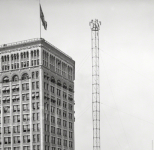
This photograph is from the archived thread that trismegistus posted:
It is important to view the tower from this angle to compare with the next photograph that I have found which is apparently from 1891.

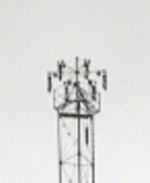
I kept looking at that first pic and then it dawns on me...

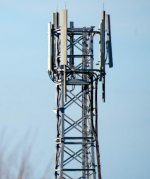
That last picture with the pretty blue sky? 2022 UK 5G tower. They are doing it all over again, folks. History is repeating itself. I guess the next question is which came first? The towers or the asylums? We already know all of the history we've learned in school is b*llshit. So what is the real story? Keep digging.

but then, what do we do with all this knowledge? The patterns are there, and we can see they are repeating their old strategy because it worked so well the last time they did it 123 years ago (give or take a decade IF the timeline we understand to be true). What do you do when you know that you know that you know...?
 

Attachments

  • Detroit tower picture-cropped1.png
    Detroit tower picture-cropped1.png
    316 KB · Views: 117
  • Detroit tower picture-cropped1-zoomed to tower top.png
    Detroit tower picture-cropped1-zoomed to tower top.png
    165.3 KB · Views: 123
  • UK 5G towers.png
    UK 5G towers.png
    194 KB · Views: 122
Last edited:
The president of Brush Electric Company that created the "moon towers" was Wells W Leggett

Wells W Leggett born 1847-1891
  • fought in the Civil War at 15 years old
  • became a captain at 17
  • became US commissioner of patents at age 19
  • later became President of Brush Electric Light Co
  • died at 44 years old
His mansion in Detroit.
sidebar_leggettmain.jpg


Detroit's Energy History
"Electric arc lights, sizzling bright, came to Detroit in 1879 as part of a traveling circus that boasted as its main attraction 18 electrically-lit chandeliers; in 1880 one local entrepreneur, Wells W. Leggett, powered from the engine of the Free Press building a total of 17 electric lights to a handful of downtown Detroit businesses. In 1883, Detroit had its first glimpse of Edison's incandescent light bulb. It was turned on in front of a crowd of spectators at Metcalf Bros. dry goods store. But the landscape really changed in 1884 when the city contracted the Brush Electric Light Company to build 122 electric light towers to illuminate Detroit. These towers were 150 feet high with a ring of electric arc lights at the top. Their lights were bright as the moon; sometimes they are still called "moonlight towers." "But Detroit's system of tower lights was one of the nation's most ambitious, and by the late 1880s, Detroit was widely considered one of the best-lighted cities in the world."​

campus-martius-at-night.jpg


Also Detroit once had a starfort Ft. Lernoult / Shelby, built 1779, destroyed 1827.
large_24675.53959.jpg
 
Tips
Tips
Please respect our Posting Rules.
Back
Top