SH Archive Tartarian Language and Alphabet

SH.org OP Username
KorbenDallas
SH.org OP Date
2019-02-11 21:01:03
SH.org Reaction Score
100
SH.org Reply Count
19
Note: This post was recovered from the Sh.org archive.
Username: UnusualBean
Date: 2019-02-14 19:51:06
Reaction Score: 0
As per this thread, if Tartarian isn't literally just Manchu then it's gotta be an extremely close relative. I'm also now 100% convinced it could be written in Chinese. The pronunciations of those words seals the deal.
 
Note: This post was recovered from the Sh.org archive.
Username: jd755
Date: 2019-02-14 20:51:07
Reaction Score: 1
This site just popped up during a break from reading an old book. Manchu Studies Group

And this one Rise of the Manchus | Fe Doro - Manchu archery

Manchu was the name that a number of united Jurchen tribes took in the 17th century in present day Manchuria. Manchu being an identity rather than a race, the Manchu cultural group contained mostly Jurchen but also Koreans, Ming Chinese deserters and frontiersmen, Mongolians and others.
 
Note: This post was recovered from the Sh.org archive.
Username: space966
Date: 2019-02-15 01:58:41
Reaction Score: 8
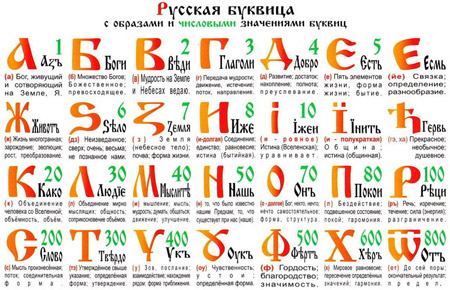
Language you are talking here is Old Slavonic буквица. It can be translated as "letters", "order of letters", or more precisely in literature-spirit meaning "poetry of letters". Couple times I heard talking in this language, it's sense, that you hear some ancient singing. Several years ago in Russia out of nowhere appeared Slavic Vedas. At first I was sceptical, because letters reminded Old Slavonic Church language. But it seems no, they are against Abrahamic religions, and are considered pagan or Vedic. One emphasis! - they refer to themselves not Russians, but Старославянский, means Old Slavonic. Letters are quite complicated, can have several meanings, or mean several sentences, also have numerical value. It's something like new Hebrew. Will try to find more info, will write more.

17103
 
Note: This post was recovered from the Sh.org archive.
Username: KorbenDallas
Date: 2019-02-15 04:33:34
Reaction Score: 0
Not sure how one could read Slavonic upside down.

These boys have a much easier chance of being read upside down.

 
Note: This post was recovered from the Sh.org archive.
Username: UnusualBean
Date: 2019-02-15 20:11:54
Reaction Score: 1
I like how the author called Chinese "the most difficult and troublesome language in the whole universe" :LOL:

Anyway, the word is pelipaouan, not pelipaonan. The image to text algorithm just derped it for that one instance.

The word parts peli, pao, and uan are all said to mean "prince" in Tartarian, Korean, and Chinese respectively. The word itself is an actual person's name, not a vocabulary word. If we break it down into those three parts and look for their origins though, some interesting things come out...

Peli - May also be "peri", "pali" or "pari". This seems to be of Iranian origin, and wherever it comes up it refers to supernatural beings. Fairies, witches, angels, gods...
Pao - Written 包 or 포 and pronounced "poh", this one is strange too. It actually originally comes from the Manchu ᠪᠣᠣ (boo, pronounced like bohh), meaning "house". If anything, it should most likely refer to a slave or contract worker, not a prince...
Uan - Written 王 and pronounced "wang", this is a general word for a monarch. It's the only one that definitively can be said to mean "prince".

:unsure:
 
Note: This post was recovered from the Sh.org archive.
Username: whitewave
Date: 2019-02-16 00:24:46
Reaction Score: 2
This book written in 1908 has a chapter on the Tartars that identifies Manchurians as one of the tribes of Tartars.
 
Note: This post was recovered from the Sh.org archive.
Username: Bald Eagle
Date: 2019-02-17 00:21:47
Reaction Score: 6
Check out what this guys says around the 3:30 mark:


"This writing once existed worldwide ...."
 
Note: This post was recovered from the Sh.org archive.
Username: Jim Duyer
Date: 2019-02-18 16:44:15
Reaction Score: 2
In my humble opinion, the language that was first used by the tribes that eventually formed into the people of Tartar, was the Tocharian languages, a branch of the Indo-European family, that was found in tablets on the Silk Road, and especially the area in Southern Russia of modern times. Wikiconfusia tells us : Agricultural communities first appeared in the oases of the northern Tarim circa 2000 BC. (The earliest Tarim mummies, which may not be connected to the Tocharians, date from c. 1800 BC.) Some scholars have linked these communities to the Afanasievo culture found earlier (c. 3500–2500 BC) in Siberia, north of the Tarim or Central Asian BMAC culture.
Thus we see a direct connection between these red-haired, white-skinned mummies of people that migrated into the Tarim basin in northern Tibet, and the rise of a great people in the area to the northwest of there. Perhaps they were escaping the genocide that was on-going?
Anyway, that's my take on it, from a linguistic standpoint, and by the way - don't believe the reports that their three written alphabets, the so-called Tocharian A,B, and C are undeciphered. Some very clever scholars have done that, and even produced a dictionary of sorts, although limited at this time. But to give them credit, even the Sumerian is only about 30% deciphered to date, and the Mayan about the same percentage, and we have many examples to work from in those languages.
 
Note: This post was recovered from the Sh.org archive.
Username: 0harris0
Date: 2019-02-24 11:04:27
Reaction Score: 0
so the french(?) guy, is reading a Tartarian book (presumably very slowly...) and the Tartarian guy mentioned, is sitting opposite and watching him read the book? a book he's probably read before, in his native language, faster than a foreigner... hardly surprising to me

I have to say the whole "reading upside down" seems too much like a red herring, especially to base it on only one small piece of text. I can read english upside down... it's pretty easy to say the least!

Are there any other mentions of upside-down reading/writing??

If not, I think that could probably be dropped as insignificant to the search. It could maybe even hinder finding the truth!
 
Note: This post was recovered from the Sh.org archive.
Username: Born Curious
Date: 2019-02-25 02:14:57
Reaction Score: 1
I believe that Finno-Ugric languages are later development of Tartarian, because of Turkic and Slavic (Sarmatian/Gothic) influence through centuries. Magyar (Hungarian) people would be a closest connection and descendants of Tartars in Europe, and here is another perspective on this topic...

By the bible and legends, Noah had three sons; Japheth, Ham and Shem.
  1. Ham's descendants would be Cush, Mizraim, Phut and Canaan (Hamitic people, mostly Africa)
  2. Children of Shem are Elam, Asshur, Arphaxad, Lud and Aram, in addition to daughters (Semitic people, middle East)
  3. Japheth's son's would be Gomer, Magog, Madai, Javan, Tubal and Meshech (European and Asian people from lands above Himalayas)
Magogs would be Scythian (Tartarian) people based on conclusion and writings of many historians. Someone already opened this topic on SH forum Gog and Magog. This Map and story about three Indias might also be interesting in connection to Magogs.

Etymologically Magyar would be from Mag(og) and yar = friend (turkic). Term Armagedon descibes event connected to Magog, but meaning can be translated in many ways. Armagedon is usually a final battle or Ragnarok from Norse mythology


Note: This post was recovered from the Sh.org archive.
Username: sineNrise
Date: 2019-03-18 01:06:13
Reaction Score: 1
Came upon this.
Translation of the T'sing wan k'e mung, a Chinese grammar of the Manchu Tartar language; with introductory notes on Manchu literature : Ch'êng Ming-yüan, ed : Free Download, Borrow, and Streaming : Internet Archive

Translation of the T'sing wan k'e mung, a Chinese grammar of the Manchu Tartar language; with introductory notes on Manchu literature by Ch'êng Ming-yüan, ed; Wylie, A. (Alexander), 1815-1887, tr
 
Note: This post was recovered from the Sh.org archive.
Username: jd755
Date: 2019-03-18 12:10:48
Reaction Score: 0
Armageddon is a gathering of the people of god, is another.
 
Note: This post was recovered from the Sh.org archive.
Username: whitewave
Date: 2019-03-20 01:15:11
Reaction Score: 1
Can you translate the text for us?


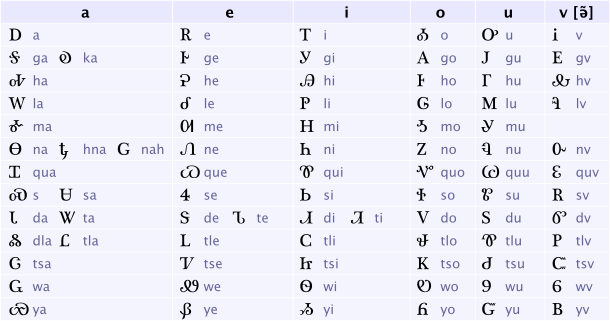
Lot of similarities to the Cherokee language.
19162

Of course, Sequoyah, who ironically enough, could not read any language had been around literate people and had seen Latin, Greek, Cyrillic, English, French, Spanish, and just made up his own language from symbols/letters he'd seen. In the Cherokee language those symbols/letters (syllables, actually) aren't pronounced at all like they are in Latin, Greek, etc.

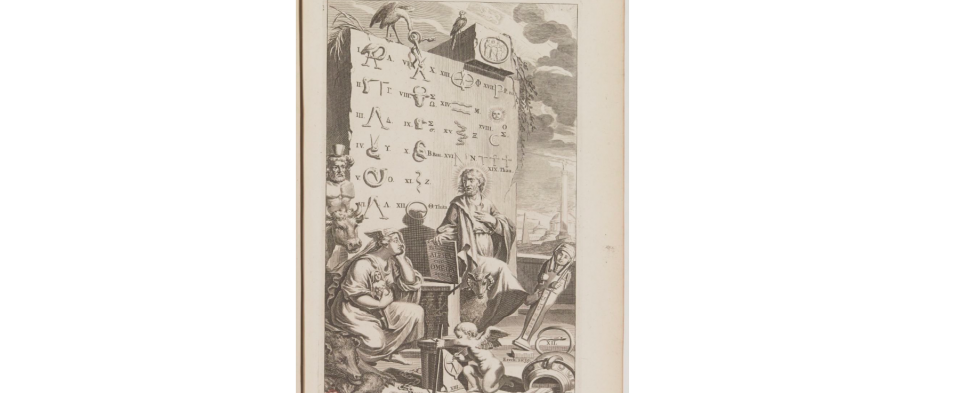
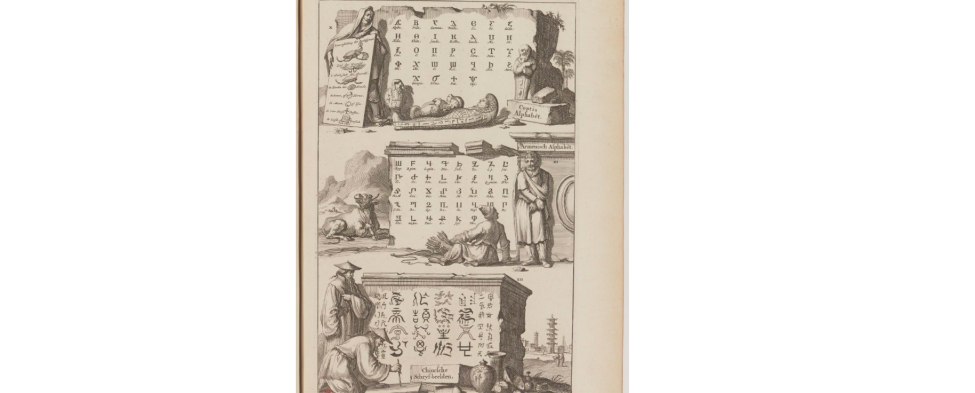
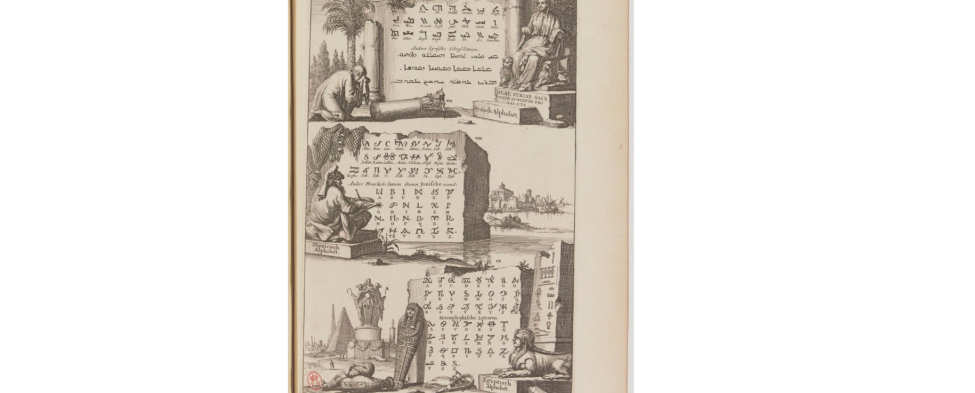
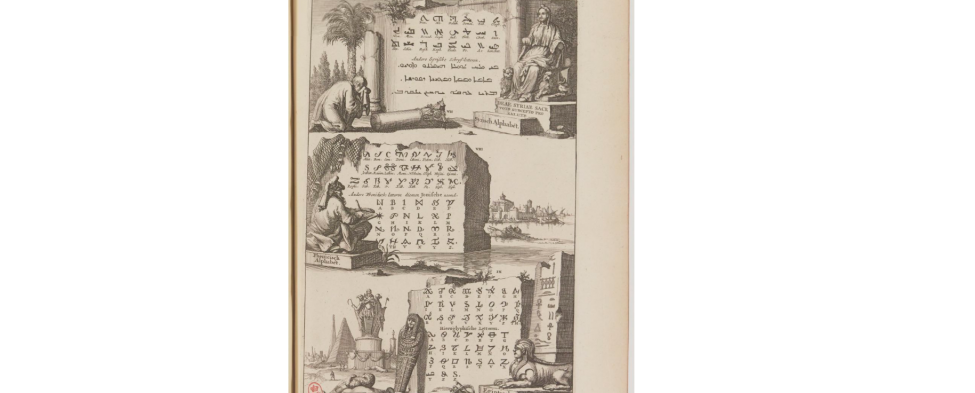
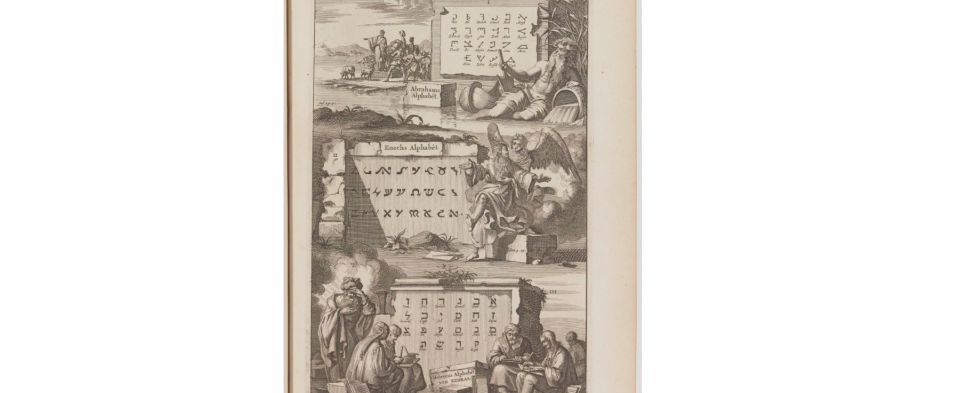
Looks like the first one is Samaritans alphabet, then Saloman's alphabet then? Next picture is Abraham's alphabet, then Enoch's alphabet, then what looks like Hebrew. Next picture is Syrish (Syrian?), then Phoenician ? Next picture has a guy holding a book that reads in plain English "The Book of Alpha and Omega" even though the symbols depicted are not at all English and doesn't look particularly Greek either as suggested by the words 'alpha and omega'. The next picture doesn't say what the top one is but the bottom one is Chinese.

I'm not being deliberately patronizing by listing what you just posted. I just figured I couldn't be the only one who couldn't read that small print without enlarging the page. :)
 
Note: This post was recovered from the Sh.org archive.
Username: Ladybug
Date: 2019-03-20 05:50:45
Reaction Score: 1
I imagine the language to have an almost musical quality as beautiful as I am learning the people were by the construct and design of their buildings and culture etc.. Call me a romantic but I do..
 
Tips
Tips
Please respect our Posting Rules.
Back
Top