Yes, and no.
To peel back this onion you need to "un-babble" the church's counterintelligence and other assorted misdirection.
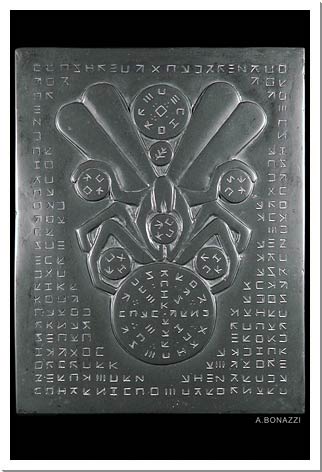
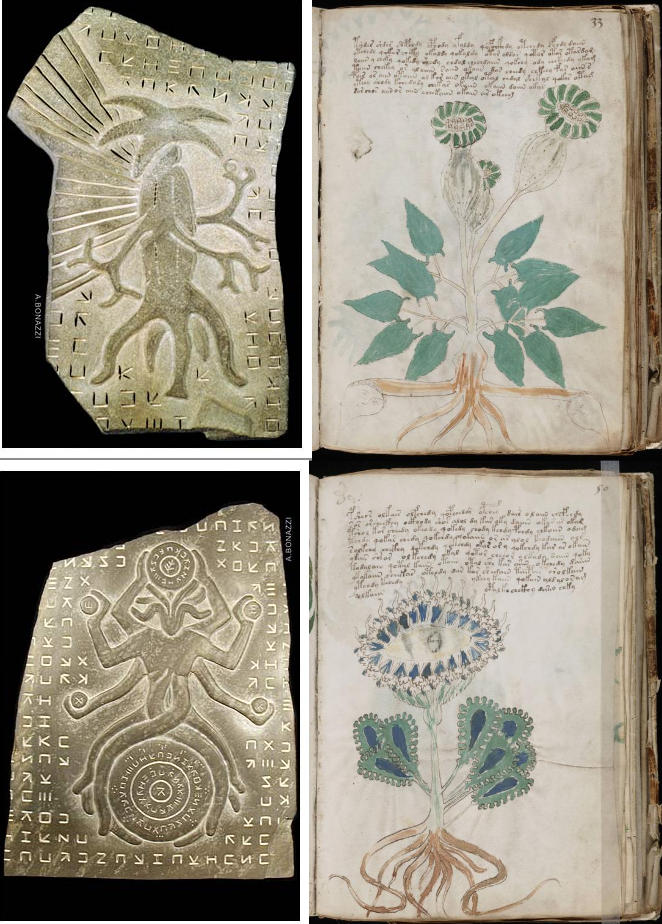
The tablets are not in Hungarian per-se, they're in the language modern Hungarian is based on which is now being called "magyar".
The name itself is somewhat tongue-in-cheek. This is not it's real name, the name used by the people actually speaking the language, it's the label that is used to obfuscate what it really is and to hide it in plain sight. But, we will use the term for now since it's easy to Google.
The language base called Magyar is the linguistic origin of Sumerian, Etruscan, Dacian "first civilization" peoples as well as many others. Sounds ridiculous given the timeline we are all indoctrinated with, but it's true:
LÁSZLÓ BOTOS
Magyar-Etruscan affiliations
"The presence of the Magyar language at such an extensive geographic spread going into ancient times is the proof of a once unified world-language of which the longest surviving remnant is the Magyar. "
Also, please don't get hung up on the modern idea of Hungary, Romania, Poland, Ukraine, etc. - these are all blinds to hide the common ancestry of these peoples and languages, what we would modernly call the Sauromatian peoples of Scythia. These people have been mentioned before on the forums and are a key to understanding the war that's been waging between the old and new factions. That's a whole 'nother can of worms.
Hungarian prehistory - Wikipedia
"Most extant chronicles show that the earliest works contained no information on the history of the Hungarians before their conversion to Christianity in the 11th century.[35] The only exception is the Gesta Hungarorum, which is the earliest extant Hungarian chronicle, whose principal subject is the Magyars' pagan past.[37]"
The Gesta is one of the few surviving original texts of these peoples. Or at least that's still accessible. Its a link back to the truth before the propaganda war began.
In any case, the Tartaria tablets actually mention and show the "Sumerian" god Enki (Aquarius), that's what the little guy with the fish tail is standing next to the goat (Capricorn). Also note the little sprig of wheat between the two, which is the same as shown in the "Sumerian" seal on the right. Same language. Different parts of the world. Different artistic flare.
There were several types of alphabet used on this base language depending on the part of the world you were in and the time period. Coelbren was one of the earliest and was used for trade throughout the British isles, Mediterranean, Turkey, and North America all the way through China. There was also more than one form of coelbren, one of which we now call ogham. These are not "Celtic", there was no such thing as Celtic. Total myth created in the 1800s to fill a hole caused by hiding the other groups. A modern term and idea and part of the great misdirection.
In the above Alan Wilson link he mentions the "Cimmerians" using coelbren. Cimmerians are the same word as Sumerians. Pretty obvious if you just say them out loud.
All forms of Coelbren can be read omnidirectionally as can it's cousin Cuneiform. They can both be translated with the same base language. Its useful as a trade language as everyone sitting around the table can read the same document at the same time without the need to pass the paper around or flip it.
Now, is this the later Tartarian language referenced earlier? Yes, kinda. Magyar is the base of that language, but they were using a different common alphabet later in the empire. Coelbren had long been replaced with the advent of printing. What you're seeing is an evolution in a single language, not necessarily different languages.
Also, just a fun aside. The pretty "nordic pagan" tattoo symbols so in vogue these days are a multidirectional
sigiled form of the coelbren/ogham on the right (book of Ballymote). Right in front of everyone's faces, yet no one is literate enough to read them.
Dumb shits.
Beat me to it! Nice find!