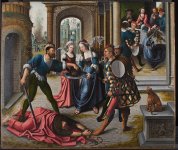
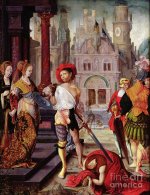
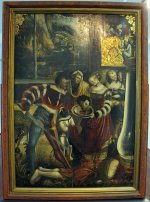
The Beheading of St. John the Baptist

OKKorral

Contributor
Active Member
Joined
Mar 2, 2023
Messages
37
Reaction score
110
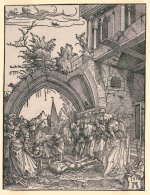
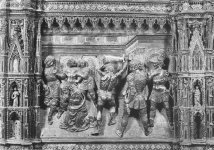
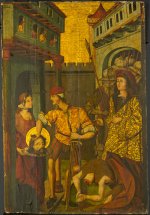
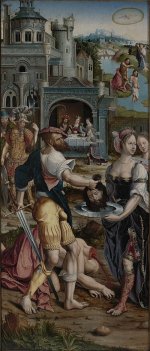
I've noticed by chance that the Beheading of John the Baptist event was a very popular theme in the 16th century. Everybody was painting it.
There also is one version that depicts an ambience of ruins very much alike the works of Piranesi.

So when did this actually happen? Maybe at the turn of the 15th/16th, or maybe sometime early in the 16th century? Or was it just a passing fashion?

Albrecht_Altdorfer_-_Beheading_of_John_the_Baptist.jpgbeheading_of_st_john_the_baptist_.jpgbeheadingjohnthebaptist.jpgJean-LA9on+GA9rB4me_The+Reception+for+Duc+de+CondA9+at+Versailles-635891657.jpgThe_Martyrdom_of_Saint_John_the_Baptist_.jpgthe-beheading-of-st-john-the-baptist-1525-french-school.jpgJohtheBaptistBeheading.JPG
 
Artists immitating artists. Popular memes get copied the most.
I would suggest you look into the original artists and figure out who sponsored or supported them at the time of painting claimed for each one. There may be a pattern to be found.
 
I've noticed by chance that the Beheading of John the Baptist event was a very popular theme in the 16th century. Everybody was painting it.
There also is one version that depicts an ambience of ruins very much alike the works of Piranesi.

So when did this actually happen?
I have no input as to when (if) this happened or if John was real. I do think old art like this is very interesting however. thank you for this work OK. I sort of think that old artists from these olden days might be a lot like the artists of today; it's all bad players. To me theses types of images betray that something was wrong with the artists; I've heard it said that every work of art is a self portrait to one degree or another. maybe maybe not. It's very intriguing though.
 
Beheading is a very specific punishment, is it Muslims who are killing any astronauts or fairies or supernatural beings trying to rescue us from the prison planet? I heard Islam is really an anti-xeno cult. They would consequently want to murder anyone who was from space and that explains how humans are apparently alone in the universe
 
I started a long response to the original post which I never finished.

Today I just want to bring up a few interesting tidbits about John the Baptist.

If my memory serves me, Andreu Marfull thinks that John the Baptist is a stand-in for Prester John, in whose name an original covenant regulating political and economic relationships between nations was once enacted. "John" was the guarantor of this order. Genoa and Geneva get their names from this covenant.

It seems clear when you read the Bible that John the Baptist is included in the Gospels as propaganda to convince followers of the old Johannite covenant, whatever it was, to flip to the new Christian covenant.

I recently came across the following passage in the excellent Piso Christ by Roman Piso:

Jesus is “the bright morning star”...he actually shares this title with John the Baptist, who was really only a character that was created to represent Yochanan ben Zakai.

Yohanan Ben Zakkai (the name is just another version of "John") is the (Pharisee) rabbi who "saved" Judaism from the destruction of the Temple. His teaching led to the writing of the Mishnah, the original Jewish law book which was later expanded into the Talmud. So this "John" was indeed the author of a "covenant".

Is the Mishnah the covenant of John the Priest?

"Yohanan Ben Zakkai" just means "John Son of Zakkai". Since John the Baptist's father was named Zecharia, his Hebrew name could be "Yohanan Ben Zechariah", which is quite similar. And of course John was supposedly Jewish.

There is a legend according to which Yochanan Ben Zakkai had an audience with the Roman emperor Vespasian on the eve of his destruction of the Temple. Zakkai tells Vespasian that he is destined to rule over the Roman Empire:

Screenshot_20260310_093151.jpg


So he spends three days locked in prison before being "resurrected". Whoever wrote this corny, obviously made-up story also wrote the Christ story, or was inspired by it, or vice versa.

The coffin thing is also a reference to Masonic initiation rituals.

Vespasian granted Yochanan the city of Yavne (Didier Lacapelle thinks Yavne = Avignon), where he re-established the Sanhedrin and rewrote Judaism. It sounds like Ben Zakkai and Vespasian were working together to eradicate the Sadducees. The following piece of information makes it sound like Ben Zakkai was controlled opposition whose job was to neuter the resistance to Rome:

Screenshot_20260310_092815.jpg


Joseph Atwill thinks that the Christ character is based on Vespasian. So Ben Zakkai telling Vespasian he will be emperor is equivalent to John the Baptist announcing that Christ will be even greater than he. But as we saw with the three-day resurrection, Ben Zakkai is also Christ.

This story is also clearly a variation of the story of Flavius Josephus, who abandons the Temple to become a Roman citizen. (And don't forget that Flavius Josephus is also Paul, as both were shipwrecked.) I don't know how mainstream historians don't find it fishy that we just happen to have all these documents from both Roman and Jewish sources about the destruction of the Temple.

John is associated with the practice of baptism. I am not sure how that might tie in here. Perhaps there is some connection with the fact that Rabbinic Judaism is among other things a religion that is obsessed with purity, which includes all kinds of literal washing rituals. Christianity does away with these, reducing washing to a one-off symbolic baptism.

Is "John the Baptist" just "John the compulsive hand-washer and mikvah bather"?

Mikveh - Wikipedia

These baths are hugely important in orthodox Judaism. According to Wikipedia, they only emerged during the 2nd Temple period, so precisely around the time of Yohanan Ben Zakkai. This is according to mainstream geography and chronology, but maybe there is some connection here.

Maybe the real story is something like:

- there is an empire which practices a form of Judaism
- there are multiple priestly factions with multiple interpretations of the law
- at some point the Flavian faction decides to break away and create a new version of Judaism called "Christianity", based in Rome
- the Flavians pay off Yochanan Ben Zakkai and grant him the city of Yavne (Avignon?) where he can spread his less militant Judaism
- he is written into the Bible as John the Baptist
- he is also remembered as Prester John

According to the Chabad website, Shimon Bar Yochai was born around the same year Yohanan Ben Zakkai died, with Rabbi Akiva mediating between them. Check out this interesting detail of Bar Yochai's life:

Screenshot_20260310_175646.jpg


(Some especially pious young Israelis celebrate Lag BaOmer by throwing live puppies and kittens into the fires.)

So he died on the 33rd day. Christ died in his 33rd year, of course. So these two stories were also written by the same group, who love that 33 number. According to legend, Bar Yochai wrote the Zohar, which launched a new, esoteric version of Judaism. Isn't there a parallel here with Christianity, inasmuch as Christianity is the exoteric version of the widespread Mithraic religion, which is also Kabbalah?

Rabbi Akiva was ALSO Jesus, inasmuch as he was betrayed to the Romans by a traitor named "Judah" and then tortured to death:

Rabbi Shimon could never forget the terrible sight of his beloved master and teacher, Rabbi Akiva, being tortured to death by the Roman executioners. The sages were not aware that their conversation was overheard by a certain young man, Judah ben Gerim. At one time a disciple of Rabbi Shimon, Judah ben Gerim later turned spy for the Roman authorities. This treacherous man reported the conversation of the sages to the Roman authorities.

Was Ben Zakkai/Prester John granted Avignon by the Flavians who founded Rome as a concession in exchange for not interfering when they eliminated the Sadducees, mutual enemies of both the Pharisees and the Flavians? Was John's covenant canceled a couple of generations later, which entailed a rewrite of the Bible in which John the Baptist's head is cut off?

Keeping in mind, of course, that all of these characters are to some extent fictional, and the events being recounted occurred in the 15th-17th centuries...
 
Last edited:
I started a long response to the original post which I never finished.

Today I just want to bring up a few interesting tidbits about John the Baptist.

If my memory serves me, Andreu Marfull thinks that John the Baptist is a stand-in for Prester John, in whose name an original covenant regulating political and economic relationships between nations was once enacted. "John" was the guarantor of this order. Genoa and Geneva get their names from this covenant.

It seems clear when you read the Bible that John the Baptist is included in the Gospels as propaganda to convince followers of the old Johannite covenant, whatever it was, to flip to the new Christian covenant.

I recently came across the following passage in the excellent Piso Christ by Roman Piso:

Jesus is “the bright morning star”...he actually shares this title with John the Baptist, who was really only a character that was created to represent Yochanan ben Zakai.

Yohanan Ben Zakkai (the name is just another version of "John") is the (Pharisee) rabbi who "saved" Judaism from the destruction of the Temple. His teaching led to the writing of the Mishnah, the original Jewish law book which was later expanded into the Talmud. So this "John" was indeed the author of a "covenant".

Is the Mishnah the covenant of John the Priest?

"Yohanan Ben Zakkai" just means "John Son of Zakkai". Since John the Baptist's father was named Zecharia, his Hebrew name could be "Yohanan Ben Zechariah", which is quite similar. And of course John was supposedly Jewish.

There is a legend according to which Yochanan Ben Zakkai had an audience with the Roman emperor Vespasian on the eve of his destruction of the Temple. Zakkai tells Vespasian that he is destined to rule over the Roman Empire:

View attachment 36142

So he spends three days locked in prison before being "resurrected". Whoever wrote this corny, obviously made-up story also wrote the Christ story, or was inspired by it, or vice versa.

The coffin thing is also a reference to Masonic initiation rituals.

Vespasian granted Yochanan the city of Yavne (Didier Lacapelle thinks Yavne = Avignon), where he re-established the Sanhedrin and rewrote Judaism. It sounds like Ben Zakkai and Vespasian were working together to eradicate the Sadducees. The following piece of information makes it sound like Ben Zakkai was controlled opposition whose job was to neuter the resistance to Rome:

View attachment 36143

Joseph Atwill thinks that the Christ character is based on Vespasian. So Ben Zakkai telling Vespasian he will be emperor is equivalent to John the Baptist announcing that Christ will be even greater than he. But as we saw with the three-day resurrection, Ben Zakkai is also Christ.

This story is also clearly a variation of the story of Flavius Josephus, who abandons the Temple to become a Roman citizen. (And don't forget that Flavius Josephus is also Paul, as both were shipwrecked.) I don't know how mainstream historians don't find it fishy that we just happen to have all these documents from both Roman and Jewish sources about the destruction of the Temple.

John is associated with the practice of baptism. I am not sure how that might tie in here. Perhaps there is some connection with the fact that Rabbinic Judaism is among other things a religion that is obsessed with purity, which includes all kinds of literal washing rituals. Christianity does away with these, reducing washing to a one-off symbolic baptism.

Is "John the Baptist" just "John the compulsive hand-washer and mikvah bather"?

Mikveh - Wikipedia

These baths are hugely important in orthodox Judaism. According to Wikipedia, they only emerged during the 2nd Temple period, so precisely around the time of Yohanan Ben Zakkai. This is according to mainstream geography and chronology, but maybe there is some connection here.

Maybe the real story is something like:

- there is an empire which practices a form of Judaism
- there are multiple priestly factions with multiple interpretations of the law
- at some point the Flavian faction decides to break away and create a new version of Judaism called "Christianity", based in Rome
- the Flavians pay off Yochanan Ben Zakkai and grant him the city of Yavne (Avignon?) where he can spread his less militant Judaism
- he is written into the Bible as John the Baptist
- he is also remembered as Prester John

According to the Chabad website, Shimon Bar Yochai was born around the same year Yohanan Ben Zakkai died, with Rabbi Akiva mediating between them. Check out this interesting detail of Bar Yochai's life:

View attachment 36144

(Some especially pious young Israelis celebrate Lag BaOmer by throwing live puppies and kittens into the fires.)

So he died on the 33rd day. Christ died in his 33rd year, of course. So these two stories were also written by the same group, who love that 33 number. According to legend, Bar Yochai wrote the Zohar, which launched a new, esoteric version of Judaism. Isn't there a parallel here with Christianity, inasmuch as Christianity is the exoteric version of the widespread Mithraic religion, which is also Kabbalah?

Rabbi Akiva was ALSO Jesus, inasmuch as he was betrayed to the Romans by a traitor named "Judah" and then tortured to death:

Rabbi Shimon could never forget the terrible sight of his beloved master and teacher, Rabbi Akiva, being tortured to death by the Roman executioners. The sages were not aware that their conversation was overheard by a certain young man, Judah ben Gerim. At one time a disciple of Rabbi Shimon, Judah ben Gerim later turned spy for the Roman authorities. This treacherous man reported the conversation of the sages to the Roman authorities.

Was Ben Zakkai/Prester John granted Avignon by the Flavians who founded Rome as a concession in exchange for not interfering when they eliminated the Sadducees, mutual enemies of both the Pharisees and the Flavians? Was John's covenant canceled a couple of generations later, which entailed a rewrite of the Bible in which John the Baptist's head is cut off?

Keeping in mind, of course, that all of these characters are to some extent fictional, and the events being recounted occurred in the 15th-17th centuries...
I was completely unaware of this Ben Zakkai character, thanks for the info.
Considering the nature of his character and religious "rank", I suspect his worships definitely included demons, he could have been a priest of the Solomonic School of Magick. I'm a bit lazy at the moment so I will post some links:
The Lesser Key of Solomon - Wikipedia, or The Book of Evil Spirits
Key of Solomon - Wikipedia
Magical Treatise of Solomon - Wikipedia
The lesser key of Solomon, Goetia : the book of evil spirits contains two hundred diagrams and seals for invocation ... translated from ancient manuscripts in the British Museum, London ... only authorized edition extant : De Laurence, L. W. (Lauron William), 1868- : Free Download, Borrow, and Streaming : Internet Archive
 
Tips
Tips
Please respect our Posting Rules.
Back
Top