The different history of the Roman Empire

The "Jesus in late 15th century" is interesting.
Years ago, I first read Niketas Choniates' Byzantium book, after reading Fomenko's equation of Andronikos Komnenos with Jesus of the Gospels.

When reading about Andronikos, in addition to the obvious Jesus parallels, what struck me was how similar Andronikos was to Richard III of England. I made more detailed notes, but lost thrm along the way. However, some(definitely not all) parallels.

Both were from a "disinherited" Royal branch, who had a greater claim to the throne than the ruling Monarch.

Both ruled in a land north of the Great city. Each was a wise ruler, while the people of the Great city struggled.

Both were well-known military commanders.

A bad King, whose parentage was in doubt(Edward IV/Manuel) was controlled by his wife, as the Kingdom fell into ruin.

After the King's death, his son (Alexios/Edward V) takes over, but it's really his mother and her family ruling.

Andronikos/Richard is invited south in 1182/1483. And are supposed to be Regent. Each becomes Ruler, after being accused of killing Alexios/Edward.

Andronikos/Richard rules from 1183/1483 to 1185/1485.

Both are "strict but fair". Each gives greater power and freedom to common people, angering the elite.

Both are overthrown by cousins with minor(at best) claims. Isaac and Henry. Both Isaac and Henry are part of factions associated with the colour red.

Andronikos is killed at the stake. Richard dies in battle, but it is stressed that he died in a thorn bush.

Fomenko points out that in some Gospels John the Baptist came after Jesus. Andronikos has a relative, John Komnenos, fail to take the throne. Richard's nephew, John De La Pole, dies trying to take the throne. He is said to have died in a river.

Isaac/Henry both kill off rival claimants.

Andronikos/Richard were both demonised after death. Neither body was found.(Forget that car park nonsense.)

There was a lot more. I'll try and find my notes...
 
Unfortunately this is debunked racism. The equation of "African" with "Black people". The Moors/North Africans looked like the North Africans of today. The article you linked to is clearly trying to push an agenda. While a North African community in Britain is interesting, it is not for the reason that the writer of that article (falsely) claims it to be.

Agreed. My recent research shows the existence of indogenous swarthy/copper coloured Americans (Moors/Muurs/Berbers/...) some having dress/architectural symbolism typically associated with North African countries as we know them today.
 
Andronikos Komnenos

Is there any relation with this name or the associated history to this below?

Lady Andros of clan Siol Andrea of the ancient and noble house of Andrus/Andreas (Ptolemy Egypt/Greek/Iberian Hebrews) who’s family named the Andros Island, Greece, Agios Andreas Greek towns, British “Isle of Man”, Andrus Island, California, and Andros Islands, Bahamas, is a relative of “Megas Alex Andros (Alexander the Great), who is a relative AlexAndros Ptolemy X, of the Hyksos pharaohs of Egypt’s 15th dynasty, Kings of Greece, Spain, and medieval Europe. She is Ionian, relatives of Dorian, Lydian, Phrygian, Aeolian, Locrian, Acheans, and others. She left family in many places like Tunisia, Morocco, Portugal, Spain, Hungary, “Land of Rus” (Russia), New York, and her family named many places like Alexandria, Virginia, Louisiana, and Alexandria, Egypt. The most famous of our relatives is one of the longest reigning monarchs in history, Her Majesty “Alexandra” Queen Elizabeth II.

These are some of the Andros offspring who inhabited North Africa and protected Europe during the Attila the Hun, Khan Mongol 1240AD, and Ottoman invasions.
andreas1.gif

From these offspring come Kings Milesius and Princess Scotia of Egypt, King Heremon & Princess Tamar, Kings Conn, Colla, Alpin, and the VI Kings, including Viking Magnas Olafson (last king of Isle of Man), son of Olaf “The Black” and Christina Andros de Ross, and many others.
andrews-family.jpg
moore-2.jpg
lindsay.jpg
freising-coat-of-arms.png
skofja-slovinia.jpg

From Lost “Tribes” of Andros
 

I did read it a couple years ago when I first discovered Stolen History. But it was time to read it again with the reservoir of new knowledge I have since then. Thank you for the prompting. I also enjoyed rereading the thread you suggested in your post to the Arcadia thread.

Thread 'France - Biblical Israel' France - Biblical Israel

Which fits in very nicely with a thread I've mentioned above. Here's the link to Part One.

Thread 'Was the temple of King Salomo in Spain? Part 01' Was the temple of King Salomo in Spain? Part 01

Here's what AI says about King Solomon:

He is known for being the last king of a united Israel before the kingdom split into two. His reign is often regarded as a time of great prosperity and peace, marked by the construction of the First Temple in Jerusalem, which became a central place of worship for the Israelites.

The 'Salomo in Spain' threads place King Solomon and his Israelite (not yet Jews) subjects in Spain mining gold and other precious metals. This would be considered ancient history, during Old Testament times. He builds his Temple of Solomon in Spain.

The thread places the Temple of Solomon in Granada at the location where the Alhambra now stands. It may even be the same buildings that Solomon built, since an extra 1000 years never passed.

1000002963.jpg
1000002962.jpg


Solomon was VERY ambitious and was able to build up a vast fortune in trade partnership with King Hiram of Phoenicia. They would go to Tarshish and Ophir for gold and other metals, including tin to forge bronze with. Our sleuths have determined that the gold mining was in Western Iberia/Spain/Portugal, Eastern Iberia/near Albania, and also in the New World in the Appalachian Mountains.

When Solomon died two of his sons split the kingdom and caused the two kingdoms to become very different from each other. The split kingdom could be Spain and France. Spain remained more 'Jewish' and France was a 'Christian ' country before becoming a raging 'Catholic' country.

The 'France as Biblical Israel' thread is focused on the Israel of the New Testament. The locations of the actions of Jesus, Lazarus, Joseph of Arimathea, Mary Magdaline and others are suggested to have happened in Medieval France. Paris is determined to be Jerusalem.

It's not clear from the thread if the First Temple still exists in some way in Paris. It could be the jealous northern kingdom stealing the story from the southern kingdom. Saying "Jerusalem/Paris is the true Holy City because Solomon built his Temple here!" When the Temple was really down in Spain/Western Iberia. Perhaps there was also a Temple built in Paris, perhaps it was the Second Temple, built 70 years after the destruction of the First Temple.

Let's say that Paris was Jerusalem and that there was a lot of building done during Solomon 's reign. He spent 13 years building a palace complex on a hill - this could be the famous Montmarte hill complex in Paris.

1000002964.jpg


To the left of the large cathedral is where the Jesuits originated, in a basilica named Saint-Pierre et Montmartre. It could be the Second Temple. The Second Temple is described as looking like a lion, and the meaning of that is debated by scholars. Saint-Pierre resembles an animal laying down. It has the natural curves of nature compared to every building surrounding it. The view from the back made me think of the view from the back of the Sphinx.

1000002967.png

1000002968.png

1000002969.jpg


He constructed waterworks - which could be the canals all over Paris and France.

1000002966.jpg


Excavations in the Jerusalem of the Middle East reveal no monumental architecture that matches the descriptions of his buildings. But there's monumental architecture all over Paris.

-----------

Esoteric knowledge is so interesting. You have to build the foundation in order to learn and comprehend the next level. Only then can you understand some higher knowledge of that subject. But there is always more that is out of reach. It is very satisfying to be able to start again at the foundation and obtain clues that were there the whole time. We just didn't have the eyes to see yet.

1000002963.jpg
1000002962.jpg
1000002964.jpg
1000002965.jpg
1000002966.jpg
 
Some images relating to Rome/Germany.

1754773285984.png
1754773320483.png


Note regarding image on the right:
Note on the Halos: Neither Cardinal Albert of Brandenburg nor Ulrich von Hutten were Canonized (declared a Saint). Therefore the Halos must have another meaning. Or were placed there later, to justify identifying Ulrich von Hutten as Saint Maurice

Old German imperial flags for comparison
1754773589435.png
1754774213928.png


Original imperial German WWI naval war flag, with a large Balkenkreuz (Beam Cross), with a circle around the Imperial German Eagle From an auction site
1754774467629.png

1754776392845.png
1754774717923.png
1754774598714.png
1754776880779.png
1754776958629.png

1754777278489.png
1754777320489.png


1754777596122.png
1754777666638.png

Germany (c. 1520)
Oil on Wood, (left wing) 168 x 64 cm.
The Image of the Black in Western Art Research Project and Photo Archive, W.E.B. Du Bois Institute for African and African American Research, Harvard University

1754778974268.png
1754779990392.png

The statue of the left is from Schaffhausen, Switzerland. Date given: 1520

Example of St George's cross

1754779755414.png
1754779805543.png


There's an eagle symbol associated with the Holy Roman Empire/Germany on the right of this image below, but what is the 8 "pointed" symbol associated with the tawny dark chap? Is it a variation of the "cross pattée"? (see first image on this post re cross pattée)

1754775773230.png
 
Last edited:
I'm fairly sure this info is relevant and on topic!
Some interesting use of the words tawny & swarthy, particularly the countries that are being described as such.

America as a Land of Opportunity
Benjamin Franklin, 1751
...why should the Palatine Boors [Germans] be suffered to swarm into our Settlements, and by herding together establish their Language and Manners to the Exclusion of ours? Why should Pennsylvania, founded by the English, become a Colony of Aliens, who will shortly be so numerous as to Germanize us instead of our Anglifying them, and will never adopt our Language or Customs, any more than they can acquire our Complexion.
(Franklin considered himself purely White; he is saying that Germans were not White).
Which leads me to add one Remark: That the Number of purely white People in the World is proportionably very small. All Africa is black or tawny. Asia chiefly tawny. America (exclusive of the new Comers) wholly so. And in Europe, the Spaniards, Italians, French, Russians and Swedes, are generally of what we call a swarthy Complexion; as are the Germans also, the Saxons only excepted, who with the English, make the principal Body of White People on the Face of the Earth. I could wish their Numbers were increased. And while we are, as I may call it, Scouring our Planet, by clearing America of Woods, and so making this Side of our Globe reflect a brighter Light to the Eyes of Inhabitants in mars or Venus, why should we in the Sight of Superior Beings, darken its People? why increase the Sons of Africa, by Planting them in America, where we have so fair an Opportunity, by excluding all Blacks and Tawneys, of increasing the lovely White and Red? But perhaps I am partial to the complexion of my Country, for such Kind of Partiality is natural to Mankind.

On the etymology of the word swarthy.
Quote from here
Swart, as an adjective, is defined as “black; darkly brown; tawney”. Used as a verb, it means to blacken or to dusk. The word swarthy does not exist without its root, which is swart. Swarthy is an amalgamation of the adjective swart/swarth and the adjective suffix -y, naturally translating to black-ish or nearing blackness. The definition of swarthy is “dark of complexion; black; dusky; tawney”. These definitions come from A Dictionary of the English Language, written by Samuel Johnson and published in 1755.
ezgif-4af40b9c921645.jpg

And this, The Inca King list

1754784826098.png


1754784844783.png


1754784896794.png

1754785079955.png
 
Last edited:
Concerning the emperors of the Holy Roman Empire:
The Emperor was elected first by the rulers of the German Stem Duchies, later by the Prince Electors (Kurfursten in german); eventually there were seven: the Archbishop of Cologne, Archbishop of Mainz, Archbishop of Trier, Count Palatine of the Rhine, Duke of Saxony, Margrave of Brandenburg and King of Bohemia.

Technically even a "foreigner" could run for the Title, an example being Francis the I of France who tried to get himself elected but failed; at some point even an Englishman tried to get the Title, though I don't recall exactly if it was a monarch or some noble.

The aspiring Emperor had to be elected King of the Romans first (at the same time he was also King of Germany, or of the Germans); then he was crowned as such in Aachen (later in Frankfurt).
He would then go to Rome to be crowned emperor by the Pope, thus becoming Holy Roman Emperor (of the German Nation- the different names and terminology of names and titles is a bit tricky yes, kind of makes you lose track of who's who and what is what).

Concerning the Roman Empire/Empires:
Claiming to be the Roman Empire seems to have been quite a widespread hobby in the past. There have been multiple nations that claimed to be Rome/The Roman Empire and its descendants.

The Holy Roman Empire was discussed above.

The Byzantine Empire (The Eastern Roman Empire/Greek part of the Empire): here things get really tricky. It was supposedly the Eastern part of the Empire (still Roman) and yet they were known as the Byzantine Greeks - using the greek language. But the Byzantine Greeks called themselves Romaioi, which means Romans. They considered themselves Romans and descendants of the Romans. So... the romans are greek and the greeks are roman? Both are romans and greeks at the same time? Some are greeks but not romans?
You can see where this is going so... who's who?
The Ottoman Empire: it too claimed to be THE Roman Empire and its descendant- they referred to themselves as Rumi, meaning Romans (you knew it was gonna be that by this point lol). Before the Ottomans however there was the Seljuk Sultanate of Rum - yep, Rum stands for Roman again.
Looks like it was fancy being "Roman" with your homies back in the dayz.
 
The Emperor was elected first by the rulers of the German Stem Duchies, later by the Prince Electors (Kurfursten in german); eventually there were seven: the Archbishop of Cologne, Archbishop of Mainz, Archbishop of Trier, Count Palatine of the Rhine, Duke of Saxony, Margrave of Brandenburg and King of Bohemia.

Technically even a "foreigner" could run for the Title, an example being Francis the I of France who tried to get himself elected but failed; at some point even an Englishman tried to get the Title, though I don't recall exactly if it was a monarch or some noble.
Concerning the Seljuks and religions:
two-seljuk-statues-from-the-late-12th-century-depicting-a-ezgif.com-webp-to-jpg-converter.jpg

It's surprising they made statues like this. If you look at the right statue, you can notice the cross on its chest and kufic script on their arms, both holding something I don't understand, probably authority symbols or related to their own beliefs. On the head of the right one there are two heads of snakes or lizards. I mean not really today islamic. It is said seljuks did mixed beliefs. Religious syncretism appears to have been practiced everywhere at that time eg pagan rome, or eastern cultures like uyghurs

uyghurs.png

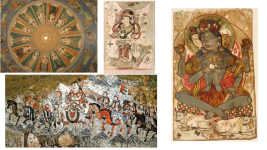
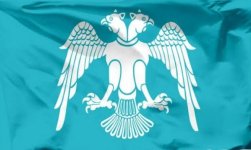
who mixed buddhism manichaeism and their own beliefs like crazy. The banner or flag of the Seljuks was a two-headed eagle, and one of the heads represents a spiritual authority, like in rome, catholic as universall, all religions of the empire. Then yeah seljuks weren't really muslim

brown_1-081816-ezgif.com-webp-to-jpg-converter.jpg

h1_1983.247.jpg

Weren't depictions of animals, humans haram?

Court_of_Seljuk_ruler_Tughril_III.jpg

The way he sits in a lotus position holding a cup repeats the motifs of these stone statues in central asia


download.jpg


which in turn, seljuk art echoes the style of this painting, predecessors of the Seljuks ancient Turks
Afrasiab_reconstitution.jpg


This is from Baptistère de Saint Louis
Mamluk_ruler_in_the_Baptistère_de_Saint_Louis_-_Médaillon_IV_(1320–1340).jpg

products-779399.jpg

The pattern on a quiver is found among turkic and caucasian cultures.

And this is Salah Ad-Din
Al-Nasir_I_Salah_al-Din_Yusuf_(Saladin)._AH_564-589_(1169-1193_CE)_Æ_Dirham_(30.1mm,_13.28_g,_...jpg


Ottoman sultans ordered portraits of themselves from venetian painters like it's nothing.
 

Attachments

  • uyghurs.png
    uyghurs.png
    3.6 MB · Views: 58
Last edited:
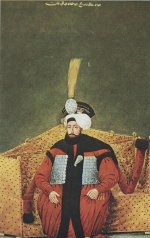
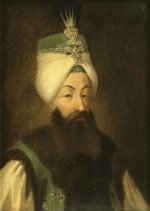
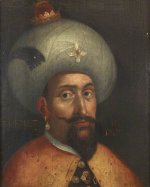
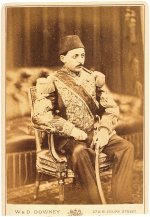
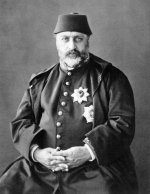
Speaking of Turks, a thing that has always puzzled me is that all the sultans are depicted with caucasian features (and look caucasian), rather than looking how Turks/Turkic peoples are supposed to look.
EmperorSuleiman.jpg
Bellini,_Gentile_-_Sultan_Mehmet_II.jpg


Seljuk Flag:
seljuk flag.jpeg
 
Speaking of Turks, a thing that has always puzzled me is that all the sultans are depicted with caucasian features (and look caucasian), rather than looking how Turks/Turkic peoples are supposed to look.

Origins of the Ottoman Empire​

Pressured out of their homes in the Asian steppes by the Mongols, the Turkish tribes converted to Islam during the eighth and ninth centuries. By the tenth century, one of the Turkish tribes, the seljuk, had become a significant power in the Islamic world and had adopted a settled life that included Islamic orthodoxy, a central administration, and taxation. However, many other Turkish groups remained nomadic and, pursuing the gazi tradition, sought to conquer land for Islam and to acquire war booty for themselves. This led them into conflict with the Seljuk Turks, and to pacify the nomadic tribes, the Seljuks directed them to the eastern domain of the Byzantine Empire, Anatolia. The tribe known as the Ottomans arose from one of the smaller emirates established in northwestern Anatolia after 1071. The dynasty was named for the Oghuz Turk tribal leader Osman (1259-1326), who began to expand his kingdom into the Byzantine Empire in Asia Minor, moving his capital to Bursa in 1326.

In English, the name of Turkey for ancient Anatolia first appeared 1369. It derives from the Medieval Latin Turchia (meaning “Land of the Turks"), a name originally used by Europeans to designate those parts of Anatolia controlled by the Seljuk Sultanate of Rum after the Battle of Manzikert (1071). The Eastern Roman Empire - the name Byzantium came to refer to the Eastern Roman Empire, the "Byzantine" Empire, whose capital Constantinople stood on the site of ancient Greek city of Byzantium. Constantinople was the capital city of the Roman/Byzantine Empire. It was reinaugurated in 324 A.D. from ancient Byzantium as the new capital of the Roman Empire by Emperor Constantine the Great, after whom it was named, and dedicated, on 11 May 330 AD.

1756375372930.png
 
Last edited:
There is a lot going on with these nomadic and Turkic peoples. Seljuks and later the Ottomans.

At the same time the Seljuks were in Anatolia, above them in the Eurasian steppe were the Cumans.
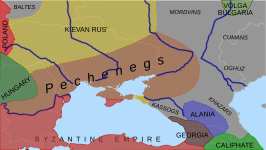
A bit before that there was the Pechenegs.
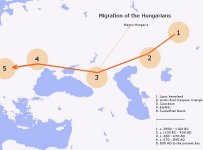
Before them came the Magyars.
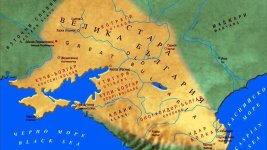
Before them came the Bulgars.
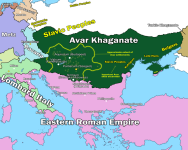
Before them were the Avars.
And before them (and first of them all in this category of Turkic/Mongoloid Steppe Peoples) came the Huns.
The last and most well known were of course the Mongols.

Here we have a rather numerous collection and series of nomadic peoples coming in from the East, going in the same directions, appearing one after the other at very short intervals or simultaneously.
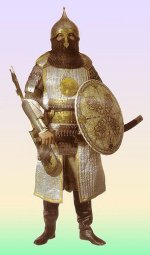
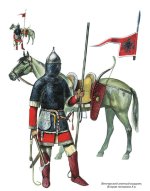
All of them seem to have the same customs, traditions, styles, manner of warfare and tactics, clothing etc.
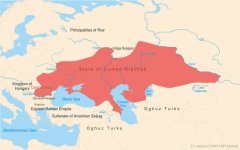
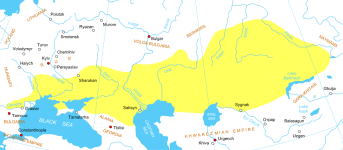
They come West as horse lords and they settle and mingle in the same areas: Carpathian Basin, Pannonian Plains, Pontic Steppe, Balkan Peninsula.

The Hungarians claim descent from the Huns ( I grant them that, would put my hand in the fire its true, the name itself says it - HUNgary - and a popular name among them is Attila).

Later the Cumans sought refuge and settled in Hungary, as they were running from the Mongol/Tatars. They married into the royal family and there is a region in Hungary known as Cumania.

Not really a lot about the Avars and Pechenegs, they are somewhat mysterious, though it is known that they would hire their services as warriors (some Pechenegs captured by muslims would become what were known as Mamluks - same goes for Cumans.

The Bulgars just waltzed in the Balkans on the Byzantine Empire, established the First Bulgarian Empire and settled (they are actually not slavic but a steppe nomadic/turkic people).

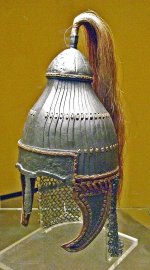
AVARS:
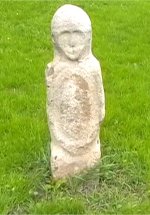
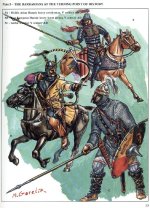
Lamellar_helmet_Avar.jpgAvar_Khaganate_Map_602.png

BULGARS:
old GBulgaria.jpgBulgarian warrior.jpg

MAGYARS:
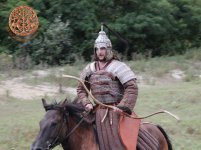
MagyarWarrior.jpgMigration_of_Hungarians.jpg

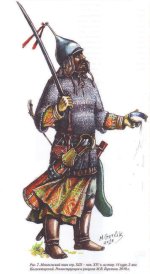
PECHENEGS:


Pechenegs_c.1030.svg.pngPecheneg warrior.jpg

CUMANS:
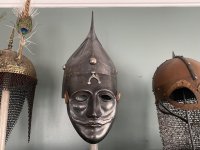
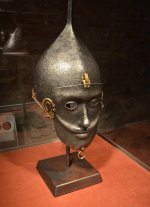
Cuman helmet.jpg0925_Kipchak_style_helmet_13th_c.JPGCumanSt..jpgCuman.jpgCumanHelm.jpgCumania_(1200)_eng.pngCumanSt2.jpg
 
Last edited:
Aside from the Magyars and Bulgars which have survived, the Cumans are the most documented and recorded in the annals of history.

I strongly believe all these Nomadic/Turkic peoples with their movements and invasions are actually one and the same people/nation and have come to two possible conclusions:
1. It is a single event of a nomadic/turkic people coming from the steppes that has been copied and pasted multiple times in a forged history.
2. It was the same nomadic/turkic peoples coming and going ( call it raiding, invasions or how you like it, doesn't matter) over time for some reason.

Cumans: Cumans - Fierce Warriors of the Steppe - Archery Historian
Cuman | Nomadic Tribe, Eurasian Steppe & Turkic People | Britannica

Pechenegs: Pechenegs | Turkic-speaking, Nomadic, Steppe | Britannica

Avars: Avar Origins
Avar | People, Empire, & Origin | Britannica

I'd like to hear your thoughts and observations.

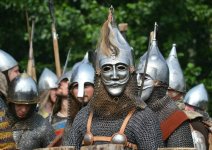
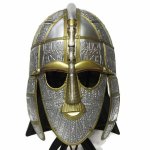
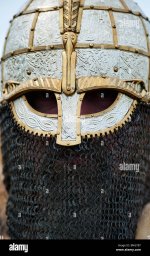
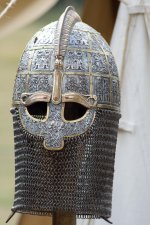
PS: Oddly enough,the style of all these peoples' masked helmets for some reason is almost identical to those of the old Saxons.

(ANGLO)-SAXON HELMS:
saxonH.jpganglo-saxon- helm.jpgsaxon_helmet_2.jpg
 
Last edited:
At the same time the Seljuks were in Anatolia, above them in the Eurasian steppe were the Cumans.
A bit before that there was the Pechenegs.
Before them came the Magyars.
Before them came the Bulgars.
Before them were the Avars.
And before them (and first of them all in this category of Turkic/Mongoloid Steppe Peoples) came the Huns.
The last and most well known were of course the Mongols.

Here we have a rather numerous collection and series of nomadic peoples coming in from the East, going in the same directions, appearing one after the other at very short intervals or simultaneously.
All of them seem to have the same customs, traditions, styles, manner of warfare and tactics, clothing etc.
They come West as horse lords and they settle and mingle in the same areas: Carpathian Basin, Pannonian Plains, Pontic Steppe, Balkan Peninsula.

The Hungarians claim descent from the Huns ( I grant them that, would put my hand in the fire its true, the name itself says it - HUNgary - and a popular name among them is Attila).


The Bulgars just waltzed in the Balkans on the Byzantine Empire, established the First Bulgarian Empire and settled (they are actually not slavic but a steppe nomadic/turkic people).

AVARS:
View attachment 34957View attachment 34958

BULGARS:
View attachment 34959View attachment 34960

MAGYARS:
View attachment 34961View attachment 34962

PECHENEGS:


View attachment 34964View attachment 34963

CUMANS:
View attachment 34965View attachment 34966View attachment 34967View attachment 34968View attachment 34969View attachment 34970View attachment 34971
Because of the Volga trade route I think.

Volga trade route - Wikipedia
Route from the Varangians to the Greeks - Wikipedia

And ofc various nomadic tribes fought over these trade routes.

Scythian artifacts are also found there, for example. From which gold? Did they mine it there? Probably, the gold came from trade or raiding.

Distribution-of-forest-areas-in-Europe-Forest-resources-cover-about-one-third-of-the.png

The areas marked in green are forests, a natural boundary between nomads and settled peoples. It overlaps with scythians cumans huns etc.
 
Last edited:
Because of the Volga trade route I think.

Volga trade route - Wikipedia
Route from the Varangians to the Greeks - Wikipedia

And ofc various nomadic tribes fought over these trade routes.

Scythian artifacts are also found there, for example. From which gold? Did they mine it there? Probably, the gold came from trade or raiding.

View attachment 34975
The areas marked in green are forests, a natural boundary between nomads and settled peoples. It overlaps with scythians cumans huns etc.
My point was in that they all look the same; I am very well aware of the river and trade routes, but this is not relevant to what I was talking about. It was about these nomadic/steppe/turkic people all looking the same through a span of 800-900 years

The Huns also made use of lamellar and chainmail armor of a particular style, common to all these peoples.
Hunnic Cavalry.jpghunn.jpg
 
Last edited:
Aside from the Magyars and Bulgars which have survived, the Cumans are the most documented and recorded in the annals of history.

I strongly believe all these Nomadic/Turkic peoples with their movements and invasions are actually one and the same people/nation and have come to two possible conclusions:
1. It is a single event of a nomadic/turkic people coming from the steppes that has been copied and pasted multiple times in a forged history.
2. It was the same nomadic/turkic peoples coming and going ( call it raiding, invasions or how you like it, doesn't matter) over time for some reason.

Cumans: Cumans - Fierce Warriors of the Steppe - Archery Historian
Cuman | Nomadic Tribe, Eurasian Steppe & Turkic People | Britannica

Pechenegs: Pechenegs | Turkic-speaking, Nomadic, Steppe | Britannica

Avars: Avar Origins
Avar | People, Empire, & Origin | Britannica

I'd like to hear your thoughts and observations.

PS: Oddly enough,the style of all these peoples' masked helmets for some reason is almost identical to those of the old Saxons.

(ANGLO)-SAXON HELMS:
View attachment 34973View attachment 34972View attachment 34974

I agree with you that this appears to be the same nomadic raiders that keep entering the same location under different names. I think that the different names come from the name of whatever individual warlord was leading them at the time they appeared. Meet the new boss, same as the old boss. Except for the new name.

The steppes are a pretty vast area. Perhaps the nomadic raider hordes were moving along a pre-planned path? A vast circuit to collect payment from all their vassal tribes. The vassal tribes would, of course, forget they were vassals by the time the nomadic raider hordes came back around. The nomad horde would be considered intruders instead of the victorious rulers they considered themselves to be.

Or, maybe their story wasn't spread out over 800 years. Maybe it was all the same large group that never left. Maybe one big raider horde inhabited the entire steppes and surrounding areas and each of those tribes you mentioned above are co-habitating at the same time in their own provinces. Of course they would raid over the border into neighboring cities and countries. That's what raider hordes do. Now that I've laid it out, I think this idea is probably the correct one.
 
They had slavic harems?
I don't buy that one, sorry. We are being lied to.


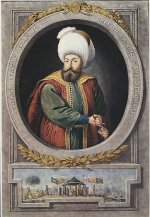
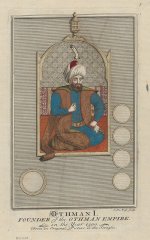
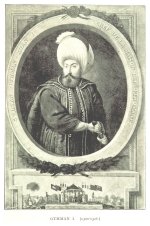
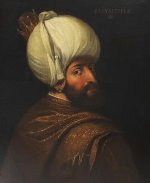
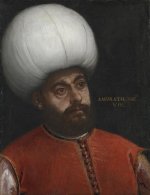
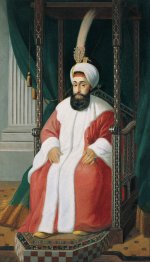
Until the mid 19th century (the times coincide with the tumultuous events of the mid 19th century, when perhaps a Reset and Replacement happened) they looked like this:
Osman_I.jpgOsman I .2.jpgOsman I.jpgBaiazeth._P._IIII.jpgPaolo_VeroneseSultan_Murad_II.jpgJoseph_Warnia-Zarzecki_-_Sultan_Selim_III.jpg800px-IV._Mustafa.jpgPortrait_of_Abdülhamid_I_of_the_Ottoman_Empire.jpgSultan_Mehmet_III_of_the_Ottoman_Empire.jpg

These two really shine out and speak for themselves:
Paolo_Veronese_Bildnis_des_Sultans_Moise.jpg

Sultan_Abdülmecid.jpg


Remove the Turban and the Fez and they could pass as Count Palatine of the Rhine, the King of France, the Duke of Bavaria and so on...
The second guy, Abdulmejid the I was the last one to look like this. After him they start to look Turkic in the manner we have been taught how Turkic people look like. Lived 25th April 1823-25th June 1861. Reigned 1829-1861. Under him started the Tanzimat era (era of reorganization): Tanzimat | Modernization, Reforms & Reorganization | Britannica

This guy is a little sketchy. Mahmud the II. Born 1750, died 1839. Reigned 1808-1839. We seem to have two versions of him, with
substantial differences:

Sultan_Mahmud_II_of_the_Ottoman_Empire.jpg
MahmutII.jpg


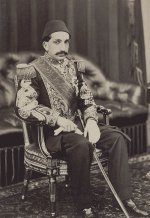
After Sultan Abdulmejid the I however, they start looking like this:
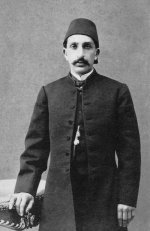
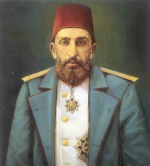
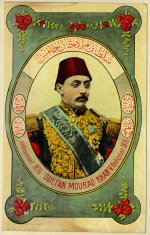
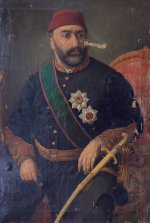
800px-Abdülhamid_II_of_Turkey.jpgAbdulaziz.jpgSultan_Murad_V_Khan.jpgSulAbdulaziz.jpgSultan_Abdul_Hamid_II_of_the_Ottoman_Empire.jpgSultan_Gazi_Abdül_Hamid_II.pngSultan_Mourad_Khan_V.jpg

No idea of what is going on.
 
Tips
Tips
Please respect our Posting Rules.
Back
Top