They say that this building was built recently, the building hides some mystery or not?

Old plan of the Kremlin, can't really find an old star there, i mean the kremlin kind of is a fortified city but it is not what i would call a star fort or a star civ, it has the wrong dimensions to satisfy my need, emphasis on my. It does make it onto the map as being an interesting place.

kazan-1552.jpeg


Screenshot 2022-01-27 at 13.01.12.png

My criteria is that although it is an impressive fortified city, from above it is not a star, ie not geometrically perfect.
 
Looks like its on the edge or just outside the old star city?
According to the generally accepted version, this is so. The same can be seen on any map. I have already mentioned many times that this building is located next to the Kremlin (in this case, there is no information that the Kremlin is star "fortress").

Personally, I tend to think that the real history of Kazan (like most cities in Russia; and the world too) is hidden from prying eyes. In the case of Kazan, it is hidden under water. I don’t have much confidence in old maps (beginning of the 20th century and earlier), since they could easily be drawn at any time.
 
Hellboy there is a timelapse in the video on this page which shows the reclamation that was done.
Pavel Otdelnov | Artificial Reclamations
The video featured on the site shows areas on the other side of the river or areas that are located on the outskirts of the city. To the Palace of Farmers, the video is indirectly related. The only thing it shows is how the coastline is being washed and strengthened for the construction of elite housing and Universiade facilities.
 
Fair enough. I found it looking for articles or images of any of the rivers flooding. Cannot find any using English as the search language will try the Russian language later.
Did find this though which is a great view of the area under discussion. Historic and Architectural Complex of the Kazan Kremlin
No sign of the singular form of a starfort though.
perspective.jpg

 
No sign of the singular form of a starfort though.
We will not see them (at least the central ones, not the outskirts).

The center of old Kazan, with a high degree of probability, is under water.

Around here, in my opinion.

IMG_20220127_185334.jpg
 
Opinions are fine as far as they go but you have no evidence.
As you can see, I'm not putting forward evidence. Only a theory based on a comparison with the location of a number of cities in the world.

We should drain the area. Maybe there's a treasure of the pirates inside the star-fort.

Ok.
Most of what interests us has long been washed away (and most likely more than once). And what was left after was taken to us. It would be interesting to see what is under the modern bottom (under the old earth), but this is definitely not information for the general public.
 
We should drain the area. Maybe there's a treasure of the pirates inside the star-fort.

Ok.

No need to be rude. You dont know until you dig if there is any pirates there.
This for example, seemingly random rectangular foundation style cut rocks, is a bit from a ~200m area where no maps show any building historicly. But the name of the modern housing contains something you can translate to fort. Its just an example.
Screenshot_20220127_151348.jpg
 
Also commissioned and built this during the same building period pre 2013.
Good grief.
This is a late Soviet style building (ru). (I think it's obvious). Built after the collapse of the USSR. Nobody built it in 2013. At most, minor repairs were carried out.

This building is located along the same line as Pushkin Street (the border of the modern center of Kazan), which, in my opinion, is a section of the border of the old Kazan.

Please note that the building is fortified on all sides with earth. This may indicate both additional reinforcement (given that there is a river nearby), and the fact that the building was built on an old foundation. And to strengthen this foundation (without prying eyes) they added an embankment from all sides.
 
Only a theory based on a comparison with the location of a number of cities in the world.
Again fine but this thread is all about the Palace of Farmers building don't forget. We are seeking evidence there is anything mysterious about it and up to date there is no evidence of anything mysterious.

Clearly it wasn't there in 2004 as the google images provided by citizenship are evidence of.
Clearly part of a hill was removed to accommodate the building as I have provided evidence of.
There was a flood in 1926 but it was not what you could call devastating nor catastrophic.
The German aerial shots are the best evidence I have found for what was really there in 1942/43 and it is very very different to what is really there today in 2022.
I am looking for any evidence of any buildings of any kind that were there prior to 1900 and am finding nothing no matter what language is used so will continue broadening the search.

Please stop hiding your replies behind the spoiler tag not only is it annoying it disrupts the flow of discussion.
Once again where is the evidence for what you claim to be the case?
Please post it.
 
By the way @iseidon, Fomenko says that Astrachan was previously located in another place. Never seen any 'mudflooders' searching for the previous location.

14. THE MODERN LOCATION OF ASTRAKHAN DIFFERS FROM THAT OF THE OLD TARTAR ASTRAKHAN, WHICH THE ROMANOVS APPEAR TO HAVE RAZED OUT OF EXISTENCE (https://chronologia.org/en/seven/4N14-EN-5.pdf)
I'm sure of it too. As well as Samara, Nizhny Novgorod, Tolyatti, Volgograd, Saratov-Engels and other large cities on the Volga.

But this is already too far from the topic of the branch.

UPD for KD-755.


You will not find any serious evidence from the beginning of the 20th century and earlier.

The censors (ru) ate their bread and butter for a reason. You know my position on the stolen story (I already cited it in the thread).

My opinion is based only on my life experience. Every time I'm interested in any area, the same signs pop up (for example, those indicated in this thread). And so from time to time. This is the only way to approach the study of stolen history, in my opinion. No one will give me or you any proof.

I am sure that censorship exists in developed countries as well. Only there it is more advanced than in conditional Russia. Plus, there are more contradictions in developed countries. As a result, one branch of the ruling groups can use (for example) us or anyone from real civil society in their interests against another branch of the ruling circles. When we perform (without knowing it) a task that certain ruling circles need, we will be disposed of or discredited. That's all the reasons, in my opinion, why such people (like me and many visitors to the site) can freely paint their theories on the Internet.
 
Last edited by a moderator:
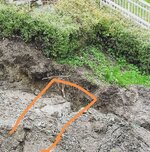
Well took me a while but here you go Iseidon you asked for a great big hole picture and here it is;

2.jpg

And another six documenting the build.

1.jpg

3.jpg

4.jpg

5.jpg

6.jpg

aerial.jpg


he development project of the quarter, taking into account the location of the administrative building of the Ministry of Agriculture and Food of the Republic of Tatarstan, was developed on the basis of the Order of the Head of the Executive Committee of Kazan, the program and conditions of the closed competition for the best conceptual design of the development of the quarter, taking into account the location of the administrative building of the Ministry of Agriculture and Food of the Republic of Tatarstan .

The space-planning idea of the Ministry building is to harmonize it with the complex of the Kazan Kremlin and neighboring buildings. The Kazan Kremlin is a historical pearl of Kazan. Next to it, in our opinion, architecture in the style of past eras is best combined. Therefore, it was decided to design the building in the classicist style, in the spirit of Belle Epoque prevailing in the second half of the 19th century - the golden age of architecture. In order for the building not to compete with the Kazan Kremlin in the panorama of the city, it was necessary to limit it to a four-level storey and arrange it in length. The building is integrated into the slope of a fifteen-meter hill and exceeds its height by only one floor. This ensured the maximum underestimation of the building relative to the Kremlin hill.

The idea of the building itself was that the Ministerial building would look extremely monumental. For this, authentic architectural orders (Corinthian, Ionic, Doric) were chosen in the processing of facades, strictly adhering to Vignola's treatise on five orders in architecture.
The center of the composition of the building of the Ministry of Agriculture and Food is a tree (twenty meters high), inscribed in a deep arch. This tree symbolizes fertility and prosperity. Agriculture is essentially concerned with the cultivation of wildlife. A large tree, inscribed in a strict classical arch, symbolizes the beauty of the nature that man cultivates. The second important detail of the building is its central dome. It is made in the form of a slotted, spirally twisted sphere. The dome has a classical silhouette as it is part of a classical building, but its slotted latticework and swirling helix add a touch of oriental architecture.
Kazan is a city where both Eastern and Western cultures have been present since ancient times. And in our project, we wanted to express the idea of a harmonious combination of these two cultures with the domed part of the Ministerial building.

planning idea

According to the APL, the building should have three separate entrances:
- for employees of the Ministry
- for employees of the agro -industrial complex
- for the management of the Ministry.

In our design solution, the central part of the building is the halls and lobbies located one above the other, and the right and left parts are two autonomous parts of the building connected to each other by floor corridors. Accordingly, one wing (the first three levels) belongs to the agro-industrial complex, and the other wing belongs to the employees of the Ministry. Therefore, on the facade from Fedoseevskaya street there are two main entrances. The entrance for the leadership of the Ministry is located on the fourth level from the side of Nagornaya Street, and this entire level in the majority belongs to the governing apparatus.

The planning decision was influenced by the fact that the building with its southern part crashes into the slope. As a result, there was a shortage of insolated area. To address this issue, three atriums were introduced in the roof, which illuminate both the office, vestibule and parking areas. Due to the proximity and backwater of groundwater, we did not introduce a basement floor for parking. Parking is located on the first floor of the building.

Structural solutions
For the implementation of this project, a structural scheme with a monolithic supporting frame was used.
The foundations are piled with a monolithic reinforced concrete grillage. Columns and floors from monolithic reinforced concrete. External walls are self-supporting with external cladding made of fiber-reinforced concrete elements and facing bricks.
Internal walls made of light partitions with sound insulation. The roof is flat with an internal drain. Doors and windows are wooden. Atrium cover made of aluminum profile.
The main dome is made of prefabricated fiber-reinforced concrete elements. Architectural elements (columns, balustrade, cornices) made of fiber-reinforced concrete. Floors with soundproofing screed. Suspended ceilings for engineering communications.
The transport scheme allows you to provide access to all sides of the building. We have also introduced road transport between Nagornaya and Fedoseevskaya streets without going to B. Krasnaya and Baturin streets.

The planning idea of the adjacent territory is that between the building of the Ministry, the Kazanka River and the foot of the Kremlin there is a city park. Baturina Street is expanding according to the red lines with a parking area at the intersection of Baturina Street and Fedoseevskaya Dam for the convenience of visiting the park.

The Fedoseevskaya dam is being expanded for the construction of a road and a sidewalk zone with the location of trade pavilions. A boulevard runs from the central axis of the Ministry building to the embankment and through it to an artificial peninsula, where there is a restaurant, a berth for light ships and a high fountain (80m) from the water surface, in the image of the Geneva Fountain. Fedoseevskaya dam, thus, turns into a spacious embankment adjacent to the city park.
min3.jpg

All from here

Took me longer to find these and I do not speak nor understand the Russian language but google translate and duckduckgo came in handy.
It would have been quicker but frankly I was mesmerised by the imagery on this site

Edit to add
Here is a blokes who wandered through the undergrowth behind the construction sites blog inc photographs.

Here is an old postcard type photo of the site in days long ago

old.jpg
 
What do these photos show (most of which I have already posted)? There is no pit.

They just partially dug out part of the hill, which was evident from the previous photos. Back then, they did not bury the building under the hill to strengthen it. So it has nothing to do with the excavation of the foundation.

2.jpg
3.jpg

kreml-kazani-obzornaya-ploshadka.jpg


This means that there is a powerful foundation below (into which piles were driven). This foundation (piling pit or ground stabilization work in the coastal area) is not visible. It can only be seen that the piles are driven into the ground. Which is not enough for the coastal area.

You gave a link to a survey of the Bogoroditsky Monastery area, and it is located a little away from the Palace of Farmers. This monastery is under renovation. I came to Kazan 3 times (2016, 2017, 2019) and each time it is half-abandoned in anticipation of reconstruction. According to Google panoramas, the situation has not changed much.

Screenshot_20220128_013341.jpg


In the old photo that you brought, you can only see that there are small residential buildings. The situation is similar with the houses that interest me in Yekaterinburg.

vo803yy04x9b5wn0gq.jpg
755710548475491.jpeg

Ural Federal University, old UrGU (ru)
waimseat6kozp79nu0.jpg
9e7a1c3000860c7b37e6baf6b2e837a2.jpg

Military GenSHtab (ru).
6314n8fykn0vwlr9j1.jpg
p48657SRJ6TJ5paHYF8872nV7N05Ky.jpg


So this only reinforces my suspicions. According to my theory, these lands were specially built up with such housing so that prying eyes would not go there (in the case of Russia, first of all, foreigners who actively tried and are trying to appropriate everything that is on the territory of Russia).

And there is another area that is completely occupied by the Greenwich Shopping Center (one of the largest in Russia).

maxresdefault.jpg


Near Greenwich, as in the case of the Palace of Farmers, there is a metro station, a monastery (ru), a stadium (ru), a circus, a shopping center in the form of a pyramid (ru, photo) (truncated), a park (ru, photo) (an arboretum with a fountain and an old restored chapel).

Is it just a coincidence?

Before the revolution, this area was occupied only by estates. And now there are officially two (at least) floors underground, numerous underground parking lots from all sides, access to the metro station, which is located at a depth of 30 meters.

484498_Press_konferentsiya_posvyashtennaya_otkritiyu_novogo_vhoda_na_stantsiyu_metro_Geologich...jpg


And there are many more such examples in Russia.

You do not want to understand that the current level of the Volga is artificially high. That is, we need to look for the foundations that interest us at a fairly large depth, since modern buildings in Kazan are much higher than this level.

vr3841brl.jpg


Judging by how you actively try to prove that the building was built from scratch, but at the same time not being able to prove it (just like I cannot prove the opposite), and as an example you only cite photos that do not say anything about , which is underground or a link to a survey near the lying monastery - one gets the impression that you are working for forces that are stealing this story.

I can't assume this from a user who is one of the most active on the site. So I don't know what to think.

UPD. Added old photos to objects in Yekaterinburg.
 
Last edited by a moderator:
What do these photos show (most of which I have already posted)? There is no pit.

They just partially dug out part of the hill, which was evident from the previous photos. Back then, they did not bury the building under the hill to strengthen it. So it has nothing to do with the excavation of the foundation.

View attachment 19089View attachment 19090
View attachment 19088

This means that there is a powerful foundation below (into which piles were driven). This foundation (piling pit or ground stabilization work in the coastal area) is not visible. It can only be seen that the piles are driven into the ground. Which is not enough for the coastal area.

You gave a link to a survey of the Bogoroditsky Monastery area, and it is located a little away from the Palace of Farmers. This monastery is under renovation. I came to Kazan 3 times (2016, 2017, 2019) and each time it is half-abandoned in anticipation of reconstruction. According to Google panoramas, the situation has not changed much.

View attachment 19097

In the old photo that you brought, you can only see that there are small residential buildings. The situation is similar with the houses that interest me in Yekaterinburg.

View attachment 19084
Ural Federal University, old UrGU (ru)
View attachment 19085
Military GenSHtab (ru).
View attachment 19086

So this only reinforces my suspicions. According to my theory, these lands were specially built up with such housing so that prying eyes would not go there (in the case of Russia, first of all, foreigners who actively tried and are trying to appropriate everything that is on the territory of Russia).

And there is another area that is completely occupied by the Greenwich Shopping Center (one of the largest in Russia).

View attachment 19092

Near Greenwich, as in the case of the Palace of Farmers, there is a metro station, a monastery (ru), a stadium (ru), a circus, a shopping center in the form of a pyramid (ru, photo) (truncated), a park (ru, photo) (an arboretum with a fountain and an old restored chapel).

Is it just a coincidence?

Before the revolution, this area was occupied only by estates. And now there are officially two (at least) floors underground, numerous underground parking lots from all sides, access to the metro station, which is located at a depth of 30 meters.

View attachment 19091

And there are many more such examples in Russia.

You do not want to understand that the current level of the Volga is artificially high. That is, we need to look for the foundations that interest us at a fairly large depth, since modern buildings in Kazan are much higher than this level.

View attachment 19087

Judging by how you actively try to prove that the building was built from scratch, but at the same time not being able to prove it (just like I cannot prove the opposite), and as an example you only cite photos that do not say anything about , which is underground or a link to a survey near the lying monastery - one gets the impression that you are working for forces that are stealing this story.

I can't assume this from a user who is one of the most active on the site. So I don't know what to think.

Perhaps this user you refer to is only trying to make you work harder.
 
Here is a photo of what type, I could be convinced. There is nothing like the Palace of Farmers.

47.jpg

This is the construction of a new building in the historical center of Voronezh. The link (ru) shows the real process of laying the foundation in close proximity to historical buildings.

At the same time, construction is not carried out in the coastal region.
 
Last edited by a moderator:
So now you get into me the person not the information I have posted.
You have provided no evidence whatsoever that supports your opinions nor your theory of water level changes in the rivers that meet at Kazan.
As I am not living in Kazan or Russia and can neither read nor speak Russian I have to rely on the internet as in search engine duckduckgo and googles translation service to uncover things.

During all my searches which are nothing more than putting search strings into the search engines which arrive at through asking myself the question "what is the most likely explanation?", I have not come across a scrap of evidence be it pictorial or documentary that supports your opinions.

On the balance of what I have discovered, all presented here for everyone's perusal, shows me the buried pre existing foundation theory is a nonsense, without supporting evidence.

You yourself claim such evidence will not be found due to the state secrecy etc in Russia so this means you are left with opinions and theories.
Me I prefer the balance of available evidence as the method of determining the likely reality.

In light of that I can see no point in going any further with this investigation unless you or someone else turns up any evidence which throws doubt on the way this building went up and presents it here.
 
Tips
Tips
Please respect our Posting Rules.
Back
Top