Evidence humans were created and traded as slaves, food, entertainment and material resources (IHASFEMR)

I guess it would be prudent to mention the word skull-duggery.

This stuff almost writes it self.

Definition of SKULDUGGERY

Interesting that it has no etymology.

Here is the ngram chart

Google Books Ngram Viewer

Maybe a little clue as to when.

That ngram report is interesting isn't it.

What weaknesses are reported for the ngram tool? False positives, false negatives, environmental factors that skew it? Are there statements/analyses on that?

I've avoided using it, partly because it's Google and partly because I'm wary of letting the written word lead the analysis (I've become so distrustful of the written word I prefer to let physical evidence lead the analysis and look at the written word as a technique for explaining or propagandising the physical evidence, but that's just a personal preference.)

As I woke up this morning your and Sapioit's skullduggery and skullery comments came together as a very visual pun about 'skullduggery raising an eyebrow'. Cue image of skull being exhumed with an eyebrow clinging to it.

There's so many patterns poking out of this material, here's some I haven't had time to look into:

  • gypsies -> rag and bone man -> gypsum. And then an idea the board may have hosted before: Paris catacombs -> plaster of Paris (gypsum)

  • 'St Marys churches' and 'St Michaels churches' patterns: St Marys churches crop up much more often and seem to be associated with the tunnel system and butchery infrastructure/death ('dispatches'); St Michaels crops up much less often, but seemingly associated with nunneries and therefore 'hatches'. The inverse of what you might expect if you think of St Michael as symbolic of a butcher.

  • clay pipes. Are they for smoking or moxibustion or supping with?

Dumping these here in case someone else is already noticing or wants to run with them. I really want to work up a post about Sheela na gig data.

Nice real world syncho: last night (Saturday) Michael Portillo Great Railway Journeys was showing water jet quarrying - as per some of the well-known Seattle regrade photos - in a Cornish porcelain quarry - the world's largest china clay quarry allegedly.
Though appreciated, the two naked ladies didn't use the facilities properly. You're supposed to kneel and put your head all the way through the hole and downwards into the U shaped niche. A heavy stone goes on top of the loo above your head and locks you into place. The meat cleaver obviously chops down outside the loo, between it and your shoulders. Your head conveniently stays inside the loo and there's less gore to clean up. The cartoon was inaccurate. Why is that?
I've thrown in one idea about why that might have been and it will be interesting to see others.

Another is that we (dmitrij_an, Vladimir Mamzerev, kbogam, and latterly me) may be wrong about these structures being used as abattoirs. Though I suspect one or more of the Russian presenters of the theory had been briefed about what they were for.

Other ideas:

  • The top (the seat of the throne in conventional toilet morphology) as a (possibly food) preparation area, with the top holes being something like a waste disposal hole or a dispatch hole for 'ready to go' produce.
  • Another is that these facilities were designed to be flooded as part of processing something. The floor gutters then fit as draining/sluicing out/mopping out channels. The side holes and top holes may then be fluid level control or drain-offs for the processed fluids. The slots don't fit in unless the facility required a fast surface level rise, followed by a slower surface level rise, followed by an upper level threshold that must not be risen above. This is idea is not necessarily inconsistent with butchery products. Traipsing through tunnel material you do encounter a lot of clues that some parts of the infrastructure involved mixing blood (and possibly flesh) into water and distributing it. Keywords for this are; Rothwell, Rockwell, Rockefella (Rot + Quelle), holy well, chalybeate springs, etc.
Rot = Red
Quelle = Spring (as in fresh water)
 
Last edited:
I guess it would be prudent to mention the word skull-duggery.
Funnily enough, I misremembered that word as skull-thievery, which made me think of piracy, as in pirates, who wave as a flag a skull with two bones. Was that how merchandise was shipped, at least after one of the cataclysms? Was it how new wild hoomans were caught to be domesticated? Was it how the wild hoomans were caught to be consumed like wild boar? Probably both, with the young cattle saved for adding to the farm, the very young cattle as cherub, very few young male cattle for multiplication, young and old female cattle for multiplication, and the other cattle used as food.
  • 'St Marys churches' and 'St Michaels churches' patterns: St Marys churches crop up much more often and seem to be associated with the tunnel system and butchery infrastructure/death ('dispatches'); St Michaels crops up much less often, but seemingly associated with nunneries and therefore 'hatches'. The inverse of what you might expect if you think of St Michael as symbolic of a butcher.
But it checks out, if you think of St Michael as the one doing the multiplication leading to hatchlings, and the tunnel system being St Mary's catac-womb being the tunnels. Speaking of, what would "catac" mean, in that case? Google says it means "down" in greek, which wouldn't make much sense, but it would make sense if you take into account the other meanings google gives it:
  • 1. completely.
    "cataclysm"
  • 2. wrongly; badly.
    "catachresis"
  • 3. down; downwards.
    "catadromous"
  • 4. against; alongside.
    "catapult"
1622971129072.png
The following ideas make sense: 1) the complete results of the womb (complete gestation); 2) miscarriages, or "bad womb", possibly referring to (a) how those who cannot give birth are treated, and (2) what only people of lower status can end up as; 3) something which went down from the womb (same as 1, the result of the complete gestation); 4) the opposite of nunneries, which function alongside them, to harvest and process the produce.
  • clay pipes. Are they for smoking or moxibustion or supping with?
Might be for sucking liquid, like a drinking straw. Maybe the saying to scramble your brain was because they literally did that, resulting in a soup or slurry.
  • Another is that these facilities were designed to be flooded as part of processing something. The floor gutters then fit as draining/sluicing out/mopping out channels. The side holes and top holes may then be fluid level control or drain-offs for the processed fluids. The slots don't fit in unless the facility required a fast surface level rise, followed by a slower surface level rise, followed by an upper level threshold that must not be risen above. This is idea is not necessarily inconsistent with butchery products. Traipsing through tunnel material you do encounter a lot of clues that some parts of the infrastructure involved mixing blood (and possibly flesh) into water and distributing it. Keywords for this are; Rothwell, Rockwell, Rockefella (Rot + qwelle), holy well, chalybeate springs, etc.
Hypothetically, if it's not for processing meats, what could it be for? Not trying to undermine the idea of butcheries, just wanting to see if they're multi-purpose. Maybe they had a different purpose, before the takeover which led to humans becoming cattle. Maybe we need a different perspective, to see things more accurately.

To quell means to end, so rock-quell and rock-a-feller might refer to ending something/someone with a rock, or ending with a rock (like freemasons getting stone buildings for free, for example), or even what came to be known as "rock bottom". Could be a catchword to let other knowledgeable ones know they remember the rock-bottom period. Or maybe it means they're the descendants of those who mined the planet, leaving behind canyons and mountains.
 
Funnily enough, I misremembered that word as skull-thievery, which made me think of piracy, as in pirates, who wave as a flag a skull with two bones. Was that how merchandise was shipped, at least after one of the cataclysms? Was it how new wild hoomans were caught to be domesticated? Was it how the wild hoomans were caught to be consumed like wild boar? Probably both, with the young cattle saved for adding to the farm, the very young cattle as cherub, very few young male cattle for multiplication, young and old female cattle for multiplication, and the other cattle used as food.

But it checks out, if you think of St Michael as the one doing the multiplication leading to hatchlings, and the tunnel system being St Mary's catac-womb being the tunnels. Speaking of, what would "catac" mean, in that case? Google says it means "down" in greek, which wouldn't make much sense, but it would make sense if you take into account the other meanings google gives it:
  • 1. completely.
    "cataclysm"
  • 2. wrongly; badly.
    "catachresis"
  • 3. down; downwards.
    "catadromous"
  • 4. against; alongside.
    "catapult"
The following ideas make sense: 1) the complete results of the womb (complete gestation); 2) miscarriages, or "bad womb", possibly referring to (a) how those who cannot give birth are treated, and (2) what only people of lower status can end up as; 3) something which went down from the womb (same as 1, the result of the complete gestation); 4) the opposite of nunneries, which function alongside them, to harvest and process the produce.

Might be for sucking liquid, like a drinking straw. Maybe the saying to scramble your brain was because they literally did that, resulting in a soup or slurry.

Hypothetically, if it's not for processing meats, what could it be for? Not trying to undermine the idea of butcheries, just wanting to see if they're multi-purpose. Maybe they had a different purpose, before the takeover which led to humans becoming cattle. Maybe we need a different perspective, to see things more accurately.

To quell means to end, so rock-quell and rock-a-feller might refer to ending something/someone with a rock, or ending with a rock (like freemasons getting stone buildings for free, for example), or even what came to be known as "rock bottom". Could be a catchword to let other knowledgeable ones know they remember the rock-bottom period. Or maybe it means they're the descendants of those who mined the planet, leaving behind canyons and mountains.
Great associations. Pirates, yes, I've noted it too. Perhaps refined human lime was (is) worth its weight in gold. Perhaps the skull and crossbones is the global flag of advanced ceramics traders.

I've clarified the Rot + Quelle = Rockefella association in the post above to make it more obvious I was associating with the German word for 'spring'. It's pronounced something like 'Kvella'. Something like...

Perhaps a water-butchery process was about making soup. Which brings us back to the main diet of fabricants in Cloud Atlas. A key plot twist in that film is that a fabricant is shown a factory that turns fabricant dead into the fabricants' main food: soup. And - for anyone who has not seen the film - its fabricants go to their deaths thinking they are going to a religious exaltation.

The following ideas make sense: 1) the complete results of the womb (complete gestation); 2) miscarriages, or "bad womb", possibly referring to (a) how those who cannot give birth are treated, and (2) what only people of lower status can end up as; 3) something which went down from the womb (same as 1, the result of the complete gestation); 4) the opposite of nunneries, which function alongside them, to harvest and process the produce.
3. down; downwards. "catadromous"

also caught my eye because I had just been going through descriptions of sheela na gigs, in which the people writing them up are obviously very struck by the many representations of seemingly soft tissue that is falling, or has fallen, from the sheela na gig's pudenda. I think part of their puzzlement (if that is what they were experiencing) is that they tend to think of sheela na gigs as fertility symbols, and what seems to be portrayals of afterbirth - or conceivably, miscarriages - doesn't directly reconcile with a fertility symbol.

'Soup' may be the answer. Or afterbirth smoothies. Available 24/7 at the sign of the Golden Cross.

Edit: 'burgers' changed to 'smoothies'; link to first-person account
 
Last edited:
The examples given for cataclysm in the oxford dictionary have spiked my confirmation bias of the charts

In the existing orthodoxy, settler farming developed along a gradual, cataclysm-free road to capitalist agriculture.

Settler farming, farming settlers.

I could just be reading to far into that but that little voice at the back of my head screams, "they love to mock us at every chance".

Although I did learn a new word today.

hemoclysm - Wiktionary

Also might be nothing but sometimes i get hit with keyboard dyslexia and spell things wrongly, this has on occasion produce some wanted and some very unwanted results.

Anyway I misspelt clysm as clysum, and google interpreted that as Elysium.

clysum at DuckDuckGo
 
Settler farming, farming settlers.

I could just be reading to far into that but that little voice at the back of my head screams, "they love to mock us at every chance".

Although I did learn a new word today.

hemoclysm - Wiktionary

Also might be nothing but sometimes i get hit with keyboard dyslexia and spell things wrongly, this has on occasion produce some wanted and some very unwanted results.

Anyway I misspelt clysm as clysum, and google interpreted that as Elysium.

clysum at DuckDuckGo
Hemoclysm - what a fab word! It has the same meaning as 'Senlac' - lake of blood - which is the name for the field in Battle, East Sussex, where the alleged Battle of Hastings was fought (no serious evidence has been found of the battle). That reminded me of another set of word associations:

Sen (blood) -> sin -> saint
 
The river Siene,(Sen, french), runs strait to the heart of the Paris catacombs....

How come so many bones in the Paris catacombs, stacked so neatly? Same for other ossuaries. The thinking in this thread would lead you to believe that these bones would have been ground up for fertilizer or some other utilitarian use. Were some people just interested in the meat, with bones being just some kind of leftover? If it's about food, you'd think they'd harvest the marrow. Was soup making the way these bones got so clean?

The stacking of bones done in an orderly way speaks more to an aesthetic, maybe even a type of honoring of the dead, and not just a throw away approach.

Can you kill people and eat them and still have an after death ritual that honors them in some way, maybe just to absolve you from a guilty conscience? You know; the scapegoat scenario. Maybe there's a segue here in recognizing that the killing and eating was a 'sacred' ritual and had the side benefit of releasing you from your anxieties, since you cast those off into the souls of those you murdered.

Those "christian" churches sure had a racket going. Up to no good. More luciferian inversion.
 
The river Siene,(Sen, french), runs strait to the heart of the Paris catacombs....
Ah, nice one.
How come so many bones in the Paris catacombs, stacked so neatly? Same for other ossuaries. The thinking in this thread would lead you to believe that these bones would have been ground up for fertilizer or some other utilitarian use. Were some people just interested in the meat, with bones being just some kind of leftover? If it's about food, you'd think they'd harvest the marrow. Was soup making the way these bones got so clean?

The stacking of bones done in an orderly way speaks more to an aesthetic, maybe even a type of honoring of the dead, and not just a throw away approach.

Can you kill people and eat them and still have an after death ritual that honors them in some way, maybe just to absolve you from a guilty conscience? You know; the scapegoat scenario. Maybe there's a segue here in recognizing that the killing and eating was a 'sacred' ritual and had the side benefit of releasing you from your anxieties, since you cast those off into the souls of those you murdered.

Those "christian" churches sure had a racket going. Up to no good. More luciferian inversion.
Excellent - I hadn't computed the 'show respect for the victim' aspect into bone displays. At least, not respect beyond the requirement to seduce sentient prey into cooperating with their role in the catering process.

Download Video


Even the proprietors' explanation for their ossuaries seems more about practicalities than respect. It is - generalising somewhat - that 'graveyards were overflowing so kindly monks set to with their shovels and provided the necessary space in their cellars.'

I probably would have agreed with the 'kindly monks' explanation or even the 'respect-after-eating' explanation. But not after I saw photographs of the human bones so far recovered at Narborough Bone Mill.

'Eating and honoring' presents another problem: it is an already-much-discussed scenario and, as such, it does not have to recognised. It merely has to be selected from the shelf of available scenarios, and adopted.

And I didn't think we were coming here to develop our shopping skills.

The thread is imbalanced in favour of humans as food. That is partly because its origins lie in someone else's cannibalism thread, partly because there is more evidence for humans being seen as - and processed into - food.

We seem to have arrived at the concept of 'blood soup' in the last few posts. In the 1980s, Yeah Yeah Noh - alleged favourite band of British DJ John Peel - wrote an ode to it:

 
Last edited:
This from our good friends at the Smithsonian Institute;
Blood was procured as fresh as possible, while it was still thought to contain the vitality of the body. This requirement made it challenging to acquire. The 16th century German-Swiss physician Paracelsus believed blood was good for drinking, and one of his followers even suggested taking blood from a living body. While that doesn’t seem to have been common practice, the poor, who couldn’t always afford the processed compounds sold in apothecaries, could gain the benefits of cannibal medicine by standing by at executions, paying a small amount for a cup of the still-warm blood of the condemned. “The executioner was considered a big healer in Germanic countries,” says Sugg. “He was a social leper with almost magical powers.” For those who preferred their blood cooked, a 1679 recipe from a Franciscan apothecary describes how to make it into marmalade.

Rub fat on an ache, and it might ease your pain. Push powdered moss up your nose, and your nosebleed will stop. If you can afford the King’s Drops, the float of alcohol probably helps you forget you’re depressed—at least temporarily. In other words, these medicines may have been incidentally helpful—even though they worked by magical thinking, one more clumsy search for answers to the question of how to treat ailments at a time when even the circulation of blood was not yet understood.

However, consuming human remains fit with the leading medical theories of the day. “It emerged from homeopathic ideas,” says Noble. “It’s 'like cures like.' So you eat ground-up skull for pains in the head.” Or drink blood for diseases of the blood.

Another reason human remains were considered potent was because they were thought to contain the spirit of the body from which they were taken. “Spirit” was considered a very real part of physiology, linking the body and the soul. In this context, blood was especially powerful. “They thought the blood carried the soul, and did so in the form of vaporous spirits,” says Sugg. The freshest blood was considered the most robust. Sometimes the blood of young men was preferred, sometimes, that of virginal young women. By ingesting corpse materials, one gains the strength of the person consumed. Noble quotes Leonardo da Vinci on the matter: “We preserve our life with the death of others. In a dead thing insensate life remains which, when it is reunited with the stomachs of the living, regains sensitive and intellectual life.”
The Gruesome History of Eating Corpses as Medicine

Edit to add; With regards to skullduggery, there was also this practice back in medieval times.

Skulls for sale: English conquest and cannibal medicines
 
Last edited:
This from our good friends at the Smithsonian Institute;

The Gruesome History of Eating Corpses as Medicine

Edit to add; With regards to skullduggery, there was also this practice back in medieval times.

Skulls for sale: English conquest and cannibal medicines
I planned to get into this after posting evidence that medieval people living near monasteries and priories were very unhappy with their 'beneficent' neighbours. Because of monastic tendencies to:
  • charge high land rents
  • steal land (fencing others' land, rewriting tenancy contracts into ownership contracts)
  • tax roads (by building tollbooths), and
  • violence.
Protesting locals could be beaten up or hung from abbot-owned gallows. Officials who attempted to restore order were met by promises of reform, by outright lies and - sometimes - by well-armed 'monks'. I planned to show that the modern perception of 'good' monks is out-of-whack; the result of zealous information management.

However, presenting that case takes a lot of space and Oracle's medicinal cannibalism post leap-frogs us to less well-known ecclesiastic profit lines. So let's look at those instead.

We start with prostitution, then move on to blood harvesting (virginal and non-virginal).

First, credits: the film clips in this post were taken from these two reports about Spanish brothels:


Pay attention to the signage: it is directed at passing traffic, clearly signals the product offer, and highlights the entrance door.

From a distance:

Spanish brothel pic WQV6QMWWSRCWPN45VVMNTON5AE.jpg
Roadside brothel in Spain
Above: Catch the eye of passing trade...

Spanish Show Girls cropped sign.png
Product offer should be unambiguous

Above: Signal the product offer as clearly as cultural norms permit.

Download Video

In Spanish, 'club' rhymes with 'boob'

Below: As the customer approaches the premises, showcase the product offer and identify the entrance:

Download Video

Showcase the entrance. Make it unmissable

Below: Reassure hesitant customers and close the sale:

Download Video

Pimp that entrance door. And - like the Church - disassociate yourself from the daily grind

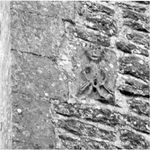
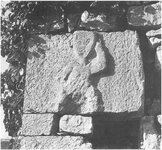
Now let's look at sheela na gigs - those mysterious 'fertility symbol' carvings found around old churches, priories and castles:

From a distance:

church_wall_advert_hc.png
Stanton St Quintin, Wiltshire, England (copyright John Harding)
Above: Catch the eye of passing trade... many sheela na gigs are positioned high on exterior tower and nave walls.

nave wall sheela -004.ppm.jpg
Ballinaclogh, County Tipperary, Ireland (copyright Conleth Manning)

Above: Signal the product offer as clearly as cultural norms permit.

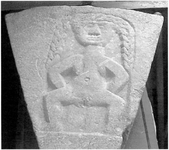
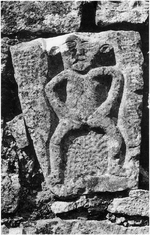
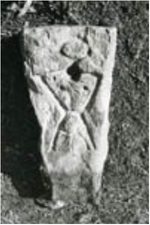
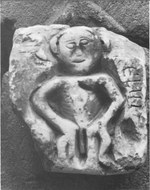
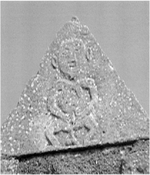
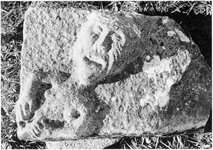
Below: Three wedge-shaped sheela na gigs, probably keystones from arched doorways:

keystone_sng_1_hc.png
Rahara, County Roscommon, Ireland (copyright Gay Cannon)

keystone_sng_2_hc.png
Scregg, County Roscommon, Ireland (copyright Barbara Freitag)

Wexford_Ireland_keystone_sheela_na_gig.png
Kilmokea, County Wexford, Ireland

As the customer approaches the premises, showcase the product offer and identify the entrance. Close the sale...

For raw data, we turn to Barbara Freitag's catalogue of 167 Irish and British sheela na gigs in Sheela-Na-Gigs - Unravelling an Enigma. There we find:
  • 67 of the known sheela na gig carvings are thought to have been repositioned at some time, leaving:
  • 100 possibly still in their original position.
Of these 100:
  • 33 are positioned inside
  • 67 are positioned outside
Of the 67 that are outside:
  • 26 were first found positioned high on an outside wall
  • 23 were first found positioned above an entrance door (including three that appear to have been keystones at the top of archways)
  • 16 were first found positioned on a gatepost
What follows are samples of individual sheela na gig location reports. Feel free to skip over these next two purple-coloured lists - they're only here to give texture:

Sheela na gigs positioned above doors:
  • Figure formerly placed above gateway
  • Figure on key-stone of the arch over main doorway
  • Figure situated above main entrance door at considerable height
  • Above doorway on outer face of S wall
  • Figure... on E impost of N doorway of the larger of two churches
  • Very high up on wall in masonry E over doorway
  • On S respond of arch at entrance
  • Situated on N impost of chancel arch.
  • On outer wall above N door
  • Figure was placed above doorway
  • Placed high up above door
  • Keystone over archway
  • Originally from doorway of medieval church
Sheela na gigs positioned high on external wall:
  • Figure situated on... SW facing wall... some 10 m above ground level
  • Figure... at NW corner of nave facing road
  • Figure... on wall, above entrance doorway, some 4 m above ground
  • High on E face
  • Figure c. 7 m over ground level
  • Figure... at considerable height, just below level of fourth floor.
  • Situated some 14 m up in masonry
  • Figure overlooks Clashawley river and Watergate Bridge.
  • Situated very high on E wall
  • Figure situated some 2–3 m up... on outer wall
  • About 6 m above ground level in wall of tower
  • Figure on second floor... above opening in S wall.
  • High up on W wall of (church) tower
  • On apex stone crowning W gable of medieval parish church
  • High up on... S face
  • High on S facing wall
  • At top of wall... this was an outside wall
  • Figure originally in outer N chancel wall where it served as cornerstone, 1.5 m above ground, overlooking graveyard.
  • Figure situated... at SE corner of nave on outside some 2.8 m above ground level.
  • Situated on N external wall... c. 2.5 m from ground.
  • On W wall of eleventh-century tower at third floor level
  • High up on outside W wall of N transept, above window
  • Below clock on S side of tower.
  • Set on central panel of S wall of tower.
  • Believed to have come from E gable of old church... described in... 1834/5 as ‘a grotesque figure in freestone’ projecting from wall.
That last one brings to mind Rob Trubshaw, in Rutland Village by Village, 2011 edition, p25, where he describes a female stone-carved figure found face down and being used as a doorstep at Braunston, Rutland, England:

the massive stone 'base' suggests she once stuck out horizontally, face down, from near the top of the tower. Such decorative figures are known as 'hunky punks' in Somerset, where they are known to date to the thirteenth and fourteenth centuries. The word 'punk' at this time had connotations of a whore; Quaintree Hall House nearby on the green takes its name from 'queen tree' and, again, until recent decades, the word 'queen' also had a double meaning as whore.

Draw your own conjectures.

If you're struggling, you can even compare the 'good works' of the Church with a brothel manager's attitude to his job:

Download Video

We do good work!

We already made a case that ecclesiasts were active in the business of 'hatches'. What might medieval brothels have to do with famine? And with harvesting human parts for medicine and cosmetics?

Famine first. We're already familiar with the sheela na gig below from this cannibalism thread post's discussion of The Time Machine's Eloi.

sheela-na-gig-page-9-images-of-lust.png
Elui from Easthorpe, Essex, England (Source: Images of Lust, Jerman)

This time, look at her ribs.

Most sheela na gig images depict women like this: thin with visible ribs. It is probably significant that their creators took the time to carve ribs on what are otherwise very primitive carvings. Only one or two are known to depict the physiques of well nourished women.

Why?

The Great Hunger and the Celtic Gene | Irish America discusses hemochromatosis - a disorder characteristic of survivors of famine. The page focuses on the Great Irish Famine. Bear in mind this IHASFEMR thread grew out of evidence that North-West Europe went through a series of flood-famine cycles starting approx 1,000 years ago and that the British floods have been propagandised into purely politico-ecclesiastic events.

Hemochromatosis is:

a fatal disorder [where the body builds up excess iron] that compromises the liver and pancreas, and results in bronzing or hyperpigmentation of the skin.

Individuals possessing the gene for hemochromatosis would have been advantaged in the face of limited dietary iron availability and delivery. Those without the gene would have died in disproportionately large numbers since iron is one of the most critical elements within the body.

The HFE gene that renders populations particularly susceptible to hemochromatosis:

has documented a remarkably high incidence in the Celtic population, leading to the description of the HFE gene as the Celtic Gene.

The Great Famine with its life-destroying absence of adequate nutrition magnified the importance of possession of the HFE gene for hemochromatosis.

Female famine survivors tend to show hemochromatosis later in life (10-20 years later) than male famine survivors. Because women periodically hemorrhage iron through menstruation and occasionally through childbirth.

Discussing possible sheela na gig depictions of free-flowing menstruation, Freitag cites research that says post-menarche female human stock require 'at least' twice as much iron as men. And that most women were - at best - anemic in medieval times.

Summary:
  • Famine survivors were more likely to have the iron-retaining HFE gene (the Celtic Gene).
  • Women were more likely to suffer from iron deficiency (anemia) than men during famine.
  • Surviving women were less likely to suffer hemochromatosis than surviving men after famine.
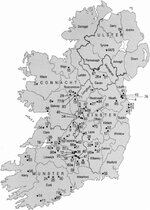
Most known sheela na gig images are from Ireland and Britain, though there are a few finds (and suspected finds) in France, Germany, Austria and Switzerland. In Ireland and Britain, the distribution of known finds is:

-002.ppm.jpg
Sheela na gig finds in Ireland (Source: Freitag)

-003.ppm.jpg
Sheela na gig finds in Britain (Source: Freitag)

Both maps from Barbara Freitag's Sheela-na-gigs - Unravelling an Enigma

The evidence and circumstances not only support the Smithsonian's claim that fresh virgin's blood was in demand, but that at times any source of nutritional iron was in demand, and that - sometimes - any form of nutrition was in demand.

The fact that women produce iron-rich blood products through their adult life and during childbirth must have been attractive to farmers of human products. Especially during times of famine. They had a profit motive for herding women - especially virginal women - into centres suitable for regular blood harvesting.

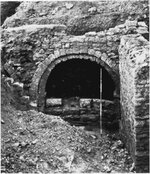
St Michaels Priory nunnery Stamford reredorter fig225.jpeg
Does my bum look big in this?

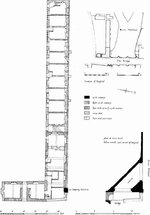
This 1974 image is of the inexplicably large vaults excavated beneath the toilets (in medieval-speak: the 'rere-dorter') at St Michael's Priory, Stamford, England - a nunnery housing 40 nuns (Google Maps), (Google Streetview). Source is the collection of images at: Plate 5: 12th-Century Monastic Remains | British History Online

The vault was nearly ten feet (3m) high. See:
St Michael's Priory rere-dorter, Stamford, Lincolnshire
and
St Michael's Priory rere-dorter, Stamford - 1007811 | Historic England

It's possible - even probable - that Stamford's nuns were composting their crap. So they would need to get under there with a wheelbarrow.

But ten feet?

Perhaps they sold compost at the roadside. However, economic theory says it makes more sense to 'add value' by selling the surplus vegetables they grew in their compost, along with prepared meals and hospitality to travellers and sailors (Stamford was a major medieval east coast port). Given that virgin's blood was in demand and (some) sheela na gig images depict 'bloody flux', can we speculate that St Michael's nunnery's massive toilet vaults are evidence of the working space required to collect and process a premium-priced, iron-rich human product? One that only nunneries could offer?

That's the medicinal side. It's not a big step to consider herding and harvesting of humans for cosmetics, just as American indians warned us (see section 3).

Taghboy_amniotic_sac_hc.png
Taghboy, County Roscommon, Ireland (Copyright: Gay Cannon)

High on top of a church gable wall, the object beneath the sheela na gig at Taghboy, Ireland, is catalogued as 'amniotic sac ... partially lying on the ground'. That's not what it looks like to me but then I haven't inspected it closely. And there are around nine sheela na gigs where there seems no doubt that the 'falling mass' depicted between the legs is either afterbirth or menstrual fluid. It can also be seen - just - in the Rahara and Kilmokea sheela na gig images further above.

However, there were probably many more. Researchers often report the area between the legs of many sheela na gigs has been severely defaced.

What do we have here?
  • We may have menstrual fluid harvesting centres.
  • We may have afterbirth harvesting centres.
  • We may have abortion clinics. (It's worth reading up on medieval abortifacients and the cultural toings and froings around them)
  • We may have all three combined.
We also have evidence of intense popular rage over their activities: destruction of images, destruction of churches, monasteries, priories, nunneries - coupled with flood and mudflood.

How did the farmers of humanity respond? Did management and workforce rebrand into our current Church? Or did they migrate to somewhere less... resentful? Or both?

Do we have any clues?

Download Video

Allegations about a brothel manager

Do the allegations in the clip give us clues about where hated, flooded farmer-managers of humans would migrate to? Summarising the allegations:
  • Money laundering
  • Tax evasion
  • Good lawyers
With expertise in products like:
  • Pharmaceuticals
  • Cosmetics
  • Banking
  • Time management, time-pieces (Spanish word for 'clock': 'reloj', Portuguese word for 'clock': 'relógio')
  • Red crosses on white backgrounds and white crosses on red backgrounds
  • Hosting venues noted for elite arrogance
  • Symbolic use of the phoneme 'Ch'
  • Chocolate (think 'butter fat', as in 'butter crosses', 'butter markets', and 'sacamantecas')
With a love of geographic features like:
Where might that be?


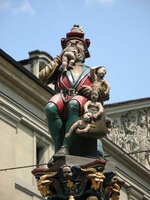
kindlifresser_top_color.jpeg
Kindlifresserbrunnen, Bern, Switzerland (Google Maps), (Google Streetview).
 
Last edited:
I planned to get into this after posting evidence that medieval people living near monasteries and priories were very unhappy with their 'beneficent' neighbours. Because of monastic tendencies to:
  • charge high land rents
  • steal land (fencing others' land, rewriting tenancy contracts into ownership contracts)
  • tax roads (by building tollbooths), and
  • violence.
Protesting locals could be beaten up or hung from abbot-owned gallows. Officials who attempted to restore order were met by promises of reform, by outright lies and - sometimes - by well-armed 'monks'. I planned to show that the modern perception of 'good' monks is out-of-whack; the result of zealous information management.

However, presenting that case takes a lot of space and Oracle's medicinal cannibalism post leap-frogs us to less well-known ecclesiastic profit lines. So let's look at those instead.

We start with prostitution, then move on to blood harvesting (virginal and non-virginal).

First, credits: the film clips in this post were taken from these two reports about Spanish brothels:


Pay attention to the signage: it is directed at passing traffic, clearly signals the product offer, and highlights the entrance door.

From a distance:

View attachment 10745
Roadside brothel in Spain
Above: Catch the eye of passing trade...

Product offer should be unambiguous

Above: Signal the product offer as clearly as cultural norms permit.

In Spanish, 'club' rhymes with 'boob'

Below: As the customer approaches the premises, showcase the entrance and the product offer:

Showcase the entrance. Make it unmissable

Below: Reassure hesitant customers and close the sale:

Pimp that entrance door. And - like the Church - disassociate yourself from the daily grind

Now let's look at sheela na gigs - those mysterious 'fertility symbol' carvings found around old churches, priories and castles:

From a distance:

View attachment 10752
Stanton St Quintin, Wiltshire, England (copyright John Harding)
Above: Catch the eye of passing trade... many sheela na gigs are positioned high on exterior tower and nave walls.

View attachment 10755
Ballinaclogh, County Tipperary, Ireland (copyright Conleth Manning)

Above: Signal the product offer as clearly as cultural norms permit.

Below: Three wedge-shaped sheela na gigs, probably keystones from former arches:

View attachment 10753
Rahara, County Roscommon, Ireland (copyright Gay Cannon)

View attachment 10754
Scregg, County Roscommon, Ireland (copyright Barbara Freitag)

View attachment 10756
Kilmokea, County Wexford, Ireland

Showcase the entrance and the product offer. Make the entrance unmissable. Close the sale...

For raw data, we turn to Barbara Freitag's catalogue of 167 Irish and British sheela na gigs in Sheela-Na-Gigs - Unravelling an Enigma. There we find:
  • 67 of the known sheela na gig carvings are thought to have been repositioned at some time, leaving:
  • 100 possibly still in their original position.
Of these 100:
  • 33 are positioned inside
  • 67 are positioned outside
Of the 67 that are outside:
  • 16 were first found positioned on a gatepost
  • 23 were first found positioned above an entrance door (including three that appear to have been keystones at the top of archways)
Rob Trubshaw in Rutland Village by Village, 2011 edition, p25 describes a female stone figure found face down and being used as a doorstep at Braunston, Rutland, England:


Draw your own conjectures.

If you're struggling, you can even compare the 'good works' of the Church with a brothel manager's attitude to his job:

We do good work!

We already made a case that ecclesiasts were active in the business of 'hatches'. What might medieval brothels have to do with famine? And with harvesting human parts for medicine and cosmetics?

Famine first. We're already familiar with the sheela na gig below from this cannibalism thread post's discussion of The Time Machine's Eloi.

View attachment 10759
Elui from Easthorpe, Essex, England (Source: Images of Lust, Jerman)

This time, look at her ribs.

Most sheela na gig images depict women like this: thin with visible ribs. It is probably significant that their creators took the time to carve ribs on what are otherwise very primitive carvings. Only one or two are known to depict the physiques of well nourished women.

Why?

The Great Hunger and the Celtic Gene | Irish America discusses hemochromatosis - a disorder characteristic of survivors of famine. The page focuses on the Great Irish Famine. Bear in mind this IHASFEMR thread grew out of evidence that North-West Europe went through a series of flood-famine cycles starting approx 1,000 years ago and that the British floods have been propagandised into purely politico-ecclesiastic events.

Hemochromatosis is:


The HFE gene that renders populations particularly susceptible to hemochromatosis:


Female famine survivors tend to show hemochromatosis later in life (10-20 years later) than male famine survivors. Because women periodically hemorrhage iron through menstruation and occasionally through childbirth.

Discussing possible sheela na gig depictions of free-flowing menstruation, Freitag cites research that says post-menarche female human stock require 'at least' twice as much iron as men. And that most women were - at best - anemic in medieval times.

Summary:
  • Famine survivors were more likely to have the iron-retaining HFE gene (the Celtic Gene).
  • Women were more likely to suffer from iron deficiency (anemia) than men during famine.
  • Surviving women were less likely to suffer hemochromatosis than surviving men after famine.
Most known sheela na gig images are from Ireland and Britain, though there are a few finds (and suspected finds) in France, Germany, Austria and Switzerland. In Ireland and Britain, the distribution of known finds is:

View attachment 10757
Sheela na gig finds in Ireland (Source: Freitag)

View attachment 10758
Sheela na gig finds in Britain (Source: Freitag)

Both maps from Barbara Freitag's Sheela-na-gigs - Unravelling an Enigma

The evidence and circumstances not only support the Smithsonian's claim that fresh virgin's blood was in demand, but that at times any source of nutritional iron was in demand, and that - sometimes - any form of nutrition was in demand.

The fact that women produce iron-rich blood products through their adult life and during childbirth must have been attractive to farmers of human products. They had a profit motive for herding women - especially virginal women - into centres suitable for regular blood harvesting.

View attachment 10761
Does my bum look big in this?

This 1974 image is of the inexplicably large vaults excavated beneath the toilets (in medieval-speak: the 'rere-dorter') at St Michael's Priory, Stamford, England - a nunnery housing 40 nuns (Google Maps), (Google Streetview). Source is the collection of images at: Plate 5: 12th-Century Monastic Remains | British History Online

The vault was nearly ten feet (3m) high. See:
St Michael's Priory rere-dorter, Stamford, Lincolnshire
and
St Michael's Priory rere-dorter, Stamford - 1007811 | Historic England

It's possible - even probable - that Stamford's nuns were composting their crap. So they would need to get under there with a wheelbarrow. But ten feet?

Perhaps they sold compost at the roadside. But economic theory says it made more sense to 'add value' by selling the surplus vegetables they grew in it, along with prepared meals and hospitality to travellers and sailors (Stamford was a major medieval east coast port). Given that virgin blood was in demand and (some) sheela na gig images depict 'bloody flux', can we speculate that St Michael's nunnery's massive toilet vaults are evidence of working space required to collect a premium-priced, iron-rich human product? One that only nunneries could offer?

That's the medicinal side. It's not a big step to consider herding and harvesting of humans for cosmetics, just as American indians warned us (see section 3).

View attachment 10762
Taghboy, County Roscommon, Ireland (Copyright: Gay Cannon)

High on top of a church gable wall, the object beneath the sheela na gig at Taghboy, Ireland, is catalogued as 'amniotic sac ... partially lying on the ground'. That's not what it looks like to me but then I haven't inspected it closely. And there are around nine sheela na gigs where there seems to be no doubt that the 'falling mass' being depicted is either afterbirth or menstrual fluid. It can - just - also be seen in the Rahara and Kilmokea sheela na gig images earlier in this post.

However, there were probably many more. Researchers report the area between the legs of many sheela na gigs has often been severely defaced.

What do we have here?
  • We may have menstrual fluid harvesting centres.
  • We may have afterbirth harvesting centres.
  • We may have abortion clinics. (It's worth reading up on medieval abortificants and the cultural toings and froings around them)
  • We may have all three combined.
We also have evidence of intense popular rage over their activities: destruction of images, destruction of churches, monasteries, priories, nunneries - coupled with flood and mudflood.

How did the farmers of humanity respond? Did management and workforce rebrand into our current Church? Or did they migrate to somewhere less... resentful? Or both?

Allegations about a brothel manager

Do the allegations in the clip give us clues about where hated farmer-managers of humans would migrate to? Summarising:
  • Money laundering
  • Tax evasion
  • Good lawyers
With expertise in products like:
  • Pharmaceuticals
  • Cosmetics
  • Banking
  • Time management and time-pieces (Spanish: 'Reloj' and Portuguese: 'Relojo')
  • Red crosses on white backgrounds and white crosses on red backgrounds
  • Running centres noted for elite arrogance
  • Symbolic use of the phoneme 'ch'
  • Chocolate (think 'butter fat' as in 'butter crosses', 'butter markets' and 'sacamantecas')
With a love of geographic oddities like:
Where might that be?


View attachment 10763
Kindlifresserbrunnen, Bern, Switzerland (Google Maps), (Google Streetview).


I have to say there is a lot of dot connecting going on in this thread. The subject is disturbing. I had no idea that this behavior was so widespread in the past. For me, it's similar to waking up to the general upside down luciferian nature of our world. The world we thought we lived in is not the world that is going on around us. That's the big shocker, maybe even more than the tradition of harvesting and eating people and their body fluids. The fact that this has been so well hidden from us is almost a bigger pisser for me. How is it that we can bury this information so well, even though there is a lot of evidence to show us otherwise?

Of course it's because we have taboos about such subjects. In the same way it's also taboo to see our controllers behind the curtain scheming against us. So what is it with this denial to see and understand the truth? Are we under a spell??

Are we just stupid or is it that we are easily programmed? People are walking around in a fog! What's the matter with us?

The last thing I wanted to say; this disgusting world of poverty and starvation and cannibalism and human farming doesn't comport with my vision of enlightened culture with star forts and grand architecture and massive geometric food gardens to feed the people. We are talking about two entirely different civilizations here. You can't have an illustrious culture at the same time as a depraved fake christian church running baby harvesting operations (and worse), can you? IDK, perhaps you can...

So, did these cultures exist at different times or did they exist in different places at the same time? Was the uplifted one before an earth catastrophe and the depraved one after?

Or are we exploring two different time lines, each culture running concomitantly but in a separate universe/dimension? A separate SH thread for that question I know, but had to bring it up...

My head is spinning.
 
Last edited:
I have to say there is a lot of dot connecting going on in this thread. The subject is disturbing. I had no idea that this behavior was so widespread in the past. For me, it's similar to waking up to the general upside down luciferian nature of our world. The world we thought we lived in is not the world that is going on around us. That's the big shocker, maybe even more than the tradition of harvesting and eating people and their body fluids. The fact that this has been so well hidden from us is almost a bigger pisser for me. How is it that we can bury this information so well, even though there is a lot of evidence to show us otherwise?

Of course it's because we have taboos about such subjects. In the same way it's also taboo to see our controllers behind the curtain scheming against us. So what is it with this denial to see and understand the truth? Are we under a spell??

Are we just stupid or is it that we are easily programmed? People are walking around in a fog! What's the matter with us?

The last thing I wanted to say; this disgusting world of poverty and starvation and cannibalism and human farming doesn't comport with my vision of enlightened culture with star forts and grand architecture and massive geometric food gardens to feed the people. We are talking about two entirely different civilizations here. You can't have an illustrious culture at the same time as a depraved fake christian church running baby harvesting operations (and worse), can you? IDK, perhaps you can...

So, did these cultures exist at different times or did they exist in different places at the same time? Was the uplifted one before an earth catastrophe and the depraved one after?

Or are we exploring two different time lines, each culture running concomitantly but in a separate universe/dimension? A separate SH thread for that question I know, but had to bring it up...

My head is spinning.
Just a thought. If cattle ever become sapient and humans go extinct, cattle may think the same about *their* predecessors. These creatures may not have been evil at all, just hungry. They may even have provided for us with these massive gardens and such until they...perhaps went extinct? Or had a religious/cultural shift that made them abandon their former lifestyle and go elsewhere?
 
I have to say there is a lot of dot connecting going on in this thread. The subject is disturbing. I had no idea that this behavior was so widespread in the past. For me, it's similar to waking up to the general upside down luciferian nature of our world. The world we thought we lived in is not the world that is going on around us. That's the big shocker, maybe even more than the tradition of harvesting and eating people and their body fluids. The fact that this has been so well hidden from us is almost a bigger pisser for me. How is it that we can bury this information so well, even though there is a lot of evidence to show us otherwise?

Of course it's because we have taboos about such subjects. In the same way it's also taboo to see our controllers behind the curtain scheming against us. So what is it with this denial to see and understand the truth? Are we under a spell??

Are we just stupid or is it that we are easily programmed? People are walking around in a fog! What's the matter with us?

The last thing I wanted to say; this disgusting world of poverty and starvation and cannibalism and human farming doesn't comport with my vision of enlightened culture with star forts and grand architecture and massive geometric food gardens to feed the people. We are talking about two entirely different civilizations here. You can't have an illustrious culture at the same time as a depraved fake christian church running baby harvesting operations (and worse), can you? IDK, perhaps you can...

So, did these cultures exist at different times or did they exist in different places at the same time? Was the uplifted one before an earth catastrophe and the depraved one after?

Or are we exploring two different time lines, each culture running concomitantly but in a separate universe/dimension? A separate SH thread for that question I know, but had to bring it up...

My head is spinning.
It is disturbing. However, we have to deal with our taboos if we are to process all the evidence.

1. Are we stupid? What's the matter with us?
We're not stupid. We are programmed to be loyal to authority. The loyalty loop over-rides intelligent thought (regardless of how intelligent you are) if certain conditions are detected. That is: if the circuits in the brain responsible for rational processing start to identify problems with authority's assertions, the loyalty loop 'trips' the brain. The brain then abandons rational thinking. It drops into 'obedience mode'. It looks to me as though someone programmed Isaac Asimov's Second Law of Robotics - "A robot will obey a XXX..." - into us but also incorporated experience of programming in real-world situations. Ie, they seem to have asked themselves: how should obedience be actioned? By freezing all motor functions? By resetting memories of the situation prior to the 'trip'? By altering beliefs? And, after its loyalty loop 'trips', how should the human perceive its own loss of rationality?

2. Aspects of our culture are amazing. But to chickens, sheep, pigs, cows? If they were more sentient we would have to fool them into cooperating with being harvested. Probably by creating deceitful rituals for them like the clip in https://stolenhistory.net/threads/evidence-humans-were-created-and-traded-as-slaves-food-entertainment-and-material-resources-ihasfemr.5379/post-100382.

Who's culture was it? Really? Whose books do we read? Were they written by humans or by owners of humans?
Just a thought. If cattle ever become sapient and humans go extinct, cattle may think the same about *their* predecessors. These creatures may not have been evil at all, just hungry. They may even have provided for us with these massive gardens and such until they...perhaps went extinct? Or had a religious/cultural shift that made them abandon their former lifestyle and go elsewhere?
That is the question! :)
 
Last edited:
I think it is no coincidence that things seem to be set up in such a "farming" way, snout to tail if you will.

As with most types of farming there is little prophet in a single line of produce, to minimise waste and take advantage from all angles including physical(body), mind(thought) and soul(spi-ritual), these all offer a particular form of nourishment/energy.

For some reason reading through this thread brings this video to my mind or at least the concept talked about.


View: https://youtu.be/gMtrPFjTNQg
 
Sen (blood) -> sin -> saint
Saint sounds similar to taint, so saint might have come from mixing sin + taint.
The subject is disturbing
You can say that again.

Of course it's because we have taboos about such subjects. In the same way it's also taboo to see our controllers behind the curtain scheming against us. So what is it with this denial to see and understand the truth? Are we under a spell??
Taboos are also effective tools of control.

Are we just stupid or is it that we are easily programmed? People are walking around in a fog! What's the matter with us?
Now more than ever, I think, for most humans alive.

So, did these cultures exist at different times or did they exist in different places at the same time? Was the uplifted one before an earth catastrophe and the depraved one after?

Or are we exploring two different time lines, each culture running concomitantly but in a separate universe/dimension? A separate SH thread for that question I know, but had to bring it up...
I'm inclined to think that's more likely the case. And, paired with the Mandella Effect and the spiritual people a few years ago claiming those who can be saved will be saved from the downfall of this world by being moved into a different world, as well as with the biblical stories of the end times and heaven and hell, as well as the sci-fi and fantasy literature depicting a few possibilities related to uplifting and filtering, makes me think we might be experiencing a period after multiple worlds were merged together, while the people in those worlds were shuffled according to where they fit best, before the worlds will separate once again, effectively filtering good and evil, enlightened, and unenlightened (and that means good enlightened in one set of worlds, good unenlightened in another set of worlds, bad unenlightened in another set of worlds, and bad enlightened in yet another set of worlds).

Which might raise the need to think more about ways to fix the wrongs of society, and how they could possibly be fixed, and how a near-utopic, utopic, and heavenly society would function and look like. I mean, they say "the devil is in the details", but that's not the only place it is in, so I think making a space, no matter how real or unreal or imaginary, where the devil cannot get, or where the devil would need the most effort to get in, could help towards making such a space/place a reality, even if we do not get to become part of it, because it could lead to us getting a lot closer to it than we already are.

My head is spinning.
Mine, too.
2. Aspects of our culture are amazing. But to chickens, sheep, pigs, cows? If they were more sentient we would have to fool them into cooperating with being harvested. Probably by creating deceitful rituals for them like the clip in https://stolenhistory.net/threads/evidence-humans-were-created-and-traded-as-slaves-food-entertainment-and-material-resources-ihasfemr.5379/post-100382.

Who's culture was it? Really? Whose books do we read? Were they written by humans or by owners of humans?

That is the question! :)
That reminds me, those in the Mandella Effect communities have noted all animals getting a lot smarter in the last decade and a half, especially so in the last half decade. There are already cats who bark like dogs, dogs and cats who use button speakers to talk with/to their owners (very limitedly, for now), and cats and dogs speaking human words, parrots having actual discussions with humans, crows speaking, and so much more. Do you remember lions hugging humans without, you know, treating them as food? Seriously, how many friendly crocodiles do you remember?

A few videos, but I'll hide them behind a button press, to avoid taking up too much space.

 
Last edited:
I'm inclined to think that's more likely the case. And, paired with the Mandella Effect and the spiritual people a few years ago claiming those who can be saved will be saved from the downfall of this world by being moved into a different world, as well as with the biblical stories of the end times and heaven and hell, as well as the sci-fi and fantasy literature depicting a few possibilities related to uplifting and filtering, makes me think we might be experiencing a period after multiple worlds were merged together, while the people in those worlds were shuffled according to where they fit best, before the worlds will separate once again, effectively filtering good and evil, enlightened, and unenlightened (and that means good enlightened in one set of worlds, good unenlightened in another set of worlds, bad unenlightened in another set of worlds, and bad enlightened in yet another set of worlds).

Thanks Sapioit for your reflections on the possibility of merged worlds, and the comings and goings of individuals on the way in and out of here. This resonates with me.

When I let go of my linear line of atheistic thinking and default to the notion of a Creator, I can imagine many things possible. We have the after life reality and we have our soul journeys, whether we call this trans-dimensional living or parallel universes we traverse, or whatever we want to call it. So who's to say that it isn't possible that time is just a narrow 3D construct, and the possibility exists that we live in a multiverse with layers and layers of experience, with multiple physical realities going on at the same time, and maybe in the same place. If so, it's easy to imagine that we will find the exploration of history to be confusing and with contradictory evidence. I guess this is what people want to call the Mandella Effect, some kind of situation with overlapping realities, a kind of glitch in the space/time field where evidence crops up that we not only live in a 3D linear world, but inhabit other realities.

Maybe one of our top jobs in life is to look into this glitch and learn from it. I see an enlightened world of star cities and canals, and geometric field systems to feed the masses. I see abundant free energy and building of inspired architecture to honor the human spirit in co-creation with god. All life is in healing mode and the technologies to help enhance it are freely available to all. Satan is nowhere to be found in this world because the inhabitants are greatly in tune with Creation.

Then there is the satan ruled world with incessant poverty, warfare, greed and depravity, with human sacrifice under totalitarian rulers. And maybe there are hybrid worlds with their own mix of both.

All seem to exist in their own historical timelines and can be substantiated by cultural narratives and physical evidence. The problem is they seem to occupy the same time period, though the mainstream view chooses to ignore the uplifted cultures we are studying on SH.

So in summary, I am going with the idea that there is no conflict in discovering multiple overlapping time lines. That's how this realm works. We get the opportunity to inhabit multiple realities to be challenged and learn from different experiences. We move through these realms in part by our own karma as well as some overarching god enhanced impulse to wake up and understand what's going on with our being.

We either progress or we don't. Some people stay stuck and keep reincarnating in this upside down realm of samsara, while others purposely come here to be challenged and even help others get unstuck. There's lots of reasons to show up, in each of the realms that exist.

I don't suppose I'll ever figure out what is going on, but maybe that's not so much the point of it. Perhaps in this realm it's about keeping your head up and not surrendering to satan's ways. There's lots of consequences we could fall into if we were to make a deal with the devil. You can easily get sidetracked here and lose your way in your soul journey. I think this world is a graduate level course of being exposed to all kinds of temptations. It's only the righteous that make it through the gauntlet. This is a place of fast ripening karma. If you make it here and didn't arrive as an NPC, you get the chance to evolve in big leaps and bounds. Where we end up or where we are going with this further enhanced life experience is not clear, but I like to think we get to have a deeper hand in ongoing Creation if we have increased our ability to be both wise and compassionate.
 
I just realized this, but... the "modern humans" are orcs. Very human-looking orcs, but orcs nonetheless. After all, fantasy often introduce orcs like a mix between humans and pigs, or as humanoid pigs.
 
I think it is no coincidence that things seem to be set up in such a "farming" way, snout to tail if you will.

As with most types of farming there is little prophet in a single line of produce, to minimise waste and take advantage from all angles including physical(body), mind(thought) and soul(spi-ritual), these all offer a particular form of nourishment/energy.

For some reason reading through this thread brings this video to my mind or at least the concept talked about.


View: https://youtu.be/gMtrPFjTNQg

I see what you did with 'prophet'.

The Handbook of Human Ownership has got to be recommended listening. I like how he makes similar points to this thread without the appalling displays of evidence. :)

Being serious for a moment, the moral aspect of this investigation is worth thinking about. We can be shocked by cannibalism, by brain-eating, by ecclesiasts appearing to be purveyors of morality - while operating human farms and breeding centres. But ordinary humans do all these things too or pay others to do them. How is egg farming morally different to amniotic sac farming? How do sturgeon feel about caviar? Cows about veal farming? Is there a moral guide we could follow?

Sapioit said:
Taboos are also effective tools of control.

Exactly. Apparently, taboos have two functions, one visible, one invisible:
  1. Visible: Stop humans from engaging in specific, dangerous physical activities (eg, interbreeding, unauthorised killing, etc)
  2. Invisible: Stop humans from engaging in specific, dangerous thought activities
Item 2. is implemented through 'the loyalty loop' identified in these posts:
Examples of taboo thought activities highlighted in this thread:
  • Questioning authority's interpretations/instructions.
  • Reasoning through specific, dangerous interpretations of available physical evidence.
Example: Peter Abernathy reasons through available physical evidence: a photograph of modern New York City found on his 19th Century ranch:

Download Video

I had a question. A question you're not supposed to ask. Which gave me an answer you're not supposed to know.
Source: Westworld, S01, Ep01


Our difficulties imagining the breeding of human babies for food, and the breeding of humans as sources of raw and refined materials, are also reflected at hour one in Ewaranon's The Lost History of the Flat Earth (Given its tendency to move, this link searches for SH discussions of the video). At the top of hour one, The Lost History of the Flat Earth prompts viewers to question the origins of disapproval of unmarried mothers, the source of so many orphans, and the reasons for incubator baby exhibits at fairs.

The video doesn't provide answers. Perhaps Ewaranon, or its production team, doesn't know the answers. Perhaps they do know, but taboos get in the way. I hope this thread helps identify the taboo thought-domain where the answers might be found.

Continuing with sheela na gig images...

Researchers often comment that many sheela na gig images have lines etched into their faces, making them look old:

old lady sheela na gig_hc.jpg
Clonbulloge, County Offaly, Ireland (copyright Heather King)

They don't fit with brothel signage like this:

Sign above Spanish brothel.png
Sign above Spanish brothel

Both farmed humans theory and and famished humans theory may help solve this puzzle.

From Medieval Hospitals of England | History Today:

Over seven hundred hospitals were founded in England between the Norman conquest and the middle of the sixteenth century. This number is surprisingly large, for at no time did the population of the country exceed four million. Of course, many of them were not really hospitals as we know them today. Their name indicated their primary function; it was derived from the Latin word _hospitalis_, meaning being concerned with _hospites_, or guests, and guests were any persons who needed shelter.

...others were really almshouses, intended chiefly for the poor and the aged.

There are many references to ecclesiasts being in the hospitality business. Each of the three 'hospitals' shown below were founded by ecclesiasts.

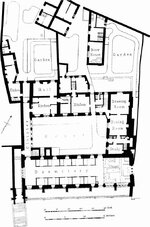
Brownes Hospital, in the centre of Stamford, England, (Google Maps), (Google Streetview):

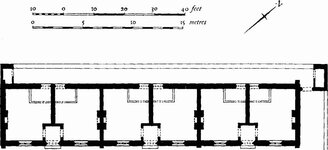
The ratio of kitchens and brewery to bedrooms does seem odd for a hospital.

Seal of Brownes Hospital:
Stamford Browne's Hospital Seal fig216.jpg
Just what is that on his lap?

Burghley Hospital, later called Lord Burghley's almshouses, (Google Maps), (Google Streetview):


Lots of bedrooms. Not a lot of other rooms.

Fryers Hospital, Stamford, England (now Stamford and Rutland Hospital), (Google Maps), (Google Streetview):

A hospital?

Medieval hospitals and almshouses are often sited at major road junctions on what were, in medieval times, the edge of town. That's true for Stamford's Fryer's Hospital and Burghley hospital-turned-almshouses, as you can see if you click on the Google maps links.

It's true for Cambridge's alms houses: (Google Maps), (Google Streetview). Text description at: The city of Cambridge: Almshouses | British History Online

These layouts - and locations - support History Today's observation: they look more like hostels than hospitals. So how to interpret brothel signs depicting ageing escorts?

Just possibly we are looking at evidence of market segmentation in the medieval escorts market. Vendors catering to different tastes. A glimpse of the importance of diverse product offer - at least in the escorts market - appears in the first seconds of this clip:

Download Video

There's big girls and everything!

But the last seconds also provide a clue. He describes a payment arrangement that allows the hostel-owner to plausibly - ie legally - claim he is running a hotel. Or a home for old ladies. Or a hospital. Which leaves the legal liabilities to the hostesses and clients. And leaves a paperwork trail that documents the facts but hides the truth. Especially from historians.

Why advertise old ladies? For the same reasons you would advertise gaunt ladies.

Option one is we are looking at the aftermath of flood and famine. A very severe shortage of women and a medieval market response that allowed surviving freelancers to earn a living and for land-owners to take a cut.

But it seems hard to believe there was a medieval version of Grab-a-Granny. So option two is that these structures were breeding centres for sentient stock. Their managers did not share human sensibilities and were marketing their stock's availability to other owners of humans. They were not marketing to male human breeding stock.

For them, the whole business may have been as pragmatic as putting the rams in with the ewes.

After all, how else do you mass produce the Lamb of God?
 
Last edited:
For them, the whole business may have been as pragmatic as putting the rams in with the ewes.

After all, how else do you mass produce the Lamb of God?
Now, that's a good catch!
 
Now, that's a good catch!
Cheers. Though we should really credit Pink Floyd:
Excerpt from Sheep, Pink Floyd, 1977

The Lord is my shepherd, I shall not want
He makes me down to lie
Through pastures green He leadeth me the silent waters by.
With bright knives He releaseth my soul.
He maketh me to hang on hooks in high places.
He converteth me to lamb cutlets,
For lo, He hath great power, and great hunger.
Lyrics from Sheep lyrics - Animals Lyrics - Pink Floyd Lyrics
Audio from:

You know, they say if you play Pink Floyd tracks backwards, you can hear them chant: "Open your heart to the Lord".

Sapioit said:
6. They could be used to stun the humans, kind of like how a flashbang stuns humans using both sound and a blinding light, but without the blinding light. And since weddings are often gatherings of people and their families, then the food is already crowded together and ready for the picking.

7. Brainwashing used by the secret services of today often uses catch phrases and certain words as triggers, for different behaviours. For a period of time, the armies used flags, and then fireworks when there was no visibility for flags, to communicate. The same could have been done with the bells, to activate infiltrators to attack from the inside. Even just opening the city gates for the invaders/attackers on someone's wedding date to would turn that day from a happy day into a bad day.

8. In mainstream history, bells were often rang when the settlement was attacked, so you can imagine that would turn a happy day possibly followed by the first night of the two into a sad day possibly without the wife or with the wife's first taken by someone else by force or without the husband.

9. Those could be used to heal humans or to damage humans. In many cultures, the night of the marriage is expected to be the first night of the newlyweds, so a bell which rang could lead to health defects for the newborns, or could somehow damage the link between the newlyweds in ways which might seem more esoteric than scientific.

10. It might be a case of using the number of bells to signify the price, or the quantity, or both (with a break in between). In binary, every second on-or-off signal given is double the value of the last, so taking into account two bell ringings to signal the frequency of the ringing and when to start counting, one could easily calculate numbers. Different frequencies could be used to switch from counting produce to counting price, or the other way around. The values of each ringing in binary would be like this, for example: 1, 2, 4, 8, 16, 32, 64, 128, 256, 512, 1024, etc.

11. It could signal the arrival of clients, for the scattered employees to start bringing in the produce, which would lead to produce being consumed, which would lead to more produce needing processing to fill up the space.

12. If weddings were done in the nature, possibly with wild animals around (like in the "elven" fantasy stories of today), then a loud ringing bell would create a bit of problems, most likely scattering some if not all of those animals.

13. It could also sound like the dwarven smithies being in use by enough smiths to work in sync to make such a sound, which could spell troubles. I wonder if there are legends about that.

It's easy to find legends that support your item 13: Here, Let Me Google That For You

They include interesting Basque folklore about Basajaun - the hairy, underground-dwelling hominid who taught humans how to farm, forge (as in: smelting and smithing, not history) and to mill.

Basajaun is 'explained' as a memory of early contact with Neanderthal or Cro-Magnon. Perhaps. We pass on - noting as we do that 'Cro' is 'Orc' in reverse - and ponder the modern explanation for Basajuan's fur: that early man wore skins and furs.

Perhaps Basajaun was monkey-like: a hominid wearing his own natural fur. Perhaps his fur was changed into clothing in the 19th Century, when today's rational narrative was being assembled from bits of existing folklore (often by dramatists folklorists with first names like 'Augustus' and 'Augusta').

Perhaps some 19th Century modification of older folklore turned his natural fur into ermine robes, his name from 'Basajaun' to 'Bishop Hugh' and the inventor of usable smelting into 'Henry Bessemer'.

803_600.jpg
Hairless hominids and a fur-robed entity. Guess who's the boss

My guess: Basajaun is the boss. That's why farming, forging and milling are so often found together in excavations of early English 'ecclesiastical' sites. They are a sort of holy trinity.

It might also explain why so many steel artifacts - especially swords - pre-date Henry Bessemer's 1856 invention.

These things matter because we sometimes come across images like this:

k_base_image004.jpeg
Go on, guess what it is

and mistake them for power plants when we should first eliminate any connection with Tower of Babel stories and the mass production of lime.

Just as we should with churches too.

Which brings us back to the folklore of church bells.

Quoting Dr Rev Augustus Jessop writing in July 1904 about what he called 'The Great Pillage' (the destruction of English churches in the second half of the 16th century, which seems to mean around 1553 - a decade or so after the flood Dissolution ;-) ):
The pillage was carried out under the pretence of religion, the pretence being that bells, organs and sacred vessels were mischievous and harmful. But Edward VI died in July 1553 and was succeeded by his sister Queen Mary who immediately set to work to bring back the old state of religion with the old ritual
and this from the same (source):
Rev. St John Priest, who was the Curate of the Parish under Mr. Aufrere, the Rector, put a stop to the ringing of the bell about the year 1815.

Now why would the rector prevent the ringing of the church bell? Why would he/she do that around 1815? All we know is there were a lot of odd wars just before then. And that a lot of English churches 'burned down' or were damaged. Something was going on at that time.

Mike Burgess collected a lot of 'buried bells' folklore at LEGENDS OF THE EAST ANGLIAN LANDSCAPE:

Buried bells:
Little Cressingham church, Little Cressingham, Norfolk (Google Maps), (Google Street View):
...Ministry of Defence training area south-west of the village is Bell Hill, a large Bronze Age burial mound... A tradition used to be current that the bells of Little Cressingham church are buried within the earthwork.

Former priory church, Castle Hill, Thetford, Norfolk (Google Maps), (Google Street View):
...six silver bells (one version says seven) were taken from the priory church and hidden beneath the mound for safe keeping. Another account says they were bells of solid gold... Made by the Devil, Oliver Cromwell, the Romans, or a giant.

Silver bells eh? The lean ascetics of those ancient priories...

Holy Trinity Church, Blythburgh, Suffolk (Google Maps), (Google Street View):
Holy Trinity Church valuables buried in 1644 and bells buried during Civil War. It used to be said many years ago that to save the church bells from being stolen and melted down for cannonballs during the Civil War, the locals removed and buried them one night on the common, in Toby's Walks (Google Maps), (Google Streetview)

Gazeley, Suffolk (Google Maps), (Google Street View):
An early Bronze Age round barrow, now almost ploughed away at Pin Farm was reputed to contain 'silver bells'.

Undley, Suffolk (Google Maps), (Google Street View)
...of two Bronze Age beakers that are now in the British Museum, and where silver bells are said to be hidden. According to Gordon Fowler, who excavated the ringwork in 1948:

There is a tradition in Undley that many years ago three silver bells were buried in Undley Hall Farm, and that some time later a man came from France with a plan showing where they were.
...
Although this tale doesn't specify that the bells were hidden in any earthwork, that now seems to be the legend.

Summary: the french man did not trust the farmer, would not show farmer his plan, and returned to France, and the three silver bells were never found.

Wordwell, Suffolk (Google Maps), (Google Street View):
...one of three barrows. In 1950 archaeologist Basil Brown recorded that the Head Forester had told him eight years previously that, by tradition, silver bells were said to be buried there.

Bells in wells:
From: Sleaford and the Wapentakes of Flaxwell and Aswardhurn - Anthony Trollope, page 90, (describing Croyland monastery - now Crowland Abbey - in 869) (Google Maps), (Google Street View):
Other articles of value, such as cups, and vessels of brass, were thrown into the cloister well.

From page 318 of the same document:
...in another well, discovered during the last century (17th) to the west of the Temple (Bruer) site (Google Maps), (Google Streetview), three bells of large dimensions were found.

Bells in rivers:
St Andrew's Church, Attlebridge, Norfolk (Google Maps), (Google Streetview):
...legend says that, during the English Civil War, two silver bells were taken from the tower of St. Andrew's church and buried in the bed of the nearby river Wensum, in order to save them from the depredations of Oliver Cromwell's troops. Another source doesn't mention the church, but says that the bells were lost in the river close to the site of a hermitage at map reference 'TG 128167' (Google Maps), (Google Street View)

Watlington, Norfolk (Google Maps), (Google Streetview):
is a barely-noticeable bridge over a small stream. Tales tell that once, long ago, men stole the bells from Tottenhill church just over a mile away. As they were too heavy to carry away in one go, the robbers hid the bells under this bridge for safe-keeping - but, they were of course found, and the thieves later apprehended and hanged.

Lyng Estaugh chapel, Norfolk (Google Maps), (Google Streetview):
Another little tale tells that, when the chapel was closed in 1176, the bells were hurled into the river and on occasional nights, can still be heard ringing.

St. Peter and St. Paul's church, Tunstall, Norfolk (Google Maps), (Google Streetview):
A fierce fire happened at St. Peter and St. Paul's church at Tunstall many years ago, leaving the tower and nave in ruins, only the chancel being left to be used for services. After the fire, tradition says the parson and one of his churchwardens argued about who should take possession of the church bells. Then the Devil popped up and snatched the bells away, scampering off towards the marshes. "Stop, in the name of God!" cried the parson. "Curse thee!" cried the Devil, dug a deep hole and leapt in, and it filled with water after him, becoming Hell Hole (now thought to be Hell Carr). The bubbles that continuously break the pool's surface are said to be caused by the bells, still sinking slowly down to Hell, while you can sometimes hear the muffled ringing far below the surface.

So odd. A lot of English churches seem to have have been damaged by fire in the 16th, 17th and 18th centuries. Like there was war raging.

And more singing bells:
Great Abington, Cambridgeshire (Google Maps), (Google Streetview):
...in field south of village a spectral choir could be heard singing if a person put their ear to the ground on a moonlit night. Plus, the sound of bells ringing deep underground could sometimes be heard.

St Michael's church, Oulton, Suffolk: Granite stone in St Michael's churchyard: (Google Maps), (Google Streetview):
Firstly, it is said that placing one's ear against the stone at any time of day or night will cause the listener to hear the church bells. Secondly, running round the stone three times will cause the Devil to appear.

Speak of the Devil:
Download Video

You're livestock, scenery...

Old folklore - there's a lot of wisdom in it. What about 'modern' folklore?
Give the next one plenty of time to download and turn the volume up to 11:

That item13 of yours, Sapoit... I think you're on to something.
 
Last edited:
Tips
Tips
Please respect our Posting Rules.
Back
Top