Hello all,
I can also provide you much detail relating to the Skitians/Scythian's/Tartarians bc my grandfather is a decendant of Swedish Prince Rurik who ruled over Novgorod, Rus-sia. Rurik was of Varangian stock, which is another word for Viking. In addition, the prefix Rus means - "men who row" which also relates to the Vikings. Rurik had a son who fought over taxes and was killed by the Slavic Drevelian Tribe. However, Ruriks grandson, Tierghnan Ruarc aka "Little Lord" was sent to Ireland to be married to an Irish Princess in Brefnei, Ireland. Throughout the past twenty years or so, I have traced that portion of my genealogy to Brefnei Ireland and back to Tierghnan Ruarc.
Now take note, the Ash-ke-nasi Jewish word for Holy Spirit is Ruach. Ruach is very similar to Rook, Roark, Roarke, Ruark, Ruarke, Roach, Rorik, Ruarch, Ruarg, and other's. Also, the prefix "Ash" not only relates to the Ashina people, but also to the tree known as Yggdrasil. Vikings are commonly known to be the children of the Ash Tree. The prefix "Ke" is much like the prefixes "Ki, Chi, Qi and Prana" and thus equate to energy in En-Gael-ish (English).
One of Ruriks brothers, I believe Truvor ruled briefly over Izborsk, which is in modern day Russia, anciently part of Estonia. His other brother, who also ruled shortly 860-862AD, was named Sineus. He too ruled another area called Belo Ozero aka Belozersk today. After Ruriks brothers died, Rurik became ruler over all three regions.
The Kievan Rus actually have no patrilineal lineage to Rurik because Oleg was not related to Rurik. Rather he was related to Ruriks Slavic wife, thus being a matrilineal heir. Oleg did get credited with naming the Kievan Rus and did claim himself as heir to Rurik's lineage in Russia, as did Catherine the Great, and the Romanov's, but the truth of the matter is Tierghnan Ruarc was the actual heir of his grandfather, Rurik.
This is how some Scots fall into place as Skitians, but I'm not fully sure all do. Because, Tierghnan Ruarc (Tigernan in English) ruled over Brefnei Ireland, many Scottish resided in Northern Ireland and along what's known as Dal Riata, Scotland.
Have you ever noticed the Biblical name Beth Shean was originally called Scythopolis? Also, the Sea of Gal-i-lee is known in Irish as a Kinneret, which happens to be the word for Harp. It is named this because the Sea of Gal-i-lee resembles a Harp shape.
Ashkenasi Jewish people after departing as Scythian's migrated to the following areas; Latvia, Lithuania, Livonia, Slovakia, Ukraine, Belorussia, Bohemia, Croatia, Estonia and regions around there. Many Ashkenasi Jewish lived also lived in Prussia, Germany, Hungary, Austria, as well as Russia.
It's important to not that like Tsar/Czar, Galicja (Halycia-Volhynia) can also be spelled in many ways. For example, there is the Galicija, Galazian, Galatian, Galasian, Galena, Gaels, Galecian, among other variants. This also holds true with Denmark, which was formerly known as Danemark and prior to that as Jut-land.
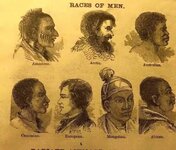
As someone mentioned above, Caucasian is clearly speaking of Cauc-Asian.
I will provide more to this after I've had some rest and will provide some links too.
please do look into Machir Todros though and know that there are two different types of Ashkenasi Jews - those that practice the old ways and those that practice what's referred to as Jewish Enlightenment (Haskala). Also note, the letter H like the J and Y, are sometimes silent letters. Now we can see Askala aka Ashkala.
So happy to see others reviewing these topics! What a pleasure it truly is. Also you all have provided some excellent research that in very grateful for.
Sincerely,
Ekowa