Note: This post was recovered from the Sh.org archive.
Username: KorbenDallas
Date: 2019-10-17 04:34:50
Reaction Score: 13
Let's get first things out of the way. I understand that the photographs I question were made by the worst equipment they could master at the time, but motion photography was working quite alright for those people back then. This is just to get technical capabilities out of the way.
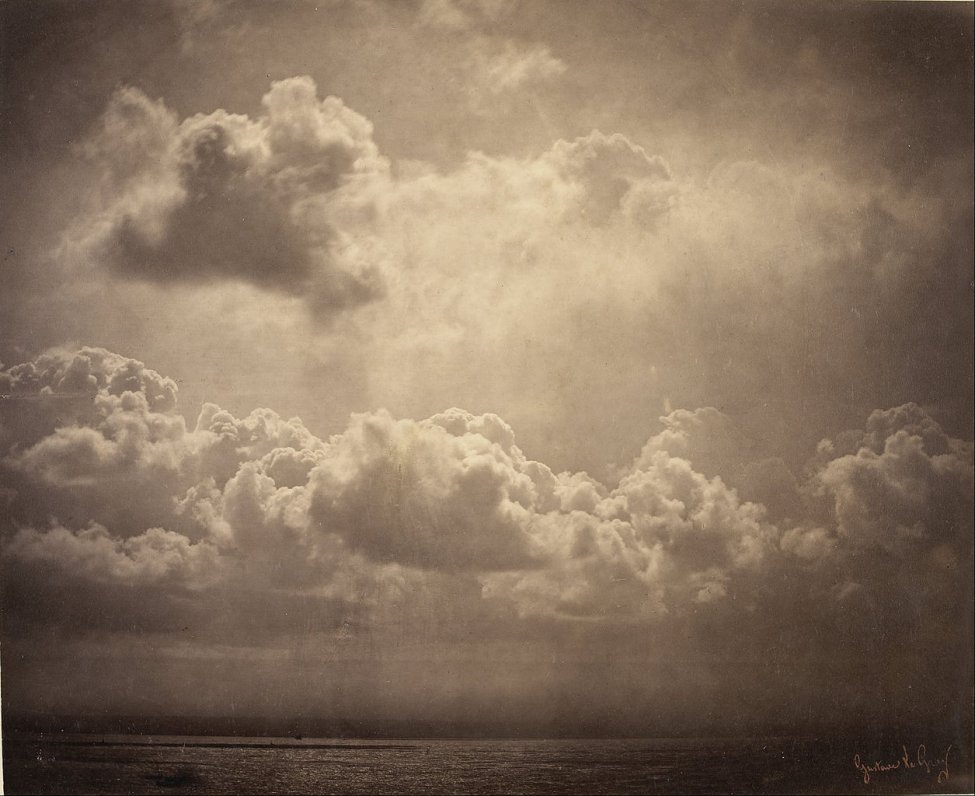
Seascape with a ship leaving port in Sète, France, 1857
 Source
1856 - 1857
Source
1856 - 1857
 Source
 And even when the quality was not sharp, we can still see what we see, and what we see was in motion.
Additionally, if Abe Lincoln's funeral was not staged, we can see a whole bunch of movement in
those photographs. I personally question the events/timing, so this is not a proof of anything.
Korben, do you want to find out the truth or are you just trying to support your theory of an 1800's "reset?"
Now I know that sounds provocative, but it's a very important self-evaluating question. I think you need to check you bias, as I was taught in journalism class. No offense intended. It's not always easy to be objective, and we can't learn something new if we believe we already have the answer. It's called confirmation bias.
None taken. If biased means having a personal opinion, than I absolutely am. Some time ago, I had a different opinion, now I am absolutely biased based on the totality of circumstances observed. I'm also biased based on a gazillion of mainstream excuses pertaining to just about everything, i.e. empty streets, buried buildings, dating, mapping, automatons, etc. None of which add up, unless looked at as separate events and occurrences. The reality is they are not, for they all contribute to the grand picture.
All those exposure, and artistry reasons are a well known mainstream explanation. The one I choose to question based on the totality of circumstances. The one I choose to support no longer, based on my observations.
This is
not our first conversation on the issue, as far as I understand. So, I will try to address one thing at a time.
1. If there was such a thing as a reset in the 19th century, I had never said that it happened simultaneously throughout the entire world. We have specific time frames for various locations. What caused those cities to be empty around those specific time frames, I am not sure. Yet, I do think that they share a common denominator.
- Various cities were empty during times specific to those individual cities.
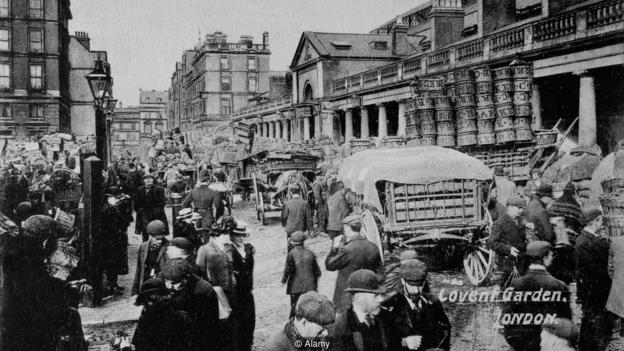
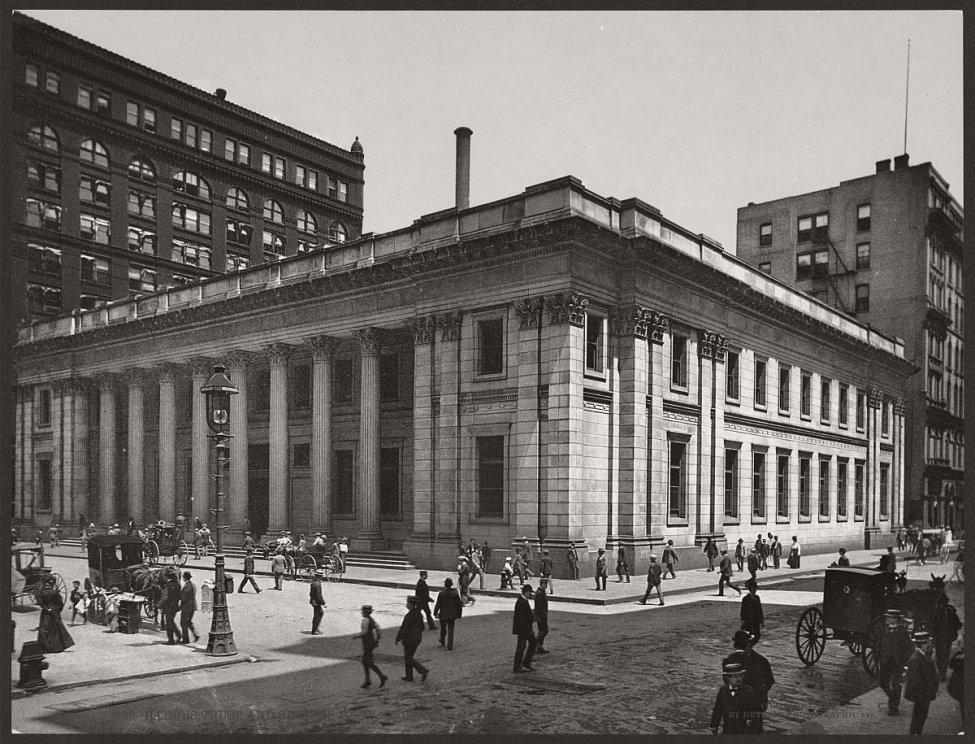
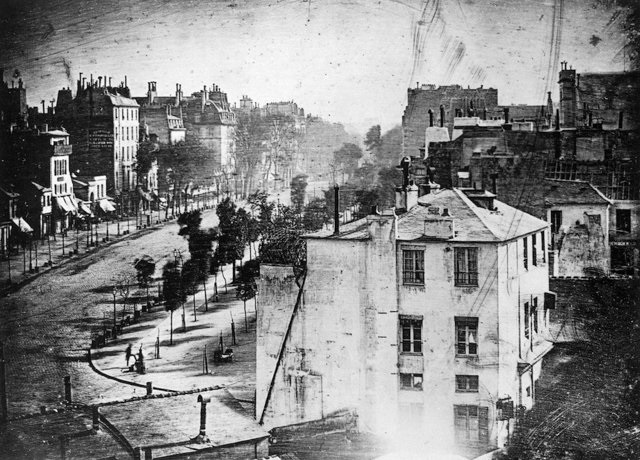
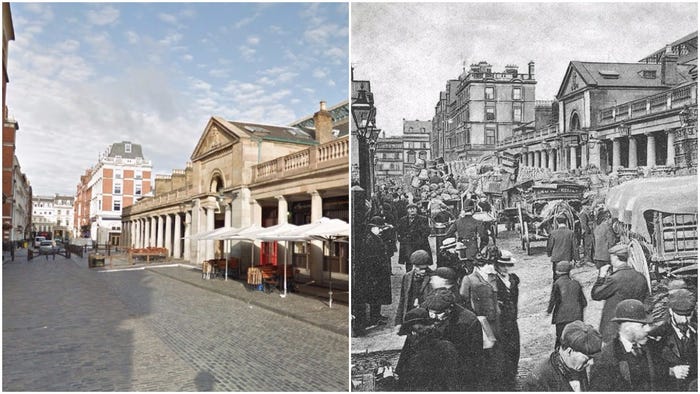
- From this perspective the above three photographs, dated 1905, 1900 and 1838, explain nothing. I know well that we have multiple 19th century photographs showing crowds in the streets.
I could not help it, but 1905 looks technologically pathetic in this 1905 vs today compilation.
2. A few quotes will follow.
If you want to learn about photography, where do you go? To an expert. A professional photographer. Someone who has the knowledge you are seeking. But when you tell that professional he is wrong because his answer doesn't fit your hypothesis why would he help you further?
Does this include professional historians as well? What about NASA? This entire site exists due to the lack of trust in the educational system which produced these professionals. In this specific instance, we are talking about the history of photography. I am not questioning your abilities as a professional photographer. Heck, you could be the best one there had ever been.
- But I do question the historical paradigm and common cliche explanations which came with your photography related education.
- These explanations are well known, and simply reciting the mainstream does not add anything other than common knowledge.
It's not difficult for a photographer to eliminate smoke and people, etc. any time of the day. All you do is lengthen the exposure time and close down the aperture to let in less light. That will eliminate the moving people, etc. Then anything else you don't like is removed in the darkroom.
This specific issue has been addressed by me multiple times. I will start with a question.
- If a photograph of an empty streeted city (with only 10-15 people present) was to be taken, how would this photograph differ from the ones we are analyzing? In other words what would be the difference between an "architectural" photograph where people were removed by the means of the exposure and other tricks, and a photograph of a genuinely abandoned city?
Now I will re-paste myself, and try address the issue this time. It’s the totality of things which is missing, and not the people only.
- Chimney smoke is missing, horses are missing, trams and horsecars are missing, vendors are missing.
- We see buildings, because they are stationary.
- Assuming that in a city with 500,000 people and 50,000 horses like in the Abandoned Saint Petersburg thread, or in a city with 250,000 people, and 20,000 horses like in 1878 SF, everyone was moving for the moment of the picture taking is preposterous.
- Shadows indicating high noon eliminate the 5am, no people on the streets idea.
- At the same time, here and there, we end up with a random moving horse, or a moving person.
- Those clearly indicate that moving objects were caught during the picture taking moment.
Some factual backup follows
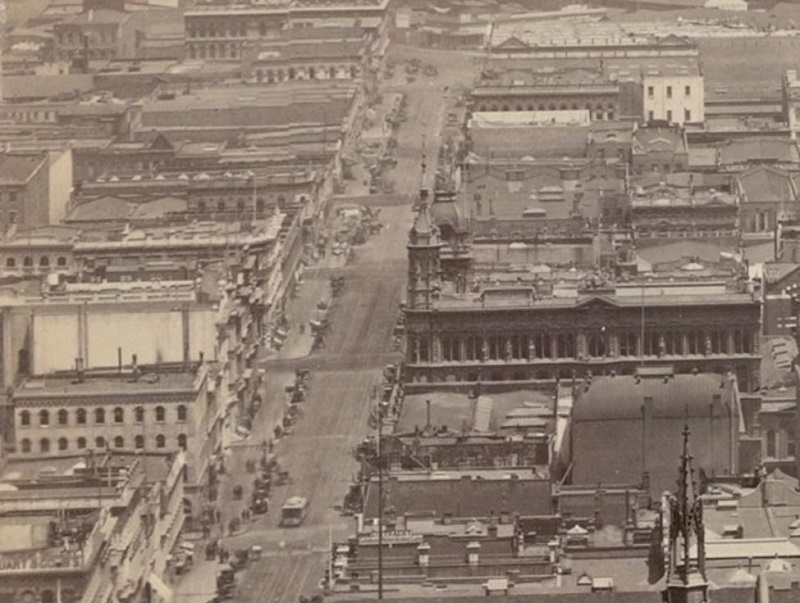
It’s not like I did not look into this before making my statements. The below image is a cutout from the
highly debated 1878 panorama of San Francisco. I will copy and paste from
the other thread these interesting
San Francisco facts:
- In the 1880 Census there were 233,959 San Franciscans and an estimated 23,000 horses.
Apparently people and horses are hiding in the middle of the afternoon, when they have to be highly visible. How exactly do you hide 23,000 horses? There should have been one, may be two or three next to each house.
- 2019 SF is ~ 46.87 mi². In 1878 the city was supposed to be smaller.
- Yet, even today we would have approximately 500 horses per square mile, were we to place 23,000 horses in there.
- We also would have approximately 5,000 people per square mile.
- This is 1880 population within 2019 SF square mileage for both horses and people
Fact: in 1880 every square mile of San Francisco
(which at the time was much smaller in size vs 2019) was populated by at least 500 horses and 5,000 people.
Yet, for the entire
1878 SF photograph we have a few
(when compared to the entire city) horses and people. The ones you say should be invisible to it being an "architectural" photograph.
If there were people, and smoke, and daily activities in those photos the photographer wouldn't have gotten paid for his work, and someone else would have been given the work to do it right!
Mr. Muybridge was probably fired for his 1878 photograph
Important: The same
applies to all of the SH mentioned abandoned 1850s-1870s cities respectively of the city vs. that city time frame of being abandoned. There are a few people whose movement, or the lack of, was somehow ignored by either the long exposure, or by a careless photographer making people, horses and tramcars disappear.
And just to reiterate; I used our 1878 photograph of San Francisco as an example. We have
Toronto,
Moscow,
Saint Petersburg, Venice and others. The above applies to all of these cities. I stopped looking into the issue but there are tons of empty cities out there pertaining to the time frame.
They are not 100% empty, and careful examination will reveal single moving figures here and there. It will also reveal that the cities are void of life, meaning all those things accompanying human activities.
The other thing you are not taking into consideration is in that time, most people lived in the country on farms or small villages. People came to the cities for business and entertainment mostly. So on any given Sunday, the streets wouldn't be packed with people because most of the businesses would be closed, especially during church time, as most people went to church on Sundays back then. This is something we were taught in photography class - when it comes to photographing buildings, shoot on Sunday, as most people will be somewhere else.
I do not know why all of the above-mentioned cities have population stats for any given period if
"most people lived in the country on farms or small villages."
- 1880 San Francisco had 339,959
- 1870 Saint Petersburg had 682,300
These are the two city examples. Where is the information how many citizens of these cities lived in small villages, and on farms?
KD: I see what I see based on what I see. If exposure was not an issue, and presence of a random few eliminates the architectural artistry, then what are we left with?
P.S. I updated "1860s" to "1850s-1870s" in the thread title, for it better reflects the time frame of the events. In reality, I do not know what year all these things were happening. The photographs are officially dated with whatever they are dated with. Whether they accurately reflect the real date of the events, I do not know.
More on Exposure
And as far as I understand, our lack of proper research into the exposure and capability issues of the allegedly early days of photography plays into the mainstream BS narrative story line.
I do not believe for a second that these cameras were simply "invented" out of nowhere but that is what this non-advertised story says. I can even guess that just like electric cars later on, these cameras were "not popular", or bad quality, or whatever else.
And while we all were tricked into thinking that those 1860s-1880s cameras were big, tripoded and required long stationary time due to exposure issues, they played with
these ones below + 1. How long can you stay still with something like that?
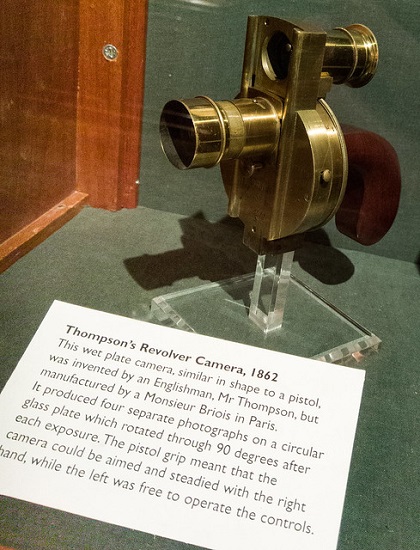
Thompson’s Revolver Camera, 1862
Not all of the unusual cameras of this era focused on concealment, as shown by Thompson’s Revolver Camera. The ‘Revolver Photographique’, was patented in 1862 and made by the Parisian instrument maker A. Briois. The camera made four exposures on a circular glass plate, with the lens being held in the ‘barrel’ of the gun. This allowed the photographer to aim and steady the camera with one hand, using the other hand to operate the controls.
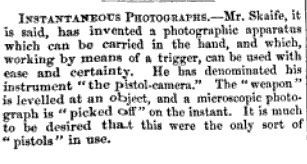
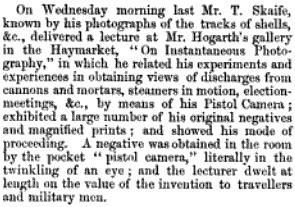
There is a story of a similar, earlier model made by a Thomas Skaife, who, upon pointing his pistol-shaped camera at Queen Victoria during a procession, was promptly arrested!
 Fusil Photographique, 1882
And then there's the great Etienne Marey's "Fusil Photographique", as it appeared in
La Nature in 1882, which was an early and significant step in the development of cinematography, though again a highly problematic and time-invasive explanation out in public might escape the user:
- E.J. Marey's photographic rifle of 1882 allowed to take a second, 12 shots at the 1/720° second.
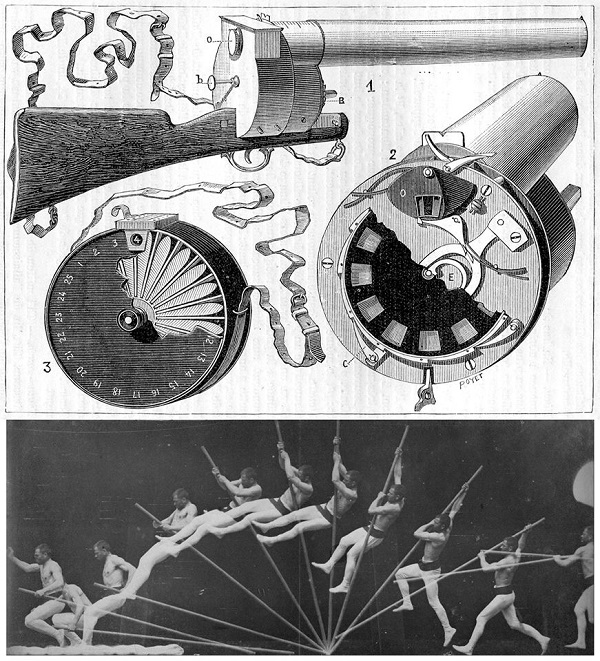
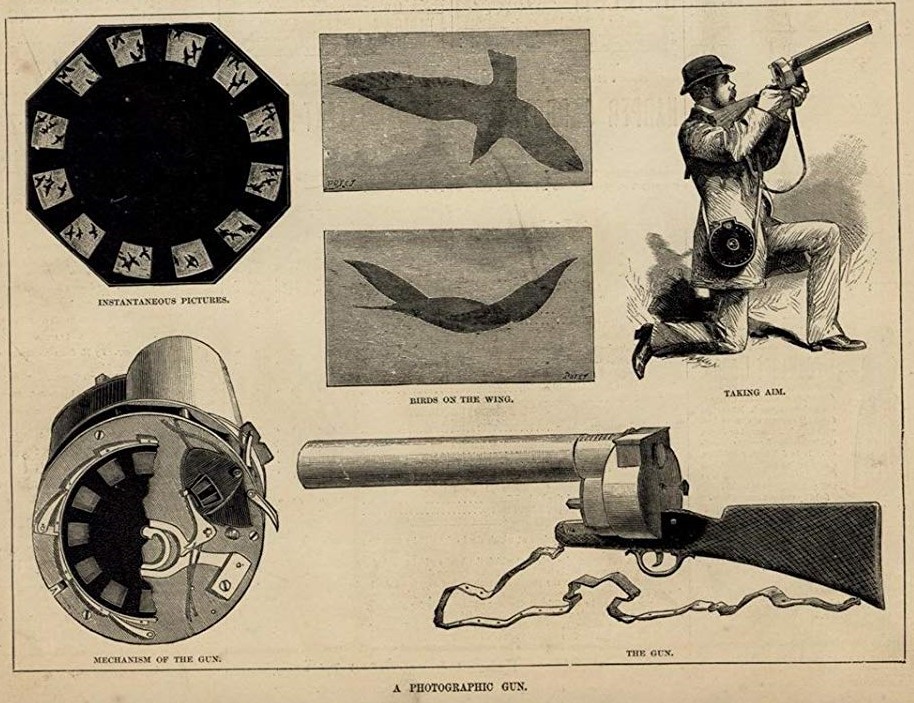 Photo-Revolver de Poche , 1882
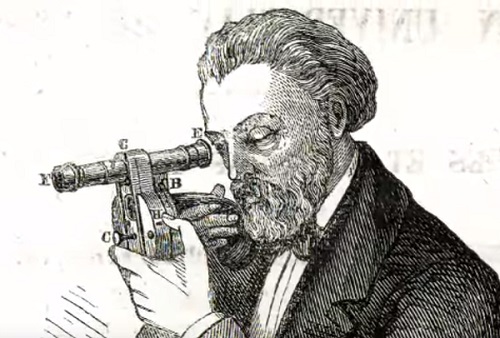
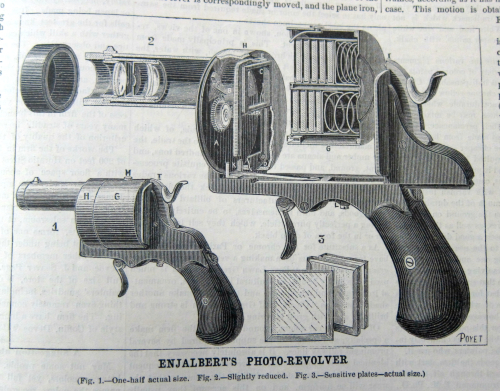
The Photo-Revolver de Poche was invented by E. Enjalbert in Montpellier, France and constructed from 1882-1892. The camera was designed to look and operate like a handgun. The gun cylinder held ten 16 x 16mm dry plates. The image was taken just as if you were shooting a pistol, aim via a sight located on the top of the barrel and pull the trigger which instantaneously exposed the plate. The action of pulling the trigger back allowed the cylinder to be rotated for the next shot. The barrel housed a periscopic 70mm f/10 lens. The Photo-Revolver camera was nickel plated with wood handles just a like a pistol. Due to its inherent hostile appearance and possible misleading interpretation that the photographer was actually trying to kill someone instead of the harmless act of taking a photograph, this placed the photographer at times in jeopardy and so the Photo-Revolver did not fair well on editorial reviews or on the market. It has been reported that only 6 cameras are known to exist, with several replica's existing.
 Source
Magazine Detective Camera c.1885
Source
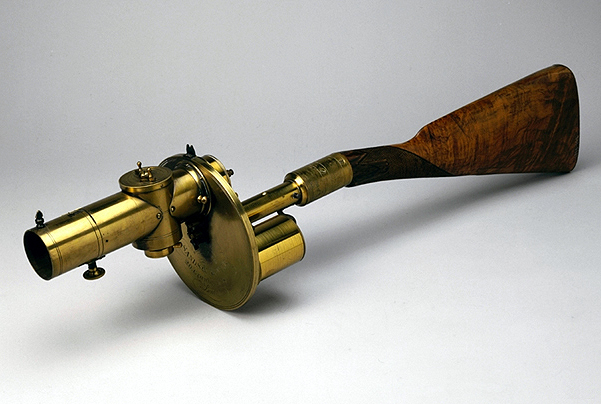
Magazine Detective Camera c.1885 This ‘Rifle Camera’ was developed by Sands and Hunter in the 1880s. The longer, two-handed design meant it could take a steadier image than the Revolver Camera. It could also take 18 images before being reloaded, a significant increase from the four image limit of the Revolver Camera.
 Stirn’s Secret Camera, 1886
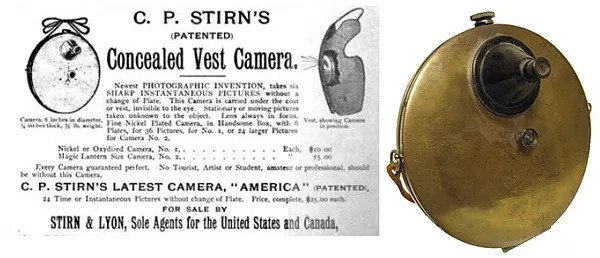
 Originally named ‘The Concealed Vest Camera’, patented separately by Robert D. Gray and C.P. Stirn in 1886, this circular metal camera was designed to be worn under the waistcoat with the lens protruding from a button hole. It was made in several models, with this model taking six 40mm diameter circular images on a 140mm circular plate.
 Krugener’s Taschenbuch’ Patent Book Camera, 1888
 Invented by German photographer Dr. Rudolf Krugner and produced in Germany by Haake and Albers from 1888, this model was the first of many successful book-shaped cameras. Several thousand were sold in various countries including France, Belgium and Britain. The camera took 24 plates, measuring 40mm squared, in an upper chamber. After exposure these were pushed down into a lower chamber by a metal rod for storage.
The above camera's including these
pre-1900 ones do not even scratch the surface. Mainstream will probably say that they were worthless, but what else is new?