The Leiden Aratea, medieval artistic astronomy
First a bit description of the Leiden Aratea, taken from the pdf that I attach, written by Ranee Katzenstein and Emilie Savage-Smith in 1988. The Aratea, officially a COPY of a COPY of a lost COPY of a lost COPY of a .. lost Original? contains pictures of star constellations, personification of planets and seasons and a picture of the constellations of the planets, that caught my interest. It is dated in this book to be a representation of the planets on
28 March 579 AD. This is wrong.
Full moon will happen a few hours later and Saturn is in Aquarius. But neither Venus, nor Merkur match, Mars in LIBRA. Jupiter just entered CANCER and Lunar Node is in SAGITTARIUS.
From the pdf:
"The Aratea is a ninth-century copy of an astronomical and meteorological treatise based on the Phaenomena written by the Greek poet Aratus (circa 315—240/39 B.C.). Aratus’ poem was a product of the Hellenistic Greek culture centered not at Alexandria, where scientific activity flourished, but at Athens and the Macedonian court there. …
A small, squarish book (each page measures 22.5 x 20 cm [87/8 by 77/8 inches]), the Leiden Aratea is a parchment manuscript comprising ninety-nine leaves. Apart from four folios that were already missing in 1600, the manuscript appears to be complete. The text, which runs from folio 2 through folio 97 verso, is Claudius Caesar Germanicus’ Latin translation, composed in the early first century AD, of Aratus' original Greek. This text has been supplemented by portions of a second Latin version of Aratus' poem, written by Rufius Festus Avienus in the fourth century AD,
Thirty-nine miniatures depicting the constellations, the seasons, and the planets illustrate the Aratea. At least five others—representing Jupiter as a personification of the heavens, along with the sun, the moon, and two additional constellations (Virgo and Centaurus)—were originally included but are now lost. …"
Miniatures, I recently read that
the grand-father Benedetto Bordon of Iosephus Iustus Scaliger was allegedly a painter of miniatures. I found that info only in french.
"Illusionistic techniques of this type are typical of ancient painting and, in fact,the illustrations of the Leiden Aratea are presumed to be copies of the miniatures made for a Late Antique manuscript, now lost, of Germanicus' treatise. …
As a faithful copy of a manuscript probably made in the mid-fourth or fifth century, the Leiden Aratea offers precious evidence regarding the form and content of illustrated books in the ancient world. But it is just this fidelity to its model that makes it so difficult to determine precisely where this Carolingian copy of the Aratea was created. (P 6)"
Siriusly ?
"Other features of the Leiden Aratea also depend on ancient manuscript traditions. The text is written in a narrow, condensed style of script called rustic capitals (the transcription in Gothic minuscule script in the margins was added in the thirteenth century). ….(p6)
Its thousand-year-long story begins with the Greek poet Aratus. Aratus was born around 315 Bc in the town of Soli on the southern coast ofpresent-day Turkey, just north of Cyprus. He wrote the poem on which the Aratea isbased, the Phaenomena, at the request of the ruler of Macedonia, Antigonus Gonatas, who was renowned for the active literary circle around his court. …."
A story ! … correct !
Consisting of 1,154 verses in Greek, the Phaenomena surveys the constellations and circles of the heavens and the risings and settings of the stars, concluding with a section subtitled "Omens from the Sky" that concerns weather signs. …
Natural phenomena !
"The map of the heavens which forms the basis of this poem is representative of the astronomical knowledge of classical antiquity prior to the writing of Ptolemy in the second century AD. Ptolemy's manual of astronomy, known as the Almagest, was to dominate all astronomical thought until the time of Copernicus and Galileo in the sixteenth and seventeenth centuries. (P11)"
My favourite „ancient Greek“ Ptolemy, he is credited to have fixed the spring equinox point to be forever 0° ARIES, when the spring sun passes over the AEquator, which THEY say was exact when Ptolemy lived in 2 century AD. So I suppose since PTOLEMY this fixed astro system was and is still used. He was mapping earth and the heaven. THEY confuse us with the fixed 0° ARIES Equinox point to be able to pretend there was a precession of the fix stars by 1° in 70 or 72 years. I do not buy this, there is a precession of the positions of the planets, node, … due to fractional cycles. I explained at the end of the post
here, why imo there is no precession of fix stars.
"… One of the most important Latin versions of Aratus' poem was made by a writer known as Germanicus, who corrected some of the astronomical errors in the original and changed the orientation of the constellation figures from those on a globe to those in the sky. This Germanicus has generally been assumed to have been Germanicus Caesar, who was a nephew of the first-century Roman emperor Tiberius and stood in the direct line of succession. However, the poem may have been written by the Emperor Tiberius himself, who is known to have been keenly interested in astrology and mythology and was, on occasion, called Germanicus …"
source pic pompeii
This
Caesari Tertio Germanico listed at position 2 on the North Wall of the Basilica in Pompeii ?
"In the poem by Aratus and in the Latin elaborations by Germanicus and Avienus, the twelve zodiacal constellations are described among the northern constellations. All the constellations are divided into two groups, those to the north of the ecliptic, including the zodiac, and those to the south. (p14)"
So the Zodiac constellations are among the northern constellations. It might well be this was the very first appearance of the „ancient“ 48 ancient star constellations …mythologies and constellations belong together. Star gazer myths. You remember star constellations easier when an interesting story accompanies them.
"The mythological personification of the five planets (fol. 80v), whose names obviously come from the names of Greek and Roman gods and goddesses, the personification of the four seasons (fol. 82v), and the twelve months which are part of the final illustration (fol. 93v)—all of these might well be related to the illustrations known to have been in a Roman state calendar made in AD.354 by Furius Dionysius Filocalus. (An illustrated copy of this calendar was made at the Carolingian court; although now lost, it is known through a seventeenth-century copy….(p15)"
NOOOO …

the Carolingian COPY has also been lost?? But luckily there is the 17th century COPY!
"… medallions containing personifications of the twelve months. The sun, moon, and planets are also represented by human figures in medallions. Written around the circular orbit of each planet are Latin quotations from the Historia naturalis of Pliny the Elder (AD. 23—79). These inscriptions state each planet's point of nearest approach to (perigee) and furthest point from (apogee) the earth. They also give the exhultation of each planet, which is its position of greatest astrological influence. This astrological element, while of interest to Pliny, was generally avoided by later Latin writers of the early Middle Ages…."
Later Latin writer couldn’t care less about astronomical elements because they simply didn’t exist. There was no Early Middle Age either. Pliny died 1631 when Pompeii got really buried.
Pompeii 79 AD = 1631 !
"A curious error was introduced, however, by either the designer or the miniaturist producing this particular copy, for when the month—signs were drawn in the medallions, they were placed in the wrong order. They run clockwise, beginning with January at the top of the diagram, while the zodiacal signs run counterclockwise, beginning with Aries at the left of the circle. The result is that the months and the zodiacal signs are not synchronized, except at two points: January-Aquarius and July-Leo. Such an incorrect order would seem to be due to simple carelessness. This unusual diagram, then, is a Carolingian copy, at least once removed, of a sixth-century composite diagram of calendric symbols and planetary configurations corresponding to the specific date of AD. March 28, 579. (P17)"
Only ONE curious error ? Nothing else been „accidentally“ INVERTED ?
But NO, it does NOT match March 28, 579 AD.
This book about the Leiden Aratea was written in 1988. I have no idea when the astronomer calculated the date, but in any case he did not take care of the lunar node DRACO in AQUARIUS which cannot be missed! 28 March 579 AD is wrong. Also do the positions of Merkur, Venus, Mars, Jupiter and Lunar Node NOT match.
The question is whether this is a pure ARTISTIC representation of the heaven, with the planets just being distributed in different aspects to each other or if this constellation was really once OBSERVED and noted or if this constellation was once CALCULATED that it should have been like that on a special day ?
The planets Saturn, Jupiter and Mars are
all placed in the middle of the sign. This does not seem very realistic. As I have learnt from this book,
Unser Alphabet, in the early times, planets were noted to be in the first or second half of a sign, no degrees were indicated. This based on observation, 15° degree of a sign rise in 1 hour.
The LUNAR NODE
The lunar node DRACO is placed in front of Saturn in Aquarius. Node is where the paths of sun and moon cross each other in the ecliptic. This indicates when solar and lunar eclipses happen. The node moves back in the zodiac by around 19 degrees per year. A revolution, 1 draconic year = 18,6 years.
There is no exact indication of the Lunar node, but it is clearly second half of AQUARIUS between 20° and 26° and would move around 13° until end of that year. This means the lunar node would still have been in AQUARIUS at the end of that year. The lunar node regresses, moves clockwise. If it was for example at 6° AQUARIUS at the end of that year, there would be 10° of difference to 16°, where it was end of 1803. Here is a progression, a counterclockwise movement of 1° in 69,75 years. For a difference of 10°, it takes almost 700 years.
An example of progression with Lunar Node in ARIES.
Planetary movements
Pics lunar nodes each 93 year starting 1800, 1893, 1986, 2079
Compare the end points each 93 years. They progress.
VENUS or The importance of VENUS PHASES for time telling.
The painting indicates a very special phase of the Venus cycle, which does not happen so often. As example, here is the current Venus cycle of 584 days in detail.
VENUS Cycle 2021-23
Venus stations and turns retrograde December 19 2021 at 26° CAPRICORN.
Venus spends 40 Days
retrograde moving from evening star to morning star.
Venus is no longer visible as Evening star January 3, 2022 at 22° CAPRICORN,
then Venus conjuncts the sun (inferior conjunction) January 9 at 18° CAPRICORN
and rises as Morning star January 14, at 15° CAPRICORN beginning a new 584 day cycle.
Venus now rises before the sun during 260 days (Heliacal rising).
Venus conjuncts 7 – 8 times with the waning moon as Morning Star. The
meetings of the old moon and Venus are 27- February, 28 March, 27 April, 27 May, 26 June, 26 July, 26 August and 25 September.
Maximal morning elevation March 20, 2022 at 13° AQUARIUS, the largest distance from the sun. Distance decreases until Venus is no longer visible as morning star September 15 2022 at 12° VIRGO.
Venus conjuncts the sun again, superior conjunction October 22, 2022 at 29° LIBRA. Venus travels with the sun with a few days.
Then speeds up and rises as Evening star on December 2 2022 at 19° SAGITTARIUS.
As evening star Venus meets with the waxing Moon 7 to 8 times. Maximal evening elevation June 4, 2023 at 28°CANCER
Venus stations and becomes retrograde July 23 2023 at 25° LEO
Venus begins her
retrograde phase in the Evening Sky for
40 days and disappears from the Evening Sky on Aug 08, 2023 at 23° Leo.
Then Venus meets the Sun, inferior conjunction August 13 2023 at 20° LEO, and Venus emerges in the Morning Sky on Aug 17 2023 at 18° Leo, beginning a new 584 day cycle.
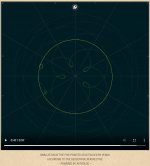
5 cycles of 584 days = 8 years. Each position of the moment VENUS turns RETROGRADE, leaves the image of ONE pentagram in the heaven after 8 years. Not a perfect pentagram due to the regression in the stationary-retrograde points. Venus touches each 3rd point successively. There is a short video animation on the site.
Ingress of planets and ephimerides are from
astro com.
On the Aratea painting:
VENUS is shown as EVENING star in TAURUS becoming retrograde for
40 days in TAURUS before rising as morning star. In red are the dates of the years VENUS was in TAURUS becoming retrograde.
VENUS enters with one tip/leg of the pentagram TAURUS each 251 or 259 years and stays there for 104 years = 13 x 8 years, sometimes 112 years, 14 x 8 years. So 1 revolution of the PENTAGRAM, moving COUNTERCLOCKwise takes between 5 x 251 = 1255 years and 5 x 259 = 1295 years. It also means TAURUS is void of any VENUS-retrograde station for about 147 years.
The planetatium picture constellations must represent one of those VENUS-retrograde TAURUS years. Before 1582 the dates are julian dates, marked with j.
SATURN
Saturn in Aquarius, I marked those years, even when it just entered or left Aquarius. Field filled in green.
FULL MOON
The day shown was at Full moon. Checking the venus-r / Saturn years for full moon at
moongiant. It doesn’t show years BC, so ephimerides to check those years
Only 2 years match this combination: 610, 1168
610: Jupiter Saturn conjunction in AQUARIUS, Mars in TAURUS, Lunar node ARIES, Merkur does not fit either
1168: Jupiter in PISCES, Mars almost AQUARIUS, Lunar node ARIES, Merkur does not fit.
WHAT IF : 579 = 1579 ?
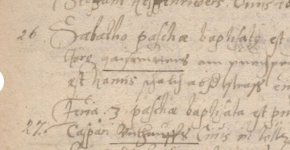
add i or 1 for 1579, it is the first year that the date on the Easter Tables in Ravenna was as GREGORIAN Sunday. Except for the last 3 ones, the previous ones are JULIAN Sundays. 1579 = dominical letter G year, a new start.
28.3.1579
Saturn AQUARIUS fits, Mars in GEMINI and Jupiter in SCORPIO. Both are INVERTED in the zodiac signs..
Venus is in the exact OPPOSITE or INVERTED position, just rose as Morning star in PISCES. 28 days after becoming direct on March 1, having been retrograde for 40 days. Inferior conjunction. First visibility as morning star on March 19
The Venus/Mercury position in 1403
The year
1403, March 28 has the exact position of Sun, Venus and Mercury. This matches the constellations of the painting. Saturn in Aquarius too. But for full moon a few days later on April 7, the position of Mercury no longer matches.
The LUNAR NODE is end of LEO, exactly INVERTED ! If I take this degree for the painting, the lunar node would have been around 12° AQUARIUS by the end of that year, 4° of difference to 1803 at 16°, so 4 x 70 = 280 years prior, around 1523.
Mars and Jupiter are both in CAPRICORN
I reached the limit of a post and could not post all. Will try again tomorrow for the rest



 The 3 DEAD languages once united in creating. The practice of making images continued after the imaginary period called Middle Ages aka the Dark Ages, that have never seen the light.

 !
!


