Basilikas, The „CORPUS I.C.“ & years AD

If i understand correctly, all the church documents to use people as disposable goods for power, forgeries, and to establish fake his-story, it all originates on copies of alledged "ancient" originals that don't exist? It can't be more fucked up than that!!
 
If i understand correctly, all the church documents to use people as disposable goods for power, forgeries, and to establish fake his-story, it all originates on copies of alledged "ancient" originals that don't exist? It can't be more fucked up than that!!
Indeed! You pretty much summed it up. There are NO ORIGINALS, only copies of copies .. it's just make-believe

That matches ... The obligation to register christenings (baptisms) and marriages was first prescribed in the Roman Catholic Church by Trident Council (1545-1563), and in 1614 it became mandatory to register the deceased.
TRI-dent council, will have a look at that one .. officially this council was 1545-1563
3 dens = 3 homes Fuimos Tres as marked on the picture of Iosephus Iustus Scaliger Iul. Caesaris A BURDEN F.

The REGIStration agenda is very likely the implementation of the JUStinian C.odex, the Corpus J.C. .

Official HIStory tells Justinian Codex was created in the early 6th century. Around 527-529. So just add the i or 1. Like in the St Laurentius Churchbook, where the i is often missing in front of dates.

In the West, Justinian's Codex was largely lost, or in many places never present, due to the limited western extent of the Byzantine territories. The Latin version known today was painstakingly restored over many centuries. The only known manuscript that once contained the entire Latin Codex is a Veronese palimpsest of the 6th or 7th century; it is now only fragments.[13][14] Within its home in the Byzantine Empire, the code was translated into Greek, which had become the governing language, and adapted, in the 9th century as the Basilika. It appears as if the Latin Code was shortened in the Middle Ages into an "Epitome Codex", with inscriptions being dropped and numerous other changes made.[15] Some time in the 8th or 9th century, the last three books of the Code were separated from the others, and many other laws in the first nine books, including all of those written in Greek, were dropped.[16] Substantially complete versions of Justinian's Codex were restored around the end of the 12th century, and the humanists of the 16th century added the laws originally promulgated in Greek.[17] Paul Krüger created the modern, standard version of the Codex in 1877

Painstakingly restored :ROFLMAO: …the "greek" version released in the 9th century but using koine letters from what THEY label 2nd century … anyway an earlier way to write. THEY have meddled with everything. Imo, the Corpus JC really started with the “humanists” of the (1)6th century, and was refined until 1877. If you want to implement your laws or Codex, you need a REGIStration system, to write down the NAMES of the people over which you want to exercise power and control, to be able to bind them with your new “jewridical"/"legal” civil CON.tract system and as I meanwhile think also the newly implemented MONEY system.

First something is a proposition, then when seemingly accepted by a majority, some time later it becomes mandatory, a template that THEY still use.

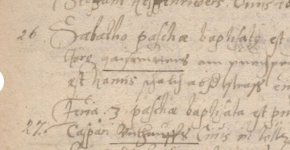
The earliest Churchbook until now being from St Georg, Augsburg and from here we know that in 1576 the week started with Sunday and Saturday was called Sabbath. Sabbatho Pascha.

1579-sabado-pascha.JPG

Source to the BOOK, not this page, Bad Tölz 1579​

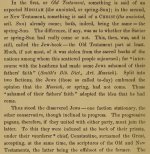
This is „jewish“ tradition. Thus the change to Sunday, to the „christian“ tradition happend around 1600. This might actually be the time, which Milton Woolley in Hebrew Mythology refers to on page 10 & 11

hebrew-myth-p10.JPG

hebrew-myth-p11.JPG
 
If i understand correctly, all the church documents to use people as disposable goods for power, forgeries, and to establish fake his-story, it all originates on copies of alledged "ancient" originals that don't exist? It can't be more fucked up than that!!

And this is why The Muslims claim that the only unpolluted word of God came from their prophet! They claim (with valid evidence) that they could trace the oral tradition person by person (names and families) until it was transferred into a written form. They have a case there!

Screenshot_20220920-063817_WeChat.jpg


I had no answer about this ... I could take Bible only on pure faith!

Painstakingly restored :ROFLMAO: …the "greek" version released in the 9th century but using koine letters from what THEY label 2nd century … anyway an earlier way to write. THEY have meddled with everything. Imo, the Corpus JC really started with the “humanists” of the (1)6th century, and was refined until 1877. If you want to implement your laws or Codex, you need a REGIStration system, to write down the NAMES of the people over which you want to exercise power and control, to be able to bind them with your new “jewridical"/"legal” civil CON.tract system and as I meanwhile think also the newly implemented MONEY system.

First something is a proposition, then when seemingly accepted by a majority, some time later it becomes mandatory, a template that THEY still use.

The earliest Churchbook until now being from St Georg, Augsburg and from here we know that in 1576 the week started with Sunday and Saturday was called Sabbath. Sabbatho Pascha.


1579-sabado-pascha-jpg.jpg
Source to the BOOK, not this page, Bad Tölz 1579

This is „jewish“ tradition. Thus the change to Sunday, to the „christian“ tradition happend around 1600. This might actually be the time, which Milton Woolley in Hebrew Mythology refers to on page 10 & 11


hebrew-myth-p10-jpg.jpg

I agree on everything you said, less some speculations that need to be proven by me if I want to accept them... luckily for me I always knew that Sunday is not the Sabbath, so I never had problems with that understanding... but changes of the calendars managed to "pollute" that as well, I think!

Milton Woolley in Hebrew Mythology probably refers to the Messianic Jews (and all the Christian groups connected to them because the beliefs of all of those groups do not differ much) and the others that follow just Torah (or Kaballah?).

Check out this Muslim videos (in English)... it is interesting that they really care about every step in the process! Bad experience, perhaps...?!

Download Video


They did their research diligently !

Download Video
 
Last edited by a moderator:

ICCD13685150_SABAPRAAFS6-G-18.jpg


Some more interesting things to say about Ravenna's Easter calendar:
  • The peculiar MAI appearing from time to time stands for May rather than March.
Immagine 2022-09-20 140439.png
  • Number ç = 6 resembles the way this number was written by Greeks (Greek numerals - Wikipedia). This makes me think that maybe the sculptor of the calendar 'wrote' VI instead of ç by mistake. A lapsus? Once carved it was already too late. It's interesting that apparently no one cared. Is it possibly due to the fact that this stone calendar was never used? I imagine that if it was so important they would do a new one without that error. Don't know!​
Immagine 2022-09-06 115523.png
Immagine 2022-09-20 140929.png
  • And, most important of all, is the fact that the calendar is supposed to represent 95 years from 532 AD to 626 AD with the first metonic cycle of 19 years from 532 AD to 550 AD but....
Immagine 2022-09-20 141853.png
Immagine 2022-09-20 141946.png
.... but all the years are described with a generic AN I (year 1) to AN XçIII (year 19). Yes of course these years represented a repeating cycle so they carved them one time to represent the five cycles of the calendar. But it's still very convenient that a calendar has no mention of the current year, especially since it expired after 95 years. Weren't they interested in having an immediate reference point? Historians will tell that the Anno Domini crafted by Dionysius was not used until the time of Bede, but there were in any case the Era of the Martyrs and the Ab Urbe Condita.

And in any case... where are the subsequent tables of 95 years from 627 AD onwards? It seems the Dionysian Easter Table survived the eras of time as proof for us to see. The other tables were less fortunate, sigh.
 
The Leiden Aratea, medieval artistic astronomy

First a bit description of the Leiden Aratea, taken from the pdf that I attach, written by Ranee Katzenstein and Emilie Savage-Smith in 1988. The Aratea, officially a COPY of a COPY of a lost COPY of a lost COPY of a .. lost Original? contains pictures of star constellations, personification of planets and seasons and a picture of the constellations of the planets, that caught my interest. It is dated in this book to be a representation of the planets on 28 March 579 AD. This is wrong.

Full moon will happen a few hours later and Saturn is in Aquarius. But neither Venus, nor Merkur match, Mars in LIBRA. Jupiter just entered CANCER and Lunar Node is in SAGITTARIUS.

From the pdf:

"The Aratea is a ninth-century copy of an astronomical and meteorological treatise based on the Phaenomena written by the Greek poet Aratus (circa 315—240/39 B.C.). Aratus’ poem was a product of the Hellenistic Greek culture centered not at Alexandria, where scientific activity flourished, but at Athens and the Macedonian court there. …

A small, squarish book (each page measures 22.5 x 20 cm [87/8 by 77/8 inches]), the Leiden Aratea is a parchment manuscript comprising ninety-nine leaves. Apart from four folios that were already missing in 1600, the manuscript appears to be complete. The text, which runs from folio 2 through folio 97 verso, is Claudius Caesar Germanicus’ Latin translation, composed in the early first century AD, of Aratus' original Greek. This text has been supplemented by portions of a second Latin version of Aratus' poem, written by Rufius Festus Avienus in the fourth century AD,

Thirty-nine miniatures depicting the constellations, the seasons, and the planets illustrate the Aratea. At least five others—representing Jupiter as a personification of the heavens, along with the sun, the moon, and two additional constellations (Virgo and Centaurus)—were originally included but are now lost. …"

Miniatures, I recently read that the grand-father Benedetto Bordon of Iosephus Iustus Scaliger was allegedly a painter of miniatures. I found that info only in french.

"Illusionistic techniques of this type are typical of ancient painting and, in fact,the illustrations of the Leiden Aratea are presumed to be copies of the miniatures made for a Late Antique manuscript, now lost, of Germanicus' treatise. …

As a faithful copy of a manuscript probably made in the mid-fourth or fifth century, the Leiden Aratea offers precious evidence regarding the form and content of illustrated books in the ancient world. But it is just this fidelity to its model that makes it so difficult to determine precisely where this Carolingian copy of the Aratea was created. (P 6)"

Siriusly ?

"Other features of the Leiden Aratea also depend on ancient manuscript traditions. The text is written in a narrow, condensed style of script called rustic capitals (the transcription in Gothic minuscule script in the margins was added in the thirteenth century). ….(p6)

Its thousand-year-long story begins with the Greek poet Aratus. Aratus was born around 315 Bc in the town of Soli on the southern coast ofpresent-day Turkey, just north of Cyprus. He wrote the poem on which the Aratea isbased, the Phaenomena, at the request of the ruler of Macedonia, Antigonus Gonatas, who was renowned for the active literary circle around his court. …."

A story ! … correct !

Consisting of 1,154 verses in Greek, the Phaenomena surveys the constellations and circles of the heavens and the risings and settings of the stars, concluding with a section subtitled "Omens from the Sky" that concerns weather signs.

Natural phenomena !

"The map of the heavens which forms the basis of this poem is representative of the astronomical knowledge of classical antiquity prior to the writing of Ptolemy in the second century AD. Ptolemy's manual of astronomy, known as the Almagest, was to dominate all astronomical thought until the time of Copernicus and Galileo in the sixteenth and seventeenth centuries. (P11)"

My favourite „ancient Greek“ Ptolemy, he is credited to have fixed the spring equinox point to be forever 0° ARIES, when the spring sun passes over the AEquator, which THEY say was exact when Ptolemy lived in 2 century AD. So I suppose since PTOLEMY this fixed astro system was and is still used. He was mapping earth and the heaven. THEY confuse us with the fixed 0° ARIES Equinox point to be able to pretend there was a precession of the fix stars by 1° in 70 or 72 years. I do not buy this, there is a precession of the positions of the planets, node, … due to fractional cycles. I explained at the end of the post here, why imo there is no precession of fix stars.

"… One of the most important Latin versions of Aratus' poem was made by a writer known as Germanicus, who corrected some of the astronomical errors in the original and changed the orientation of the constellation figures from those on a globe to those in the sky. This Germanicus has generally been assumed to have been Germanicus Caesar, who was a nephew of the first-century Roman emperor Tiberius and stood in the direct line of succession. However, the poem may have been written by the Emperor Tiberius himself, who is known to have been keenly interested in astrology and mythology and was, on occasion, called Germanicus …"

pompeii-germanicus.JPG

source pic pompeii

This Caesari Tertio Germanico listed at position 2 on the North Wall of the Basilica in Pompeii ?​

"In the poem by Aratus and in the Latin elaborations by Germanicus and Avienus, the twelve zodiacal constellations are described among the northern constellations. All the constellations are divided into two groups, those to the north of the ecliptic, including the zodiac, and those to the south. (p14)"

So the Zodiac constellations are among the northern constellations. It might well be this was the very first appearance of the „ancient“ 48 ancient star constellations …mythologies and constellations belong together. Star gazer myths. You remember star constellations easier when an interesting story accompanies them.

"The mythological personification of the five planets (fol. 80v), whose names obviously come from the names of Greek and Roman gods and goddesses, the personification of the four seasons (fol. 82v), and the twelve months which are part of the final illustration (fol. 93v)—all of these might well be related to the illustrations known to have been in a Roman state calendar made in AD.354 by Furius Dionysius Filocalus. (An illustrated copy of this calendar was made at the Carolingian court; although now lost, it is known through a seventeenth-century copy….(p15)"

NOOOO … :eek: the Carolingian COPY has also been lost?? But luckily there is the 17th century COPY!

"… medallions containing personifications of the twelve months. The sun, moon, and planets are also represented by human figures in medallions. Written around the circular orbit of each planet are Latin quotations from the Historia naturalis of Pliny the Elder (AD. 23—79). These inscriptions state each planet's point of nearest approach to (perigee) and furthest point from (apogee) the earth. They also give the exhultation of each planet, which is its position of greatest astrological influence. This astrological element, while of interest to Pliny, was generally avoided by later Latin writers of the early Middle Ages…."

Later Latin writer couldn’t care less about astronomical elements because they simply didn’t exist. There was no Early Middle Age either. Pliny died 1631 when Pompeii got really buried. Pompeii 79 AD = 1631 !

"A curious error was introduced, however, by either the designer or the miniaturist producing this particular copy, for when the month—signs were drawn in the medallions, they were placed in the wrong order. They run clockwise, beginning with January at the top of the diagram, while the zodiacal signs run counterclockwise, beginning with Aries at the left of the circle. The result is that the months and the zodiacal signs are not synchronized, except at two points: January-Aquarius and July-Leo. Such an incorrect order would seem to be due to simple carelessness. This unusual diagram, then, is a Carolingian copy, at least once removed, of a sixth-century composite diagram of calendric symbols and planetary configurations corresponding to the specific date of AD. March 28, 579. (P17)"

Only ONE curious error ? Nothing else been „accidentally“ INVERTED ?

But NO, it does NOT match March 28, 579 AD.

This book about the Leiden Aratea was written in 1988. I have no idea when the astronomer calculated the date, but in any case he did not take care of the lunar node DRACO in AQUARIUS which cannot be missed! 28 March 579 AD is wrong. Also do the positions of Merkur, Venus, Mars, Jupiter and Lunar Node NOT match.

The question is whether this is a pure ARTISTIC representation of the heaven, with the planets just being distributed in different aspects to each other or if this constellation was really once OBSERVED and noted or if this constellation was once CALCULATED that it should have been like that on a special day ?

The planets Saturn, Jupiter and Mars are all placed in the middle of the sign. This does not seem very realistic. As I have learnt from this book, Unser Alphabet, in the early times, planets were noted to be in the first or second half of a sign, no degrees were indicated. This based on observation, 15° degree of a sign rise in 1 hour.

The LUNAR NODE

The lunar node DRACO is placed in front of Saturn in Aquarius. Node is where the paths of sun and moon cross each other in the ecliptic. This indicates when solar and lunar eclipses happen. The node moves back in the zodiac by around 19 degrees per year. A revolution, 1 draconic year = 18,6 years.

There is no exact indication of the Lunar node, but it is clearly second half of AQUARIUS between 20° and 26° and would move around 13° until end of that year. This means the lunar node would still have been in AQUARIUS at the end of that year. The lunar node regresses, moves clockwise. If it was for example at 6° AQUARIUS at the end of that year, there would be 10° of difference to 16°, where it was end of 1803. Here is a progression, a counterclockwise movement of 1° in 69,75 years. For a difference of 10°, it takes almost 700 years.

An example of progression with Lunar Node in ARIES. Planetary movements

18-years-lunar-nodes.JPG


Pics lunar nodes each 93 year starting 1800, 1893, 1986, 2079
horoscope-circular-annual-motion2__ephemeris-motion-1800-.png

horoscope-circular-annual-motion2__ephemeris-motion-1893-.png

horoscope-circular-annual-motion2__ephemeris-motion-1986-.png

horoscope-circular-annual-motion2__ephemeris-motion-2079-.png

Compare the end points each 93 years. They progress.

VENUS or The importance of VENUS PHASES for time telling.


The painting indicates a very special phase of the Venus cycle, which does not happen so often. As example, here is the current Venus cycle of 584 days in detail.

VENUS Cycle 2021-23

Venus stations and turns retrograde December 19 2021 at 26° CAPRICORN.
Venus spends 40 Days retrograde moving from evening star to morning star.
Venus is no longer visible as Evening star January 3, 2022 at 22° CAPRICORN,
then Venus conjuncts the sun (inferior conjunction) January 9 at 18° CAPRICORN
and rises as Morning star January 14, at 15° CAPRICORN beginning a new 584 day cycle.

Venus now rises before the sun during 260 days (Heliacal rising).
Venus conjuncts 7 – 8 times with the waning moon as Morning Star. The meetings of the old moon and Venus are 27- February, 28 March, 27 April, 27 May, 26 June, 26 July, 26 August and 25 September.
Maximal morning elevation March 20, 2022 at 13° AQUARIUS, the largest distance from the sun. Distance decreases until Venus is no longer visible as morning star September 15 2022 at 12° VIRGO.
Venus conjuncts the sun again, superior conjunction October 22, 2022 at 29° LIBRA. Venus travels with the sun with a few days.
Then speeds up and rises as Evening star on December 2 2022 at 19° SAGITTARIUS.


As evening star Venus meets with the waxing Moon 7 to 8 times. Maximal evening elevation June 4, 2023 at 28°CANCER
Venus stations and becomes retrograde July 23 2023 at 25° LEO
Venus begins her retrograde phase in the Evening Sky for 40 days and disappears from the Evening Sky on Aug 08, 2023 at 23° Leo.
Then Venus meets the Sun, inferior conjunction August 13 2023 at 20° LEO, and Venus emerges in the Morning Sky on Aug 17 2023 at 18° Leo, beginning a new 584 day cycle.


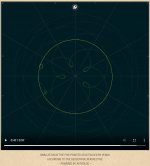
5 cycles of 584 days = 8 years. Each position of the moment VENUS turns RETROGRADE, leaves the image of ONE pentagram in the heaven after 8 years. Not a perfect pentagram due to the regression in the stationary-retrograde points. Venus touches each 3rd point successively. There is a short video animation on the site.

Ingress of planets and ephimerides are from astro com.

On the Aratea painting:

VENUS is shown as EVENING star in TAURUS becoming retrograde for 40 days in TAURUS before rising as morning star. In red are the dates of the years VENUS was in TAURUS becoming retrograde.

years-venus-retro-taurus.JPG

VENUS enters with one tip/leg of the pentagram TAURUS each 251 or 259 years and stays there for 104 years = 13 x 8 years, sometimes 112 years, 14 x 8 years. So 1 revolution of the PENTAGRAM, moving COUNTERCLOCKwise takes between 5 x 251 = 1255 years and 5 x 259 = 1295 years. It also means TAURUS is void of any VENUS-retrograde station for about 147 years.

The planetatium picture constellations must represent one of those VENUS-retrograde TAURUS years. Before 1582 the dates are julian dates, marked with j.

SATURN
Saturn in Aquarius, I marked those years, even when it just entered or left Aquarius. Field filled in green.

FULL MOON
The day shown was at Full moon. Checking the venus-r / Saturn years for full moon at moongiant. It doesn’t show years BC, so ephimerides to check those years

Only 2 years match this combination: 610, 1168

610.JPG

610: Jupiter Saturn conjunction in AQUARIUS, Mars in TAURUS, Lunar node ARIES, Merkur does not fit either

1168.JPG

1168: Jupiter in PISCES, Mars almost AQUARIUS, Lunar node ARIES, Merkur does not fit.

:unsure:

WHAT IF : 579 = 1579 ?

add i or 1 for 1579, it is the first year that the date on the Easter Tables in Ravenna was as GREGORIAN Sunday. Except for the last 3 ones, the previous ones are JULIAN Sundays. 1579 = dominical letter G year, a new start.

28.3.1579

1579-march28.JPG

Saturn AQUARIUS fits, Mars in GEMINI and Jupiter in SCORPIO. Both are INVERTED in the zodiac signs..

Venus is in the exact OPPOSITE or INVERTED position, just rose as Morning star in PISCES. 28 days after becoming direct on March 1, having been retrograde for 40 days. Inferior conjunction. First visibility as morning star on March 19

1579-venus-morningstar.JPG

The Venus/Mercury position in 1403

The year 1403, March 28 has the exact position of Sun, Venus and Mercury. This matches the constellations of the painting. Saturn in Aquarius too. But for full moon a few days later on April 7, the position of Mercury no longer matches.

The LUNAR NODE is end of LEO, exactly INVERTED ! If I take this degree for the painting, the lunar node would have been around 12° AQUARIUS by the end of that year, 4° of difference to 1803 at 16°, so 4 x 70 = 280 years prior, around 1523.

Mars and Jupiter are both in CAPRICORN

1403-march-28.JPG

1403-full-moonapr7.JPG
I reached the limit of a post and could not post all. Will try again tomorrow for the rest
 

Attachments

  • Leiden-Areata-0892361425.pdf
    24.1 MB · Views: 138
  • venus.cycle.JPG
    venus.cycle.JPG
    68 KB · Views: 100
Last edited:
I couldn’t post this yesterday, I had exceeded the postable limit.

So far until now, I summarize :

The painted constellation never happened from -500 to 1905.

I do not think it was a pure artistic and imaginary creation of the constellations. It served indoctri.. „educative purposes“ and probably secret communication of astronomical knowledge.

Calculated for a special day?

Not with NASA time tables but the contemporary (probably 16th century) knowledge of the cycles, as marked on the painting. Saturn 30 years. Jupiter 12 years, but Jupiter will progress by 1 whole zodiac sign after 7 revolutions x 12 years = 84 years. Did the calculators know and consider this ?

Composite from 2 different days ?

1403
for the TRInity Sun, Venus, Merkur with INVERTED lunar node &
1579 for the 3 outer planets with INVERSION of 2 planets in their signs?

To keep real astronomical cycles and knowledge SECRET in THEY esoteric circles and mislead others to keep them ignorant? Likely! Even very likely. The symbolism of presenting VENUS as TAURUS Evening star in 1403 to a hidden Mo(u)rning Star in 1579 in PISCES, I might look deeper into VENUS cycles and symbolism.

If the painting shows a composite from 1403/1579, a creation of a first original as “ancient copy“ could have happened in the 1500s. As symbols mean much to THEY, what about 1579, the start of THEY new Gregorian system minus 40 years ? A days is like a year. Analog to the cycle of Venus becoming direct after 40 retrograde days and starting a new cycle as Morning star? In PISCES! The symbol of Christians. Made in 1539 ? The 16th century Humanists were really busy.

Reverse calculating from 579, adding once 12 years for Jupiter and once 30 for Saturn. Common multiple years: 819, 1059, 1299, 1539, 1779 I :love: those COINCIDENCES.

1539 or 1779 ? Those 2 puzzle pieces, both seemingly match at first sight: The Leiden Aratea was created either 1539 or merely 1779.


Reading partially again as I uploaded images yesterday

… THEY show us twisted truth… the very last part I copied from the pdf:

This unusual diagram, then, is a Carolingian copy, at least once removed, of a sixth-century composite diagram of calendric symbols and planetary configurations corresponding to the specific date of AD. March 28, 579. (P17)

Adding the usual missing i or 1 and it shows truth ? not ten days, but 10 centuries missing ?

The Leiden Aratea … a sixteenth century composite ? … 1539 ?
--------------------------------------

@PantaOz

I will watch the videos you proposed, I have a fast growing list of what to read and look into, I don’t know if I live long enough to make it til the end of the list ;) And I got now interested to search for my anchestors in the Churchbooks. Curious to know if I can trace back til 1601 ?
 
@PantaOz

I will watch the videos you proposed, I have a fast growing list of what to read and look into, I don’t know if I live long enough to make it til the end of the list ;) And I got now interested to search for my anchestors in the Churchbooks. Curious to know if I can trace back til 1601 ?
If they were born north of Danube, there is a slight chance...
 
I was searching for info about the evolution of writing, letters, Koine letters, not specifically Roman figurative Koine on Murals of the Synagoge at Dura, Europos (Syria). But it popped up.

From Eric M. Moormann, The Murals of the Synagogue at Dura Europos as an Expression of Roman Koine I attach the pdf

Abstract: The figurative decorations of the synagogue in Dura Europos have aroused questions about their significance and reading strategy. They have been seen as expressions of different Jewish currents in Late Antiquity. In many contributions, detailed analyses are provided, which may be correct as such but tend to leave out the greater context, such as the interplay with the architecture, the connection with the cultural koine of the world outside Dura, and the international Jewish community. The question of what the murals represent often overshadows the question of how adequate affects were achieved. In this paper it is argued that an integrated view, that is, a connection of the scenes with the Greco-Roman world of images, does greater justice to the paintings and solves the problem of their isolation as a unique case of religious decoration. Without reflecting a purely theological programme, the decorations match perfectly the room’s shape and function, demarcating religious space, and thus enhance the prestige of the Jewish community at large. They constitute sacred decor, but at the same time make the synagogue a place of memory, connecting with Roman traditions in public and private decoration that display decorative narratives.

I was curious to see the images of the mural decorations and surprised the photos shown were b/w from 1932, the time of discovery of „one of the ‘shocking’ aspects of the Dura Europos synagogue, which displayed a wide array of biblical scenes, further enriched by ‘pagan’ motifs on the dado and on the tiles of the ceiling.“

discovery in 1932 by Count Robert du Mesnil du Buisson


These are the Roman figurative Koine paintings from the pdf. I attach colored ones I found online at the end of this post.

torah-niche-westwall-fig3.JPG
westwall-southern.JPG
westwall-northern.JPG

northwall.JPG
southwall.JPG
eastwall-northern.JPG
eastwall-southern.JPG

This „Synagoge“ was a TEMPel, or Tabernakel, a time teller place. It had absolutely nothing to do with religious worship, that was INVENTED later to HIDE what it really was about… keep records of heavenly movements and telling people time. That was important secret/sacred knowledge.

This is the time the books of the Old Testament deal with, according to the „biblical scenes“

Over the course of the 20th century, however, many more figurative monuments (especially mosaics) that contradict the Second Commandment have come to light in synagogues. For this reason, scholars have been eager to find solutions, either by observing that the worshippers did not respect the Second Commandment so severely in daily life, or by assuming that the mixing of Jews with Romans and Greeks created a new practice. Clearly among the Jews a practice of making images existed in the 2nd and 3rd centuries A.D.6 that continued in later times, including the production of figurative mosaics in synagogues. P1+2

The „biblical scenes“ are ancient star gazer myths or memories around the location of star constellations in the heaven and cycles of sun, moon, inner & outer planets. Sacred = secret knowledge depicted with personification of stars, places in the heaven as houses, cities, Palaces called by names like Jerusalem for Summer Solstice, Zion or Babylon for Winter solstice, accompanied with stories of astronomical memory that served observations of sun, moon, planets, the heliacal rising of star constellations that tell us time. There are no wars depicted, the „slaying or defeating“ means those stars disappeared from view, were no longer observable. They went to the Underworld and were reborn.

There were many places with the same mission: to keep track of movements above, and often positioned at the same latitude. Some time ago, in relation with the GOAT of Mendes, I looked for cities named Mendes, Mendocino and similar and found several located at 18° N and S. I knew this was to observe the position of the Out of Bonds moons, that moves between 18° and 28° within 19 years. Now I can connect the GOAT (Pentagram), as well as the ROSE to Venus cycles.

THEY will not allow scolars to publish anything but mythologies. THEY whole POWER „cardhouse“ would crumble, a foundatioun built upon deception and lies.

The Jews with Romans and Greeks created a new practice. 😂 The 3 DEAD languages once united in creating. The practice of making images continued after the imaginary period called Middle Ages aka the Dark Ages, that have never seen the light.

The synagogue was built in the back part of a private house. There exists a great discrepancy between the exterior of the hall and its interior (Fig. 2): the outside does not give any clue as to the function, content and importance of the space, a feature found in other Durene shrines as well p4

In the back part of a PRIVATE house, not a PUBLIC space. No religious services, but SECRET Investigation Service. Maybe I.nternational S.ecret I.nvestigation S.ervices aka ISIS :ROFLMAO:

The room measures 13.65 × 7.68 m and was approximately 7 m high, with two entrances on the east side. The central doorway is positioned almost in front of the main feature, the Torah shrine located in the centre of the west wall; this door served as the entrance for the male members of the community (Fig. 3). The second door, positioned just to the south, provided access to the women.

Many ancient „Churches“ had special dimensions to RESONATE with certain frequencies (wavelenghts). But maybe for this the windows had to be open without colored glass, to let the wind enter. Have to re-search about that.

Windows were constructed in the upper parts of the long east and west walls, and moveable candelabra probably provided additional light. Low concrete benches were installed along all four walls, accommodating approximately 60 to 65 worshippers. If there was space for standing or additional benches located in the centre of the room, even more people could have attended the services

organisation-of-wall-decoration.JPG

They did not need additional light, there were no religious services but astronomical observations. The 3 windows on West and East wall (those on East are not depicted in the pdf) prove that they observed the Equinoxes and Solstices, maybe there were holes in the ceiling too for OOB-moons? Middle = Equinoxes, left (South) is Winter Solstice) and right (North) is Summer Solstice.

The sun would illuminate at those times the Tabernakel at sunrise and sunset and time tellers, TEMPlars knew the day of equinox or solstice had arrived. This was sacred/SECRET knowledge.

The paintings follow a fashion of interior decoration practiced all over the Empire, which does not reflect at all the ‘limited repertoire of the local artists. Mock veneer was a widespread type of wall painting in Greek and Roman sanctuaries that enhanced the interior’s prestige by creating an elevated atmosphere. The ceiling of this first phase also drew reference from architectural concepts: it was covered in square blue coffers ornamented with yellow circles, surrounded by a red grid.

The sky, the sun and the grid for the position. Maybe they had similar to the 58-hole-system in Stone Circles something to mark the position of sun, moon and lunar node. „Benches“ might have served that purpose.

The registers do not reach an identical height on each wall, so they must have been planned separately. 58 narrative scenes fill 28 panels (Fig. 5). The articulation of the figurative scenes resembles that of a comic strip (without speech bubbles),

An astronomic strip for memory. 28 phases of the moon. 58 stations for the movement of the Lunar Node DRACO, moving 3 holes per year. To predict Eclipses.

Although the decoration of the ceiling is barely visible because of the hall’s height, much attention was paid to it. The 234 tiles that have been preserved represent around half of those required to cover the entire ceiling (Fig. 13)47. In addition to 23 images of female heads, which are typically seen as personifications of nature, there are 40 zodiac signs, 39 animals, 119 vegetal elements, two apotropaic eyes and three inscriptions surrounded by wreaths. The motifs lack biblical connotations and some simultaneously occur in non-Jewish Durene contexts (P 11)

ceiling-tiles.JPG

234 or 235 tiles for the half ? 235, number of lunations in the Metonic cycle.

Wow ! They had 40 zodiac signs ? The Lost 28 Zodiac Signs ?

But I think the author did not make a difference between star constellations and zodiac signs, which are also star constellations located around the Ecliptic

Apotropaic eye:

apotrpaic-eye.JPG
venus-retro.JPG

Some 60 % of the original murals have been preserved: the west wall is complete, the north and south walls (Figs. 4–10) are cut diagonally and the east wall (Figs. 11–12) retains only dado and part of the lower register. All walls originally displayed four horizontal friezes up to around 4.6 m, crowned by a white surface reaching the total estimated height of 7 m.

Cut diagonally … bizarre.

The existing arrangement was created c. A.D. 244–245, when an earlier assembly space was replaced. Parts of the older synagogue were found under the walls of the new room. The older building contained two areas for religious activities: a smaller room associated mostly with women, and a larger one located more or less under the later hall. Its decoration, reconstructed on the basis of some remains in situ, consisted of a yellowish dado adorned with diagonal hatches in green and red, imitating giallo antico. Parallels of this ‘incrustation style’ have come to light within various complexes in Dura, which confirms Carl Kraeling’s conclusion that the murals found here were ‘entirely conventional and traditional

Built upon older remains. Destroyed, reconstructed, destroyed, discovered in 1932.

So far for now, I post this before I reach a postable limit. It’s the time the sacred/secret books of the Old Testament deal with, before the birth of JC, the Julian Calendar or New Testament.

There is more for sure, because I have not yet finished reading it. Also more dot connecting possible with what is depicted and astronomical relations made by Milton Woolley. But that might be for some later time, I add that to my list.

Here are some color pics from Dura Europos (Syria)

Here is another site with a lot of (color ;)) images, examining the textiles from Dura Europos. Roman Togas.
 

Attachments

  • 10.1515_9783110732139-009.pdf
    923.6 KB · Views: 226
In the back part of a PRIVATE house, not a PUBLIC space. No religious services, but SECRET Investigation Service. Maybe I.nternational S.ecret I.nvestigation S.ervices aka ISIS

I was not the least bit surprised when reading this:

Looting by ISIS

Looting of Dura-Europos, 2011–2015, satellite images by DigitalGlobe.[97]
Between 2011 and 2014, during the Syrian Civil War, Dura-Europos was looted and mostly destroyed by the Islamic State.[98][99] In 2015, according to satellite imagery, more than 70% of Dura-Europos was destroyed by looters;[100] and National Geographic reported further plundering of the site on a massive scale by the Islamic State in order to fund their hold on the region.[101]

Dura-Europos - Wikipedia

The sun would illuminate at those times the Tabernakel at sunrise and sunset and time tellers, TEMPlars knew the day of equinox or solstice had arrived. This was sacred/SECRET knowledge.
It's the kind of knowledge that could provide hard evidence regarding the falsification of history and chronology, which needs to be removed. The idea that the Iraq war was partially or wholly used to destroy these places has been brought up by many.
 
After I posted a few color images of the Dura Synagoge mural paintings yesterday I watched what else had popped up as image and this zodiac sign of the CAPRICORN or Seagoat caught my attention


This should be arabic or hebrew letters.

Then saw these two pics. Looks like „ancient Greek Koine“, but it must be a local koine adaptation for some letters. I am no linguistic specialist. Tried for a while to decode what’s written …

arts-08-00164-g001.png


Figure 1. Mosaic carpet in the prayer hall, the synagogue at Apamea, Syria, 392 CE. Courtesy of the Center for Jewish Art, Hebrew University of Jerusalem.

IERIOCAMA (square = O ?) URANIHA or IRANIHA

GUNEKIE?XAMENOC

EPOIHACE N? Or ?I P ????

arts-08-00164-g002.png

Figure 2. Mosaic carpet in the prayer hall with a menorah, the synagogue at Apamea, Syria, 392 CE. Courtesy of the Center for Jewish Art, Hebrew University of Jerusalem.

EUHALIC Euhalis

CXOLACTIKO Celestial

CEPOINE??N SEPO, SEPT, SEVEN ????

PODACIM ???

Which I would translate „coelestial breath“ 7fold ? Podacim A name ?

maybe @PantaOz can read this and knows the provenance of the strange non-greek letters? I know you’re busy, this is not an emergency.


Then I started reading, the pics are not from Dura. The article deals with several „synagoges“. I attach the pdf of the article too.

In 1934, in the city of Apamea, the Mission Archaeologique Belge revealed an ancient synagogue, built adjacent to the Cardo Maximus, the city’s main street. The synagogue’s prayer hall is built along a north–south axis, and the Jerusalem-oriented southern wall features a square niche for the Torah shrine. The mosaic carpets that adorned the prayer hall were uncovered in their entirety and they extend over an area of 120 sq. m. The mosaics consist of a central mosaic carpet with a north–south orientation, including two panels bounded by a decorative frame, and eight smaller carpets surrounding the central mosaic carpet from north and west.8 The mosaics incorporate 20 dedicatory inscriptions mentioning the names of 20 donors: 13 women and seven men.9 Two inscriptions record the date of the mosaic carpet’s installation: 392 CE.10 The mosaic features diverse geometric and decorative patterns, some of them manifest in a three-dimensional quality typical to contemporary Syrian mosaic art (Figure 1)

392 CE ! REALLY ? I mean …. that Dionysius Exiguus allegedly only calculated in 525 what year AD it was … and he only found out accidentally, how could they have known prior to this, it was 392 CE ??? … or what refers CE to ? Maybe … 1190 +392 = 1582

NOW. WHAT. A COINCIDENCE :love:

Where’s that Mosaic ? Oh, it’s Pic 1 .. so the date should be at the bottom right corner : 392

pic1-inscription.JPG

The synagogue at Bova Marina in southwestern Italy was discovered accidentally during the eighties of the previous century.

:ROFLMAO: … accidentally discovered. THEY make-believe. Such discoveries are planned in advance when sth has to be discovered to back up ancient HIStory. THEY know where the things are burried for THEY burried them, only a few generations ago. Pompeii is the same. How could it be possible to restore buildings (on paintings in Pompeii Unpublished) from a heap of stones, unless the author knew in 1818 how Pompeii looked 200 years prior or it’s pure fiction.

The excavators identified two phases in the synagogue: the firstfollowing its construction in the 4th century, and the second in the wake of a renovation conducted during the 6th century …. Follows a description of the interior … During the synagogue’s first phase, before the construction of the apse and bima, the menorah indicated the building’s southeastern orientation.15 During the early 6th century the building was renovated: the prayer hall was expanded towards the southeast and a bima was built in the new space. An apse was added in the southeast wall. A new decorative mosaic panel, of inferior quality, was installed between the bima and the edge of the old mosaic carpet.16 The synagogue and the entire settlement were abandoned in the wake of outbreaks of violence at the turn of the 7th century. Traces of fire found in the prayer hall attest the synagogue’s fate.17

The usual fate of Basilikas in the imaginary first centuries AD. Conflagrations.

This building, and probably all the other „Churches“ were destroyed after 1582. After the implementation of the new Gregorian Calendar. 1582 = 392

FIRE, Byzantine fire, rebranded as Greek fire. To wipe out memories from the „ ancient Roman“ times, so THEY could relocate to earlier periods, which never existed. These forgeries might all have happened in the 1700s and 1800s. What were the wars really about ? RESISTANCE against the Implementation of CORPUS IC and the new Gregorian calendar, those that refused were defeated ? Their centers of power, the Churches. Like the Napoleonic war, that might have happened from 1694 til 1703 and NOT later.

Even if THEY ghostwriters „reveal“ stratigraphic info, like mudlayers must be from 9th century. How would they know ? It could also merely be 300 years. Pay attention to THEY names, like HeinSOHN, MoorMANN, Katzenstein, Goodenough, …. THEY job is to mislead us. THEY are the 🤡🤡🤡 on stage in this programmed CIRCUS Show. And THEY are the ONLY ones to get to play a ROLE, release publications, … etc. There are always bits of truth to be found in their outlets, because TRUTH RESONATES with us. Trust your gut (god) ! We can feel manipulated energies.

Astronomical symbols, observational memory stories (aka biblical scenes) and ancient observatories are now sold as religious worship buildings and shall prooven the „jewish“ diaspora .. what a 🤡🌍 !

Note: These points of views are my own, based upon MY puzzle pieces I put together over a long period of time. I try to not forget thought steps, so that others could find it useful in their own search for truth. I found usefull stuff here, that's why I share. I will NOT argue anyone else’s views or religious feelings, that is yours and everyone has the right to have it's own view.
 

Attachments

  • synagogues-arts-08-00164-v2.pdf
    4.6 MB · Views: 199
This is just a mosaic presentation of a prayer carpet with a dedication... I would probably understand this as "ιεριο σαμά ουρανη γυναίκη ευζαμένος εποιχών" that could mean something like "sacred Sama (Sama is girl's name of Arabic origin meaning "sky") celestial woman's well-wishing settler"- dedications are always like that, especially if we are not familiar with the personal names from the region... but there are other combinations, too.

1664109495611.png

And for the second one is the same situation with a different text. This time THERE IS A LETTER OR TWO MISSING , so I would try my best: εύβαλης σχολαστικό σεποΐν σιν πο δασιμ... or in English... dedicated to someone who was "arrogant meticulous to whom it is to be spent"...

If you can make sense of those... good luck...
 
Last edited by a moderator:
This is just a mosaic presentation of a prayer carpet with a dedication... I would probably understand this as "ιεριο σαμά ουρανη γυναίκη ευζαμένος εποιχών" that could mean something like "sacred Sama (Sama is girl's name of Arabic origin meaning "sky") celestial woman's well-wishing settler"- dedications are always like that, especially if we are not familiar with the personal names from the region... but there are other combinations, too.

And for the second one is the same situation with a different text. This time THERE IS A LETTER OR TWO MISSING , so I would try my best: εύβαλης σχολαστικό σεποΐν σιν πο δασιμ... or in English... dedicated to someone who was "arrogant meticulous to whom it is to be spent"...

If you can make sense of those... good luck...

even without text, I'm sure that's for VENUS cycles .. the octagonal pattern is associated with Venus, the 8 year cycle
that was not a prayer carpet, but secret knowledge encoded in a matheMAGICAL manner
nowadays it's a preyer carpet

Sama inverted amas, Hamas, isn't that a name for the sun ?

Are you sure that's "ancient Greek Koine" ?
It could be a mix of koine letters, I think it was more common back then to use several letters for the same, like we still use VI and 6 for 6 .. in a similar manner. Nothing was standardized and those that could write used letters quite à la "freestyle" sometimes

I saved a few ABC's over the last time, and I think in the first line the 3rd letter might be a H. Other letters just need to be INVERTED or mirrored to fit.
Euhalis Cxolastika, celestial breath would make sense.
This is an Etruscan ABC, I found on the net, no source

etruscan.gif

EDIT to add:

I did a search with Euhalis and found it means Eucharistae = Thanksgiving


Translation: As for the etymology of the word EUCHARISTA, it originates from the Greek word EUHALISIA, which in Latin is to give thanks: hence the Greek word EUHALISIA means thanksgiving in Latin, and addresses this and the reason for this appeal is because 1.the source of all graces is contained in Jesus Christ our Lord … – translated with

Podasim


Translation: Podasimos (greek mythology) One of the 50 sons of the King Aegyptos.

Aegyptos = name for sun in the South, in Winter. 50 suns, 50 days
 
Last edited:
even without text, I'm sure that's for VENUS cycles .. the octagonal pattern is associated with Venus, the 8 year cycle
that was not a prayer carpet, but secret knowledge encoded in a matheMAGICAL manner
nowadays it's a preyer carpet

Sama inverted amas, Hamas, isn't that a name for the sun ?

Are you sure that's "ancient Greek Koine" ?
It could be a mix of koine letters, I think it was more common back then to use several letters for the same, like we still use VI and 6 for 6 .. in a similar manner. Nothing was standardized and those that could write used letters quite à la "freestyle" sometimes

I saved a few ABC's over the last time, and I think in the first line the 3rd letter might be a H. Other letters just need to be INVERTED or mirrored to fit.
Euhalis Cxolastika, celestial breath would make sense.
This is an Etruscan ABC, I found on the net, no source

EDIT to add:

I did a search with Euhalis and found it means Eucharistae = Thanksgiving


Translation: As for the etymology of the word EUCHARISTA, it originates from the Greek word EUHALISIA, which in Latin is to give thanks: hence the Greek word EUHALISIA means thanksgiving in Latin, and addresses this and the reason for this appeal is because 1.the source of all graces is contained in Jesus Christ our Lord … – translated with

Podasim


Translation: Podasimos (greek mythology) One of the 50 sons of the King Aegyptos.

Aegyptos = name for sun in the South, in Winter. 50 suns, 50 days
I wish I could be sure about anything... but that is impossible with innumerable interpretations. I just tried to help and translate it the way I see it, and, as human, I can often be wrong. I have no theory I need to prove, so I just did it impartially , translating to something that makes sense (as much as possible).

About Etruscan part, I can guarantee you, not an option. Read from right to left makes no sense... it is a form of Greek language and it could have more options for translation... but you could be right for the numbers, especially this part...

mmexport5b245519b894c31f1d35975ad71bf54b_1664141044390.jpeg

and the last two letters... P and R.

I hope you can find something useful but be careful and don't get sucked in trying to "match" the findings to your needs. It's almost like Sudoku... it will crumble at the end if not done the "right" way. 🙂
 
I hope you can find something useful but be careful and don't get sucked in trying to "match" the findings to your needs. It's almost like Sudoku... it will crumble at the end if not done the "right" way. 🙂

yes, I found sth really useful and this is what an INSTANT LOSS of INTEREST looks like

It's no longer an original on the place it was once created. It can NOT be excluded that there were changes done, it can NOT even be prooved it was once in Apamea. Could all be THEY MAKE-BELIEVE.

EDIT to add .. yes, it's like a Puzzle ;)
 
yes, I found sth really useful and this is what an INSTANT LOSS of INTEREST looks like

It's no longer an original on the place it was once created. It can NOT be excluded that there were changes done, it can NOT even be prooved it was once in Apamea. Could all be THEY MAKE-BELIEVE.

EDIT to add .. yes, it's like a Puzzle ;)
It seems like everywhere is the same. I remember when I moved first time to Xian, ancient capital of China, I was so excited to climb the "original" city wall, until I noticed the bricks with inscriptions... Wei Wen 1974, Li Bo, 1976... they were SELLING bricks and people could write their names while they were rebuilding it !
 
It seems like everywhere is the same. I remember when I moved first time to Xian, ancient capital of China, I was so excited to climb the "original" city wall, until I noticed the bricks with inscriptions... Wei Wen 1974, Li Bo, 1976... they were SELLING bricks and people could write their names while they were rebuilding it !

:LOL: 😂 SELLING the bricks .. yes, that fits ! It’s all BUSINESS !

THEY SOLD once places in the heaven, sold “religious” reliquies, ancient coins, ancient whatever that suddenly emerged in the 1800s and 1900s .. and it’s been COINED or FORGED by THEY. Today one can even buy a place on the MOON, no ? :ROFLMAO:

THEY can SELL 🐂:poop: as long as people BUY it. 🤡🌍

 
I leave the „synagoge artists“ from Apamea, this article is misleading as it‘s MAKE-BELIEVE that the mosaics are still in Apamea and original. But what to expect from sth if it serves to make-believe fiction ? I could find an indian 9 that looks alike, but no match for what shall be 3 in the date of 392 CE. But THEY promote that date, so it is important for THEY.

I return to Dura Europos, but with another look on SYN-AGOGES.

From the Moormann pdf:

Dura was a multi-cultural community of Roman citizens from all parts of the Empire, especially the east. Citizens lived together with people from other areas who probably had a good existence here22. Commercial and military activities prevailed p.3

The military character of various scenes may connect the Synagogue’s patrons with the military, a dominant force at Dura Europos p 15

Some time ago I did a search about „ancient Greece“, also Sparta, wherever and whenever it existed or might just serve as blueprint for THEY Brave New World? There are many similarities between the lifestyle back then and the lifestyle of THEY.

Sparta, a military oligarchy was special and unique in many ways. Here is some text & links I copied from wiki back then. Connect the dots .

SYN means


AGOGE

Sparta - Wikipedia
The Spartan education process known as the
agoge was essential for full citizenship. However, usually the only boys eligible for the agoge were Spartiates, those who could trace their ancestry to the original inhabitants of the city.

Spartans who could not afford to pay the expenses of the agoge could lose their citizenship.


https://en.wikipedia.org/wiki/Agoge

The agōgē (Greek: ἀγωγή in Attic Greek, or ἀγωγά, agōgā in Doric Greek) was the rigorous education and training program mandated for all male Spartan citizens, with the exception of the firstborn son in the ruling houses, Eurypontid and Agiad. The word agōgē had various meanings in Ancient Greek, and comes from the verb ἄγω (to lead).

Spartans were „children of the state“, their life was directed and controlled since when they were 7 years old. Education, fitness for later military that they had to join til age 30. The best were chosen for the SECRET SERVICE, they were SPIES for the state

Crypteia - Wikipedia

The Crypteia, also referred to as Krypteia or Krupteia (Greek: κρυπτεία krupteía from κρυπτός kruptós, "hidden, secret"), was an ancient Spartan state institution involving young Spartan men. It was an exclusive element of Sparta's state-sponsored child-rearing system in which participation afforded its members, known as kryptai (κρύπται, members of the Krypteia), the opportunity to test their skills further and to prove themselves worthy of the Spartan polity. As an organisation, the Crypteia's mandate and practices are still debated by historians.

They had to participate in daily dining messes. Called love-feast.

Syssitia - Wikipedia

The syssitia (Ancient Greek: συσσίτια syssítia, plural of συσσίτιον syssítion)[1] were, in ancient Greece, common meals for men and youths in social or religious groups, especially in Crete and Sparta, but also in Megara in the time of Theognis of Megara (sixth century BCE) and Corinth in the time of Periander (seventh century BCE).

The banquets spoken of by Homer relate to the tradition. Some reference to similar meals can be found in Carthage and according to Aristotle (Politics VII. 9), it prevailed still earlier amongst the Oenotrians of Calabria.[2]

The origin of the syssítia is attributed to Rhadamanthus, the legendary lawgiver of Knossos of
Crete. This is explained by Cleinias of Crete in conversation with an Athenian and a Spartan, in Plato's dialogue the Laws. Lycurgus of Sparta certainly made use of the practice in Sparta.

In Sparta, where the system was most evolved, they were also called pheiditia (φειδίτια, from ἔδω edō, to eat).[citation needed] The term is probably a corruption of philitia (φιλίτια, "love-feast"),[3] a word corresponding to the Cretan Hetairia. It was a daily obligatory banquet comparable to a military mess.

The syssitia patently served to bring kinship groups together. In having those who would fight together eat together in peacetime, a strong bond was formed. The syssition effectively became an extended family in which all were "children of the state".

Some other PROMOTED lifestyle was Homosexuality and Pederasty.

Pederasty in ancient Greece - Wikipedia

Pederasty in ancient Greece was a socially acknowledged romantic relationship between an older male (the erastes) and a younger male (the eromenos) usually in his teens

Idealized youth
Homosexuality in the militaries of ancient Greece - Wikipedia

Sacred Band of Thebes - Wikipedia
Homosexuality in ancient Greece - Wikipedia

It might have served population control, but was especially for lover couples to fight together, which would motivate them to give their best to defend the life of their lover.

Pederasty was the way some Emperors choose their followers. The time of adoptive Emperors. Emperor Hadrian had named a star constellation after his lover Antinous , allegedly in 132 AD, or maybe 1190 +132 = 1322 ? ... 322 ! :unsure::unsure::unsure: The star constellation Antinous below the EAGLE is related to the Abduction of Ganymede by Zeus (Symbol Eagle). "Greek" mythology or rather Cretan mythology. Serving to legitimate unnatural pleasures.

The Spartans were also UNIQUE in dealing with those populations they conqueered. While others usually killed all of the MALES and just kept FEMALES and CHILDREN to serve as their SLAVES, Spartans proceeded the following way :

Sparta was an oligarchy. The state was ruled by two hereditary kings of the Agiad and Eurypontid families,[72] both supposedly descendants of Heracles and equal in authority, so that one could not act against the power and political enactments of his colleague

The helots were originally free Greeks from the areas of Messenia and Lakonia whom the Spartans had defeated in battle and subsequently enslaved.[81] In contrast to populations conquered by other Greek cities (e.g. the Athenian treatment of Melos), the male population was not exterminated and the women and children turned into chattel slaves. Instead, the helots were given a subordinate position in society more comparable to serfs in medieval Europe than chattel slaves in the rest of Greece.[citation needed] The Spartan helots were not only agricultural workers, but were also household servants, both male and female would be assigned domestic duties, such as wool-working.[82] However, the helots were not the private property of individual Spartan citizens, regardless of their household duties, and were instead owned by the state through the kleros system.

What made Sparta's relations with her slave population unique was that the helots, precisely because they enjoyed privileges such as family and property, retained their identity as a conquered people (the Messenians) and also had effective kinship groups that could be used to organize rebellion.

Do you know the „Comitee of 300“ is also called „The Olympians“ ?

Ring a bell ?
 
I wrote some time ago
Composite from 2 different days ?

1403
for the TRInity Sun, Venus, Merkur with INVERTED lunar node &
1579 for the 3 outer planets with INVERSION of 2 planets in their signs?

To keep real astronomical cycles and knowledge SECRET in THEY esoteric circles and mislead others to keep them ignorant? Likely! Even very likely. The symbolism of presenting VENUS as TAURUS Evening star in 1403 to a hidden Mo(u)rning Star in 1579 in PISCES, I might look deeper into VENUS cycles and symbolism.

The positions of Sun, Venus and Mercury from 28 March 1403 that match the Leiden Aratea planetarium composite : Venus becoming RETROGRADE as EVENING star in TAURUS 14°40 and becoming DIRECT as MORNING star on May 10, 1403 in ARIES 28°10. During the 40 retrograde days, Venus moves back around 15° or ½ zodiac sign.

A change of zodiac sign in 1403, signs that were fixed by my favourite „ancient Greek“ Ptolemy.

This is the same leg of the Pentagram, as for Venus Morningstar in PISCES becoming DIRECT on the date 18 March 1579. Within 10 days it moves only from 8°53 (almost 9°) to 10°25 PISCES, but then reaches its greatest brilliancy. It became retrograde February 5, 1579 at 25°3 Pisces.

It is leg A, according to this site. The pentagram moves backwards through the zodiac, regresses, which is moving CLOCKWISE. The pentagram used to be called PENTALPHA by Pythagoras.

Leg A has entered LIBRA in 2010 and will enter VIRGO on October22, 2106. Virgo is the OPPOSITE zodiac sign of PISCES.

venus-tme.jpg

By numbering the legs and zodiac signs, the Pentagram indicates a sequence of numbers that I name „VENUS TIME“. The veiled start of the new „gregorian“ calendar system in 1579 was with Venus time 1.12, 2.7, 3.2, 4.9, 5.5 . Similar to the Mayan calendar, that shall have started with 13.0.0.0.0.
1579-venus-tme.jpg

Bits of MatheMAGIC

1403 and 1579 are PRIME numbers .. (2017 and 2027 are also PRIMEs, 2022 is in the middle of those 10 years in between)

Duration of 1 Venus cycle 584 days is about 19 months, 19 = PRIME

8 Earth years = 5 Venus CATS, circles around the sun 5=PRIME + FIBONACCI, 8 = FIBONACCI

Venus is as long visible as morning star, than as evening star. 243 days correspond to 9 months, the duration of a pregnancy

2 conjunctions pro cycle with the sun, the inner inferior in the middle of 40 days, while being RETROGRADE, the outer superior conjunction in the middle of around 60 days (not retrograde, but invisible due to ist proximity to the sun). During the conjunctions Venus travels at the same speed as the sun for about 7 days, before it speeds up.

Superior conjunctions in a zodiac sign are followed 4 years later by inferior conjunctions. This leaves an octagonal pattern in the zodiac

venus-superior-inferior-conj.JPG


Source pdf Astronomical iconography of 5 icons, file attached​
P14 In the figure above, taking Venus’ movement over any Solar 8-year cycle we obtain only 8 different positions for the extreme points of the Venus cycle for any given group of 8 years, which always follow a repeating pattern. Thus a Venus octagonal pattern emerges since any pair of superior and inferior conjunctions alternate in the same part of the sky every 4 years such that, for example, the superior conjunction of 23 August 1987 was followed four years later in the same place by the inferior conjunction of 22 August 1991. Thus a calendar based on five Venus years of 584 days in relation to the corresponding 8 Earth years of 365 days interlock reveals itself as octagonal in relation to the whole sky, due to the almost exact 5:8 ratio.

Symbols for Venus

venuscycleblue-2037373313.gif
venus-greek-goddess.jpg
mornng-evenng.JPG

8 pointed star, octagon, number 8, Rose or Lotus, apostropic eye, owl, wings or winged statues. A winged lion could mean Venus in Leo, like as example Venus as morning star in LEO with sun in VIRGO.

The horns of Venus, the crescents. Venus shows phases like the moon. Under favourable conditions, it is possible to see the crescent form of Venus with the unaided eye.

Associated with water, born from the ocean, the sea of heaven.

Morning star is viewed as male, martial. Evening star as female. The change from Evening star to Morning star with the correspondant attributes.

Numerology, where A = 1, B = 2, … Z = 26 = 2+6=8.

There are 9 PRIME numbers in our alphabet corresponding to the letters B2,C3,E5,G7,K11,M13,Q17,S19,W23.
There are 4 pairs of TWIN primes, C3&E5, E5&G7, K11&M13, Q17&S19

For the name Venus, the total sum is 22+5+14+21+19 =81, which root is 9. 9 is the number of perfection.

The author from Science of numerology lists vowels and consonants separately. Also attributes again letters to those numbers.

For Venus: Vowels 26/8, Consonants 55/10/1.
VENUS MORNING STAR: Total 229/13/4, Vowels 51/6, Consonants 178/16/7
VENUS EVENING STAR: Total 215/8, Vowels 46/10/1, Consonants 169/16/7
Only 3 letters change: MOR or ROM to EVE

The 666 of the ABC : F=6, O=15=6, X=24=6, FOX

Names of Venus in different cultures: Inanna, Ishtar, Mithra, Isis, Aphrodite, Esosphoros (Morningstar) , Hesperos (Eveningstar), Astarte, Vena, Veda, Lucifer, … there are more for sure

Indian mythology calls Venus The son of the sun Siva.

Related Star gazer Myths: The descent of Inanna to the Underworld, Ishtar and Gilgamesh (sun), …, there are more for sure, like indian myths about Vena, Veda, file attached

VENUS-based calendars
The Aztecs used a Venus calendar based on 260-day units. As did the Mayans and probably each star gazer „Service Organisation“.

From the pdf, Astronomical iconography of 5 icons
P15 Bork (ibid.) points out that the Aztecs, masters of all aspects of the Venus cycle and ist interrelationship with other planets, also used a Venus calendar based on 260-day units, but left out the ragged 9th intercalary Venus month - like the alternative Elamite system which was divided into 9 x 40, or 9 x (5 x 8) – 360 days - to tie in with the lunar year, where only 5 epagominal days would need to be inserted to reconcile Lunar and Solar years. Röck, referring to Bork’s description of the ‘Venusjahr’, posits an Elamite Solar year of 10 months of varying length devised to dovetail the Venus months with the Solar Year.

The times our year had 10 months, those must have been based upon that Elamite system. And it might have started with only 8+1, 9 months !

… the original 9 Elamite months (8 plus 1 intercalary) later had their length shortened to 29/30 days with two Babylonian months added to bring the year up to 11 shorter months – along with a 12th intercalary month - indicating the Babylonian changeover at Elam to the Luni-Solar calendar, thus subordinating the Venus cycle to it.

P15 But we know from the Venus Tablets of Ammisaduqa (in the British Museum) how the Babylonians then proceeded to study Venus behaviour minutely, integrating its cycle more scientifically into the calendar – to the extent that Sun, Moon and Venus was the key planetary triad shown on seals and boundary stones

There is our original heavenly TRINITY. Sun, Moon and Venus. But …. Personification of planets according to „As above, so below“. „Father, Mother, Child“. Turned into „Father, Son and Holy Ghost“ by the „Church Fathers“, the inventors of worship and religions. Taking the FEMALE away. It couldn’t be more obvious! What a „Divine Comedy“ or CIRCUS 🤡show! The word Church derives from circ, cyrc, circular, meaning circle. Latin Circus. Circle as in Stone Circle to observe natural phenomena.

Ptolemy, my favourite „ancient Greek“
If he ever existed, not in Antiquity but Renaissance times, his JOB was to create confusion about the star constellations to mislead the ignorant peasants. He (THEY) might well have created new zodiac signs. Knowledge was limited to few, especially among the „Church Fathers“ or Kingpriests. By fixing the equinox point to 0° ARIES, as it should have been in 2nd century AD, thus THEY can now sell a non-existing precession of the fix stars. I do not buy this, imo it is NOT a coincidence that the sun is in ORIONs hand on summer solstice and SIRIUS showing up on 31.12 at midnight on zenit at GIZEH, the ancient center of power. It’s always been like that. The sun is in GEMINI on summer solstice, how many myths involving TWINS or brothers ?

I found here that the „Babylonians“ shall have used a star in PISCES (star Pisces Nu) as the start or zero-point of their zodiac circle.

zero-point.JPG


From pdf Babylonian astronomy, attached file​

It looks like, that in the beginning were only 8 zodiac signs, related to the extreme positions of Venus

Back to the first pdf, p 15

roeck-seben.JPG

He calls the Tierkreis-Bilder(zodiac signs) seven: ARIES, TAURUS, CANCER, LEO, SCORPIO, CAPRICORN, PISCES

Seven, Capricorn, the goat-fish is 2, so 8. Goatfish, the beginning and the end. Or the end of the old year and the beginning of the new year, back than, as today in Capŕicorn. Like musical octaves ! OCTAVES = 8

Note that there was no VIRGO, no AQUARIUS, no GEMINI. No HUMANS, only animals!
LIBRA … put in the heaven the same time JUStinian Codex was implemented ? By THEY JUS. Jus.tice. Same for the other signs. You know … „as above so below“ .. as THEY say.

I leave Venus for now, found this pic of an ancient boundary stone in the 5icons pdf, it looks very challenging … a solar eclipse in Scorpio …. A „babylonian“ puzzle :D
boundary-stone.JPG
 

Attachments

  • astronomical_iconography_of_5_icons.pdf
    2.7 MB · Views: 196
  • vena.pdf
    83 KB · Views: 167
  • BabAstr.pdf
    1.2 MB · Views: 211
Fulcanelli - Le mystère des Cathédrales, The mystERI(S) of Cathedrales
An Yntroductyon ynto Art gothique - Gothic art or Argotic Symbolism & Alchemy

Which was most interesting (and which most probably served as inspirational source for some parts of PRINCIPIA DISCORDIA)

But hereafter limited to which is most interesting about what Cathedrals were used for according to Fulcanelli ….. and bits about art gothique and ISIS (goddess)

Next to places for religious services they served as gathering place for POLITICAL meetings, ECONOMIC and FINANCIAL discussions & decisions, Market Hall, place for advices from priests and JUS. aka Lawyers, annual meetings of (member) guilds, …. Which might had to pay to assure the protection of their Saints.

Book P.37 If people go to the building to take part in religious services, if they enter it following a funeral corthège or the joyful procession of a high festival, they also throng there in many other circumstances.

Political meetings are held there under the aegis of the bishop; the price of grain and livestock is discussed there; the drapers fix the price of their cloth there; people hurry there to seek comfort, to ask for advice, to beg for pardon. There is scarcely a guild which does not use the cathedral for the passing-out ceremony of its new journeyman, scarcely a guild which does not meet there once a year under the protection of its patron saint.

Ceremonies are described by Fulcanelli as comedy and gaudi, pagan rites, gotic THEATER 🎭

The feast of the Fools … or the Wise

P.37 During the great medieval period it was the scene of other ceremonies, very popular with the masses. There was the Feast of Fools--or of the Wise- processional hermetic fair, which used to set out from the church with its pope, its dignitaries, its enthusiasts and its crowds, the common people of the Middle Ages, noisy, frolicsome, jocular, bursting with vitality, enthusiasm and spirit, and spread through the town. . . . What a comedy it all was, with an ignorant clergy thus subjected to the authority of the disguised Science and crushed under the weight of undeniable superiority. Ah! the Feast of Fools, with its triumphal chariot of Bacchus, drawn by a male and a female centuar, naked as the god himself, and accompanied by the great Pan; an obscene carnival taking possession of a sacred building; nymphs and naiads emerging from the bath, gods of Olympus minus their clouds and minus their clothes; Juno, Diana, Venus and Latona converging on a cathedral to hear Mass. And what a Mass! It was composed by the initiate Pierre de Corbeil, Archbishop of Sens, and modelled on a pagan rite. Here a congregation of the year 1220 uttered the bacchanal cry of joy: Evoe! Evoe!-and scholars in ecstasy replied : Haec est clara dies clararum clara dierum! Haec est festa dies festarum festa dierum!"

That must have been fun back then, it reminds me though of fotos I saw on social media from LGBTQ(P?) festivals aka Pride Parades … a revival of pagan rites ? Considering that „ancient Roman times“ are not that ancient … this could well have been the period known as „Roman Decadence“

Then there was the Feast of the Donkey

P. 38 There was also the Feast of the Donkey, almost as gaudy as the one just mentioned, with the triumphal entry under the sacred archway of Master Aliboron, whose hoof (sabot) once trod the streets of Jerusalem. Thus our glorious Christ-bearer was celebrated in a special service, which praised him, in words recalling the epistle, as this asinine power, which was worth to the Church the gold of Arabia, the incense and the myrrh of the land of Saba. The priest, being unable to understand this grotesque parody, had to accept it in silence, his head bent under the ridicule poured out by these mystifiers of the land of Saba or Caba, that is the cabalists themselves. Confirmation of these curious celebrations is to be found graven by the chisels of the master image-makers of the time

The land of Saba … Caba, the Cabalists and ignorant priests … hmmm :unsure:

Finally there were some bizarre events in which a hermetic meaning, often a very precise one, was discernible. These were held every year, with the Gothic church as their theatre. Examples include the Flagellation of the Alleluia, in which the choirboys energetically whipped their humming-tops (sabots)" down the aisles of the cathedral of Langres; the Procession of the Shrovetide Carnival; the Devilry of Chaumont; the procession and banquets of the Infanterie dijonnaise? The latter was the last echo of the Feast of Fools, with its Mad Mother, its bawdy diplomas, its banner on which two brothers, head to foot, delighted in uncovering their buttocks. Until 1538, when the custom died out, a strange Ball Game was played inside Saint-Etienne, the cathedral of Auxerre.

Buttocks and Ball games … those „ancient greek customs“ ? Oh that custom died out in 1538. Or maybe just went from overt to covert rites ? But first throw fairy dust ?

Protocols-roundabouts-SHOWmasonry-p35.JPG

Source Protocols of Sion​

What else served Cathedrals for?

Book P.39 The cathedral was the hospitable refuge of all unfortunates. The sick, who came to Notre-Dame in Paris to pray to God for relief from their sufferings, used to stay on till they were cured. They were allotted a chapel lit by six lamps near the second door and there they spent the night. There the doctors would give their consultations round the holy-water stoup at the very entrance to the basilica. It was there too that the Faculty of Medicine, which left the University in the thirteenth century to continue independently, gave lectures. This continued to be the custom until 1454, when its last meeting took place, presided over by Jacques Desparts.

Hospital, where the sick were treated. I can just guess that the allotted chapel had special dimensions and resonated with natural healing frequencies that would balance the body.

Medical Faculty, Academy, University or School … the center place of life.

The cathedral is the inviolable sanctuary of the hunted and the burial place of the illustrious dead. It is the city within a city, the intellectual and moral centre, the heart of public activity, the apotheosis of thought, knowledge and art.

This host of bristling monsters, of grotesques and comic figures, of masks, of menacing gargoyles, dragons, vampires and tarasques, all these were the secular guardians of an ancestral patrimony.


Meeting place of Alchemists on the day of Saturn

Book p. 40 The alchemists of the fourteenth century used to meet there once a week on the day of Saturn, either at the main porch, at the Portal of St. Marcel or else at the little PorteRouge, all decorated with salamanders. Denys Zachaire tells us that this custom was followed until the year 1539 'on sundays and feast days'. Noel du Fail says that 'the great place for those academy meetings was Notre-Dame of Paris.

Saturnday or Sunday ? But it stopped 1539. There must have been a major break around that time.

There, amid a dazzling array of painted and gildeda arches, of stringcourses and copings, of tympana with multi-coloured figures, each philosopher would show the result of his labours and work out the next sequence of his researches.

It was there that they assessed probabilities and discussed possibilities and studied on the spot the allegory of the Great Book


Art gothique – gothic art - argotic

P. 42 For me, gothic art (art gothique) is simply a corruption of the word argotique (cant), which sounds exactly the same. This is in conformity with the phonetic law, which governs the traditional cabala in every language and does not pay any attention to spelling. The cathedral is a work of art goth (gothic art) or of argot, i.e. cant or slang. Moreover, dictionaries define argot as 'a language peculiar to all individuals who wish to communicate their thoughts without being understood by outsiders'. Thus it certainly is a spoken cabala. The argotiers, those who use this language, are the hermetic descendants of the argonauts, who manned the ship Argo. They spoke the langue argotique-our langue verte ('green language' or slang)---while they were sailing towards the felicitious shores of Colchos to win the famous Golden Fleece. People still say about a very intelligent, but rather sly, man: 'he knows everything, he understands cant.' All the Initiates expressed themselves in cant; the vagrants of the Court of Miracles-headed by the poet Villon-as well as the Freemasons of the Middle Ages, 'members of the lodge of God', who built the argotique masterpieces, which we still admire today. Those constructional sailors (nautes) also knew the route to the Garden of the Hesperides. . . .

Argonautes and their ship Argos Navi, once the largest star constellation in the South.

Hesperides, Venus as Evening star in the West. The golden apples of the Hesperides. KALLISTI !!!!!

Cabala, not to be confused with Kabbalah

P44 Finally I would add that argot (cant) is one of the forms derived from the Language of the Birds, parent and doyen of all other languages-the one spoken by philosophers and diplomats. It was knowledge of this language which Jesus revealed to his Apostles, by sending them his spirit, the Holy Ghost. This is the language which teaches the mystery of things and unveils the most hidden truths.

The ancient Incas called it the Court Language, because it was used by diplomats. To them it was the key to the double science, sacred and profane. In the Middle Ages it was called the Gay Science and the Gay Knowledge, the Language of the Gods, the Dive-Bouteille


The Language of the Birds … I guess Fulcanelli did not think of Latin, although Latin could be seen as “Court language“, as this was the language everything was written … in books dedicated to the court of the King-priest. And to consceal knowledge from the subjects. Imo, it refers to how birds are represented in art gothique because birds (race, number, flying or not, flying up or down) tell about the alchemical process and kind of material to use.

Never heard of Gay Sciene, it means „Joyous Science“, a name coined by THEY puppet F. Nietzsche in the 1880s … medieval times ?

Protocols-faked-education-p16.JPG


Source Protocols of Sion​

Phonetic cabala & Kabbalah, their meanings as described

P17 However, if Le Mystère des Cathédrales needed any justification, it would be enough to point out that this book has restored to light the phonetic cabala, whose principles and application had been completely lost. After this detailed and precise elucidation and after the brief treatment of it, which I gave in connection with the centaur, the man-horse of Plessis-Bourré, in Deux Logis Alchimiques, this mother tongue need never be confused with the Jewish Kabbala. Though never spoken, the phonetic cabala, this forceful idiom, is easily understood and it is -at least according to Cyrano de Bergerac-the instinct or voice of Nature. By contrast, the Jewish Kabbala is full of transpositions, inversions, substitutions and calculations, as arbitrary as they are abstruse. This is why it is important to distinguish between the two words cabala and kabbala, in order to use them knowledgeably. Cabala derives from greek caballus or from the Latin caballus, a horse; kabbala is from the Hebrew Kabbalah, which means tradition.

Phonetics, phoenician, venitian

ISIS

P57 Formerly the subterranean chambers of the temples served as abodes for the statues of Isis, which, at the time of the introduction of Christianity into Gaul, became those black Virgins, which the people in our day surround with a quite special veneration. Their symbolism is, moreover, identical; both the one and the other bear the same famous inscription on their base : Virgini pariturae; to the Virgin about to give birth.

P58 Isis before conception is, says Bigarre, in astronomical theogany, that attribute of the Virgin, which several monuments considerably prior to Christianity describe under the name of Virgo paritura, that is to say the earth before its fecundation and which the rays of the sun are soon going to bring to life. She is also the mother of the gods, as is attested by a stone at Die: Matri deum, magnae ideae'.

P. 60 As for the statuettes of Isis-I am speaking of those which escaped being Christianized-these are even rarer than the black Virgins.

P61 I have already mentioned that a stone at Die, representing Isis, referred to her as the mother of the Gods. The same epithet was applied to Rhea or Cybele. The two goddesses are thus shown as being nearly related and I would tend to consider them merely as different expressions of one and the same principle. M. Charles Vincens confirms this opinion in the description he gives of a bas-relief featuring Cybele, seen for centuries on the outside of the parochial church of Pennes (Bouches-du-Rhone), with its inscription: Matri Deum. 'This curious piece,' he tells us, 'disappeared only around 1610, but it is engraved in Grosson's Recueil (p.
2O).'

It is a curious hermetic analogy that Cybele was worshipped at Pessinonte in Phrygia in the form of a black stone, which was said to have fallen from heaven. Phidias represents the goddess seated on a throne between two lions, having on her head a mural crown, P-62 from which hangs a veil. Sometimes she is represented holding a key and seeming to draw back her veil. Isis, Ceres and Cybele are three heads under the same veil.

ISIS - International Stargazer Investigation Services ! Original task, before it turned into religious worship.
Introduction of Christianity in the 1600s ?

Isis, Ceres, Cybele, different names for the same … worshipped in form of a black stone.

Edited to add a link ... I knew sth was missing
 
Last edited:
Fulcanelli, The MystERIS of Cathedrales Part II

Paris, Notre Dame, about modifications, vandalism and destruction on order

P.63 In the middle of this space stood a tall, narrow stone statue, holding a book in one hand and a snake in the other. This statue was part of a monumental fountain, on which was written this couplet : Qui sitis, huc tendas : desunt si forte liquores, Pergredere, aeternas diva paravit aquas.
You, who are thirsty, come hithec if, by chance the fountain fails The goddess has, by degrees, prepared the everlasting waters.
The people used to call it sometimes Monsieur Legris (Mr. Grey), sometimes the Dealer in Grey, the Great Fasting Man or the Fasting Man of Notre Dame.

P64 'This stone was removed in 1748, when the square of the Paris-de-Notre-Dame was enlarged.'

At about the same time, the chapter of Notre Dame received the order to suppress the statue of St. Christopher. This collossus, painted in grey, stood back to the first pillar on the right, as you enter the nave. It had been erected in 1413 by Antoine des Essarts, Chamberlain to King Charles VI. Its removal was suggested in 1772, but Christopher de Beaumont, Archbishop of Paris at that time, opposed this formally. It was only at his death in 1781 that it was dragged away and broken up


The order to destroy, removing alchemical and astronomical knowledge, cast in stone.

P.64 Behind such acts there must obviously have been powerful motives. Although they do not appear to me to be justified, we can, however, find their cause in the symbolical expression drawn from the legend condensed doubtless all too clearly-by the image. St. Christopher, whose primitive name Offerus, is revealed to us by Jacques de Voragine, signifies to the masses : he, who carries Christ (from the Greek Χριστόφορος but the phonetic cabala discloses another meaning, which is adequate and in conformity with the hermetic doctrine. Christopher stands for Chrysopher: he, who carries gold (Greek Χρυσοφόρος). From this one can better understand the extreme importance of the symbol of St. Christopher. It is the hieroglyph of the solar sulphur (Jesus), of the nascent gold, raised on the mercurial waters and then carried, by the proper energy of this Mercury, to the degree of power possessed by the Elixir. According to Aristotle, the emblematic colour of Mercury is grey or violet, which explains sufficiently why the statutes of St. Christopher were given a coating of that colour. A certain number of old engravings of the collossus, kept at the Cabinet des Estampes in the Bibliothèque Nationale, are executed in simple outline in bistre. The oldest dates from 1418.

I found this old picture of the interior of Notre Dame in this post.

1670.jpg

@Mabzynn points to the giant statue on the left writing “Statue of what appears to be a giant with a human baby on his shoulders from 1670”

1555590899828.png

This was the statue of St Christopher. The Myth follows at the end of this post.

What about the giant people on the right side ? Are those statues too ? No, I don’t think so.

giants-right.JPG

Those people wear TOGAS. The others do not. So was wearing a TOGA reserved to special upper class members ? The CONTROLLERS, the senators, the teachers, alchemists … the ERISTOCRATY ?

So many people pointing at sth, even the one in the red TOGA next to the blue TOGAS at the right side points to sth which is not pictured. A second red TOGA wearer at the second column pointing to one of the drawings on the wall. Also the one that draw this pic must have been a TOGA wearer !

Btw, Fulcanelli mentions the giant statue was on the right side? „This collossus, painted in grey, stood back to the first pillar on the right, as you enter the nave“ .

Do we have to flip the pic or was Fulcanelli fed wrong info ?

p.62 The majestic Notre Dame of Paris was formerly raised up on a flight of eleven steps. Separated only by a narrow space from the wooden houses, from the pointed, crow's step gables, it gained in boldness and elegance what it lost in bulk. Today, thanks to clearances, it appears all the more massive for being more isolated and because its porches, pillars and buttresses rest directly on the ground. A gradual raising of the ground level all around has meant that the cathedral steps have been swallowed up, one by one, until none remains.

THEY didn’t stop outside with raising the ground level. Looking at the suspended drawings (showing TOGA wearers) on the walls, they rest on top of the columns and cover the arches …
so THEY raised the floor inside too. And quite a bit !!! Possibly all of the destroyed art gothique is burried beneath the floor.

notre-dame-floor-raised.JPG

Also, from outside, it feels like there is quite a bit missing .. burried ! Doesn't it look more WHOLLY on the right side ?

notre-dame-front.JPG

Now follows the Legend of St Christopher and bits about alchemy for those interested.

P.146 I have often had the good fortune to come across fine old illustrations of St. Christopher, but none has kept so close to the legend as this one. It, therefore, seems beyond doubt that the subject of this masterpiece and the text of Jacques de Voragine contain the same hermetic meaning and that, further, they have certain details not to be found elsewhere. From this fact, St. Christopher takes on the greatest significance with regard to the analogy between this giant, who carries Christ, and the gold-bearing matter Χρυσοφόρος, since both play the same part in the Work. Since it is my intention to help the sincere and genuine student, I will shortly explain the esoteric meaning of this, which I kept back when speaking of the statues of St. Christopher and of the monolith standing in the Parvis Notre Dame in Paris. But, in order to make myself better understood, I shall first of all give the legendary story in the rendering by Amédée de Ponthieu of the version of Jacques de Voragine. I will deliberately underline the passages and names which have a direct bearing on the work itself, its conditions and materials, so that the reader may pause, reflect and profit by them.

I have put in bold the text which was written in cursive in the book.

P.147 'Before he was a Christian, Christopher was called Offerus. He was a sort of giant, dull in spirit. When he reached the age of reason, he began to travel, saying that he wished to serve the greatest king on earth. He was sent to the court of a powerful king, who was delighted to have such a strong servant. One day the king, hearing a singer utter the name of the devil, made the sign of the cross in terror. "Why do you do that?" Christopher asked at once. "Because I am afraid of the devil," answered the king. "If you are afraid of him, then you are not as powerful as he. So I will serve the devil."

And thereupon Offerus departed. 'After going a long way in search of this powerful monarch, he a large band of horsemen coming towards him, dressed in red. Their leader, who was black, said to him: "What are you looking for?" "I am looking for the devil in order to serve him." "I am the devil, follow me." So Offerus enrolled himself among the servants of Satan. One day, on a long ride, the infernal band saw a cross at the roadside; the devil ordered them to turn about. "Why do you do I that?" asked Oflerus, always eager to learn. "Because I am afraid of the image of Christ." "If you are afraid of the image of Christ, then you are less powerful than he; so I will take service with Christ."


Offerus passed alone before the cross and went on his way. He met a good hermit and asked him where he could see Christ. "Everywhere," replied the hermit. "I do not understand," said Offerus; but if you are telling the truth, what services can a strong and alert fellow like me do for him?" "He is served by prayer, fasting and watching," replied the hermit. Offerus made a face. "Is there no other way of pleasing him?" he asked. The recluse understood whom he was dealing with and, taking him by the hand, led him to the bank of a raging torrent, which came down from a high mountain and told him: "The poor people who have crossed this water have been drowned; stay here and carry those, who ask, across to the other side on your strong shoulders. If you do that for the love of Christ, he will recognize you as his servant." "I will certainly do it for the love of Christ," replied Offerus. So he built himself a hut on the river bank and day and night he carried across those travellers, who asked. One night, overcome by tiredness, he was sleeping deeply when he was awakened by a knocking at the door and heard the

p.148 voice of a child, who called him three times by name. He got up, took the child on his broad shoulders and stepped into the torrent. When he reached the middle, he suddenly saw the torrent become violent. The waves swelled and hurled themselves at his sinewy legs to knock him over. He resisted as best he could, but the child's weight was like a heavy burden. Then, for fear of dropping the little traveller, he uprooted a tree in order to lean on it; but the waves went on increasing and the child became heavier and heavier. Offerus, afraid of drowning him, raised his head towards him and said: "Child, why do you make yourself so heavy? I feel as though I were carrying the world." The child replied: "Not only are you carrying the world, but him who made the world. I am Christ, your God and your master. As a reward for your good service, I baptize you in the name of my Father and in my own name and in that of the Holy Ghost; frow now on, your name will be Christopher." From that day on, Christopher went up and down the world to teach the word of Christ.'


st-christopher-lallemant-manison.JPG

This narrative shows clearly enough how faithfully the artist has observed.and represented the legend down to the last details. But he has done even better than this. Under the inspiration of the hermetic scholar, who ordered the work from him, he has placed the giant with his feet in the water, clothing him in some light material, knotted on the shoulder and drawn in round the waist with a broad belt. It is this belt which gives St. Christopher his real esoteric character. What I am going to say about it here is not taught elsewhere.

But, apart from the fact that for many people the science taught here remains none the less obscure, I think also that a book which teaches nothing is useless and vain. For this reason, I am going to endeavour to lay bare the symbol as far as I can, in order to show to investigators of the occult .the scientific fact hidden beneath the image.

Offerus' belt is marked with crisscross lines, like those seen on the surface of the solvent when it has been prepared according to canon law. This is the sign, recognized by all the Philosophers as

P.149 marking exteriorly the intrinsic virtue, the perfection and the extreme purity of their mercurial substance. I have already said severalI times, and I will repeat again, that the whole work of the art consists in processing this mercury until it receives the abovementioned sign.

And this sign has been called by the ancient authors the Seal of Hermes, Seal of the Wise (Sel des Sages, sel, salt, being put instead of Scel, seal, which confuses the mind of seekers), the Mark and the Imprint of the Almighty, his Signature, also the Star of the Magi, the Pole Star, etc. This geometric pattern remains and shows up more clearly when the gold to be dissolved is put into the mercury in order to restore it to its first state, that of young or rejuvenated gold, in other words to infant gold. That is why mercury- that faithful servant and Seal of the earth-is called the Fountain of Youth. The Philosophers are, therefore, speaking clearly when they teach that mercury, as soon as the solution has been carried out, bears the child, the Son of the Sun, the Little King (Kinglet), like a real mother, since the gold is indeed reborn in her womb. 'The wind-which is winged and volatile mercury-carried it in her belly', says Hermes in the Emerald Tablet. Furthermore, we find the secret version of this positive truth in the Epiphany cake, which it is the custom for families to eat at Epiphany, the famous feast marking the manifestation of the Christ Child to the three Magi-Kings and to the gentiles. Tradition has it that the Magi were guided to the cradle by a star, which was for them the annunciatory sign, the Good News of his birth. Our cake is signed like the matter itself and contains inside it the little child, commonly called the bather. It is the child Jesus, carried by Offerus, the servant or the traveller; it is the gold in its bath, the bather; it is the bean, the sabot, the cradle or the cross of honour and it is also the fish 'which swims in our philosophic water', according to the very expression of the Cosmopolite.' It should be noted that in the Byzantine basilicas Christ was sometimes represented, like the sirens, with a fish's tail. He is shown in this way on the capital of a column in the Church of St. Brice at St. Brisson-sur-Loire (Loiret). The fish is the hieroglyph of the Philosophers' Stone in its first state, because the stone, like the fish, is born and lives in water.


galette-rois-frangipane.jpg

Epiphany cake - Galette des Rois
EDIT to add this picture, a painting from ça 1525 .. have a look at the doors, compare .. they look definitely taller as they are today Also giant statues in front, taller than the height of todays doors ! Comparable to the height of the St Christopher statue.

 
Last edited:
Tips
Tips
Please respect our Posting Rules.
Back
Top