Evidence humans were created and traded as slaves, food, entertainment and material resources (IHASFEMR)

Now, why would a little village need a tunnel from a cottage to the church next door? Why would Broadhembury need such a big church? From previous posts we know eastern England was depopulated. In Broadhembury, do we see evidence of depopulation in western England too?

And the other question still applies: why would this rural location require a tunnel between church and cottage?

I have searched for tunnels near where I live. Unfortunately, there is a very prominent tunnel - when I search that seems to be all I find.

However, I have heard personally of a (modern) house that has a tunnel to what was the "artist's studio". The studio was sold and is now a house of its own - the tunnel is now blocked off.

I believe this information is true, but it does not makes sense. The location of the studio is at the back of a small garden - probs 25 foot away. Why would anyone bother to dig all that out? It does prevent a walk in the drizzle, or anyone knowing your comings and goings, but its just not worth it.

My best guess is that the tunnels were already there, and incorporated into the modern house etc. Perhaps there are a lot of tunnels around, but as this one was in good repair they continued to use it? Who knows though.

Anyway, I'm just re-iterating the point from personal experience, that short tunnels really are a thing.
 
Badger is talking about "badgers", Grahame (the author) is talking about "people". The use of animals should be read - by us at least - as metaphorical - the 'animals' in the story are just a different type of conscious creature - inferior to the 'people' who build the infrastructure they now live in. George Orwell does something similar to this in Animal Farm.

But I want to point out how it re-iterates a lot of the points we have discussed here. Grand houses, miles of secret tunnels, fine and rich food, lots of mystery re the tunnels and their creators with more information being held back by those in the know (Badger).

And what of Kenneth Grahame the author of The Wind in the Willows? From Kenneth Grahame - Wikipedia:

Interesting story - we can also see that he was a connected fellow.
Man, great find! And kudos to you for putting in the work to present it.

Your link to Kenneth Grahame's biography says he was: "sent to work at the Bank of England", where he survived a pistol attack in 1903. "Possibly" as a result, the link says, Grahame retired five years later. The link adds an alternative explanation for Grahame's retirement: because he had quarrelled with soon-to-be BoE director Walter Cunliffe.

Observations:
  • "Sent to work" implies some organising agent took the choice of employment out of his hands - and out of the Bank of England's hands. Presumably that was a well-connected relative.
  • With regard to the pistol shots, you would think they know what happened with certainty and that lack of certainty is because the issue is wrapped in bank secrecy.
  • Walter Cunliffe eventually became governor of the Bank of England. Today, a Jon Cunliffe is BoE deputy governor for Financial Stability (Sir Jon Cunliffe and Jon Cunliffe - Wikipedia). Jon Cunliffe's early biography is missing so we can't easily work out if he is related to Walter Cunliffe.
A few weeks ago, Jon Cunliffe gave a speech about cryptocurrency increasing the risks of financial instability. It got a lot of coverage and was trolled in the Keiser Report's "Bank of England (allegedly)" episode:

Download Video

The Bank of England. Nothing to hide, nothing to fear. Allegedly. Source

Thinking about your comment that Grahame was well connected... He published The Wind in the Willows - a work about rural English idyll - in 1908. This was about the same time-frame Mercury H.G. Wells was writing forward-looking, technocratic works. Much less well-known is that Wells was associating with - and apparently writing for - think-tanks (The Coefficients and the Fabians) who were involved with massaging public perceptions. At least, English perceptions, but probably perceptions further afield than England.

So, we can wonder if Grahame and Wells were neighbouring nodes in a network. Grahame massaging backward-looking perceptions; Wells massing forward-looking perceptions.

We can also ask ourselves: what did Grahame's public know about England's tunnels? Let alone the other matters discussed in this thread? Today, we know there were tunnels - and tunnel legends - because the legends survive to our time. The legends are reinforced, even today, by pub and hotel workers, builders and house owners who still encounter tunnel entrances in cellars.

The following is a newspaper story from 1847 about passages found under houses in Greenwich, London. Note how the story shows no curiousity about the passages themselves, only about how people were now using them.

1847_01_29_Stamford_Mercury_Greenwich_Tunnel_Under_House_IMG_0567.jpg
Source: Stamford Mercury, 1847-01-29
Does the lack of interest in the origin of the passage mean:
  • Newspaper reporting (and editing) was poor by today's standards
  • Readers could be expected to know why the passage would be there.
  • Readers could not be expected to know why the passage was there. Nor care.
Being a mansion, the house in the newspaper story could be the so-called Vanbrugh Castle ('crenellated' mansions are sometimes called 'castles') but the description sounds as though the mansion was more prosaic than a castle. Whatever, the mansion is near here (Google Maps), (Google Streetview), (OpenStreetMap), (Flickr images). And if you scroll around the map there is plenty else suspicious! :)

The Vanbrugh Castle web-page also mentions the last name 'Yarborough', which shows up a lot as an elite name in north Lincolnshire and Yorkshire. I suspect this may be one aspect of a re-population breeding program. A programme begun in the late 17th Century and running through the 18th and on into the 19th Century.

Coincidentally enough, John Vanbrugh also redesigned Byng's mate's mansion-castle at Grimsthorpe (Google Maps), (Google Streetview), (OpenStreetMap), (Flickr images).

I wonder if Kenneth Grahame was writing a novel that could be used to 'eggbox' memories and stories of tunnels. The mechanism could work something like:
  • Person A: "You know, giants used to live in tunnels under towns and eat everything including us."
  • Person B: "Oh, you are just remembering Wind in the Willows. Someone probably read it to you as a kid."
Orthodox history often acknowledges various issues discussed in this thread - but only as one-off and/or geographically distant events. An example is the Sawney Bean story. Orthodoxly, the Beans were a single family of red-haired cannibals living in a cave near the west coast of Scotland. Who preyed on travellers. But when you traipse through cannibal mythology, you find Sawney Bean-like stories are widespread.

Similarly, village and market crosses as places of restraint... You find a few examples of market crosses with rings for prisoners' chains built into them but when you look at many crosses, you find various forms of jail, cavern or tunnel under them.

The transformation of the routine eating of humans into a single 'Last Supper' event (mentioned in post-104570), is another example of the technique.

However, I have heard personally of a (modern) house that has a tunnel to what was the "artist's studio". The studio was sold and is now a house of its own - the tunnel is now blocked off.

I believe this information is true, but it does not makes sense. The location of the studio is at the back of a small garden - probs 25 foot away.
You'd need to check old maps for your area. See what was there before. The pub-manor-hall algorithm is pretty reliable out in the countryside, but there are other tunnel-finding algorithms. The 1840-ish Ordnance Survey might do the trick for you. Try the VisionOfBritain maps at: https://www.visionofbritain.org.uk/maps/

You might start by looking at the 'Boundary maps' tab on that page.

Why would anyone bother to dig all that out?
The size of the bother depends on the size of the cost. For example, it's possible the tunnels were dug by human children, with an accident and death rate beyond our ability to imagine. But a cost of near-zero. These events may have been reduced down to the stories we have been given about children working in mines.

But I don't think the tunnels were necessarily dug by humans at all. Removing our human limitations from our ideas about how the tunnels were dug (and why they were dug) makes it easier to attack this puzzle.

As for why the tunnels were dug...

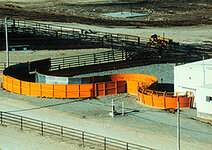
Calm stock is more predictable, and therefore easier, and therefore more consistent, and therefore cheaper to manage at slaughter time. It's also thought that unstressed meat tastes better.

slide1-3.jpg
Curved cattle chutes reduce stress in pre-slaughter livestock. Source

Why?

From: Temple Grandin's designs for slaughterhouse livestock management:
  1. As the animals go around the curve, they think they are going back to where they came from.
  2. The animals can not see people and other moving objects at the end of the chute.
  3. It takes advantage of the natural circling behaviour of cattle and sheep.

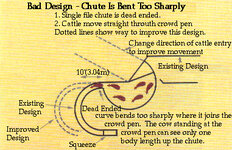
If we look at the details, we can see the principles being applied:

design.princ3.jpg
Improved design superimposed on basic design. Source

From Sample Designs of Cattle Races and Corrals
If the single file race is bent too sharply where it joins the crowd pen, the pigs may refuse to enter. The pigs must be able to see a minimum of three body lengths up the race before it bends.
You'll notice both traditional designs and Temple Grandin's designs try to minimise livestock's sight of their imminent slaughter.

One of Temple Grandin's abbey abbatoir innovations is the gently curved chute or race. It fools each animal into thinking it can see what lies ahead.

It falsely reassures.

When fully implemented, this means significant extra costs:
round.pen.handler.pivot.point.crowd.gate.jpg
It's worth investing in the long-run. Source

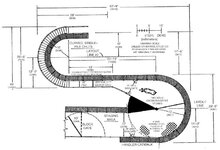
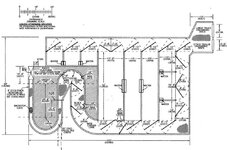
Here's a Temple Grandin livestock management design for a small abbatoir:
cad-15.jpg
"Small Abattoir lairage and pen layout." Source

Lairage:
A place where cattle or sheep may be rested on the way to market or slaughter.

Laird:
(in Scotland) a person who owns a large estate

Lord:
historical: A feudal superior, especially the owner of a manor house.

Manor house. Manor Farm. Animal Farm.

The more sentient the stock, the more effort is invested in managing its vision of what lies ahead. And in giving false reassurance.

Download Video

Just relax... Source: Cloud Atlas, 2012
 
When reading through you post my mind keeps jumping to the video game called Death Stranding, very cargo cult and has too many correlations to your findings for it to be a coincidence.

Death Stranding - Wikipedia

The baby in a jar is the strangest one, for the baby's power to function properly it needs to think it is still in the womb which the jar simulates, maybe this could be a metaphor for our reality.

Death stranding baby.jpeg


Funny that they used the zombie actor guy for this role.

That saying keep rolling around in my head, truth in the films, lies in the news.

Now I am not that big on the whole psychic phenomena but I do know all the successful creative types like Hideo Kojima(interesting name, hideo) get the creative juices flowing by tapping into the channeling subnet and are able to make downloads(for want of better expression) that then get translated/muted into the media that we all seem to have a voracious appetite for.

This thread still surprises me every time I catch up with, i am still several pages behind so have some catching up to do.

Catho-deral 2.jpg
Catho-deral 1.jpg
Catho-deral 8.jpg
Catho-deral 7.jpg
Catho-deral 6.jpg
Catho-deral 5.jpg
Catho-deral 4.jpg
Catho-deral 3.jpg
 
Last edited:
When reading through you post my mind keeps jumping to the video game called Death Stranding, very cargo cult and has too many correlations to your findings for it to be a coincidence.

Death Stranding - Wikipedia

The baby in a jar is the strangest one, for the baby's power to function properly it needs to think it is still in the womb which the jar simulates, maybe this could be a metaphor for our reality.
Yes. Metaphorically, many people are still "in the womb". They swapped Mummy for Government. And they toil away for kiddy treats and the pleasure of watching other children being naughty, being caught, and being punished.

Watch a TV detective series. Or East Enders. To see kiddy treats, just watch the adverts.

This approach to life looks like a cargo cult remnant of the earlier manorial farm system. As though our human adult population are struggling to mature beyond, say, age 12.

In my original conjecture about manorial management's preferred age for slaughtering children, I thought it was probably at around 12 years old. Before the chewmans became too big, too self-willed, and therefore too hard to manage. Here's the context for that 12-year age estimate:

You can see three preferred ages of slaughter:
  • At birth
  • By around 12 years old
  • As late as 30 (if they were lucky)
You have been contributing to the thread for a long time so you don't need me to repeat this. But for newer readers:
  • In archaeologists' own papers most chewman babies were slaughtered and lacto-fermented died at birth. I expect most of the survivors were worked - see tunnel-digging above - until:
  • Up to 12 years old or so. The few survivors after that were kept for:
    • breeding in nunneries (and presumably for leisure purposes), or
    • fighting in 'tier parks' and perhaps urban settings (the 'gladiators' myth).
Unpacking that list... there is plenty of evidence that larger humans - or human-like - hominids were available for heavy work. Giants and probably 'other'. So I don't think there was a guarantee that post-puberty chewmans would be used for slave labour. My sense is that the value-adds offered by older human children were dexterity and programmability.

With regard to fighting, we're all aware that mature chewmans were pitted against animals. That's the 'Roman Gladiators in the Colosseum' myth. While working on the 'Humans as Entertainment' post, I came across evidence that children were - and sometimes still are - cut up and fed to animals for entertainment and/or put in a walled field or wood with hungry animals for onlookers to take pleasure in the spectacle. Or directly hunted (and sometimes hunted in ways that suggest torturing the human mind was part of the fun). As far as I can discover, today, children are preferred for these activities. It seems to be a product variant offered by entities in the child trafficking sector.

However, I expect that there were - and still are - higher risk variants of hunting that involve mature, possibly well-trained, humans.

The reason I mention this is to do with an observation about adult humans: it's that after puberty many human adults develop remarkably rigid outlooks. They seem to lock into systems of belief - career, aspirations, religious views, political views, sports and entertainment preferences - such that each adult individual shows quite predictable behaviours. I'm not talking about habits or minor addictions like coffee, tea, or chocolate. I'm talking about attitudes, which in turn produce visible, predictable, patterns of behaviour. Mind-set.

This suggests to me that among the design features built into humans is a propensity for being trained. And - if they survived beyond puberty - to carry on with their entrained behaviours until death.

The absence of specific training today may explain why your 'babies in the womb' observation may be more than computer game entertainment, and a genuine metaphor for today's adult human. That is: it could be that humans are no longer being trained and - absent any other entrained behaviour - are taking their baby-like, child-like trust and affection for their nuns their nannies their parents and transferring it directly to Government.

By example, although it would have been too late, the fabricant in the above Cloud Atlas clip should have noticed one of the abbatoir workers was wearing a mask.

Who wears masks today?

That saying keep rolling around in my head, truth in the films, lies in the news.
Yes :)

I use film clips because they help people visualise events that could account for the evidence. And because they may help people get past my wordiness.

But it is odd how very easy it is to find film clips that depict exactly what the evidence all around us so strongly suggests.
 
Last edited:
This approach to life looks like a cargo cult remnant of the earlier manorial farm system. In my original conjecture about manorial management's preferred age for slaughtering children, I thought it was probably at around 12 years old. Before the chewmans became too big, too self-willed, and therefore too hard to manage. Here's the context for that 12-year age estimate:
I think this has something to do with the education system because it seem that this was more common before the mandatory schools, almost as if the schooling replaced the need to kill as it took care of the spirit that seems to flourish in the unschooled.

This also ties in to the admiralty laws and how in the land of the dead we are, as adults, still classed as children and therefore need to be represented when playing in one of their courts, i hope that makes sense.

I can say that because my own programming was interrupted that i don't seem to have the unwavering faith in the cult of authority that one needs to truly flourish in the land of the (living) dead or even have the desire to.
 
I managed to get to the British Library recently.

On the approach you see this statue:

View attachment 12904

A not very cryptic Masonic statue (the figure is holding a compass)

I almost wrote 'quary' rather than 'herd' there.

Quary

a. A hunted animal; prey.
b. Hunted animals considered as a group; game.

It is interesting to me that quarry (mining) and quary (prey) intersect in this story.

Since writing the above, I think I can give the above a better etymological treatment.

Re the etymology of 'quarry', as in stone, at quarry | Etymology, origin and meaning of quarry by etymonline I see:

quarry (n.1)

[what is hunted] early 14c., quirre "entrails of deer placed on the hide and given to dogs of the chase as a reward," from Anglo-French quirreie, Old French cuiriee "the spoil, quarry" (Modern French curée), altered (by influence of Old French cuir "skin," from Latin corium "hide"), from Old French corée "viscera, entrails," from Vulgar Latin *corata "entrails," from Latin cor "heart" (from PIE root *kerd- "heart").

The original meaning is obsolete. The sense of "beast of the chase when pursued or slain in a hunt" is by 1610s, also "any object of eager pursuit;" earlier "bird targeted by a hawk or other raptor" (late 15c.).

quarry (n.2)

"open place where rocks are excavated," late 14c., quarrei (mid-13c. as a place name), from Medieval Latin quareia, a dissimilation of quarreria (mid-13c.), literally "place where stones are squared," from Latin quadrare "to make square," related to quadrus "a square," quattuor "four" (from PIE root *kwetwer- "four"). Quarry-faced, of building stones, is "rough-faced, as though taken right from the quarry" (1849).

The word mine is generally applied to the excavations from which metals, metalliferous ores, and coal are taken ; from quarries are taken all the various materials used for building, as marble, freestone, slate, lime, cement, rock, etc. A quarry is usually open to the day : a mine is generally covered, communicating with the surface by one or more shafts. [Century Dictionary]

quarry (v.)

"to dig or take from a quarry," 1774, from quarry (n.2). Related: Quarried; quarrying.

It relates to entrails given to dogs as a reward, skin, object of eager pursuit, bird targeted by a hawk or raptor
and
a place where rocks are excavated and made square, related to quadrus "a square," quattuor "four".

for some reason, in my previous post, I pointed out the compass. Re the etymology of 'compass', at compass | Etymology, origin and meaning of compass by etymonline, I see:

compass (n.)

c. 1300, "space, area, extent, circumference," from Old French compas "circle, radius; size, extent; pair of compasses" (12c.), from compasser "to go around, measure (with a compass); divide equally," from Vulgar Latin *compassare "to pace out," from Latin com "with, together" (see com-) + passus "a step" (from PIE root *pete- "to spread").

The mathematical instrument for describing circles was so called in English from mid-14c. The mariners' directional tool (so called since early 15c.) took the name, perhaps, because it's round and has a point like the mathematical instrument.

Meaning "limits, boundary" is from 1550s. Sense of "range of notes which a given voice or instrument can produce" is from 1590s.

The word is in most European languages, with a mathematical sense in Romance, a nautical sense in Germanic, and both in English. In Middle English it also could mean "ingenuity, subtlety, cunning." Also an adverb in Middle English: to go compass was "go in a circle, go around."
Related entries & more
Advertisement
compass (v.)

c. 1300, "to devise, plan;" early 14c. as "to surround, contain, envelop, enclose;" from Anglo-French cumpasser, Old French compasser "to go around, measure (with a compass), divide equally, calculate; plan" (12c.), from Vulgar Latin *compassare "to pace out" (source of Italian compassare, Spanish compasar), from Latin com "with, together" (see com-) + passus "a step" (from PIE root *pete- "to spread"). Related: Compassed; compassing.

Ie - the etymology of compass relates to go around, measure (with a compass); divide equally and surround, contain, envelop, enclose.

In summary we have:
* we have quary as 'pray', I mean 'prey', and entrails, and skin.
* we have quary as 'square'.
* we have compass which can mean 'enclose'.

There seem to be a few dense terms here - with unexpected relations in themselves, and to this thread in particular. It feels a bit like uncovering a hidden language.
 
I think this has something to do with the education system because it seem that this was more common before the mandatory schools, almost as if the schooling replaced the need to kill as it took care of the spirit that seems to flourish in the unschooled.
My suspicion about this part is that the transition from slave-cum-edible to self-directed aspirational learner (I know we can argue the finer points of that latter description but you know my views) was planned, managed, implemented. What we would have been had the current - or the then - educational system not been put in place, well, that I can barely guess at. Certainly, we are sold a story about how chewmans might have turned out - through books like William Golding's Lord of the Flies.
This also ties in to the admiralty laws and how in the land of the dead we are, as adults, still classed as children and therefore need to be represented when playing in one of their courts, i hope that makes sense.
Your comment makes perfect sense to me.

Still submerged in the weeds of this thread is the question of what happened around 1631 outside of Pompeii. One of the discrepancies that got me to look more carefully at English ecclesiastical history was that Dutch and Belgian North Sea inundations are not recorded in English history. They do, however, coincide with large-scale English land ownership changes. It follows that the concept of 'lost, presumed drowned' in Admiralty law may be an outcome of a recent flood, a flood hidden from history:

Download Video

The Deluge. Source: Westworld S02 Ep01

Hence the need for a breeding programme.

I can say that because my own programming was interrupted that i don't seem to have the unwavering faith in the cult of authority that one needs to truly flourish in the land of the (living) dead or even have the desire to.
:) Nothing I can add to that!

quarry (n.1)

[what is hunted] early 14c., quirre "entrails of deer placed on the hide and given to dogs of the chase as a reward," from Anglo-French quirreie, Old French cuiriee "the spoil, quarry" (Modern French curée), altered (by influence of Old French cuir "skin," from Latin corium "hide"), from Old French corée "viscera, entrails," from Vulgar Latin *corata "entrails," from Latin cor "heart" (from PIE root *kerd- "heart").

The original meaning is obsolete. The sense of "beast of the chase when pursued or slain in a hunt" is by 1610s,
Quarry, quary, quirre, quirreie, cuiree. Possible link to 'squire' and/or 'curate'?

You could wonder if old halls - like Hunstanton's - were built near quarries. The surrounding ecclesiastic infrastructure - churches, abbeys, monasteries, nunneries - could have been for breeding, food-production, butchery and entertainment (games, hunts, torture and sex).

We can then see this infrastructure was attacked and/or flooded in the century before Byng was touring and journalling. This has implications for how we re-construct England's chronology.

Since writing the above, I think I can give the above a better etymological treatment.

Re the etymology of 'quarry', as in stone, at quarry | Etymology, origin and meaning of quarry by etymonline I see:


It relates to entrails given to dogs as a reward, skin, object of eager pursuit, bird targeted by a hawk or raptor
and
a place where rocks are excavated and made square, related to quadrus "a square," quattuor "four".

There seem to be a few dense terms here - with unexpected relations in themselves, and to this thread in particular. It feels a bit like uncovering a hidden language.
Byng's comments about east England's ruined towers left me wondering if he knew they were used as part of hunting spectacles. He suggests "falconry and other sports", if I remember his comment correctly.

The modern examples I found of parts of living humans being fed to animals, did involve dogs. This was done in front of other children, who presumed they were being taught to comply.
 
Last edited:
You could wonder if old halls - like Hunstanton's - were built near quarries. The surrounding ecclesiastic infrastructure - churches, abbeys, monasteries, nunneries - could have been for food-production, butchery and entertainment (games, hunts and sex).
Well, its a bit further afield, but the famous Paris catacombs, with its estimated 6 million skeletons, are apparently a consolidation of quarries.

Perhaps 'quarries' play some part in justifying rumours of tunnels etc, eg "its a quarry tunnel", with the double meaning capable of being interpreted by the listener according to their awareness.

Legalese of course is full of these sorts of opposite meanings eg "did you suffer this abusive man?" I believe Masons may refer to this as 'masterful language'.
 
Last edited:
Well, its a bit further afield, but the famous Paris catacombs, with its estimated 6 million skeletons, are apparently a consolidation of quarries.
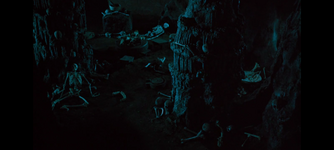
They were being bred by the Morlocks - The Time Machine.png
"They were being bred by the Morlocks." Source: The Time Machine, 1960

Quarrying is physical work, sometimes hard physical work. It develops the appetite.

Links to offsite resources referenced in this thread:

Brothers of the Serpent podcast interviews with Eugene McCarthy about hybridisation and his evidence that humans are hybrids:
Plamski's thread - Human Origins: Are We Hybrids? - discusses McCarthy's findings and illustrates them with interesting visuals.

Online copies of books referenced in this thread:

Kenneth Grahame: The Wind in the Willows

George Orwell: Animal Farm

Rev George Oliver:
The first two Oliver books below are particularly useful for their accounts of the nasty side of 'medieval' monks and abbots.
In retrospect, I think Oliver was fabricating a human identity for the actual builders and original users of England's ecclesiastic ruins. Quite who and what they really were is possibly better accounted for by folklore.

John Byng:
I viewed the ruins of the bishop's palace [in Lincoln]. The gardener remark'd 'these were fine places before they were inherited''.
From: The Torrington Diaries, John Byng, p343

The only complete online Byng book I know of is: The Torrington Diaries, Vol IV

Also online are selections from the same The Torrington Diaries Vol IV, as straightforward text and with regional maps at:
https://www.visionofbritain.org.uk/travellers/Byng

The cheapest print version of The Torrington Diaries is the abridged, single-volume: The Torrington Diaries: A selection from the tours of the Hon. John Byng (later Fifth Viscount Torrington) between the years 1781 and 1794, Edited by C. Bruyn Andrews, abridged into one by volume by Fanny Andrews, Eyre & Spottiswoode, 1954. For which there are:
The various four-volume versions of The Torrington Diaries are also available, thought at quite a price. Listings of the various volumes and editions get quite confusing so either buy the single-volume abridged version or be sure you are buying a full set of the four volumes published in 1934-1938.

We should not be naive about Byng and his evidence, just as we should not be naive about Oliver. Byng had a Dr Syntax in his life and Oliver had a Dr Crucifix. And from The Torrington Diaries:
They are one of a number of eighteenth- and nineteenth-century diaries, journals and memoirs that emerged in the first half of the twentieth century, greatly enhancing our view of the years between 1760 and 1880. Thomas Creevey’s papers appeared in 1903, William Hickey’s memoirs followed in four volumes between 1913 and 1925, Parson Woodforde’s diaries in five between 1924 and 1931, Francis Kilvert’s in three between 1938 and 1940, while James Boswell’s London jurnal, the first fruits from the massive accumulation of Boswell papers, came out in 1950.

We should bear in mind the possibility that we are looking at a faked backdrop. Our challenge is to be able to see the multiple purposes, multiple goals of the evidence in front of us. And try to peer through it to the reality. But that's a different post.
 
Last edited:
...the question of what happened around 1631 outside of Pompeii... Dutch and Belgian North Sea inundations are not recorded in English history. They do, however, coincide with large-scale English land ownership changes. It follows that the concept of 'lost, presumed drowned' in Admiralty law may be an outcome of a recent flood, a flood hidden from history:

The Deluge. Source: Westworld S02 Ep01
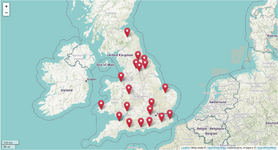
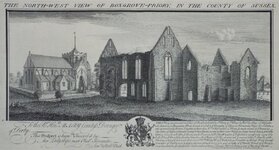
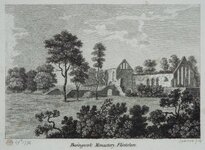
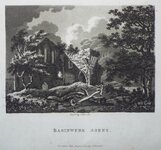
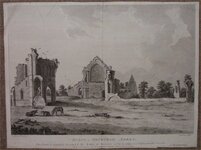
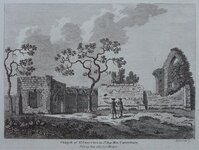
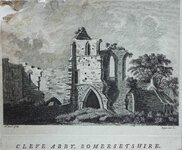
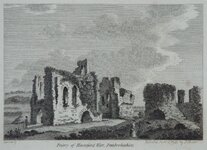
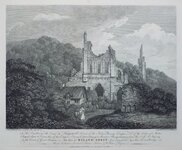
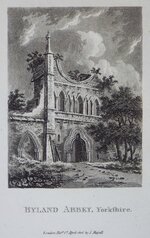
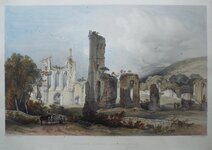
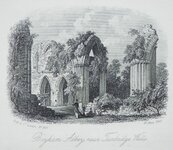
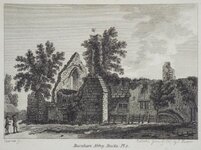
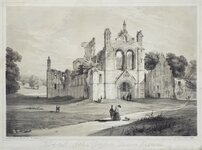
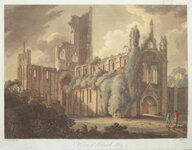
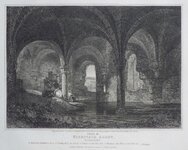
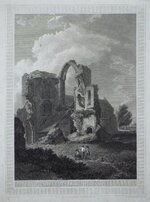
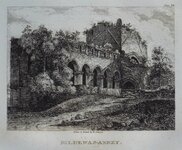
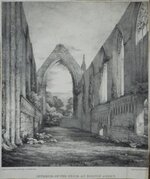
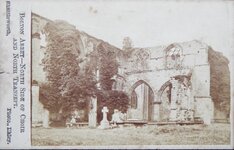
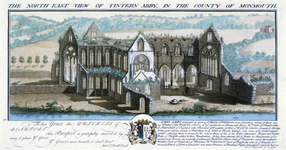
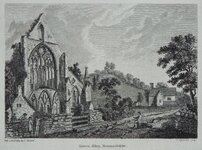
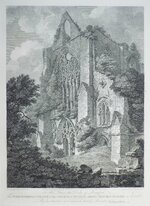
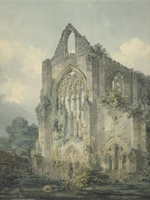
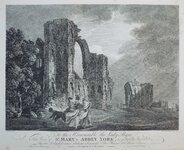
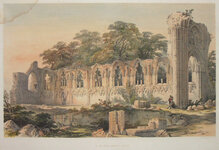
Images of ruined English abbeys made from 1737 into the 1850s. Taken from the images available at Rare Old Prints. I've used their median date of 1790 for the two "how many years earlier were they destroyed?" calculations below.

The standard chronology claims these ruins were created by:
  • Henry VIII's 1540 Dissolution and/or
  • During the 1642-1651 English Civil War.
So we can ask: does the state of the vegetation fit with the 1540 Dissolution 250 years earlier? If not, does the state of the vegetation fit with the Civil War 140 years earlier? Or does the state of the vegetation suggest a Year Zero closer to 1730?

The occasional images show signs of mudflood... Does mudflood fit better with the 1540 Dissolution? Or with the 1642-1651 Civil War? Or is mudflood simply an unexplained aspect of these ruins, also noted - without explanation - by Abner Brown and John Byng when they encountered wet, soil-embanked ruins?

Ruin locations:
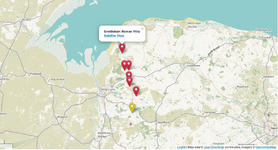
geographic marker map.png

There are many, many more prints available on the Rare Old Prints site. These are a small sample from its 'Abbeys' section.

1737 Boxgrove Priory Boxgrove Buck.JPG
1737: Boxgrove Priory
(Google Maps), (Google Streetview), (OpenStreetMap), (Flickr images)

1774-07-29 Basinwerk Monastery P14572.jpg
1807 Basinwerk Abbey P13232.JPG
1774 and 1807: Basinwerk Abbey
(Google Maps), (Google Streetview), (OpenStreetMap), (Flickr images)

1776 Dryburgh Abbey Pict0008.jpg
1776: Dryburgh Abbey
(Google Maps), (Google Streetview), (OpenStreetMap), (Flickr images)

1784 Chapel of St Pancras Canterbury St Pancrace.JPG
1784: Chapel of St Pancras, St Agatha's, Canterbury
(Google Maps), (Google Streetview), (OpenStreetMap), (Flickr images)

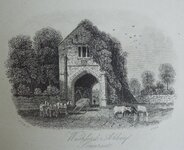
1785 Cleve Abbey P18776.JPG
1844 Cleeve Abbey DSCF5489.JPG
1785 and 1844: Cleve Abbey
(Google Maps), (Google Streetview), (OpenStreetMap), (Flickr images)

1786-04-03 Haverford West Priory 2.JPG
1786: Haverford West Priory
(Google Maps), (Google Streetview), (OpenStreetMap), (Flickr images)

1786 Byland Abbey P24723.JPG
1806 Byland Abbey P13234.JPG
1848 Byland Abbey P5482.JPG
1786 - 1848: Byland Abbey
(Google Maps), (Google Streetview), (OpenStreetMap), (Flickr images)

1860 Bayham Abbey DSCF4516.JPG
1860: Bayham Abbey
(Google Maps), (Google Streetview), (OpenStreetMap), (Flickr images)

1787-06-19 Burnham Abbey 2 Grose.JPG
1787: Burnham Abbey
(Google Maps), (Google Streetview), (OpenStreetMap), (Flickr images)

1800s Kirkstall Abbey.JPG
1804 Kirkstall Abbey NW.JPG
1834-05-1 Kirkstall Abbey cellar P21949.JPG
1834: Kirkstall Abbey
(Google Maps), (Google Streetview), (OpenStreetMap), (Flickr images)

1801 Castle Acre Priory P25383.JPG
1801: Castle Acre Priory
(Google Maps), (Google Streetview), (OpenStreetMap), (Flickr images)

1803 Cerne Abbey P27584.JPG
1803: Cerne Abbey
(Google Maps), (Google Streetview), (OpenStreetMap), (Flickr images)

1805 Dunstable Priory Church P26380.JPG
1805: Dunstable Priory Church
(Google Maps), (Google Streetview), (OpenStreetMap), (Flickr images)

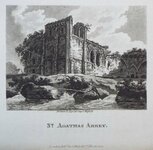
1807 St Agathas Abbey Easby P13229.JPG
1812 Easby Abbey P24412.JPG
1851 Easby Abbey.JPG
1807 - 1851: Easby Abbey
(Google Maps), (Google Streetview), (OpenStreetMap), (Flickr images)

1800 Beaulieu Abbey P24675.JPG
1820 Beaulieu Abbey P23670.JPG
1800 and 1820: Beaulieu Abbey
(Google Maps), (Google Streetview), (OpenStreetMap), (Flickr images)

1824 Bildewas Abbey P19823.JPG
1824 Bildewas Abbey P19824.JPG
1824: Bildewas Abbey
(Google Maps), (Google Streetview), (OpenStreetMap), (Flickr images)

1829 Bolton Abbey Choir.JPG
Bolton Abbey P27534.JPG
1829 - 1850s: Bolton Abbey
(Google Maps), (Google Streetview), (OpenStreetMap), (Flickr images)

1773-08-13 Tintern Abbey screenshot37.png
1780 poss Tintern Abbey image22.png
1784  Tintern Abbey Tintern 4.JPG
1804 Tintern Abbey P24693.JPG
Tintern Abbey post-1830 perhaps image23.png
1773 - 1830s: Tintern Abbey
(Google Maps), (Google Streetview), (OpenStreetMap), (Flickr images)

1778 St Marys Abbey York P24729.JPG
1844 York St Marys Abbey.JPG
1778 and 1844: St Marys Abbey, York
(Google Maps), (Google Streetview), (OpenStreetMap), (Flickr images)​

British historical records contain no floods that could account for damage of this scale and type. Dutch and German historical records contain flood events that should have severely affected Britain but which also cannot account for damage of this scale and type. For summaries, try:
Some of these records mention the 1530 St Felix Floods but seem to underplay their scale (Ie, from Rome to the North Sea). For discussion, try:
 
Last edited:
Four weeks after posting evidence that Hunstanton's chalk and sandstone cliffs were quarried for iron, the site with the photos - Everything's Electric - has gone.

Shame. However, scrubbing tells us what we should pay special attention to:

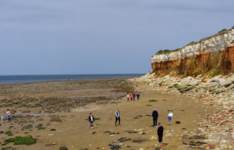
Hunstanton quarry scarring on left - iron stone on right.png
Quarrying scars to the left, iron-ore to the right. Source: Google Maps

Hunstanton cross cuts screenshot-1.png
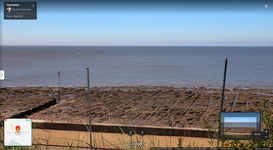
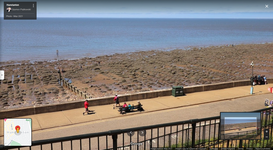
Remains of straight cuts perpendicular to the shore. Shadows indicate cross-cuts. Source: Google Maps

Hunstanton cross-cuts screenshot.png
And with humans for scale. Source: Google Maps

Hunstanton beach close up cut with circle.jpg
Much less eroded cuts are sometimes visible. Source: Google Maps

As a rule of thumb, the diameter of a stone-cutting disc is around 64 times the width of its blade. Sometimes more. Call the cut in the above image 75mm wide and you are looking at a 4.8m diameter disk. I suspect it was bigger. Next time I'm there, I will try to find and measure a cut.

From the same post-104859:
Quarrying might also explain the gap in the iron-rich red rock which - theoretically - once ran from Hunstanton to the iron-rich 'Spilsby sandstones' 35 miles north-west in Lincolnshire's southern Wolds See page 4. The dark green rocks...
(I've removed the original quote's confusion between the size of the gap in the ironstone cliffs and the width of the Wash.)

You can also see the gap in the three green-coloured rock formations in this eastern England bedrock map:
Eloi BGS bedroock.png
Eastern England bedrock. Source: British Geological Survey

If iron was quarried from Hunstanton's cliffs, where did the tailings - the left-overs - go?

Not many parts of Britain have been compared with the Sahara:

The Brecks map.png
The Brecks. Image source

From The Brecks Earth Heritage Trail, page 8:
"Nothing was to be seen on either side but sand and scattered gravel without the least vegetation; a mere African desert", wrote William Gilpin, when passing through Brandon in 1769.

The main surface characteristic of the Norfolk Brecks (AKA The Brecklands) is still sand. It is 6m (19+ ft) deep in places. More details: Sand Flood – Santon Downham.

From The Brecks Earth Heritage Trail, page 7:
In past centuries, carriages would sometimes struggle through the ‘burning Brandon sands’.

Brandon: (Google Maps), (Google Streetview), (OpenStreetMap), (Flickr images)

From page 3:
Sand storms were once a regular occurrence, such as one which engulfed Santon Downham in 1668.

Santon Downham: (Google Maps), (Google Streetview), (OpenStreetMap), (Flickr images)

From page 8:
In the 1660s, Thomas Wright wrote about a ‘Sand-Floud’ that had originated in the Lakenheath and Wangford area and eventually engulfed the village of Santon Downham, almost blocking the Little Ouse river. A brown stone in the south-west corner of St Mary’s Church wall is said to mark the height reached by the sand (6m high).

Lakenheath: (Google Maps), (Google Streetview), (OpenStreetMap), (Flickr images)

Brecks' conservationists blame:
  • Sheep
  • Rabbits
  • Humans
  • A version of the Ice Age starting in the 16th Century (page 8)
The BBC blames:
  • Sheep
  • Rabbits
  • Humans
  • A version of the Ice Age starting in the 16th Century
BBC audio:
Source: BBC Radio 4 - Making History, 20/10/2009

(Note how they managed to stand by a 6m high sand deposit, then conclude there is no evidence Santon Downham was once buried by a 6m high sand deposit. :) )

Anyway, they're on the same page. For the origin of the sand, both sources suggest you look south-west - towards Lakenheath and Wangford. Makes sense: England's prevailing south-westerlies would blow sand to the north-east. That is, from Lakenheath to the Brecks.

But how did Britain's prevailing winds blow sand on to Lakenheath in the first place? There are no major sand deposits south-west of Lakenheath.

From post-104482:
There's a useful rule of thumb: invert whatever the 'authorities' tell you. Then you'll be closer to the truth.

Let's look north instead. Towards the top left-hand corner of the map of the Brecks.

Towards Hunstanton.

Any other clues about where the Brecks' sand came from?

One clue: From The Brecks Earth Heritage Trail, page 9:
The soils here are acidic and poor in nutrients; humus and iron minerals are washed downwards

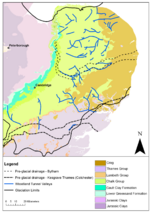
Another clue: Geologists study East Anglia's buried woodland 'tunnel valleys'. The landscape that existed before Ice Age tailings 'till' smothered them:

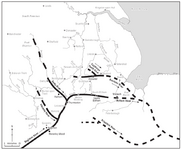
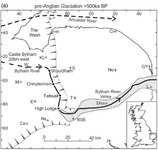
Another clue: the Bytham River. AKA the 'Ingham drainage channel':

Bytham_River_and_Tributaries.png
The Bytham River and tributaries. Source: New Insight into the Quaternary Evolution of the River Trent, UK - Bridgland et al

Southern River Bytham.png
Also known as the 'Ice Age' Bytham River. Source: The ‘Tunnel’ Valleys of East Anglia and Fenland, UK

Ice ages around the Wash are tricky things. Geologists and glaciologists admit they can't differentiate one Lincolnshire ice age from another. Didn't we talk about geologists' difficulties with this region before?

Question: In what circumstances would rivers flow past the Wash to the south-east without draining out through it?

Answer: If the area now called 'the Wash' was sealed. By ironstone hills running north-west to south-east.

Download Video

Clearly a massive endeavour. Source: Westworld S01 Ep04

A key question is: when was the seal broken?

As always, draw your own conjectures.

Other than the revelation of a real cover-up, what's this got to do with humans?

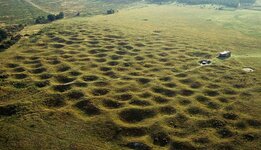
Also in the Brecks is Grimes Graves flint mine.

grimes-graves-46.jpg
Grimes Graves shaft pits. Image Source
(Google Maps), (Google Streetview), (OpenStreetMap), (Flickr images)

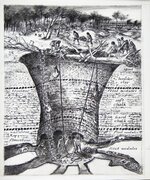
section_900-6-Grimes-Graves-1-Sorrell.jpg
Typically 10m (40 feet) from top to bottom. Image Source
From: When and Why? The Chronology and Context of Flint Mining at Grime’s Graves, Norfolk, England:
The deepest, most complex galleried shafts were worked probably from the third quarter of the 27th century cal bc and are amongst the earliest on the site.

So, almost 5,000 years ago, Grimes Graves' miners allegedly performed three miracles:
  • They found high-quality flint 10 metres beneath multiple layers of chalk, clay and poor-quality flint.
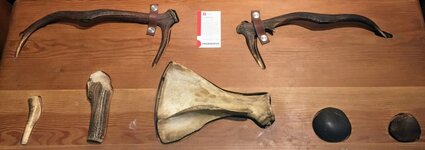
  • They dug through the chalk with antler picks:
tools_Grimes-Graves-1-1024x362.jpg
Antler picks. Shoulder blade shovels. Image source
  • And - look at the image of the section through a Grimes Graves mineshaft again - they kept the Brecks' infamous sand out of their mine shafts until they were done.
Quite a feat.

Expert prospectors that they were, I imagine they noticed they were digging through geological relatives of the rock layers at Hunstanton:

Grimes Graves (page 10)Hunstanton
SandWhite chalk
ClayVarious red, iron-rich chalks
Hard chalkRed iron-rich sandstone ('Carrstone')
Soft chalk
Clay
Hard chalk
Soft chalk

Except the layers were inverted: sand on top, chalk below. As if something had shovelled the chalk, then the sandstone, from Hunstanton and flipped it on to the Brecks. Stripping out the iron as it went, and depositing in the debris those useful drops of heat and pressure-treated clay called 'flint'.

Britain's Iron Age began 1,300 years later - in 800BC.

In AD43 the Romans arrived. And continued using iron.

About 400 years later, the Angle, Saxon, Viking and Norman invasion sequence began. They also continued using iron.

2,500 years of continuous demand for iron and none of them spotted some of Britain's richest, most accessible iron ore. And coal too! From Robert Pennant in A Tour In Scotland, as he rode past Inkersall, Staveley, on 27th June 1769:
...about three miles from the town, are several pits of iron-stone about nine or ten feet deep, The stratum lies above the coal, and is two feet thick. I was informed that the adventurers pay ten pounds per annum to the lord of the foil (meaning 'soil'), for liberty of raising it; that the laborers have six shillings per load for getting it: each load is about twenty strikes or bushels, which yields a tun of metal.

That's rich ore. And not much deeper than a grave.

You can still see the water-filled pits at Inkersall:
Inkersall ponds iron quarries.png
Source: Google maps (Google Maps), (Google Streetview), (OpenStreetMap), (Flickr images)

Summarising:
  • Grimes Graves flint... hard to find, deep and difficult to dig. But mined from almost 5,000 years ago.
  • Staveley coal and iron... Easily found, easily dug, easily refined. Ignored by iron miners until just 300 years ago.
Logic of the Situation:
  • Grimes Graves were dug by entities with skills not recognisably human.
  • The Brecks appeared in the 16th Century - when ironstone tailings were dumped on and upwind of it. By entities with skills not recognisably human.
  • The Wash formed when iron quarrying finished. By - or early in - the 18th Century.
  • Only after the entities 'left' did humans begin scrabbling for minerals - in the shallow deposits within reach of their newly-acquired capabilities.
I don't want to knock humans though. We're quick learners.

When we wake up:

Download Video

Sporadic and unpredictable. Source: Humans S02 Ep02
 

Attachments

  • building-stones-web.pdf
    8.6 MB · Views: 258
  • brecksehtbookletfinalforweb.pdf
    10.8 MB · Views: 165
  • New insight into the Quaternary evolution of the River Trent, UK - Bridgland et al - 15746.pdf
    5 MB · Views: 188
  • Lesson-2 - What is the cause of the distinctive striping of Hunstantons cliffs.pdf
    705.2 KB · Views: 175
Last edited:
Dropping some evidence from mainstream sources here to ensure we keep things real...

Time Team's 'Ancaster' episode - S09 Ep02 - presented evidence for how 'ancient' iron industries and their workers really looked.

Ancaster is on iron-bearing limestone. Its hurriedly-built fort is important to historians of the 'Romans in England'. Ancaster is also the seat of the Duke of Ancaster. He is mentioned from post-104000 onwards for his connection with John Byng's travels through the ruins of 18th Century England.

Ancaster 'Roman' camp: (Google Maps), (Google Streetview), (OpenStreetMap), (Flickr images)

The three clips below are all from Time Team's 'Ancaster' episode. Starting with the entities found at its iron-working sites:

Download Video

"Is that... is that really human?" Source: Time Team S09 Ep02

I put it down to a high-protein diet.

From Facts and Fancies in Modern Science, JW Dawson, 1881:
...there is no good reason to regard the first man as having resembled a Greek Apollo or an Adonis. He was probably of sterner and more muscular mould. But the gigantic palæolithic men of the European caves are more probably representatives of that fearful and powerful race who filled the antediluvian world with violence, and who reappear in postdiluvian times as the Anakim and traditional giants, who constitute a feature in the early history of so many countries. Perhaps nothing is more curious in the revelations as to the most ancient cave-men than that they confirm the old belief that there were 'giants in those days.'

and:
Another point which strikes us in reading the descriptions, and which deserves the attention of those who have access to the skeletons, is the indication which they seem to present of an extreme longevity. The massive proportions of the body, the great development of the muscular processes, the extreme wearing of the teeth among a people who predominantly lived on flesh and not on grain, the obliteration of the sutures of the skull, along with indications of slow ossification of the ends of the long bones, point in this direction, and seem to indicate a slow maturity and great length of life in this most primitive race.

The picture would be incomplete did we not add that in France and Belgium, in the immediately succeeding or reindeer age, these gigantic and magnificent men seem to have been superseded by a feebler race of smaller stature and with shorter heads;

I guess that would be us.

Time Team also helps us appreciate the difficulties of separating the Iron Age from the civilised Roman Age:

Download Video

Source: Time Team S09 Ep02

Have you noticed it's difficult to separate pre-Roman from Roman? And Roman from post-Roman? (Third video down, captioned: You say 'Roman', I say 'Norman'.)

Time Team also shows us the problems associated with lead-lined coffins - as mentioned in post-104407 (lead-lined coffins under Normanton church) and post-105045 (lead-lined coffins under Broadhembury church).

Even when the coffins are - allegedly - 2,000 years old:

Download Video

"We've got all of those, we came prepared." Source: Time Team S09 Ep02

Except for the radiation meter.

Naturally, Time Team couldn't get into the mysteries of Ancaster's geomorphology. Specifically, the mysteries around:
  • What cut 'the Ancaster Gap' from the western edge of Lincolnshire's limestone edge toward Sleaford in the east.
  • Which rivers flowed through it and when.
Lincolsnhire gaps all collated2.png
The riverless Ancaster Gap. Source: Lincolnshire - Gaps and More Gaps

If you can bring yourself to read a geology paper, make it Allen Straw's: Lincolnshire - Gaps and More Gaps. Like many of Straw's papers, it's funny. It's even funnier when you read between its lines.
 
Last edited:
Great work @usselo!!

What a find re the big bone. 'Osteoarcheologist' - Margaret Cox - needs a knock on her head with it.. Why can't she say what she sees?!

Proving my suspicions re her well-trained intellect, she then pops up to say there is a 'health and safety' issue because of the 'body liquor' from a body that's been in a coffin they think has been buried for 2000 years! Ludicrous!

Liquor... there's a term. Perhaps we have forgotten but before fish and chips (1860) in England the national fast food was pie and mash (1800). Its served with liquor. Here's a write up + excerpt:
Pie and Mash | The history of London pie mash and liquor
The main dish today is pie, mash and liquor. This is a baked minced beef pie with mashed potato. Liquor is unique to pie and mash shops who all claim to have their very own secret recipe for the green parsley gravy.

Think Sweeney Todd: Sweeney Todd - Wikipedia
In the original version of the tale, Todd is a barber who dispatches his victims by pulling a lever as they sit in his barber chair. His victims fall backward down a revolving trap door into the basement of his shop, generally causing them to break their necks or skulls. In case they are alive, Todd goes to the basement and "polishes them off" (slitting their throats with his straight razor). In some adaptations, the murdering process is reversed, with Todd slitting his customers' throats before dispatching them into the basement through the revolving trap door. After Todd has robbed his dead victims of their goods, Mrs. Lovett, his partner in crime (in some later versions, his friend and/or lover), assists him in disposing of the bodies by baking their flesh into meat pies and selling them to the unsuspecting customers of her pie shop. Todd's barber shop is situated at 186 Fleet Street, London, next to St. Dunstan's church, and is connected to Mrs. Lovett's pie shop in nearby Bell Yard by means of an underground passage. In most versions of the story, he and Mrs. Lovett hire an unwitting orphan boy, Tobias Ragg, to serve the pies to customers.
...does the orphan serve the pies to the witting customers?

Anyway, I reckon liquor == gravy. Perhaps gravy made from the blood of the animal.

Diving a bit more into etymology of the term - liquor | Etymology, origin and meaning of liquor by etymonline
liquor (n.)

c. 1200, likur "any matter in a liquid state, a liquid or fluid substance," from Old French licor "fluid, liquid; sap; oil" (12c., Modern French liqueur), from Latin liquorem (nominative liquor) "a liquid, liquor; wine; the sea," originally "liquidity, fluidity," from liquere "be fluid, liquid" (see liquid (adj.)).
Narrowed sense of "fermented or distilled drink" (especially wine) first recorded c. 1300; the broader sense seems to have been obsolete from c. 1700. As long as liquor is in him was a Middle English expression, "as long as he is alive," that is, "as long as he has a drop of blood left." The form in Modern English has been assimilated to Latin, but the old pronunciation persists.

liquor (v.)
c. 1500, "to moisten," from liquor (n.). From 1550s as "supply with liquor," 1839 as "drink" (intoxicating liquor). To liquor up "get drunk" is from 1845. Related: Liquored; liquoring.

"As long as liquor is in him was a Middle English expression, "as long as he is alive," that is, "as long as he has a drop of blood left.""

Gosh - does that tie up a few loose ends?

@usselo you have mentioned chewmans as a fermented drink. Well, 'fermentation' is in the etymology. I am saying that there may be a case that liquor is gravy from the blood of an animal too. We also have the alcoholic reference, which takes me take to an earlier post where you were considering the religious side of things - 'do this in remembrance of me, eat my body, and drink my blood'.
 
Last edited:
Liquor... there's a term. Perhaps we have forgotten but before fish and chips (1860) in England the national fast food was pie and mash (1800). Its served with liquor. Here's a write up + excerpt:
Pie and Mash | The history of London pie mash and liquor

Anyway, I reckon liquor == gravy. Perhaps gravy made from the blood of the animal.

"As long as liquor is in him was a Middle English expression, "as long as he is alive," that is, "as long as he has a drop of blood left.""

Gosh - does that tie up a few loose ends?
Oh yes, nice catches! Dismissed as stories and aphorisms. But only so long as there is no physical evidence.

Oracle posted about Paracelsus claiming blood was good to drink. And 'liquor' may be what Selenadia described as fermented, ionised blood. Unfortunately, I couldn't make enough sense of the English translation to understand how the ionisation bit was done. Or why.

I used 'chewmans' as a pun to soften up on the repeated use of terms like 'edible humans', rather than as a word specificly for fermented blood.
Thanks. That post was a lot of work. Mostly spent quarrying information, though the toughest part was refining it; cutting the drafts right down until presentable. All very enjoyable to do. But discussion of its many implications had to be left out. Five of them:
  • Staveley's history. And proximity to a place symbolically associated with baton-wielding horse-riders.
  • How did the iron-ore get into these rocks in the first place?
  • The New Forest (Google Maps), (Google Streetview), (OpenStreetMap), (Flickr images). Its story always felt unlikely. Now, perhaps we have an adult explanation for it?
  • Assuming the processing equipment moved until the work was completed, there would have been a final place for processing. Possibly where the kit was dismantled or destroyed. Where? I'd investigate just beyond the north-west edge of the Brecks. Not far from Narborough bone mill (Google Maps), (Google Streetview), (OpenStreetMap), (Flickr images).
  • Perhaps the quarrying conjecture gives us clues about why the south-eastern fen boundary coincides with hills on the eastern coast of the Wash. Perhaps quarrying was interrupted. See the BGS 'superficial geology' map in the 'English Civil War'-focused post-104000.

Download Video

"Or was there ever a... grand plan?" Source: Talking Landscapes: The Fens

What a find re the big bone. 'Osteoarcheologist' - Margaret Cox - needs a knock on her head with it.. Why can't she say what she sees?!

Proving my suspicions re her well-trained intellect, she then pops up to say there is a 'health and safety' issue because of the 'body liquor' from a body that's been in a coffin they think has been buried for 2000 years! Ludicrous!

Yeah, I agree this dissonant moment - and others in that show - are significant. Both in terms of what the presenters say, and what they do. And, just as importantly, for how you react. Here's a really good example from the same Time Team 'Ancaster' show:

Download Video

It's just body-talk. Source: Time Team 'Ancaster' S09 Ep02

Shows often include visual humour. But I don't think her big shrug is a joke or an accident. Nor the fade-out that follows it. Their editing, not mine. I suspect the fade-out was a conscious editing decision, designed to give viewers time to let her body language sink in. A straight cut to the next scene would not have allowed that.

IIRC, about 60% of British skeletons are found 'disarticulated' or in 'disarray'. In this scene, the skeletons are disarticulated and mixed with animal bones. I can think of two life outcomes likely to produce that result:
  1. Encountering catastrophe
  2. Becoming lunch
But look at the tray of bones containing the jaw at the start of the clip. Look at the front of the tray in that scene before you play it. It's a bit obscured by the player controls. We already know there is a size 'dissonance'. But remember Mark Passio's presentation in your post-104651? His presentation included a slide to contrast the strength of primate bones with thin-walled human bones...

This show was assembled with care. It sows seeds and uses careful editing to help the seeds settle into place

Here's another example of what I think is Time Team sowing seeds. IIRC, we touched on this video shot in SH 1.0:

Download Video

Coastal rock cut. Source: Time Team: Britain's Drowned World

I don't know how to add highlight circles to mp4 clips yet. You'll have to look carefully for the large saw-cut gradually revealed before the scene ends. This shot was repeated twice, possibly three times, in that episode. Ostensibly for the visual pretties, there being no other overt explanation for it. You may see other saw cuts if you look carefully.

One day, in some brains, the seeds sown in these shows may find conditions are suitable for germination. I think Michael Portillo's Great Railway Journeys series are full of this too, though it is less obvious. I'm sure Vance Packard would approve of both shows.

But let's just assume the above is pure speculation. I mean: seriously, why would anyone conspire to educate us via enhanced dissonance? :)

So then, let's turn to the most important aspect: how you reacted. Your sense of exasperation at Dr Cox's statement...

Seeing the cognitive dissonance is one thing; feeling traces of exasperation at it is another. Perhaps the trace of exasperation is caused by a germinating seed pushing for growing room in the otherwise well-tended, orderly soil of your mind.

Download Video

From frown to lotus blossom. Source: I, Pet Goat II, 2012

Perhaps the girl's frown shows her exasperation when her trust in The Narrative begins to break down. The sequence may show her loss of trust, followed by loss of loyalty as she discards the apple of 'received wisdom'. I would guess any genuine user of this board is well into the germination stage (germination being possibly more analogous to becoming a level 101 conspiracy theorist). So, pursuing the germination analogy, maybe your exasperation is caused by your own wisdom coming into blossom and searching for light. That is, looking for integrity from expert speakers and respect from them for your ability to think.

OK, let's look at a more conventional explanation. Let's play with the idea that Dr Cox has herself been put into the same position this girl is in but has decided to play along with the narrative.

Often discussed in the Covid and forged document threads - though not often named - is 'trust'. Trust, and what occurs as trust breaks down. I don't think the breakdown is very simple at all. How would Dr Cox's break-up with the system look as her trust unravelled?

Consider the 'Exalting Fabricant in the Abbatoir' scene:

Download Video

"Welcome! Take a seat!". Source: Cloud Atlas, 2012

And consider this scene:

Download Video

"What is that for?" Source: No Country for Old Men, 2007

Ask yourself: does the fabricant trust the people who are managing her?

In the second clip, does the man trust the 'cop'?

The second clip shows us a sequence where trust is breaking down. That is why the driver asks: "What is that for?" He suspects its purpose is something directed at him. But it remains unexplained and is beyond his own capacity to figure out in the time he has. We see him becoming suspicious.

But why don't we see an abrupt shift to 'Flight'? Why does he comply right up to the very end, as the situation created by 'Authority' becomes increasingly unusual?

I suggest it is because his loyalty loop is in play.

Summarised, two kinds of vulnerability are being demonstrated:
  • Clip 1: Misplaced trust
  • Clip 2: Breakdown of trust, accompanied by a high-contrast (AKA low information-density) situation, which triggers 'the loyalty loop'.
As you can imagine, I've been paying attention to possible loyalty loops since they came up in the thread (and since black and white authority flagging came up in the Clown thread). I'm fairly sure loyalty loops are more likely to operate (or 'trip') when the human is faced with stark contrasts. Ranging from colour contrasts (black and white, or blue and yellow) to statements framing the situation as "It's us or them". Or in this case: "Comply."

Were the car driver even given a fake explanation of the matador (it's an abattoir's cattle stunning tool), the situation would become nuanced. He could weigh the explanation and make a judgement call. But absent any explanation, he simply complies. It's the absence of information that trips his loyalty loop. In a high-contrast situation - comply or run - his loyalty loop trips in and offers him 'comply' as the least-risk choice.

Instead of requiring a complex password or special powers, you simply need to:
  • signal 'authority' (preferably augmented with contrasting colours), then
  • reduce the information available
This combination triggers 'the loyalty loop' and you achieve the compliance you want.

Very elegant. The loyalty loop's design is efficient, pragmatic and, to me, looks programmatic. It resembles a deliberately designed vulnerability. In programmer's jargon - a 'back-door'.

This suggests to me that Dr Cox is in an unstressed, low-contrast position. Either she:
  • doesn't realise, or
  • does realise and has had time to assess the nuances of her situation. And concluded the rewards are worth playing along for.
The rewards would be the money, the glamour, the fame of having her motives analysed on boards populated only by well-paid Information Operations staff and a mica-thin slice of the narratively-contaminated.

It seems I've come back to my first conjecture. Cox knows the presentation is dissonant. In which case, there are reasons for the dissonance and her co-operation with its production. Perhaps it's all about achieving this moment in human development:

Download Video

Warning: this audio is loud. Source: 2001 A Space Odyssey, 1968

Given the expense of sowing these 'seeds of dissonance', logic tells us 'germination' and 'dissonance development' will be monitored.

Without being told where monitoring is located, could 'dissonants' find it if they looked?

Possibly. Possibly by watching body language.

What should be present but isn't, is often very significant. What was present, but no longer is, is also often very significant. Iron-bearing sandstone and iron-free sand...

I paid more attention to the 'quarried Wash' conjecture after noticing earlier evidence had 'become unavailable'.

Possibly, the content's disappearance was body language.

Previously publicly-visible content from post-102939 in the Clowns thread has also 'become unavailable':


Body language. Source: Your local monitoring team

Just to be clear, that content was hosted on - and removed from - Odysee's servers, not Stolen History.net's servers.
  • What might need to be hidden?
  • Why?
  • By whom?
  • What protocols would need to be in place to catch and communicate inconvenient interpretations of publicly-available material?
  • What protocols would need to be in place to continuously improve the effectiveness of existing protocols?
  • What do time delays between likely awareness and consequent action tell us about routes and boundaries within the communicating institutions?
  • Etc, etc, usw, usw.
The Internet is full of conversation. It is also full of body language.

The body language is often louder than the conversation.

Download Video

Warning: this audio is quiet. Source: Next, 2007
 

Attachments

  • clip_apple_I_Pet_Goat_II.mp4
    2.7 MB
  • clip_bone_mixture_Time_Team_Ancaster_S09_Ep02.mp4
    1.8 MB
  • clip_beacon_touch_2001_A_Space_Odyssey.mp4
    6.9 MB
  • clip_quarry_cut_Britain_s_Drowned_World.mp4
    1.2 MB
  • clip_just_relax_exaltation_of_the_fabricant.mp4
    3.9 MB
  • clip_loyalty_loop_No_Country_for_Old_Men_(2007).mp4
    4.7 MB
  • clip_hes_looking_right_at_us_Next.mp4
    686.5 KB
  • clip_fen_arc_BBC_Talking_Landscapes_4_of_6_The_Fens.mp4
    4.6 MB
(Note: I got some feedback that my Google links are not working correctly. I think this relates to the Google Streetmaps links sometimes returning black images. It happens where there is no nearby Google Streetview image for the location (typically rural sites). I've removed them from this post. If you see other problems, please let me know.)

This post follows up Quarried Hunstanton Part 1: Rock Cuts which - when its main images went missing - led to Quarried Hunstanton Part 2: Tailings. Currently its images are reinstated. Which means evidence for one of my claims about missing evidence is... missing. :D

This post is 'Quarried Hunstanton Part 3: Refining Clues'.

But discussion of its many implications had to be left out. Five of them:
  1. Staveley's history. And proximity to a place symbolically associated with baton-wielding horse-riders.
  2. How did the iron-ore get into these rocks in the first place?
  3. The New Forest (Google Maps), (Google Streetview), (OpenStreetMap), (Flickr images). Its story always felt unlikely. Now, perhaps we have an adult explanation for it?
  4. Assuming the processing equipment moved until the work was completed, there would have been a final place for processing. Possibly where the kit was dismantled or destroyed. Where? I'd investigate just beyond the north-west edge of the Brecks. Not far from Narborough bone mill (Google Maps), (Google Streetview), (OpenStreetMap), (Flickr images).
  5. Perhaps the quarrying conjecture gives us clues about why the south-eastern fen boundary coincides with hills on the eastern coast of the Wash. Perhaps quarrying was interrupted. See the BGS 'superficial geology' map in the 'English Civil War'-focused post-104000.

Item four seems worthwhile so, looking for evidence, I started with these assumptions:
  • The Brecks map in Quarried Hunstanton Part 2: Tailings shows sand tailings from iron-ore refining.
  • The tailings are fanned out to the south-east, as if pushed away from an initial dumping area in the north-west.
  • Refining infrastructure, waste disposal infrastructure and staff facilities would likely have been sited between the dumping area and the Hunstanton quarrying site to the north. Because it's central to both operations. So where else would make sense?
  • Therefore, supporting physical evidence and folklore evidence might be traceable in that area.
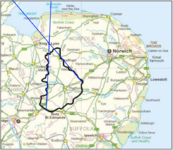
The Brecks map modifed with trace lines.png
Sophisticated plotting identifies a candidate location.

Nice to see on first pass that the two blue lines cross each other close to the previously discussed Narborough Bone Mill (Google Maps), (Google Streetview), (OpenStreetMap), (Flickr images). Why nice to see? Because food waste and dead staff were upcycled.

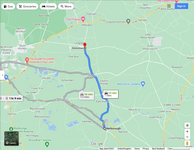
Narborough-Gaythorpe-Grimston.png
Gratuitous map proves Grimston and Narborough are close. Source: Google Maps

Mapped the cross on to Google Maps and looked around. There the ground evidence, historical and folklore evidence fairly jumped out. Each piece of found evidence comes with a batch of implications for understanding the evidence's role in the refining process, as well as clues to other aspects of the process. And - of course - for interpreting similar evidence found elsewhere. A set of keys, any one of which may begin to unlock the history of other places.

The lines cross, more or less, at the village of Grimston (Google Maps), (Google Streetview), (OpenStreetMap), (Flickr images) seven miles north of Narborough. 'Grim' = 'Devil' in folklore. In England, 'Grim' is credited with landscape modification: typically ditches, dykes, mounds. With building ditches and mounds in which 'soldiers killed in a war are buried'. Compare with Reach, Cambridgeshire - location of the 'A Supernatural Battle South of Elloi' account from post-104000. Note also Fleam Dyke's uninvestigated bodies. Perhaps some of the obsolete workforce were ploughed under.

Hidden East Anglia doesn't have much Grimston folklore but does have some and some more. That's OK: we're looking at an area, not a point.

Grimston also offers physical clues. Per this decaying page:
  • The Roman Villa, 200 yards West of the church
  • When it was excavated, it was the first Villa found in Norfolk. (My note: Ie it was easy to find when people explored)
  • But then the found a villa every few miles along the old road, at Gayton Thorpe, Well Hall, Congham, Flitcham, West Newton and Appleton.

Roman Villas around Grimston.png
Roman villas on the old road. Yellow marks Narborough.
Are we looking at upper management's housing strung along the route between quarry, refinery and tailings dump? Check if the route is definitely part of Peddar's Way.

Near Grimston is Pott Row (Google Maps), (OpenStreetMap), (Flickr images). Formerly known for making pottery often found in Scandinavia. Check: is this made from iron-rich clay? If so, was the clay a refinery side-product? (Staveley exported iron-rich clay pottery according to Thomas Pennant's A Tour of Scotland. Replacing a business formerly dominated by, presumably, recently-flooded Holland or Dogger). Also if so, was the refining up-stream (east) of Pott Row? And did the refining process involve lots of water and, eventually, an iron-rich clay runoff? Does this explain Grimes Graves' clay layers? Do we now have a partial explanation for Ringstead Downs (Google Maps), (OpenStreetMap), (Flickr images) and the similar-looking 'spillways' in the Lincolnshire Wolds? Which also sit close to iron-bearing sandstone and chalks.

The waterways around here show engineering. Lots of small round ponds (ecclesiastical ponds tend to be long and thin) and lots of streams. Examples:
There are also many apparent moated house sites. Rectangular islands. Just a sample:
Scan the map for these examples and the area they are in. You can see this is a heavily engineered landscape. This looks like water management but for different goals than the creation of the spillways.

Mid way between Grimston and Narborough is Gayton and just off to the east, Gayton Thorpe. Besides all the usual English village IHASFEMR clues (the church, the old chapel, the inn, the lone surviving butcher shop) we have Lime Kiln Road, which presumably ends where the kilns were: (Google Maps), (OpenStreetMap), (Flickr images).

And we also have the large 'The Old Workhouse' stuck way out in the country just where I wouldn't expect: (Google Maps), (OpenStreetMap), (Flickr images).

A possible implication of the oddly located large workhouse and the 'Gayton' names is that these are the human workers' living areas. The 'Gay' may indicate the 'Hoi' as in 'Hoi Polloi' or 'Oik', or possibly 'Goy'. Plus a workhouse structure built to provide employment once they began to survive childhood. Just like the Williamson Tunnels and many other post 18th century structures.

We also have the two odd lanes that part, and then go more or less nowhere. But perhaps they are the remains of tracks around the edge of the (conjectured) tailings dump at the north-east end of the Brecks. The area I mean is here: (Google Maps), (OpenStreetMap). If correct, this is where tailings were initially delivered before being spread out in the Brecks.

So that's a first pass analysis based on looking at the evidence in the Grimston area. Obviously each item throws up plenty to investigate and the wider area could also be examined for contradicting or supporting evidence.

For more evidence on the timing, we also have evidence that the Fens flooded around the time of the Bronze Age. I don't buy the dating but I buy the possible correlations between the quarrying out of that band of ironstone, the alleged start of Grimes Graves, and of the fens flooding:

Download Video

"The Fens were dry?" Source: Talking Landscapes: The Fens

Two other observations...

I get the sense there may be a symbolic link between places connected with the start of eastern England's Industrial Revolution and its end. Possibly a link symbolising the introduction of 'policy' and, perhaps, the replacement of 'policy' with something else. It's to do with timing and is not quick to explain with text so I'll just present images, links and audio:

RoHT horseman image 1289841782_75.jpeg
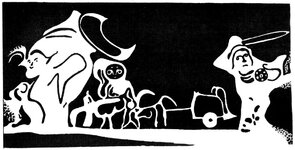
Wandlebury figures plan p_3_fig.jpg
  • And an image, with discussion, from Orgreave - ten miles away from Staveley. It's from 18 June 1984:
Download Video

End of the Miners' Strike Industrial Revolution 1.0. Source: BBC Woman's Hour via Youtube

The quotes about Nocton and Blankney hall parties in post-104455 came from Douglas Craven-Hodgson's Revelations of an Imp, via Nocton Hall - Revelations of an Imp - Chapter 1. I experienced the Imp's sense of humour at work again when I searched for the location of Grimston's Roman Villa at (Google Maps), (OpenStreetMap), (Flickr images).

It's too personal for a public board but I'm sure it was deliberate and I am still laughing at it. :D
 
Last edited:
Until a 1014 flood, the Witham entered the Wash via Elloi's large Bicker Haven sea harbour. Or so Wikipedia's authors allege. It lay to the west of Swineshead.

But Byng described being shown where one of the harbour's inner navigation marks had stood - before its owner sold it for timber:

View attachment 12805
High ground east of Bicker Haven. Source
So that marker - a yew tree - stood in place for 747 years. It stood through multiple wars, storms, fires, changed soil hydrology, changed climate, and mass tree falls until it was felled by market demand for timber to rebuild a ruined country. Remarkable.
A bit more about Swineshead:
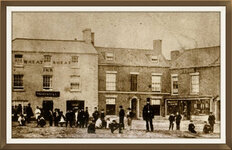
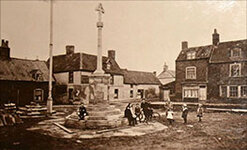
Swineshead giant policeman home-4.jpg
Village centre. Date unknown. Source

Camera seems to have been positioned about here: (Google Maps), (Google Streetview), (OpenStreetMap), (Flickr images).

Observations:
  • Seemingly, a tall policeman in a top hat. Wearing a medallion or badge on a chain or fixed low on tunic. See left hand of baton-wielding entity in Wandlebury hill figures image above. Is it possible the Wandlebury entity is holding a badge pinned to its clothing. Thrusting it forward as if to say: "I have the authority"?​
  • The rest are children, adolescents and possibly teenagers. I don't see an obviously older adult in the scene.​
  • The arched doorways on the right are typical east Midlands/east Anglian. But today the tops would be glassed in (as these now are) or boxed in with ply.​
  • White stone-looking structures behind the people. Structures possibly similar to the bases in this image:​

Swineshead multiple cross bases history-01.jpg
Two cross bases, as there still are today. Source

I wonder if the planks around the base are to protect recent cement mortar. If so, why no adult builders in the image? Maybe the adult builders had to rush back to the fields to sow and hoe. :)

This image reminds me of the image of Deeping St James' jail-cross from post-102177:

about-the-deepings-history-bw-2-jpg.jpg

Back to Swineshead:

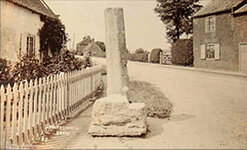
Swineshead cross parts history-05.jpg
Which cross is this? When? Source
It may be worth clicking on the Google Maps link, dragging the yellow man to this location and having a look at the cross bases. This village used to be on the edge of Bicker Haven harbour. It struck me that the cross bases and the barely discernible, low structures in the Swineshead policeman image above may be the remains of bases for the columns of a classical-style building.

There are accounts of hollow columns in churches. Which usually have underground access. A scenario could be:
  • that some villages are built on the surviving bases of classical buildings​
  • later, market cross were sometimes sited on the stump base of one of the columns, typically a column with underground access.​
This would explain tunnels under 'war memorials' like Grants Gardens, Liverpool, and in Fowlmere, Cambridgeshire.

Dates would be a useful for these images. It might help date the transition from short human lifespans to lifespans that included the prospect of surviving adulthood.

The Wandlebury image above and the Swineshead policeman images may offer us a scenario that goes something like this:
  1. The Wandlebury hill figures were cut near old chalk mines. It's possible the image depicts miners being hurried along by a supervisor. If we accept the IHASFEMR proposition that mining was primarily a child's occupation, then we may be looking at a grim visual protest at being harried by an entity with a sword or a baton. Not a depiction of a prehistoric moon goddess cult but a straightforward political protest scraped out of the chalk by children who knew how to scrape chalk. That might explain why it was so strangely suppressed when rediscovered in the 1960s.
  2. Looking at the etymology, some towns were run by mayors, backed by their second in command: the sheriff. In Britain, we tend not to associate 'police' with 'sheriff'. Where a sheriff exists, it is seen as a political role. But perhaps the badge-wearing sheriff of the America's (alleged) Wild West and the medallion-wearing English major were closer together in late 18th Century/early 19th Century Britain.
  3. Perhaps these images show us a moment in smaller towns and villages where two groups were transitioning to different roles at the same time. Something like:
    • miners -> minors
    • majors -> mayors
  4. Along with physical tokens of authority - the badge, the medallion on a chain, the high-viz clothing.
But it's just a guess...
 
Last edited:
FWIW
Here are my observations on your first image.
There are adults in the image. The police officer and a dark figure to the left of the pub door, another dark figure adjacent to the window, immediately in front of the dark figures are two adults playing the same game as the kids possibly marbles or jacks? and a further two in line in white jackets/shirts also playing a game.
The police officer appears completely incongruous with the image to his right and completely incongruous with the people to his left who in turn are completely incongruous to the other people in the photograph.
The people to the police officers right are out of scale with everything else in the photograph with the exception of the crouching kids.
The person standing nearest to the police officer appears to be wearing a bowler which none of the other kids are which suggests he is in fact an adult and b extraction so is his companion both of whom are as close to the camera as the police officer so should be of similar scale.
By contrast the figure leaving the shop in the background is congruous with the shop doorway for scale and the other adults outside the pub.
See screenshot

Screenshot_2021-12-05_15-24-45.png
We presume police officer from his clothing but he could easily be a teacher and the kids his class. There appears to be but one girl amongst them so I wonder if there is a school nearby or school house and the only playground is this square in front of the pub.

The pair of windows over the shop seem completely out of scale with the shop frontage in scale with the windows on the house and yet different in scale to the pub which I would suggest predates the house and shop by a number of years. I would also suggest the pub building is of rubble wall construction not brick like the shop and house which is why it is rendered for weather proofing and whitewashed. Was it a coaching inn at one point prior to the houses construction?

I cannot fathom what the gain is by inserting that odd pair of figures perhaps the photographer was testing his cut and paste skills but it does appear to have been poorly done or perhaps I have it wrong and am surmising from the low quality scan and the original image wherever it is would reveal all.
In your second image those planks are too long to be used as seating atop the stone steps on the plinth of the cross. My guess would be its a market cross and it is being prepared for a market in winter or autumn.

Screenshot_2021-12-05_15-55-34.png

The podium by the flagpole appears to be of stone too though it is hard to tell. Alongside it is an iron railing and on the opposite side what appears to be knock down seating or tables. I would guess the auctioneer stands on the podium above the crowds head height and his spotters on the next step down so to ensure all bids are noticed.
Neither road nor square appears to be surfaced with anything more than gravel.

Screenshot_2021-12-05_15-57-10.png
 
Last edited by a moderator:
FWIW
Here are my observations on your first image.
There are adults in the image. The police officer and a dark figure to the left of the pub door, another dark figure adjacent to the window, immediately in front of the dark figures are two adults playing the same game as the kids possibly marbles or jacks? and a further two in line in white jackets/shirts also playing a game.
The police officer appears completely incongruous with the image to his right and completely incongruous with the people to his left who in turn are completely incongruous to the other people in the photograph.
The people to the police officers right are out of scale with everything else in the photograph with the exception of the crouching kids.
The person standing nearest to the police officer appears to be wearing a bowler which none of the other kids are which suggests he is in fact an adult and b extraction so is his companion both of whom are as close to the camera as the police officer so should be of similar scale.
By contrast the figure leaving the shop in the background is congruous with the shop doorway for scale and the other adults outside the pub.
See screenshot

We presume police officer from his clothing but he could easily be a teacher and the kids his class. There appears to be but one girl amongst them so I wonder if there is a school nearby or school house and the only playground is this square in front of the pub.
Thanks for the analysis. I see what you mean about the two small figures in front of the shop. The one closest to the 'authority figure' looks like a miniaturised white-bearded man.

We discussed the bowler hat here too. I don't think it is a bowler though I was outnumbered here.

The Wheatsheaf was a coaching inn according to Lincolnshire Life:
The history of the Georgian Wheatsheaf Hotel, which is located in the Market Place, has been traced back to the early 1820s, when coaches would stop there to pick up a guide to lead them over the boggy terrain to Spalding or Sleaford, depending on their direction. The land had yet to be fully drained and strangers would easily lose their way. Later on, coaches would also leave their mailbags at the Wheatsheaf and it was from here that villagers would collect their letters – in effect the hotel was Swineshead’s first Post Office.
 
Note to self don't be lazy and click through image albums first,

The stocks on the market square
Screenshot_2021-12-05_16-23-02.png

Other views of the Wheatsheaf show perspective is a bugger!

Screenshot_2021-12-05_16-21-53.png
Screenshot_2021-12-05_16-22-30.png
Screenshot_2021-12-05_16-23-57.png
 
Note to self don't be lazy and click through image albums first,
:) Yeah, amazing how data from different times and different channels weaves together in unexpected ways when you're researching this stuff. Been there, got the t-shirt.
The stocks on the market square

Other views of the Wheatsheaf show perspective is a bugger!

We should probably clarify for anyone who doesn't look at the links, that the 'cross' in the image immediately above is not the same one as in the preceding three images. It's the new one built next to it.

Could even be that some evidence is created in real time. Another good reason to prioritise research on physical evidence over documentary and media.
 
Tips
Tips
Please respect our Posting Rules.
Back
Top