Sixteenth century maps from Tuscany

  • Thread starter Deleted member 37
  • Start date
It doesn't seem to me it's the same lake though. Sorry if I give poor indications about the maps themselves. It represents the territory of what is now modern Kenya and Tanzania. So that lake in the centre should be Lake Victoria.
Admittedly it is quite difficult to match up currently existing regions with these maps, as many of these names have changed countless times over the years. I was wondering myself after I had created the reply if this was in fact, the same area.

Regardless, there is a lot to unpack in regards to Ethiopia and its importance in the historical narrative, though perhaps in its own thread moving forward.
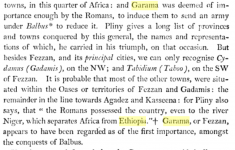
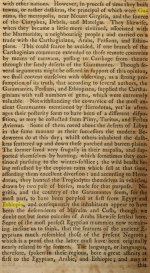
When it comes to Garama, Bonsignori doesn't say where this city was located, but it sems it was not near Zambare. I don't see it on this map and for what I remember it's not even in the map of Ethiopia proper. So it would be interesting to understand what is the real current or historical name of this city. The only Garama I found is the capital of the Garamantes in Lybia, but it doesn't fit nor for the location nor for the people inhabiting it.


The Geographical System of Herodotus, Examined and Explained, by a Comparison with Those of Other Ancient Authors and with Modern Geography Etc
1655663008533.png


1655663444239.png
source: r/MapPorn - Map of the World as known to the Ancient (map is from 1844) [2102 x 1638]

An Universal History

An Universal History, from the Earliest Account of Time

The Obstinate Lady; a New Comedy, Etc

1655663547021.png1655663813191.png1655664039756.png
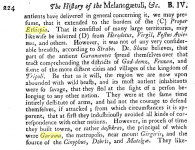
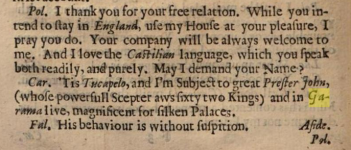
It appears that even though this city is in Libya, the association with Ethiopia is present in older literature.

 
It appears that even though this city is in Libya, the association with Ethiopia is present in older literature.
Well, I'm still not sure, but if it was then Bonsignori said they moved their capital only in the XV century, presumably. I have to say though that a capital for Ethiopia would be more fit on the Nile. In a previous map Bonsignori talked about Meroe which was the historical capital of Ethiopia. I wonder if Garama followed Meroe.
 
Décimo mapa titulado 'Parte d'Affrica' por Stefano Bonsignori.

[ADJUNTAR=completo]23394[/ADJUNTAR]
Esta parte de Alta Aethiopia (Etiopía) fue llamada así por Aethiop (Ethiope) hijo de Vulcano (Vulcano) , quien la gobernó. Fue desconocido durante muchos siglos, aunque muchos autores escribieron sobre él y las fuentes del Nilo (Nilo) y sus crecidas, aunque lo hicieron de muy diversas formas. Ptolomeo Rey de Egipto (Tolomeo Re d'Egitto) , llamado Filadelfo, lo descubrió, ya que quería cosas nuevas para su ocio y nuevos entretenimientos, y envió gente allí y descubrió que las fuertes lluvias eran la causa de esas inundaciones. Pero después de su tiempo, los otros reyes no estaban muy interesados en aprender y casi ignorar cuentos cosas. Pero en la actualidad los portugueses (Portoghesi), a raíz de las conquistas que hicieron en las Indias Orientales (Indie Orientali) , demostró y reveló claramente no solo que el Nilo tiene múltiples fuentes, sino también que esta parte del mundo se llama hoy en día Abisinia (Abasia) y su gente son los abisinios (Abissini) . Esta provincia está gobernada por el Emperador de los etíopes (Limpadore delli Ethiopi) llamado preste Juan (Ianni) , quien gobierna sobre un Imperio (Imperio) de quince (XV) grandes reinados todos unidos. Se dice que entre ellos se instruía originalmente el culto de los Dioses (Dei) y los primeros ritos y sacrificios. Estas personas son cristianas(Xi) convertido por San Felipe Apóstol (S. Filippo Appostolo) , quien primero se convirtió al eunuco chambelán de la reina Kandake (Regina Candace) . Ellos creen que el linaje de sus reyes (Re) se remonta a Salomón (Salamone) y la Reina de Saba (Regina Sabba) . Estas personas tienen muchos ritos judaicos (Giudaiche) , como la observancia del Shabbat (Sabato) , la circuncisión y otros. Tienen a uno de sus patriarcas como su Pater Patriae (PP) *, que en su lengua se llama Alima y en la nuestra significa padre. Los portugueses han logrado descubrir y obtener muchas riquezas de estos lugares después de su conquista de las Indias Orientales. El primer descubridor de esta tierra fue Lord ** Diogo Lopes de Sequeira (S. Diego Lopezze di Sequira) , quien desembarcó en el puerto de Mazzua en el golfo Arábigo (Arábigo) . Se estableció entonces una estrecha amistad entre Manuel Rey de Portugal (Emanuello Re di Portogallo) y este pueblo, que perdura hasta el día de hoy. Esta nación era grosera y con pocas artes u oficios. Pero hoy en día, debido al comercio de los portugueses, son laboriosos y van mejorando día tras día.

* Creo que PP significa Pater Patriae, 'Padre de la Nación', ya que encaja con el papel de Alima, que se dice que también significa 'padre'. No pude rastrear el término Alima en ninguna parte de la web, así que si alguien sabe, déjeme/nosotros también.

** Traducción 'S.' con Lord imaginando que significa 'Signore' italiano, pero no puedo dejar de ver la misma 'S'. usado para Felipe el Apóstol y presumiblemente significando Santo. ¡Parece que no había esa diferencia entre ser un Señor y un Santo en cualquier caso!

No está exactamente relacionado con el texto, pero me pregunto si el Shabat tiene algo que ver con la Reina de Saba. En particular, la reina de Saba hizo un viaje notorio para encontrarse con Salomón. ¿Fue el primer año sabático ( Sabbatical - Wikipedia )?

Así, en un mapa anterior, Bonsignori decía que los etíopes cambiaron su capital como consecuencia de la actividad portuguesa 'de Garama a Zambare' ( mapas del siglo XVI de la Toscana ). Ahora dice que gobernaron un imperio compuesto por quince reinos enormes. Esto debería significar, como se indica parcialmente en el mapa anterior, que gobernaron la mayor parte del interior de África. El protagonista es siempre el Preste Juan: ¿era Jano/Noé?

El explorador Diogo Lopes de Sequeira conoció estos lugares en la ciudad de Mazzua en el Golfo Arábigo. No sé dónde se encuentra esta ciudad y cuál es su nombre hoy en día. Ni siquiera estoy seguro de que el Golfo Pérsico del que habla Bonsignori sea el Golfo Pérsico moderno. En cualquier caso, parece que el texto implica que Diogo en realidad no fue allí. Entonces, ¿por qué debería ser considerado su descubridor?

Si alguien ve algo más inusual, háganoslo saber.
You said: The Noah/Janus/Priest John figure is much more important than is probably realized. To me, Priest John has to be another name for Janus.

I said about Fomenko's work: Moses initiates the 15th century Ottoman conquest, the conquest of America in the Noah-Columbus Book of Mormon.

Now we have Noe-Jano-Preste John-Columbus.


I'm a few months old now that I found this website: EL HILO DE ARIADNA

A site completely in Spanish, however in the welcome write this:

This blog is dedicated to Ruggero Marino, since his work inspired my studies and showed me an exciting world.

Ruggero Marino - Cristoforo Colombo - Ruggero Marino - Cristoforo Colombo


Well, the site is called Ariadne's Thread and it actually works similar to this site because it has a lot of threads related to history similar to this site, in each thread it brings up really interesting results hidden in certain books, writings and things like that.

And I got there once when I was looking for information on Prestor John and read one of his early threads which I found interesting as he hinted that Prestor John was none other than Columbus. He also talks a lot about Marco Polo and his book "Il Millione", even if I wanted to summarize his findings, I couldn't in one post.


-Christopher Columbus is Prestor John:

INDIAS

The mythical Indies leave the legend and enter history. Their Prester, will lead the arrival of Europeans to their shores:


"The King and Queen, Our Lords, when I served them with the Indies, I say served, that it seems that I by the will of God Our Lord gave them to them, as a thing that was mine, I can say" (Testament of Christopher Columbus, Document XC).

sailing (...) towards the west, or towards the Indians, as they say" Was not Preste Juan the "illustrious and magnificent king of the Indians"?


The wretched priest-king named Christopher Columbus never imagined... that at the end of his days, everything would be taken away from him:


"Now, at the end of my life, I was stripped of my honor and my state without cause, and in this there was neither justice nor mercy." (Christopher Columbus, Document XLII)


-Talk of Marco Polo in America from a map:

"Mapa con barco" ("Map with ship"), a ship is drawn below which appears a coat of arms and a cross of letters that together form the name of Marco Polo.

But the really incredible thing about this map is that it represents.... North America! In Secretan's own words...

MARCO POLO EN AMERICA.

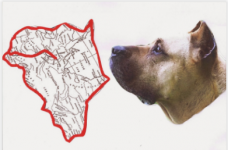
-If you look at Marco Polo's route in Asia it is shaped like a dog and also South America.

j.png
3678409227_62193bc6e3.jpg

I admit that when I saw that the Marco Polo Route drew the head of a big dog over Asia, the relationship BIG DOG - BIG DOG immediately came to my mind.


-By the way, do you remember a possible Prester John of the kingdom of Sardinia that I showed you above with the same coat of arms?

my equal to the coat of arms of the Canary Islands where Columbus-Preste Juan came from.

j3.png
j2.png


Since ancient times it was believed that beyond the Pillar of Hercules, that is, the Strait of Gibraltar, the sea ended and the abyss began. This unknown part of the Earth, where the sun died, was considered the Underworld: the kingdom of the god Hades.

Hades had a dog with three heads and a serpent's tail, called Can Cerberus, who guarded the gates of his kingdom (Tartarus).

j4.png

Dog - Serpent that according to Greek mythology guards the Underworld, and the terminology used by Marco Polo with respect to the territories explored by him, the lands of the GREAT CAN (dog in Latin) or KAAN (snake in Mayan).

However, Cerberus was not the only guardian dog of the gates of the Underworld.

It is here that Anubis, Xololt, the dog-headed god and brother of Quetzalcoatl, St. Christopher (Kinocephalus) and all wear a cross.

j5.png

Therefore, for the ancients, the West was not only the Underworld, but also a "Land of Dogs". Therefore, I personally wonder if the Canary Islands will receive precisely such a name, being the westernmost point of the known world or ecumene.

CANARIAS

Thus, Rome would place in these islands the zero meridian, the meeting point between East and West, the meeting point between the world and its underworld, between the known and the unknown.

-Once Prestor John-Columbus settled in America-the Indies were invaded by the people of the north, by none other than the Tartars, who came from the north of America to South America where they defeated Prestor John-Columbus after almost more than a century. of European domination of these lands that now become part of Tartary. This is based on Marco Polo's account of the fall of Prestor Juan by Genghis Khan's Tartars and some Inca documents...

The Inca quipu that Quipucamayoc Chauarurac showed to the Jesuit Juan Anello Oliva. Let's remember that according to this record, people from Asia had arrived to the American continent, and that...

INDIAS


"There, finding the lands occupied by peoples who built great pyramids, they descended in the thirteenth century further south, where they clashed with the warlike inhabitants of the coasts, who laid down their arms only when men of a different stature came down from the heights, that is, almost twice theirs, with white complexion, thick hair and a face covered with a golden beard. From here was born the naive fable of the giants and the divine origin of the Inca people. Now, these white people had touched the Continent a century earlier, as the royal quipu narrates, than the tribe of Tartary, following, however, a different maritime route, that is, from the other side of the sea, the People of the North. When the Tartarians confronted the white people they showed superior strength, to the point that they exterminated almost all of them. The survivors deferred to the clemency of the victors, who always acted in this way with all the peoples who recognized their superiority. The intelligence of these people of the Old Continent led them to fuse blood and culture in order to create a new lineage in those lands where the city of Tumbez was founded".


-Finally and not to exceed the allowed characters of each answer, do you remember what I told you about Fomenko and the promised land?


15th century Golden Age of the Empire.

Rise of the Ottoman Empire and its union with the Horde-Russia, the conquest of the biblical Promised Land.

The "Mongol" empire and the well-known Christian kingdom of Presbyter John.

The Inquisition in the Bible, Moses initiates the Ottoman conquest of the 15th century.


-Ariadna has something similar....


Laietus wrote:

"It is curious the map this of Pomponius Mela, I seem to remember that red sea is a mistranslation of the Hebrew and that it means sea of seaweed (sargassum?)"


Indeed. In Jewish texts, the "Red Sea" is named through the Hebrew phrase "Yam Suf", whose exact translation is "Sea of seaweed" .

Precisely in the middle of the Atlantic, today, there is an immense prairie of brownish red algae, known as the "Sargasso Sea".

This sea has an extension similar to that which occupies all of Europe, and revolves around the Bermuda Islands.

Christopher Columbus would narrate his transit through the Sargasso Sea in his "Logbook":


"... They saw much grass and very often, and it was rock grass, and the grass came from towards the west. They judged themselves to be near land.

So, inevitably we must ask ourselves if there is any connection between the "Sea of seaweed" that Moses and the people of Israel crossed, and the "Sargasso Sea".

MAR DE LAS SARGAZOS.
 
Last edited:
Now we have Noe-Jano-Preste John-Columbus.
You see HELLBOY, it's now many years that I started reading every sort of alternative narrative related to history and I have to say that most of the time these 'new' narratives bring to absolutely nothing. The first experience I had was with Gene D Matlock, search for him if you don't know who he is. Long story short, it all ends with lenghty identifications of various peoples, myths, symbols and languages one with the other. Chaos is the final outcome.
So yes, Columbus was Italian, but no he was Spanish, but no he was Portuguese, but no he was a Jew (surprise). He was good but he was bad. We have a 'portrait' identical to the Pope, cool. There are dogs everywhere on coat of arms, cooler.

What's the end result of this new narratives? None!

Fomenko says Columbus was Noah. Fine. What about all the various little details of his biography then? Is everything false?

My personal take is that every single piece of information must be taken from ancient sources rather than modern writers. Yes the portrait of Columbus identical to Pope Innocent VIII is a very cool detail. I keep it. But the rest is too much. It doesn't make sense to me.
 
Eleventh map titled ‘Mauritania’ by Stefano Bonsignori.

Mauritania, Mali, Morocco and Algeria.jpg

In their tales the ancients stated that the mount Atlas (Atlante) reached the sky with its summit, meaning that Iapetus (Iapeto) called Atlas, first ruler (Sig.re) of this Province (Provincia) after the greater flood, was the son of Noah (Noe) called Sky (Cielo). Here Hercules (Ercole) passed there to avenge his father Osiris’ (Osiri) death and killed Antaeus (Anteo) who ruled over it, from whose wife Tinjis (Tingena) had a son called Sufax (Siface). Hercules built the City of Tangier (Citta Tingena) from which the Province took its name, while the remnant parts were given their names by the Caesars (Cesari). Sufax expanded the state inherited from his father until the Phoenicians (Fenici) disturbed the peace of these people, and the Carthaginians (Cartaginesi) became rulers of a part of it. But then it passed under the Roman (Romani) rule with all the Carthaginian territory, and after them many foreign people appeared and lastly the Saracens (Saracini), still ruling it today, except for that part owned by the Portuguese (Portoghesi) and the Spaniards (Spagniuoli). Even though these Saracens are barbarians, they hold dear virtue and fine arts, which is proved by the abundance of public schools present in various places of this territory.

This map provides more ‘historical mythology’ for us to read. It will be useful to do a summary at the end with all the various identifications. Here Noah is obviously called Sky, Uranus, since he was presumably castrated by his son Ham (or Canaan), identified with Cronus/Saturn.
 
Last edited by a moderator:
-If you look at Marco Polo's route in Asia it is shaped like a dog and also South America.

j-png.png 3678409227_62193bc6e3-jpg.jpg
I admit that when I saw that the Marco Polo Route drew the head of a big dog over Asia, the relationship BIG DOG - BIG DOG immediately came to my mind.


-By the way, do you remember a possible Prester John of the kingdom of Sardinia that I showed you above with the same coat of arms?
Now, I really do like to speculate and connect some dots in a conjectural way, but every time I do it, I base my reasoning and logic on the films, video games and other forms of entertainment mediums where I let my imagination go wild and set it free. There is no harm being done there, it's just some entertaining thoughts and no one is being offended or their history being abused and used in a political manner.

You had a pretty decent trail with Prester John, but in the exact moment when you say that Mexico state or South America continent is in the shape of a dog silhouette, and the underworld is the western part of the Northern Hemisphere, not including Siberia (because reasons) and involve Tartaria as a dominant empire in North America continent as the poor guys who had to suffer the oppression of some Roman giants, and the whole of Europe was inhabited by canine dog head people, and that was the real underworld?

Then, I'm sorry, but I'll have to disagree.

This type of reasoning and logic is the exact same type of arguments being put forward in some of KD threads (Tartaria, Napoleon etc). He used to make some big questions regarding history, show some screenshots of articles from Google Books repository, show some maps or paintings of photos no one knew about, making some alternative speculations and coming up with a hidden conclusion which DESTROYS history in the eyes of those that are poorly educated in it.

I know that many things don't add up in history books, but this is no reason to take advantage of it. This is no longer about Stolen History. This is about REWRITING history as someone is clearly trying to benefit from it.

Please, let me go OFF-TOPIC for a bit, and I won't touch this argument anymore in posts.

EXAMPLE: Albanian: A Person from Albany, New York, Scotland, or Albania (Mirror)
--------------------------------------------------------------------------------------------------------------------------------------------------------
I often refer to the inhabitants of Albany, New York as “Albanians.” I did not create this term. The people of Albany, past and present, refer to themselves as “Albanians.” However, when I use this noun outside of New York, I confront misunderstanding from my non-New York listeners and readers who often think I am referring to the people of the Republic of Albania, not Albany.

For whatever reason, I decided to look up “Albanian” in the Oxford English Dictionary last week. To my surprise I found that "Albanian" has 9 definitions, 6 nouns & 3 adjectives.

miller-map.gif

Albany, New-York
  • Noun, ca. 1400. A native or inhabitant of Albania, a country once located in the eastern Caucasus, in the regions that are now Azerbaijan and the southern part of the Republic of Dagestan.
  • Noun. The Caucasian language spoken by this people.
  • Adjective, ca. 1565. Of or relating to Scotland or its people; Scottish. Chiefly with references to the time prior to the Scottish Wars of Independence (1296-1357), in later use often in relation to the Scots who settled in what is now western Scotland.
Al-map.gif

Albania
  • Noun, ca. 1569. A native or inhabitant of Albania; a person of Albanian descent.
  • Noun. The Indo-European language spoken in Albania, Kosovo, and parts of Macedonia and Montenegro, and by communities of Albanian descent elsewhere.
  • Adjective, ca. 1578. Of or belonging to the Caucasian country of Albania, its language, or its people.
  • Noun, ca. 1685. A native or inhabitant of Scotland; a Scot. Chiefly with reference to the time prior to the Scottish Wars of Independence (1296-1357).
  • Adjective, ca. 1593. Of or relating to Albania, its people, or its language; of or relating to Albanians, or speakers of Albanian living elsewhere.
  • Noun, ca. 1689. A native or inhabitant of Albany, New York State.
Scotland_map.png

Ireland
Reading these definitions proved helpful. It helped me realize that I had used the term “Albanian” correctly as a noun and incorrectly as an adjective. I occasionally use “Albanian” as an adjective to describe viewpoints, characteristics, or goods that came from Albany. In the context of my work, I believe I can get away with using the term as an adjective. Perhaps my book, tentatively-titled America's First Gateway: Albany, N.Y, 1615-1830, will cause the OED to add an 10th definition to their entry.

My reading also taught me a new definition. I had not known that I could use “Albanian” to describe someone who lived in Scotland prior to 1296. As I study early America I won’t be able to use this definition often. Still, I will let it sit in the back of my brain as a piece of pub trivia or for when I have the opportunity to impress a medievalist who works on Scotland.

Have you ever come across a word that leads to confusion, even when you use it correctly? Please share.
-------------------------------------------------------------------------------------------------------------------------------------------------------
Did you see how easy it was to claim the capital of New York State as an Albanian inherited land? It must be, after all the evidence I put forward. People should accept it and go along with it!

Now, if you gentlemen would excuse me, I have a whole State to govern, shelter, secure and ordain according to the divine laws of our Holy Father in the Heavens! I would leave now, and raise the Albanian flag on Albany New York Municipality, because I clearly demonstrated that it is Albanian!

And I!
Busy Baçi!
The first one to rediscover it!
Proclaim myself!

tada-da-dada...tada-da....tada-dada..!!!!!!!

IMPERATOR!!!

Note: Those puny mortals which are called my subjects, they better pay me bi-monthly tribute, or they'll be quick to discover the hidden Dictator that is in me.

Bisius Baçius Primus
 
Last edited by a moderator:
For whatever reason, I decided to look up “Albanian” in the Oxford English Dictionary last week. To my surprise I found that "Albanian" has 9 definitions, 6 nouns & 3 adjectives.
Perhaps my book, tentatively-titled America's First Gateway: Albany, N.Y, 1615-1830, will cause the OED to add an 10th definition to their entry.
I give the 11th definition.
Albanians: inhabitants of the now lost (?) city of Arbanum.
 
You see HELLBOY, it's now many years that I started reading every sort of alternative narrative related to history and I have to say that most of the time these 'new' narratives bring to absolutely nothing. The first experience I had was with Gene D Matlock, search for him if you don't know who he is. Long story short, it all ends with lenghty identifications of various peoples, myths, symbols and languages one with the other. Chaos is the final outcome.
So yes, Columbus was Italian, but no he was Spanish, but no he was Portuguese, but no he was a Jew (surprise). He was good but he was bad. We have a 'portrait' identical to the Pope, cool. There are dogs everywhere on coat of arms, cooler.

What's the end result of this new narratives? None!

Fomenko says Columbus was Noah. Fine. What about all the various little details of his biography then? Is everything false?

My personal take is that every single piece of information must be taken from ancient sources rather than modern writers. Yes the portrait of Columbus identical to Pope Innocent VIII is a very cool detail. I keep it. But the rest is too much. It doesn't make sense to me.
Ok, so I'm going to look for D Matlock to see what his work is about.
Well, I agree that Ari (Ariadna) has a narrative that leaves nothing perhaps, but I did present her sources only that it is impossible for me to put her complete threads as they would be long for a message. I presented Ari's page thinking that maybe you would be interested in taking a look at it, maybe you speak Spanish or translate some of her threads.
She also expresses her feelings about history and judges it as fabricated and with characters out of time and many times she feels that Freemasonry is very involved in this, because of certain symbologies and things like that.
She has interesting titles on Templars and certain medieval and renaissance artists like Da Vinci, from time to time I feel she finds things interesting.
Now, I really do like to speculate and connect some dots in a conjectural way, but every time I do it, I base my reasoning and logic on the films, video games and other forms of entertainment mediums where I let my imagination go wild and set it free. There is no harm being done there, it's just some entertaining thoughts and no one is being offended or their history being abused and used in a political manner.

You had a pretty decent trail with Prester John, but in the exact moment when you say that Mexico state or South America continent is in the shape of a dog silhouette, and the underworld is the western part of the Northern Hemisphere, not including Siberia (because reasons) and involve Tartaria as a dominant empire in North America continent as the poor guys who had to suffer the oppression of some Roman giants, and the whole of Europe was inhabited by canine dog head people, and that was the real underworld?

Then, I'm sorry, but I'll have to disagree.

This type of reasoning and logic is the exact same type of arguments being put forward in some of KD threads (Tartaria, Napoleon etc). He used to make some big questions regarding history, show some screenshots of articles from Google Books repository, show some maps or paintings of photos no one knew about, making some alternative speculations and coming up with a hidden conclusion which DESTROYS history in the eyes of those that are poorly educated in it.

I know that many things don't add up in history books, but this is no reason to take advantage of it. This is no longer about Stolen History. This is about REWRITING history as someone is clearly trying to benefit from it.

Please, let me go OFF-TOPIC for a bit, and I won't touch this argument anymore in posts.

EXAMPLE: Albanian: A Person from Albany, New York, Scotland, or Albania (Mirror)
--------------------------------------------------------------------------------------------------------------------------------------------------------
I often refer to the inhabitants of Albany, New York as “Albanians.” I did not create this term. The people of Albany, past and present, refer to themselves as “Albanians.” However, when I use this noun outside of New York, I confront misunderstanding from my non-New York listeners and readers who often think I am referring to the people of the Republic of Albania, not Albany.

For whatever reason, I decided to look up “Albanian” in the Oxford English Dictionary last week. To my surprise I found that "Albanian" has 9 definitions, 6 nouns & 3 adjectives.

Albany, New-York
  • Noun, ca. 1400. A native or inhabitant of Albania, a country once located in the eastern Caucasus, in the regions that are now Azerbaijan and the southern part of the Republic of Dagestan.
  • Noun. The Caucasian language spoken by this people.
  • Adjective, ca. 1565. Of or relating to Scotland or its people; Scottish. Chiefly with references to the time prior to the Scottish Wars of Independence (1296-1357), in later use often in relation to the Scots who settled in what is now western Scotland.
  • Noun, ca. 1569. A native or inhabitant of Albania; a person of Albanian descent.
  • Noun. The Indo-European language spoken in Albania, Kosovo, and parts of Macedonia and Montenegro, and by communities of Albanian descent elsewhere.
  • Adjective, ca. 1578. Of or belonging to the Caucasian country of Albania, its language, or its people.
  • Noun, ca. 1685. A native or inhabitant of Scotland; a Scot. Chiefly with reference to the time prior to the Scottish Wars of Independence (1296-1357).
  • Adjective, ca. 1593. Of or relating to Albania, its people, or its language; of or relating to Albanians, or speakers of Albanian living elsewhere.
  • Noun, ca. 1689. A native or inhabitant of Albany, New York State.
Reading these definitions proved helpful. It helped me realize that I had used the term “Albanian” correctly as a noun and incorrectly as an adjective. I occasionally use “Albanian” as an adjective to describe viewpoints, characteristics, or goods that came from Albany. In the context of my work, I believe I can get away with using the term as an adjective. Perhaps my book, tentatively-titled America's First Gateway: Albany, N.Y, 1615-1830, will cause the OED to add an 10th definition to their entry.

My reading also taught me a new definition. I had not known that I could use “Albanian” to describe someone who lived in Scotland prior to 1296. As I study early America I won’t be able to use this definition often. Still, I will let it sit in the back of my brain as a piece of pub trivia or for when I have the opportunity to impress a medievalist who works on Scotland.

Have you ever come across a word that leads to confusion, even when you use it correctly? Please share.
-------------------------------------------------------------------------------------------------------------------------------------------------------
Did you see how easy it was to claim the capital of New York State as an Albanian inherited land? It must be, after all the evidence I put forward. People should accept it and go along with it!

Now, if you gentlemen would excuse me, I have a whole State to govern, shelter, secure and ordain according to the divine laws of our Holy Father in the Heavens! I would leave now, and raise the Albanian flag on Albany New York Municipality, because I clearly demonstrated that it is Albanian!

And I!
Busy Baçi!
The first one to rediscover it!
Proclaim myself!

tada-da-dada...tada-da....tada-dada..!!!!!!!

IMPERATOR!!!

Note: Those puny mortals which are called my subjects, they better pay me bi-monthly tribute, or they'll be quick to discover the hidden Dictator that is in me.

Bisius Baçius Primus
I know it is very confusing what I put and it is because you need to go directly to the thread that she (Ari) wrote to understand better, even they are not the only threads dedicated to Prestor John, Columbus, Marco Polo, she has some more.

For example there is an interesting map, atlas prior to the discovery of America: the Catalan Atlas of Abraham Cresques (1375). Kept in the Bibliothèque National de Paris, this map of singular beauty is treasured as one of the "jewels" of medieval cartography.
Catalan Atlas - Wikipedia

But it is on the third plate, the one that presents Asia under the title Delli and Catayo. Most of the data that appear in it, have been extracted from the voyage of Marco Polo and therefore, from the "Book of Wonders".
800px-Atles_català_(full_5,_ca000005).jpg

In fact from Fra Mauro Composite map: Mappemonde Pl. 1-6, Urbano Monte Composite: Tavola 1-60. (Map of the World) (with additional spheres and labels in the four corners)., and more. I understand that they used data from Marco Polo's book to put in the Asian part.

Well .... It is curious to see, as in the extreme South-West of India, there is a drawing... very peculiar.
In it, we can see a king called Colobo, on which a legend that reads:

"From here is lord King Colobo, Christian, province of Columbo."

1c.png

It is easy to relate the name of the province of this Christian king, with the Italian surname of Christopher Columbus: Colombo.

But surprisingly, Colobo and Colubo were also surnames used to name the discoverer.

b.png
c.png

Be that as it may, this king finds himself surrounded by three castles. Over them fly flags with red crosses that evoke the Temple, and turtledoves, birds that in the Middle Ages symbolized fidelity.

1a.png

Given that this Christian kingdom is located in India: Shouldn't this be the mythical Prester John?

Well... moving this part of Asia to South America, something truly surprising happens.
Marking this region in Asia and moving the region to South America, we discover that it coincides with the Peru-Ecuador border (Punta Negra), the region where, according to the Miccinelli Documents, the clashes between the people of Europe and the people of Asia took place.

viaje de marco polo.png
viaje de marco polo2.png
viaje de marco polo3.png

If it is...it doesn't end here, doesn't the name of the province, Columbo, remind you of something?
COLUMBO-COLOMBO-COLOMBIA
Curiously, today there is no region in India with the name COLUMBO (except for the island of Sri Lanka, which on the Cresques map appears as a distant island with a different king).
However..., the same does not occur in South America, since the present COLOMBIA is located there.
Moreover... for a brief period of time (1821-1831), the former New Kingdom of Granada formed by Colombia, Venezuela, Panama and Ecuador, was known as Gran Colombia. The province of Columbo of King Colobo..., was in its territories.

viaje de marco polo5.png
to involve Tartary as a dominant empire in the continent of North America as the poor people who had to suffer the oppression of some Roman giants.
No, apparently the Tartars of Genghis arrived to present battle from the north, they were the red-bearded giants and came to destroy a people of whites already established in South America, that is based on the Micinelli documents.
 
Last edited:
Ok, so I'm going to look for D Matlock to see what his work is about.
Well, I agree that Ari (Ariadna) has a narrative that leaves nothing perhaps, but I did present her sources only that it is impossible for me to put her complete threads as they would be long for a message. I presented Ari's page thinking that maybe you would be interested in taking a look at it, maybe you speak Spanish or translate some of her threads.
She also expresses her feelings about history and judges it as fabricated and with characters out of time and many times she feels that Freemasonry is very involved in this, because of certain symbologies and things like that.
She has interesting titles on Templars and certain medieval and renaissance artists like Da Vinci, from time to time I feel she finds things interesting.
I'm going to read the links you suggest, they seems interesting.

What I meant with my comment is more about the general nature of 'research' in which one has to declare false almost everything in order to let pass a message based on just a few data. I'm certain there have been fabrications throughout history, but I'm always suspicious when it comes to pointing out the guilty one. It seems most people have a sort of interest related to their own identity to prove something, probably to feel better with themselves.
I feel there must be something with America altough my doubts immediately start when everything becomes a stereotypical "Rome...Rome...Rome", without pointing out that they were in fact just Christians. Orthodox Russians took over almost the entire Asian continent and still there's no one saying anything bad about it. Muslims took over a huge chunk of land and they are still at it, but most people keep silent and overall there's nothing bad about it.

I'm still waiting for someone who is capable of explaining things without delving into rethoric and Vatican-Antarctic-Greenland-Switzerland-Lalaland narratives.

edit: sorry, I was forgetting about all various denominations of Protestantism invading the world in the last 400 years. Let's not forget about that.
 
I know it is very confusing what I put and it is because you need to go directly to the thread that she (Ari) wrote to understand better, even they are not the only threads dedicated to Prestor John, Columbus, Marco Polo, she has some more.
I'll take a good look at the map and the info you posted tomorrow, for the moment I'm busy. I apologize. There is a lot you posted in it. But, a good rule of thumb for me is that I don't listen ever to what women say about men's affair like this one. A woman is a woman, they have no business in men's affairs, you and anyone can say whatever you want about this conviction of mine. I just don't care.

Talk to you tomorrow after I've examined your last post. Take care.
 
No, apparently the Tartars of Genghis arrived to present battle from the north, they were the red-bearded giants and came to destroy a people of whites already established in South America, that is based on the Micinelli documents.
The story that Ari is telling is interesting about Prester John being located in now day Colombia. Not to play the devil's advocate, but the mainstream established history has many more facts collected about Prester John being in far East Asia.

For example, Encyclopaedia Britannica describes the battles that Prester John fought and won against the Persians. So in the Colombian scenario, the Tartars of Genghis Khan came from the Bering Strait, into Alaska and stopped in Colombia where they defeated him. That's a hell of a long way going from today Central Asia to go in South America.

Let's say that they really did it. During their invasion of the Americas, if they arrived in Panama and beyond, it means that they had already conquered the whole of the North American continent. There were many riches, cities and land there to be happy to take for granted. Why would they had to go south and risk to be annihilated? This thing doesn't add up to me.

Even though to give you more support, the explanation being given by the mainstream about Prester's John name has it's fallacies like the quote below:

The title of the Karakitai rulers was Gur-khan, or Kor-khan, which may have been changed phonetically in Hebrew to Yoḥanan or in Syriac to Yuḥanan, thus producing the Latin Johannes, or John. Though the Gur-khans were Mongol Buddhists, many of their leading subjects were Nestorians, and, according to a report by the Franciscan missionary Willem van Ruysbroeck in 1255, the daughter of the last Gur-khan and wife of King Küchlüg of the Naiman, a Central Asian people, was a Christian. Küchlüg, whose father’s name was Ta-yang Khan (Great King John in Chinese), was defeated by the great Mongol ruler Genghis Khan in 1218.

Going from the name Gur-Khan to the transformation of him into the name John is a leap of faith according to me, there are no similarities between these to names. If Christopher Columbus in 1492 was sailing towards the shores of the far East Asia and he reached North America because that was considered India for the time period, than he was correct in naming it's inhabitants as Indians. He did not make any mistake in this scenario. He was right. It's us that don't know how land masses were called back than, or it could be that the both the Americas were attached with East Asia in one big land mass.

In this scenario, of course, it would make sense for Prester John to be in Colombia and not in Ethiopia because the whole land was called India, where he was believed to be according to different theories on him.
 
Last edited by a moderator:
Twelfth map titled ‘Parte d’Affrica’ by Stefano Bonsignori. The caption on this map is somewhat deteriorated.

Namibia, Botswana and South Africa.jpg

This part of Africa was unknown to the ancients until the Serene King Don John (Ser.no Re don Gio), second with this name and thirteenth King of Portugal (XIII Re di Portogallo) discovered it. He discovered it by sea since he desired glory for himself and for the renown great treasures found in the East Indies (Indie Orientali). And he tried by land at first, sending some of his people to Cairo, who faced danger and lost to the great uneasiness and differences of the...*. Not dismayed by these events, nor… hope… treasures**, nor the danger... his subjects… wanted… greatest undertaking***. He had his ships sail along the coast… which discovered the western side of the… Good Hope (Buona Spanzza)****. This tip was discovered as if… that were renamed West Indies (Indie Occiden.li)*****. It was first called Turbulent Cape (C. Fremoso) because of the great storms. But then, since they had crossed the tip and discovered the Eastern Ocean (Oceano Orientale), they renamed it of Good Hope in order to fulfill good wishes in finding what they desired, and it’s still its name. And sailing along these coasts they saw that they were inhabited by idolatrous peoples. The Portuguese hold these maritime… where their armies are reduced by the fortunes of war******. Its first discoverer was the Portuguese Bartolomeu Dias (Bartolomeo Dias) who later found his burial place in these seas together with his ship. But it is nowadays ruled by the Catholic Philip of Austria King of Spain (Cattolico Filippo d’Austria Re di Spagna), with all the East Indies.

* I suppose the sentence ends saying that the explorers were defeated by climate differences and/or different habits and had to go back or even died.

** Nor losing hope in finding those treasures? Probably something like that.

*** Really hard here. The general sense seems to be that he was ready to do everything in order to reach his objective.

**** The general sense is that his ships sailed along the western African coast untill they discovered the Cape of Good Hope.

***** This sentence seems to anticipate the next one. It seems Bonsignori is saying that the West Indies were previously called with another name.

****** It seems he is talking about the difficulties in keeping the territories discovered with the armies they had.

A basic description of the Portuguese adventures through the oceans.

Here Bonsignori draws a parallel with the discovery of the West Indies, considered to be ‘all the islands in the Antilles, plus The Bahamas and the Turks and Caicos Islands’. But here the sentence is constructed in such a way that it seems as if the discovery of the Cape of Good Hope happened after Columbus’ voyage and discovery of ‘America’. Sadly the text is deteriorated and I cannot fully comprehend what Bonsignori meant with this phrase, but it seems that the West Indies were renamed. Is it something already established?
 
Last edited by a moderator:
For example there is an interesting map, atlas prior to the discovery of America: the Catalan Atlas of Abraham Cresques (1375). Kept in the Bibliothèque National de Paris, this map of singular beauty is treasured as one of the "jewels" of medieval cartography.
Catalan Atlas - Wikipedia
This is the transcription of the map's content in modern castillian (people have to eventually translate it on their own) and english:
El Atlas Catalán de Cresques, lo juehu, given to you by my friend @Glaxiatensis
The Cresques Project - Catalan Atlas Legends

"From here is lord King Colobo, Christian, province of Columbo."
Could it be Colombo in Sri Lanka? Colombo - Wikipedia
Was it named after Christopher Columbus? mmmmmhhhh
 
Last edited by a moderator:
The story that Ari is telling is interesting about Prester John being located in now day Colombia. Not to play the devil's advocate, but the mainstream established history has many more facts collected about Prester John being in far East Asia.

For example, Encyclopaedia Britannica describes the battles that Prester John fought and won against the Persians. So in the Colombian scenario, the Tartars of Genghis Khan came from the Bering Strait, into Alaska and stopped in Colombia where they defeated him. That's a hell of a long way going from today Central Asia to go in South America.

Let's say that they really did it. During their invasion of the Americas, if they arrived in Panama and beyond, it means that they had already conquered the whole of the North American continent. There were many riches, cities and land there to be happy to take for granted. Why would they had to go south and risk to be annihilated? This thing doesn't add up to me.

Even though to give you more support, the explanation being given by the mainstream about Prester's John name has it's fallacies like the quote below:


Going from the name Gur-Khan to the transformation of him into the name John is a leap of faith according to me, there are no similarities between these to names. If Christopher Columbus in 1492 was sailing towards the shores of the far East Asia and he reached North America because that was considered India for the time period, than he was correct in naming it's inhabitants as Indians. He did not make any mistake in this scenario. He was right. It's us that don't know how land masses were called back than, or it could be that the both the Americas were attached with East Asia in one big land mass.

In this scenario, of course, it would make sense for Prester John to be in Colombia and not in Ethiopia because the whole land was called India, where he was believed to be according to different theories on him.
HB:
There is one in Spain who has a very interesting private library, she argues that America was already known centuries before the discovery, that even one of her ancestors was born in America.
Marco Polo⏤The Apostle Paul?

Luisa Isabel Álvarez de Toledo y Maura (Estoril, 1936)
She is the Marquise of Villafranca del Bierzo, although her life and work revolve around the Duchy of Medina-Sidonia Duke of Medina Sidonia - Wikipedia , a privilege granted to her family in the 15th century, the oldest in the whole Kingdom. Descendant of Alonso Pérez de Guzmán el Bueno Alonso Pérez de Guzmán - Wikipedia and great-granddaughter of Antonio Maura y Montaner, she owns the most important private archive in Europe.

She lives in the palace of San Lúcar de Barrameda (Cádiz), among Viennese salons and Florentine furniture, although the jewel in her crown is the archive of the Medina-Sidonia Foundation. After recovering the files from a furniture repository in Madrid, he read them, studied them, related them and classified them. He has even translated some of them. He has found some real surprises, so he says that anyone interested in knowing the true history of Spain should access these archives, which compete with those of Medinacelli.

This is an interview they did with him.....

-She was censored and persecuted?

[ Interrupts ] I am censored.

-Do you think that to remove the historical memory is to rekindle the bonfire?

-Historical memory, what really happened at one time or another, whether in the fifteenth century or in the twelfth century, if it is in the documents, it should be known and it should be brought out. What is absurd is to hide the truth; it is simply absurd.

-In his book "Africa versus America. The power of the paradigm" you say that knowing what happened to our ancestors will help us to understand the present situation.

-You see, here there was a tremendous economic crisis, one of the many that have taken place, and even the price of apartments went down. The mechanics of this same crisis occurred in 1564 during the reign of Philip II. I was watching the facts and I predicted "this and this will happen", and nobody believed me. I acted accordingly, that's why I was saved. And then came the crisis. I want to say that there is a series of teachings, of conspiracies, that are lived again. I have lived it, with other consequences, with small variations, but the mechanics is exactly the same, and because I have known it, I have been able to save myself.

-What have you learned living so long living next to the most important private archive in Europe?

-A lot of history: what life was really like in the past, the fables we are told and how that truth has been distorted. I have learned that we were the same as we are, with the same vices, the same virtues and the same ethical values, which are immutable. With respect to America, I have learned, because it is well documented in the papers, that there was no such discovery and that what there is is a confusion. I have also learned that knowing our true role from before, when there was a very close relationship with the American continent, because the door is here, in the Guadalquivir, on the coast of Cadiz and Huelva, would suit us as well as many others, including Muslims. [At the age of twenty, the Duchess inherited an archive of 6,314 files and six million documents that her family kept in a furniture repository in Madrid. She moved them by truck to San Lúcar. It has taken him all his life to classify them. Neither Simancas nor Medinacelli can overshadow this documentary collection.]

-He has found a document that could prove that Guzmán "el Bueno", of whom he is a descendant, comes from "allen mar".

-There is only one document that says where he was from. They have invented the date of his birth, it is not proven anywhere. And that document says that he was "allen mar".

-Does "Allen mar" refer to Africa, to America?

-From the research I have done, I have found a border point in Brazil, there is also the Mexican San Miguel de Allende San Miguel de Allende - Wikipedia and there are a series of toponyms with the allende in America.

-I was surprised: Guzman would have come from America in the 13th century and Columbus discovered it in the 15th century?

-I have looked at more than a thousand documents, many more, in Simancas, in my archive and in other archives. I have 50 documents published on a website, several of them transcribed, so that anyone can read them, but with the original next to it, so that the historian can judge, proving that America was well known and that there was a fluid trade with the continent when Columbus arrived. [Recently, a map has come to light, apparently made by a Chinese navigator, which predates Juan Sebastian "Elcano". Likewise, a Templar cemetery - the "knights of overseas" - has been discovered in Patagonia, which could predate the "discovery" [...].

-There would also be evidence of the arrival of the Templars in America before Columbus.

-The Templars were also there. Perhaps they were the first to trade with the Muslims in an open way with gold. They brought them grain, which is not produced in the tropics, and they were paid in gold. That explains the great boom of the economy in the 13th century, when Europe began to produce a surplus to be able to acquire gold.

-And what do historians say about your contributions?

-Outside is interesting. A lot of press comes to ask about it. Especially since we have published our edition with the transcriptions of the documents for historians. But here they keep quiet. Of course, the documents are there, I did not invent them. [It is necessary to underline that the written works of the Duchess maintain that America was not discovered by Columbus and that the Phoenicians arrived first, since she assures that the American continent was already known at that time by the East and the West.]

-For some people it must be a scourge to hear all this.

-The first time I came across the cake, following a document I had in the archive, I was scared to death, what can I say. Now it doesn't shock me anymore.

-Do you think that this way of transgressing has something to do with the censorship of your writings?

-My works have been published, but in silence, as they say. What has to do with censorship is the obstinacy in not wanting to know the truth. Why? Well, I don't know: pride, arrogance, arrogance, stupidity? There is no other explanation. That depends on the percentage of stupidity and arrogance in power.

-Living among millions of documents must be incredible. It must be the envy of any researcher.

-The man who accesses the history of the archives, in order to be useful, has to know paleography. Otherwise, he is useless. The historian must be the one who knows how to research, relate, read documents and put all this at the service of society.
«Noto decepción entre los que esperan ver a una duquesa con la corona puesta»

I am looking for a declaration of the Duchess Luisa Isabel where she mentions something about the source of gold that did not come from Africa but from America, more precisely in Colombia... In the course of this I found the web site where Dona Isabel has her transcripts.
:::Africa Versus America::.

HB:
I have also thought about those maps of America joined to the Asian continent SH Archive - Continent of North America does not exist... or could it be a part of Asia? , I also remembered a certain title of a certain Johannes Schoner (1477-1547) who affirmed in 1523 that Tenochtitlán, the city conquered by Hernán Cortés two years before, was the Chinese metropolis of Quinsay, the "City of Heaven" described by Marco Polo.
Is Mexico-Tenochtitlan in reality the mythic Quinsay as described by Marco Polo?

orontius_finess_map_1531.jpg
orontius_finess_map_1531_1.png
 
Last edited:
I'm quite confused in this thread lol not sure what to make of it so far but it's quite interesting so far
The thread is not 'linear' as others. it is centered around the captions and the geography/place names on the maps. So you can comment on multiple things and hopefully various conversations can simultaneously be carried on.
 
The thread is not 'linear' as others. it is centered around the captions and the geography/place names on the maps. So you can comment on multiple things and hopefully various conversations can simultaneously be carried on.
That's why every time i try to read it all again, my mind splits in 50 different lines of tought and lose track of any coherent comment hahahahah
But my 2 cents on the maps, many religious myths/tales/legends to me is a sign of a good old Vatican cover up.
But of what i need to dig deeper
 
That's why every time i try to read it all again, my mind splits in 50 different lines of tought and lose track of any coherent comment hahahahah
But my 2 cents on the maps, many religious myths/tales/legends to me is a sign of a good old Vatican cover up.
But of what i need to dig deeper
HB:
An apology, because I feel that I have diverted a lot this thread of translations of these maps Egnazio Danti (1564-1575) and Stefano Bonsignori (1575-1586) with my comments, this thread is like the thread SH Archive - Tartary - an Empire hidden in history. It was bigger than Russia once... gives for a lot.

In this map titled 'Mauritania' by Stefano Bonsignori.
Sixteenth century maps from Tuscany

Iapetus (Iapetus) called Atlas, first ruler (Sig.re) of this Province (Province) after the major flood, was son of Noah (Noe) called Sky (Sky) . Hercules (Ercole) passed through here to avenge the death of his father Osiris (Osiri) and killed Antaeus (Antaeus) who ruled it.

It reminded me of the coat of arms of the Canary Islands with the word Oceano on top, Canary Islands - Wikipedia

The etymology of the word is interesting as I feel it has a relationship with what I said before.
Sixteenth century maps from Tuscany

The name Canary Islands probably derives from the Latin name Canariae Insulae, meaning "Islands of the Dogs", a name that evidently became generalized from the ancient name of one of these islands, Canaria - presumably Gran Canaria. According to the historian Pliny the Elder, the island Canaria contained "vast multitudes of dogs of very great size."

Other theories speculate that the name comes from the Nukkari Berber tribe that lived in the Moroccan Atlas, named in Roman sources as Canarii, although Pliny again mentions the connection of this term with dogs The connection with dogs is maintained in their representation on the islands' coat of arms. It is considered that the aborigines of Gran Canaria called themselves "canaries". Canary Islands - Wikipedia

HB:
These maps certainly make me feel that both Egyptian and Roman or Greek architecture were parallel and therefore we see is the ruins of Piranesi Egyptian architecture among the mix with Obelisks and Pyramids.
SH Archive - What was Giovanni Battista Piranesi trying to say. 17-18th century apocalypse?

I remember that Piranesi's engravings show a great variety of Pyramids, Obelisks. So they make us wonder if in fact Pyramids and Obelisks were part of the structures of the same culture, along with triumphal arches and "Greco-Roman" styles.
So when I read Herodotus' accounts of the pyramids of Fayum and its labyrinth, a city that turned out to be very famous among Greeks and Romans, perhaps the time frames between Egyptians, Greeks and Romans are not so far apart.
I also met the El Fayum portraits or El Fayum mummy portraits, portraits of mummies to a kind of naturalistic portrait painted on boards of different types of wood or on canvas, covering the face of many mummies from the Roman province of Egypt.
In fact, the El Fayum portraits are the only major body of art of that tradition, with about a thousand specimens, that has survived and continued into the Byzantine and Western traditions in the post-classical world, including the local traditional Coptic iconography. in Egypt.
Is the city of Fayum the reason for the presence of Pyramids and Obelisks in Piranesi's engravings?

Sufax expanded the state inherited from his father until the Phoenicians (Fenici) disturbed the peace of this people, and the Carthaginians (Cartaginesi) became rulers of a part of it. But then it passed to Roman rule (Romani) with all the Carthaginian territory, and after them appeared many foreign peoples and finally the Saracens (Saracini) , who still rule it today, except the part owned by the Portuguese (Portoghesi) and the Spaniards (Spagniuoli). Although these Saracens are barbarians, they are very fond of virtue and the fine arts, as evidenced by the abundance of public schools present in various parts of this territory.

After Noe alias Heaven, Atlas, Hercules son of Osiris co-existing, then come the Phoenicians, Carthaginians, Romans, to finish with the Saracens that I imagine were the Mamluks, which were made up of Slavic peoples, in fact linked especially with Circassia, a nation that was dedicated to the sale of beautiful women to the Persians, Ottomans, Russians, etc.. Remember that thread about the certain relationship of Circassia and the US Civil War. The Circassian Genocide and the American Civil War. war where Russia seems to have helped Lincoln SH Archive - 1863 Russian involvement in the US Civil War interesting also the US wars with the "Pirate" countries of North Africa Algiers, Tunisia, Libya, Morocco. The North African states known as the Barbary States First Barbary War - Wikipedia SH Archive Replies - The Circassian Genocide and the American Civil War.

It was there that I understood the Pirate nation in this Atlas between Morocco, Tripoli, Tunisia, Algeria.
The world against Tartary?

ere.png
 
The connection with dogs is maintained in their representation on the islands' coat of arms. It is considered that the aborigines of Gran Canaria called themselves "canaries".
We have a derogatory word in Italian which is 'canaglia' deriving from Latin canis (canaglia - Wiktionary).

So when I read Herodotus' accounts of the pyramids of Fayum and its labyrinth, a city that turned out to be very famous among Greeks and Romans, perhaps the time frames between Egyptians, Greeks and Romans are not so far apart.
I totally believe in a shorter chronology. In any case the map of Egypt quite amazingly said that the various Egyptian dynasties were in fact its governments and not a succession of pharaohs related by blood. It seems like Bonsignori copied from Velikovsky improving his opinion (Sixteenth century maps from Tuscany).

I also met the El Fayum portraits or El Fayum mummy portraits, portraits of mummies to a kind of naturalistic portrait painted on boards of different types of wood or on canvas, covering the face of many mummies from the Roman province of Egypt.
In fact, the El Fayum portraits are the only major body of art of that tradition, with about a thousand specimens, that has survived and continued into the Byzantine and Western traditions in the post-classical world, including the local traditional Coptic iconography. in Egypt.
Is the city of Fayum the reason for the presence of Pyramids and Obelisks in Piranesi's engravings?
Those portraits are totally identical to those of Pompeii, imo.

the Saracens that I imagine were the Mamluks, which were made up of Slavic peoples, in fact linked especially with Circassia, a nation that was dedicated to the sale of beautiful women to the Persians, Ottomans, Russians, etc..
This is Fomenko's opinion, when he says that the Mamelukes were the Cherkassian Cossacks (EMPIRE. History: fiction or science? Volume 5). This is very controversial since he uses names of nations in a very loose way, expecially when he has to make something fit in his own chrono, imo.

It was there that I understood the Pirate nation in this Atlas between Morocco, Tripoli, Tunisia, Algeria.
The world against Tartary?
It's fascinating to imagine the Pirates as the Tartarian fleet, but I'm not really sure about Fomenko's reconstruction. It seems very biased to me, expecially when he conflates Russians, Slavs, Muscovites, Tartars and Scythians (and possibly others) as a singular entity without distinction. One has to discard too many things in order to believe that!
 
Tips
Tips
Please respect our Posting Rules.
Back
Top