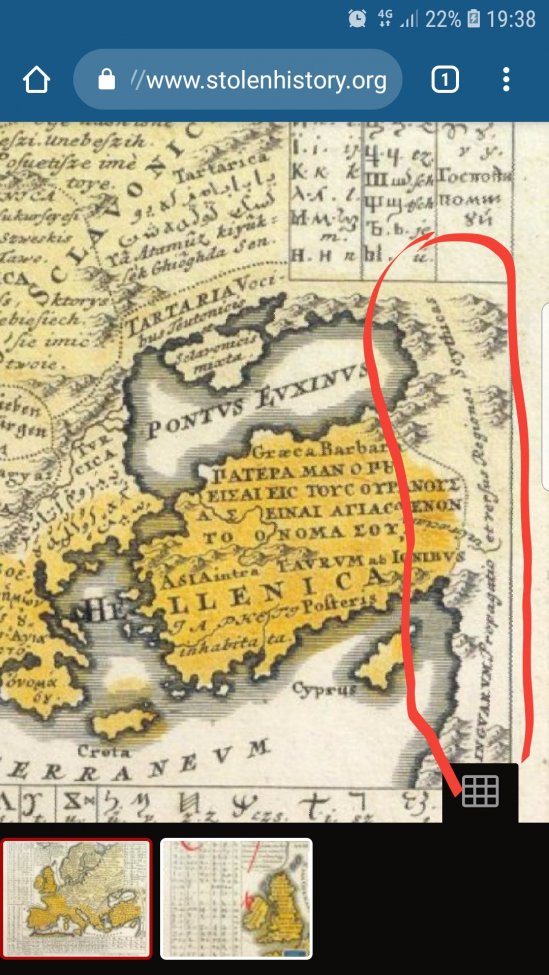
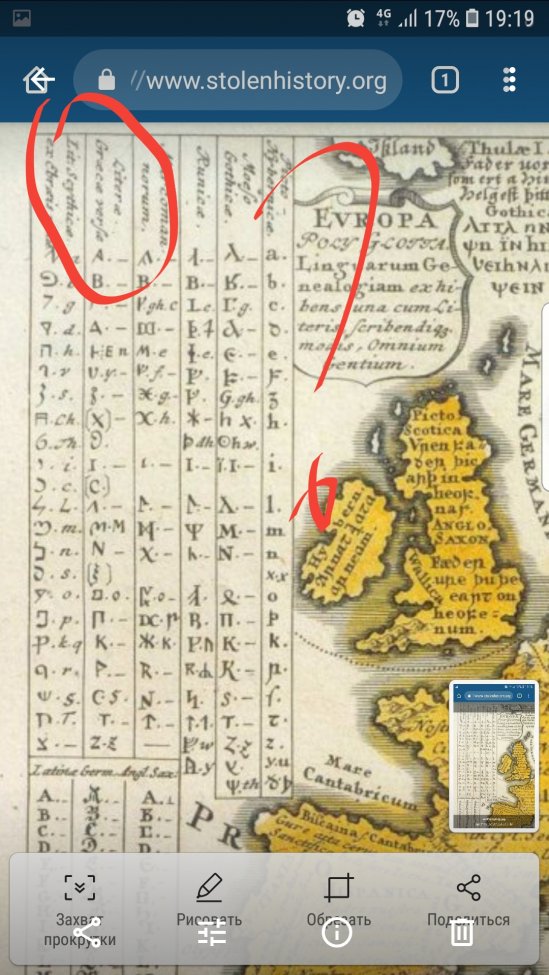
Note: This post was recovered from the Sh.org archive.
Username: Mabzynn
Date: 2019-03-20 15:41:11
Reaction Score: 9
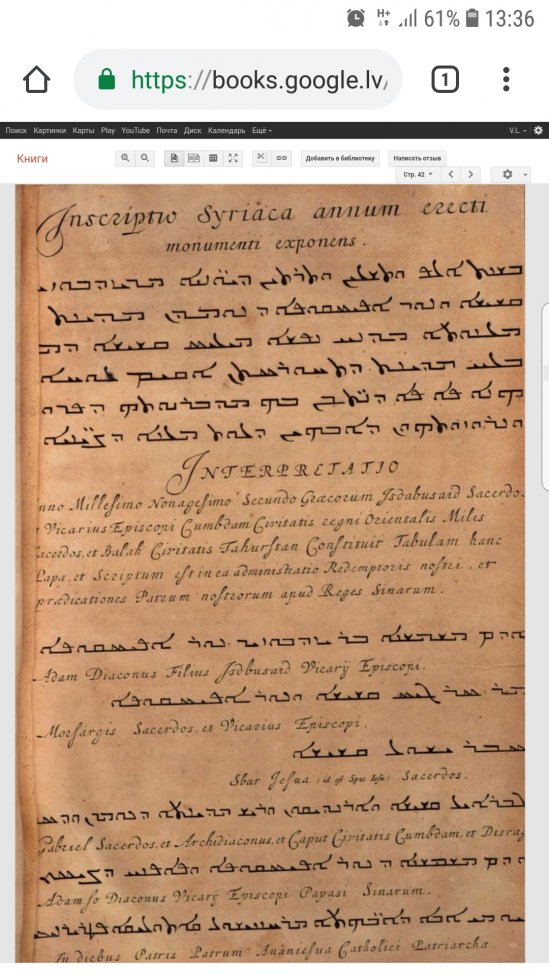
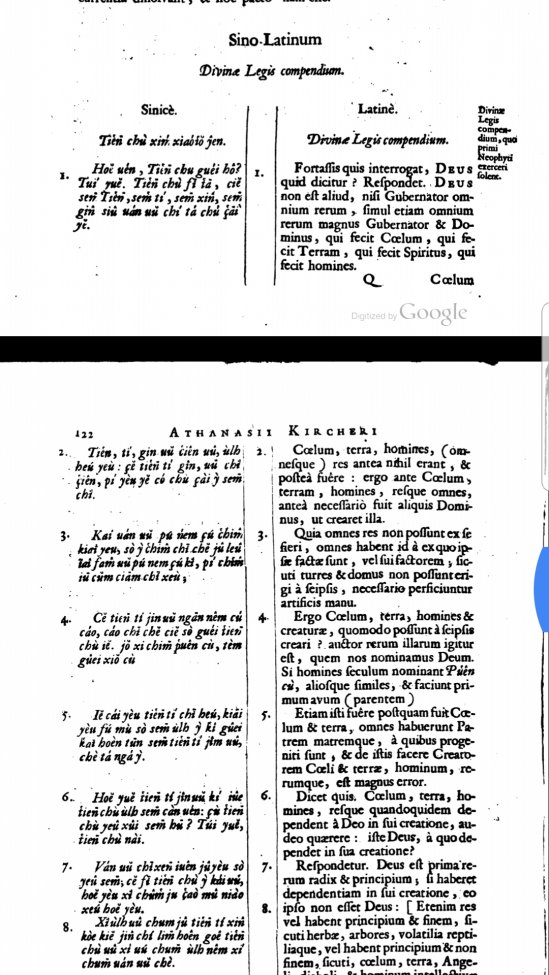
it was hard to get visible screenshots... here's the direct links to the pagesCan you translate the text for us?
Lot of similarities to the Cherokee language. View attachment 19162
Of course, Sequoyah, who ironically enough, could not read any language had been around literate people and had seen Latin, Greek, Cyrillic, English, French, Spanish, and just made up his own language from symbols/letters he'd seen. In the Cherokee language those symbols/letters (syllables, actually) aren't pronounced at all like they are in Latin, Greek, etc.
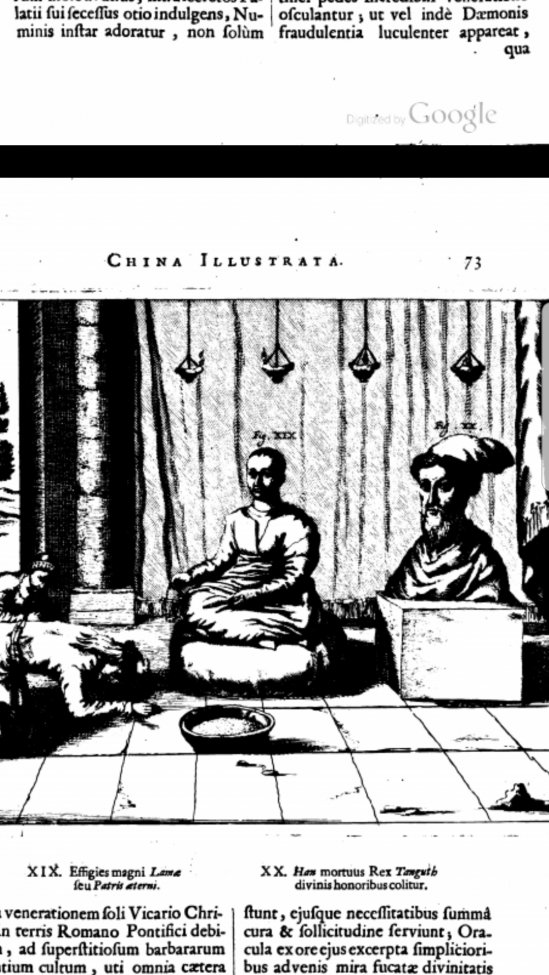
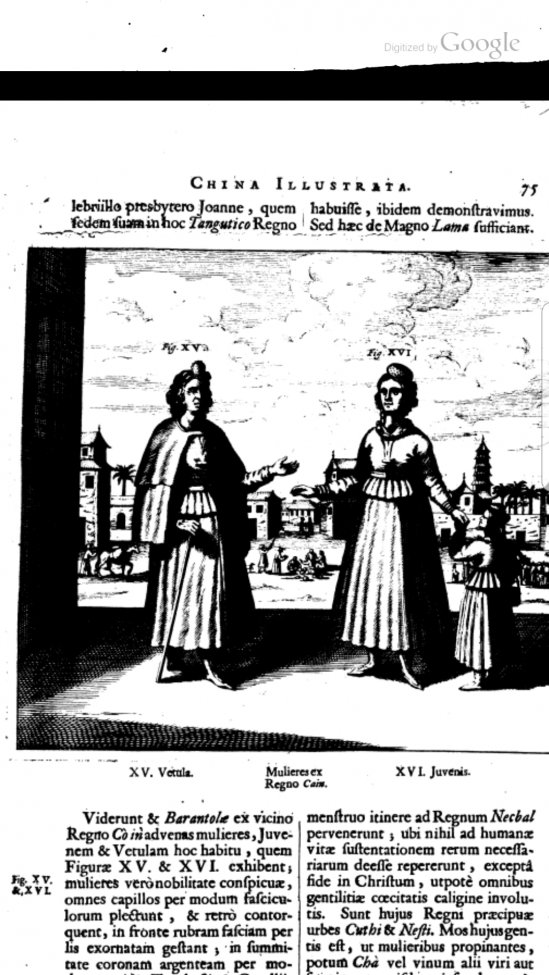
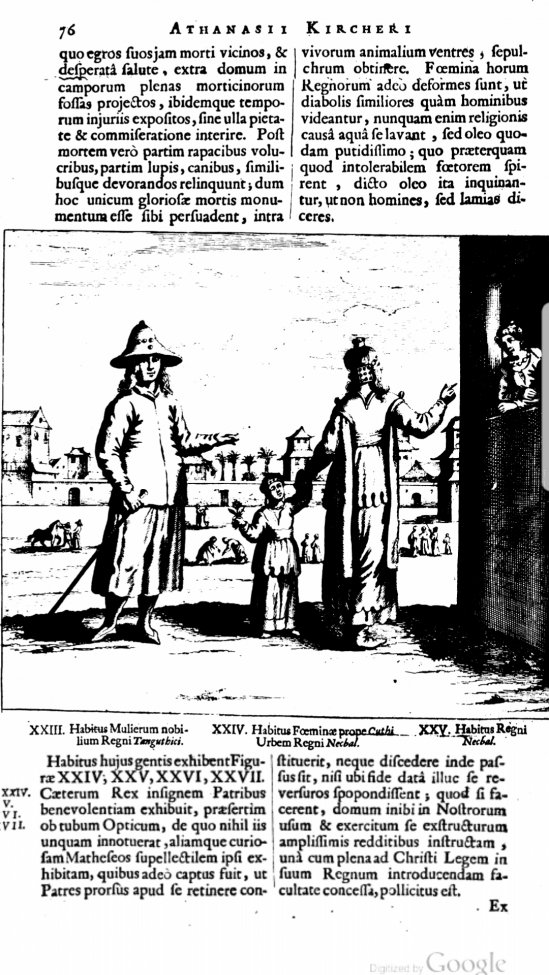
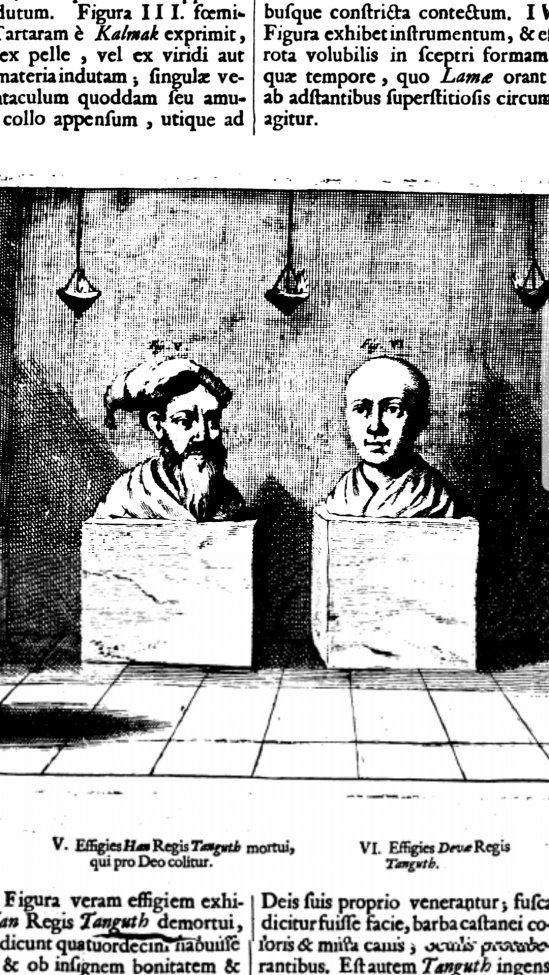
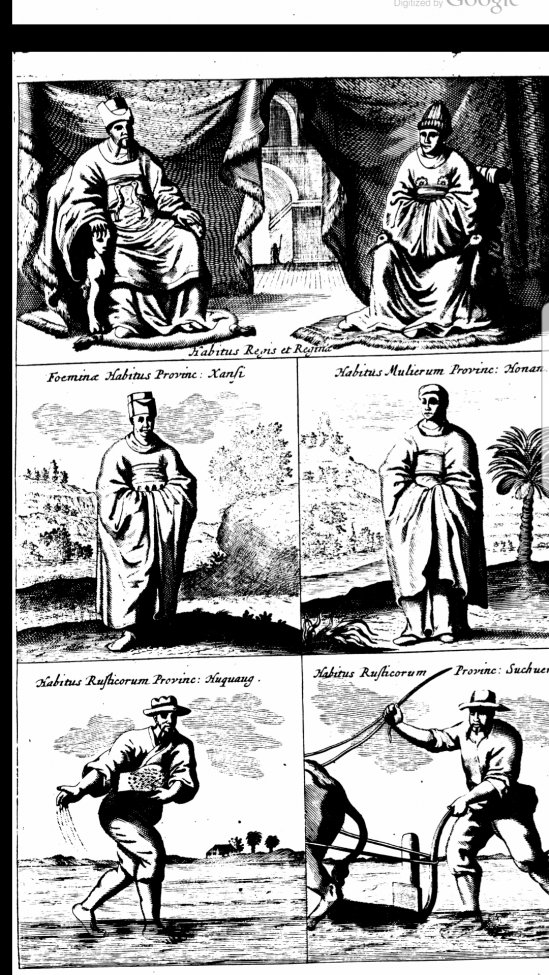
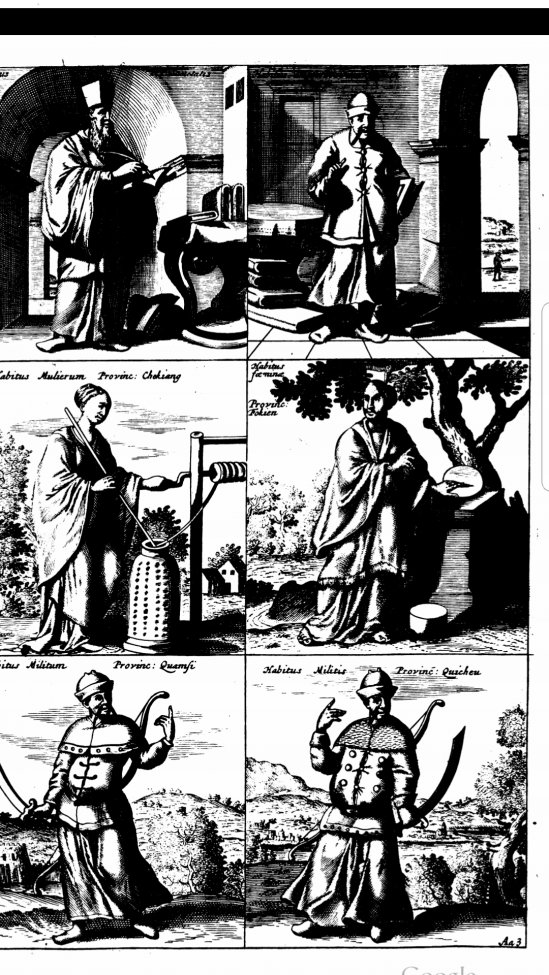
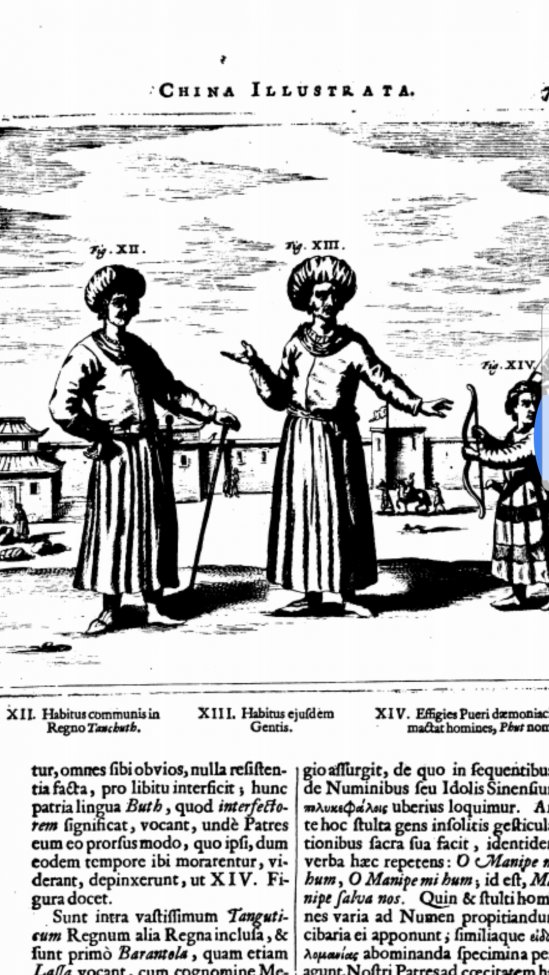
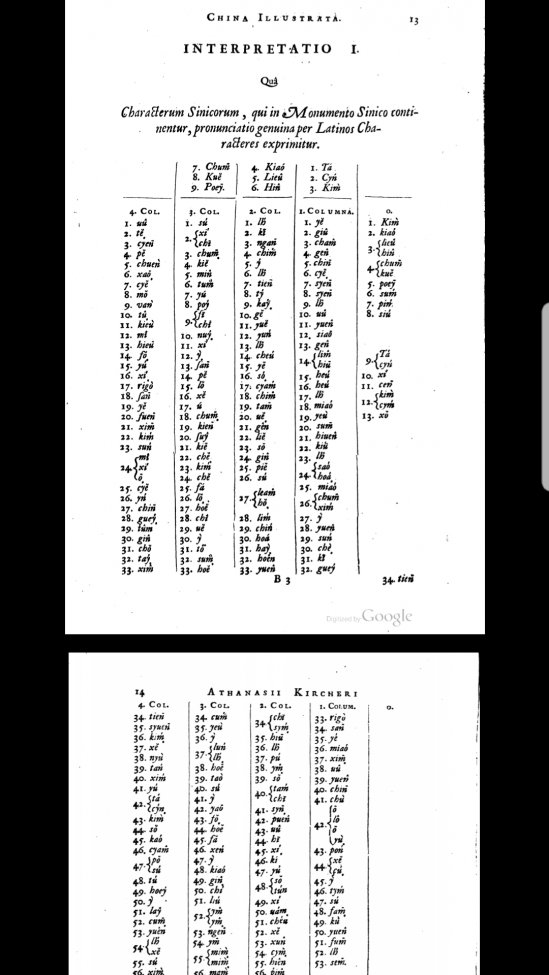
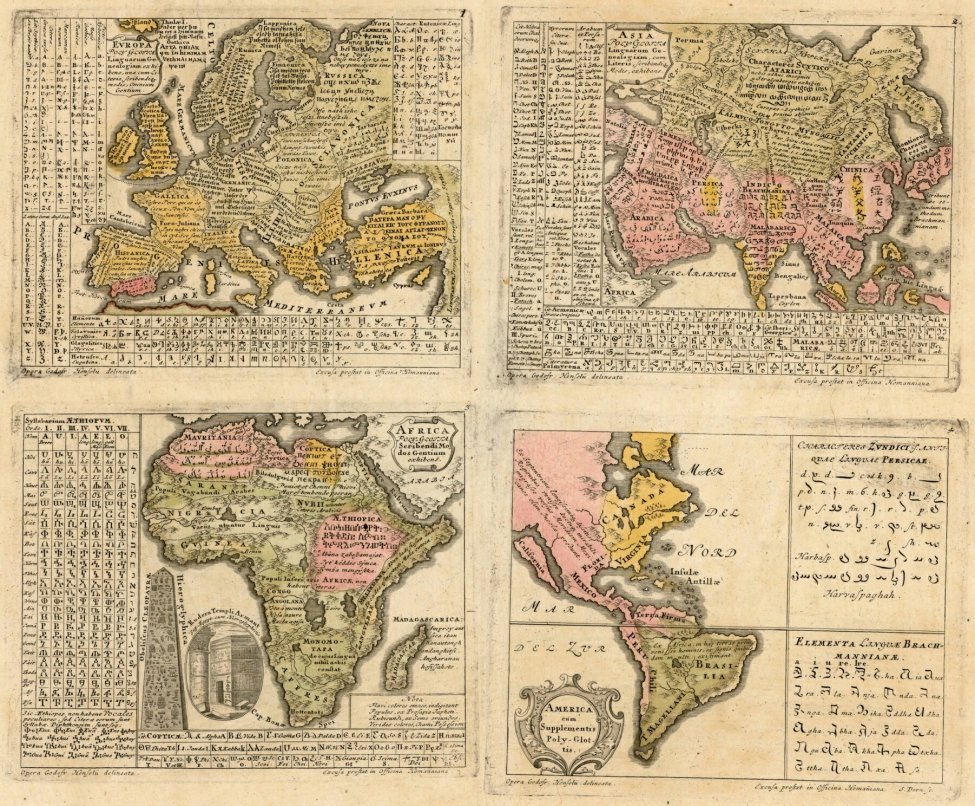
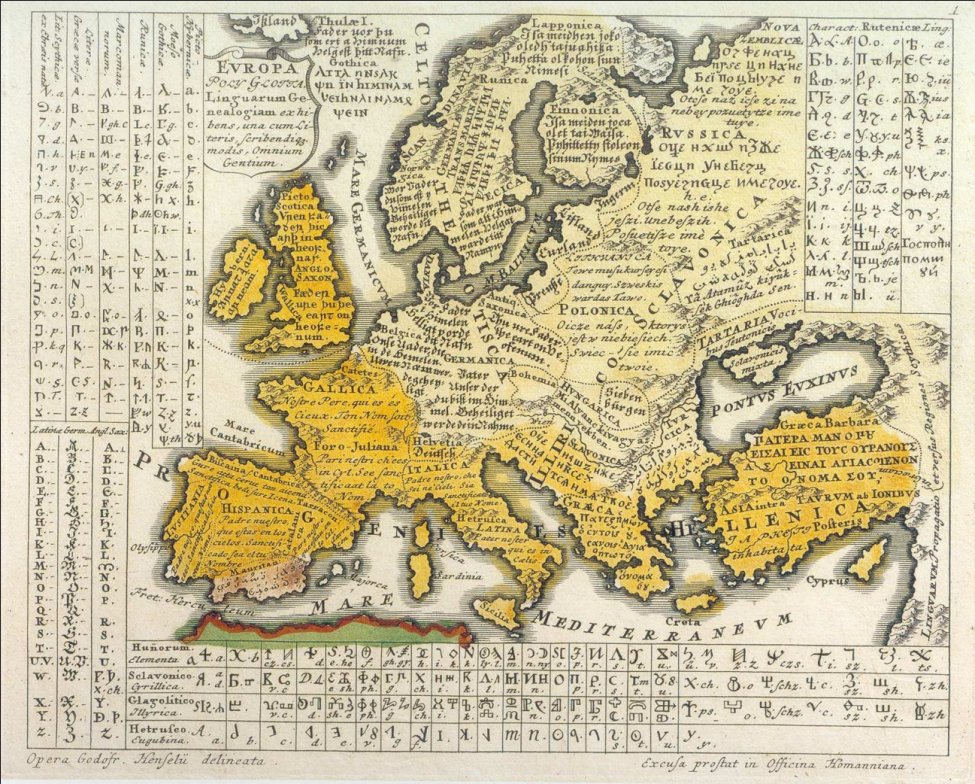
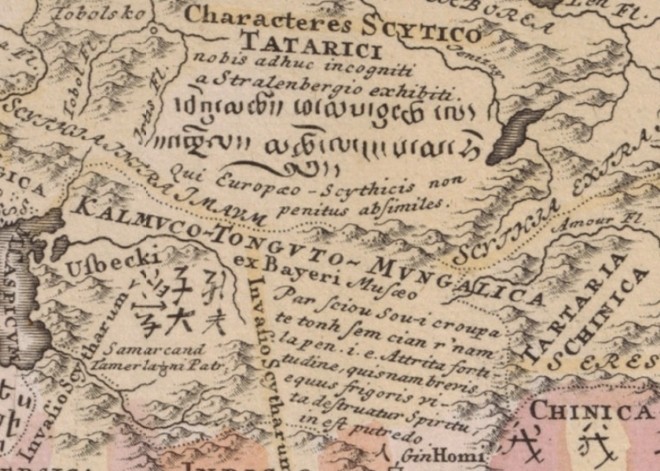
Looks like the first one is Samaritans alphabet, then Saloman's alphabet then? Next picture is Abraham's alphabet, then Enoch's alphabet, then what looks like Hebrew. Next picture is Syrish (Syrian?), then Phoenician ? Next picture has a guy holding a book that reads in plain English "The Book of Alpha and Omega" even though the symbols depicted are not at all English and doesn't look particularly Greek either as suggested by the words 'alpha and omega'. The next picture doesn't say what the top one is but the bottom one is Chinese.
I'm not being deliberately patronizing by listing what you just posted. I just figured I couldn't be the only one who couldn't read that small print without enlarging the page.
La galerie agréable du monde, où l'on voit en un grand nombre de cartes très exactes et de belles tailles douces les principaux empires, roïaumes, républiques, provinces, villes, bourgs et forteresses ...les îles, côtes rivières, ports de mer...les antiquitez, les abbayes, églises, académies...comme aussi les maisons de campagne, les habillemens et moeurs des peuples...dans les quatre parties de l'univers. Divisée en LXVI tomes, les estampes aiant été dessinées sur les lieux et gravées exactement par les célèbres Luyken, Mulder, Goerée, Baptist, Stopendaal et par d'autres maîtres renomez.... Tome troisième d'Arabie, Terre Sainte, Natolie & Assyrie / Pieter vander AA | Gallica
La galerie agréable du monde, où l'on voit en un grand nombre de cartes très exactes et de belles tailles douces les principaux empires, roïaumes, républiques, provinces, villes, bourgs et forteresses ...les îles, côtes rivières, ports de mer...les antiquitez, les abbayes, églises, académies...comme aussi les maisons de campagne, les habillemens et moeurs des peuples...dans les quatre parties de l'univers. Divisée en LXVI tomes, les estampes aiant été dessinées sur les lieux et gravées exactement par les célèbres Luyken, Mulder, Goerée, Baptist, Stopendaal et par d'autres maîtres renomez.... Tome troisième d'Arabie, Terre Sainte, Natolie & Assyrie / Pieter vander AA | Gallica
La galerie agréable du monde, où l'on voit en un grand nombre de cartes très exactes et de belles tailles douces les principaux empires, roïaumes, républiques, provinces, villes, bourgs et forteresses ...les îles, côtes rivières, ports de mer...les antiquitez, les abbayes, églises, académies...comme aussi les maisons de campagne, les habillemens et moeurs des peuples...dans les quatre parties de l'univers. Divisée en LXVI tomes, les estampes aiant été dessinées sur les lieux et gravées exactement par les célèbres Luyken, Mulder, Goerée, Baptist, Stopendaal et par d'autres maîtres renomez.... Tome troisième d'Arabie, Terre Sainte, Natolie & Assyrie / Pieter vander AA | Gallica
La galerie agréable du monde, où l'on voit en un grand nombre de cartes très exactes et de belles tailles douces les principaux empires, roïaumes, républiques, provinces, villes, bourgs et forteresses ...les îles, côtes rivières, ports de mer...les antiquitez, les abbayes, églises, académies...comme aussi les maisons de campagne, les habillemens et moeurs des peuples...dans les quatre parties de l'univers. Divisée en LXVI tomes, les estampes aiant été dessinées sur les lieux et gravées exactement par les célèbres Luyken, Mulder, Goerée, Baptist, Stopendaal et par d'autres maîtres renomez.... Tome troisième d'Arabie, Terre Sainte, Natolie & Assyrie / Pieter vander AA | Gallica
Here's the text that caught my eye besides multiple other anomalies within the alphabets and images.
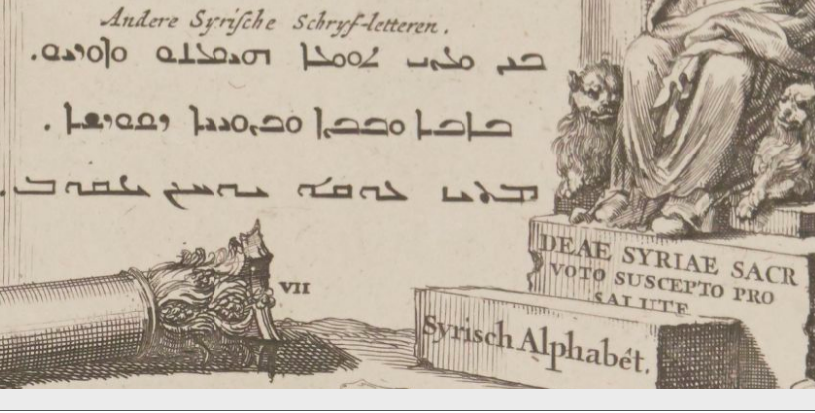
Other questions:
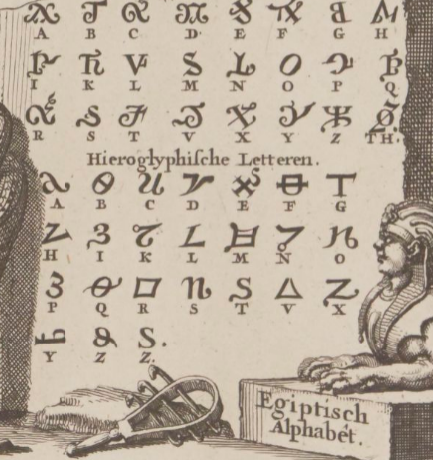
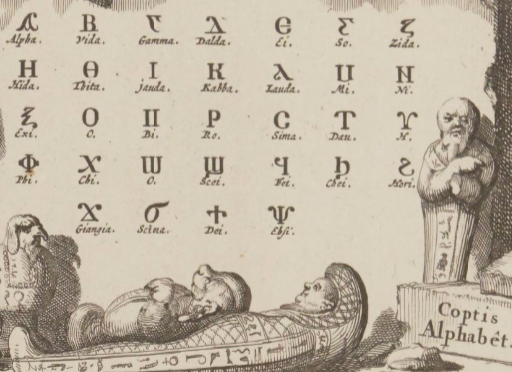
If Champollion used his knowledge of Coptic and the Rosetta stone (found in 1799) to decipher the Hieroglyphics...
Then why is this Dutch artist giving a full account of the Egyptian alphabet and hieroglyphic version in a book in 1733.
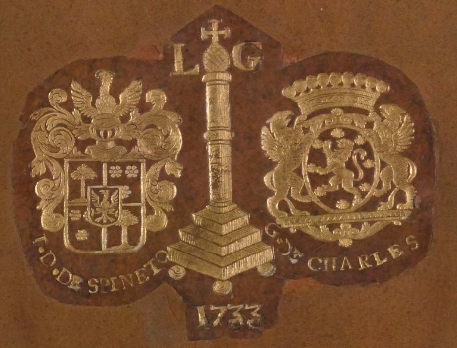
Too many inconsistencies. All coming from an area run by a Prince-Bishop of the Holy Roman Empire, that turned into one of the largest free mason lodges, that had an early schism due to mercantile infiltration of the branch, that forced many members to leave and join the "la Parfaite Intelligence" lodge.
The man in charge of the area during this period: Georges-Louis de Berghes
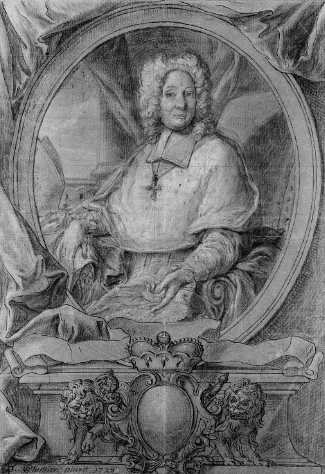
Why is all of the heraldry that appears to have Phoenician artistic reliefs around the outside all scrubbed clean?
Understanding the areas where there's a struggle between Phoenicians/Jesuits/Masons is our best chance at decoding this mess. I need to start learning Dutch and High German.. I'm really starting to think our entire understanding of Ancient Egypt was created in 18th century.